International Center for Ethics in the Sciences and Humanities (IZEW)

Public Engagement at the IZEW

The Public Engagement at the Ethics Center aims to create spaces for interaction, mutual learning, and discourse beyond the academic world. We are committed to discussing ethical issues with people from diverse backgrounds, both to share knowledge and to learn from them ourselves. After all, all people are at least experts in their own lives, and their perspectives can confirm, contrast, or complement scientific knowledge. This is especially true for questions of applied ethics. On this page, you will find examples of the Ethics Center's public engagement.
Citizens' Assembly “Artificial intelligence and freedom”

DescriptionDetails
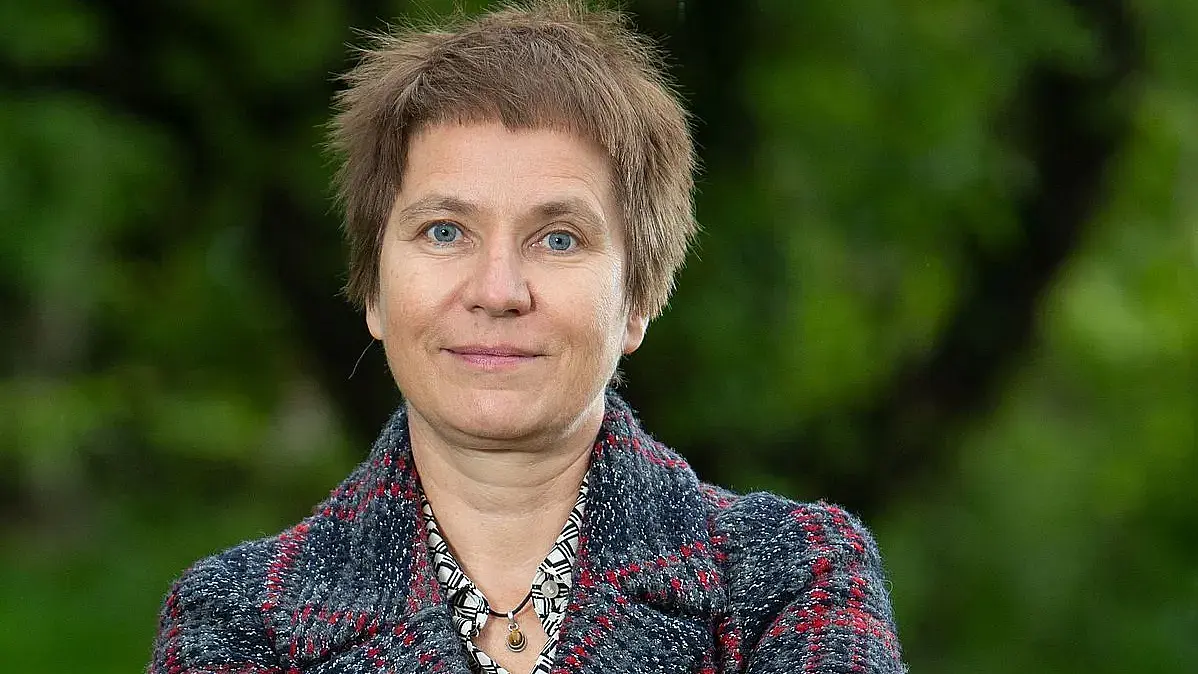
The Citizens' Assembly on AI and Freedom is looking at how citizens can get involved in AI research. Prof. Dr. Jessica Heesen was a member of the Citizens' Assembly's Scientific Council and actively participated in the citizens' assemblies as an expert.About the Citizens' Assembly

Forum “Demokratie Zukunftsfest”

DescriptionDetails
Science and urban society for a resilient democratic culture 
In cooperation with the city of Tübingen, the Integrata Foundation, citizens' initiatives, associations, and other civil society actors, the initiative “Demokratie Zukunftsfest” (Democracy Future-Proof) organizes events in which Tübingen's urban society exchanges ideas on strengthening and further developing democratic structures. The Ethics Center is a co-organizer and sits on the initiative's steering committee in person of Dr. Marcel Vondermaßen. The Center's involvement is closely coordinated with the university's Public Engagement department, which is also represented on the steering committee by Patrick Klügel.
About the Initiative


EGAR and TECHNOSEUM Mannheim

DescriptionDetails

Workshop: “Bring mir den Hammer, Robbi”
On December 12, 2024, a workshop took place at the TECHNOSEUM Mannheim featuring the robot 'Spot' from the FZI Research Center for Informatics. As part of a design fiction game, pupils had the opportunity to interact with the construction-site robot 'Spot', control it themselves, and thus learn interactively about ethical aspects of autonomous robotics.

Public Evening Event
Also on December 12, 2024, a public evening event was held in cooperation with Spektrum der Wissenschaft and TECHNOSEUM Mannheim.
Phillip Keller from the FZI Research Center for Informatics provided insights into the technical aspects of how the robot 'Spot' was developed. Afterward, Dr. Wulf Loh from the International Center for Ethics in the Sciences and Humanities (IZEW) spoke about the ethical implications of autonomous robotics. The event concluded with an open discussion.

About the Workshop 

"AbracaData" exhibition stand at Gamescom

DescriptionDetails

How do gamers perceive privacy? 
What opportunities and risks do they associate with the use of new eye-tracking technologies? 
These and other questions are addressed at a trade fair stand that got gamers excited about ethical and social science research at the Gamescom computer games fair. The interactive stand not only serves to present the project, but also to facilitate joint research and mutual knowledge transfer: AbracaData, a specially developed VR game, forms the core of a qualitative empirical study. Posters, postcards and biscuits also invite visitors to exchange ideas, try things out and engage in discussion.
The stand was designed in interdisciplinary collaboration with social scientists from Fraunhofer ISI Karlsruhe, legal scholars from the University of Kassel, computer scientists from the University of Stuttgart and the eye-tracking software manufacturer Blickshift. 


Representatives of the IZEW: Dr. Theresa Krampe and Céline Gressel.

Funded by  BMFTR, Projekt PRETINA (Platform Privacy). 
Project lead (IZEW): Dr. Mone Spindler

To the Article 

„I’m a Scientist, Get me out of here!“

DescriptionDetails
‘I’m a Scientist, Get me out of here!’ is a web-based educational format that gives students direct, low-threshold access to science. Through live written chats and a structured question function, learners engage in dialogue with scientists. This gives them insights into their everyday working lives and helps them gain an understanding of current research topics and scientific work. Jacqueline Bellon, Martin Hennig and Maria Pawelec took part in the themed discussion ‘AI in Film’ in January 2023. Maria Pawelec participated in the themed discussion ‘AI and Politics’ in February 2025. In May 2025 Jacqueline Bellon participated in the themed discussion ‘AI and Education’.About the Initiative

Ethics in digital games

DescriptionDetails
Surveillance Game Jam (University of Bayreuth, July 18–20, 2025), organized by Dr. Robin Hädicke, Dr. Martin Hennig, and Dr. Markus Spöhrer, as well as the thematic section “Surveillance” at the Gamepathy Jam (IU International University, Karlsruhe, July 18–20, 2025), organized by Prof. Thorsten Zimprich and co-organized by Martin Hennig and Markus Spöhrer. Both events were co-funded by the DFG project “The Interactive Gaze: On the Status and Ethics of Surveillance in Digital Games.” Based on an introductory lecture on “Surveillance in Digital Games” (Hennig, Spöhrer), participants developed digital game prototypes that explore, represent, and implement surveillance logics in innovative and critical ways.

About Surveillance Game Jam

About Gamepathy Jam

Adaption of the Ideation Tools Tiles IoT Inventor Kit

DescriptionDetails
In the ESTER project, employees of the Ethic Center designed and tested a playable tool for ethical, legal, social and other aspects of technology development and science communication. A publication with the results from the first rounds of games played is currently being prepared: Jacqueline Bellon, Céline Gressel, Benedikt Haupt, Alexa Becker, Christian Pentzold (2026): Empowerment and Responsibility through Playful Participatory Exploration. Transdisciplinary practical adaptations of the Tiles IoT Inventor Toolkit. In: Manuel Bolz et al. Stefanie: Wissenschaft und Technologie kommunizieren. Kontroversität, Dialog und Partizipation. Bielefeld: transcript.To the Tool

Multiple workshops and lectures on critical AI literacy in public institutions

DescriptionDetails

Multiple workshops and lectures on critical AI literacy in public institutions

From, 2023 to 2025 Jacqueline Bellon, employee of the Ethic Center, visited schools, public libraries and adult education centres to talk about generative AI and its social, ethical and epistemic effects, and to teach critical AI skills. This reached upper secondary school students (e.g. at the Montessori Centre ANGELL, Freiburg i.B.), senior citizens in the Autumn Academy programme for general scientific continuing education at the University of Ulm (the recorded lecture ‘What do you need for a good life’ can be viewed here) and in the context of adult education (e.g. as part of the Catholic Education Centre Botnang), students of applied AI at universities of applied sciences (e.g. in the Ethics Talk at the South Westphalia University of Applied Sciences on the topic ‘AI: Friend or foe in your studies?’), Children and young people aged 8-16 (e.g. at the Reutlingen City Library and Nürtigen City Library), Students in the ‘Theory meets Practice’ programme of the Freiburg FACE on responsibility in civil society, Citizens of the cities of Tübingen and Reutlingen (e.g. in the discussion ‘Better arguing with AI?’ (‘Besser streiten mit KI?’) at the University of Tübingen's Science and Innovation Days 2024 and subsequent formats in the ‘AI and Us’ (‘KI und Wir’) series, and at a workshop for adults at Reutlingen City Library), and subject leaders and teachers at the 3rd AI Symposium at the IWM, Tübingen.

On Critical AI Literacy Recorded Lecture

‘AI and Us’ 

Prevent - Workshops

DescriptionDetails

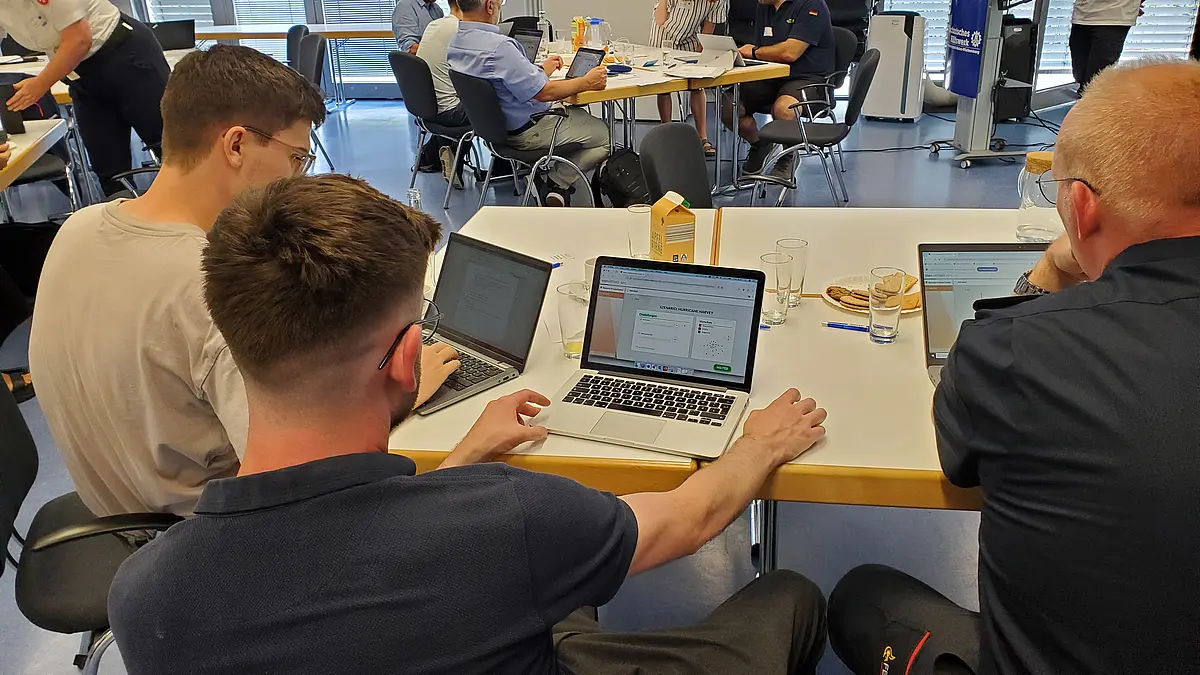
Misinformation on social media poses major challenges for authorities and organisations with security responsibilities, as it can threaten the safety of individuals and groups, as well as the stability of state institutions. The Prevent project (BMFTR, 2022-2025) held two workshops in Stuttgart on 12 October 2023 and 18 July 2024 in collaboration with security authorities from across Baden-Württemberg and beyond. At the workshops, academics and practitioners discussed possible ways of dealing with misinformation on social media (from debunking to deleting and blocking accounts), the self-image and core values of the organisations, and conflicts of values that arise, particularly between freedom of expression and protecting the population from misinformation that poses a threat to security.


Involved Members: Wulf Loh, Jessica Heesen, Maria Pawelec, Luzia Sievi

About the Project

Pick your Scientist!

DescriptionDetails

Science communication in cooperation with the TECHNOMUSEUM Mannheim

This interactive format focused on low-threshold, personal and private exchanges between scientists and citizens about their experiences with and through technology. Pairs of scientists and citizens set off together on a free walk through the exhibition at Mannheim's Museum of Technology History, the TECHNOSEUM. The tangible examples in the exhibition provided numerous opportunities for discussions about the history and development of technology. The exhibits highlighted the ethical, legal and social aspects of the technologies on display. This allowed participants to gain a unique insight into how technical and social developments have shaped and continue to shape our world.
Involved members: Jacqueline Bellon, Céline Gressel

About the Project