Research and teaching in EvE focus on how individuals, populations and communities interact and cope with environmental variability. We synergistically address a wide variety of perspectives and methodologies in evolutionary ecology, including plant and animal ecology, integrative botany and zoology, ecotoxicology, and conservation.
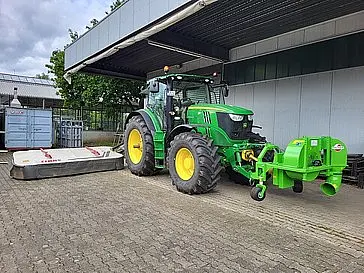
Project: INSOEL – Insect chasing devices for Organic Farming
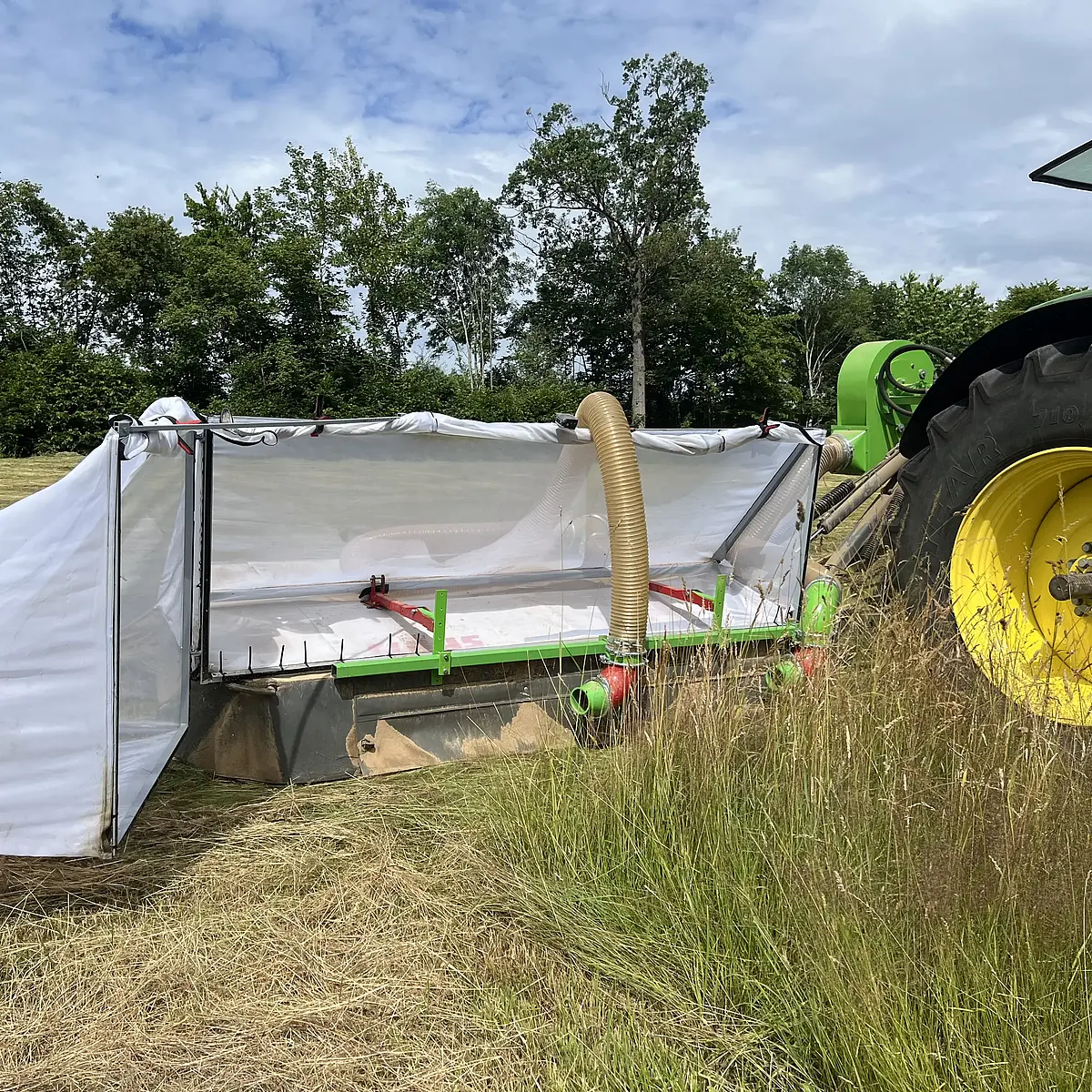
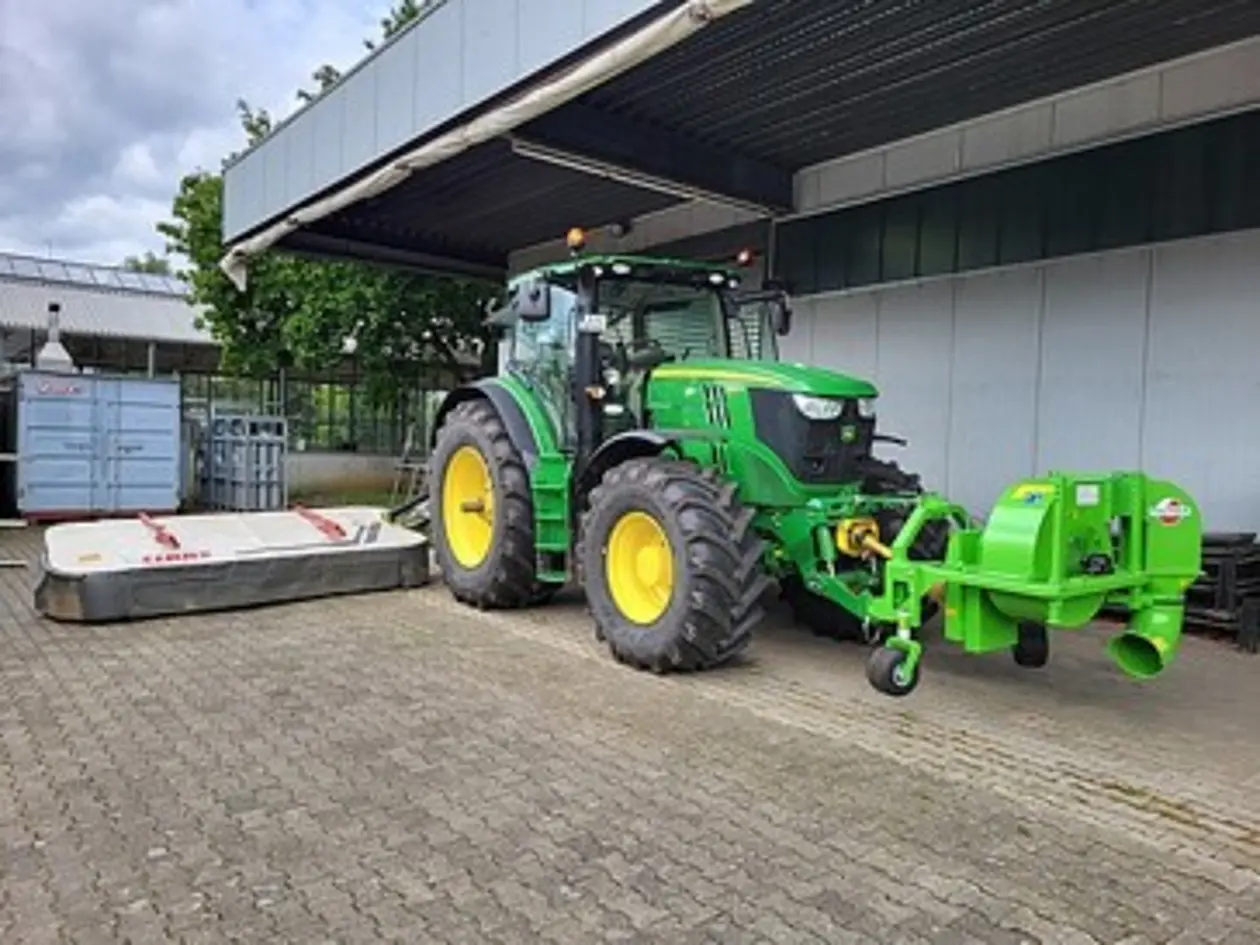
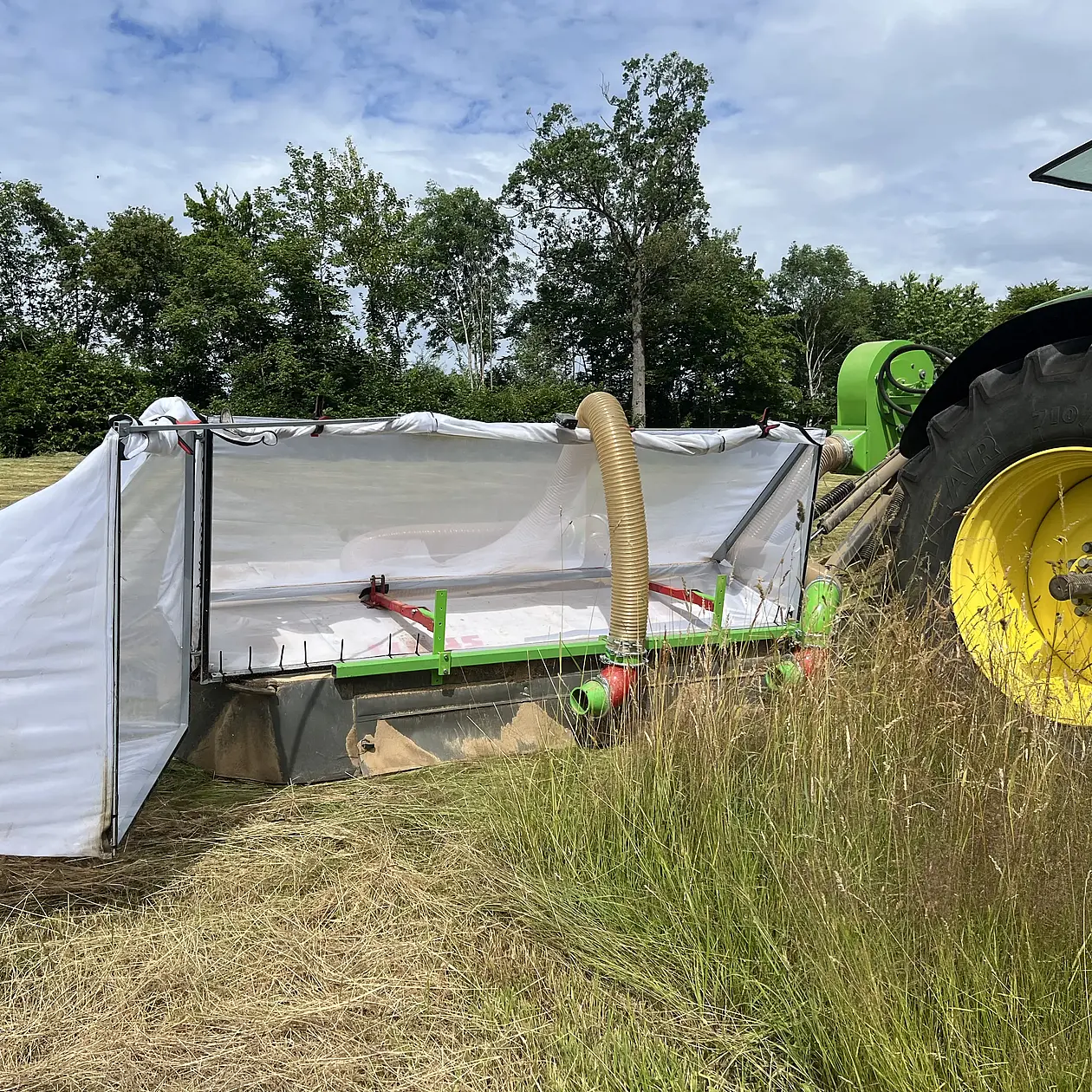
2 Sep 2026 ► In the new collaborative project “INSOEL – Insect chasing devices for Organic Farming,” researchers from the universities of Tübingen and Hohenheim are collaborating to preserve spider and insect diversity in organically managed grasslands. For more information, visit: https://oekolandbauinnovationen-bw.uni-hohenheim.de/forschungsprojekt_insoel
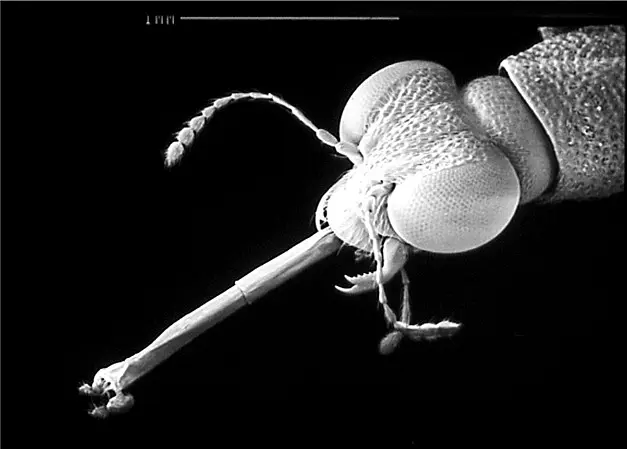
Publication: Radiation of rove beetles in the Himalaya
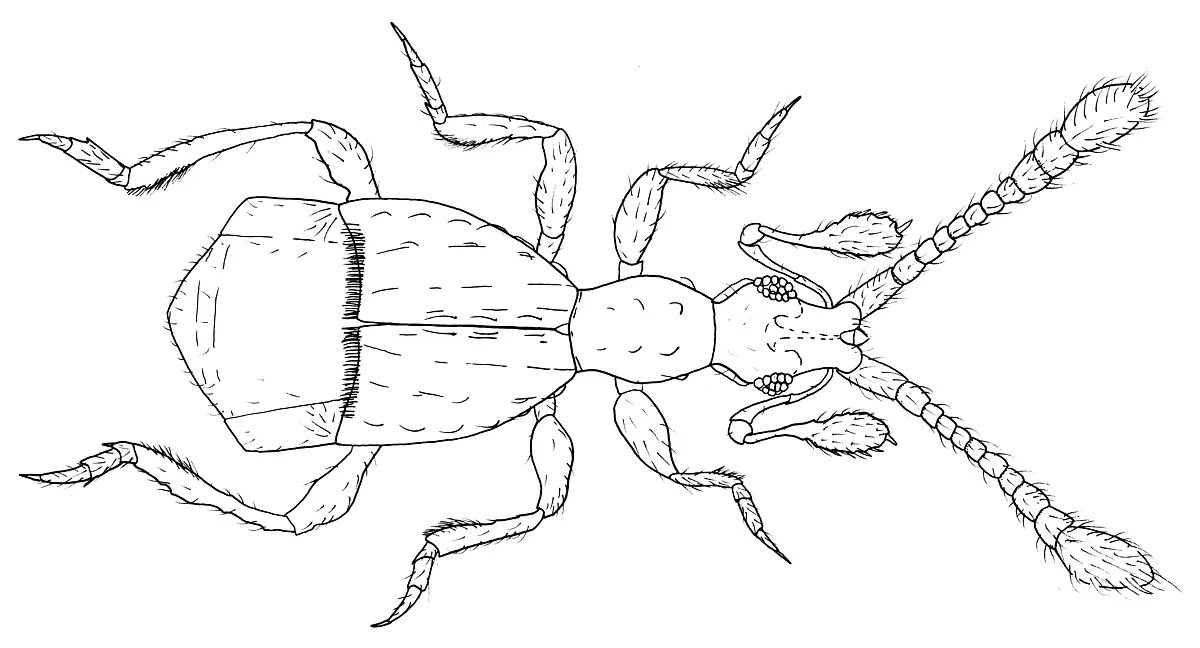
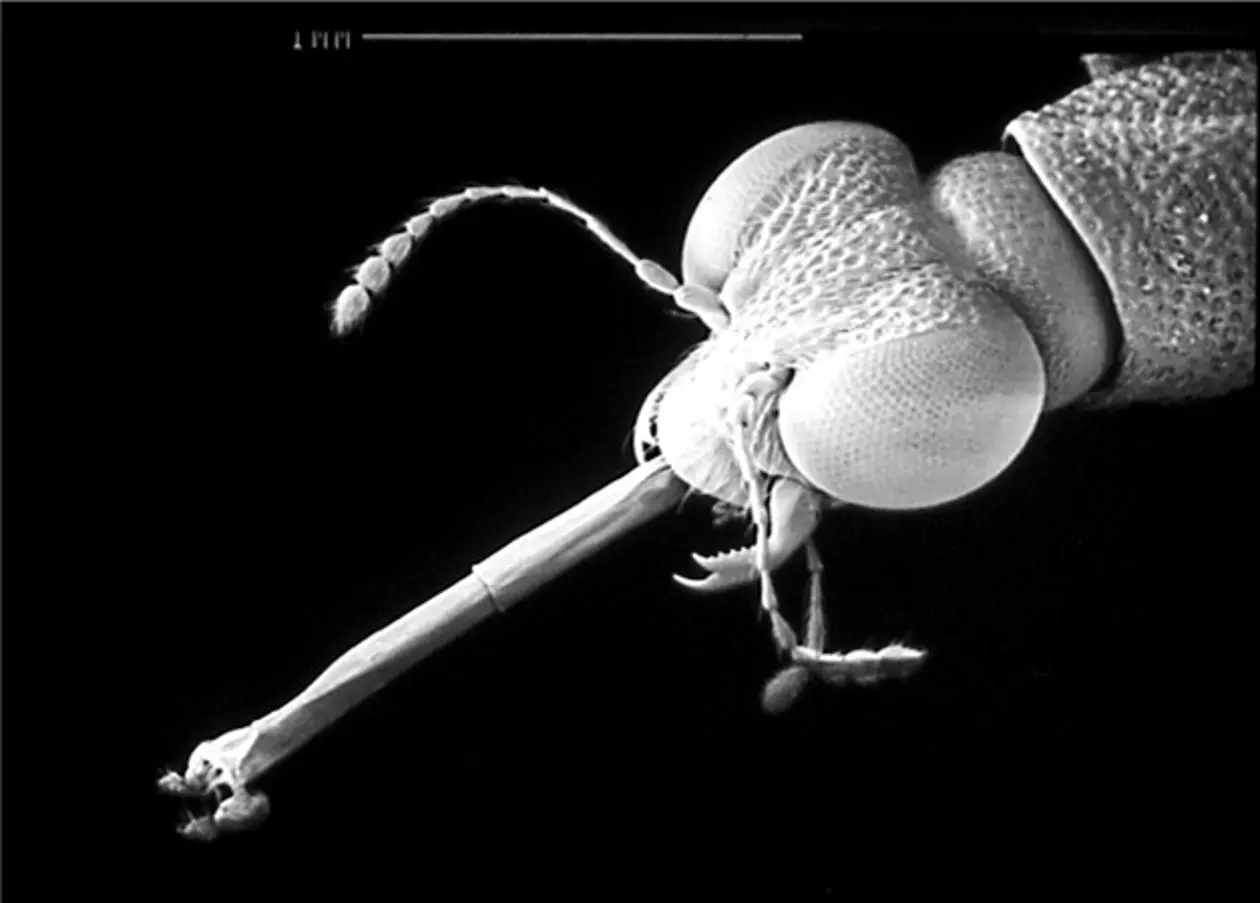
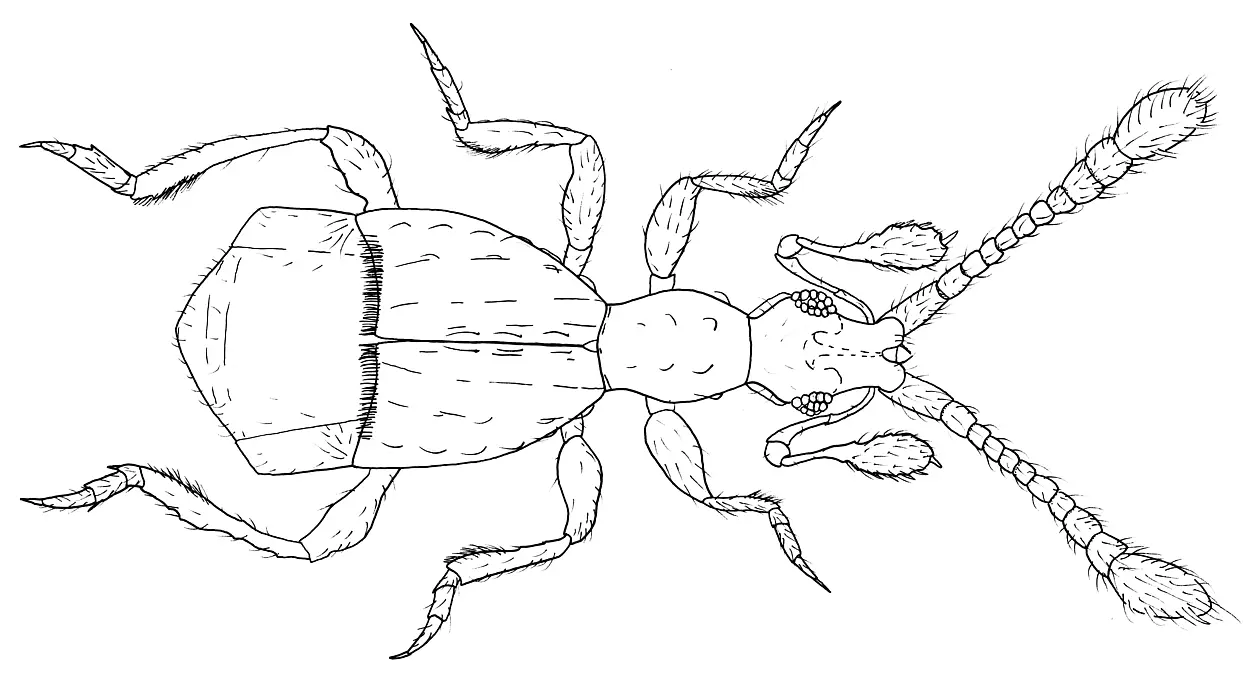
23 Sep 2026 ► A potential case of ecomorphological radiation involving ~ 80 species of the megadiverse rove beetle subfamily Steninae was collected from two neighbouring mountain ranges in the Himalayan foothills of northern Thailand (Organisms Diversity & Evolution). The findings align with adaptive radiation theory, in which divergent natural selection driven by environmental variation and interspecific competition promotes speciation. Evolutionary lability in key traits appears to have facilitated adaptive diversification within Steninae, possibly reinforced by functional trade-offs.
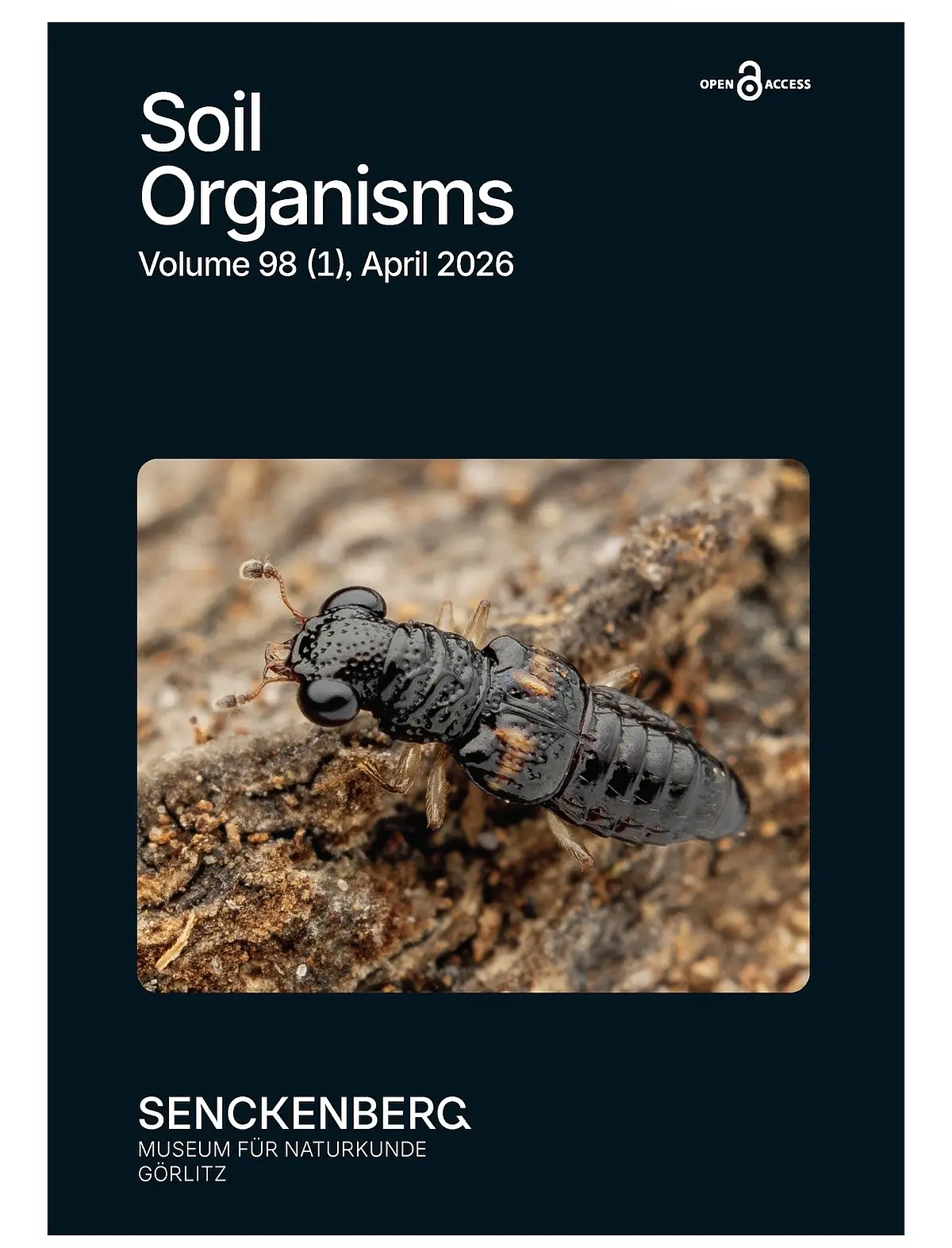
Publication: Radiation of rove beetles in the Himalaya
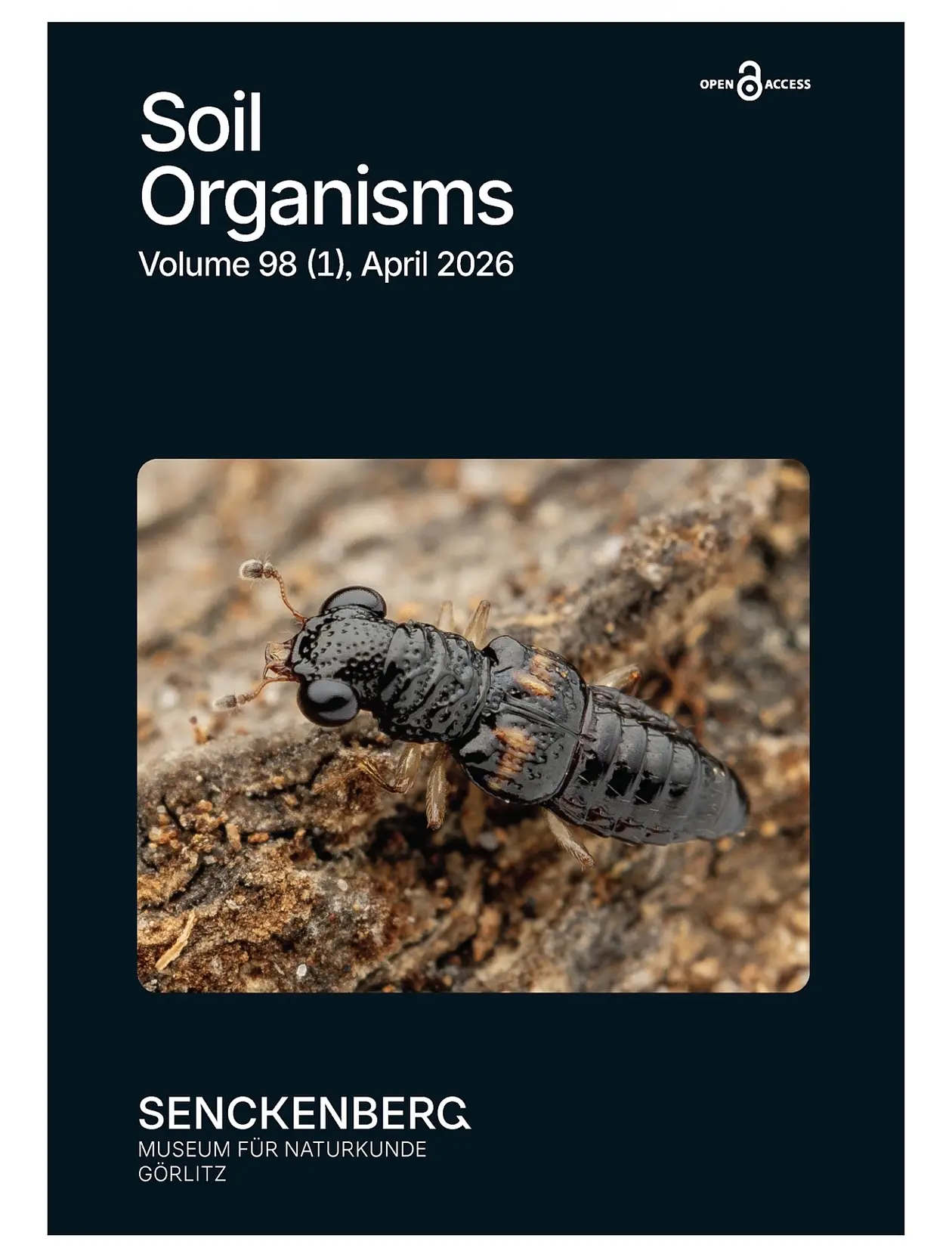
23 Sep 2026 ► Within the DFG project “Ecomorphological radiation of rove beetles of the subfamily Steninae (Coleoptera, Staphylinidae) in the Northeast Indian Himalaya”, a German-Indian team led by Prof. Oliver Betz discovered three new species of rove beetles: Megalopinus arunachalensis, M. mithun, and M. micros. Published in Soil Organisms with Dr. Hiren Gogoi (Rajiv Gandhi University) and Tobias Mainda (University of Greifswald), these species were collected from subtropical forests of Arunachal Pradesh and highlight the region’s considerable potential for undiscovered species.
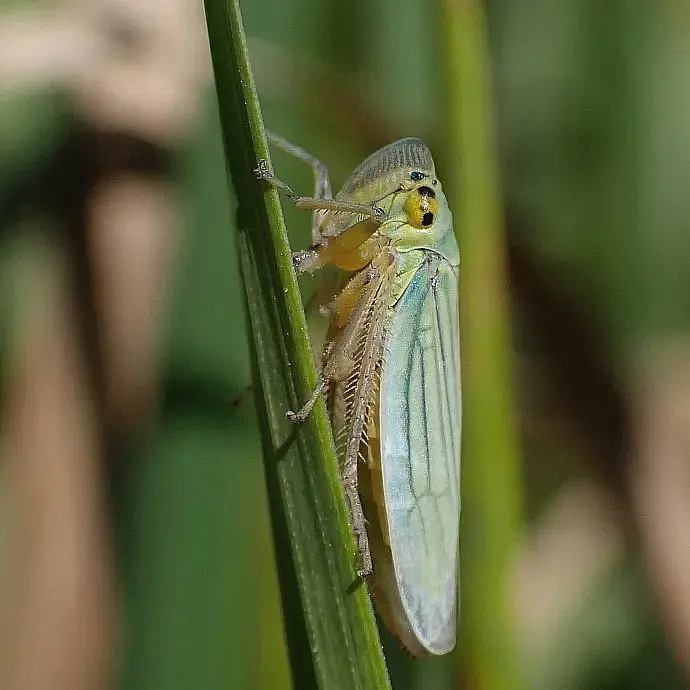
Publication: Mature flower fields support specialised leafhopper communities
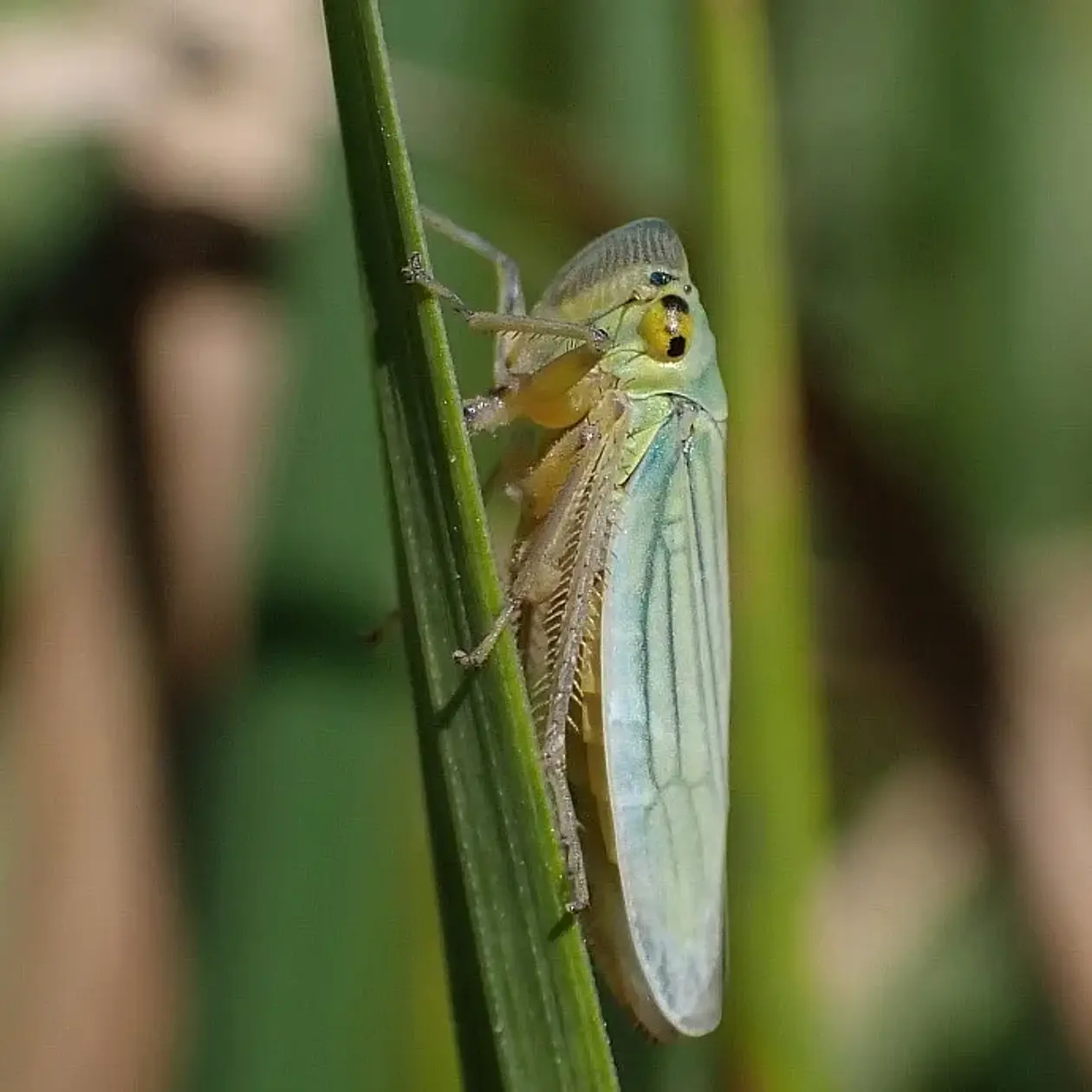
11 Sep 2026 ► Flower fields are an important tool for restoring insect diversity in agricultural landscapes, but their conservation value may depend on vegetation succession over time. New collaborative work by vegetation and insect scientists from the EVE institute (Agriculture, Ecosystems & Environment) shows that mature, structurally diverse flower fields support distinct leafhopper communities with specialised species. This highlights the importance of perennial, structurally diverse habitats in agri-environment schemes.
Farewell: Erich Weber retires as curator of the Zoological collection
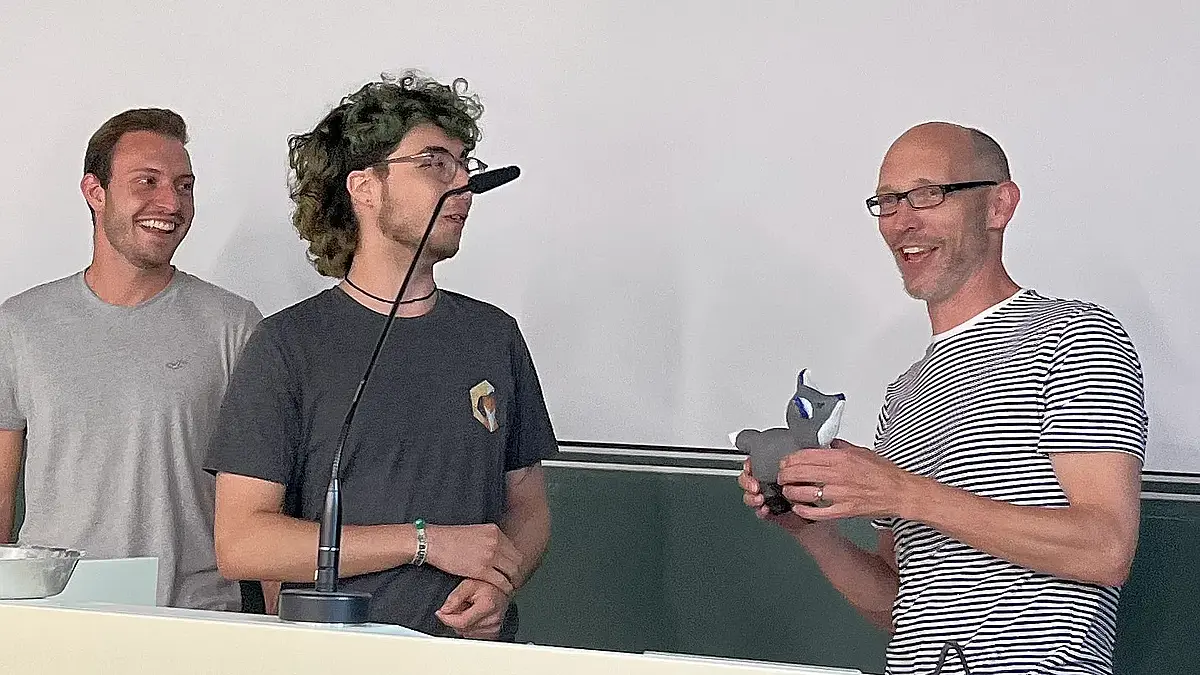
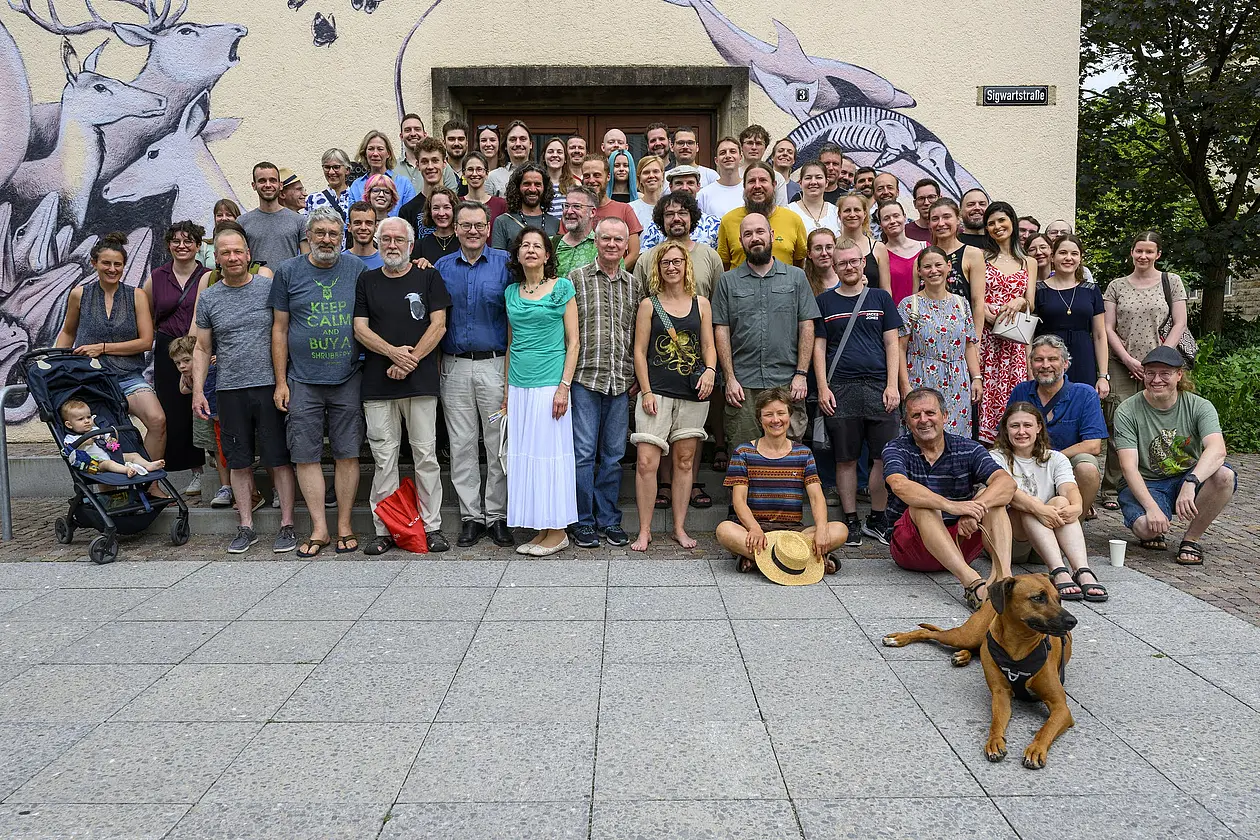
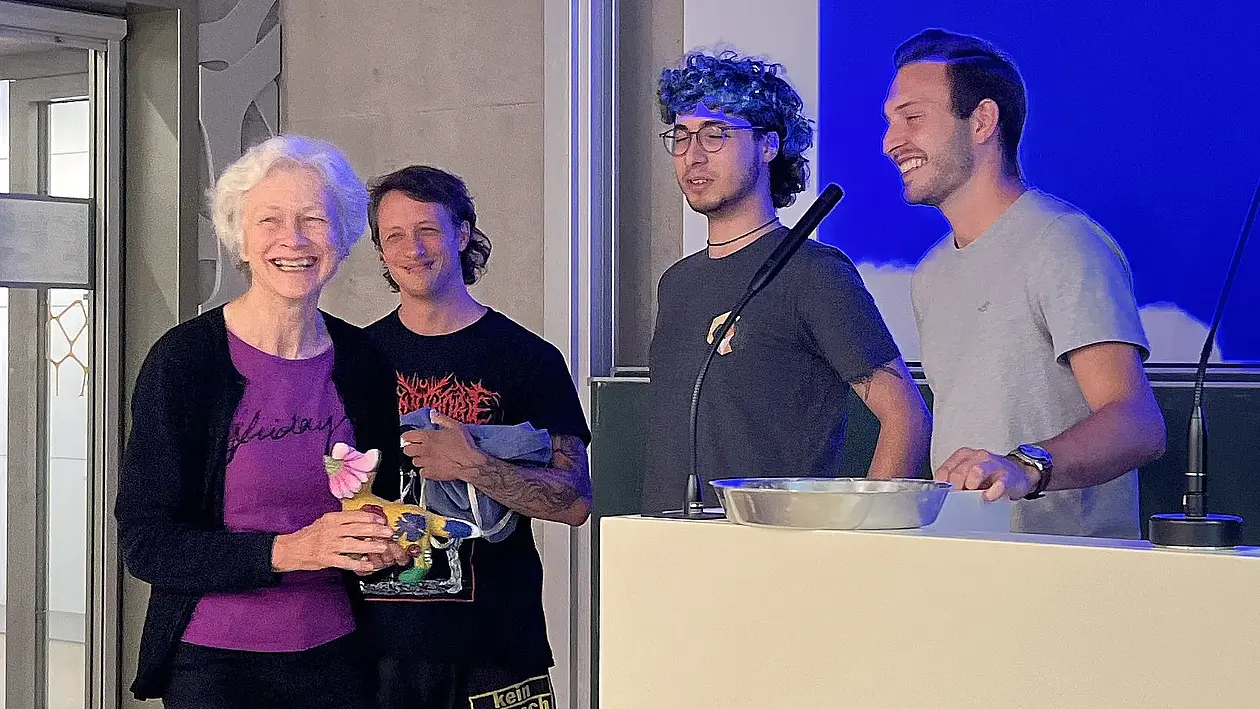
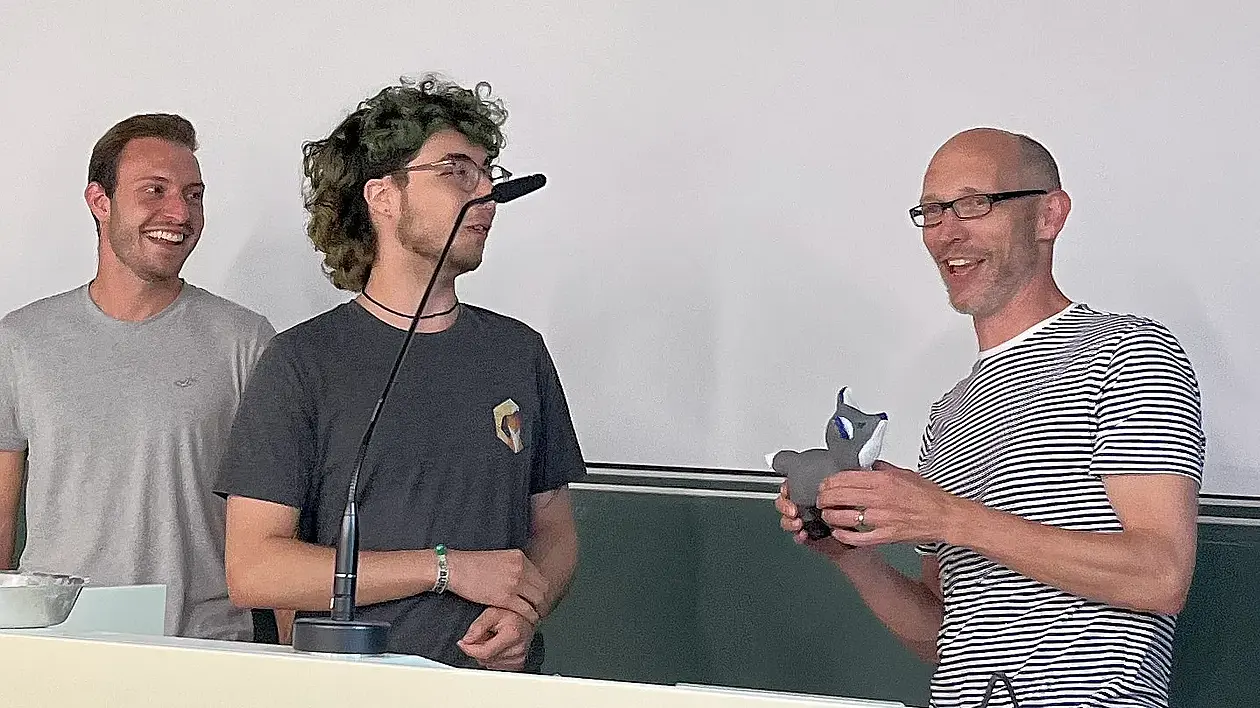
09 Aug 2026 ► After decades as curator of the Zoological Collection at the University of Tübingen, Dr. Erich Weber has now retired from office. A festive farewell organised by former students and teaching assistants celebrated his enduring commitment to sound knowledge of animal taxonomy and systematics, both in basic zoology teaching and advanced field excursions to destinations across Europe and beyond. These excursions left lasting impressions on generations of Biology students. Around 80 former and current students and colleagues attended the event.
Ceremony: Successful EvE Master students in summer 2026
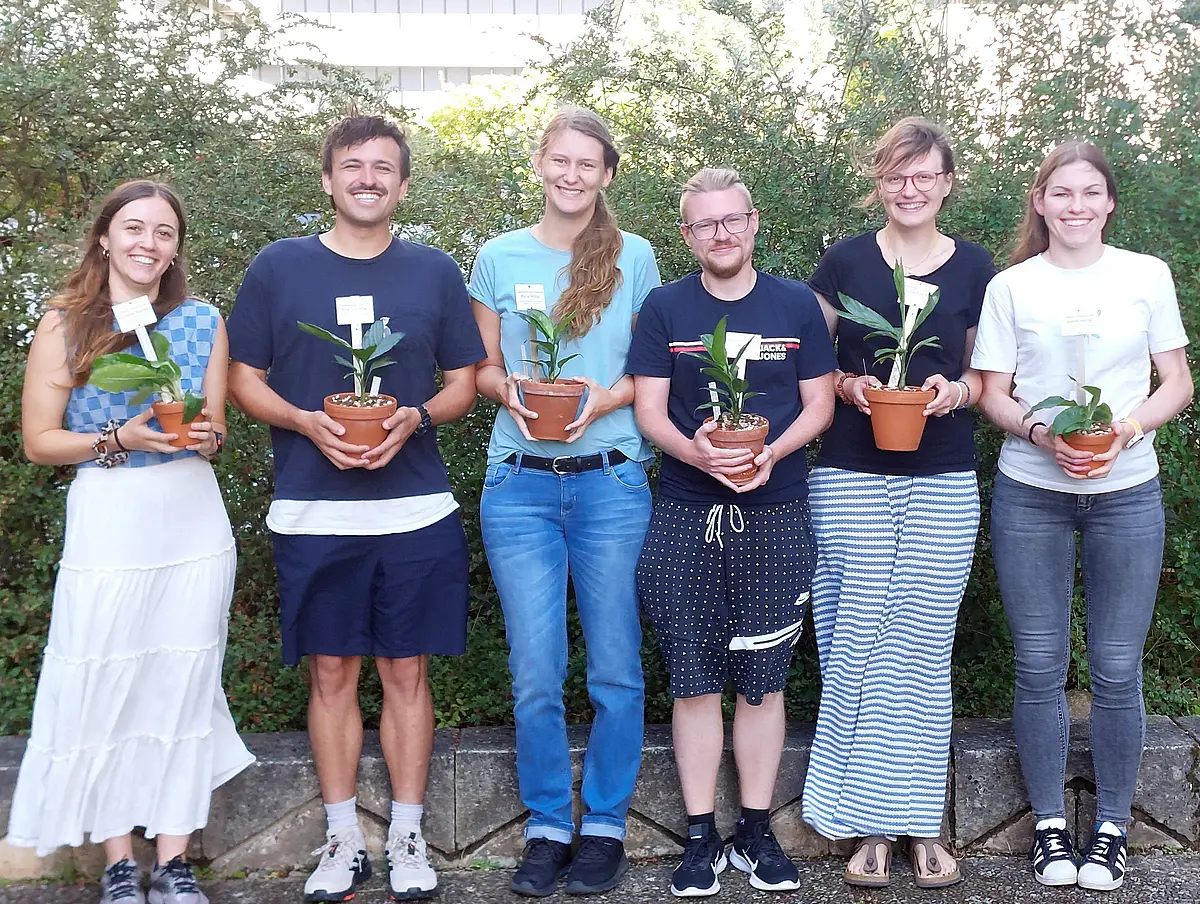
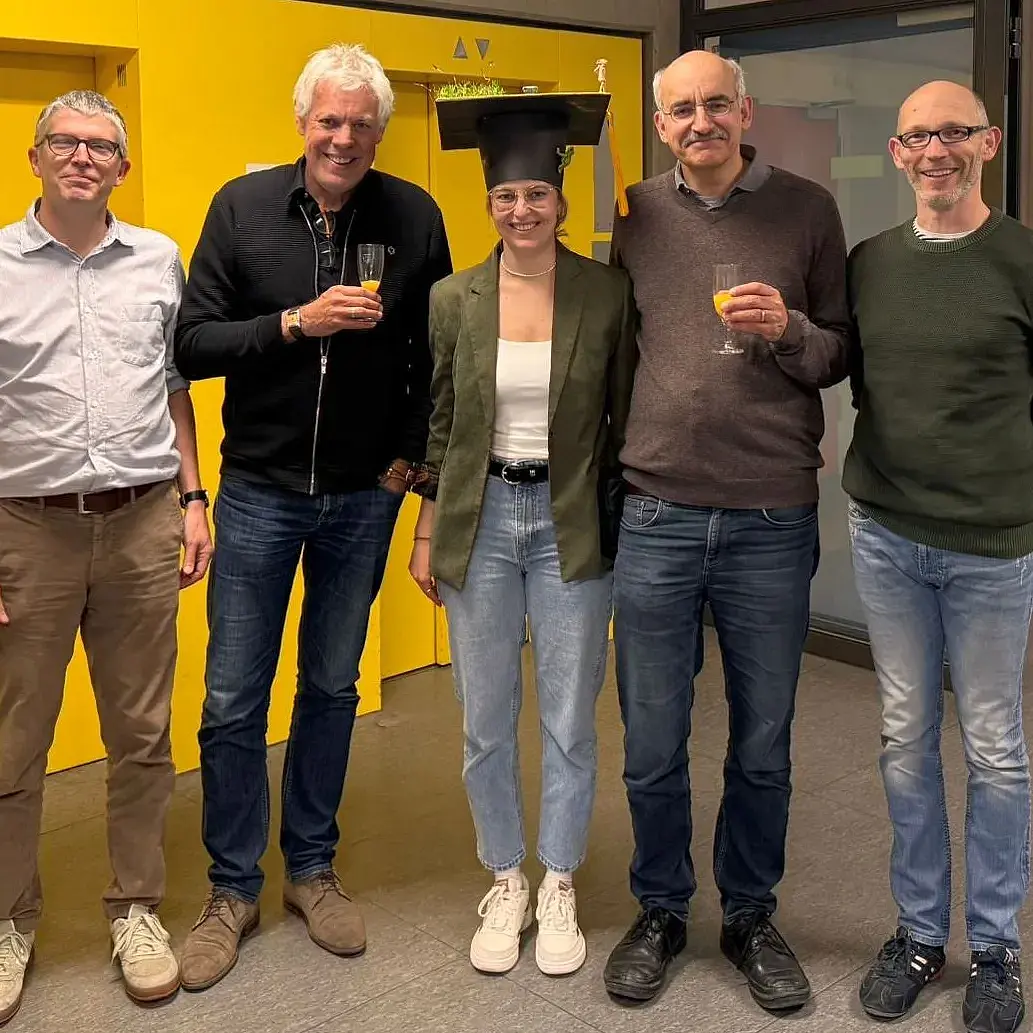
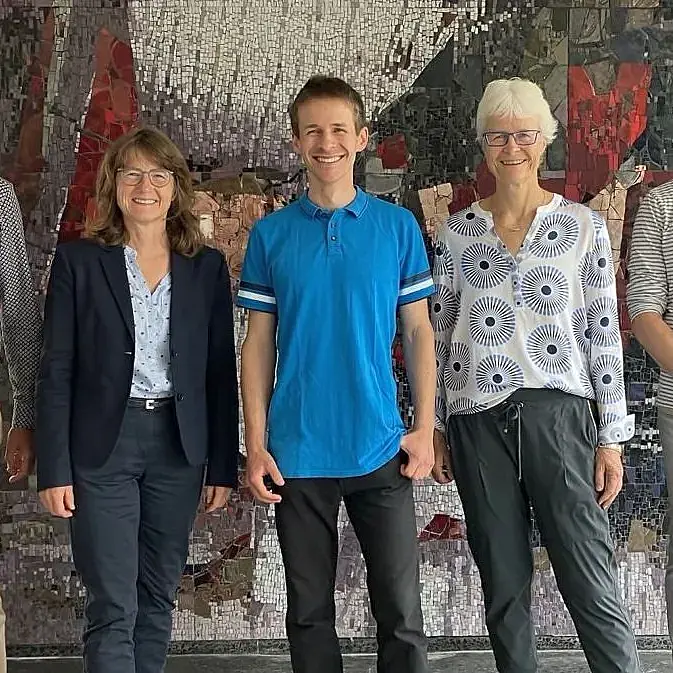
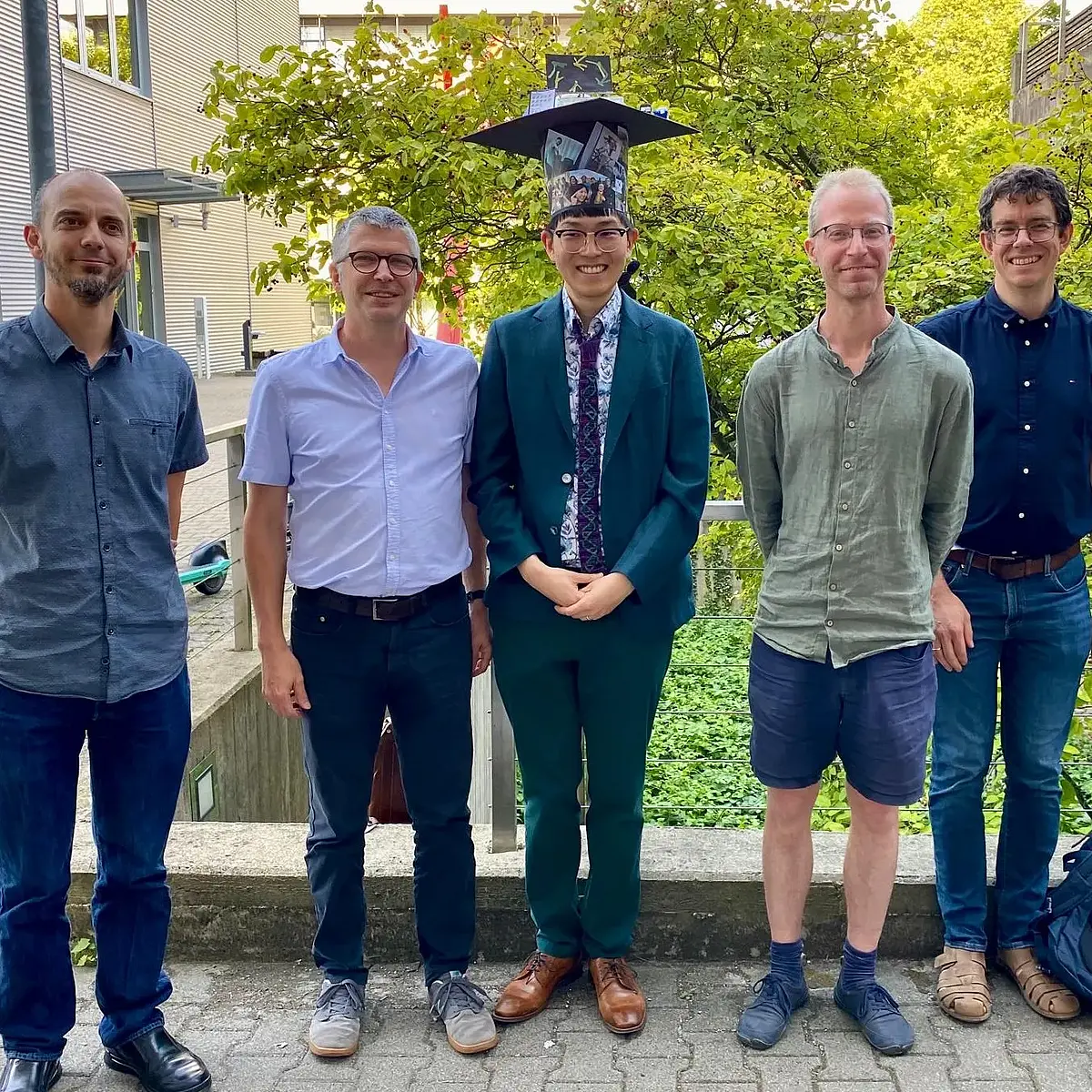
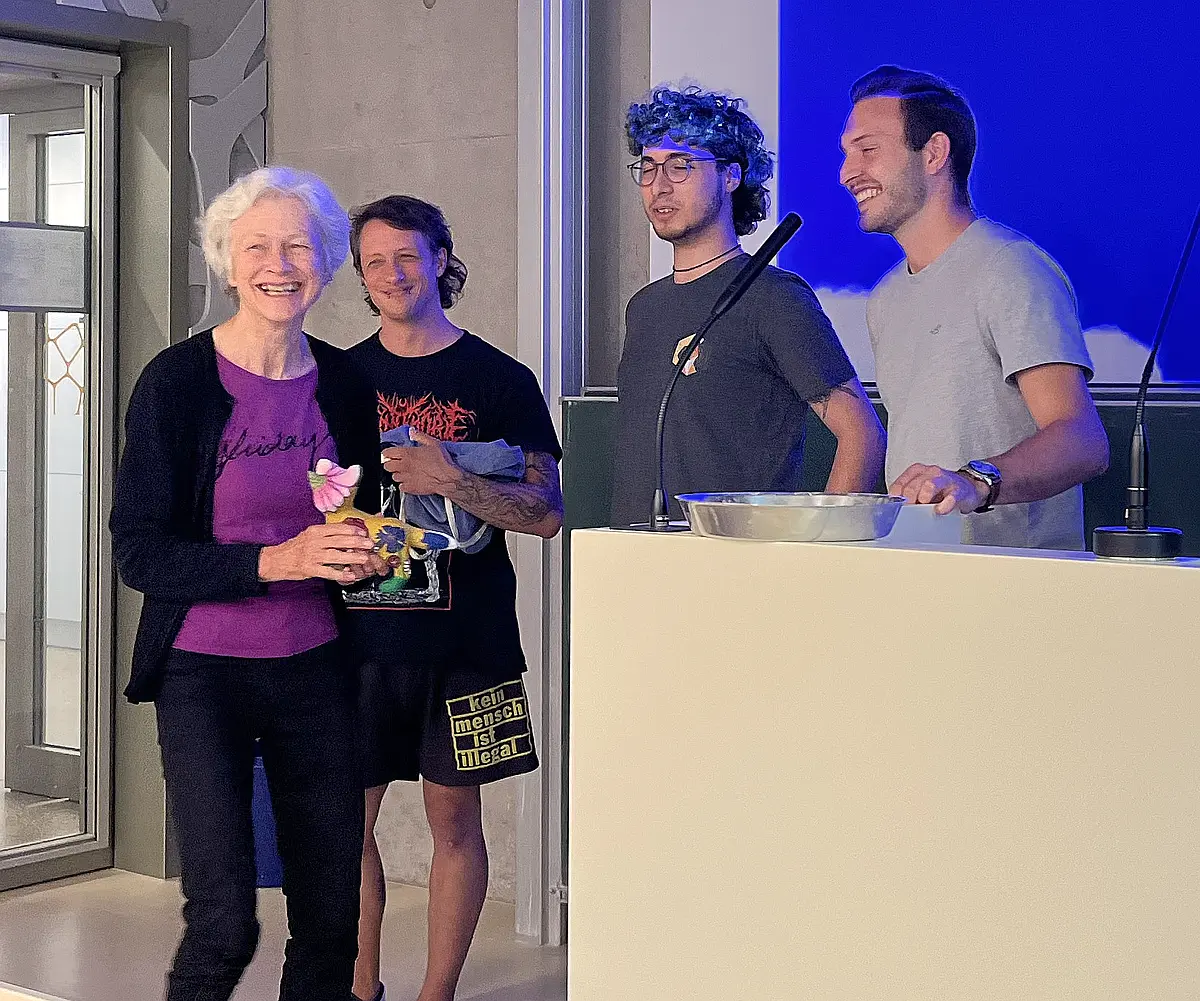
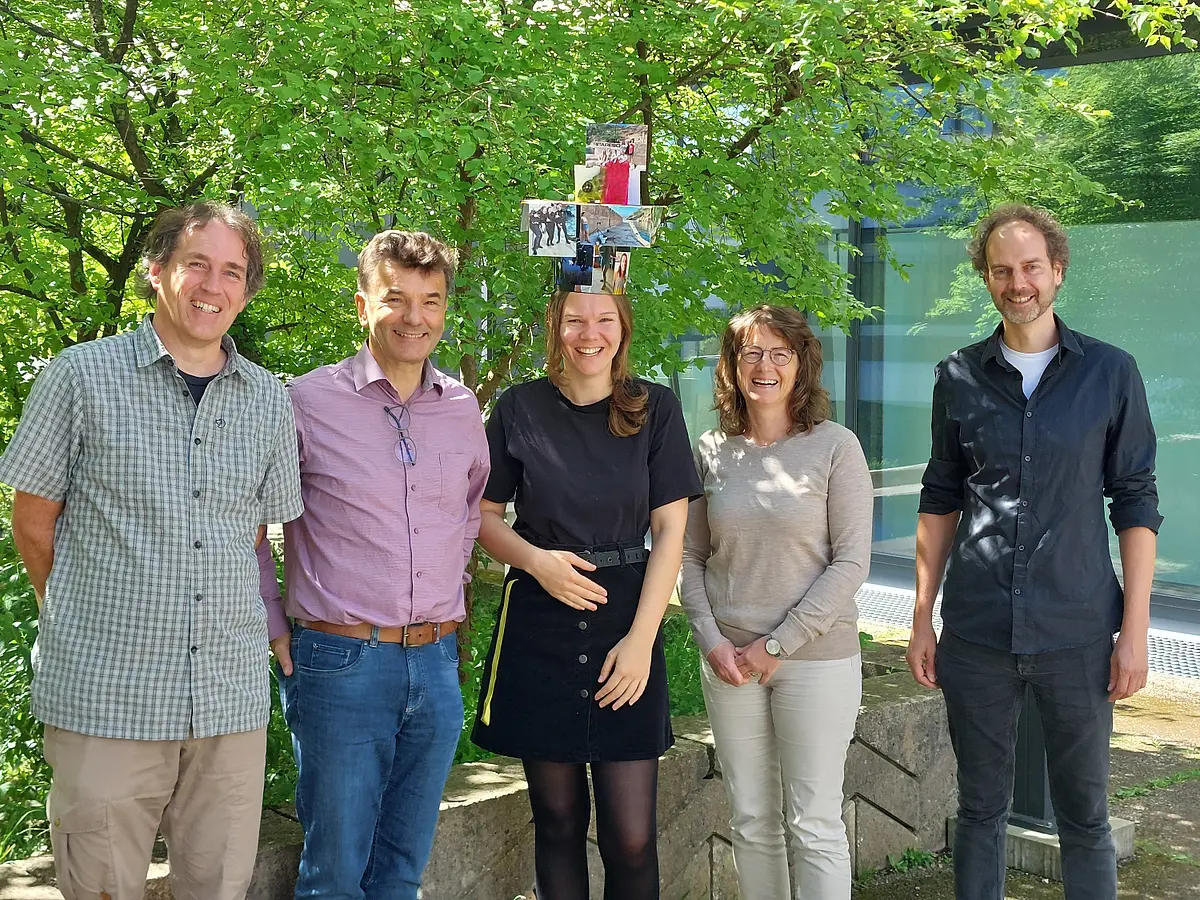
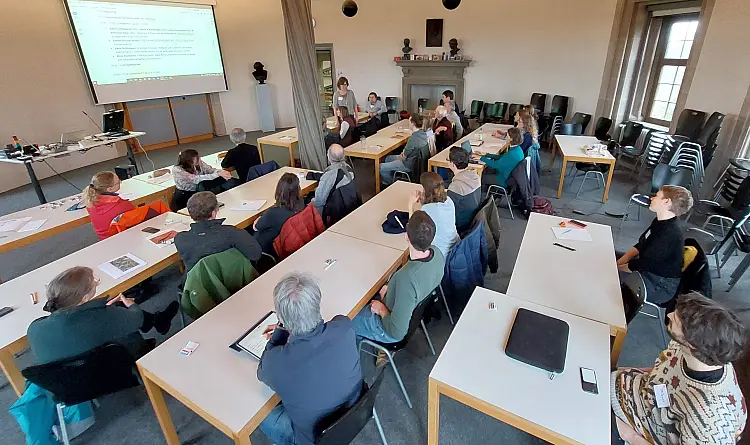
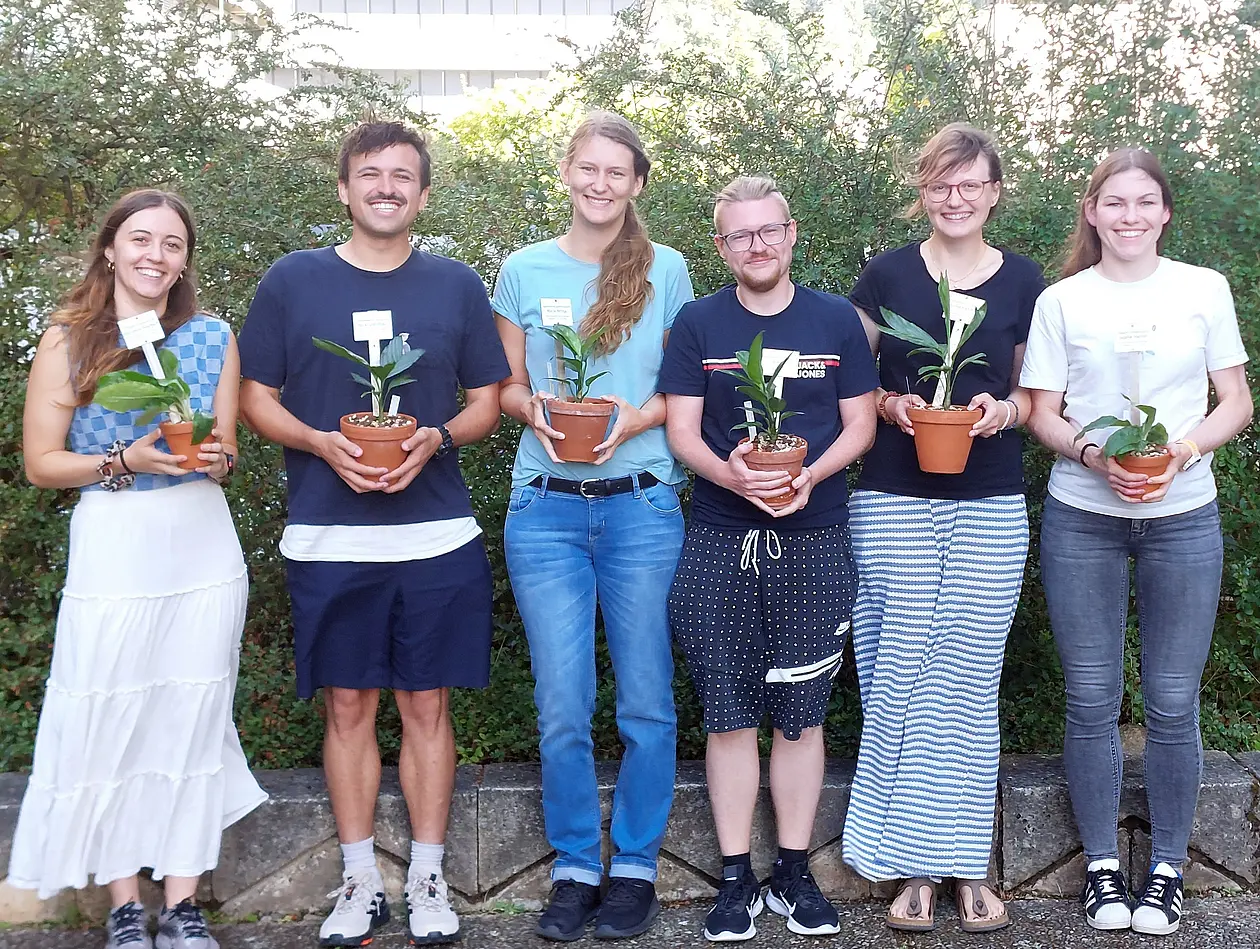
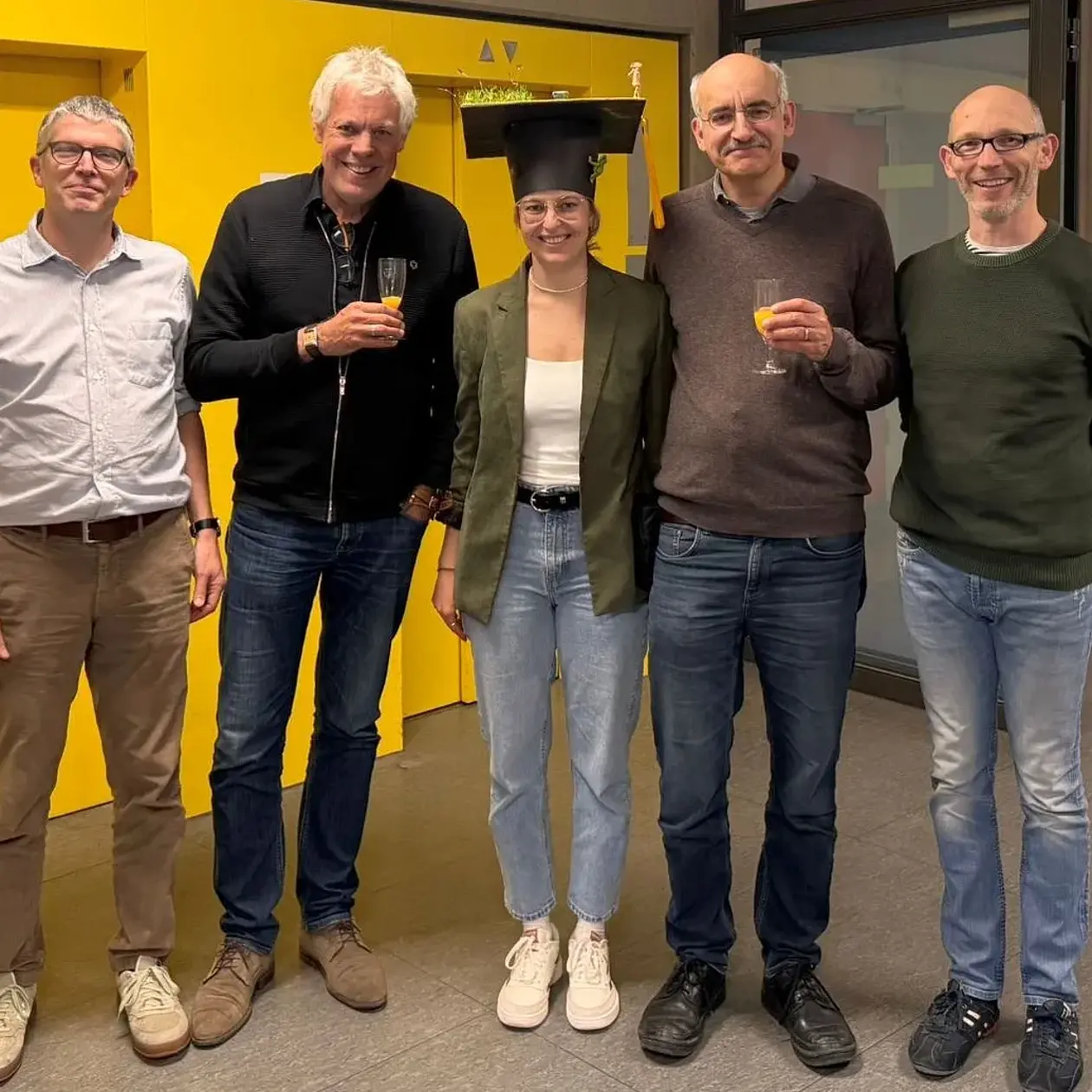
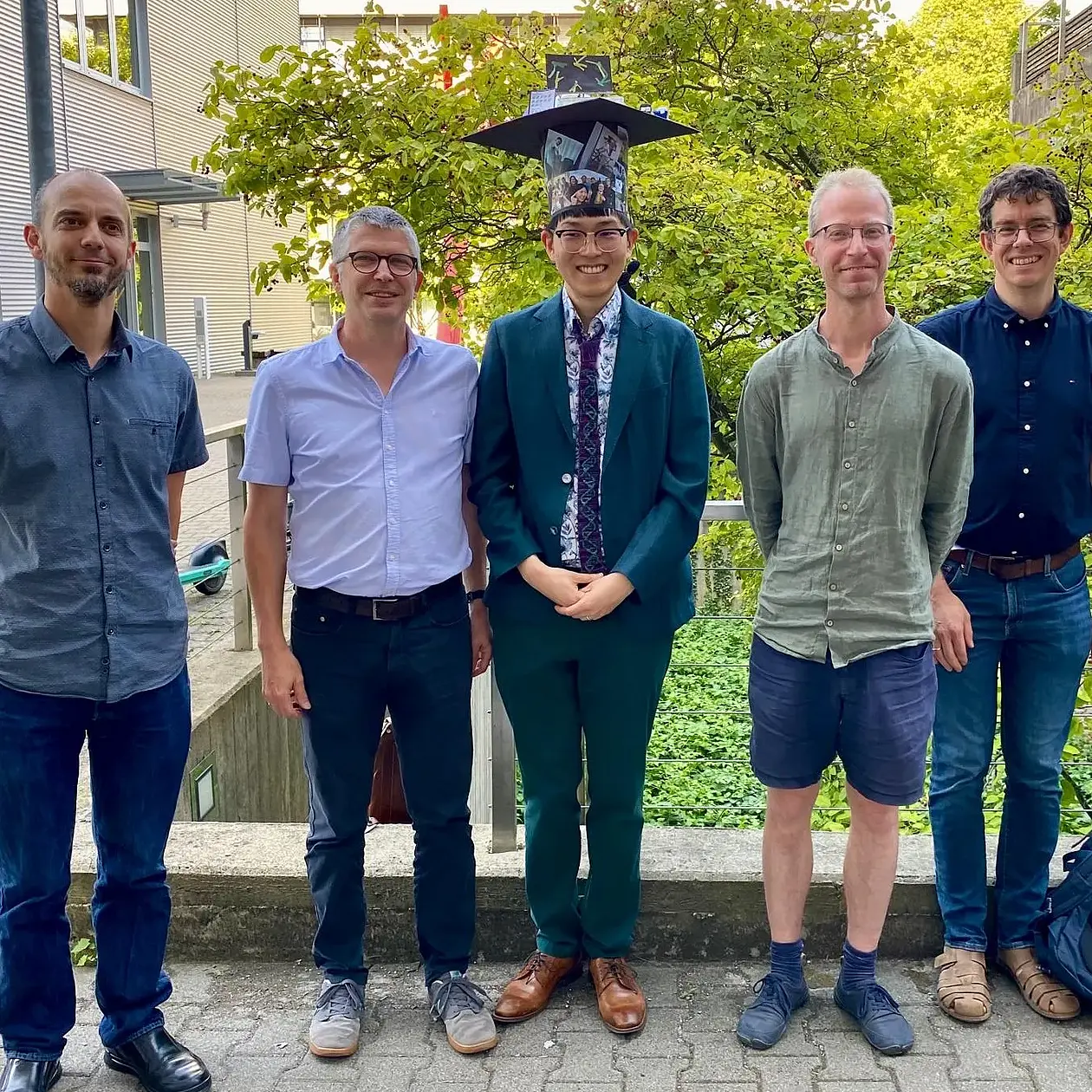
31 July 2026 ► To mark the end of the summer semester, the EvE Institute honoured all students of the MSc “Evolution and Ecology” who successfully completed their theses over the past year. At a small ceremony, the respective supervisors gave personal laudations celebrating the graduates and their achievements. Participants included Giovanna Reichert, Nick Schöffski, Marie Mross, Luca Leicht, Luiza Hamma und Sohpie Hanten (photo, from left to right). Congratulations!
Publication: Stability in dryland plant communities
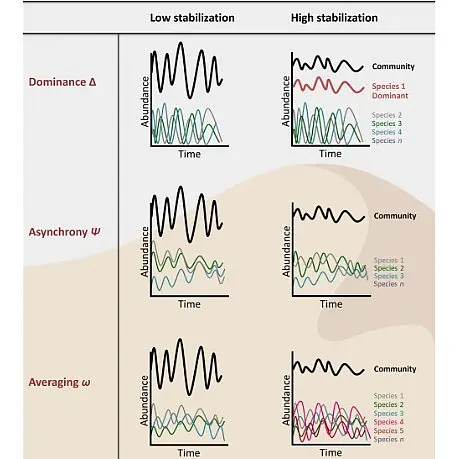
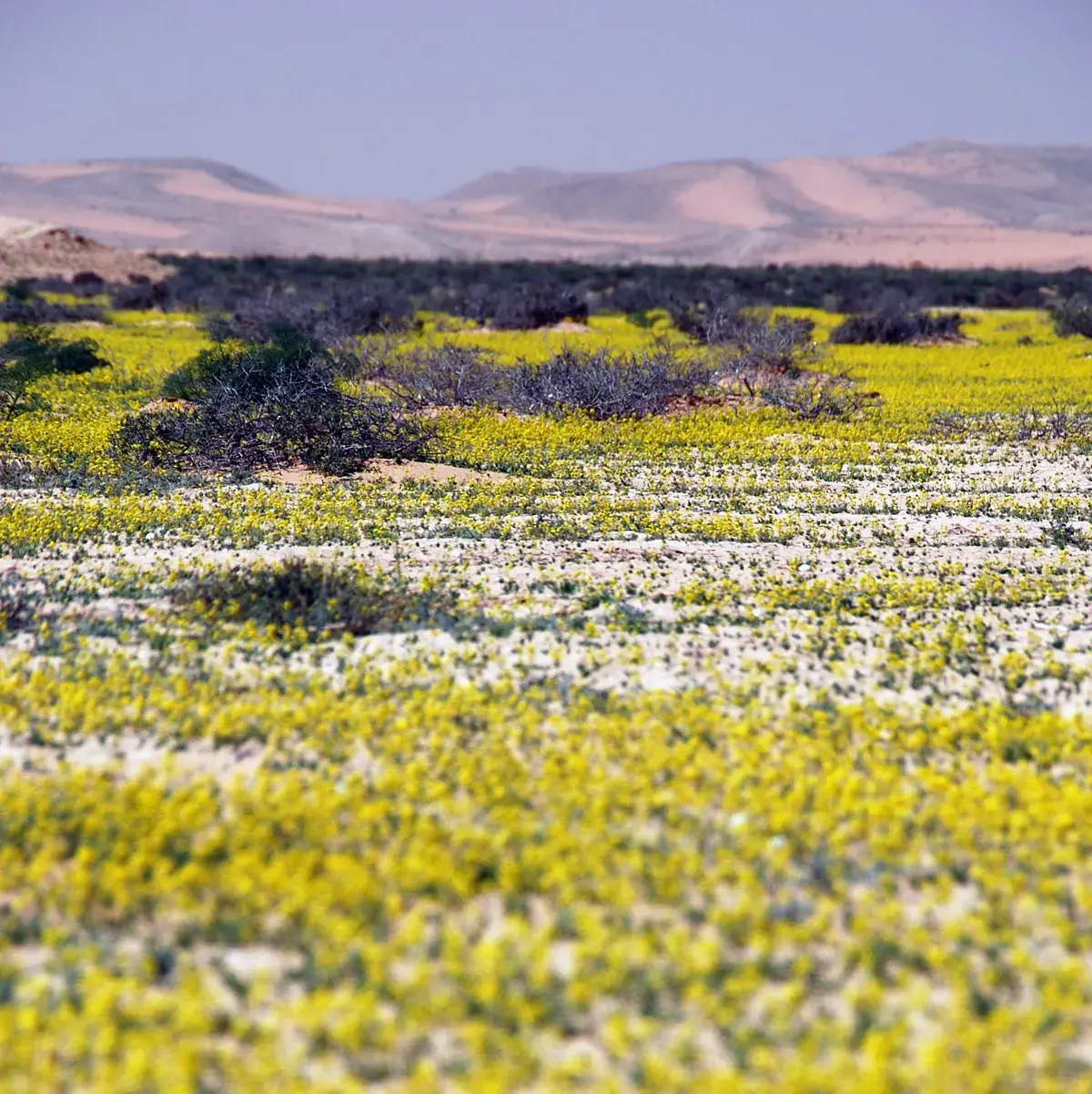
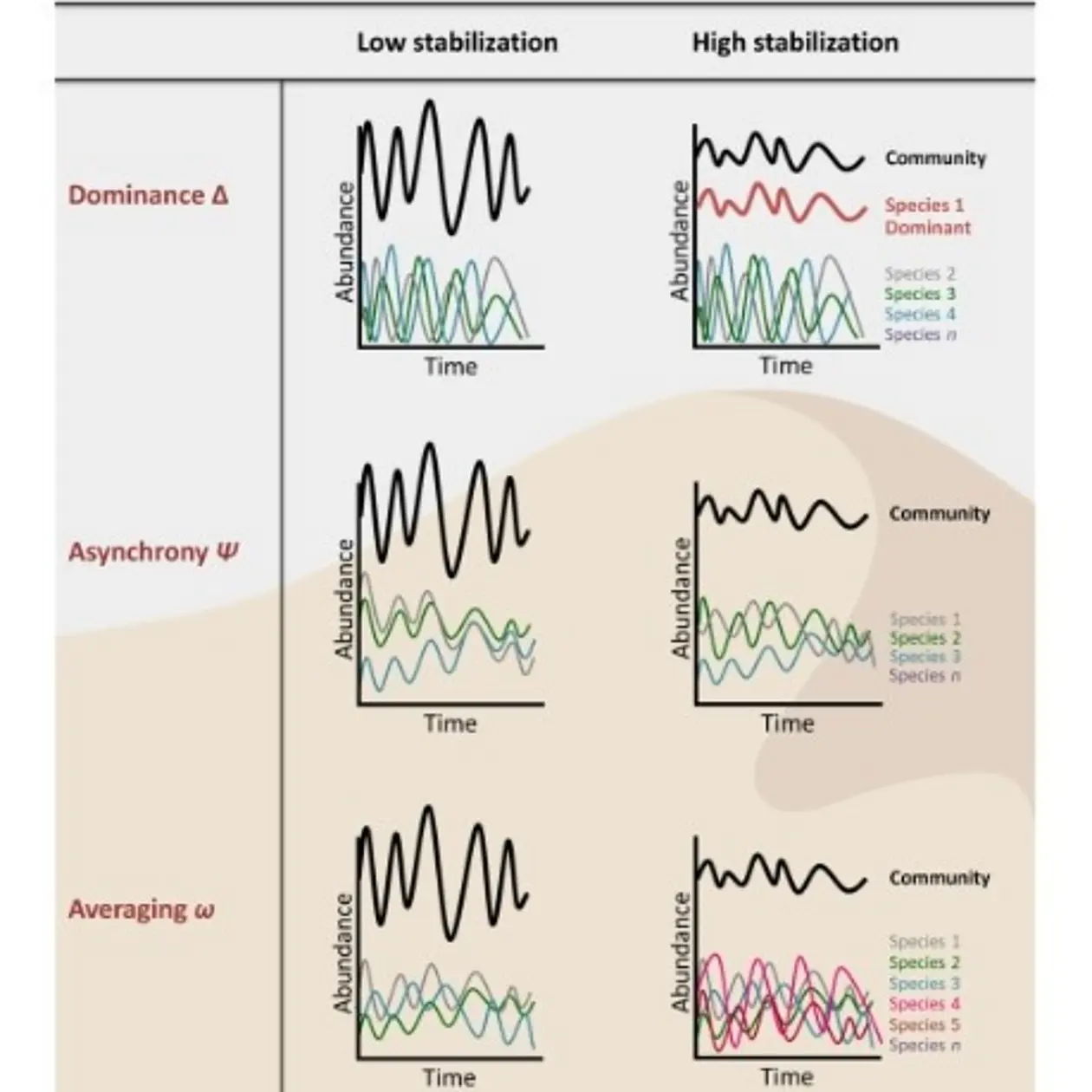
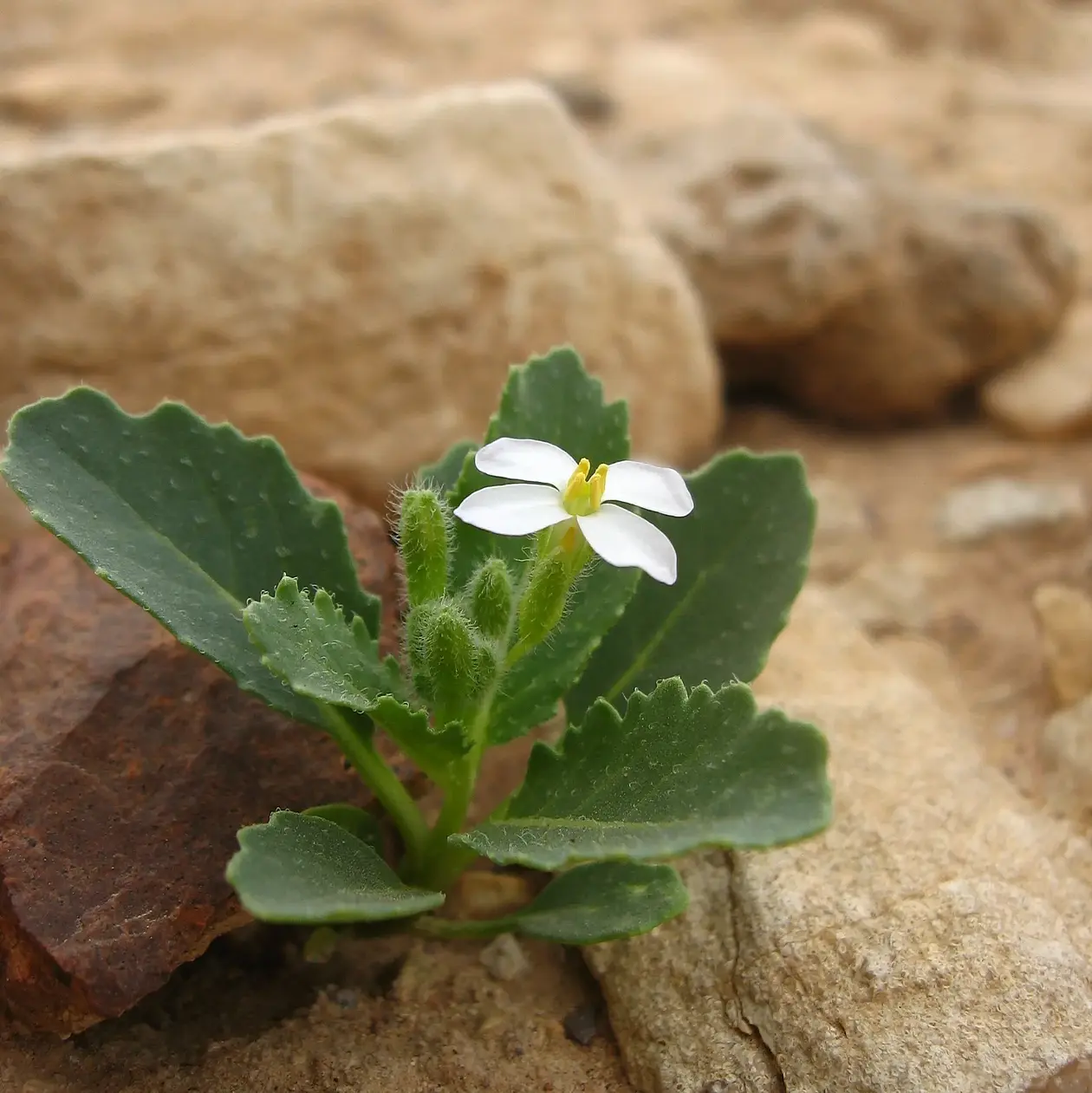
30 Jul 2026 ► A new study by Johanne Gresse, Maria Májeková, Katja Tielbörger, and colleagues in New Phytologist shows that annual plant communities remain stable across drylands because their species fluctuate asynchronously.
Project: 10-year bird ringing study in the Botanical Garden
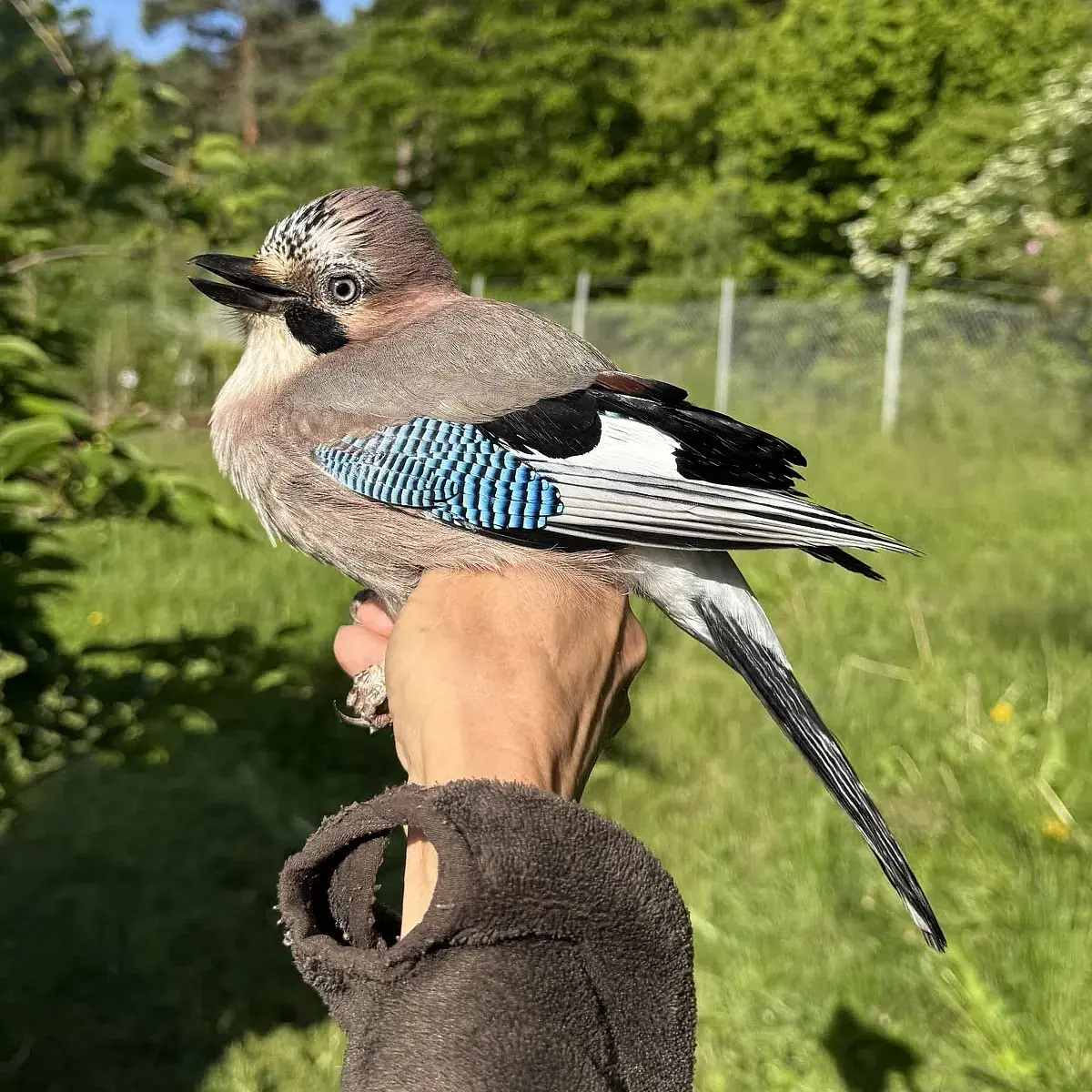
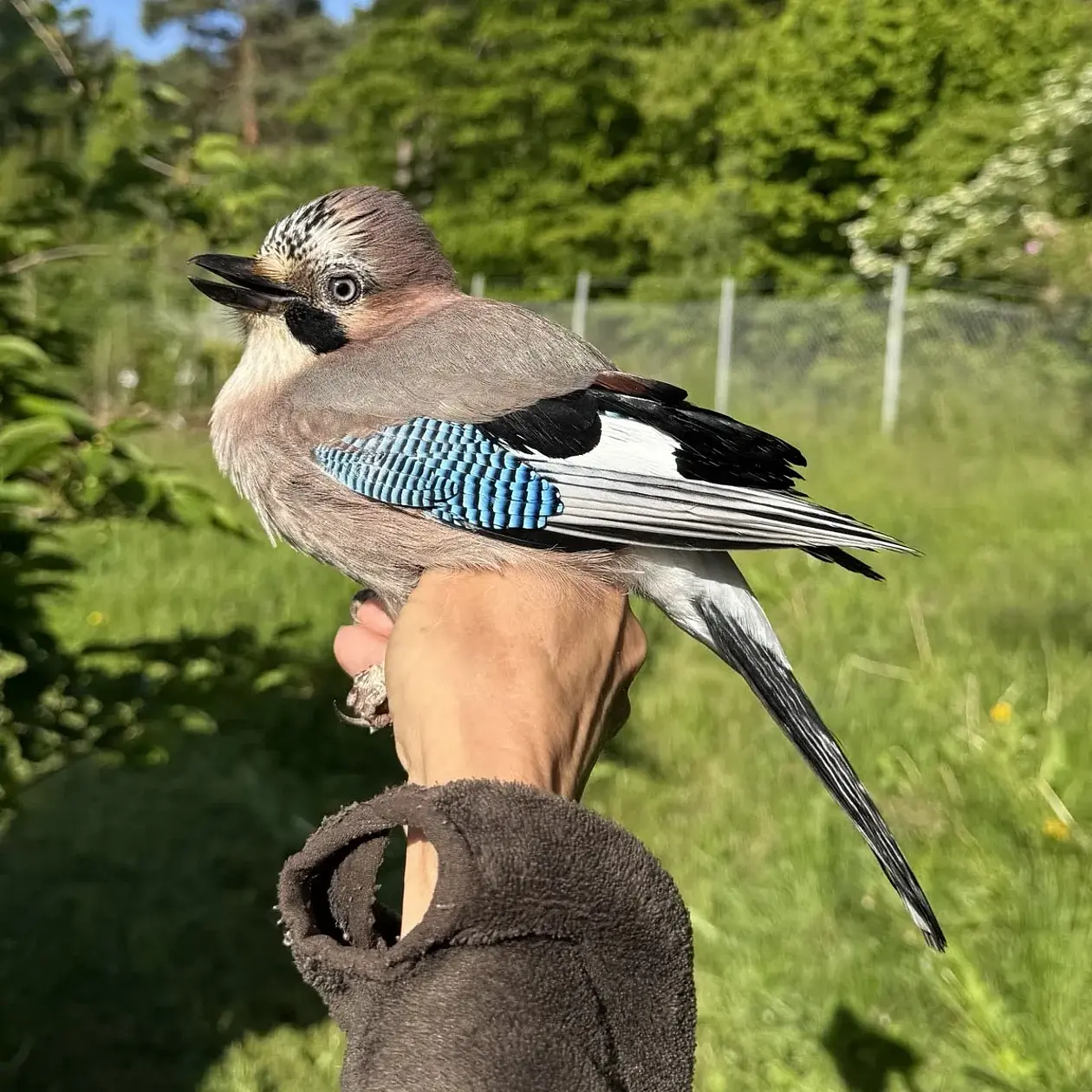
22 Jul 2026 ► Since May 2026, the Institute of Evolution and Ecology has been participating in the nationwide Integrated Monitoring of Songbird Populations (IMS). Bird ringing data collected in the Botanical Garden will help researchers better understand the causes of population changes and improve conservation efforts. At the same time, the project strengthens environmental education and the training of biology students. University of Tübingen press release. Coverage and videos by SWR and the Schwäbisches Tagblatt.
Award: Dedicated Educator Award for Nils Anthes
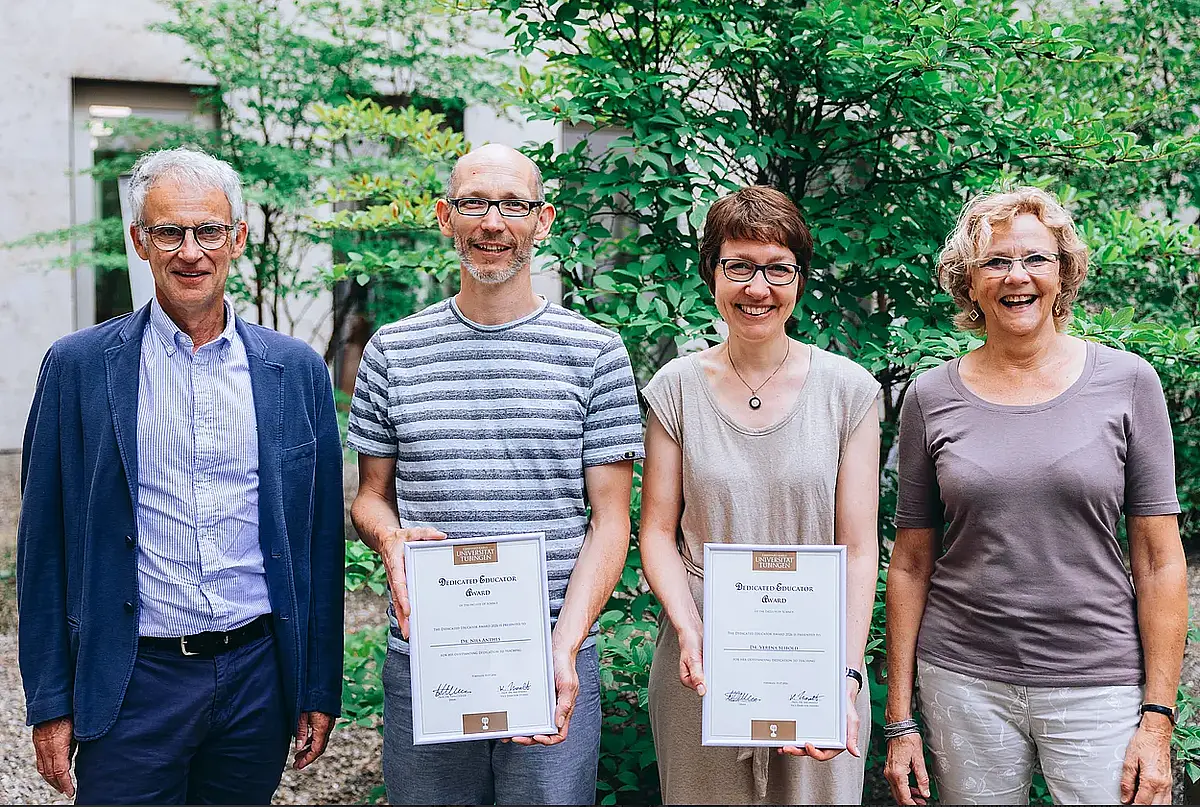
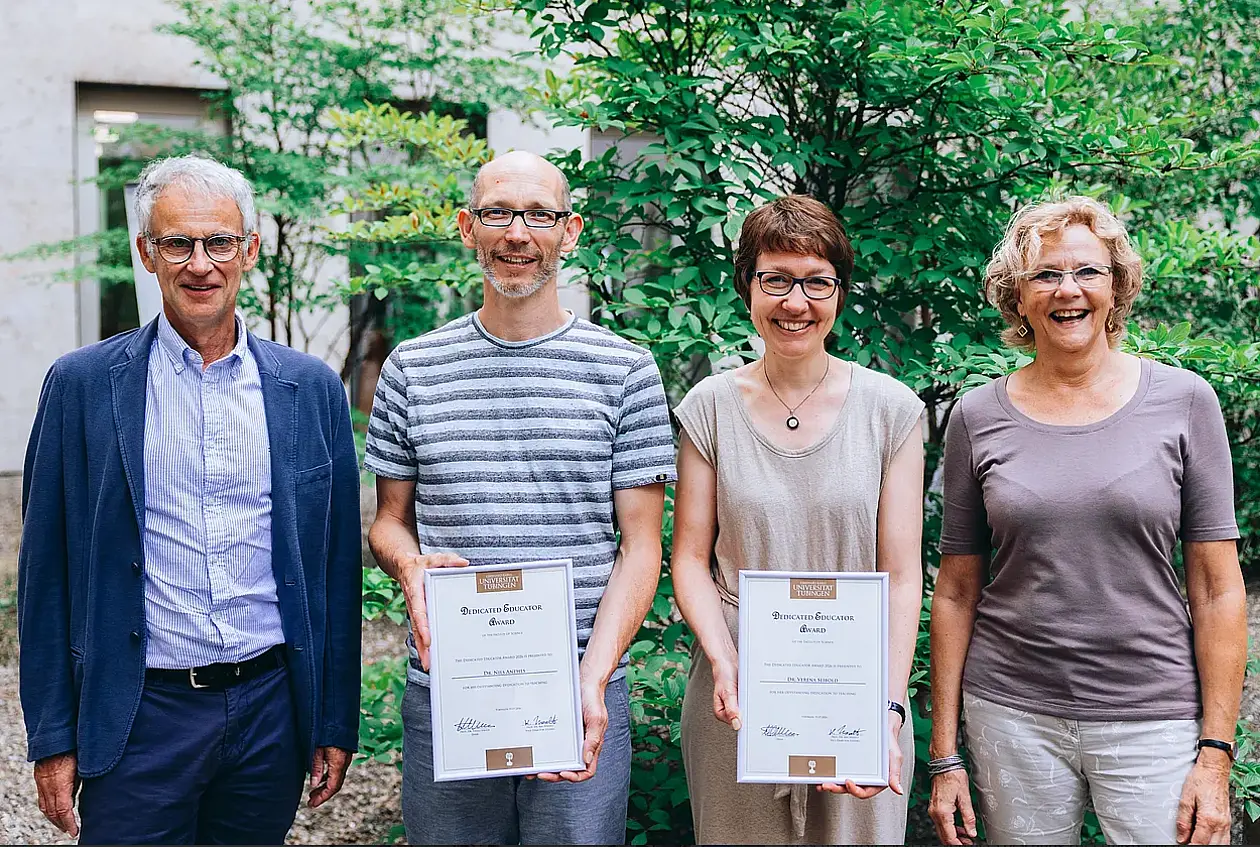
20 Jul 2026 ► The Faculty of Sciences (MNF) presented its first-ever Dedicated Educator Award at the Faculty of Science Day on 6 July 2026, recognizing long-standing excellence and commitment to teaching. Dean Prof. Stehle and Vice Dean for Teaching Prof. Nieselt presented the 2026 awards to Dr. Verena Seibold (Department of Psychology) and Dr. Nils Anthes (Institute of Evolution and Ecology). Congratulations!
Public Relations: INSOEL featured on ARD „Morgenmagazin“
13 Jul 2026 ► ARD’s Morgenmagazin featured the joint research project INSOEL (Insect chasing devices for organic farming) conducted by the Evolutionary Biology of Invertebrates Group and the University of Hohenheim. The news segment provides insights into testing insect chasing devices designed to protect spiders and insects during grassland mowing, thereby contributing to biodiversity preservation in organic farming.
Publications: Effects of grassland mowing on arthropods
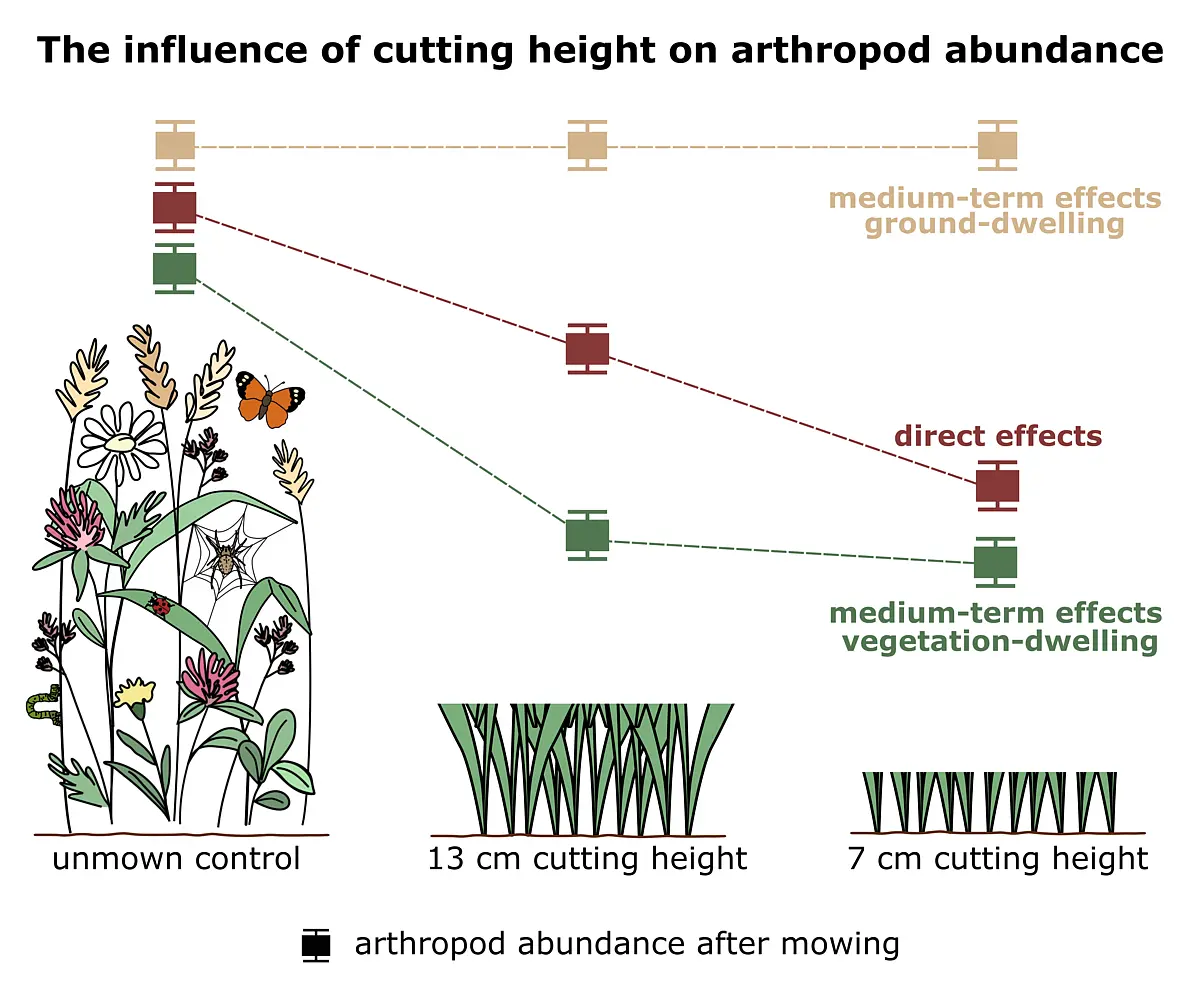
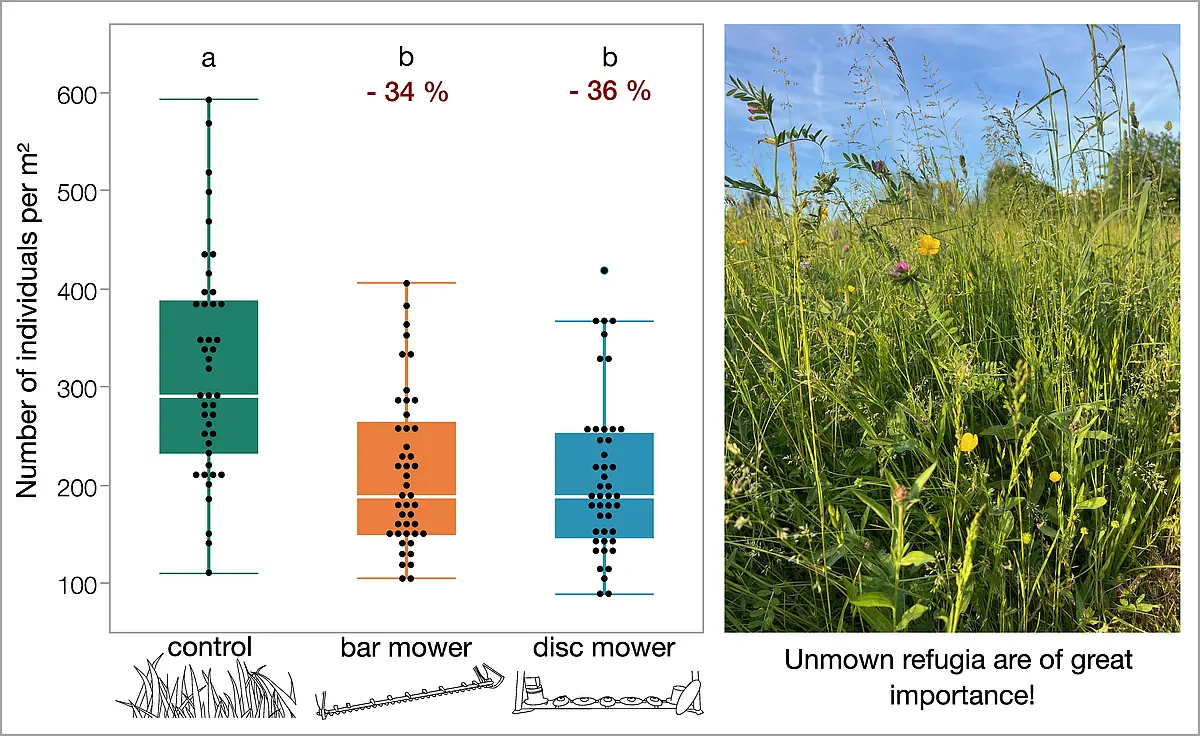
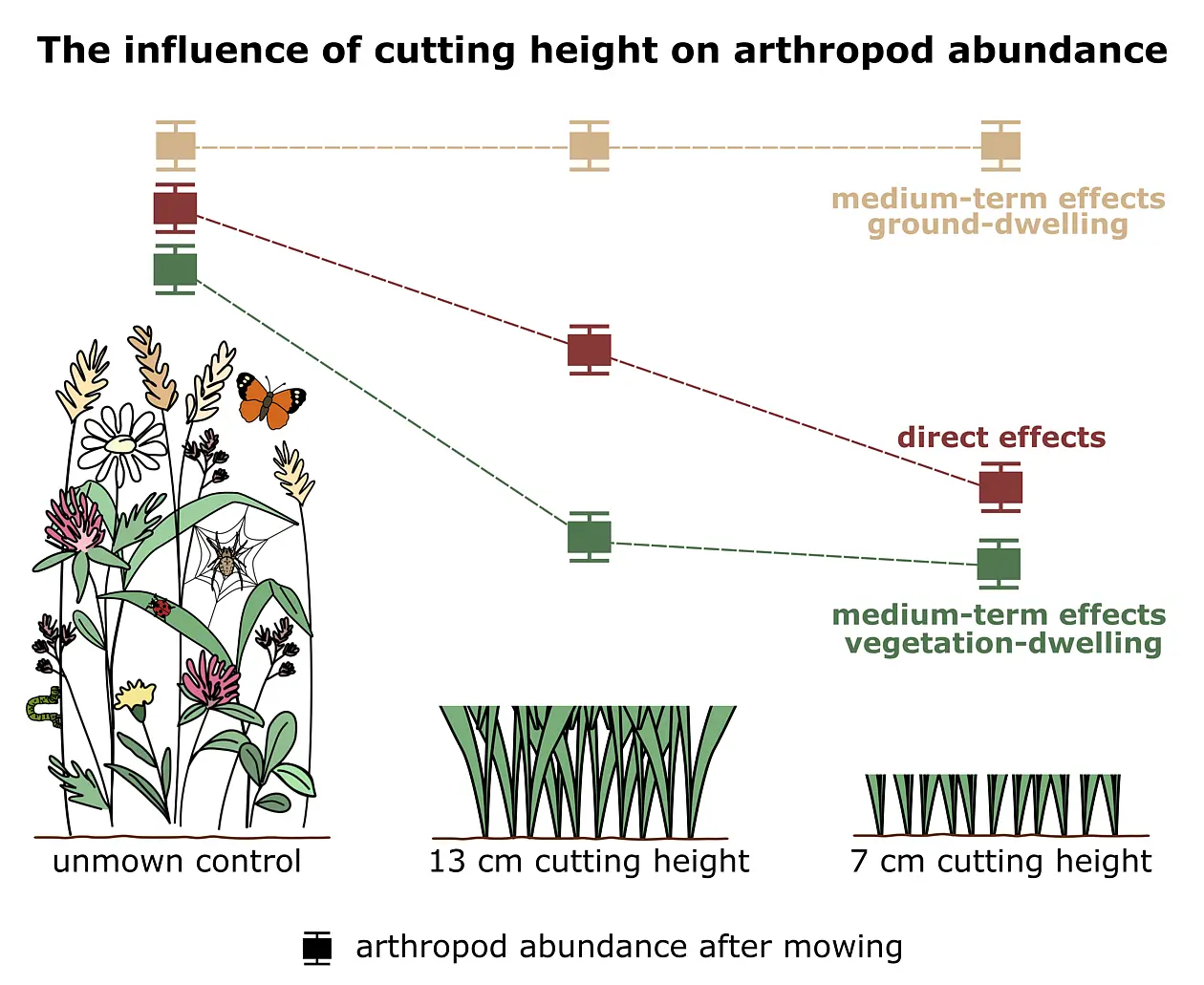
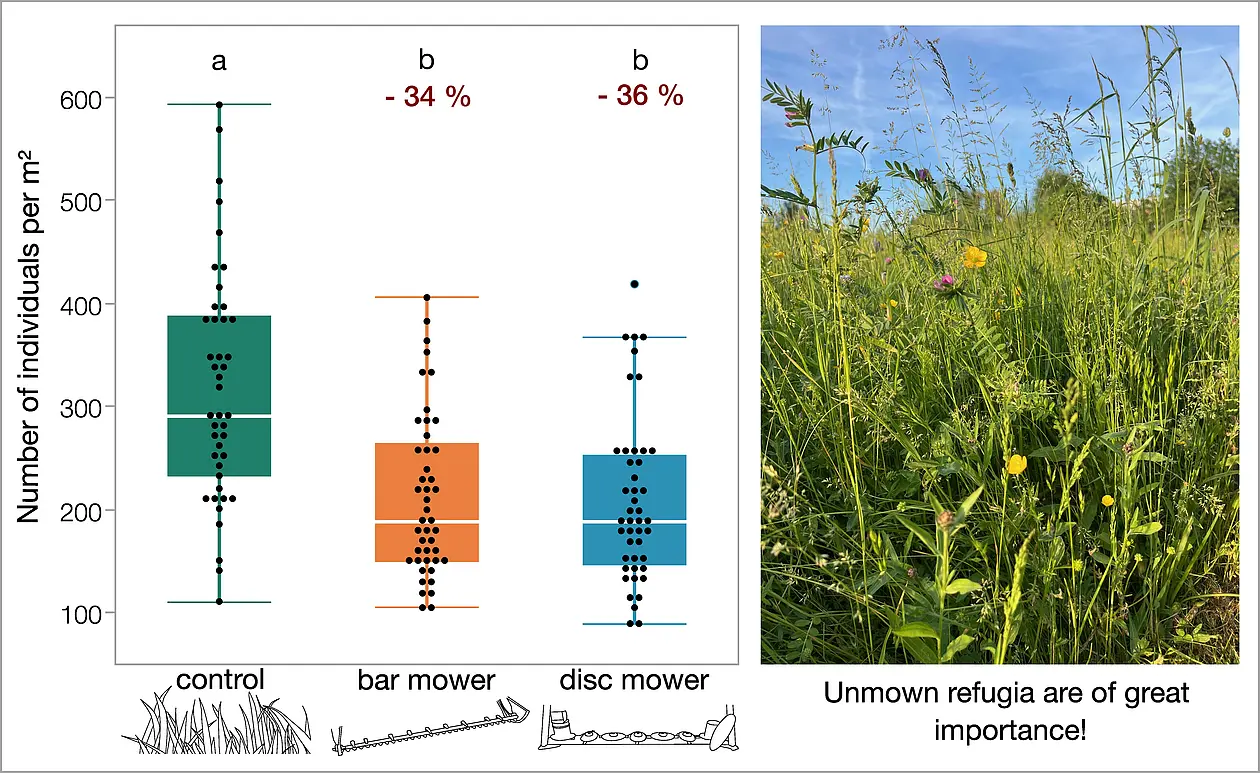
07 Jul 2026 ► Two new publications by Lea Von Berg et al. examine the effects of grassland mowing on spiders and insects. The first study investigates the impact of different cutting heights and shows that while higher cutting heights can reduce immediate arthropod losses during mowing, they provide only limited medium-term benefits for arthropods. The second study demonstrates that technical modifications to disc mowers aimed at reducing suction do not decrease insect losses during mowing. Together, both studies highlight the crucial role of unmown refuges for spiders and insects after mowing. Adjustments to mowing technology or cutting height cannon replace this function.
Publication: Conservation of ground-nesting birds
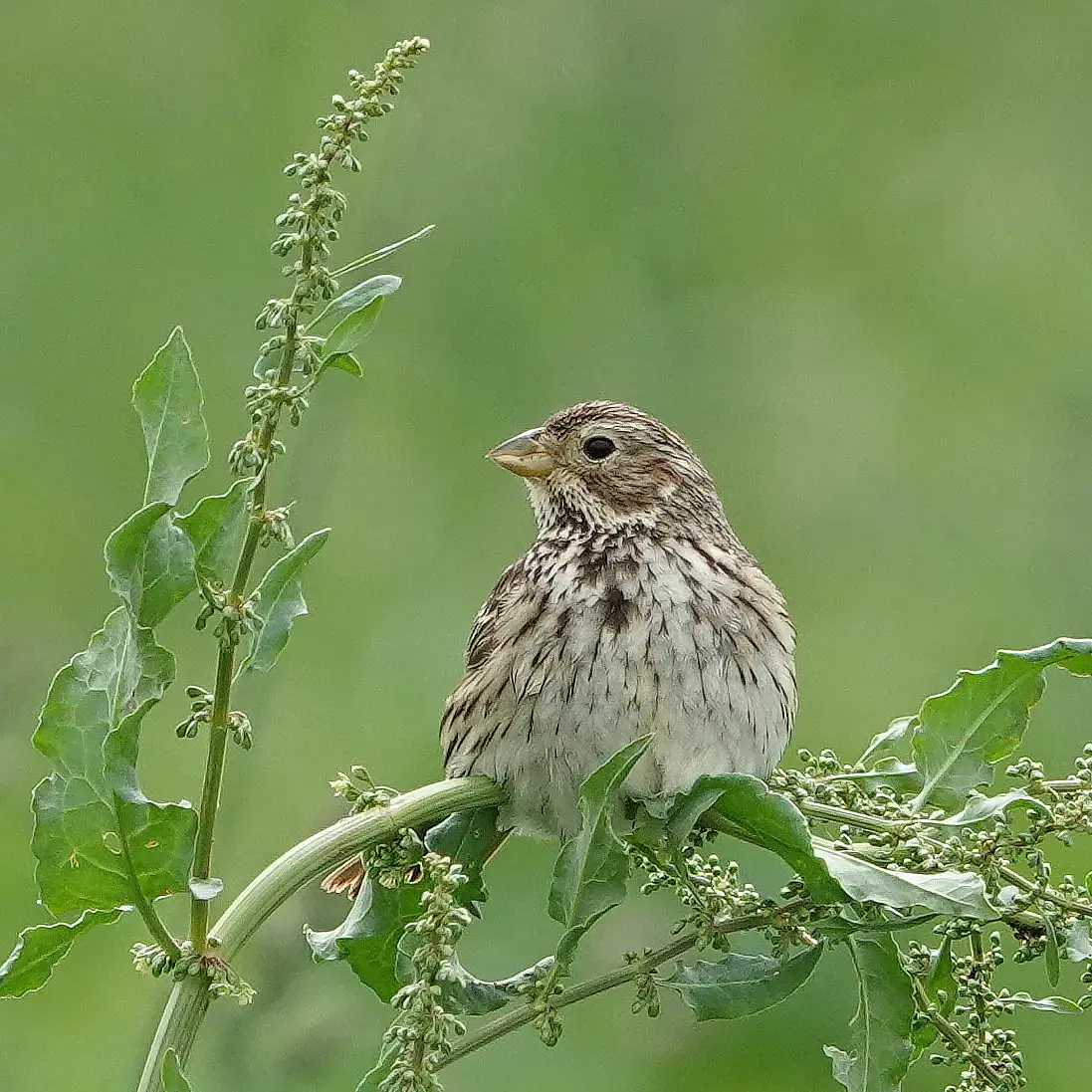
02 Jun 2026 ► Farmland bird populations have declined dramatically across Europe, yet conservation is hampered by limited knowledge of habitat requirements. Using a 12-year field study of the critically endangered Ortolan Bunting, new collaborative work (Conservation Science and Practice) shows that territory selection is driven mainly by vegetation structure and soil conditions rather than crop identity. This highlights the importance of structurally diverse, non-irrigated farmland for conserving ground-nesting birds.
Award: Rachel Gunn receives Tübingen Junior Award for Science Communication 2026
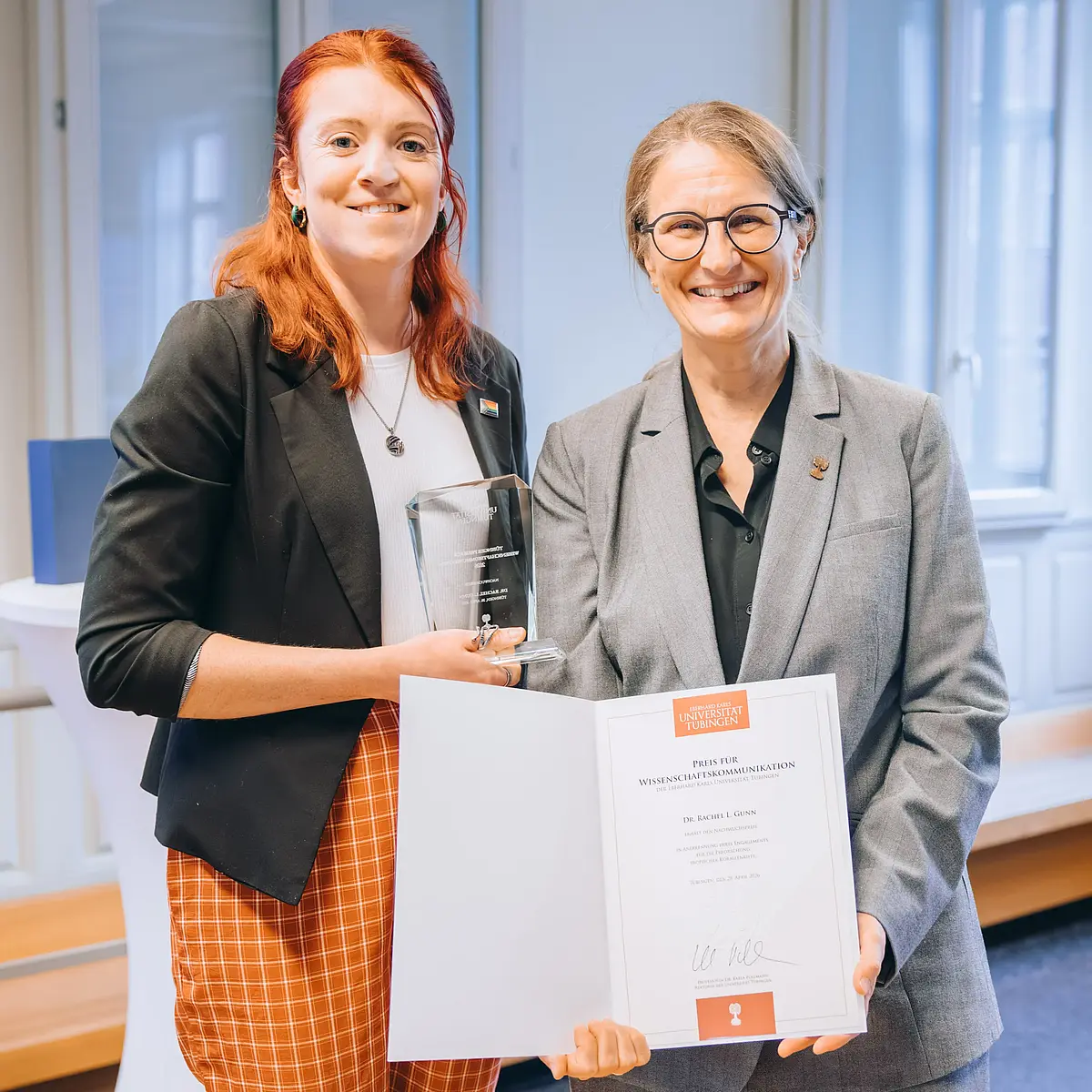
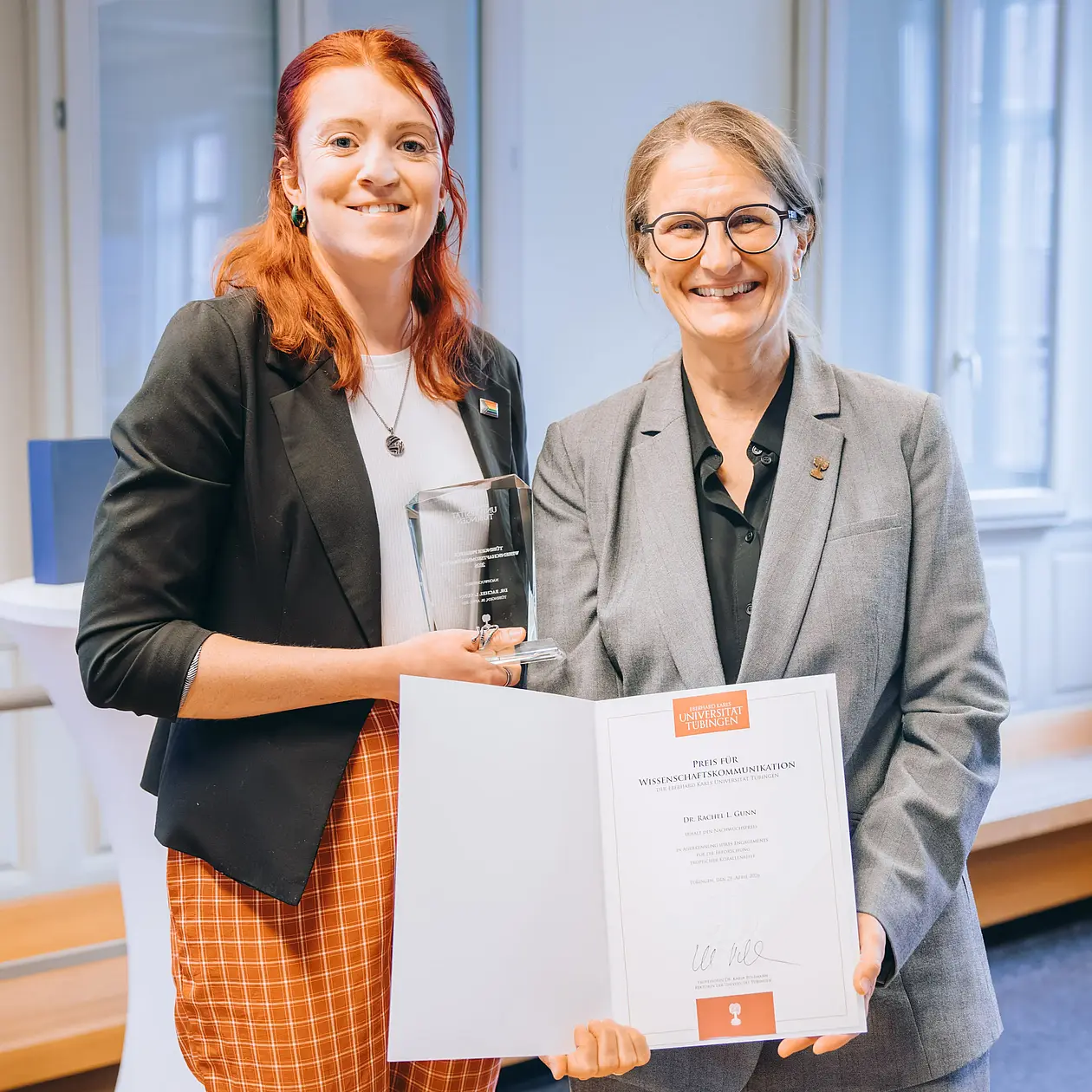
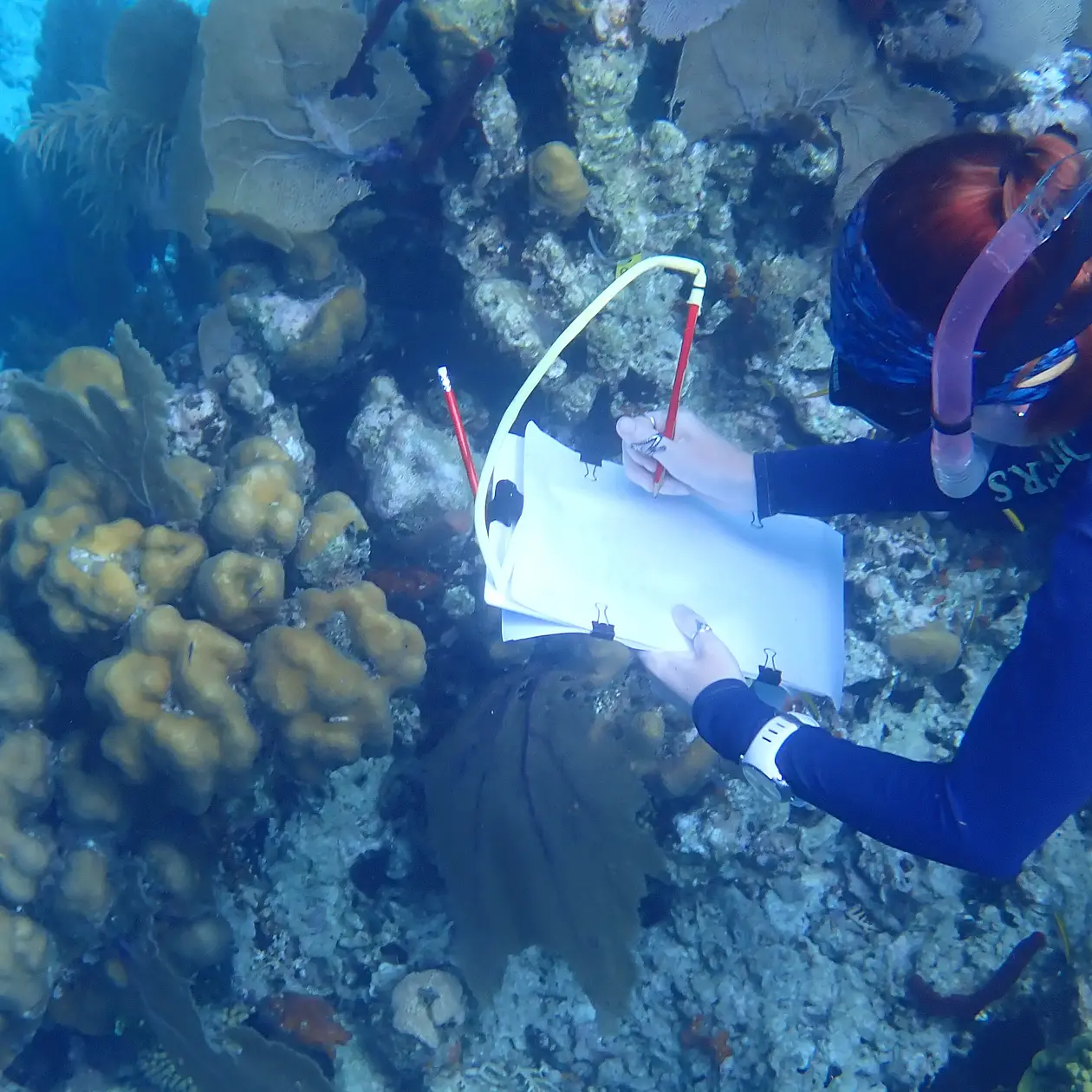
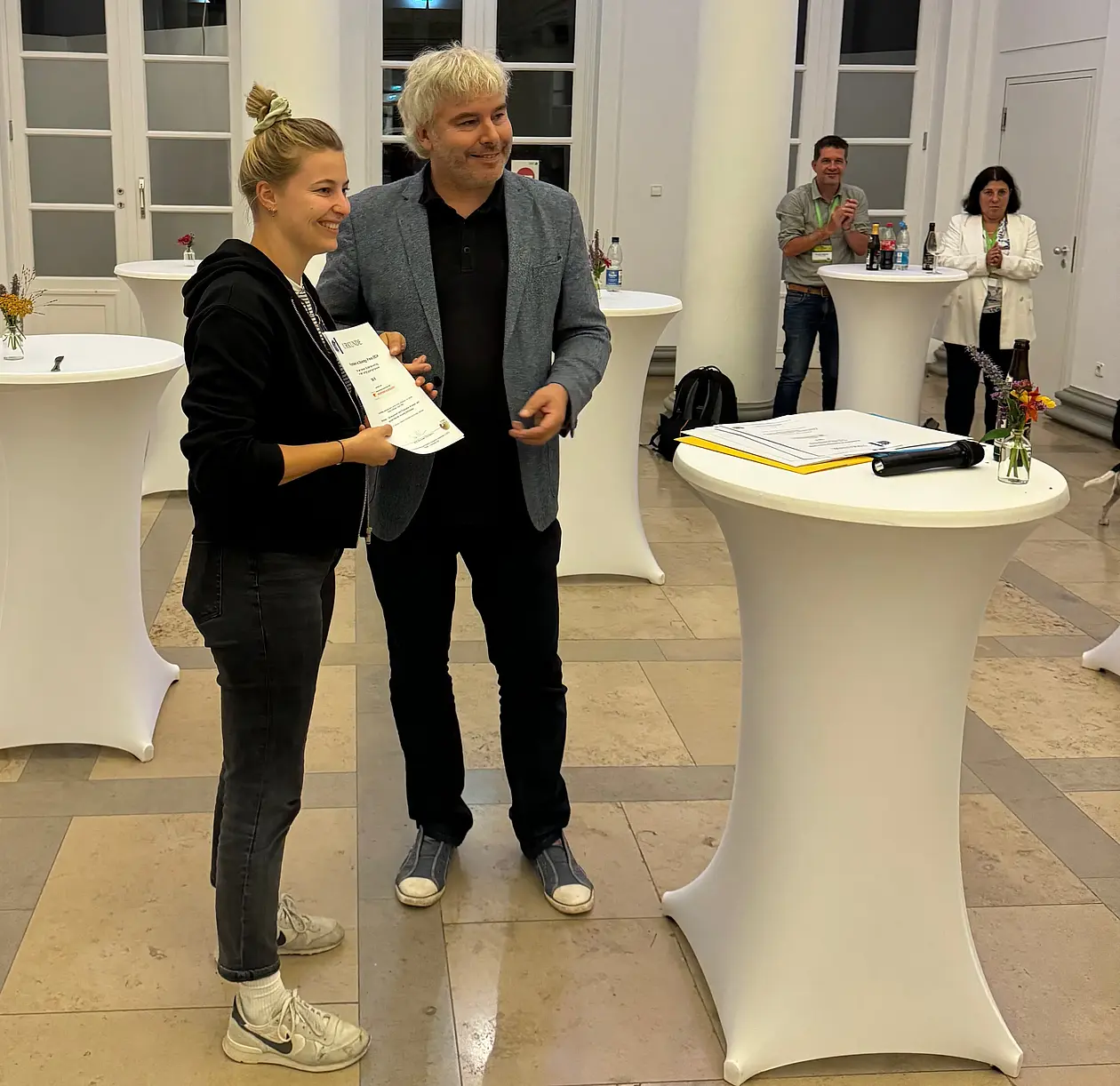
07 May 2026 ► Rachel Gunn from the EvE Institute has received this year's Junior Award for Science Communication. With this award, the jury honors Rachel's long-standing commitment to deliver her research global change effects on marine communities to a wide public, for example through online courses, citizen Science approaches and engagement of local communities. A detailed laudation has been issued by the University Press department. Congratulations! Link: Press release (German)
Publication: Mutualisms and diversity hotspots
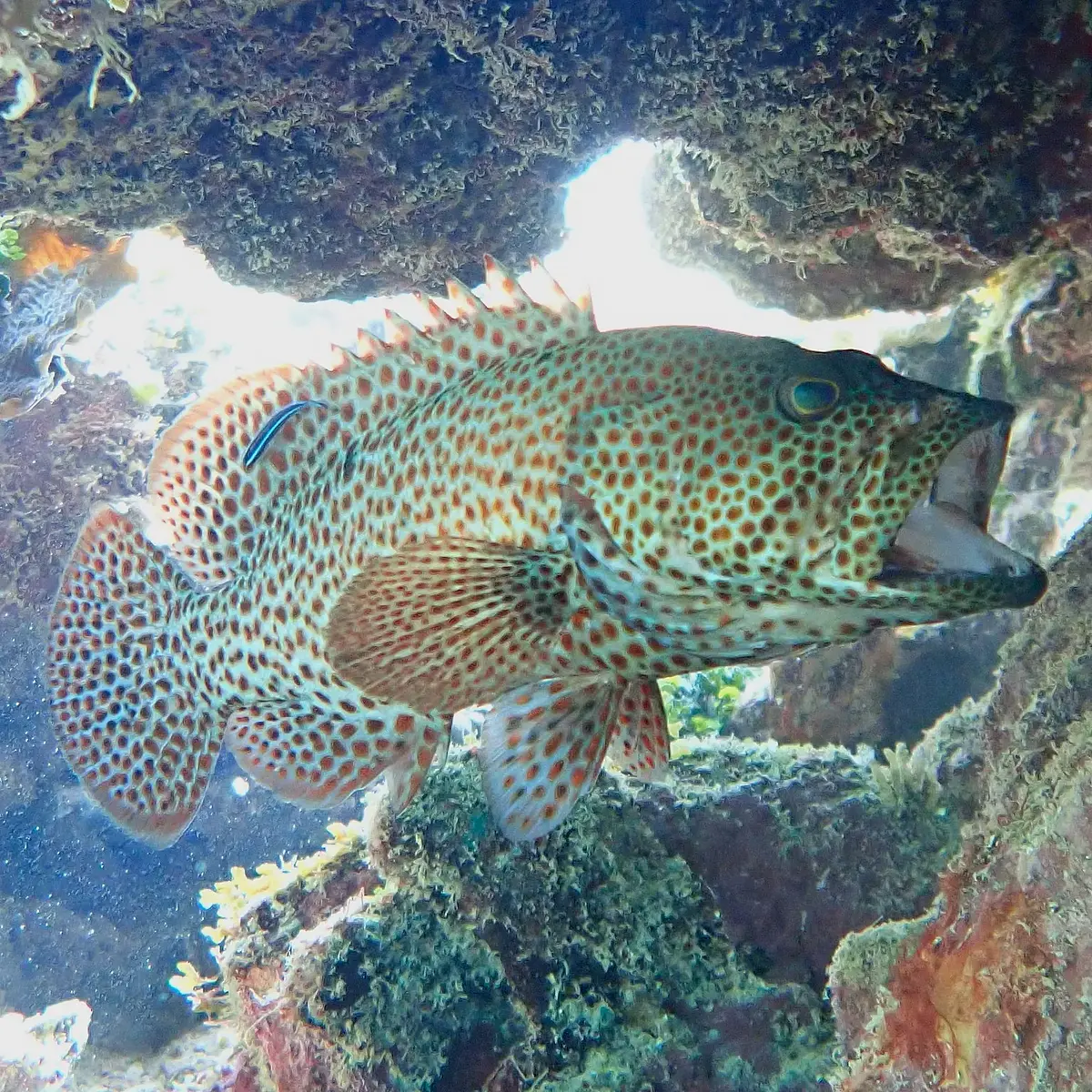
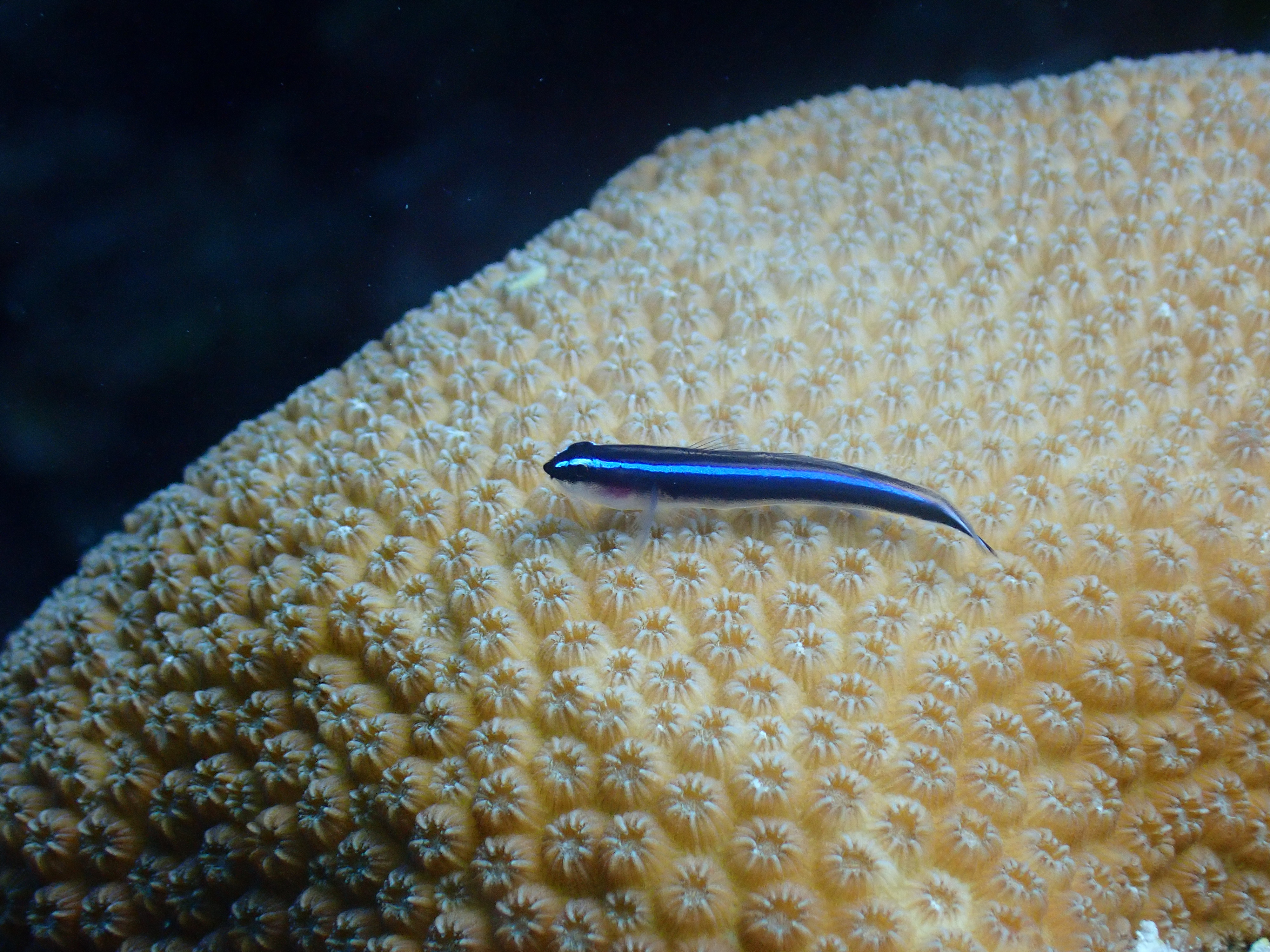
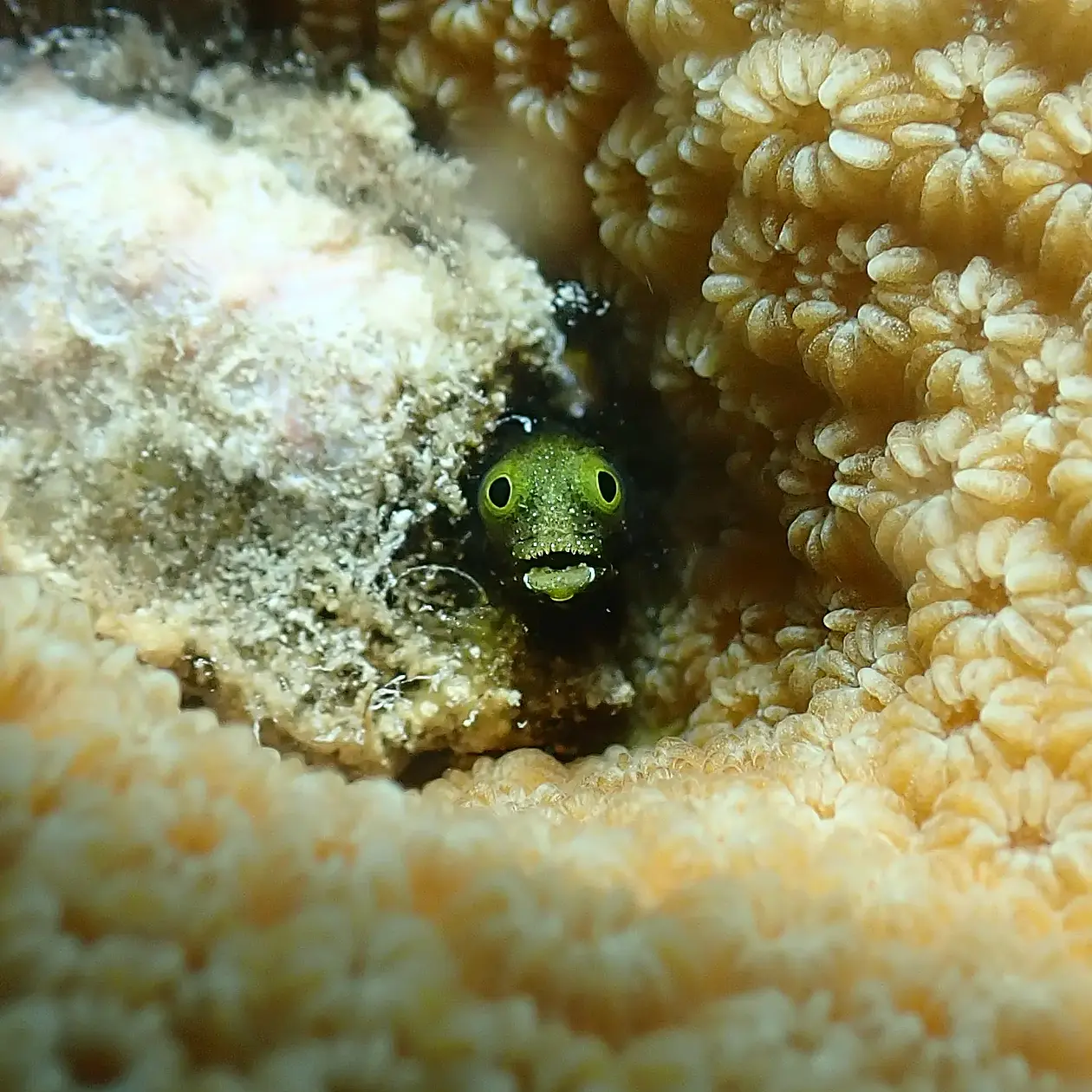
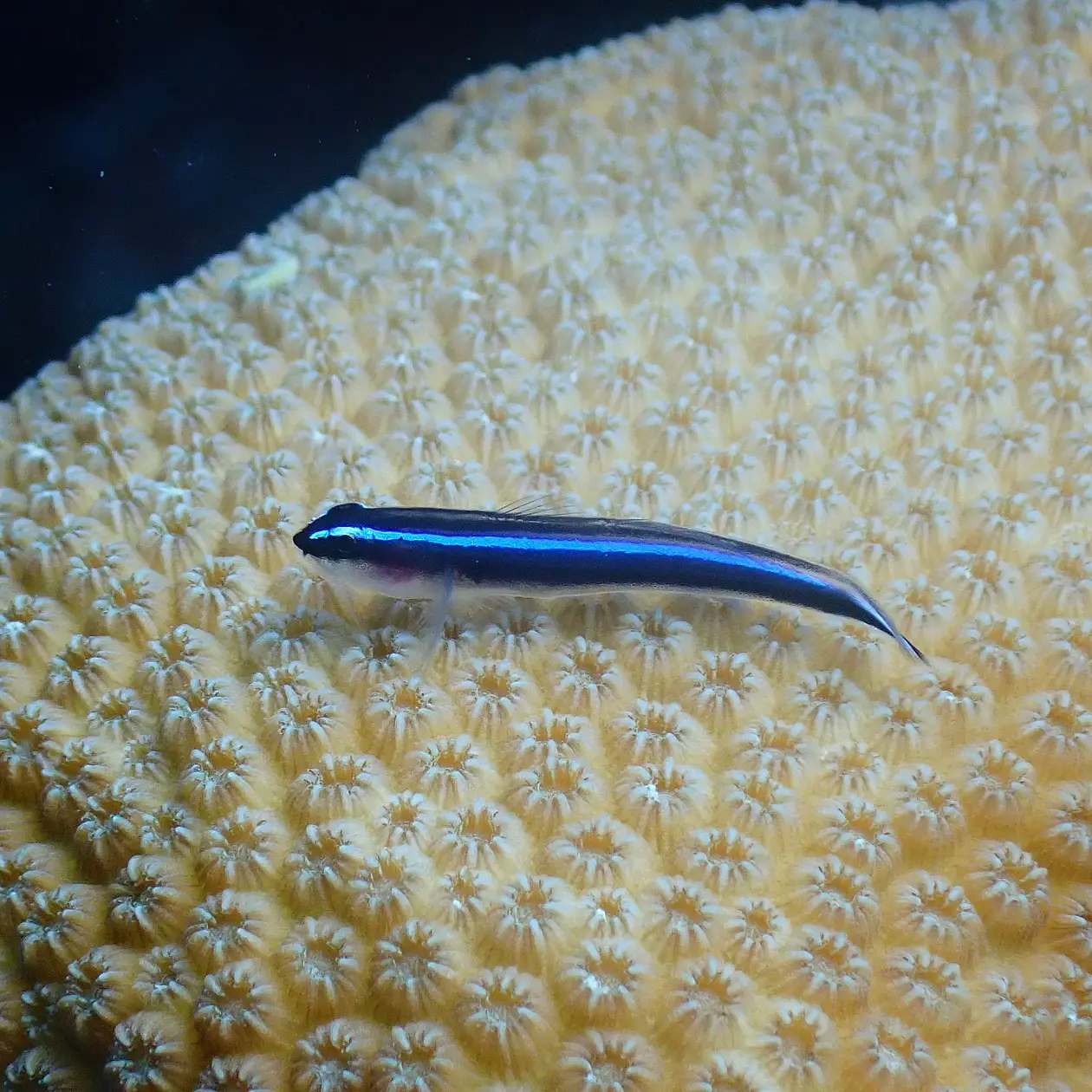
07.05.2026 ► In a new study published in Scientific Reports, Chiara Obst, Patrick Vetter and Rachel Gunn provide the first evidence that the presence of marine cleaning stations can be positively associated with the diversity of functionally important cryptobenthic reef fishes (CRF). CRF are vital to marine food webs. This study highlights the importance of mutualistic interactions in indirectly benefiting wider ecological communities.
Publication: Cleaning Mutualism adjust to reduction in Habitat Availability
07.05.2026 ► New research led by Rachel Gunn (Ecology & Evolution) tested the response of cleaner fish to experimentally reduced habitat availability, finding short-term declines in mutualism-associated behavioural expression. Removal of the manipulation resulted in a reversion to pre-disturbance levels. Such behavioural plasticity may resiliance against short term habitat disturbance but may fail if habitat disturbance persists.
Defence:Lea von Berg
21 Apr 2026 ► Recently, Lea von Berg has successfully defended her PhD project "Development and evaluation of insect- and spider-friendly mowing techniques as a contribution to a sustainable form of agricultural grassland use". Among others, Lea's highly rigorous experimental work investigated how various modifications of disc mowers may enhance arthropod survival after mowing and related these findings to both unmown refuges and traditional bar mowing. Several thesis chapters have already been published, e.g. in Journal of Applied Ecology, Insect Conservation and Diversity, and Mttg. Dt. Ges. Allg. Angew. Entomologie. Congratulations!
Publication: Retrospective monitoring in Wild Cat
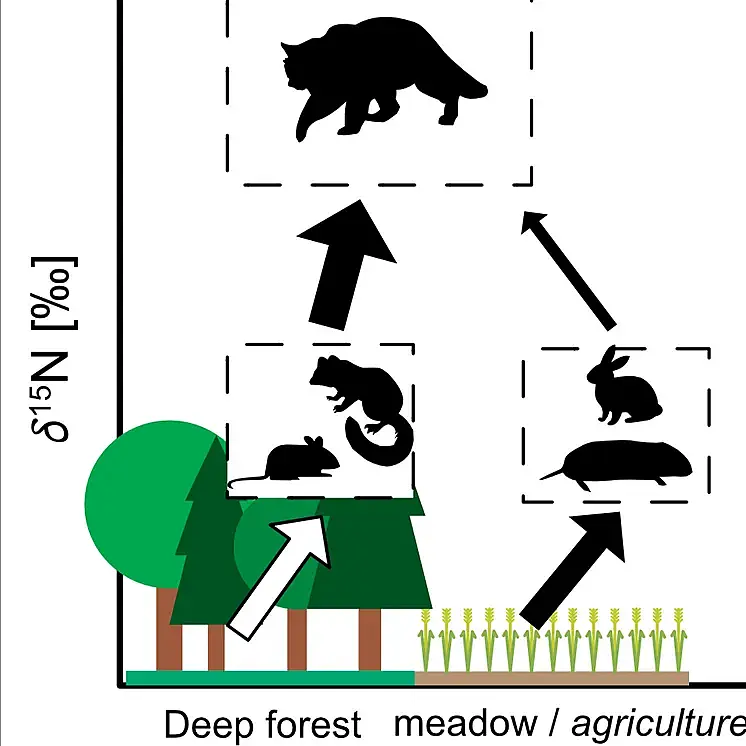
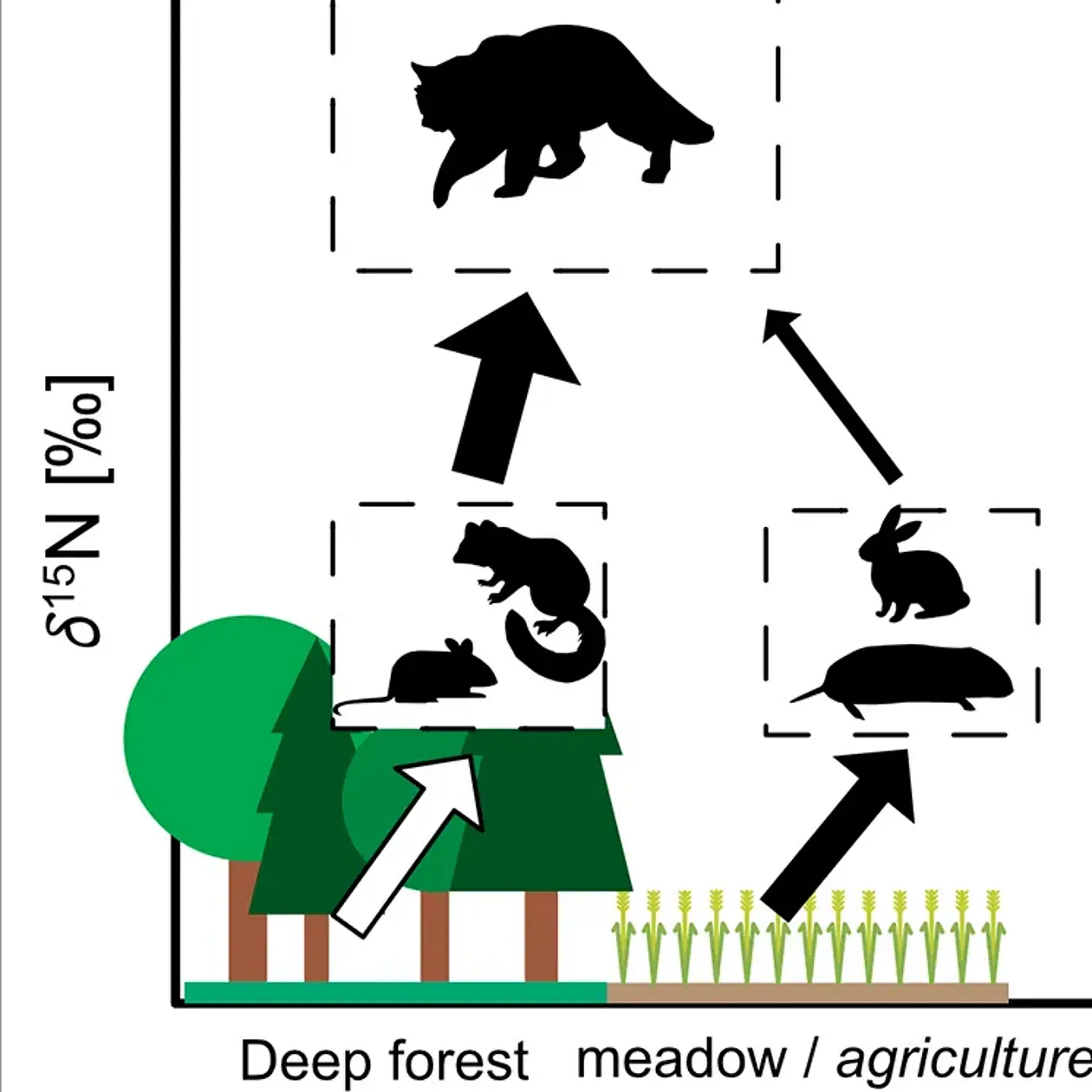
02.03.2026 ► In a new study (PLoS One), Chris Baumann et al. analysed hair samples from zoological collections to investigate diet and the use of agricultural land by European wildcats. This non-invasive method enables retrospective, long-term insights into habitat changes and adaptations to human-dominated environments, and opens up new possibilities for using existing collections..
Publication: Genetic Diversity and Ecological Speciation in Annual Plants
20.02.2026 ► A new study by Max Schmid, Katja Tielbörger, and colleagues in Ecology Letters used theoretical models to investigate the evolution of genetic diversity in annual plants. They were able to show that adaptive plasticity during seed germination promotes genetic diversification as well as ecological speciation.
Publication: Drought resistance drives population stability
11 Feb 2026 ► A new study from Johanne Gresse and colleagues in Journal of Ecology examined how functional traits determine population temporal stability in 178 populations of winter annuals across Mediterranean, semi-arid and arid climates over 13 years. Traits conferring higher drought resistance were consistently associated with greater stability in open habitats, whereas shrub microhabitats altered or reversed this pattern.
Publication: Colouration and mutualism service quality
29 Jan 2026 ► Mutualistic interactions are maintained via signalling between interacting parties. Obligate cleaner fishes have evolved a guild coloration as a signal for client fish. This study (Oikos) by Patrick Vetter et al. shows that potential clients show the strongest response to artificial cleaners matching the blue saturation of real cleaners. Associations between real cleaner saturation and service quality are also modulated by client identify and ecology.
Sustainability Award: Two Outstanding BSc Theses in EvE
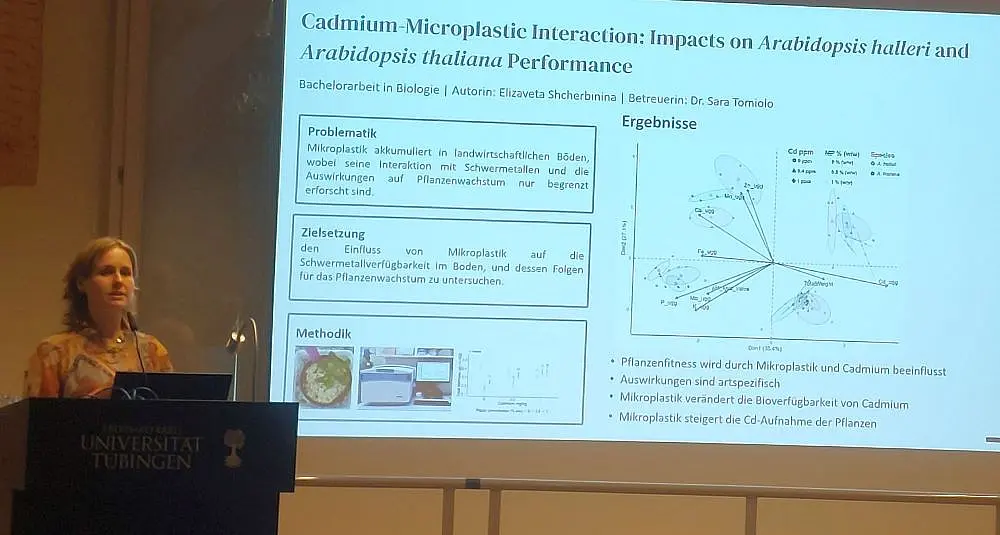
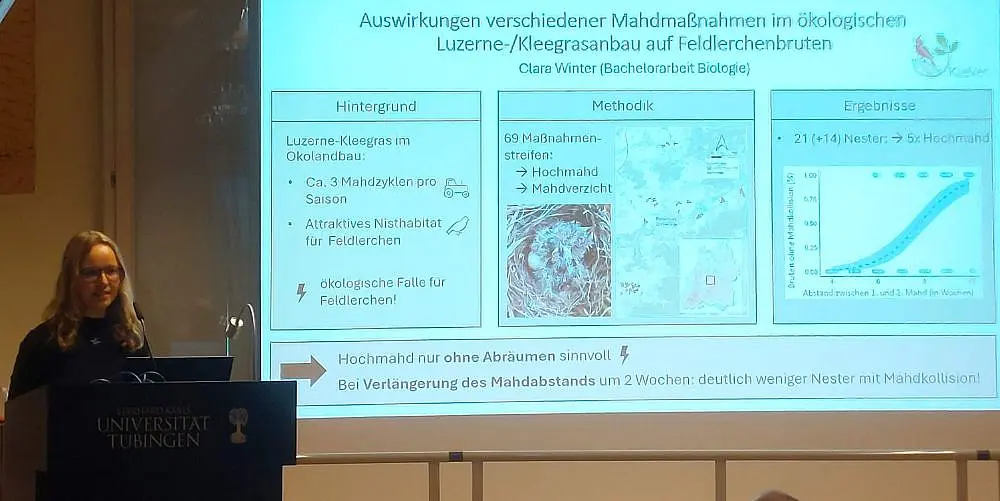
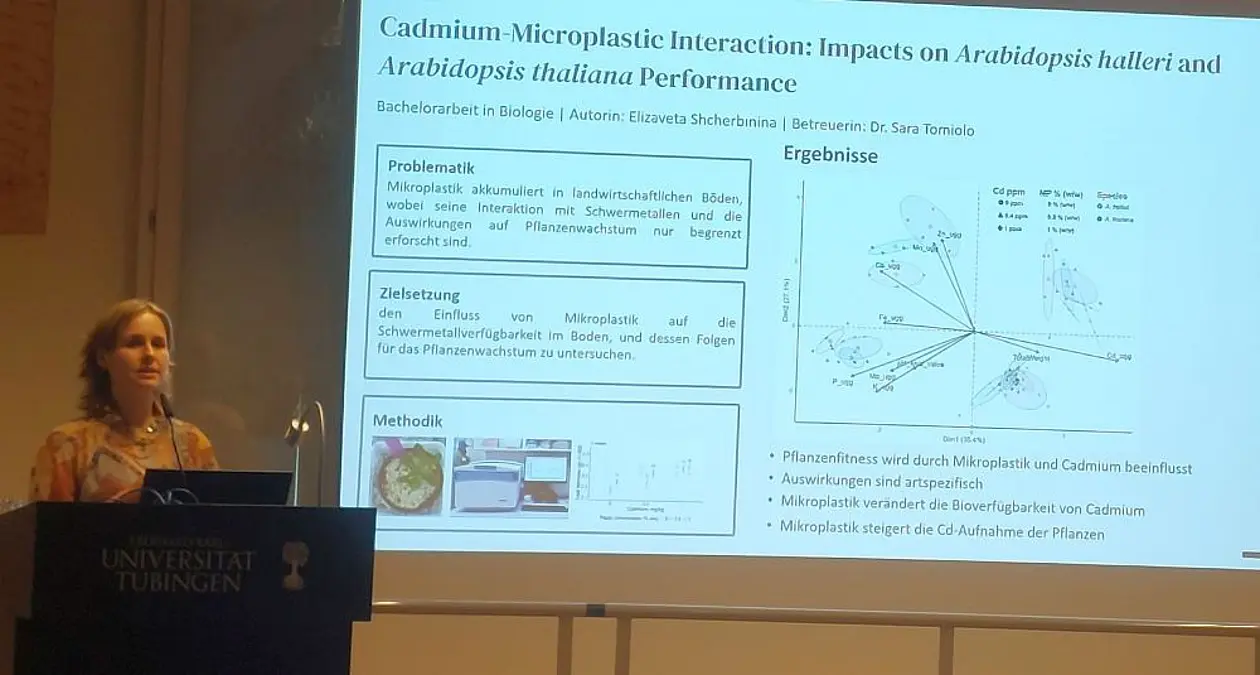
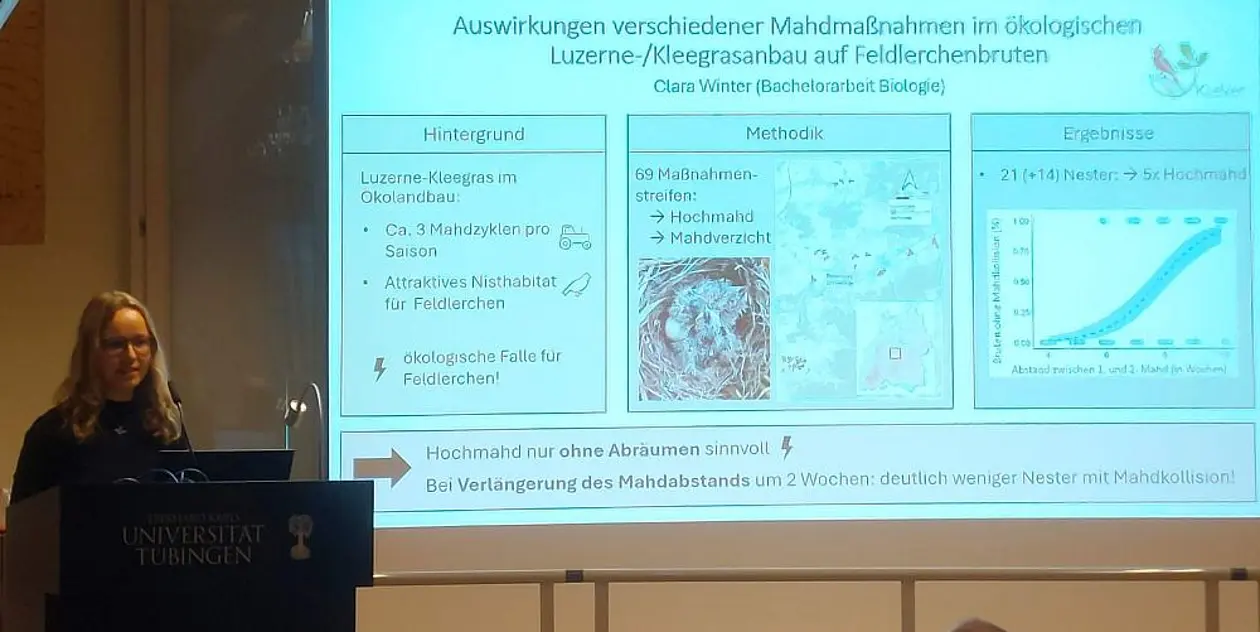
14 Nov 2025 ► The Advisory Board for Sustainable Development at the University of Tübingen has honored two bachelor’s theses from the EvE Institute with the 2025 Sustainability Award. In her thesis, Elizaveta Shcherbinina demonstrated how the uptake of heavy-metal ions by plant roots increases when soils are additionally contaminated with microplastics. In a cooperative project with local farmers, Clara Winter evaluated approaches to reduce the loss of farmland bird nests during harvesting. Both theses provide relevant contributions toward a more sustainable interaction with our environment. Congratulations to both award winners !
Certificate: Examination “field ornithology” in Tübingen
04.11.2025 ► In cooperation with the Environmental Academy of Baden-Württemberg, the EvE Institute has hosted a second examination for the BANU "Field Ornithology Bronze" certificate. More than 30 participants succeeded in a test of their knowledge of 75 bird species – identified from images or song displays – and their habitats. The certification program raises awareness for conservation and provides expertise for use in environmental assessments. It is issued nationwide with uniform criteria at various levels.
Publication:Ecological drivers of cleaner-client mutualism
04 Nov 2025 ► Species interactions are global drivers of biodiversity. On coral reefs, cleaning mutualisms, whereby 'cleaner' species remove parasites from 'client' species are fundamental for ecosystem health and functioning. A new study by Gunn and Michiels (Aquatic Biology) quantifies how the behaviours behind this mutualism can be correlated with multiple, local-scale ecological variables via both direct and indirect pathwaysl
New publication:
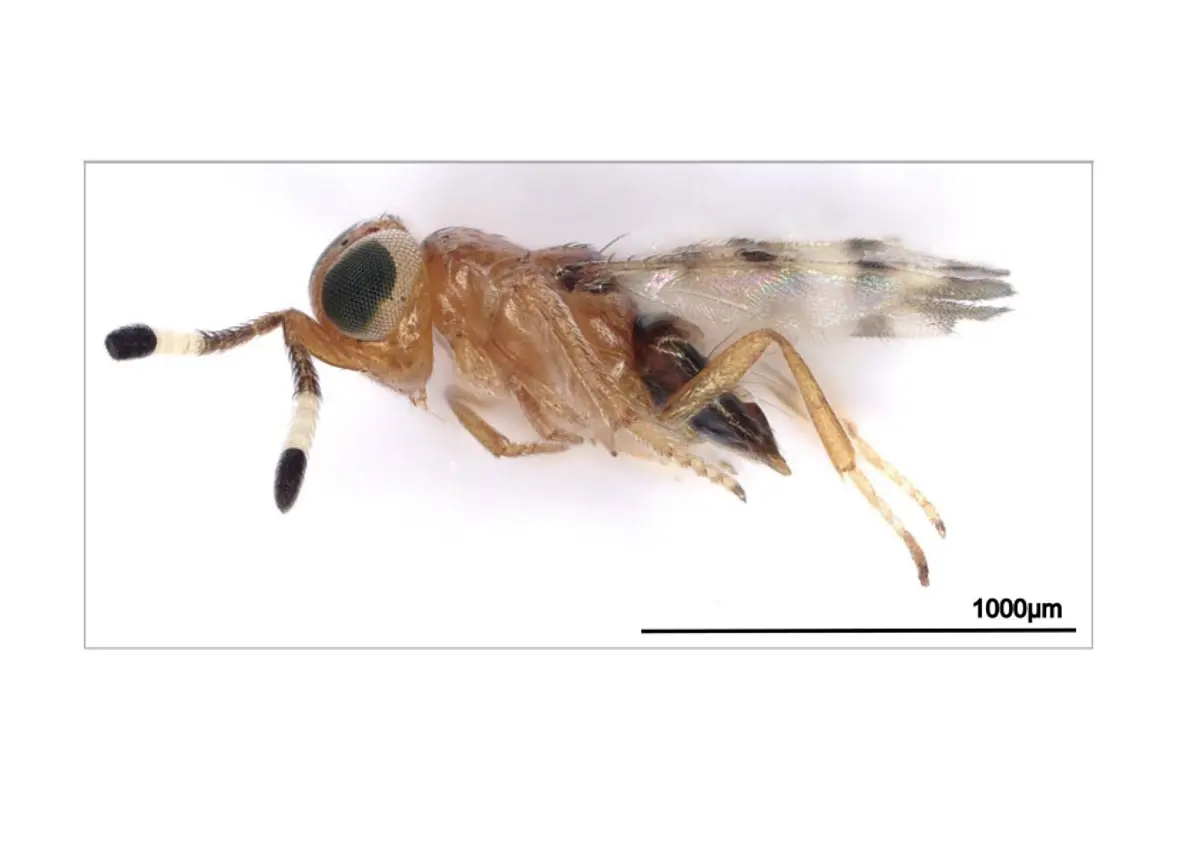
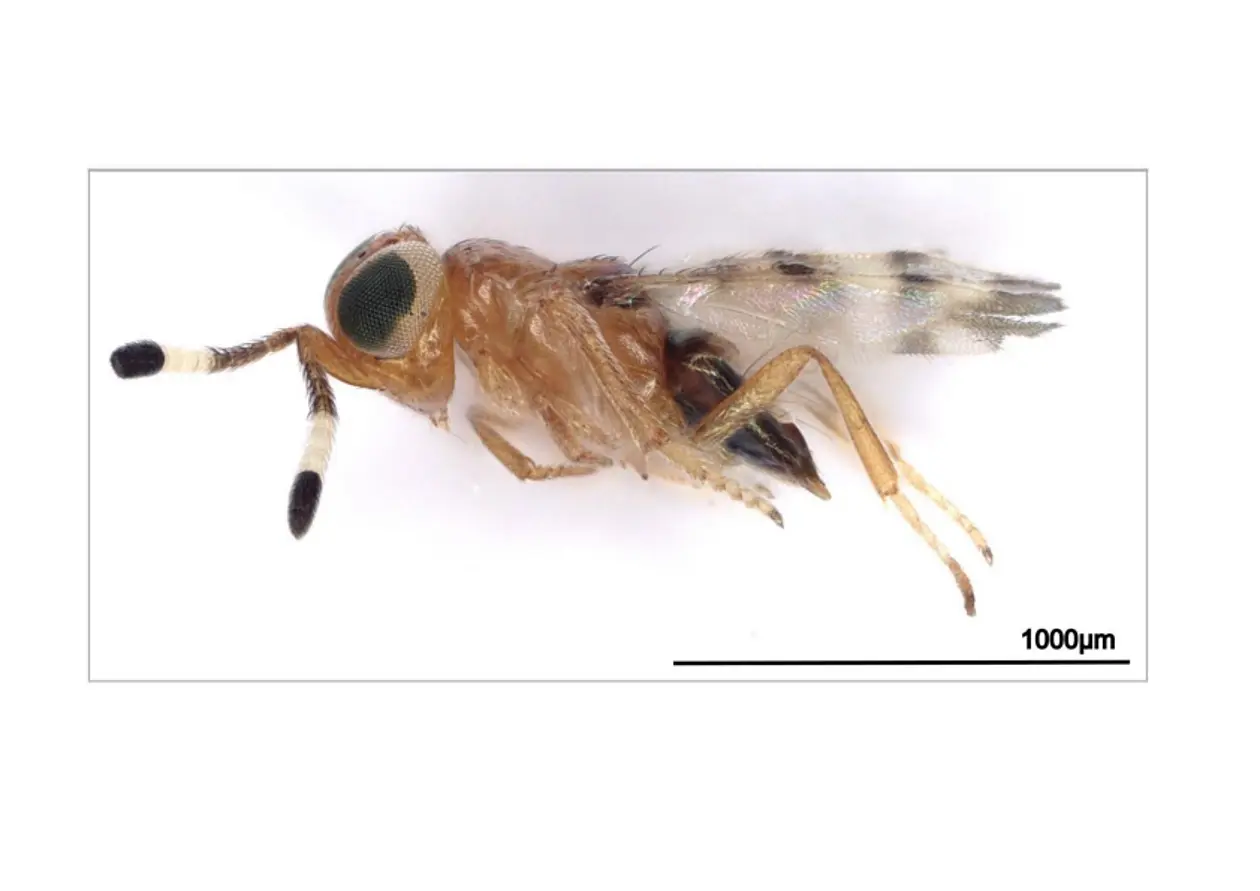
28.10.2025 ► Oviposition is crucial for the reproductive success of parasitoid insects. A new publication (Frontiers in Zoology: https://frontiersinzoology.biomedcentral.com/articles/10.1186/s12983-023-00503-1) that has emerged from the Bachelor thesis of Robin Kraft (Evolutionary Biology of Invertebrates) on the wasp Microterys flavus develops a functional model of the underlying working mechanism of all ovipositor movements observed during the oviposition process, thereby improving our understanding of a key trait contributing to the evolutionary success of a highly diverse group of chalcidoid wasps.
Publication:Water mites of Madagascar
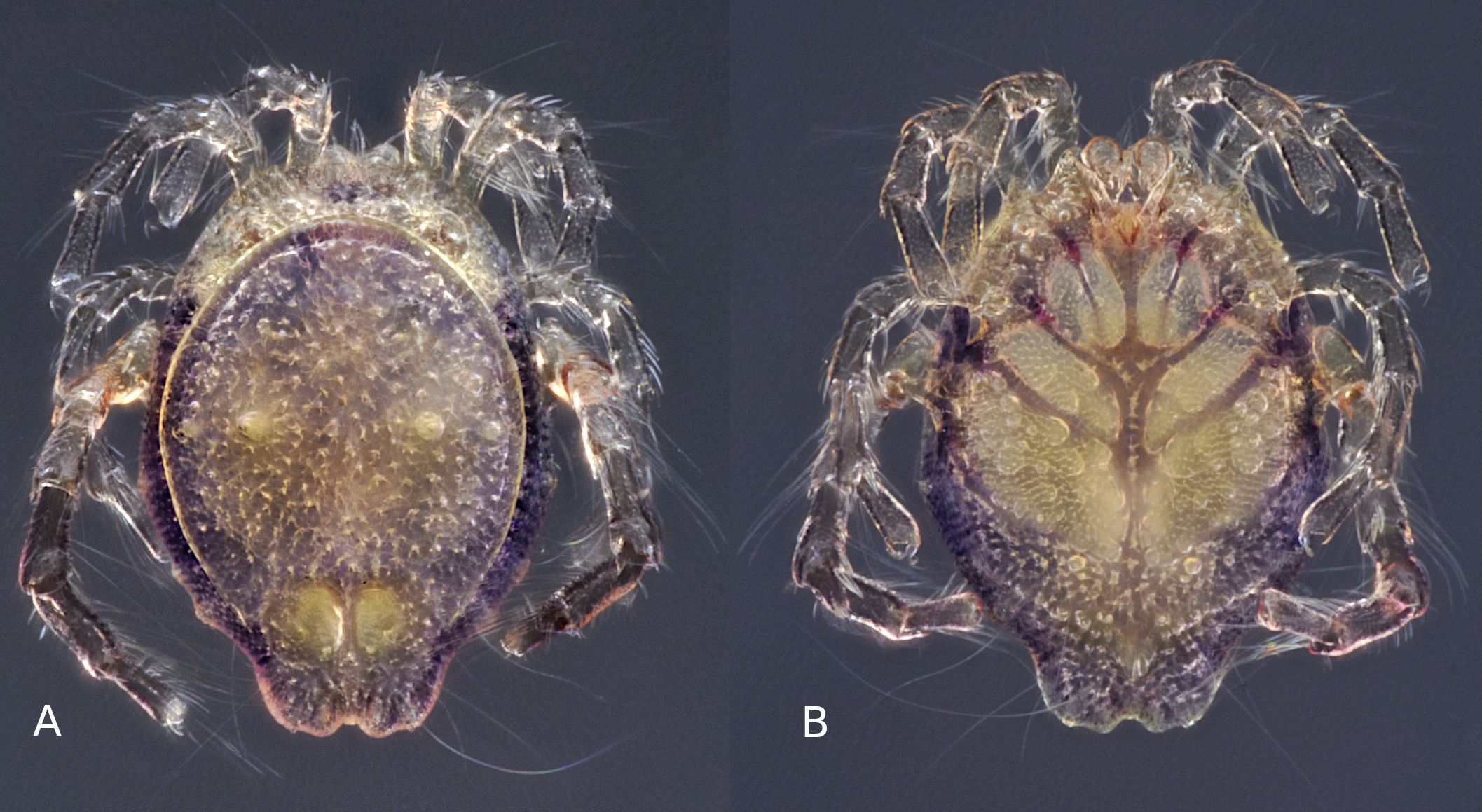
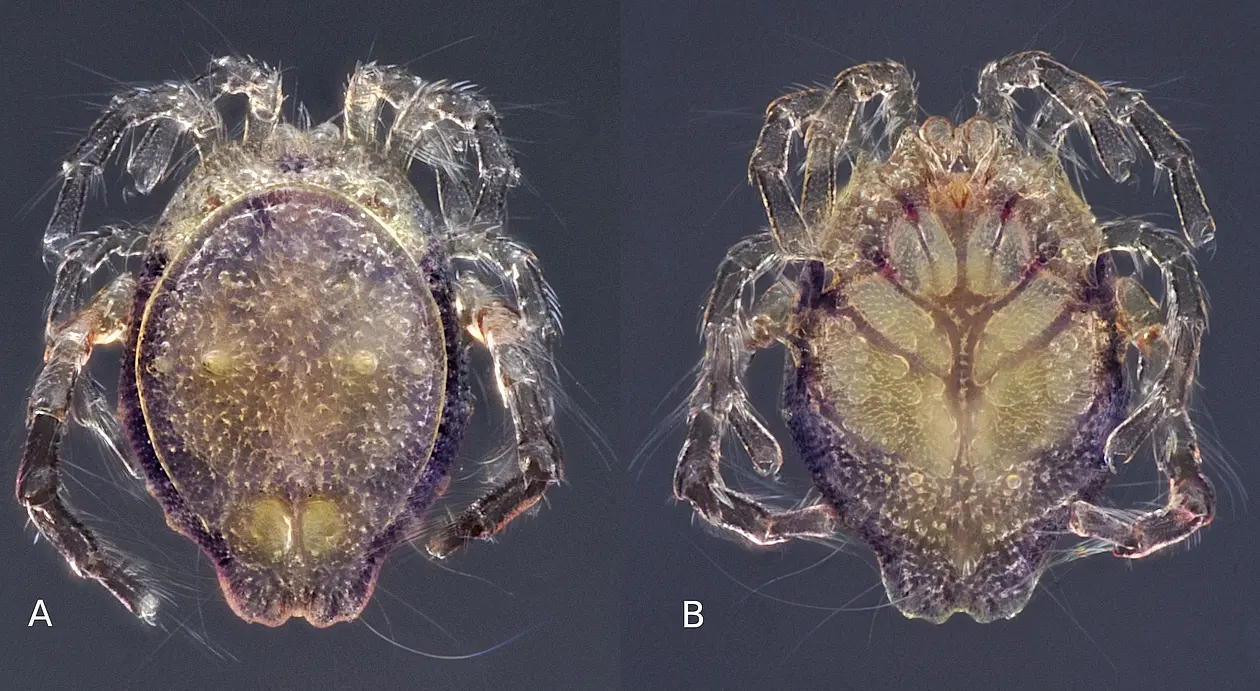
24 Sep 2025 ► As a result of field work on the widely unknown water mite fauna of springs and streams of Madagascar and revision of published data, Reinhard Gerecke (University of Tübingen, Evolutionary Biology of Invertebrates), Tom Goldschmidt (München) and Harry Smit (Alkmar) published a comprehensive survey of the family Arrenuridae. One genus new to science, and 19 new species are described, the number of the arrenurids known from the island grows from 23 to 43.
PhD Defence:Heiko Hinneberg
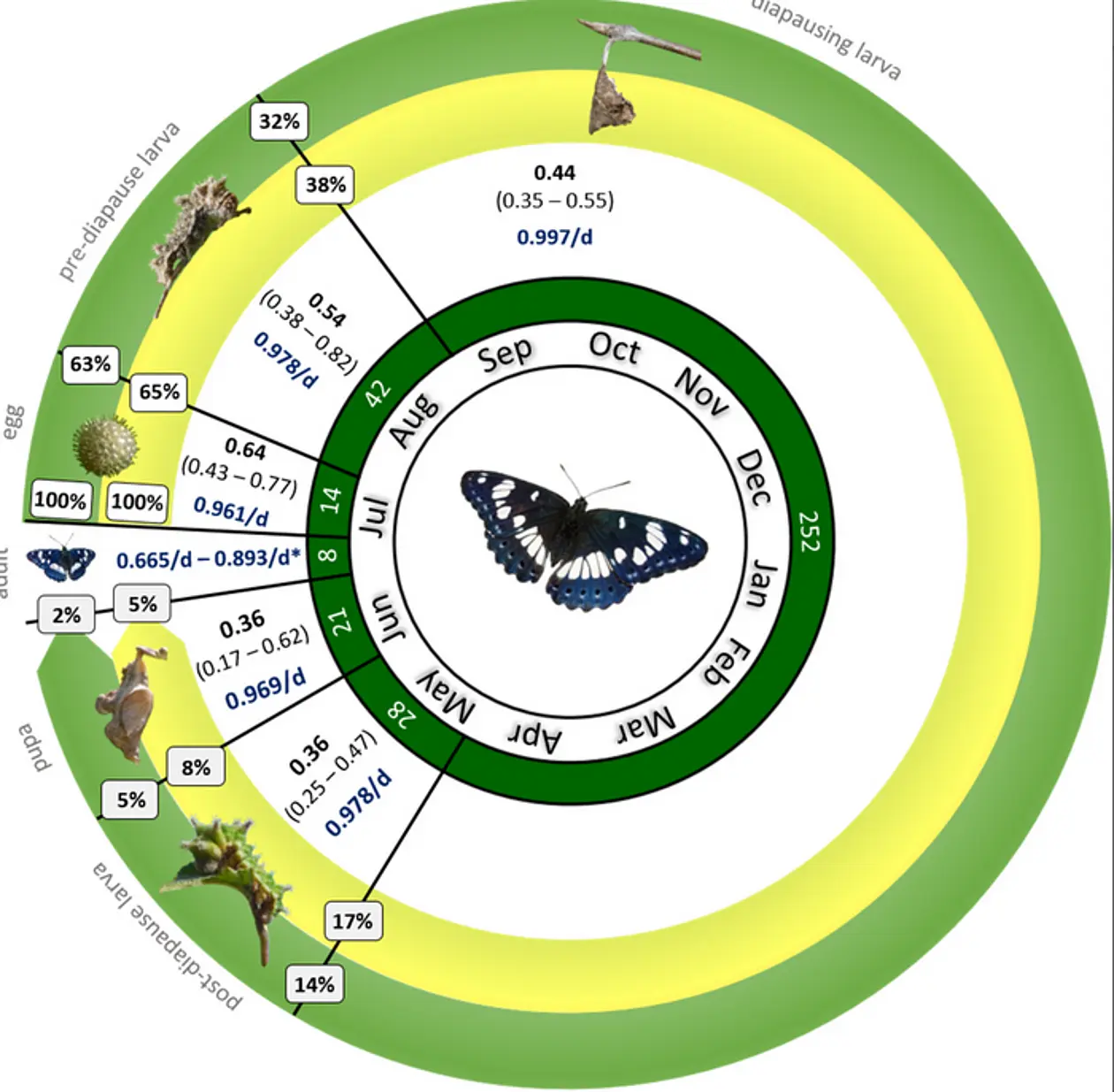
04 Aug 2025 ► Heiko Hinneberg has now successfully defended his PhD project "Population Ecology of a Rare Open Forest Butterfly, Limenitis reducta, in Central Europe: Deriving Guidelines for Conservation Management". The study provided demographic data across the entire life cycle of this highly endangered forest butterfly. The findings directly feed into ongoing habitat management that supports the diverse insect community of open woodland habitats. All three chapters of Heiko's thesis have already been published, in Ecology and Evolution, Basic and Applied Ecology and Conservation Science & Practice. Congratulations!
Publication: Sunlight as a lifeline for endangered forest butterflies
11 July 2025 ► Open forest invertebrates rely on sunlit habitats, yet these are declining due to changing forest management. A new study (Cons. Science & Practice) by Hinneberg et al. shows that solar radiation drives host choice, feeding, and survival in the endangered Southern White Admiral. The findings highlight the need to maintain sunny habitat patches to support vulnerable forest species throughout their life cycles.
PhD defence of Junhee Jung
25 June 2025 ► Junhee Jung successfully defended his PhD thesis on “Experimental Ecology of plant-microbiome interactions” within the DFG SPP 2125 DECRyPT project. He tested how leaf bacteriome diversity impacts Arabidopsis plants and whether increased temperature variability alters the Arabidopsis leaf microbiome. Two chapters have already been published in eLife and American Journal of Botany. Congratulations!
Publication: Evolution of local adaptation in long-lived species
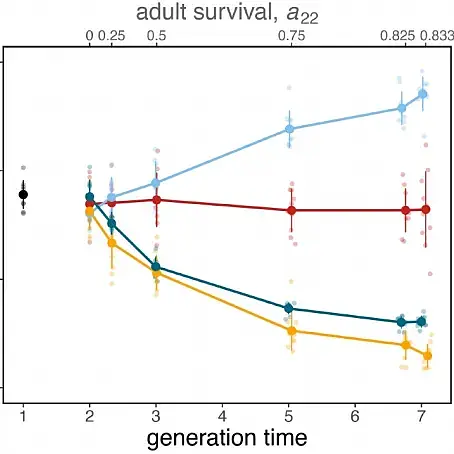
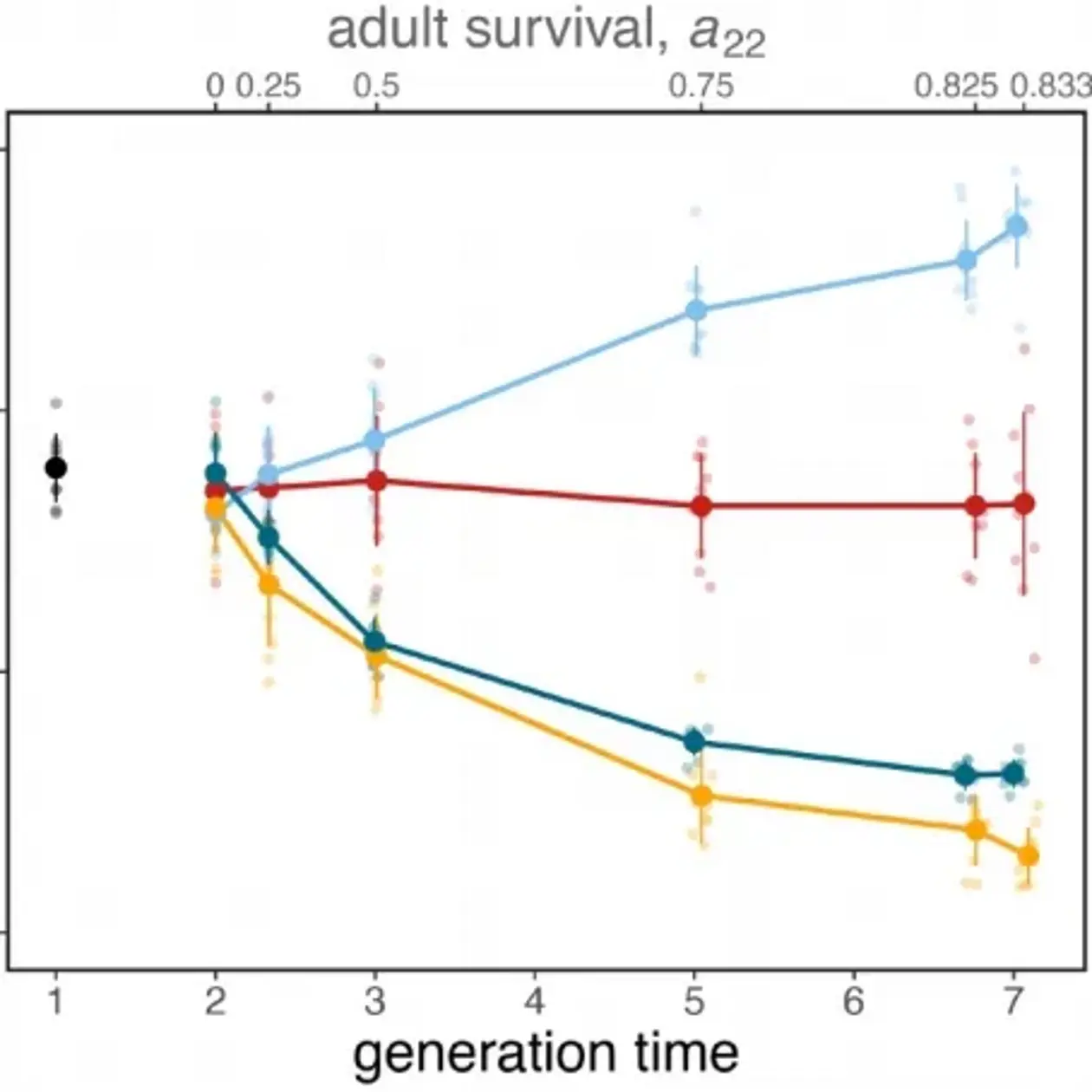
04 June 2025 ► Local adaptation is a classic example of adaptive diversity within species where local individuals achieve higher fitness than individuals from foreign habitat. Its evolution depends on a balance between divergent selection and gene flow, and the resulting fitness pattern is relevant for nature conservation or forestry. A new study by Max Schmid and colleagues (Evolution) characterises how life cycles shape local adaptation. This can explain why organisms like trees with long generation times and strong gene flow can evolve local adaptation.
Defence:Vistorina Amputu
13 May 2025 ► Vistorina Amputu now defended her PhD project "Leveraging drone technology to optimise monitoring in drylands – a case study from Namibia's semi-arid rangelands". She demonstrates the potential of drones for rangeland monitoring, offering a cost-effective tool to support management strategies and advance the understanding of dryland ecosystems that are vital yet vulnerable under global environmental change. Two chapters were published in Ecological Informatics and Remote Sensing. Congratulations!
Publication: Book on insect morphology
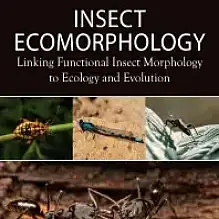
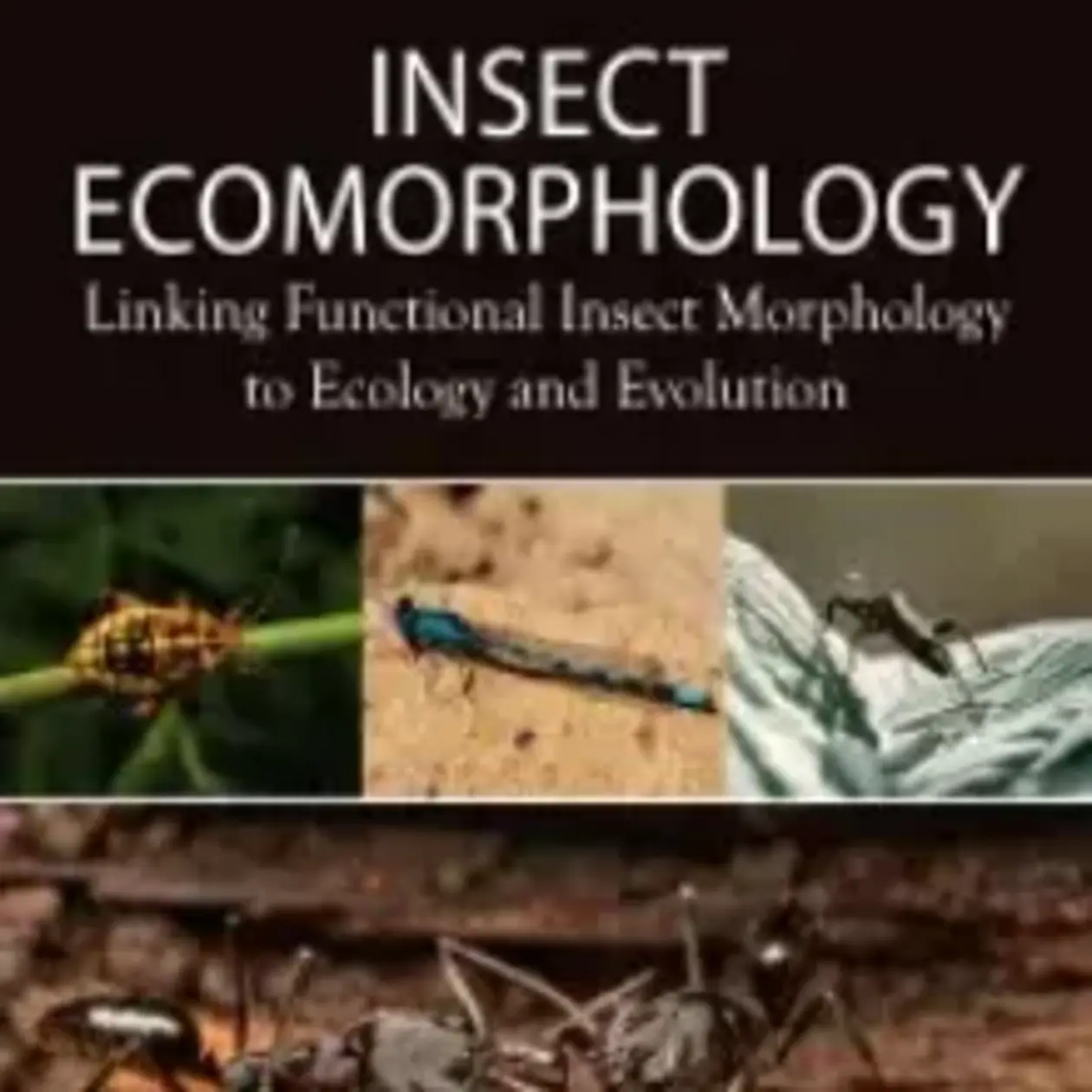
07 May 2025 ► A new book on “Insect ecomorphology - Linking Functional Insect Morphology to Ecology and Evolution” has been published with Elsevier Academic press. Edited by Oliver Betz (Evolutionary Biology of Invertebrates), it offers up-to-date knowledge and understanding of the morphology of insects and the functional basis of their diversity. More information via the publishers website.
Publication: Robust population trends from ‘rolling’ monitoring programs
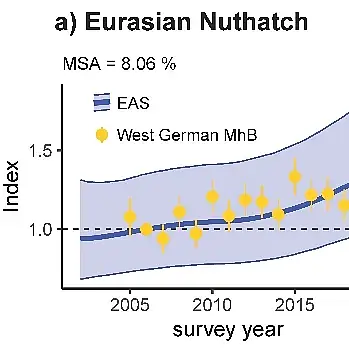
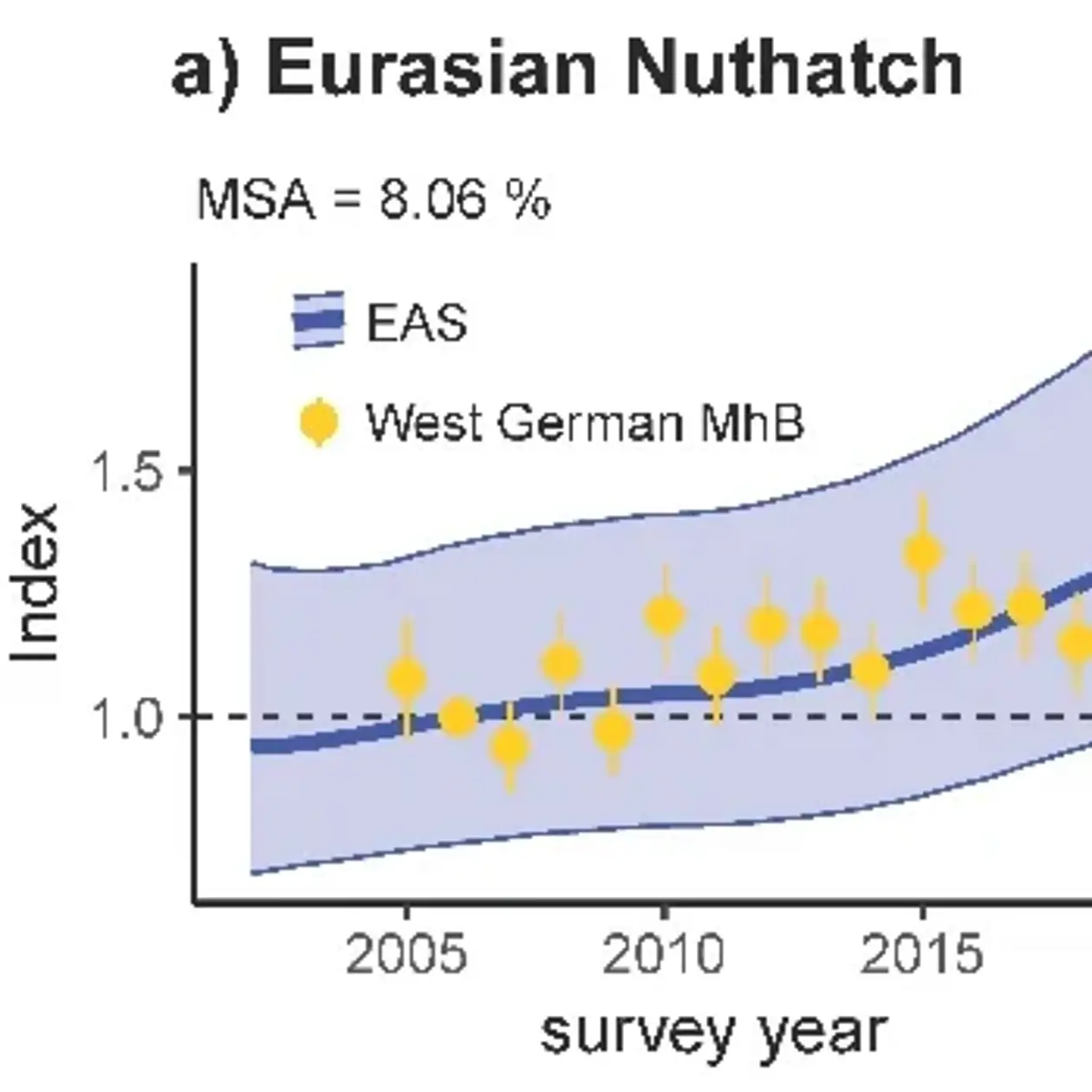
07 May 2025 ► The conservation status of animal and plant populations is often derived from monitoring-based population trends. However, these datasets pose several challenges for analysis: the distribution characteristics of the raw data, large time gaps between surveys, variation in observer expertise, and unbalanced habitat coverage. Using the breeding bird monitoring program in North Rhine-Westphalia, this study (Peer Community J, recommendation) develops a robust analysis approach for such study designs.
Publication: A nesting ecology perspective on farmland bird conservation
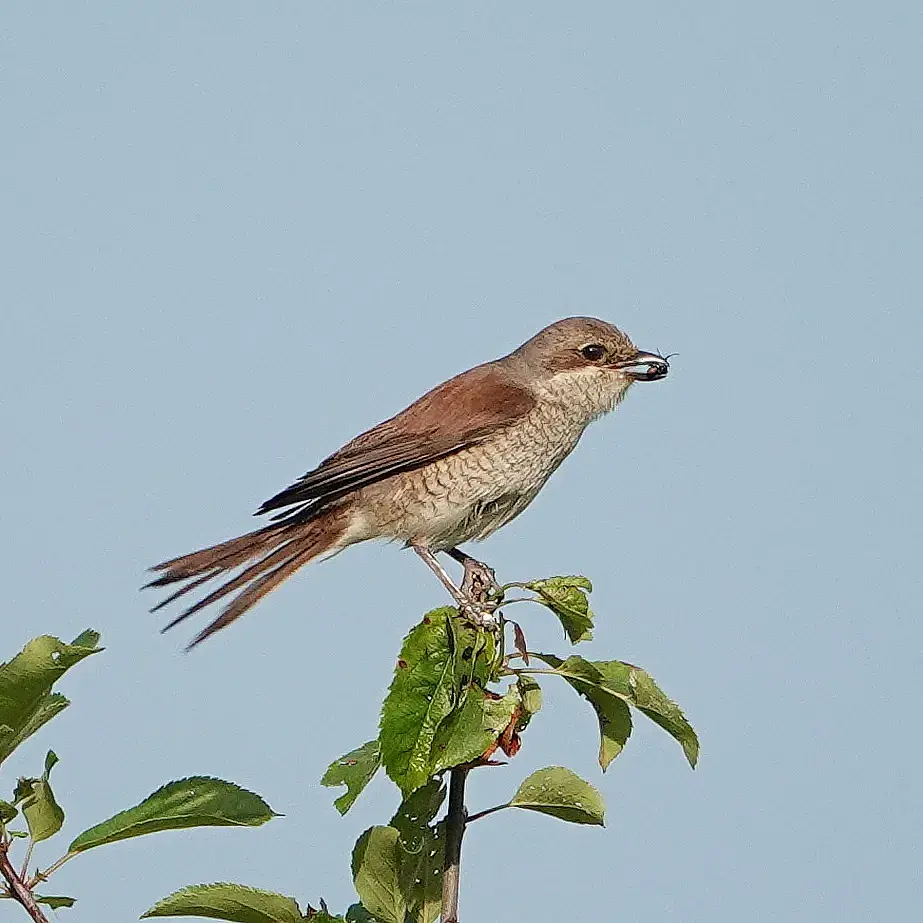
27 Feb 2025 ► Farmland bird diversity continues to decline, possible because conservation insufficiently accounts for effects of land use operations. This work (Bird Cons. Int.) investigates spatial and temporal variation in nesting success of the endangered Corn Bunting across SW German landscapes, finding substantial nest losses from mowing and harvest in grassland and fodder crops. We suggest refined land use regimes to mitigate such effects.
Publication:Effects of mowing techniques on arthropds
27 Feb 2025 ► A new study by Lea von Berg and collaborators (InsectMow project) in Journal of Applied Ecology shows that mowing has a major impact on the grassland arthropod fauna, regardless of the mowing technique used. Tractor-driven double-blade bar mowers do not appear to be a truly insect-friendly alternative to conventional disc mowers, therefore the authors strongly recommend the maintenance of unmown refugia.
Publication: Drivers of woody dominance across global drylands
21.10.2024 ► Shrub encroachment is a major process impeding dryland productivity. In a new study (Science Advances) across six continents and more than 300 plots, an international consortium with four participants from the Plant Ecology Group found that the grazing regime - and especially cattle grazing - is a major driver of shrub encroachment in drylands world-wide. This opens up avenues for sustainable management of dry rangelands under climate change.
Certificate: First examination “field ornithology” in Tübingen
02.10.2024 ► In cooperation with the Environmental Academy of Baden-Württemberg, the EvE Institute has awarded the BANU "Field Ornithology Bronze" certificate for the first time in Tübingen. Nearly 20 participants successfully completed an examination testing their knowledge of 75 bird species – identified from images or song displays – and their habitats. The certification program raises awareness for conservation and provides expertise for use in environmental assessments. It is issued nationwide with uniform criteria at various levels.
Award: Best presentation at the German Zoological Society meeting
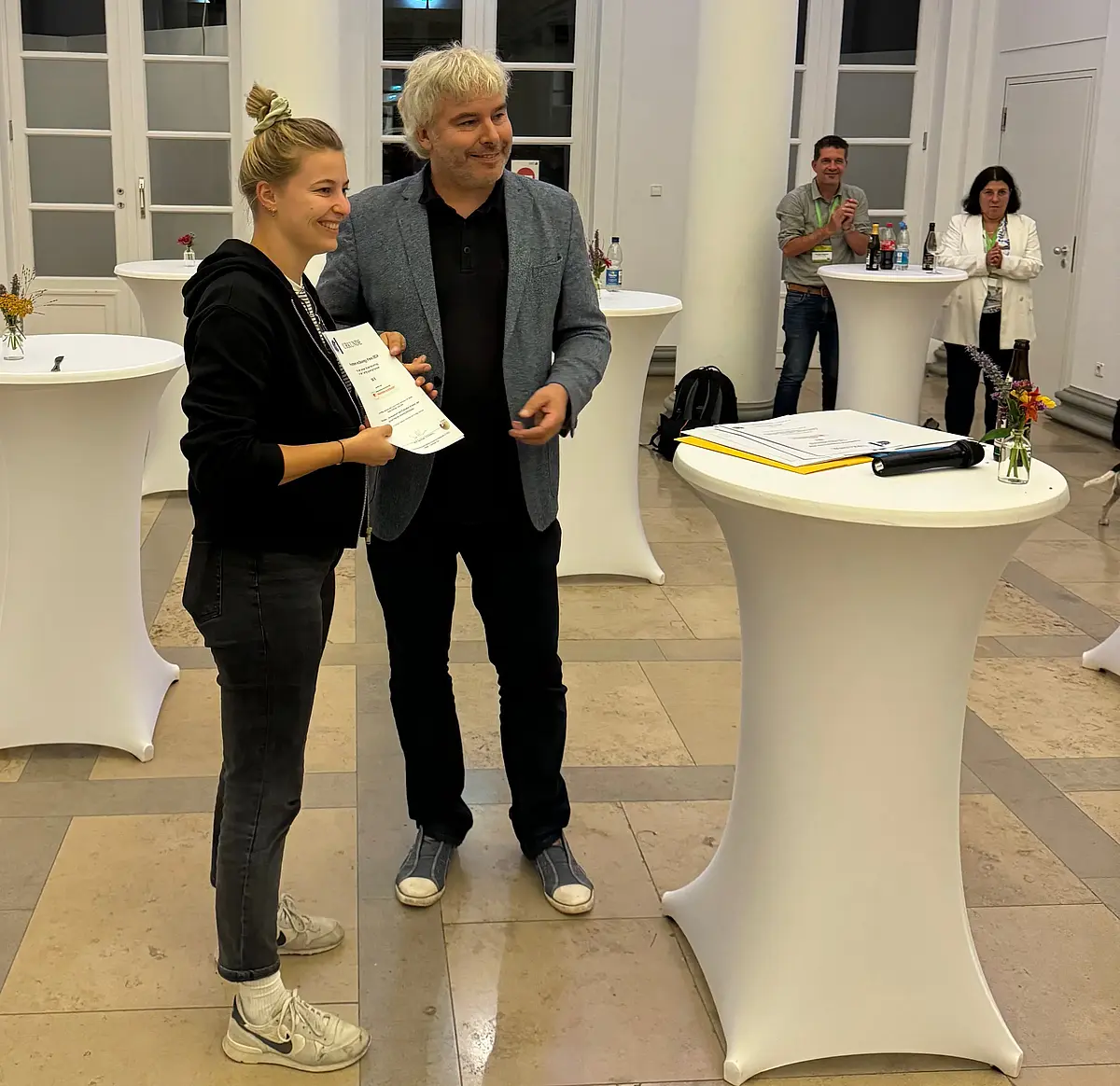
02.10.2024 ► EVEREST-PhD student Lea von Berg (Evolutionary Biology of Invertebrates) has received the third lecture prize at the annual conference of the German Zoologcial Society in Hohenheim with her talk on „InsectMow: Development and evaluation of insect and spider friendly mowing techniques".
Congratulations!
New publication: Unforeseen plant phenotypic diversity in a dry and grazed world
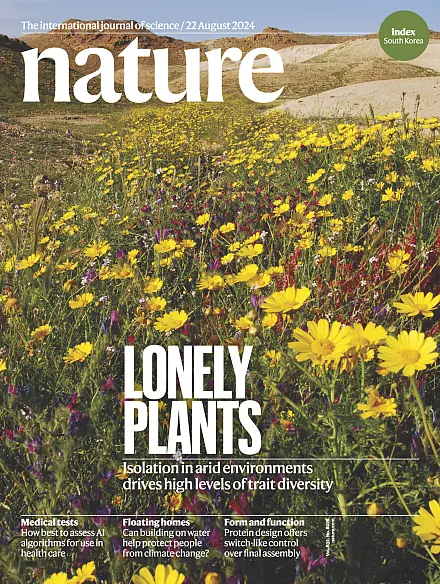
18.09.2024 ► New publication in Nature! Pierre Liancourt, Katja Tielbörger, Liesbeth van den Brink, Rafaella Canessa, and Jan Ruppert from the Plant Ecology Group contributed to a new publication which demonstrated that the diversity of traits in desert plants can be twice as high as that of plants in humid areas. This highlights the importance of desert plants as a genetic reservoir and as organisms that may withstand major environmental disturbances. A picture of Katja also made the cover page of Nature - congratulations! See also a german summary in Attempto.
Awards: Best teaching in Biology 2024
25 July 2024 ► The Biology Student Council has granted two ‘best teaching’ awards in 2024, both to lecturers of the EvE institute. Once more, Ingeborg Haug has been awarded for excellent teaching of plant families in the compulsory module ‘Botany’. For elective modules, students valued the delivery of R coding and principles of statistics in ‘Biostatistics-1’ by Nils Anthes. Congratulations!
New project: Disentangling neutral from adaptive genetic variation in light of ecological interactions
06.06.2024 ► Species are not homogeneous entities but show ample of intra-specific genetic variation in morphological, phenological, or behavioral traits. Such genetic variation is a key component of biodiversity and could help species to adapt to a heterogeneous environment. In this three-year DFG project, led by Dr. Max Schmid (Plant Ecology), the PhD candidate will study both the ecological conditions favoring adaptive genetic variation within species and empirical methods to detect this part of biodiversity.
Publication: Feeding apparatus of Staphylinine beetles
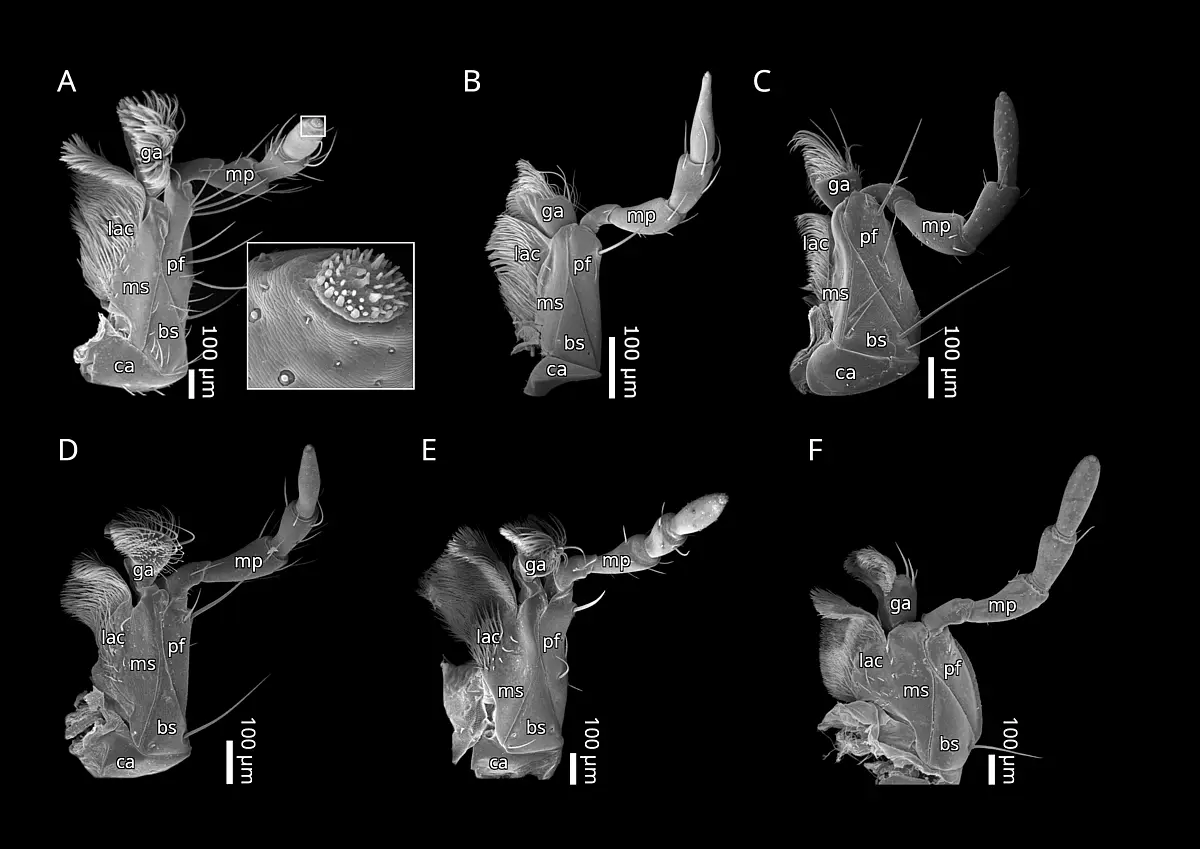
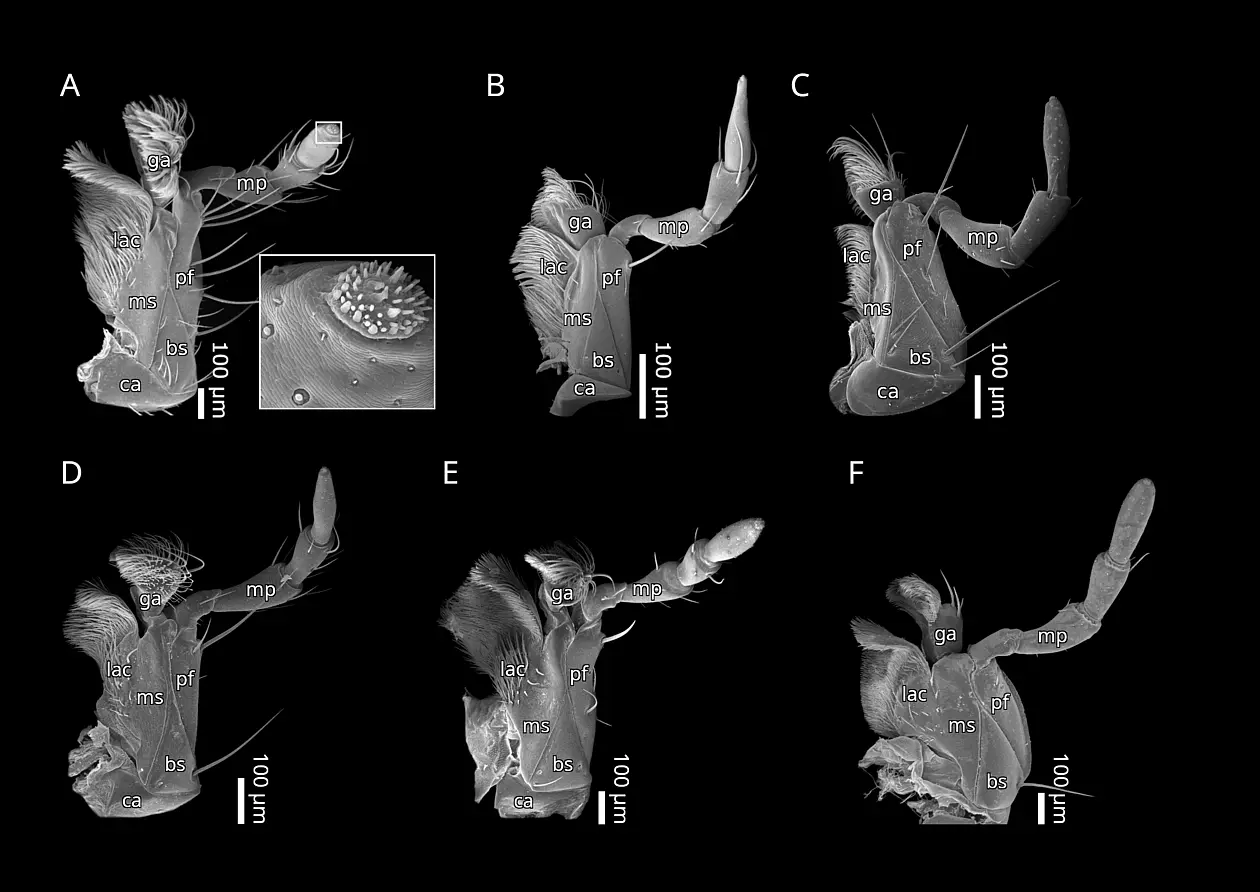
27 May 2024 ► A new study by Erich Spiessberger and collaborators in Arthropod Systematics and Phylogeny provides descriptions and image plates based on scanning electron micrographs of 36 species of rove beetles. The authors establish groundplan features of the mouthparts for the Staphylinine group and discuss their putative function. Geometric morphometric analyses explain mandible shape variations, showing a trend towards a falcate shape with a narrow base, typical of some predatory species..
New Project: Evolutionary morphology within a radiation of staphylinid beetles
17 May 2024 ► In a 3-yr DFG-funded project, Margarita Yavorskaya (Evolutionary Biology of Invertebrates) will trace the ecomorphological radiation in the hyperdiverse Pselaphinae (Coleoptera: Staphylinidae, with c. 10,000 described species). The project will apply phylogenetic reconstructions with a representative taxon sampling based on morphological and molecular data as a backbone for macroevolutionary analyses in the context of the beetles' cave-dwelling, predatory and ant-associated lifestyle.
Defence:Leonie John
16 May 2024 ► Leonie John, EVEREST student in Animal Evolution and Ecology, has now successfully defended her dissertation project, in which she investigated "Camouflage Strategies in Cryptic Predatory Fishes" in largely field-based experimental work. Leonie has already published some of her key findings in Frontiers in Ecology and Evolution, and Ecology and Evolution. Congratulations!
Workshop: Farmland bird expert group meets at Uni Tübingen
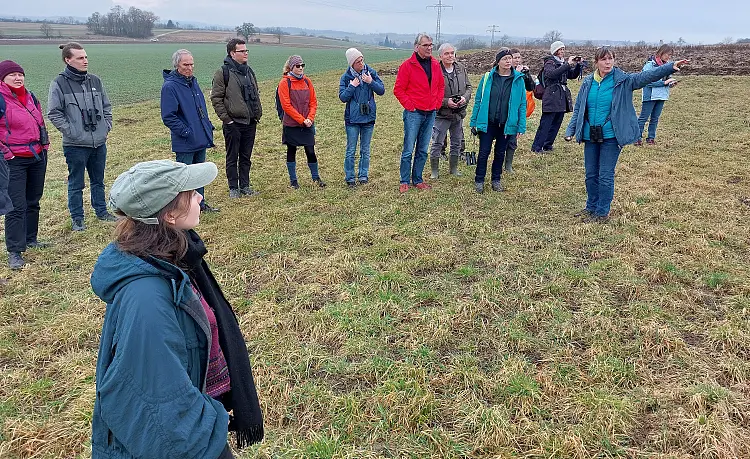
08 May 2024 ► The “KLeVer”-project on farmland biodiversity at the Institute of Evolution and Ecology recently hosted the specialist group on farmland birds within the German Ornithological Society (DO-G) at Hohentübingen Castle. Scientific exchange focused on best practice agri-environment schemes to support Skylark, Lapwing or Montagu’s Harrier. Participants further discussed the effects of agri-photovoltaic on farmland biodiversity, also presented in a recent policy paper of the specialist group.
Publication: Desert locusts feed with self-sharpening, scissor-like mandibles
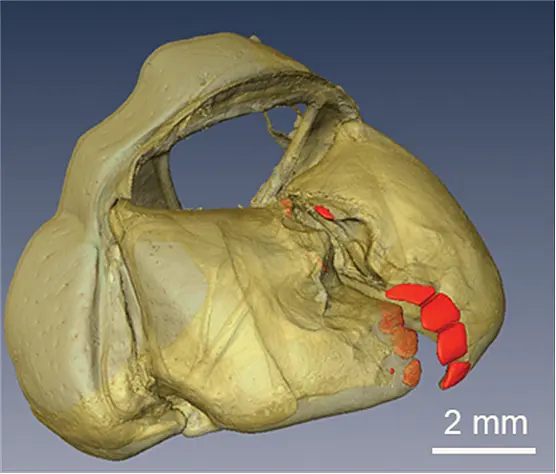
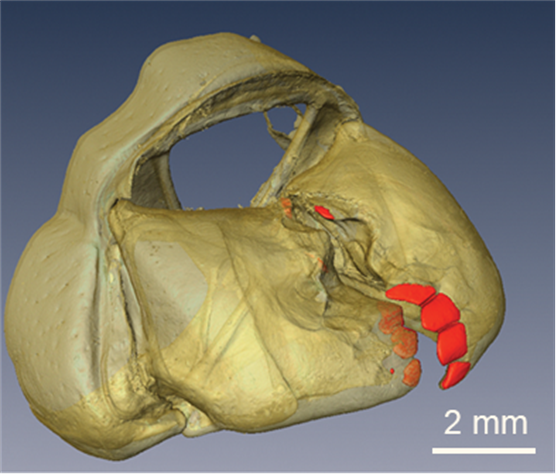
17 April 2024 ► Using dual-energy X-ray tomography, both the 3D distribution and the concentration of Zinc in the mandibles of the desert locust Schistocerca gregaria could be determined. The position of the Zn-enriched cutting-edge regions relative to one another suggests that the mandibles form a scissor-like cutting tool, which sharpens itself as the mouthparts shear past one another during feeding. The study was conducted by Oliver Betz (Evolutionary Biology of Invertebrates) in cooperation with researchers from Northeastern University (Boston, USA) and the European Synchrotron (Grenoble, France) and was published in Interface Focus.
Publication: Can scorpionfish use pattern change to adapt to backgrounds?
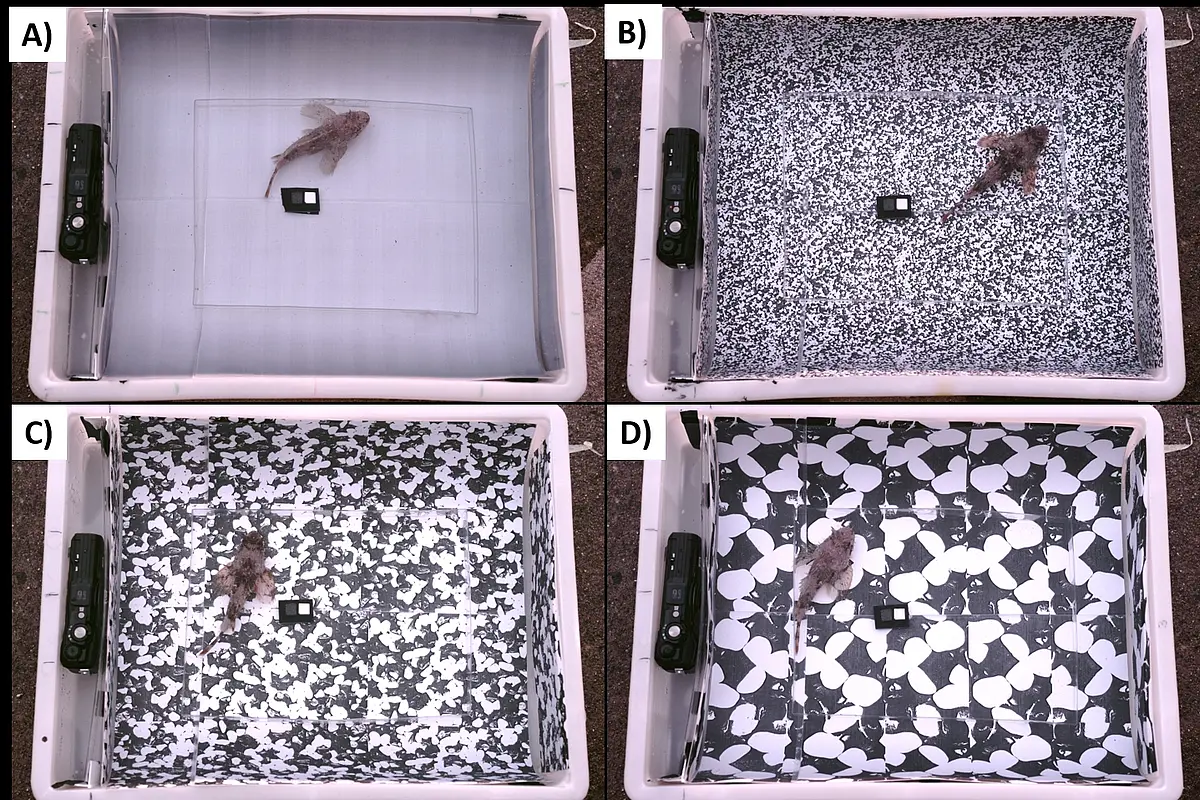
15 April 2024 ► Scorpionfishes are well camouflages predators. In a new publication in Ecology and Evolution, Leonie John, Matteo Santon and Nico Michiels (Animal Evolutionary Ecology) tested whether two species of Mediterranean scorpionfish species can change their pattern for camouflage. While scorpionfish did not adjust the patch size of their own pattern to that of the background, they flexibly changed their pattern contrast. This might help them to camouflage via the strategy of disruptive colouration on complex backgrounds.
Workshop: Foundations of biomimetics, 4 – 7 March 2024
15 Mar 2024 ► As part of the DFG-funded research project “Learning from Nature: Epistemological and Ontological Foundations of Biomimetics”, a workshop was held at the University Guest House in Tübingen. The theoretical underpinnings of biomimetics have been explored by a group of internationally renowned biomimeticians, biologists, engineers and philosophers. The project is conducted by Co-PI Manfred Drack (Evolutionary Biology of Invertebrates) in collaboration with Co-PI Ludger Jansen and Dilek Yargan (University of Rostock).
New project: Food jellies of honey bees – the role of major royal jelly proteins and sterols
12 March 2024 ► Honey bees (Apis spp.) feed their larvae with a special food jelly that is produced in two head glands of the feeding workers. Although all larvae receive food jelly up to a certain age, almost all our knowledge concentrates so far on queen food jelly (royal jelly) of the Western honey bee Apis mellifera. Studies on food jelly from worker and drone larvae as well as on food jelly from one of the other eight honey bee species are almost completely missing. The three-year DFG-funded project 'Food jellies of honey bees', led by Dr Anja Buttstedt, aims to fill this gap, with a particular focus on proteins and sterols.
Publication: Gammarids in times of climate change - Fourth treatment stage in wastewater treatment plants has positive effect on resistance to heat stress
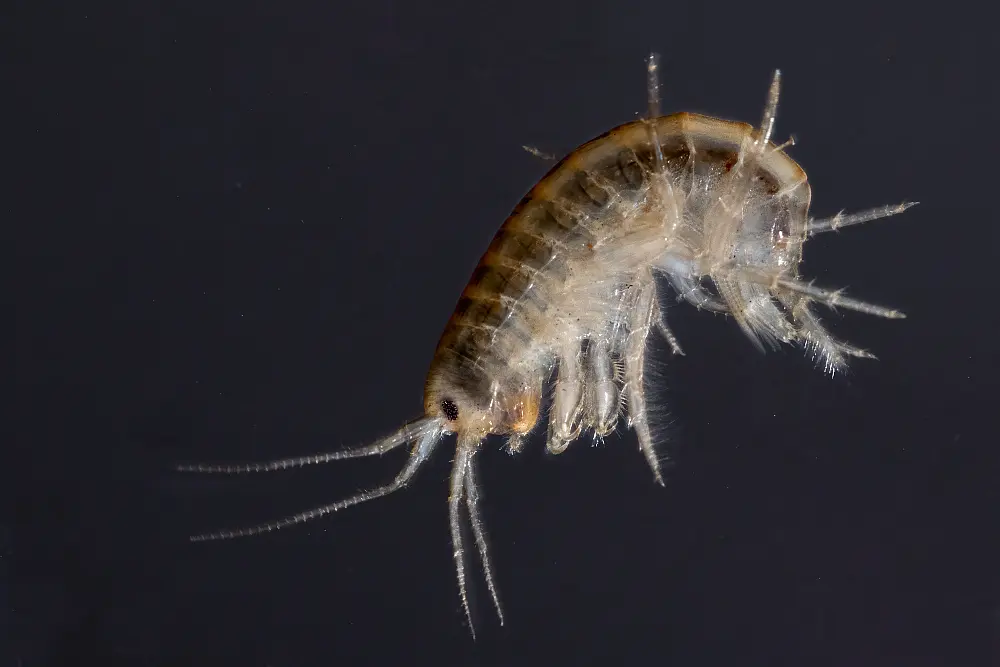
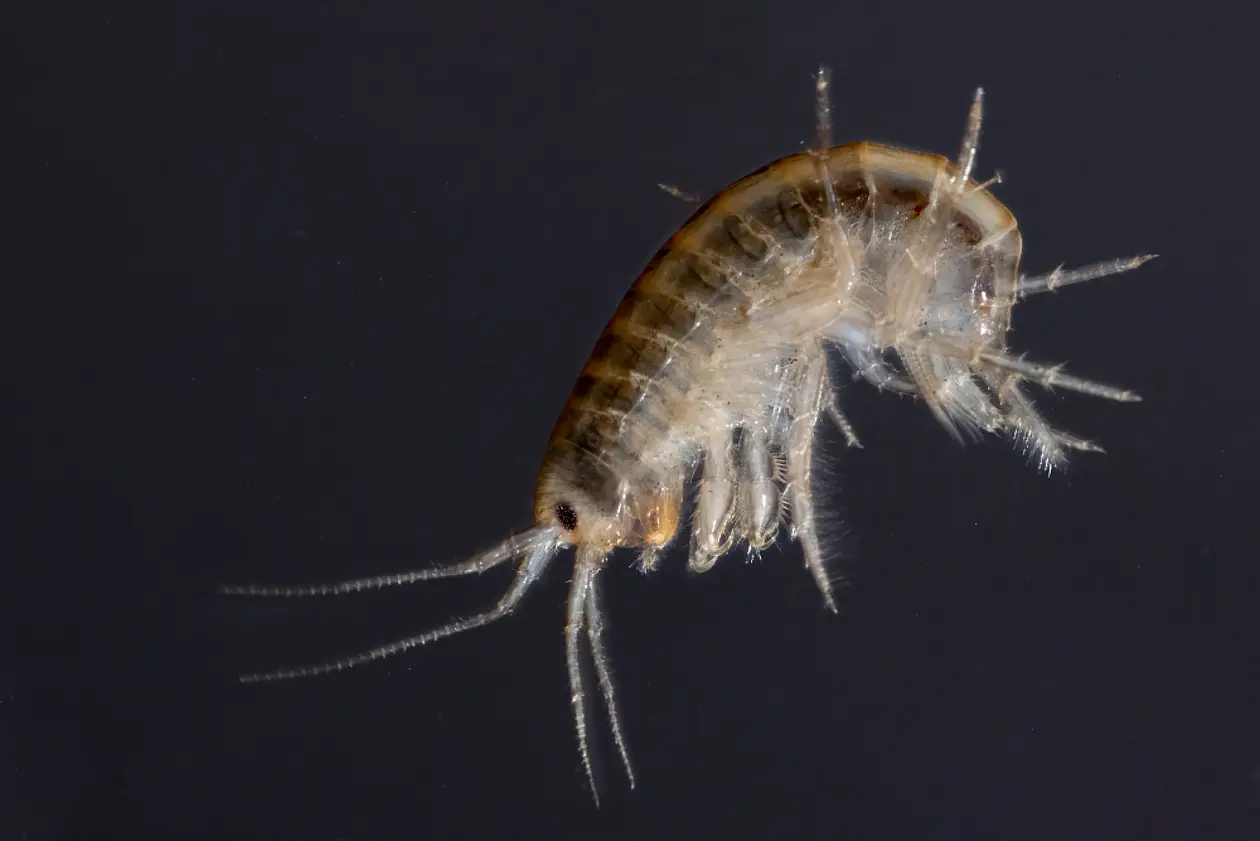
30 January 2024 ► As climate change progresses, our rivers are increasingly exposed to diverse impacts. Scientists from the Animal Physiological Ecology group (Katharina Peschke et al., Pollutants) have now found the installation of a powdered activated carbon stage in wastewater treatment plants to have a positive effect on the ability of gammarids to tolerate heat stress. The expansion of wastewater treatment plants significantly reduces the concentration of micropollutants in the wastewater, resulting in lower exposure levels for downstream gammarids. Consequently, they require less resources for tolerating these substances, leaving more energy available for the necessary responses to heat stress.
New project: Ecomorphological radiation of Himalayan Northeastern Indian Steninae beetles (Coleoptera, Staphylinidae)
03 January 2024 ► Extending previous work, this project lies within the framework of German-Indian Collaboration studying the biodiversity of Steninae (Coleoptera, Staphylinidae) across two elevational gradients in Northeast India (Arunachal Pradesh). It will investigate aspects of the ecomorphological radiation of this megadiverse clade of rove beetles. Major objectives to be addressed relate to (1) diversity, distributional and niche patterns along two elevational gradients, (2) morphological and experimental analyses of the function and performance of the mouthparts, the tarsal attachment systems and the potential sensory trade-off between the visual and antennal systems, (3) phylogeny-informed macroevolutionary downstream analyses of relevant morphological, behavioural and ecological traits and their evolutionary radiation and (4) potential assembly rules at the community level. Link to available PhD position: click