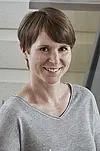
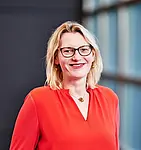
Director of the Department of Teaching and Learning Quality in Educational Institutions
at the Leibniz Institute for Research and Information in Education (DIPF)
I am happy to be involved in the Advisory Board of the TüSE because I consider teacher education to be one of the most important courses for improving the quality of education. A particular concern of mine is drawing on empirical evidence when discussing contents and structures, and providing this evidence through my own research.
Mareike Kunter has been Director of the Department of Teaching and Learning Quality in Educational Institutions at the Leibniz Institute for Research and Information in Education (DIPF) and Professor of Empirical Educational Research with a focus on Professional Pedagogical Action at Goethe University Frankfurt am Main since May 2020. From 2010 - 2020 she was Professor of Educational Psychology at Goethe University Frankfurt. After studying psychology at the Julius-Maximilians-Universität in Würzburg, she was a research assistant at the Max Planck Institute for Human Development in Berlin in the research area of Educational Science and Educational Systems (headed by Prof. Dr. Jürgen Baumert) in the PISA and COACTIV projects. She completed her doctorate and habilitation at the Free University of Berlin. Teacher training is a core topic of her work, both as part of her research and through her teaching activities.
Head of the Department of Education, Child Care, Youth, and Sports for the University City of Tübingen
“I serve on the Advisory Board because the close connection between academia and practice is very important to me. From the perspective of the school authority, I would like to help shape the conditions at our schools so that modern teaching can thrive and all children receive the best possible education and the opportunity to graduate successfully.”
Holger Chemnitz has headed the city’s Department of Education, Child Care, Youth, and Sports since June 2025. He studied from 2002 to 2006 at what was then the Ludwigsburg University of Applied Sciences and graduated with a degree in public administration. From 2011 to 2014, he completed a part-time master’s program at the University of Public Administration and Finance, graduating with a Master of Arts in Public Management.
As head of the city’s Department of Education, Child Care, Youth, and Sports, he brings the perspective of the municipal school authority to the Advisory Board. The university city of Tübingen oversees a diverse school system comprising five high schools, three comprehensive schools, a special education and counseling center specializing in learning disabilities, and 19 elementary schools. His priorities include modern schools equipped to meet current needs, favorable conditions for education and participation, as well as reliable school social work and sustainable school development.
Head of International Education Initiatives for Latin America, India, Africa, and Germany at the Siemens Foundation
I am happy to serve on the TüSE Advisory Board because teachers are at the heart of our education system. My goal is to promote quality STEM education, as it is crucial for understanding many of the challenges of the future. In other words, I view STEM subjects primarily through the lens of their social role, which entails a special responsibility regarding the consequences of our actions. I am happy to contribute this “STEM+” approach.
At the Siemens Foundation, Dr. Barbara Filtzinger oversees international educational initiatives in Latin America, India, Africa, and Germany. Her primary focus is on providing up-to-date science and technology education from kindergarten through high school graduation. To help shape the rapid changes in our world in a positive way, she and her team at MINTplus are committed to an interdisciplinary approach that combines subject-specific knowledge with 21st-century skills. In 2008, Barbara Filtzinger played a key role in the founding and development of the Siemens Foundation. Prior to her work at the Siemens Foundation, she held various positions in Corporate Communications at Siemens AG from 1990 to 2009. She headed Public Relations at Siemens AG from 2002 to 2005 and Corporate Citizenship from 2005 to 2009. In this role, she developed and implemented international citizenship strategies. She studied history and education at Ludwig Maximilian University in Munich.
Vice President for Organizational Development & Teacher Training at the TU Braunschweig
Strong teacher training needs strong institutional anchoring. The TüSE does an excellent job as a scient. As a scientific institution for teacher training, TüSE does an excellent job here. It naturally links established areas of study and teaching, (study) counselling and the organization of internships with research and the promotion of young talent in a contemporary way, thus promoting quality in teacher training.
Katja Koch has been Professor of Empirical Educational Research at TU Braunschweig since 2010 and Vice President for Teacher Education since 2018. In her research and teaching, she deals with the question of how educational institutions can respond adequately to current social challenges. In terms of education policy, she is committed to the sustainable institutionalization of teacher training and the establishment of elementary institutional standards for central academic institutions. From 1989 to 1995, she studied history and German studies at the Philipps University of Marburg to become a secondary school teacher and completed her doctorate in 2001 on the subject of “The transition from elementary school to lower secondary level from a teacher's perspective”. She then moved to an assistant position at Georg-August-Universität Göttingen, where she habilitated at the Faculty of Social Sciences on the subject of “Second language acquisition of primary school children of non-German origin” and took over the administration of her current professorship at TU Braunschweig in 2008.
Director of the Tübingen Regional Office (RST TÜ) of the Center for School Quality and Teacher Education (ZSL)
I look forward to contributing my experience from classroom practice, teacher training and professional development across all types of schools, as well as my role in shaping school administration in various capacities, to the TüSE Advisory Board. Only by considering all phases of teacher education, along with everyday school life and classroom instruction, as an integrated whole can we successfully improve the quality of education.
Since 2019, Anna Pinzger has headed the Tübingen Regional Office (RST TÜ) of the Center for School Quality and Teacher Education (ZSL), a state-level authority directly subordinate to the Baden-Württemberg Ministry of Education and Cultural Affairs.
The RST TÜ is responsible throughout the Tübingen administrative district for the management, organization, and implementation of official teacher professional development for all types of schools; for the supervision of teacher training and professional development centers in the Tübingen administrative district; and for the management and coordination of advisory services for the nearly 1,000 schools in the region. The focus is on supporting schools and those working within them based on the state’s educational policy priorities, in collaboration with the school supervisory authorities. In addition, the RST Tübingen cooperates with, among others, the region’s universities.
After completing her teacher training and probationary service in history, political science, and French, she worked as a teacher and spent many years in school administration in the Upper Swabia region. Before moving to Tübingen, she also served for four years as the director of a dual-track teacher training college. In addition, she was active for many years as a professional development trainer and subject consultant, a staff member of the RV Education Office, and a training instructor; she also served as a member of the curriculum committee for the new subject “Economics, Career, and Academic Orientation” (WBS), which was introduced in 2016, as a curriculum advisor, and as a textbook author.
Chair of Didactics of Mathematics at the LMU Munich
I am happy to be involved in the TüSE Advisory Board because I consider the design of a professionally sound and practically relevant teacher training program to be one of the most difficult social challenges that universities are currently facing. I would like to contribute to a discourse that constructively and creatively brings together the perspective of the subjects with the requirements of modern teacher training and scientific findings on its design.
Stefan Ufer has held the Chair of Mathematics Education at the Ludwig Maximilian University of Munich since 2011. After studying mathematics and teaching mathematics and physics at grammar schools, he worked as a scholarship holder and research assistant at the Mathematical Institute of the Ludwig Maximilian University of Munich. He received his doctorate in mathematics in 2004. After his traineeship, he worked as a postdoctoral researcher in mathematics didactics at the Ludwig Maximilian University of Munich and the Technical University of Munich. From 2010 to 2011, he was Professor of Mathematics Education and Deputy Head of the Department of Mathematics Education at the Leibniz Institute for Science and Mathematics Education (IPN) at Kiel University. His scientific work focuses on determinants of the acquisition of mathematical concepts and complex mathematical competencies, as well as related questions of teacher professionalization research.