
Department of Microbiology / Biotechnology
Head: Prof. Dr. Wolfgang Wohlleben
Welcome to the Department of Microbiology / Biotechnology
The Department is directed by Sen. Prof. Dr. Wolfgang Wohlleben (CV) and has its major research focus on the biology of actinomycetes and the ability of bacteria and fungi to produce secondary metabolites.
The current research projects of the department are dealing with molecular genetics and biochemistry of antibiotic biosynthesis, metabolic engineering of producer strains and with unique biological features of these mycelial bacteria. Further projects concentrate on natural product biosynthesis in fungi as well as on target validation in mycobacteria.
Many of the research projects are integrated into national and international research consortia such as the German Centre for Infection Research (DZIF) as well as the Excellence Cluster “Controlling Microbes to Fight Infections” (CMFI).
Teaching in the department includes lectures, seminars and practical courses in the biology bachelor and microbiology Masters program.
Group Members
| Group Leader | Master Students | PhD students |
| Julia Bischof
| |
Dr. Dumitrita Iftime | ||
Lena Mitousis | ||
| Samia Mohamed | ||
| BSc Students | ||
| ||
Innovation Grant, with E. Stegmann | (with Evi Stegmann) | |
Dr. Naybel Perez-Hernandez |
Research focus
Engineering secondary metabolite biosynthesis
Based on previous work elucidating the biosynthetic pathways of various secondary metabolites we optimized the production of several actinomycetes compounds by using genetic and biochemical techniques. Thereby we applied different approaches such as controlling regulatory processes, overexpression of genes to overcome metabolic bottlenecks, and redirecting precursor supply, which turned out to be rate-limiting steps in production. This resulted in an increased production of the immunosuppressant tacrolimus (FK506), of lysolipin (a highly effective antibiotic targeting the bacterial cell envelope), and of the chelating zinkophore ethylendiamine-disuccinate (EDDS) (in cooperation with A. Stegmann).
Investigation of glutamine synthetase-like (GS-like) enzymes in S. coelicolor
Polyamine and ethanolamine utilization in S. coelicolor was demonstrated to occur via the glutamylation pathway. S. coelicolor is able to survive at high polyamine and ethanolamine concentrations by involving the GS-like enzymes GlnA2, GlnA3 and GlnA4. GlnA2 and GlnA3 are γ-glutamylpolyamine synthetases, whereas GlnA4 is an γ-glutamylethanolamine synthetase, both involved in the first step of the polyamine/ethanolamine utilization pathway. This allows the detoxification and subsequent utilization of these compounds. S. coelicolor glnA2, glnA3 and glnA4 deletion mutants cannot survive in defined minimal medium with polyamines or ethanolamine as sole nitrogen source.
Validation of GlnA3 in M. tuberculosis as a novel antitubercular drug target and development of novel inhibitors to target polyamine metabolism in M. tuberculosis
Previous investigations have shown that S. coelicolor and Mycobacterium tuberculosis share the same principles of nitrogen metabolism. As a human pathogen M. tuberculosis has to survive during the infection intracellularly in macrophages, which produce high levels of spermine. Our studies revealed that M. tuberculosis has a homologue to the Streptomyces GlnA3 (GlnA3Mt) that can detoxify specifically the polyamine spermine in order to survive in human macrophages. Therefore, we have investigated the gamma-glutamylspermine synthetase GlnA3Mt as a novel specific mycobacterial drug target for pharmaceutical development of compounds that inhibit GlnA3Mt and thus prevent survival of the pathogen. In cooperation with the Research Center Borstel we analysed the polyamine metabolism in macro-phages as well as in mycobacterial cells to understand the role of GlnA3Mt for the survival of the pathogen. For the development of antibiotics for disease treatment we applied computational, biochemical, genetic and structural analysis of GlnA3Mt and collaborated with the Technical University Darmstadt to develop inhibitors for the GS-like enzymes.
CRISPR-Cas in actinomycetes
We have analysed the genomes of S. tenebrarius and S. fradiae with the purpose of detecting biosynthetic gene clusters (BGCs) of antibiotic compounds and identified completely unexplored CRISPR-Cas systems in these strains (three of Type I-E, on of Type I-U). Our transcriptional and mutational analyses in S. tenebrarius have shown that all are expressed indicating that the systems are active and confer a hitherto unknown function to the strain. Preliminary evidence suggests activities of the system beyond adaptive immunity.
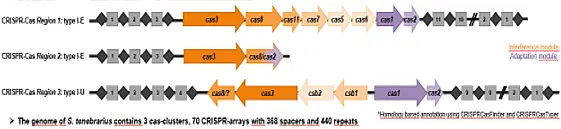
Fig. 1 CRISPR-Cas Systems in Streptomyces tenebrarius
Three Crispr-Cas systems were identified in the genome of S. tenebrarius. Its inactivation resulted in mutants that cannot sporulate
Mechanism of conjugative DNA-transfer in mycelial streptomycetes (G. Muth)
This project aims to elucidate the unique conjugative DNA-translocation system of the mycelial soil bacterium Streptomyces, which depends on the FtsK-like DNA-translocase TraB. To identify proposed TraB binding sites of S. coelicolor, directing chromosome mobilization (CMA), the clt region of the conjugative plasmid pSVH1tsr, normally recognized by TraB, was replaced by random S. coelicolor M145 DNA fragments. The resulting library was screened in mating experiments with S. lividans for plasmids that regained the ability for conjugative transfer. Plasmid DNA was isolated from transconjugants, retransferred into TK54 protoplasts and retested for their transfer ability. From one plasmid that was transferred with a high efficiency the cloned insert was analysed. It has no similarity to clt, however, a noncanonical four-stranded secondary structures (G4Q) formed by guanine-rich DNA was detected. Whether the G4Q structure is crucial for TraB binding and directing DNA transfer will be tested in further studies.
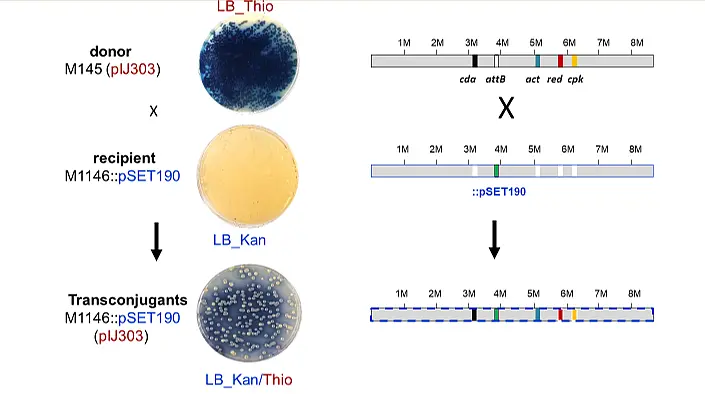
Fig. 2 Gene transfer in Streptomyces
Transfer of plasmids in Streptomyces resulted in the mobilization of large chromosomal regions including biosynthetic gene clusters
Analysis and engineering of fungal secondary metabolism
In addition to actinomycetes also various fungi produce secondary metabolites such as non-ribosomal peptides that possess pharmaceutical applications. This was the motivation to investigate the synthesis of cyclic pentapeptides (astin and lajollamide). Our studies suggest that astin (synthesized by the endophyte Cyanodermella asteris) is synthesized in different cellular organelles which prevents heterologous production in bacterial hosts or in Aspergillus. Astin variants (such as astin A and B) that are exclusively found in the host plant A. tataricus are the result of a combinatorial biosynthetic effort of the fungal endophyte and the host plant—thus illustrating a rare event of shared biosynthesis.
In contrast, the lajollamide biosynthetic gene cluster from Asteromyces cruciatus could be transferred to Aspergillus where the cyclic peptide is efficiently produced and where derivatives can be generated by precursor-directed biosynthesis.
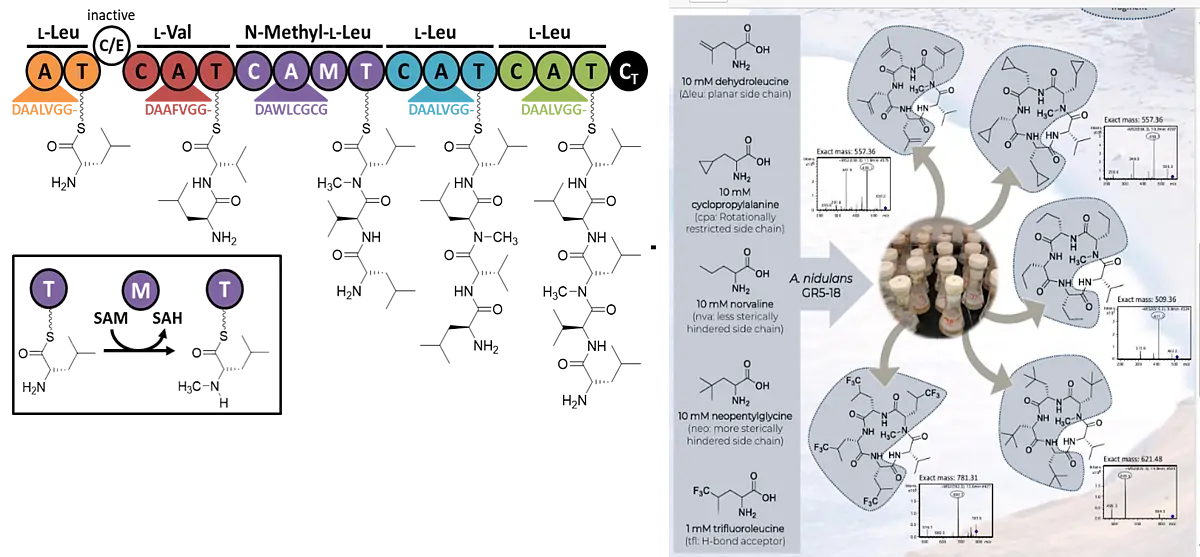
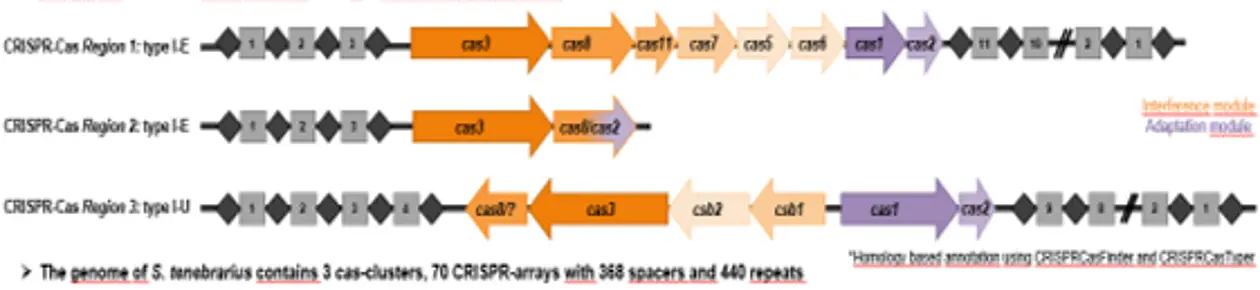
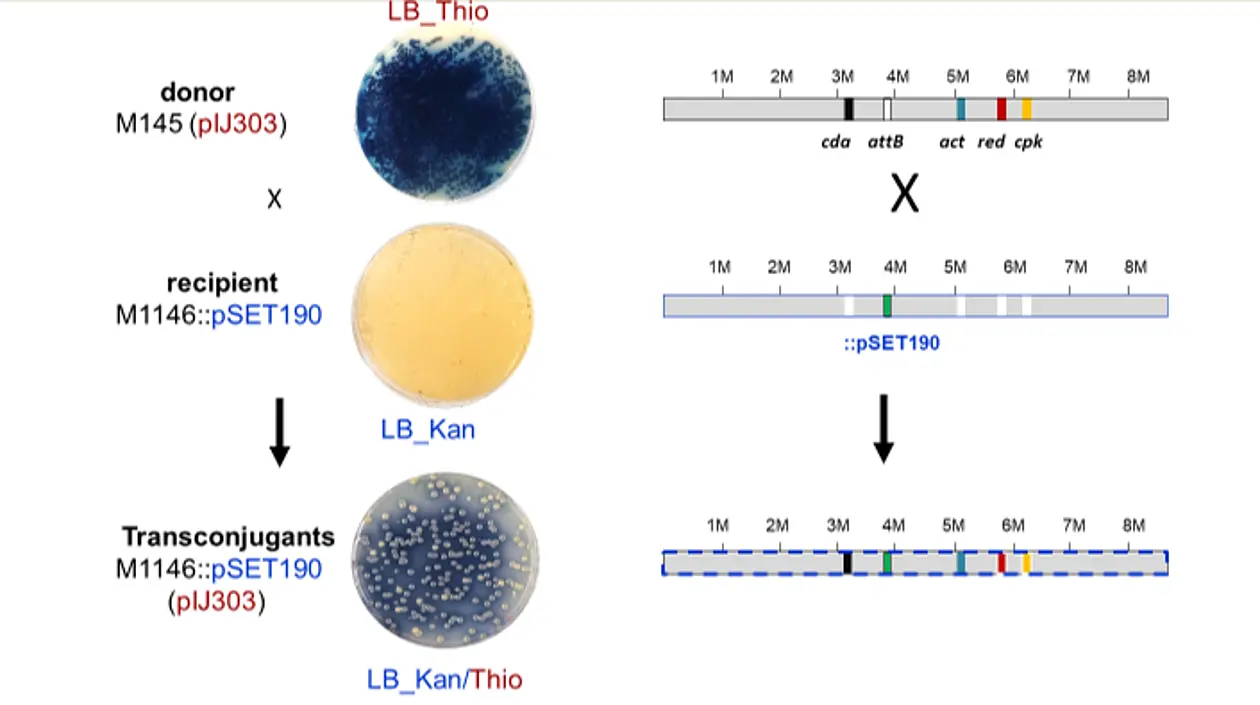
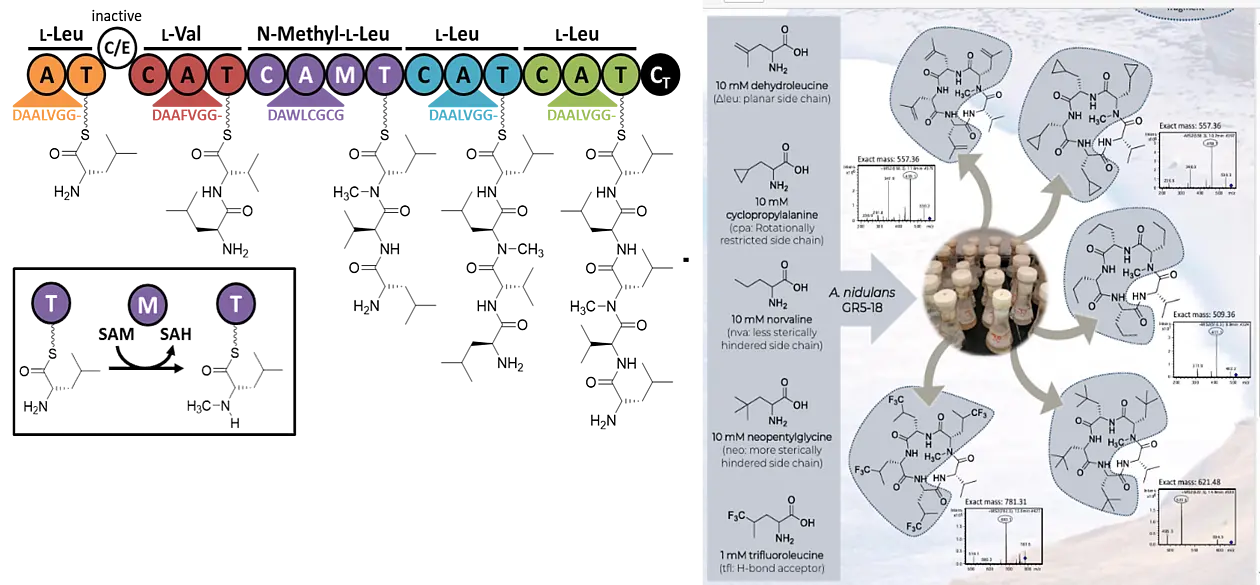
Fig. 3 Heterologous production of lajollamide in Aspergillus nidulans
The biosynthesis of the cyclic pentapeptide lajollamide is encoded by a single NRPS gene. This gene was successfully expressed in Aspergillus enabling heterologous production of lajollamide. Feeding of derivatives of the precursor leucin resulted in the biosynthesis of a series of new lajollamide derivatives
Achievements
- Engineering primary metabolism led to increased yields of secondary metabolites, among others in glycopeptide, EDDS (with Evi Stegmann), Lysolipin and FK506 production.
- Chromosome mobilizing activity in streptomycetes contributes to the evolution of specialized metabolism (Günther Muth).
- Actinomycetales CRISPR-Cas are largely unexplored and seem to have functions beyond the known CRISPR-Cas functions.
- Glutamine synthetase-like enzymes were shown to be essential for the detoxification of polyamines in actinomycetes and in human macrophages.
- Biochemical and structural data enabled the development of assays and screening methods to identify inhibitors for GS-like enzymes.
- The genes encoding the astin biosynthetic pathway have been identified and characterized in the endophytic fungus Cyanodermella asterica. The host plant appears to contribute to the synthesis of some particular astin variants (shared biosynthesis).
- Systems for efficient heterologous production and isolation of fungal cyclic peptides in Aspergillus have been developed.