Protein-protein interactions in yeast
One of the best known in vivo protein-protein interaction systems is the Yeast-2-Hybrid (Y2H) system which was introduced by Fields and Song in 1989. It is based on the artificial cleavage of the yeast’s GAL4 transcriptional activator into two functional domains: the N-terminal DNA binding domain (BD) and the C-terminal activation domain (AD). Fusion of proteins of interest with either of those two domains and coexpression in specialised yeast cells (GAL4 knockout, integrated reporter constructs, etc.) allows for the detection of interaction. Reconstitution of the GAL4 halves through close proximity of the two proteins of interest enables reporter gene activity to be monitored. The Y2H system has become a tremendously successful method and a huge variation of its original design has since been established. An abundance of reviews has been published that also details the issues of the method. One major flaw is the necessity of the fusion proteins to be localised to the nucleus as the reconstituted GAL4 needs to bind to the DNA upstream of the reporter genes. This requires for example membrane proteins to be truncated before interaction assays can be performed. It also means that interaction takes place dislodged from its native environment. In 1994, the split-ubiquitin system, an alternative method that overcomes this flaw was developed by Johnsson and Varshavsky; that was only 5 years after the Y2H had been established, yet it never gained as much attention (a google search using “yeast two hybrid” yields 1.5 million hits, “Split Ubiquitin” around 25.000, see also Xing et al. 2016).
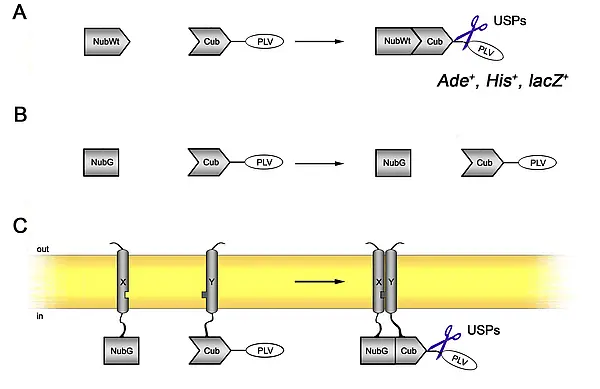
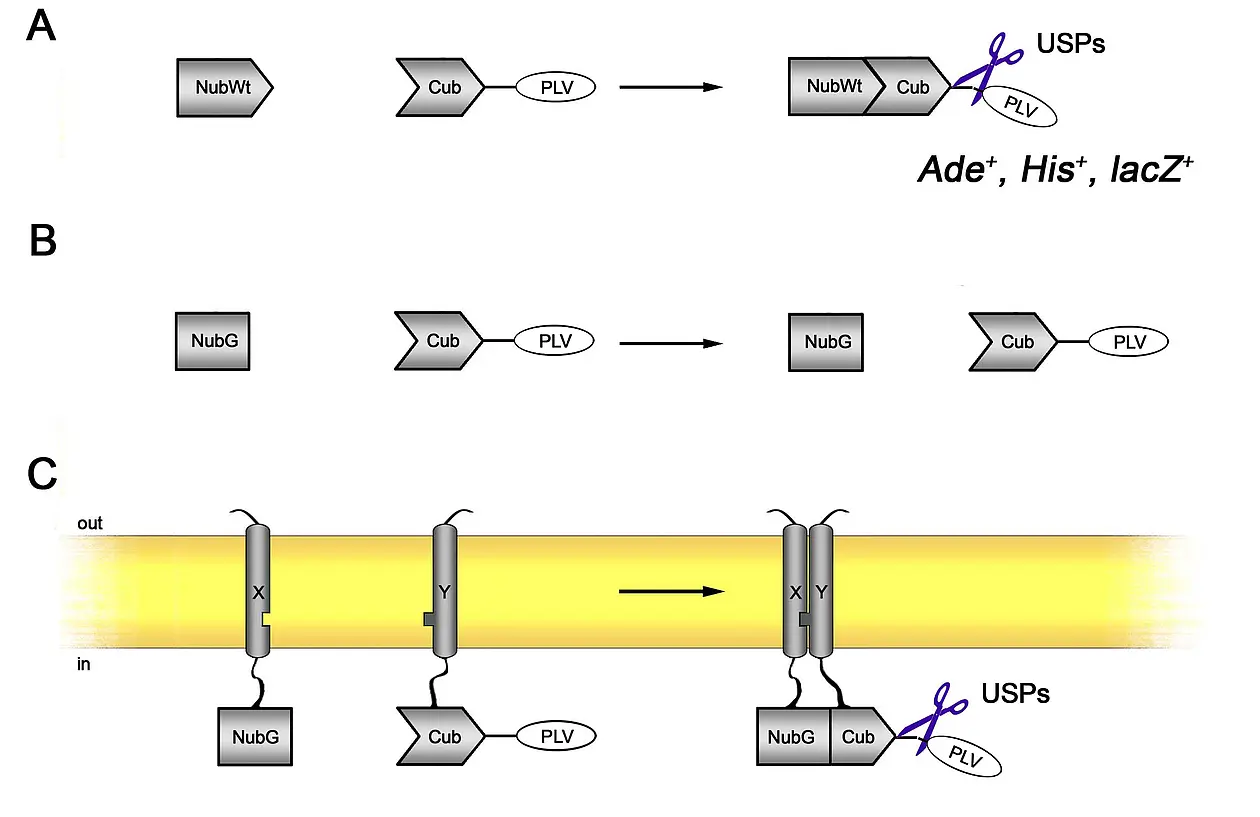
Despite this disregard of the scientific community, the split-ubiquitin system (SUS, see figure 7) in yeast is a very reliable tool to detect and dissect protein-protein interactions of full length proteins. It is based on splitting the yeast’s ubiquitin protein into an N- (Nub) and C-terminal (Cub) half, the latter being additionally tagged with a hybrid transcription factor (PLV = ProteinA-LexAVP16) and fused to proteins of interest (Johnsson et al., 1994; Stagljar et al., 1998). To prevent spontaneous reassembly of Nub and Cub, the N-terminal half is mutated at a key residue (Ile13 to Gly = “NubG”). Upon interaction of the fusion proteins Nub and Cub reassemble, are recognised by ubiquitin specific proteases and the transcription factor is released to activate reporter genes that confer growth on depleted media or β-galactosidase activity. We have extensively worked with the SUS in the past and benefit from a range of different vectors with modified tag orientations, different promoters and origins. Feel free to contact us if you would like to work with the SUS or if you simply need some troubleshooting. Browse our Resources page for vector maps, sequences and protocols.