Center for Islamic Theology

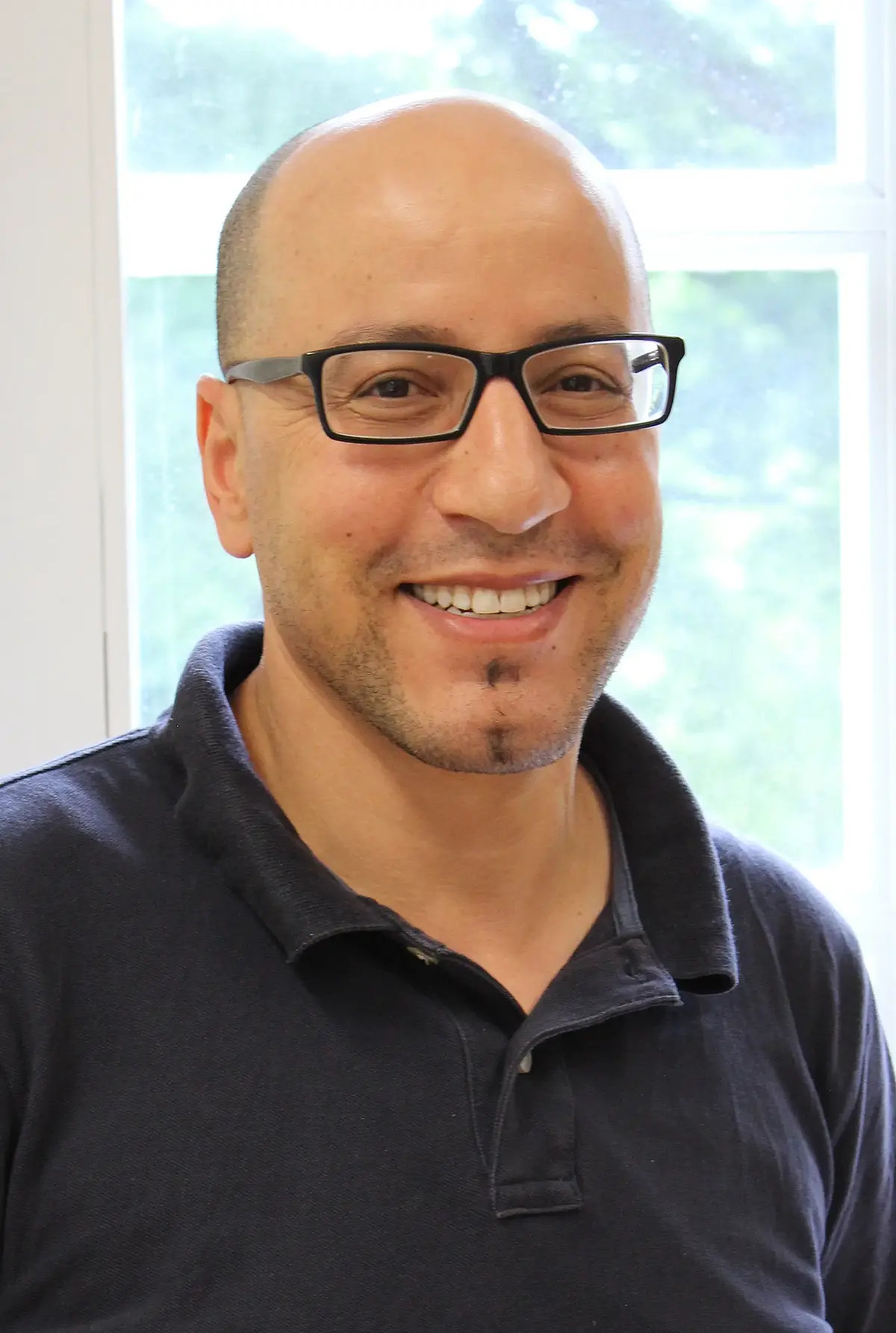
Prof. Dr. Mouez Khalfaoui

Website of the Chair of Islamic Law

Chair of the Examination Board
Member of the Academic Board
Member of the Centre Council                                                                                                                                                                                                                                                                                                                                                                                                                          

Office
Center of Islamic Law
Liebermeisterstraße 18, 72076 Tübingen
5Th level, Room 523
+49 7071 29-75393
mouez.khalfaouispam prevention@uni-tuebingen.de

Speaking hours
Tue., 15:00 - 16:00 Uhr

And by arrangement

Secretariat
Jihene Lahouar, Mo. - Wed.
+49 7071 29-74880


Research

Main Research Areas

  • Islamic law, legal theory and history
  • Legal education
  • Islamic theology
  • Minority law
  • Islamic education
  • Social ethics, business ethics, medical ethics and work ethics
  • Islam and society in Europe
  • Arabic language, literature and culture


Research Projects

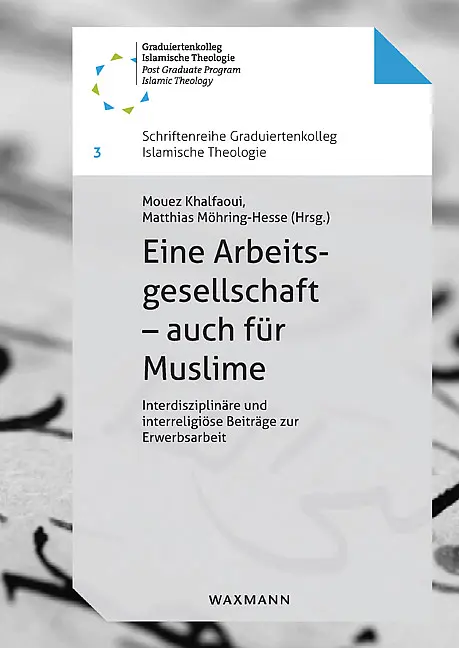
Islamic Work Ethics in a Global Context

This research project examines whether and to what extent employees’ religiosity shapes their work and how much space the workplace provides for religious practice. Its aim is to investigate comparatively the work ethics of the three Abrahamic monotheistic religions—Judaism, Christianity and Islam—with a particular focus on Islam. It explores how the same questions are answered from different perspectives and what solutions to contemporary problems in the world of work can be derived and tested.

The project combines historical, sociological, philosophical, legal and theological approaches and pursues, among others, the following research objectives:

  • The emergence of work ethics and their development in the three monotheistic religions
  • What solutions can religion offer to contemporary problems in the world of work?
  • What contribution can religion make to current debates about work?

The interdisciplinary and interreligious research group presented its findings at two workshops and published them in an edited volume in 2015.

Islamic Law, Sharia and Ethics: A European Perspective

This research project investigates current problems and challenges affecting the lives of Muslim minorities in Europe. Adopting a problem-oriented approach, it asks how Muslims in today’s globalised world, particularly in Europe, understand Islamic doctrines and can develop a progressive understanding of Islam. It proposes approaches and possible solutions to areas of tension including:

  • Islam and human rights
  • The role of women in Islam
  • Islamic family law in Europe
  • Sharia and secular law

The monograph was published by Nomos in 2022.

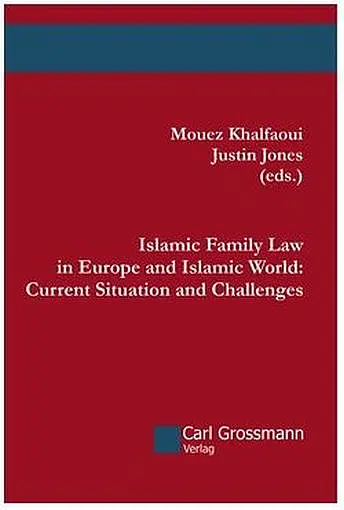
Islamic Family Law in Europe

This research project addresses challenges relating to conceptions of marriage and family arising from the migration of Muslim minorities to Europe. It focuses on the following topics:

  • Marriage involving minors
  • Polygamy
  • Unregistered marriages
  • Gender roles

The project uses a historical-critical method to examine the Islamic legal conception of marriage as developed by classical scholars and sources. It also included a nationwide quantitative field study involving people living in Germany who identify as Muslim.

The findings were presented in 2019 at the international symposium “Islamic Family Law in Europe and the Islamic World”.

The related book, Islamic Family Law in Europe and the Islamic World: Current Situation and Challenges, was published by Carl Grossmann Verlag.

The Normativity of the Qur’an between Traditional Interpretive Approaches and Contemporary Reception

The aim of this project is to provide Muslims in different areas of society with guidance on how to approach the normativity of the Qur’an. Its central subject is the Qur’anic legal verses (āyāt al-aḥkām), which are repeatedly associated with issues such as gender, corporal punishment, human rights, Sharia and secular law and are interpreted and applied in different ways.

The project was conducted in cooperation with the fields of Qur’anic hermeneutics, law and education. Participants included Professor Mohammed Nekroumi (Chair of Islamic Religious Studies, Friedrich-Alexander University Erlangen-Nuremberg) and Professor Fahimah Ulfat (Chair of Islamic Religious Education, University of Tübingen). It was funded by the Academy for Islam in Research and Society (AIWG).


The Priority of the Right in a Plural and Multireligious Society

An application was submitted to the German Research Foundation (DFG) in May 2024. The project addresses “Secularity in Plural Societies” and involves partners from Germany and Luxembourg.

Team


Short Vita

2022
Appointment as Professor of Islam in Contemporary Societies (declined)
2021-2023
Deputy Director

Center for Islamic Theology 

Summer Semester 2020
Visiting Professor in Luxembourg (LSRS)
Since 2014
Professor of Islamic Law

Center for Islamic Theology

2012 - 2014
Junior Professor of Islamic Law

Center for Islamic Theology

2010 - 2012
Diplomatic Service

Embassy of Kuwait, Berlin, Germany

2009 - 2012
Lecturer in Islamic Studies and Arabic Studies

Free University of Berlin

2008
Doctorate in Islamic Studies

University of Erfurt

1998
State Examination in Islamic Studies and Arabic Studies

University of Manouba, Tunis, Tunisia

CV


Publications

Monographs

Khalfaoui, M. (2027) Pedagogy of Islamic legal teaching in the West. Forthcoming.

Khalfaoui, M. (2022) Islamisches Recht, Scharia und Ethik: Eine europäische Perspektive. 1. Aufl. Baden-Baden: Nomos Verlag.

Khalfaoui, M. (2021) Pluralism and plurality in Islamic legal scholarship. New York: Gorgias Press.

Khalfaoui, M. (2016) Islam und Muslime in Europa. Berlin: LIT-Verlag.

Khalfaoui, M. (2008) L’Islam indien: pluralité ou pluralisme. Le cas d’al-fatāwā al-hindiyya. Frankfurt am Main: Peter Lang. Dissertation.

Khalfaoui, M. (2000) Lehrbuch für arabische Sprache und islamische Zivilisation. Tunis: Dar al-Bustān.

Edited Volumes

Khalfaoui, M., Güner, T. & Salim, A. (eds.) (2026) Special issue Campus der Theologien. Issue 3. Forthcoming.

Khalfaoui, M. (ed.) (2025–dato) Campus der Theologien. Tübingen: Universität Tübingen.

Khalfaoui, M. & Ehret, J. (eds.) (2025) Repenser la théologie musulmane dans une Europe sous tension: le modèle allemand. Paris: Éditions Hermann.

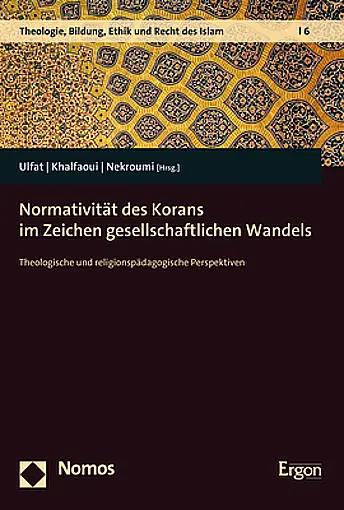
Khalfaoui, M., Ulfat, F. & Nekroumi, M. (eds.) (2022) Normativität des Korans im Zeichen gesellschaftlichen Wandels: Theologische und religionspädagogische Perspektiven. Baden-Baden: Nomos Verlag.

Khalfaoui, M. & Ehret, J. (eds.) (2021) Islamische Theologie in Deutschland: Ein Modell für Europa und die Welt. Freiburg im Breisgau: Herder Verlag.

Khalfaoui, M. & Jones, J. (eds.) (2020) Islamic family law in Europe and the Islamic world. [Ort unbekannt]: Carl Grossmann.

Khalfaoui, M. (ed.) (2017–dato) Theologie, Bildung, Ethik und Recht des Islam. Nomos series. Baden-Baden: Nomos Verlag. Available at: Link.

Khalfaoui, M. & Ucar, B. (eds.) (2016) Islamisches Recht in Theorie und Praxis. Frankfurt am Main: Peter Lang.

Khalfaoui, M. & Möhring-Hesse, M. (eds.) (2015) Eine Arbeitsgesellschaft – auch für Muslime: Interdisziplinäre und interreligiöse Beiträge zur Erwerbsarbeit. Münster: Waxmann Verlag.

Entries in Encyclopedias and Reference Works

Khalfaoui, M. 2022. ‘God’s Law and Civil Law: Religious Norms in the Public Sphere’, in Wayel, B., Krämer, G. and Gräb, W. (eds.) International Handbook of Practical Theology: A Transcultural and Trans-religious Approach. Berlin: De Gruyter, pp. 155–168.

Khalfaoui, M. 2021. ‘Strafe’, in Hallermann, H., Droege, M., Meckel, T. and De Wall, H. (eds.) Lexikon für Kirchen- und Religionsrecht. Vol. 4. Leiden: Brill. doi: 10.30965/9783506786401_0122.

Khalfaoui, M. 2020. ‘Kharaj in South Asia’, in Krämer, G. et al. (eds.) The Encyclopedia of Islam Three. Leiden: Brill, pp. 112–114.

Khalfaoui, M. 2017. ‘Shaikh Nizam al-Din al-Burhanpuri’, in Demiri, L. et al. (eds.) Christian-Muslim Relations: A Bibliographical History. Vol. 11. Leiden: Brill, pp. 248–255.

Khalfaoui, M. 2012. ‘Al-Fatawa Al-ʿAlamgiriyya (al-Hindiyya)’, in Powers, D. et al. (eds.) The Encyclopedia of Islam, Third Edition. Vol. 3. Leiden: Brill, pp. 120–122.

Articles in Peer-Reviewed Journals

Khalfaoui, M. 2026. ‘The Lost Branch of the Hanafi School of Law in North Africa’, Darulfunun Ilahiyat. Forthcoming.

Khalfaoui, M. 2026. ‘Teaching Islamic Law in Secular Context’, Journal of Islamic Studies and Education, 4(2), pp. 51–66. doi: 10.63120/jise.v4i2.129.

Khalfaoui, M. and Ben Abid, L. 2026. ‘Der sunnitische Islam: Möglichkeiten und Grenzen zum Umgang mit muslimischer religiöser Vielfalt im demokratisch-säkularen Kontext’, in Campus der Theologien. Vol. 3. Forthcoming / publication details pending.

Khalfaoui, M. 2025. ‘Islam and Freedom of Belief: The Challenge of Female Apostasy’, Hawwa, 23(2), pp. 239–254. doi: 10.1163/15692086-12341435.

Khalfaoui, M. 2024. ‘Is Child Marriage Lawful in Islam? Modern and Classical Positions in the Mirror of Modern International Human Rights’, Legal Transformation in Muslim Societies Volume 1, Issue 3, 2024: 1-13.

Khalfaoui, M. 2024. ‘Future of Shariʿah in Muslim Majority States and Beyond: A Critical Overview of the Recent Literature’, Legal Transformation in Muslim Societies Volume 1, Issue 2, 2024: 1-13.

Khalfaoui, M. 2021. ‘Work between Obligation and Right in Muslim Culture: Is There a Paradigm Shift?’, Journal of Islamic Ethics, 6(2), pp. 151–172.

Khalfaoui, M. 2020. ‘Towards a New Understanding of the Islamic Family Law in European Context’, Journal of Muslim Minority Affairs, pp. 117–127.

Khalfaoui, M. 2014. ‘Medrese: Religiöse Wissensvermittlung in der islamisch geprägten Welt und darüber hinaus’, Schweizerische Zeitschrift für Religions- und Kulturgeschichte, 108, pp. 449–464.

Khalfaoui, M. 2013. ‘Die Rolle der Muslime in der Sozialgeschichte Europas im 20. Jahrhundert: Österreichische Geschichtsschulbücher als Fallstudie’, HIKMA – Zeitschrift für Islamische Theologie und Religionspädagogik, 7(2), pp. 164–178.

Khalfaoui, M. 2011. ‘From Religious to Social Conversion: How Muslim Scholars Conceived of the Rites de Passage from Hinduism to Islam in Seventeenth-Century South Asia’, Journal of Beliefs & Values, 32(1), pp. 85–93.

Khalfaoui, M. 2011. ‘Together but Separate: How Muslim Scholars Conceived of Religious Plurality in South Asia in the Seventeenth Century’, Bulletin of the SOAS, 74(1), pp. 87–96.

Articles in Journals

Khalfaoui, M. & Müller, D. 2021. ‘Aktuelles muslimisches Verständnis des klassischen Familienrechts in einem modernen säkularen Kontext. Deutschland als Fallstudie’, CIBEDO-Beiträge, pp. 9–15.

Khalfaoui, M. & Müller, D. 2016. ‘Muslime in deutschen Streitkräften. Was ist zu regeln?’, Kompass, 21(09), pp. 7–9.

Khalfaoui, M. 2016. ‘Muslimische Ansätze zur Erziehung und Erlösung in einer pluralen Gesellschaft’, Zeitschrift für Pädagogik und Theologie, 68(4), pp. 469–475.

Khalfaoui, M. 2015. ‘Scharia in Europa’, Herder Korrespondenz Spezial, 69(2), pp. 57–59.

Khalfaoui, M. 2013. ‘Das islamische Erbrecht in Tunesien’, Electronic Journal of Islamic and Middle Eastern Law, 1, pp. 75–82.

Khalfaoui, M. 2009. ‘Indian Architecture: Social and Political Challenges’, Language, Communication, Information, 2(4), pp. 81–94.

Chapters in Edited Volumes

Khalfaoui, M. 2026. ‘Impulse für eine Didaktik des Islamischen Rechts’, in Karagedik, U. et al. (eds.) Islamische Fachdidaktik im Diskurs. Baden-Baden: Nomos. Forthcoming.

Khalfaoui, M. 2026. ‘La relation de l’état à la religion en islam’, in Messner, F. (ed.) Les droits internes des religions. forthcoming.

Khalfaoui, M. 2025. ‘La loi de Dieu face au droit civil: le défi des normes religieuses dans la sphère publique’, in Messner, F. (ed.) La Loi de Dieu est-elle supérieure à la loi des hommes? Paris: Les Éditions du Cerf, pp. 101–122.

Khalfaoui, M. and El Maghraoui, A. 2024. ‘Schöpfungsgerechtigkeit aus muslimischer Perspektive’, in Halft, D. et al. (eds.) Schöpfungsspiritualitäten in Deutschland im Dialog. Ostfildern: Matthias Grünewald Verlag, pp. 171-193 Page numbers pending.

Khalfaoui, M. and Güner, T. 2024. ‘Entry Luxembourg’, Yearbook of Muslims in EuropeBrill, siehe unten bitte

Khalfaoui, Mouez/Güner, Tülay (2024): “Luxembourg”, in: Ahmet Alibašić et al. (Hg.). Yearbook of Muslims in Europe, Brill: Leiden, 16, 425-438.

Khalfaoui, M. 2023. ‘Tod und Sterben aus muslimischer Perspektive’, in Bormann, F.-J. (ed.) Tod und Sterben: Zwischen kultureller Erinnerung und aktuellen Konflikten. Berlin: De Gruyter, pp. 357–372.

Khalfaoui, M. 2022. ‘Muslimische Überlegenheitsansprüche in Zeiten pluraler demokratischer Gesellschaften’, in Ulfat, F. et al. (eds.) Normativität des Korans im Zeichen gesellschaftlichen Wandels: Theologische und religionspädagogische Perspektiven. Baden-Baden: Nomos, pp. 325–357.

Khalfaoui, M. 2021. ‘Die Islamische Theologie im europäischen Kontext im 21. Jahrhundert. Ein neues Fach, neue Fragen, Methoden und Herausforderungen’, in Ehret, J. et al. (eds.) Islamische Theologie in Deutschland: Ein Modell für Europa und die WeltFreiburg: Herder, pp. 20–50.

Khalfaoui, M. 2021. ‘Islam and Human Rights: A Debate in Progress’, in Zarrabi, S. et al. (eds.) Dynamics of Islam in the Modern World. Leiden: Brill, pp. 177–204.

Khalfaoui, M. 2019. ‘Zwischen Vertrauen und Skepsis. Die Beziehungen von Staat und Religion im Islam’, in Abmeier, K. et al. (eds.) Rechtliche Optionen für Kooperationen zwischen deutschem Staat und muslimischen GemeinschaftenMünster: Aschendorff, pp. 71–81.

Khalfaoui, M. 2019. ‘Islamic Education in Europe and the Challenge of Extremism’, in Doroll, C. (ed.) Teaching Islamic Studies in the Age of ISIS, Islamophobia, and the Internet. Bloomington: Indiana University Press, pp. 50–67.

Khalfaoui, M. 2018. ‘Primary Islamic Texts on Land, Water, and Capital Ownership’, in Hendrich, B. (ed.) Muslims and Capitalism: An Uneasy Relationship? Baden-Baden: Ergon, pp. 23–31.

Khalfaoui, M. 2018. ‘Maqasid ash-Shariʿa as Legitimization for the Muslim Minorities Law’, in Tatari, M. et al. (eds.) The Objectives of Islamic Law: Promises and the Challenges of the Maqasid al-Shariʿa. Lanham: Rowman & Littlefield, pp. 271–284.

Khalfaoui, M. 2018. ‘Islamische religiöse Erziehung in Europa und die Herausforderung der Pluralität’, in Al-Mesbar Studies & Research Centre (ed.) Bildungsstrategien in der arabischen Welt und Iran. Dubai: Al-Mesbar Studies & Research Centre, pp. 291–304.

Khalfaoui, M. 2018. ‘Islamic Social Ethics of Mercy’, in Körner, F. et al. (eds.) Rahma: Muslim and Christian Studies in MercyRome: PISAI, pp. 111–120.

Khalfaoui, M. 2017. ‘Muslim Migrants in 21st Century Europe. Legal and Cultural Challenges’, in Varady, T. (ed.) Migration in 21st Century EuropeNovi Sad: Serbian Academy of Sciences, pp. 151–170.

Khalfaoui, M. 2017. ‘Human Dignity and the Creativeness of Muslim Fiqh: Reflections on Contemporary Muslim Approaches to the Challenges of a Secular Age’, in Braun, R. et al. (eds.) The Quest for Humanity: Contemporary Approaches to Human Dignity in the Context of the Qurʾānic Anthropology. Cambridge: Cambridge Scholars Publishing, pp. 260–277.

Khalfaoui, M. 2017. ‘Public Theology and Democracy: A Muslim Perspective’, in Meireis, T. et al. (eds.) Religion and Democracy: Studies in Public Theology. Baden-Baden: Nomos, pp. 89–101.

Khalfaoui, M. 2016. ‘Orientalismus und das Islamische Recht’, in Ucar, B. et al. (eds.) Islamisches Recht in Theorie und Praxis. Frankfurt am Main: Peter Lang, pp. 17–42.

Khalfaoui, M. and Ulfat, F. 2016. ‘Islamic Education in Europe’, in Al-Misbar Studies & Research Centre (ed.) Islamic Education. Dubai: Al-Misbar Studies & Research Centre, pp. 97–114.

Khalfaoui, M. 2016. ‘Soziale Dienste und ihre theologischen Grundlagen. Islamische Beiträge zum Wohlfahrtsstaat’, in Ströbele, C. et al. (eds.) Armut und Gerechtigkeit: Christliche und islamische Perspektiven. Regensburg: Verlag Friedrich Pustet, pp. 270–286.

Khalfaoui, M. 2015. ‘Erwerbsarbeit aus muslimischer Perspektive’, in Möhring-Hesse, M. et al. (eds.) Eine Arbeitsgesellschaft – auch für Muslime: Interdisziplinäre und interreligiöse Beiträge zur ErwerbsarbeitMünster: Waxmann, pp. 233–246.

Khalfaoui, M. 2015. ‘The Debate about Work in Muslim Culture and the Birth of the Literary Genre of “Kasb”’, in Nagar-Ron, S. (ed.) Work in the Contemporary World: Contours of Work from Interdisciplinary PerspectivesOxford: Inter-Disciplinary Press, pp. 54–60.

Khalfaoui, M. 2015. ‘Das islamische Recht und das staatliche Recht aus muslimischer Perspektive’, in Rohe, M. et al. (eds.) Christentum und Islam in Deutschland: Grundlagen, Erfahrungen und Perspektiven des Zusammenlebens. Freiburg: Herder, pp. 304–340.

Khalfaoui, M. 2011. ‘Female Apostasy in Islam: Historical Debate and Current Challenges’, in Morgenstern, M. et al. (eds.) Männlich und weiblich schuf Er sie: Studien zur Genderkonstruktion und zum Eherecht in den Mittelmeerreligionen. Göttingen: Vandenhoeck & Ruprecht, pp. 409–420.

Khalfaoui, M. 2011. ‘Ist die Frage „Warum?“ im Islamunterricht erlaubt? Islam in Deutschland zwischen Tradition und Moderne – „Antworten vergehen, Fragen bleiben“’, in Ucar, B. et al. (eds.) Islamische Religionspädagogik zwischen authentischer Selbstverortung und dialogischer Öffnung: Perspektiven aus der Wissenschaft und dem Schulalltag der Lehrkräfte. Frankfurt am Main: Peter Lang, pp. 223–244.

Khalfaoui, M. 2010. ‘Gängige Erwartungen und Erziehungsvorstellungen der Muslime: Was die Zufriedenheit verbirgt?’, in Ucar, B. et al. (eds.) Islamischer Religionsunterricht in Deutschland. Fachdidaktische Konzeptionen: Ausgangslage, Erwartungen und Ziele. Osnabrück: Universitätsverlag, pp. 113–124.

Khalfaoui, M. 2010. ‘Islamunterricht im europäischen Kontext. Gibt es einen „Euro-Islam“ in der Schule?’, in Hunner-Kreisel, C. et al. (eds.) Kindheit und Jugend in muslimischen Lebenswelten: Aufwachsen und Bildung in deutscher und internationaler Perspektive. Wiesbaden: VS Verlag, pp. 235–253.

Khalfaoui, M. 2009. ‘Pluralismus und Anti-Pluralismus in Südasien im 17. Jh. anhand der Rechtssammlung Al-Fatawa al-Alamgiriyya’, in Beck Varela, L. et al. (eds.) Crossing Legal Cultures. München: Martin Meidenbauer, pp. 203–216.

Khalfaoui, M. 2008. ‘De la pluralité religieuse au pluralisme religieux: peut-on parler de réforme du droit musulman en Asie du Sud au 17e siècle?’, in Haddad, M. (ed.) Religions et réformes religieuses. Tunis: Simpact, pp. 213–226.

Khalfaoui, M. 2006. ‘Text und Kontext: Die Normen des Zusammenlebens zwischen Muslimen und Nichtmuslimen in Südasien anhand der Fatāwā Al-Hindiyya’, in Bultmann, C. et al. (eds.) Mahnung und Warnung: Die Lehre der Religionen über das rechte Leben. Münster: Aschendorff, pp. 116–130.


Book Reviews

Khalfaoui, M. & Salim, A. 2026. Review of Müller, C. 2022. Recht und historische Entwicklung der Scharia im Islam. Berlin/Boston: De Gruyter, Wiener Zeitschrift für die Kunde des Morgenlandes, 116, pp. 410–414.

Khalfaoui, M. 2022. Review of Farahat, O. The Foundation of Norms in Islamic Jurisprudence and Theology. Cambridge: Cambridge University Press, Der Islam, 98(2), pp. 579–584. doi: 10.1515/islam-2021-0036.

Khalfaoui, M. 2017. Review of Syed, M.U. 2016. Coercion and Responsibility in Islam: A Study in Ethics and Law. Oxford: Oxford University Press, HIKMA – Zeitschrift für Islamische Theologie und Religionspädagogik, pp. 316–319.

Khalfaoui, M. 2016. Review of Yearbook of Muslims in Europe. Vol. 3. Leiden: Brill, 2011, Journal of National Identities Humanities, 18(4), pp. 427–430.

Khalfaoui, M. 2010. Review of Erkan, S. et al. 2009. Mein Islambuch. München: Oldenbourg Schulbuchverlag, HIKMA – Zeitschrift für Islamische Theologie und Religionspädagogik, 1(1), pp. 105–106.

Khalfaoui, M. 2010. Review of Meijer, W.A.J. Tradition and Future of Islamic Education. Religious Diversity and Education in Europe 10. Münster: Waxmann, Panorama: Intercultural Journal of Interdisciplinary Ethical and Religious Studies, 22, pp. 27–31.

Translations

Khalfaoui, M. 2010. Übersetzung sowie redaktionelle, inhaltliche und pädagogische Anpassung des Sprachbuches Arabisch Sprachkurs Plus an den deutschen Lernkontext. Berlin: Cornelsen.

Khalfaoui, M. 2007. Co-Übersetzung ins Arabische von Cohen, M.R. 1994. Under Crescent and Cross: The Jews in the Middle Ages. Princeton: Princeton University Press. Arabischer Titel: Bayn al-hilāl wa-l-ṣalīb: Waḍʿ al-yahūd fī al-qurūn al-wusṭā/بين الهلال والصليب: وضع اليهود في القرون الوسطى.

Khalfaoui, M. 2004. Co-Übersetzung und Kommentierung des Textes „Geistliche Anleitung“, in Kippenberg, H.G. et al. (Hgg.) Terror im Dienste Gottes: Die „Geistliche Anleitung“ der Attentäter des 11. September 2001. Frankfurt am Main: Campus Verlag. Der Text wurde ins Englische, Spanische und weitere Sprachen übersetzt.


Positions and Memberships

  • Co-founder of the German International Society for Theological Studies (DIGITS), Germany, 2015
  • Founding member of the Berlin Institute for Public Theology, Humboldt University of Berlin
  • Founder of the publication series Theology, Education, Ethics and Law of Islam, Nomos, Baden-Baden, 2017
  • Member of the German Society for Arabic and Islamic Law (GAIR)
  • Founding member of the Tübingen School of Education
  • Editorial board member of national and international academic journals
  • Adviser and reviewer for European and international foundations—including the DAAD, Alexander von Humboldt Foundation and Porticus—and for political institutions
  • Supervisor of the interdisciplinary postdoctoral research group Religion and Rationality: Faith and Reason in the Lives and Thought of Muslims, Christians and Jews in the Context of Plural Societies
  • Deputy Director of ZITh