Module description
Tropical ecology of South America
Martin Ebner (UNI TÜBINGEN), Tatiana Miranda (Senckenberg), Mirco Sole (UESC)
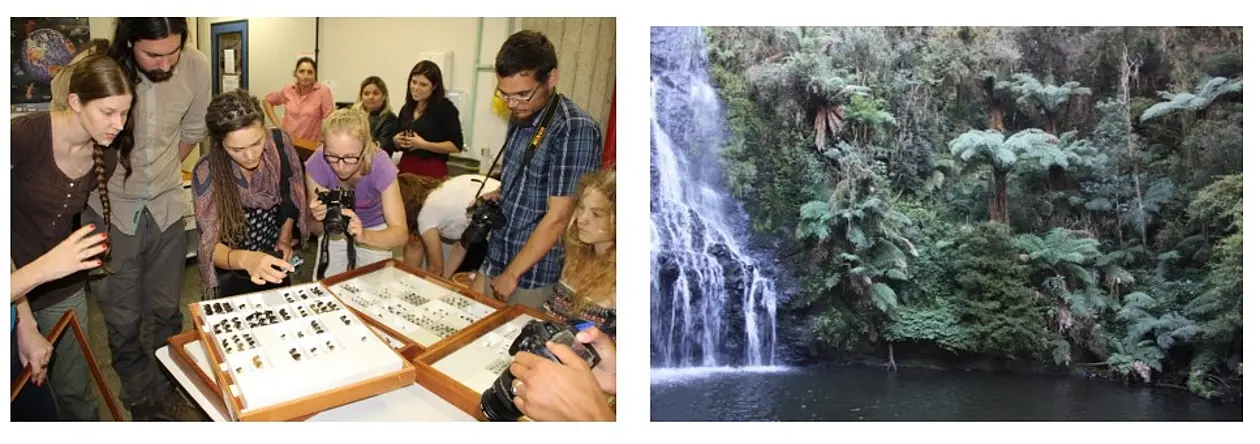
The study module is aimed at analysis of geo-bio-anthroposphere relationships in ecosystems of South America with special focus on the Brazilian Atlantic rainforest (Mata Atlântica) (Fig. 1). It deals with structure, function, diversity and change of tropical ecosystems at different geologic and climatic conditions. Another important aspect are socioeconomic implications and options for sustainable land management.
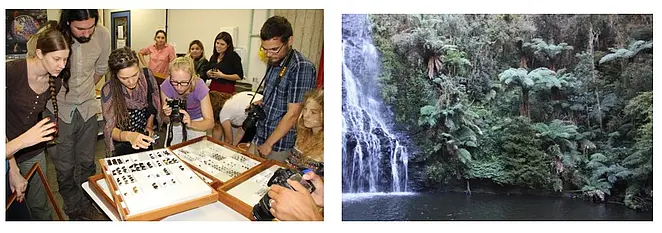
We apply a wide range of field methods in order to characterize the geologic basement, meteorological conditions, hydrology, soil properties, vegetation structure, faunal assemblages and ecophysiology of plants at different forest, grassland and cultivated sites. Experiments, chemical analyses and microscope studies in field labs complement the program in order to assess ecosystem functions, history and structure. Meetings with local scientists, farmers and NGOs working on different projects give insight into environmental issues and the socioeconomic realities of Brazil. As an applied aspect we analyze agroforestry projects and even contribute by direct participation in one of them.
The course is addressed to students of the Eberhard Karls University of Tübingen (EKUT) and to students of our partner universities in Brazil. It was organized and realized by Dr. Rainer Radtke at different locations of Bahia and Rio Grande do Sul state since 2002, under participation of different universities in Germany and Brazil. Unfortunately, it found an sudden end in March 2020 with the outbreak of the Covid pandemic. The continuation of the course is planned at March/April 2024.
The Mata Atlântica
The Mata Atlântica, the Atlantic rainforest of Brazil, is considered to be one of the most biodiverse ecosystems on earth. New species are still being discovered. The forest belt of the Mata Atlântica once ran along the entire Brazilian coast over a distance of more than 4000 km. Today only 5-10% of this forest is left. The condition of the remaining Mata Atlântica biome is of major concern to the Brazilian society as it provides important ecosystem functions like regulation of water budget, storage of carbon, supply of wood, food, purification of water and air. Maintenance and restoration of those ecosystems is of high importance as almost two thirds of the Brazilian population live in the range of this rainforest belt.
In the study module “Tropical ecology of South America” a variety of field methods are applied for monitoring structure, functioning, diversity and change of tropical ecosystems in the range of the Mata Atlântica and neighboring biomes.
Prevised course program
1) Bahia in collaboration with UESC
The first station of the course will be located in the state of Bahia in the northeastern region of Brazil. The course program there will be worked out together with our cooperation partner Prof. Dr. Mirco Solé from Universidade Estadual de Santa Cruz (UESC), who is an expert in the herpetofauna of tropical forests with focus on response of frogs and snakes to global warming and use of pesticides. This part of the course like in the past will be addressed