Social and Cultural Anthropology

Obituary: Dr. Shahnaz R. Nadjmabadi

DEPARTMENT OF SOCIAL AND CULTURAL ANTHROPOLOGY · ASIEN-ORIENT- INSTITUT · UNIVERSITÄT TÜBINGEN

Obituary notice: Dr. Shahnaz R. Nadjmabadi
* 1947 † 25. März 2026

It is with deep sadness that the Department of Social and Cultural Anthropology at the University of Tübingen announces the passing of Dr. Shahnaz R. Nadjmabadi (1947–2026). A pioneering scholar of Iranian coastal societies, beloved mentor, and tireless bridge-builder across disciplines and borders, she leaves an enduring mark on anthropology and on all who had the privilege of knowing her. We will miss her deeply. جای خالیِ او همیشه باقی‌ست

See the complete obituary here

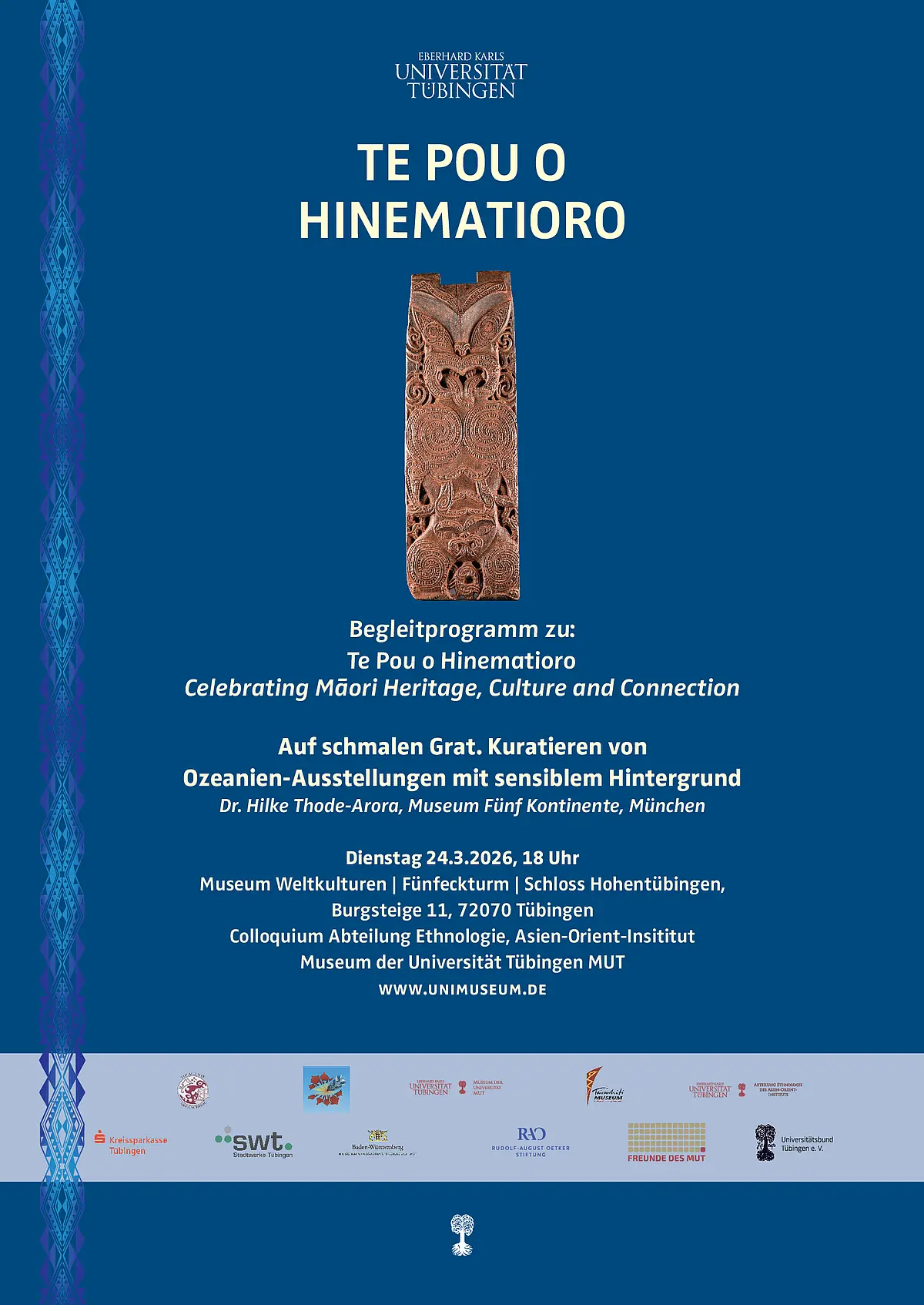
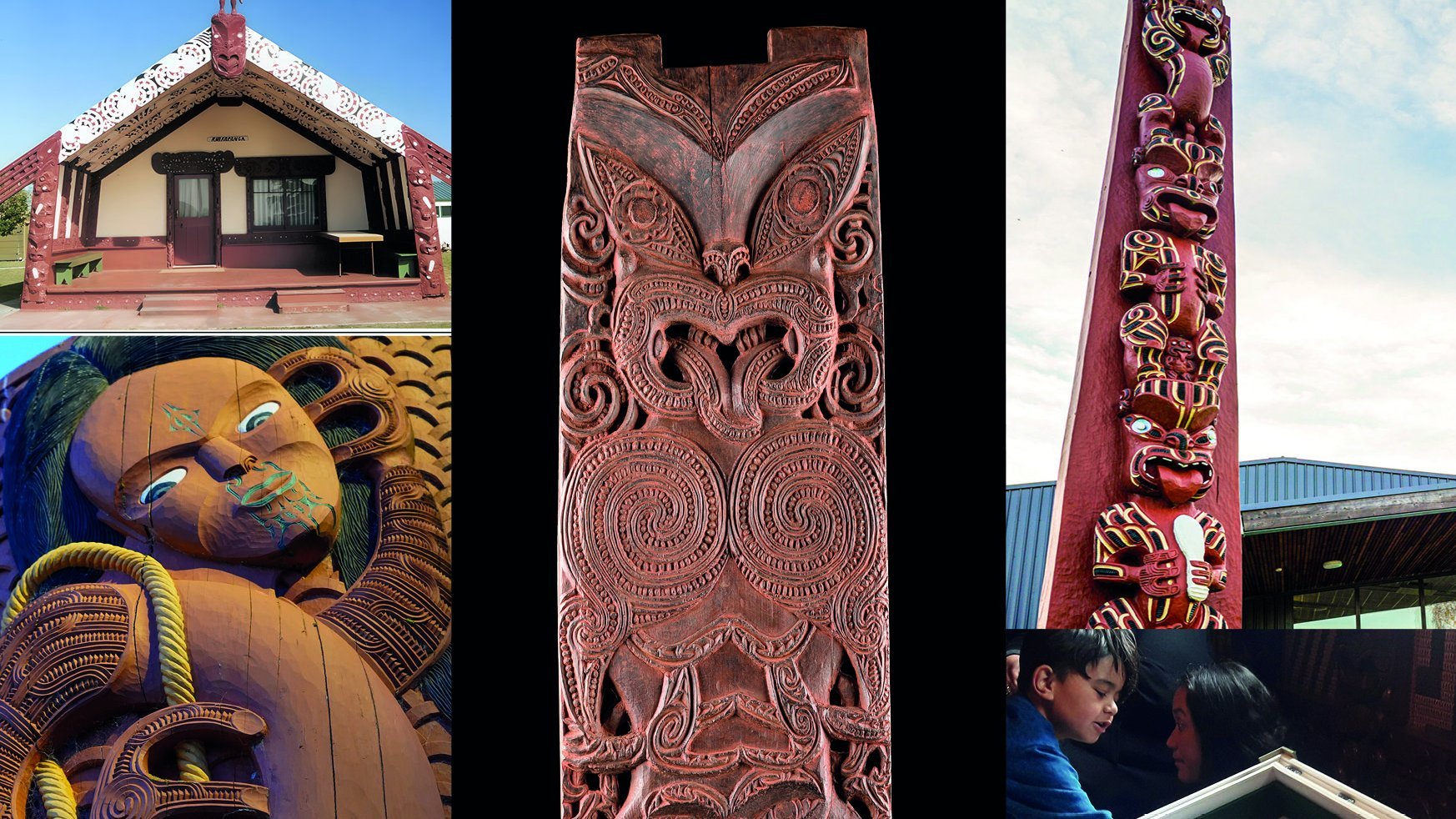
Te Pou o Hinematioro - Celebrating Māori Heritage, Culture and Connection

A student online exhibition with Hinematioro, the ancestress of the Te Aitanga-a-Hauiti people from Aotearoa, New Zealand


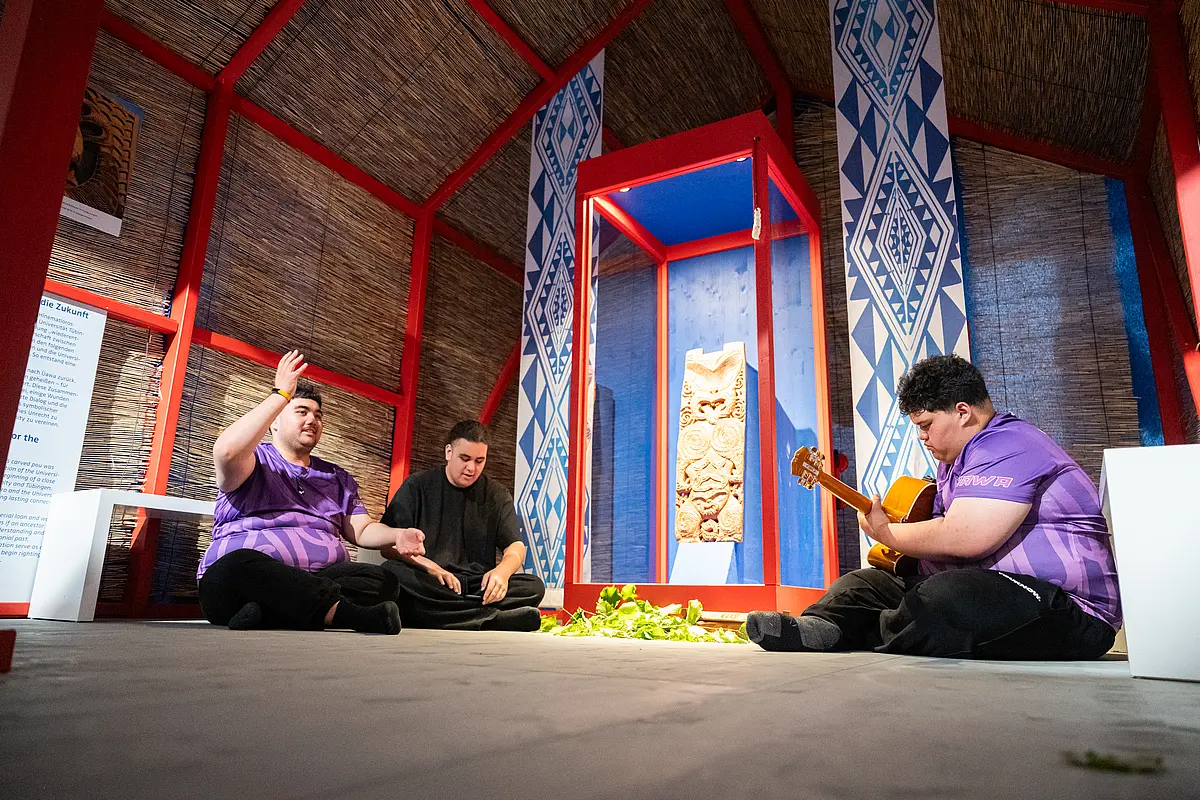
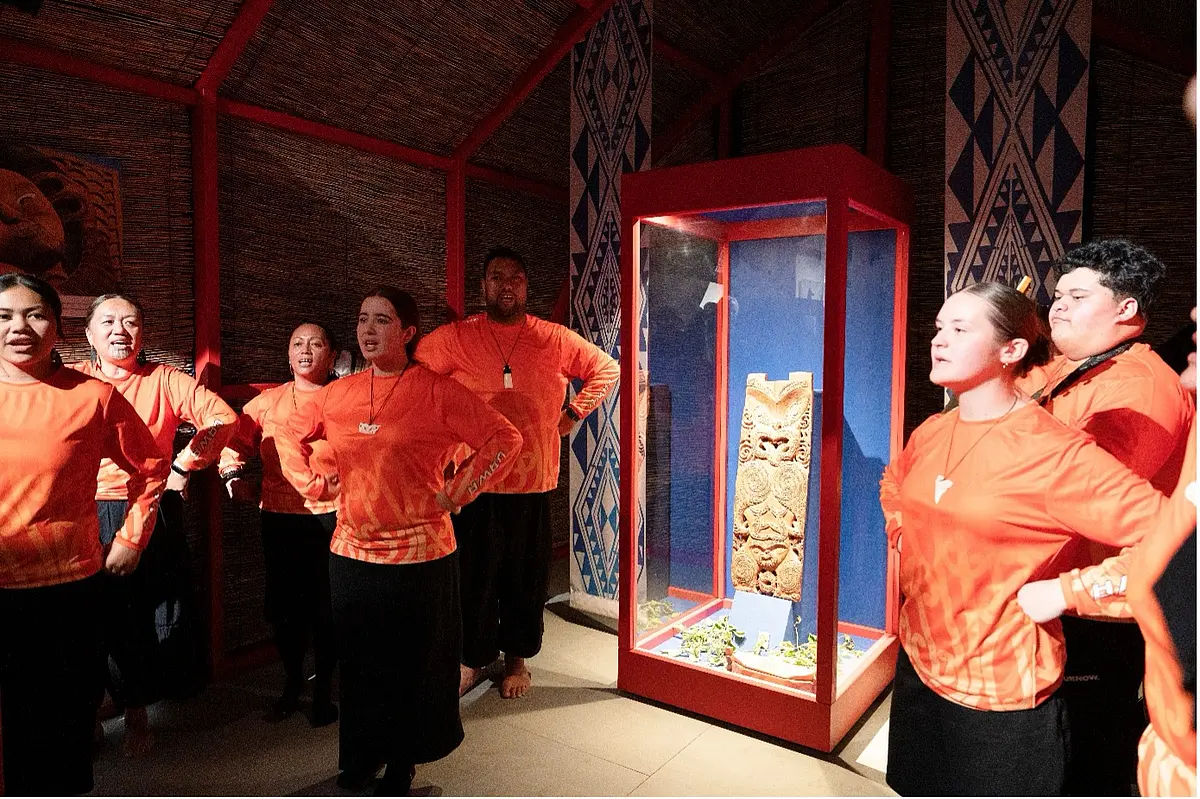
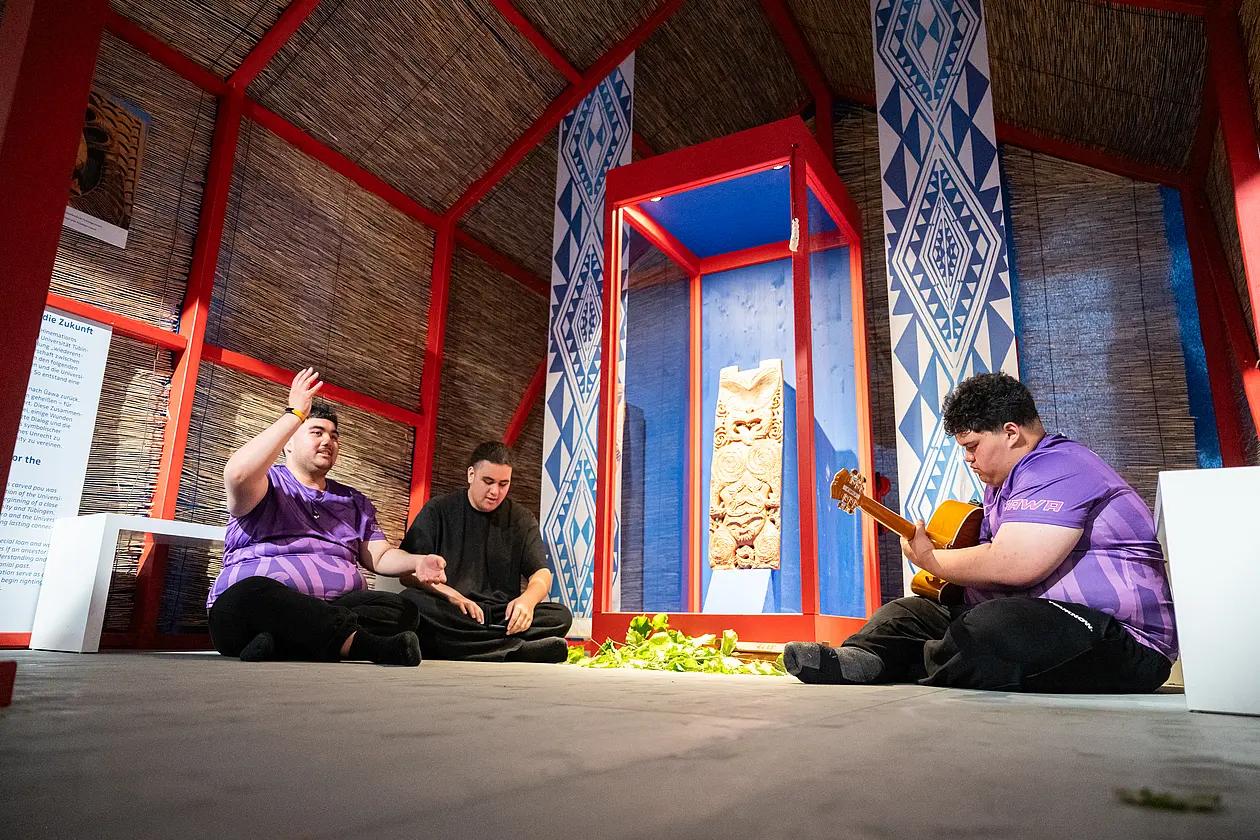
On March 29, Hinematioro’s pou (carved panel) was formally returned to the Te Aitanga-a-Hauiti community, who closed the exhibition by a ceremony in the Knights’ Hall of the Museum of Ancient Cultures!
Students of Social and Cultural Anthropology and the Master profile “Museum & Collections” (MuSa) of the Museum of the University of Tübingen (MUT) preserved the special exhibition in an extended online version. 
Discover the significance of Hinematioro’s presence in Tübingen: enjoy the fascinating pictures of the exhibition and gain insights into the traditions of the Māori community Te Aitanga-a-Hauiti.


Hinematioro returns

06. Februar 2026

Te Pou o Hinematioro is a carved artwork from the 18th century that belonged to a Māori ariki (high-ranking female ruler) named Hinematioro. For her descendants in the town of Tolaga Bay in New Zealand, this ancestral panel embodies her mauri (life energy) and represents her person. The wooden panel left New Zealand 250 years ago aboard James Cook’s Endeavour. Hinematioro has been in the Ethnological Collection in Tübingen for 90 years, where it remained unrecognised for several decades in Hohentübingen Castle.
The announcement of Hinematioro's return is a significant and moving moment for the Department of Social and Cultural Anthropology at the University of Tübingen. Hinematioro has enabled us all to have countless inspiring encounters with her descendants and her numerous visitors. However, her long stay of almost 100 years in Tübingen was also based on the colonial appropriation by European researchers. Hinematioro remained in Tübingen all these years, far away from her community and her place of origin. The Department of Anthropology, therefore, owes a deep debt to the Te-Aitanga-a-Hauiti community in Uawa/Tolaga Bay, New Zealand.
We can now celebrate the return together with the Hauiti community thanks to the cooperation and commitment of countless people. In 1998, Volker Harms, former curator of the anthropological collection, recognized the origin of the taonga (cultural treasure) which was stored there and without any clear attribution. He initiated her restoration and established contact with her descendants.
Over the past three years, students and staff from the Department of Anthropology, together with the University Museum (MUT) and the Tairāwhiti Museum in Gisborne (New Zealand), the Hauiti community, and many others, have committed themselves to Hinematioro and paved the way for her return. Many of these people made extraordinary personal dedication and stood united in their support for the restitution of the ancestral portrait to its descendants. 
In October 2025, this extraordinary engagement and sympathy for Hinematorio's fate led to the opening of a special exhibition at Hohentübingen Castle. This exhibition was curated collaboratively, with the community itself determining the design. Anthropology students are currently working on an online version of this exhibition to continue Hinematioro's legacy in Tübingen and other places.
We look forward with great joy to Hinematioro's imminent return to the Hauiti community in New Zealand.
 
Markus Schleiter, Curator of the Ethnological Collection
for the Department of Social & Cultural Anthropology, University of Tübingen
 

The World Culture Museum in winter term 25,26

Dear Museum Enthusiast,

The World Culture Museum can be visited for free this winter term on Wednesdays, 2 -5 pm. 

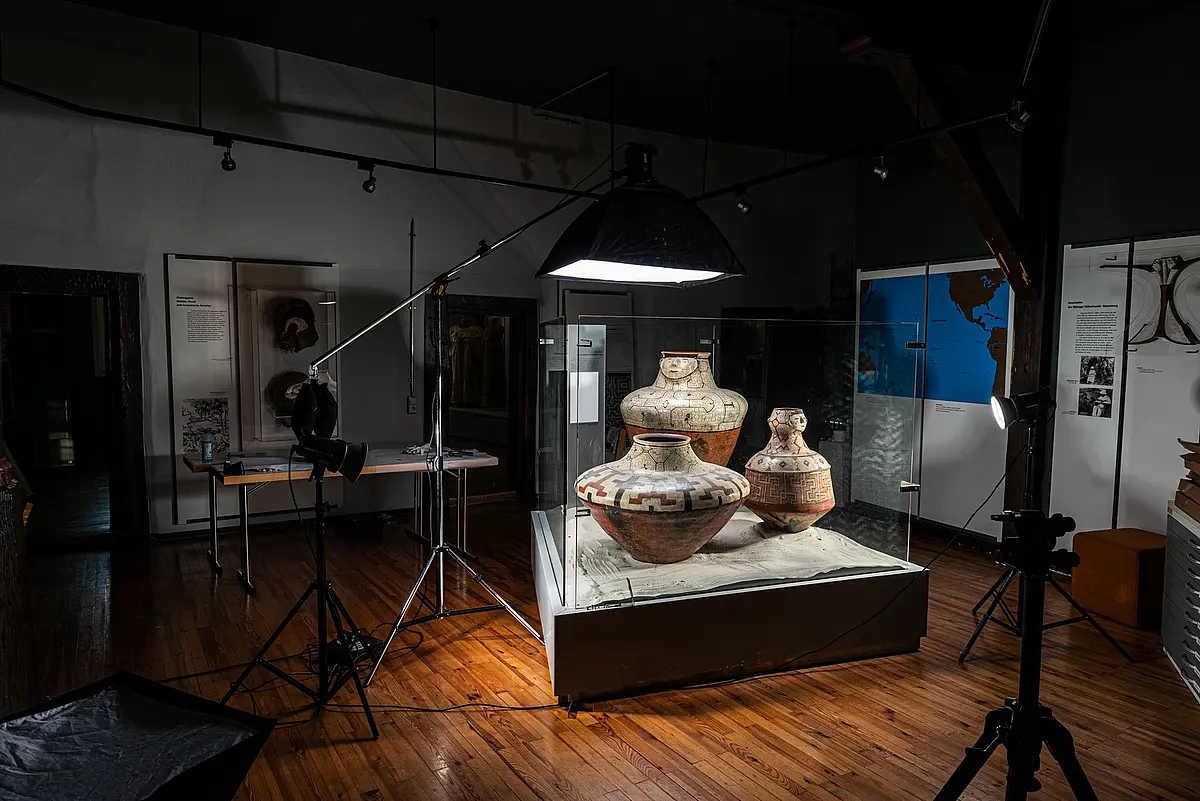
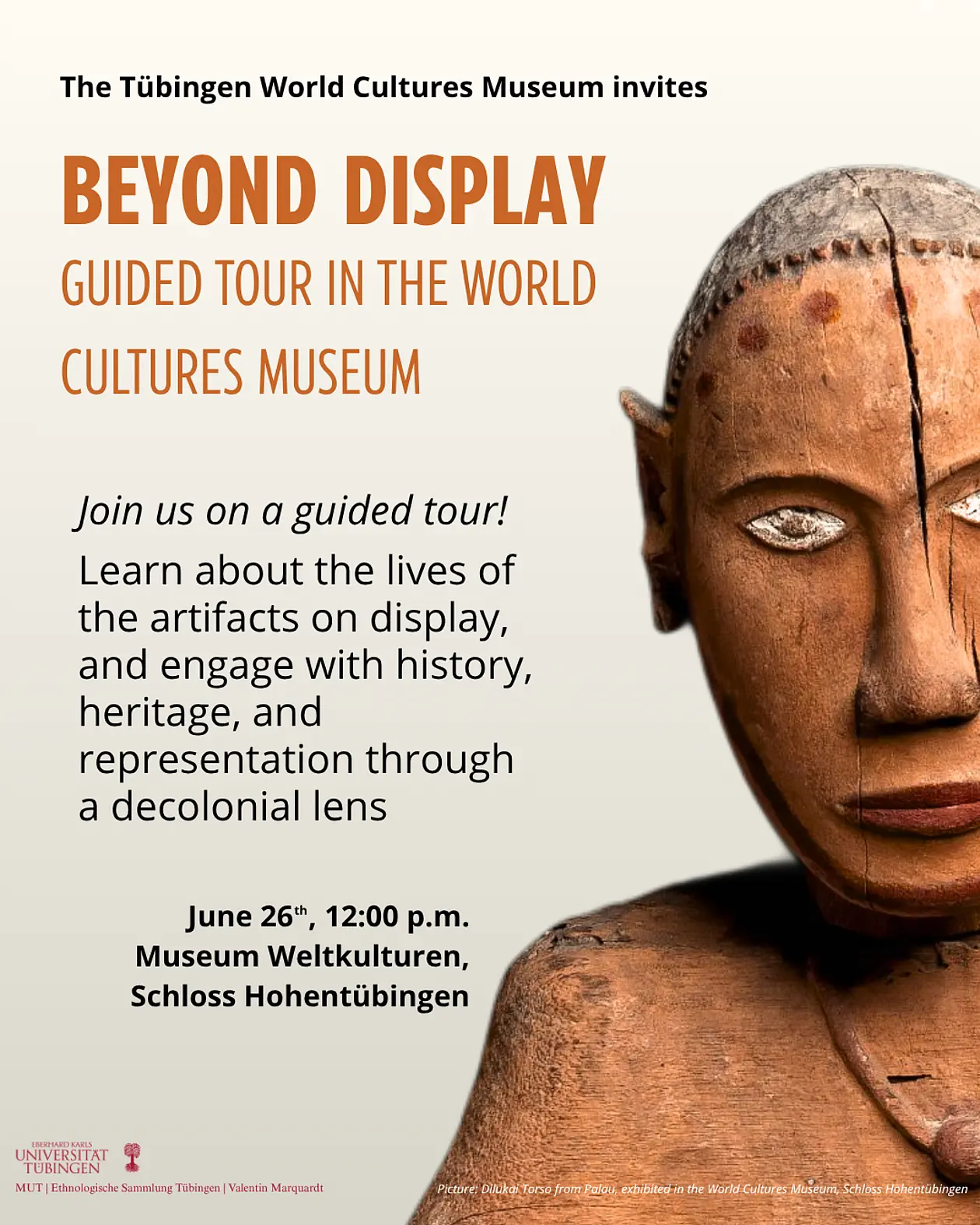
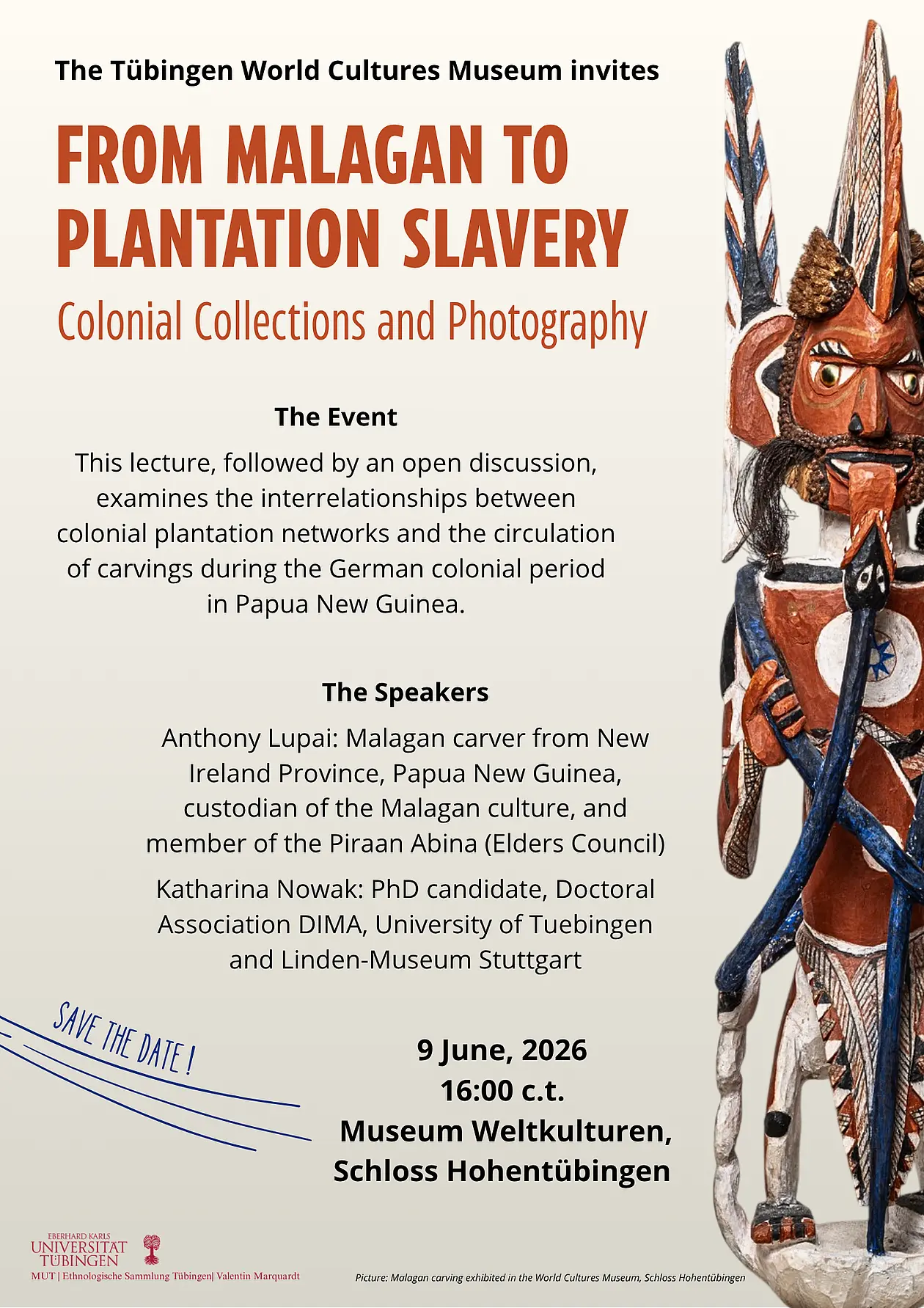
Three exhibitions of the institute's collections can be found there: pottery from Peru, tapa fabrics from the Pacific and Malangan carvings from New Ireland. More information can be found here: https://www.unimuseum.uni-tuebingen.de/de/sammlungen/ethnologische-sammlung. Students of Uni Tübingen have free entry into the entire MUT!

In addition to the exhibition, a student assistand is available to answer questions or discuss issues related to museum anthropology and postcolonial debates. Those who would like to work on the collection as part of their course work will have the opportunity to request research in our collection system at that time.

In case you need further information on our collection, please contact: sammlungspam prevention@ethno.uni-tuebingen.de

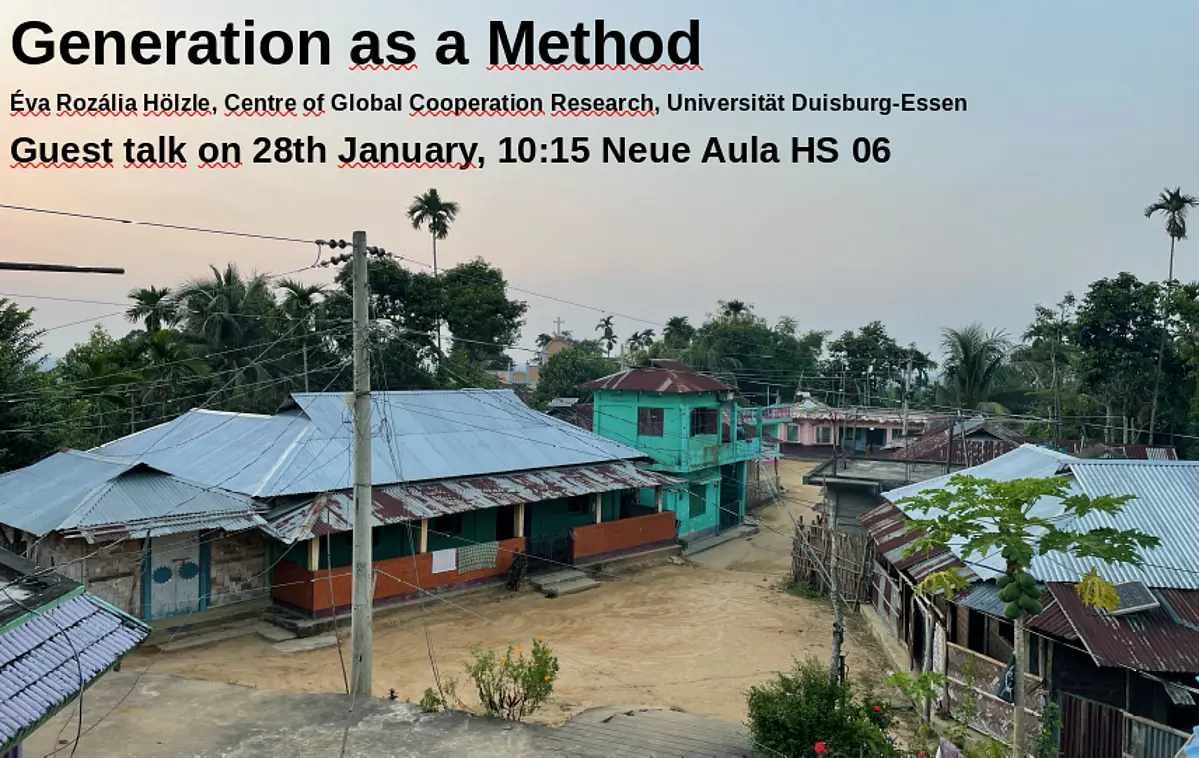
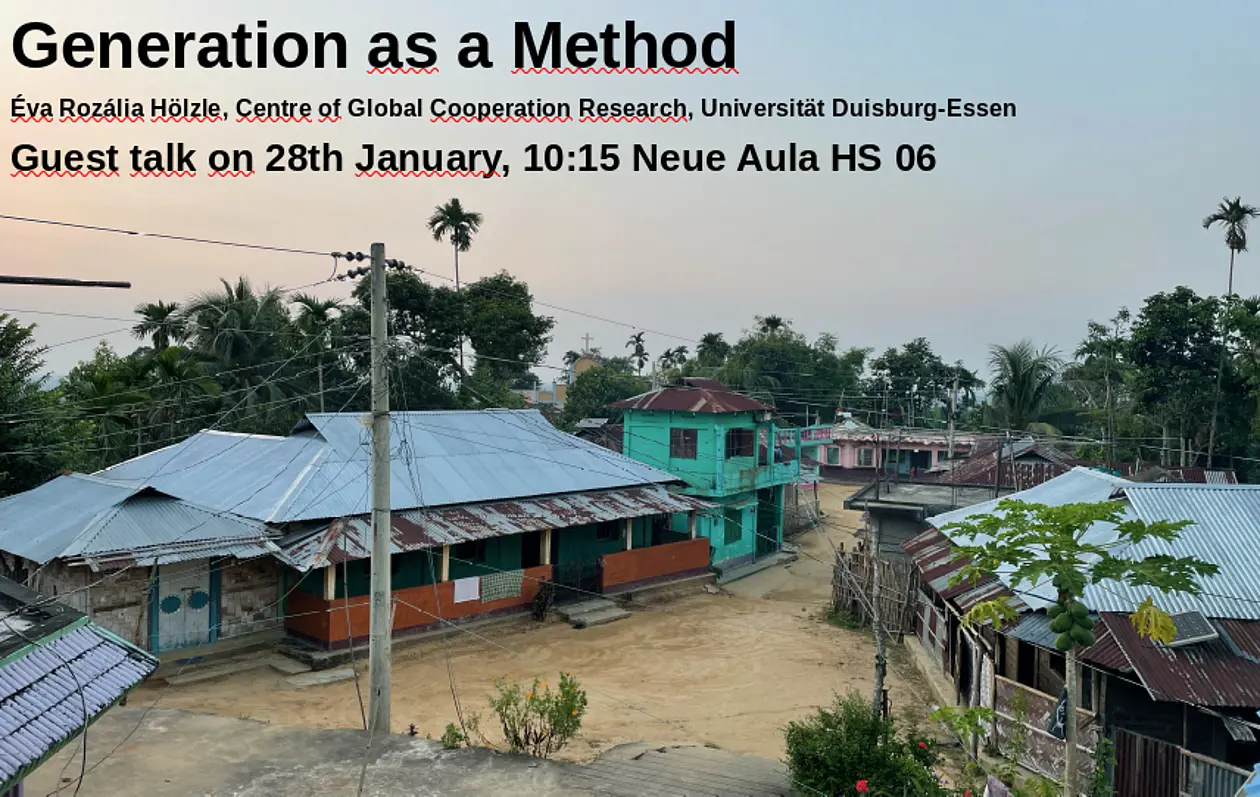
Éva Rozália Hölzle is a social anthropologist affiliated with the Centre of Global Cooperation Research at Universität Duisburg-Essen since January 2026. She has been conducting ethnographic research in the borderlands of Bangladesh and Northeast India exploring the nexus of land dispossession and nation state formation, violence and agency, as well as indigenous life politics since 2010. Her first monograph Land, Life, and Emotional Landscapes at the Margins Bangladesh was published by Amsterdam University Press in 2022. In her postdoctoral research project, Cultivating Ethics across Generation, she examines the interplay and transformation of ethics and kinship through the history of an extended family. She is currently co-leading, together with Dr Magdalena Suerbaum, the DFG-funded research network Kinship Generations, which brings together over 40 researchers focusing on questions of relatedness in Africa, Asia, and the Middle East. To prepare for her talk, please read the article titled "Generations" by Sahana Ghosh and Megha Sarma Sehdev (Feminist Anthropology, 2022) https://anthrosource.onlinelibrary.wiley.com/doi/epdf/10.1002/fea2.12095 

Abstract: The term generation encompasses a range of meanings in social anthropology. It has been used to analyse the transmission of roles and responsibilities across age groups, intergenerational commitments and practices of care, as well as shared historical experiences. Beyond these uses, generation also evokes the act of bringing something forth: humans are not merely generated by their contexts but actively shape the worlds they inhabit. This active dimension is aptly captured by the concept of social generativity, which foregrounds the ongoing making and remaking of the social world across different temporalities. Feminist scholarship (Bear et al. 2015; Ghosh and Shedev 2022), however, cautions against an exclusivly positive interpretation of social generativity. Instead, contradictions and tensions produced by uneven distributions of power play a central role in tracing the “processes of generation” through which “socialities are made” (Bear et al. 2015).

Building on these insights, I propose generation as a methodological lens rather than a purely descriptive category. I argue that a generational lens enables historically grounded ethnographic approach that illuminates differing perspectives on large-scale social events. Drawing on the findings from my ethnographic project, Cultivating Ethics across Generations, which traces the history of an extended family spanning five generations in the Bangladesh–Northeast India borderlands, my talk focuses on the biographical accounts of three siblings from different generations. This methodological approach (i.e. recording and comparing the biographies of people belonging to different generations within the same family), allows me to explore the shifting significance of political events in everyday life over time. Events that appear pivotal for one generation may recede in importance when viewed through the life histories of another within the same family. By juxtaposing these generational perspectives, it enables the accentuation of events that in a narration of family and regional histories tend to fade or submerge due to the requirement of a cohesive storytelling. Generation thus emerges as a key methodological and analytical instrument, enabling the documentation of personal, familial, and regional histories with ethnographic depth while attending to nuanced, generationally differentiated perspectives on large-scale social transformations as they are lived and experienced.

Herzliche Einladung zur Vernissage!

Te Pou o Hinematioro – Māori Heritage, Culture and Connection

a co-curated exhibition of community Te Aitanga-a-Hauiti, Department of Social and Cultural Anthropology and Museum of University of Tübingen

Students and staff of Department of Social and Cultural Anthropology are warmly invited to the opening together with our friends of Te Aitanga-a-Hauiti from New Zealand on Thursday, 23rd of October at 6 p.m. Rittersaal, Schloss Hohentübingen! 

24. October 2025 - 29. March 2026

The exhibition was created in close collaboration between the Māori community Te Aitanga-a-Hauiti from Ūawa/Tolaga Bay (New Zealand) and the University of Tübingen. At its heart stands the carved pou Hinematioro Pou, which came to Europe in 1769 during James Cook’s first voyage. For the community, it is far more than an exhibit - it embodies ancestors, genealogy (whakapapa), spiritual authority (mana), and cultural treasures (taonga).

Learn more: 

https://www.unimuseum.uni-tuebingen.de/de/ausstellungen/sonderausstellungen/poupou 

Prüfungsanmeldung/Exam-Application

Dear Students,

please keep in mind that in the middle of each term you need to apply for exam for every course that you want to have registered in your transcript of records! It can be done on ALMA. Exam applications on ALMA are mandatory!

You can only cancel your application before the exam, the exact cutoff is dependant on the exam date. Please look into the course description in ALMA or ask your lecturer for further information. If you made a mistake (e.g. applied to the wrong module), you can contact the examination office (Prüfungsamt Philosophische Fakultät) and ask to fix it: pa@philosophie.uni-tuebingen.de

You can find further information regarding application deadlines for the current term on the homepage of our examination office: uni-tuebingen.de/einrichtungen/verwaltung/iv-studierende/zentrales-pruefungsamt/