

News
18.11.2025
PINGUIN goes into the second round
Tablet-based diagnostics launched in over 90 elementary schools in Baden-Württemberg.
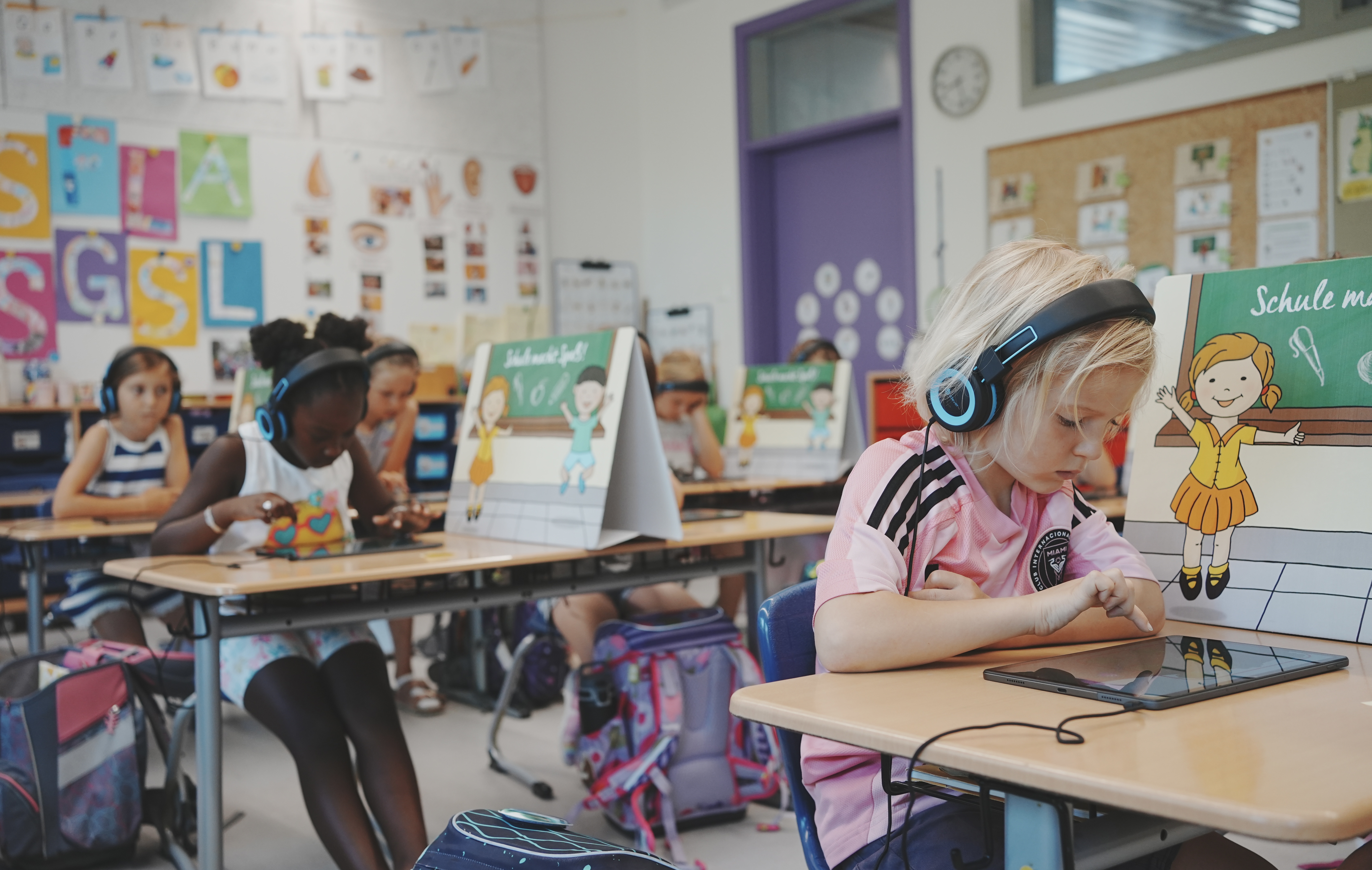
With the start of the new school year, the accompanying study of the PINGUIN project entered its next phase with new participants. By the fall break, teachers in approximately 190 first-grade classes from around 90 schools in Baden-Württemberg plan to use the tablet-based diagnostic tool with their first-graders for the first time. PINGUIN uses four modules to record the initial learning situation and cognitive potential at the beginning of first grade, enabling teachers to assess the individual status of their new first graders. Since the children use PINGUIN on tablets and receive all instructions via headphones, a group of children can participate at the same time, which makes the tool resource-efficient and easy to use.
The large number of participants is particularly encouraging. The active participation of so many different schools not only creates a broad data base, but also provides valuable insights into the use of PINGUIN under different conditions. Feedback from schools is crucial for gaining insights into practical implementation and continuously developing the tool so that it provides the best possible support in everyday school life.
Media Contact
Amelie Rebmann
amelie.rebmann@uni-tuebingen.de