

Hector Research Institute of Education Sciences and Psychology

Prof. Dr. Yizhen Huang

(Eejain Huang, 黄依真)
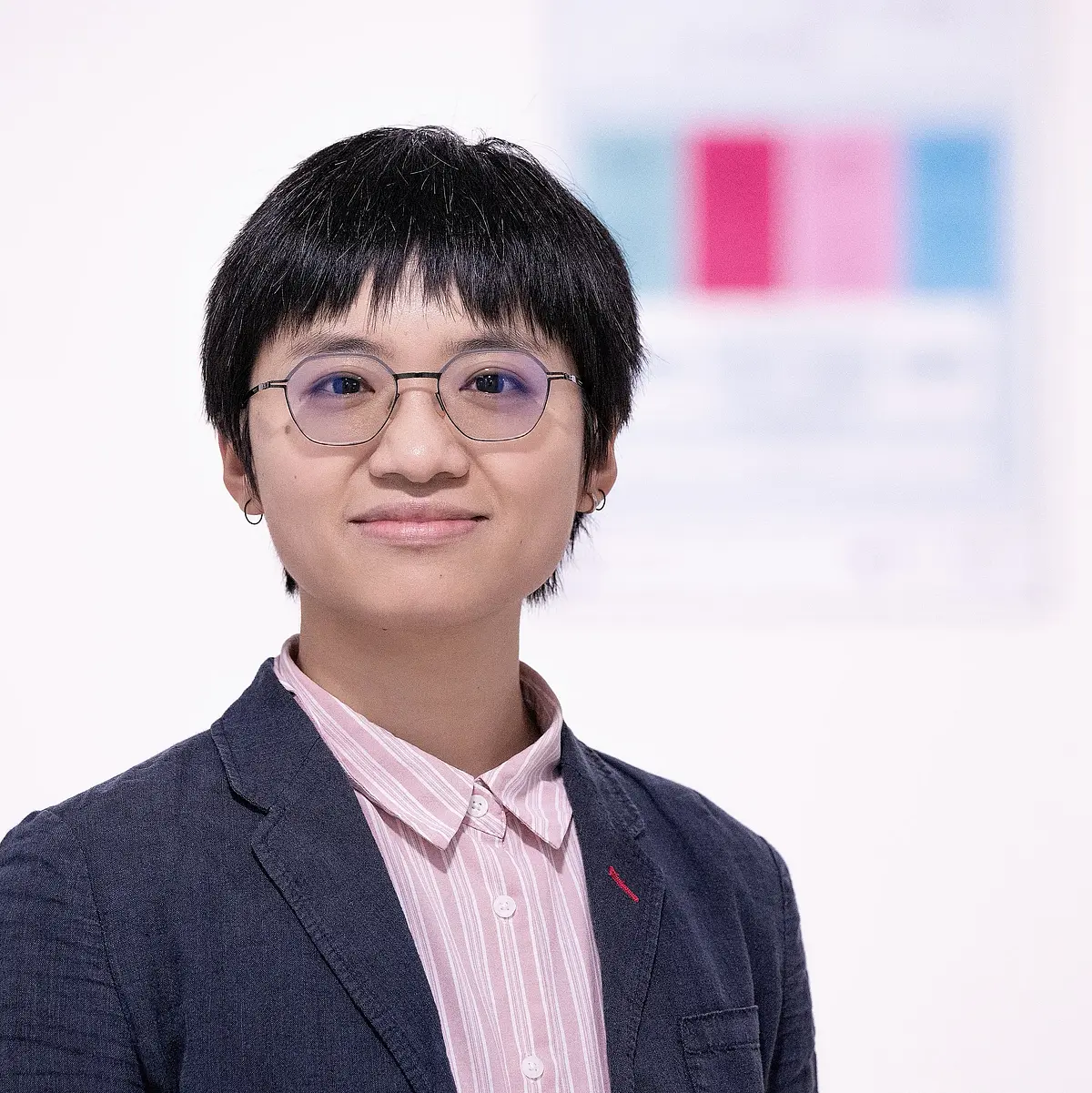
Yizhen (Eejain) Huang is a Junior Professor of Education Sciences and Psychology at the Hector Research Institute of Education Sciences and Psychology. Positioned at the nexus of education, psychology, and technology, she pursues research that deepens understanding of the cognitive, motivational, and affective dynamics of classroom learning and teaching. Her methodology integrates multimodal data from randomized controlled trials conducted in both extended reality (XR) simulations and real-world classrooms with machine learning (ML) approaches. Through this work, she develops simulation-based models of professional learning and effective applications of artificial intelligence (AI) in classrooms.

A Ph.D. graduate of the University of Michigan’s Combined Program in Education and Psychology, she received awards and fellowships from Professor & Mrs. Cho-Yee To Fund, LSA International Institute, Center for Academic Innovation, and American Educational Research Association's (AERA) Instructional Technology Special Interest Group.

Address

University of Tübingen
Hector Research Institute of Education Sciences and Psychology
Europastraße 6
72072 Tübingen
Room 407
 

Contact

Publications

Refereed Journal Articles

  • Huang, Y., Hansen, M., Richter, E., Kleickmann, T., Scheiter, K., & Richter, D. (2025). Enhancing preservice teachers’ noticing via adaptive feedback in a virtual reality classroom. Learning and Instruction, 95, 102053. https://doi.org/10.1016/j.learninstruc.2024.102053
  • Metzner, O., Wang, Y., De Melo, G., Symes, W., Huang, Y., & Lazarides, R. (2025). The potential and limitations of large language models for automatic classification of teachers’ motivational messages in educational research. British Journal of Educational Psychology, bjep.70013. https://doi.org/10.1111/bjep.70013
  • Metzner, O., Wang, Y., Symes, W., Huang, Y., Keller, L., de Melo, G., & Lazarides, R. (2025). A process-oriented perspective on pre-service teachers’ self-efficacy and their motivational messages: Using large language models to classify teachers’ speech. British Journal of Educational Psychology, 95(S1), S73–S97. https://doi.org/10.1111/bjep.12779
  • Richter, D., Huang, Y., & Richter, E. (2024). Ungleichheiten in der Lehrkräfteversorgung: Eine Analyse zur Verteilung qualifizierten Lehrpersonals auf Schulen mit unterschiedlicher Schülerschaft und verschiedenen sozio-ökonomischen Kontexten [Inequalities in teacher provision: An analysis of the distribution of qualified teaching staff in schools with diverse student populations and varied socio-economic contexts]. Zeitschrift für Erziehungswissenschaft [Journal of Educational Research], 27, 1491–1517. https://doi.org/10.1007/s11618-024-01271-2
  • Westphal, A., Richter, E., Lazarides, R., & Huang, Y. (2024). More I-talk in student teachers’ written reflections indicates higher stress during VR teaching. Computers & Education, 212, 104987. doi.org/10.1016/j.compedu.2024.104987
  • Cortina, K. S., Huang, Y., & Richter, D. (2024). Teacher professional vision – a concept revisited. In A. Gegenfurtner & R. Stahnke (Eds.), Teacher Professional Vision: Theoretical and Methodological Advances (pp. 175–188). Routeledge.
  • Bardach, L., Huang, Y., Richter, E., Klassen, R. M., Kleickmann, T., & Richter, D. (2023). Revisiting effects of teacher characteristics on physiological and psychological stress: A virtual reality study. Scientific Reports, 13(1), 22224. https://doi.org/10.1038/s41598-023-49508-0
  • Huang, Y., Lazarides, R., & Richter, D. (2023). Teachers’ adaptations to COVID-19: Perceived preparedness for distance education, frequency of teacher-student contact, and resources in ICT. European Journal of Teacher Education, 1–26. https://doi.org/10.1080/02619768.2023.2288554
  • Huang, Y., Miller, K. F., Cortina, K. S., & Richter, D. (2023). Teachers’ professional vision in action: Comparing expert and novice teacher’s real-life eye movements in the classroom. Zeitschrift Für Pädagogische Psychologie [German Journal of Educational Psychology], 37(1–2), 122–139. https://doi.org/10.1024/1010-0652/a000313
  • Huang, Y., Richter, E., Kleickmann, T., & Richter, D. (2023). Comparing video and virtual reality as tools for fostering interest and self-efficacy in classroom management: Results of a pre-registered experiment. British Journal of Educational Technology, 54(2), 467–488. https://doi.org/10.1111/bjet.13254
  • Huang, Y., Richter, E., Kleickmann, T., Scheiter, K., & Richter, D. (2023). Body in motion, attention in focus: A virtual reality study on teachers’ movement patterns and noticing. Computers & Education, 206, 104912. https://doi.org/10.1016/j.compedu.2023.104912
  • Huang, Y., Richter, E., Kleickmann, T., & Richter, D. (2022). Class size affects preservice teachers’ physiological and psychological stress reactions: An experiment in a virtual reality classroom. Computers & Education, 184, 104503. https://doi.org/10.1016/j.compedu.2022.104503  
  • Richter, E., Hußner, I., Huang, Y., Richter, D., & Lazarides, R. (2022). Video-based reflection in teacher education: Comparing virtual reality and real classroom videos. Computers & Education, 190, 104601. https://doi.org/10.1016/j.compedu.2022.104601
  • Huang, Y., Richter, E., Kleickmann, T., Wiepke, A., & Richter, D. (2021). Classroom complexity affects student teachers’ behavior in a VR classroom. Computers & Education, 163, 104100. https://doi.org/10.1016/j.compedu.2020.104100
  • Richter, E., Marx, A., Huang, Y., & Richter, D. (2020). Zeiten zum beruflichen Lernen: Eine empirische Untersuchung zum Zeitpunkt und der Dauer von Fortbildungsangeboten für Lehrkräfte [Time for professional learning: An empirical study about timing and duration of teacher training]. Zeitschrift für Erziehungswissenschaft [Journal of Educational Research], 23(1), 145–173. https://doi.org/10.1007/s11618-019-00924-x 

Book Chapters and Reports

  • Cortina, K. S., Huang, Y., & Richter, D. (2024). Teacher professional vision – a concept revisited. In A. Gegenfurtner & R. Stahnke (Eds.), Teacher Professional Vision: Theoretical and Methodological Advances (pp. 175–188). Routeledge.
  • Huang, Y., Richter, E., Kleickmann, T., & Richter, D. (2023). Virtual reality in teacher education from 2010 to 2020: A review of program implementation, intended outcomes, and effectiveness measures. In K. Scheiter & I. Gogolin (Eds.), Bildung für eine digitale Zukunft [Education for a Digital Future] (pp. 399–441). Springer Fachmedien. https://doi.org/10.1007/978-3-658-37895-0_16
  • Cortina, K. S., Miller, K. F., Hua, S., Peist, E., Huang, Y., & Wei, Y. (2013). Behavioral regulation of preschoolers in China and the US: the role of attention. In N. McElvany & H. G. Holtappels (Eds.), Empirische Bildungsforschung: Theorien, Methoden, Befunde und Perspektiven [Empirical educational research: Theories, methods, findings, and perspectives] (pp. 125–133). Waxmann Verlag.

Curriculum Vitae

Since 10/2025
Junior Professor of Education Sciences and Psychology

Hector Research Institute of Education Sciences and Psychology, University of Tübingen

11/2019 - 09/2025
Postdoctoral Research Scientist and Instructor

Department of Research on Teaching and Teacher Education, Kiel University

05/2018 - 09/2025
Postdoctoral Research Scientist and Instructor

Educational Research in Educational Sciences, University of Potsdam

09/2013 - 08/2018
Ph.D. in Education and Psychology

Combined Program in Education and Psychology, University of Michigan

09/2016 - 08/2018
M.A. in Statistics

Dual Master's Program in Statistics, University of Michigan

09/2013 - 12/2016
M.S. in Psychology

Combined Program in Education and Psychology, University of Michigan

09/2009 - 07/2013
B.S. in Psychology

School of Psychology, Beijing Normal University