College of Fellows

COLLEGE OF FELLOWS
Center for Interdisciplinary and Intercultural Studies

Das College of Fellows ist das Tübinger Modell eines universitätsbasierten Institute for Advanced Studies. Es richtet sich an alle internationalen Postdoktorand:innen und Research Fellows an der Universität Tübingen und lädt als Forschungs-, Vernetzungs- und Veranstaltungsplattform alle Universitätsangehörigen dazu ein, den internationalen und interdisziplinären Austausch innerhalb der Universität und mit der Öffentlichkeit aktiv mitzugestalten.
Weitere Informationen zum College of Fellows

Aktuelle Veranstaltungen


10. August | CoF Lecture | Prof.in Robin Wang | "Can AI Learn relational responsiveness? Subtle Proximity and a Dao-Based Model of Intelligence"

10. August | Workshop mit Prof.in Robin Wang | "Dwelling in Clarity: Zhuangzi’s Ming (明) and Subtle Proximity"

24. – 29. August | Summer School | "Way and Being: Between Daoist and Presocratic Approaches"

Stellenausschreibungen

Verwaltungsangestellte/r (m/w/d, E 9b TV-L, 50/30%)

Das College of Fellows der Universität Tübingen sucht zum nächstmöglichen Zeitpunkt zur Unterstützung des Teams 

eine/n Verwaltungsangestellte/n (m/w/d, E 9b TV-L, 50/30%)
für das College of Fellows – Center for Interdisciplinary and Intercultural Studies

Die Stelle ist entsprechend der Projektlaufzeit des Early Career Rescue Fellowship Programms befristet bis zum 31.12.2028 zu besetzen. Die Arbeitszeit beträgt bis zum 30.06.2028 50 % und vom 01.07. bis 31.12.2028 30 %.
Die Einstellung erfolgt durch die Zentrale Verwaltung der Universität Tübingen.

Lesen Sie die ausführliche Stellenbeschreibung hier
Bei Interesse freuen wir uns auf Ihre aussagekräftige Bewerbung per E-Mail bis zum 9.08.2026 an niels.weidtmannspam prevention@cof.uni-tuebingen.de


Assistenz des Direktors (m/w/d, E 6 TV-L, 50%)

Das College of Fellows der Universität Tübingen sucht zum nächstmöglichen Termin unbefristet zur Unterstützung des Teams 

eine Assistenz des Direktors (m/w/d, E 6 TV-L, 50%)

für das College of Fellows – Center for Interdisciplinary and Intercultural Studies

Die ausführliche Stellenausschreibung finden Sie hier.

Die Universität Tübingen setzt sich für die Ziele der Gleichstellung und Diversität ein und fördert aktiv Chancengleichheit. Schwerbehinderte werden bei gleicher Eignung bevorzugt eingestellt.

Bei Interesse freuen wir uns auf Ihre aussagekräftige Bewerbung per E-Mail bis zum 30.08.2026 an niels.weidtmannspam prevention@cof.uni-tuebingen.de

News

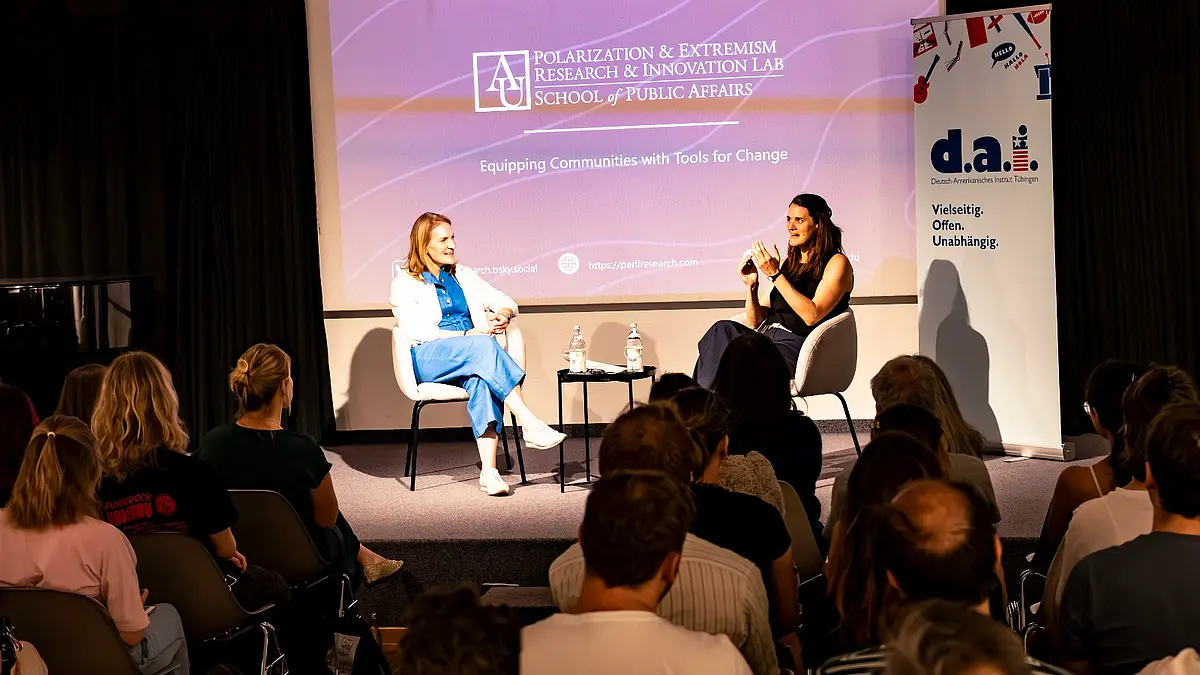
"From TikTok to the Ballot Box: Gendered Grievances and Democratic Erosion in Transatlantic Perspective"

New Horizons Fellow Cynthia Miller-Idriss präsentierte am 13. Juli ihre Erkenntnisse aus Gesprächen mit 18- bis 24-Jährigen in den USA, Kanada, Kenia und Jordanien über deren Online-Erfahrungen.
Ihre Forschung geht über übliche Debatten um schädliche Algorithmen hinaus und deckt auf, wie Empörung, Rückzug und Isolation nicht nur Geschlechtergerechtigkeit schadet, sondern auch jene Basis untergräbt, auf der Demokratien beruhen. Daraus ergibt sich die drängende Frage, was dies für unsere gemeinsamen demokratischen Werte bedeuten könnte.
Der Abend war eine Kooperationsveranstaltung des College of Fellows, des Deutsch-Amerikanischen Instituts (d.a.i.) und des Instituts für Forschung zu Rechtsextremismus (IRex). 


Mercator Fellow Rita Segato im Interview

Im Juni war die renommierte argentinische Anthropologin Rita Segato am College of Fellows zu Gast.
Im Rahmen ihres Mercator Fellowships am Graduiertenkolleg "Figurationen des Prekären im Globalen Süden", veranstaltete das Graduiertenkolleg gemeinsam mit dem Interdisciplinary Centre for Global South Studies und dem College of Fellows eine viertägige Masterclass "Introduction to Discomforting Thinking: Decolonial Feminist Takes on Patriarchy and Race" (15.–18. Juni) mit insgesamt 19 NachwuchswissenschaftlerInnen aus Mexico City, Tübingen, Marburg, Halle (Saale), Brasília, Grenoble, Prag, Leipzig und Frankfurt am Main, die ihre Arbeiten mit Rita Segato diskutieren konnten, sowie einen öffentlichen Vortrag "The Elementary Structures of Violence" (30. Juni). 

Persönliche Gedanken unter anderem zu den Themen Feminismus, Macht sowie zur Unterscheidung zwischen Kolonialismus und Kolonialität formulierte Rita Segato in diesem CoF Interview mit College of Fellows Direktor Niels Weidtmann.


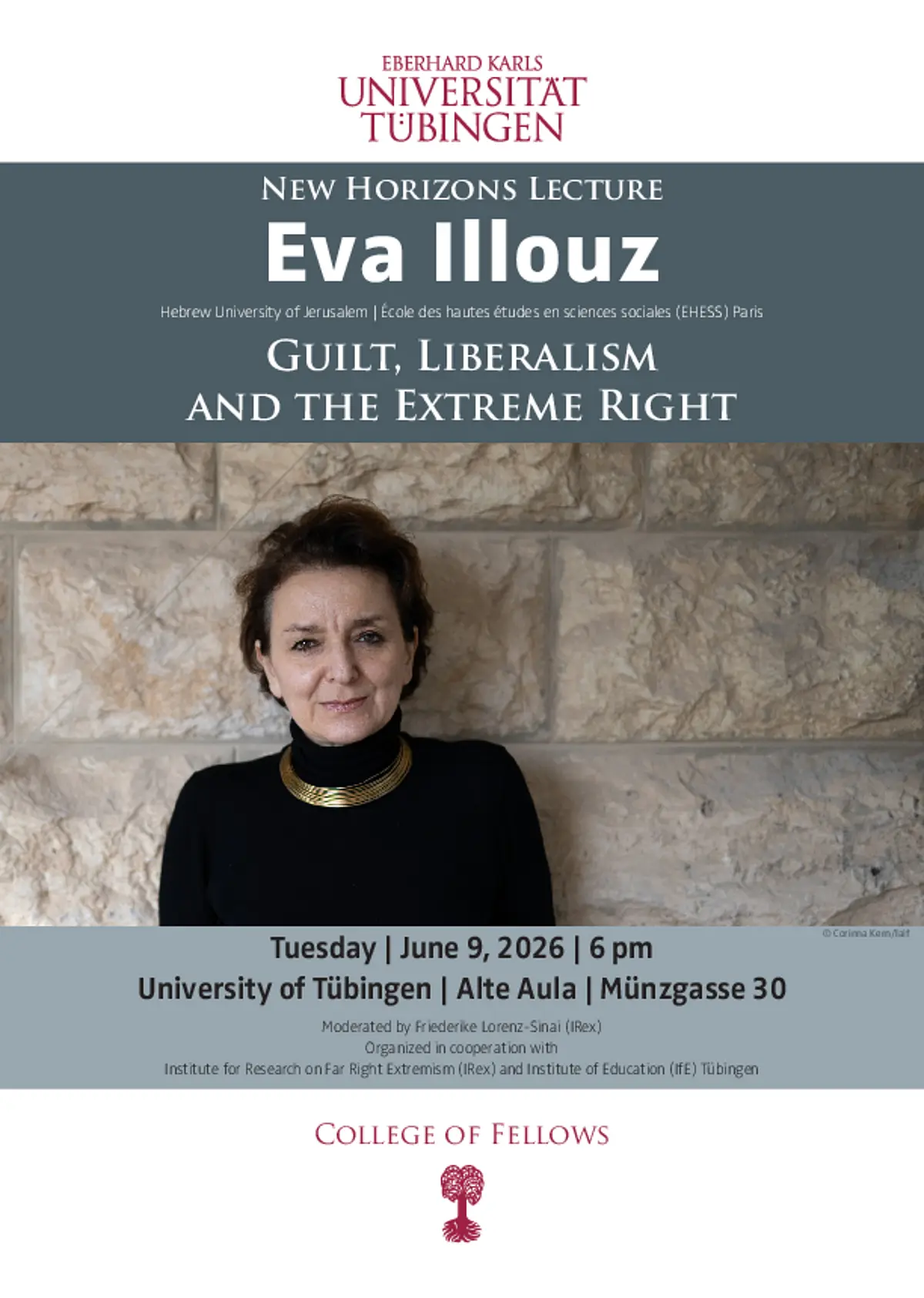
Eva Illouz zu Gast am College of Fellows

Im Juni war die renommierte Soziologin Eva Illouz am College of Fellows als New Horizons Fellow im Rahmen der Focus Group “Far Right Threats to Democracy” zu Gast. 
In ihrem öffentlichen Vortrag "Guilt, liberalism and the extreme right" befasste sie sich mit dem Thema Schuld, indem sie untersuchte, wie Schuld nach dem Zweiten Weltkrieg zu einem zentralen Element in liberal-demokratischen Gesellschaften geworden ist. Dabei beleuchtete sie, wie die extreme Rechte das Motiv der Schuld in ihrer politischen Agenda interpretiert und genutzt hat. 
Illouz vertritt die Ansicht, dass Emotionen eine entscheidende Rolle bei der Prägung der politischen Kultur von Demokratie spielen. In ihren viel diskutierten Werken, darunter The Emotional Life of Populism: How Fear, Disgust, Resentment, and Love Undermine Democracy und Explosive Emotions: How Modern Society Shapes What We Feel, untersucht sie, wie Angst, Ressentiments, Unbehagen, Ekel und Liebe aus sozialen Verhältnissen entstehen und Demokratie beeinflussen. 

Fellows

Eine Gesamtübersicht unserer Fellows sowie Informationen zu unseren Fellowships und zum Fellow Life finden Sie hier

BW Early Career Rescue Fellowship

Die Wissenschaftsfreiheit steht angesichts politischer Entwicklungen unter Druck. 
Mit dem BW Early Career Rescue Fellowhip holen das College of Fellows (Universität Tübingen), das Freiburg Institute for Advanced Studies (Universität Freiburg) und das Zukunftskolleg Konstanz (Universität Konstanz) insgesamt 14 internationale WissenschaftlerInnen nach Baden-Württemberg, deren Arbeit aufgrund politischen Drucks in den USA eingeschränkt ist.
Am College of Fellows werden 5 Fellows bis November 2026 ihre Arbeit aufnehmen. Ziel des Programms ist es, den StipendiatInnen für einen Zeitraum von bis zu zwei Jahren Raum für ihre exzellente Forschung zu bieten und internationale Perspektiven für ihre zukünftige Karriere zu eröffnen. 

Siehe hierzu auch der Bericht im SWR "Weg von Trump: So machen Unis in BW freie Forschung für US-Wissenschaftler möglich"


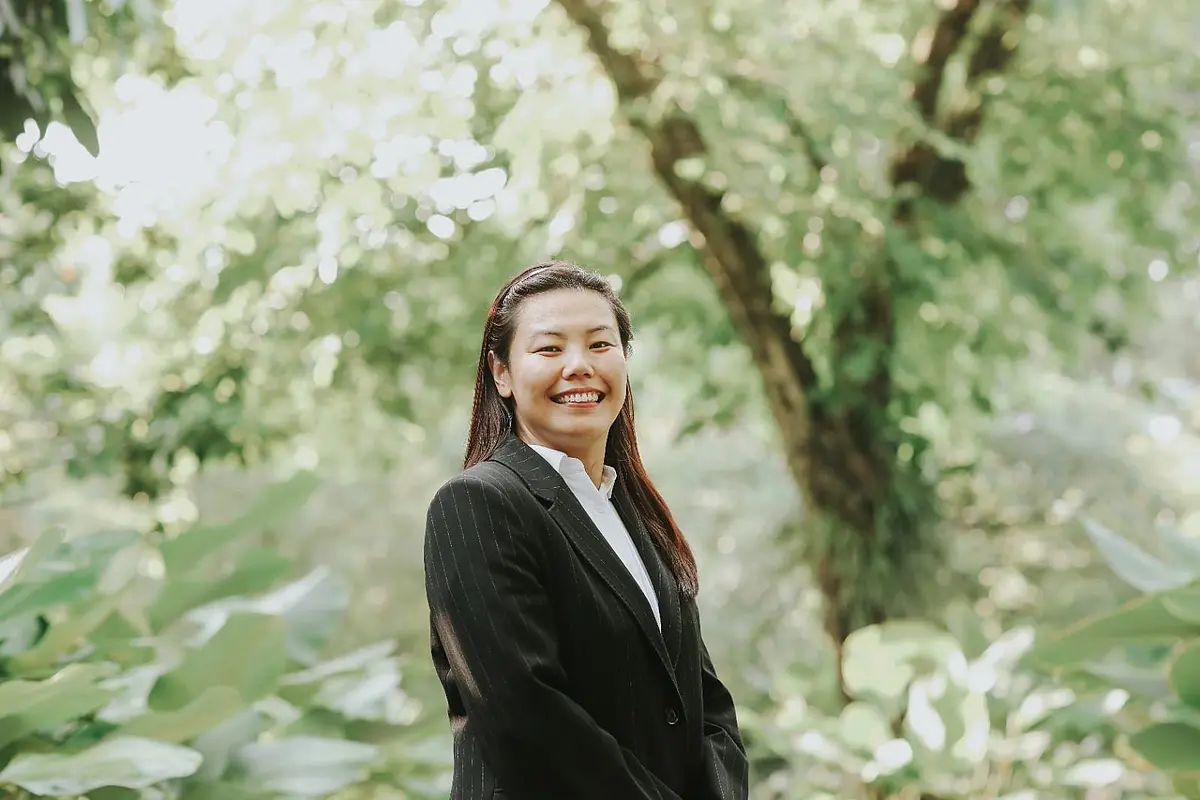
SSRC Graduate Research Fellowship for CoF Fellow Wendy He

Wendy He, eine interdisziplinäre Wissenschaftlerin im Bereich internationale Beziehungen, wurde mit dem Singapore Social Science Research Council Graduate Research Fellowship ausgezeichnet und ist derzeit als Global Encounters Fellow an der Universität Tübingen tätig. Ihr Forschungsprojekt untersucht, wie Vertrauen und Führungskräfteentscheidungen den Verlauf von Klimaverhandlungen beeinflussen – sie entwickelt dabei ein psychologisches Rahmenkonzept rund um die sogenannte „Confidence Trap", also die Fehler, die durch über- oder unterkalibriertes Vertrauen in der Diplomatie entstehen. Anhand von Fallstudien zu bedeutenden Klimakonferenzen wie Kopenhagen, Paris und Glasgow analysiert sie, wie kalibrierte Entscheidungsfindung und Vertrauensdynamiken nachhaltige internationale Kooperation ermöglichen können. Die Universität Tübingen ist dabei die erste deutsche Hochschule, die als Gastinstitution für dieses renommierte Stipendium ausgewählt wurde, was ihre starke internationale Stellung unterstreicht.

Fellow in Focus

Jeden Monat stellen wir Fellows vor, die aktuell am College of Fellows forschen.
Im August 2026 sind dies Teach@Tübingen Fellow Ivan Krivokorin und Sophia Johnson, die im Rahmen des jüngst initiierten BW Early Career Rescue Fellowships am College of Fellows ist.

Alle früheren Fellow-in-Focus-Kurzportraits finden Sie hier

August 2026: Sophia Johnson

Please introduce yourself and the background of your stay as Research Fellow in Tübingen in one or two sentences.

I like to tell people that I am a Bible scholar by training and political theologian or religious-political thinker by necessity. I am originally from the US and first became interested in the academic study of the Bible as it became a central source of American political discourse and identity posturing in the late 2010s. I have had the privilege to collaborate with colleagues in fields such as political science, law, and sociology to analyze similar trends on this side of the Atlantic and imagine ways in which religious traditions can be sources of democratic resilience. Thanks to the local funding of Baden-Württemberg, I can continue my research on the Bible and nationalism, which is under political pressure in the US, in partnership with my biblical studies colleagues at the Evangelisch-Theologische Fakultät.

Which problem or question does your research address and what fascinates you about your research area? 

A lot of my research focuses on the mutual influences of the Bible on politics and politics on the Bible, both in its original ancient west Asian context and in modern-day Europe and the US. In Tübingen, I’m working to push back on narratives that trace the origin of nationalism back to the Hebrew Bible, specifically to the book of Joshua, by instead highlighting how the texts are shaped by imperial ideals, especially conquest. What fascinates me is how natural it feels to modern Western minds to identify “nations” or political concepts like “sovereignty” in ancient texts. This is largely because the modern study of the Bible and even vernacular Bible translations, which became the heart of European religious and cultural identity, were themselves intertwined with the rise of nationalist thought, especially in Germany. So not only does nationalism subtly shape our modern political imagination but also the historical and religious discussion around the Bible and the very language we use to talk about it.

Please briefly outline the social relevance of your research. 

With the global resurgence of nationalism and transnational far-right networks, the Bible is being coopted by both religious and nonreligious movements as a weapon of political consolidation. Conservative religious communities, who have been alienated by secularist politicians denying the relevance of sacred traditions today, are told that nationalism is the only truly “biblical” form of political engagement. In some cases, academic scholarship is being appropriated to bolster historical claims that the Bible itself is a “proto-nationalist” document. My work specifically challenges religious and political fundamentalist narratives, not only by correcting historical misconceptions, but by demonstrating how the Bible itself contains a diverse collection of voices who continually renegotiated and reimagined belonging as their circumstances changed. Similarly, as the same Bible texts have been interpreted differently throughout history – Joshua, for example, was used both for and against Apartheid in South Africa – interpretation can be a source of inclusion and discourse rather than othering.

Where do you see future opportunities for international and interdisciplinary cooperation for the university, and what role can an institution like the College of Fellows play in this? 

Tübingen has a unique concentration of expertise at the intersection of religion and nationalism, particularly between the Theology Faculty, including one of the only departments of Islamic Theology in Germany, and the Institute for Research on Far Right Extremism (IRex). As demonstrated through their collaboration in hosting an international conference on Religion and the Far-Right (29-31 July 2026), the university has the unique opportunity to spearhead the growing international interest in this area—both within Europe, perhaps in partnership with initiatives like the Oxbridge Political Theologies Conference series, and beyond, building on the Transatlantic connections of the German-American Institute (d.a.i.) to reach institutions like the Public Religion Research Institute, that have analyzed these movements in North America and are eager to share their knowledge. The College of Fellows, which already boasts a focus group on Far-Right Threats to Democracy, is the perfect venue to bring together these seemingly disparate organizations and fields to address the multi-facetted global issues around religion, democracy, and co-existence.

August 2026: Ivan Krivokorin

Please introduce yourself and the background of your stay as Research Fellow in Tübingen in one or two sentences.

I am an Earth scientist with a background in geochemistry, stable isotope analysis, paleoecology, archaeology, and environmental research. I defended my PhD thesis titled "Out of the Shadows: Reconstructing Mammoth Paleoecology from Underrepresented Regions of the Western Siberian Plain and Estonia, Eastern Europe", and I enrolled in the Teach@Tübingen programme, because this was a great opportunity to share the vast amount of knowledge in different scientific areas that I have gained throughout my studies.

Which problem or question does your research address and what fascinates you about your research area? 

My research, regardless of the field, has always focused on filling gaps in data and knowledge. My current research project is designed to try to shed a light on the 500 gap between ~7.8 ka  ~7.3 ka cal BP, and understand the extent and nature of human influence on local vegetation at the arrival of LBK groups in the Ammer Valley in Germany.

Please briefly outline the social relevance of your research. 

The past is the key to the present. My project addresses a fundamental question in European prehistory: did the spread of agriculture into central Europe encounter pristine landscapes, or had Mesolithic hunter-gatherers already substantially modified the ecosystems that farmers entered? Understanding the history of our ancestors allows us to understand ourselves and where we come from, and to use this knowledge to understand how the landscape changes after human impact, and which changes are harmful and irreversible.

Where do you see future opportunities for international and interdisciplinary cooperation for the university, and what role can an institution like the College of Fellows play in this? 

I think that the College of Fellows provides great opportunities for researchers from various fields to connect, share their knowledge and get an interesting and unexpected perspective on their research. The College of Fellows creates a lot of workshops and organises lectures, and by doing so, researchers from different fields who may never meet each other during their professional life, have the opportunity to connect and familiarise themselves with the most up-to-date research in other distant fields.

Publikationen

Eine Gesamtübersicht bisheriger Publikationen finden Sie hier

Jahresbericht 2024

Wir freuen uns sehr, Ihnen unseren Jahresbericht 2024 vorstellen zu können. Darin finden Sie Interviews mit einigen der Fellows, die im vergangenen Jahr bei uns waren, in denen sie über ihre Forschung und ihre Zeit in Tübingen berichten. Außerdem finden Sie Berichte über Veranstaltungen und Kurzvorstellungen aller letztjährigen Gastwissenschaftler:innen. Den Jahresbericht können Sie hier herunterladen. 


Porr, Martin und Weidtmann, Niels (Hrsg.): "One World Anthropology and Beyond. A Multidisciplinary Engagement with the Work of Tim Ingold" London: Routeledge.

Dieser Sammelband bietet eine multidisziplinäre Betrachtunge der Arbeit von Tim Ingold, einem der einflussreichsten Anthropologen der letzten Jahrzehnte. Die Aufsätze stammen unter anderem aus Sozialanthropologie, Archäologie, Felskunststudien, Philosophie sowie Wissenschafts- und Technologiestudien und setzen sich kritisch mit Ingolds Ansätzen und Ideen auseinander. Der Band enthält Beiträge von Teilnehmenden der Masterclass "One World Anthropology" mit Tim Ingold, die vom CIIS im September 2019 veranstaltet wurde.