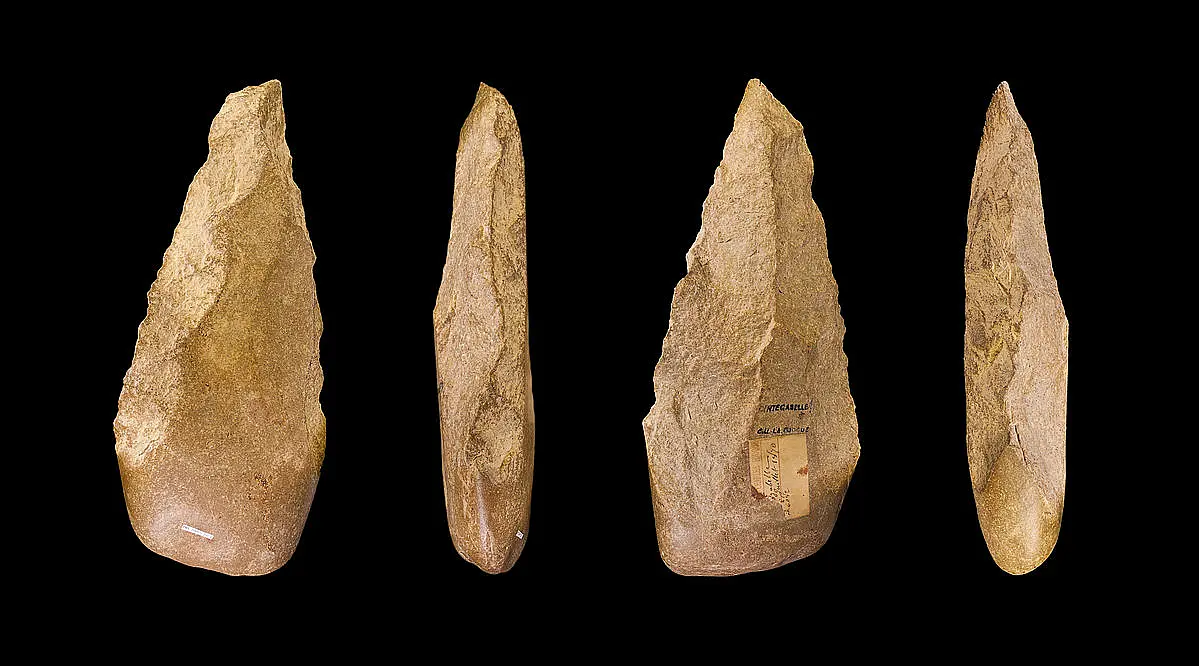
Stone Age technology (ASHE-6f)
Structure: Combined lecture/exercise and more specialized additional practical exercises or seminars. The lecture/exercise part involves face-to-face learning with dedicated practical parts. The seminar and/or practical component encompasses taught and interactive elements, group learning, hands-on material work, potentially including reading and discussion of relevant literature and presentation of specific topics or own results from practical studies.
Content: This module provides an in-depth overview on lithic and organic material culture of the global Stone Age with a focus on practical courses and analytical methods. The courses are partly or dominantly practical in nature and focus on methodological issues in Stone Age technology. Courses of the module focus on the application of standard and new methods, including experimental archaeology, 3D scanning, use-wear and residue studies (i.e. material culture lab). Proper handling of attendant equipment (microscopes, 3D scanner) will also be part of this module. An emphasis of the modules lies on stone tools as they are the most durable and frequent artefact category of the Stone Age. A combined lecture/exercise covers the various analytical methods and theoretical approaches towards studying lithic technology of the Paleolithic, Mesolithic and Neolithic including hands-on work with actual stone tool assemblages. Students can choose among a number of additional practical exercises or seminars that also examine the nature and methods of organic technology of the Stone Age, such as bone, antler, ivory or plant materials (e.g. wood), or experimental archaeology, use-wear and residue studies of lithic and organic technology.
Outcome: Students acquire advanced and practical knowledge of lithic and organic material culture of the Stone Age. They understand the different find categories, relevant analytical methods for each and can apply these methods to material culture. Students will be enabled to critically reflect on the potentials and limits of different analytical methods and theoretical approaches for studying technology in the Stone Age and convey this information in oral form. They can conduct some independent research on Stone Age material culture and present this study in a talk.
Principal lecturers: Dr. Flavia Venditti, Dr. Manuel Will, Dr. Gregor Bader, Dr. Yvonne Tafelmaier, Dr. Andreas Taller, Dr. Gudio Bataille, Dr. Sibylle Wolf