Philologisches Seminar

Aktuelles

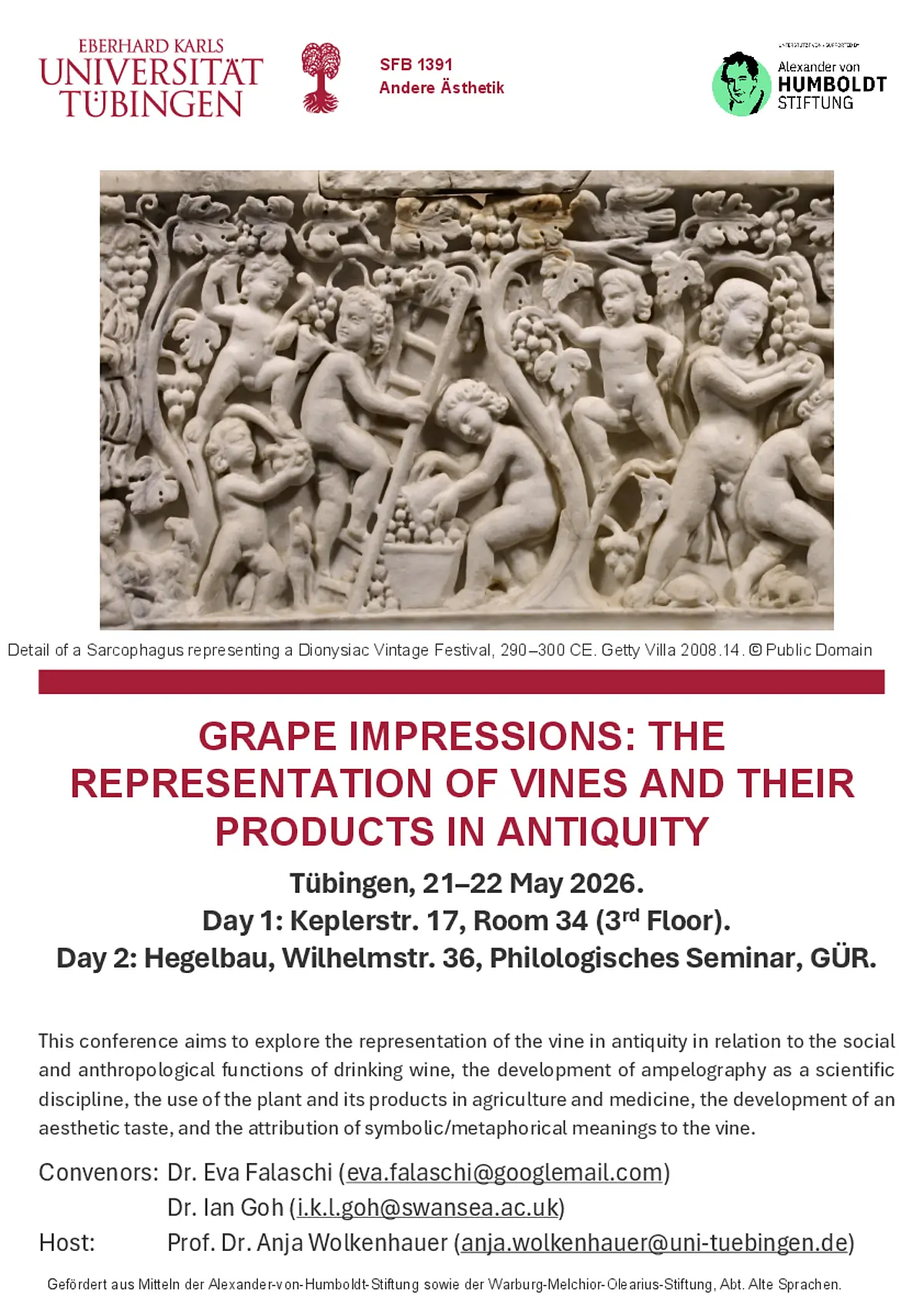
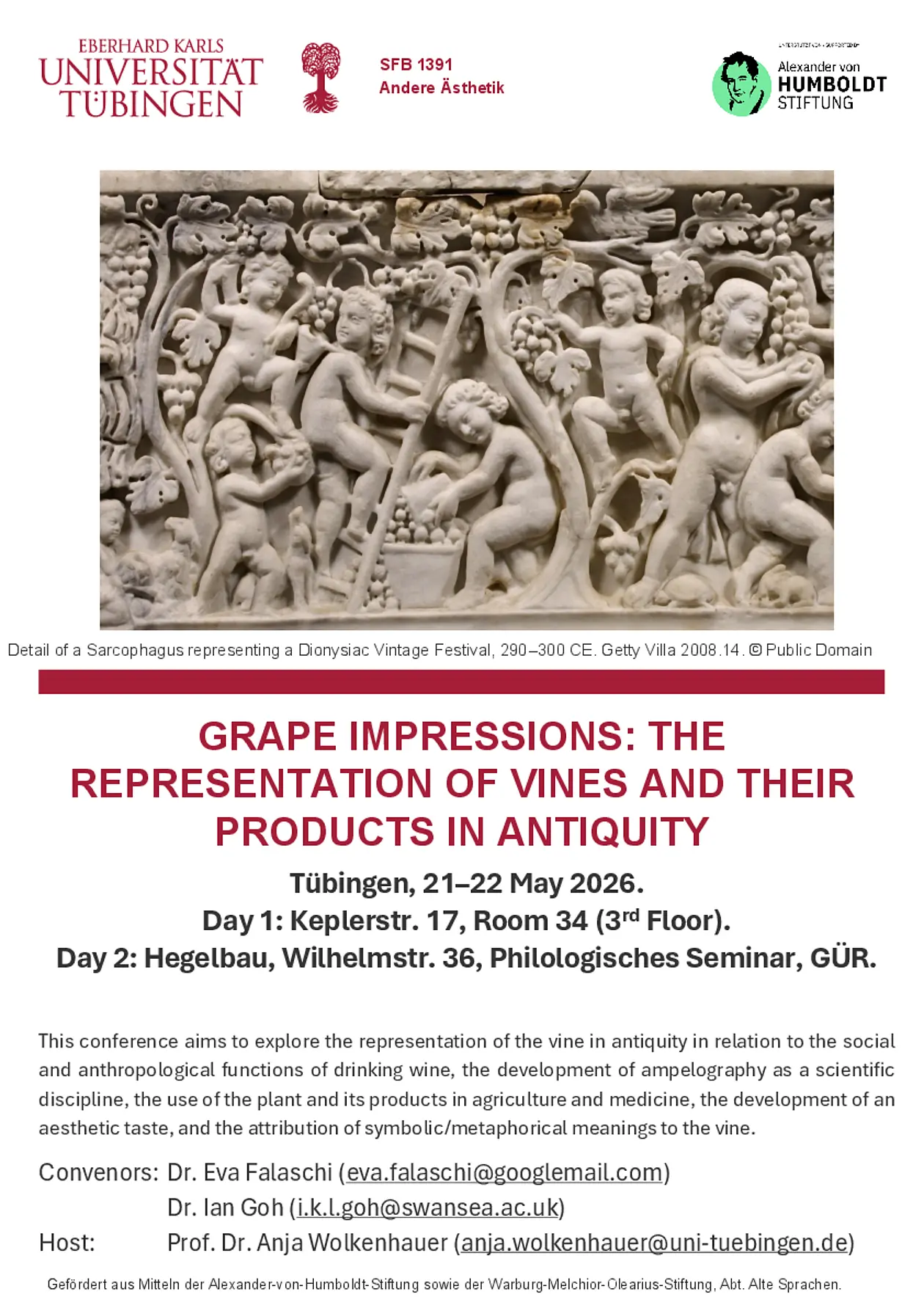
Summary of the Conference "Grape Impressions: The Representation of Vines and their Products in Antiquity"

Tübingen, 21-22 May 2026

This conference explored the topic of the representation of the vine and grapes in the Greek, Roman and Etruscan worlds. The papers presented covered material culture as well as literature, both subtle poetry and technical texts of botany and agriculture. All told, the research presentations highlighted how ancient authors and artists drew on their knowledge of the vine and its cultivation practices to depict the plant using images (for example, in funerary contexts) and words. Thus, they attributed symbolic, religious and political significance to it, both reflecting and enhancing its role, and that of its products such as wine, in ancient society.

From small-scale Hellenistic works to the gargantuan Dionysian epic of Nonnus of Panopolis, from Horace and Virgil to fables, from Theophrastus to Columella and Pliny, technical matters are interwoven throughout the texts with literary, political and aesthetic considerations, demonstrating how the vine represented much more than simply a plant that yielded fruit for wine production. At the same time, the economic interest linked to wine production led the ancients to produce a considerable body of specialist literature on the subject, with an eye on the professions which the industry created. Studying these factors, as numerous papers did, enables us to understand cultivation practices and uncover – via, for example, the names of grape varieties – new perspectives on the natural and man-made landscapes they inhabited.

The conference concluded with a wine tasting that explored the history of viticulture in Germany from Roman times to the present day.

We would like to thank the Alexander von Humboldt Stiftung, the Warburg-Melchior-Olearius-Stiftung, and the Universität Tübingen for the support we received from them, as well as SFB 1391 "Andere Ästhetik" for providing space.

21.05.-22.05.2026 Internationale Konferenz

Grape Impressions: The Representation of Vines and their Products in Antiquity

Ziel dieser Tagung ist es, die Darstellung der Rebe in der Antike im Zusammenhang mit den sozialen und anthropologischen Funktionen des Weinkonsums, der Entwicklung der Ampelographie als wissenschaftliche Disziplin, der Nutzung der Pflanze und ihrer Produkte in Landwirtschaft und Medizin, der Entwicklung des Geschmacksempfindens sowie der Zuschreibung symbolischer und metaphorischer Bedeutungen an die Rebe zu untersuchen. Organisiert wurde die Tagung von Eva Falaschi und Ian Goh, Gastgeberin ist Prof. Dr. Anja Wolkenhauer. 

Nachfolgend finden Sie das Programm, dass auch als Flyer zum Download bereitsteht. Bitte beachten Sie, dass der Veranstaltungsort an Tag 1 und Tag 2 wechselt.


Donnerstag, den 21.05.2026

09:00–09:30 Eva Falaschi und Ian Goh (Universität Tübingen). Welcome 

                      Eva Falaschi (Universität Tübingen). Introduction. Beyond (Roman) art: the vine between art, botany and literature in Roman times

9:30-10:15    Alexander Heinemann (Universität Tübingen). Eyes in the thicket: the space of the vine in archaic Greek imagery 

10:15–11:00  Zoe Stamatopoulou (University of Cincinnati). Anacharsis and the vine

11:30–12:15  Sandro La Barbera (Università di Trento). Nicander and the Hellenistic poetry: the grape spider

12:15–13:00  Celia Campbell (Emory University). Decanting enchantment: Horace on the vine

14:15–15:00   Bobby Xinyue (King’s College London). Live by the vine: the rewards of viticulture in Virgil and Columella

15:00–15:45   Maëlys Blandenet (ENS de Lyon). Rei nos pulchritudo trahit (Columella 3.20.4): variety of vines and aesthetic pleasure

15:45–16:30   Marine Bretin-Chabrol (Université Jean Moulin-Lyon 3). How do you teach a vine to become a good bride? Columella, Graecinus, and the ambiguities of care

17:00–17:45   Pietro Li Causi (Università di Siena). The grapes that deceived the birds: art, nature, animality, and humanity in Plin. HN 35.65–66

17:45 –18:30  Ursula Gärtner (Universität Graz). Ancient fables and the sour grapes


Freitag, den 22.05.2026

08:30–09:15    Daniele Federico Maras (Museo Archeologico di Firenze). VINAC: vitis vinifera in Etruscan imagery between myth and ritual

09:15–10:00    Caterina Manco (Università di Bologna). From Ámpelos to Phármakon: vine and wine in Greek botanical and medical literature of the early imperial period

10:30–11:15     Emily Kneebone (University of Nottingham). The advent of the vine in Nonnus’ Dionysiaca

11:15–12:00     Benjamin Cartlidge (University of Liverpool). Coping with tendrils: Athenaeus and vine culture

12:00-12:30      General discussion and close

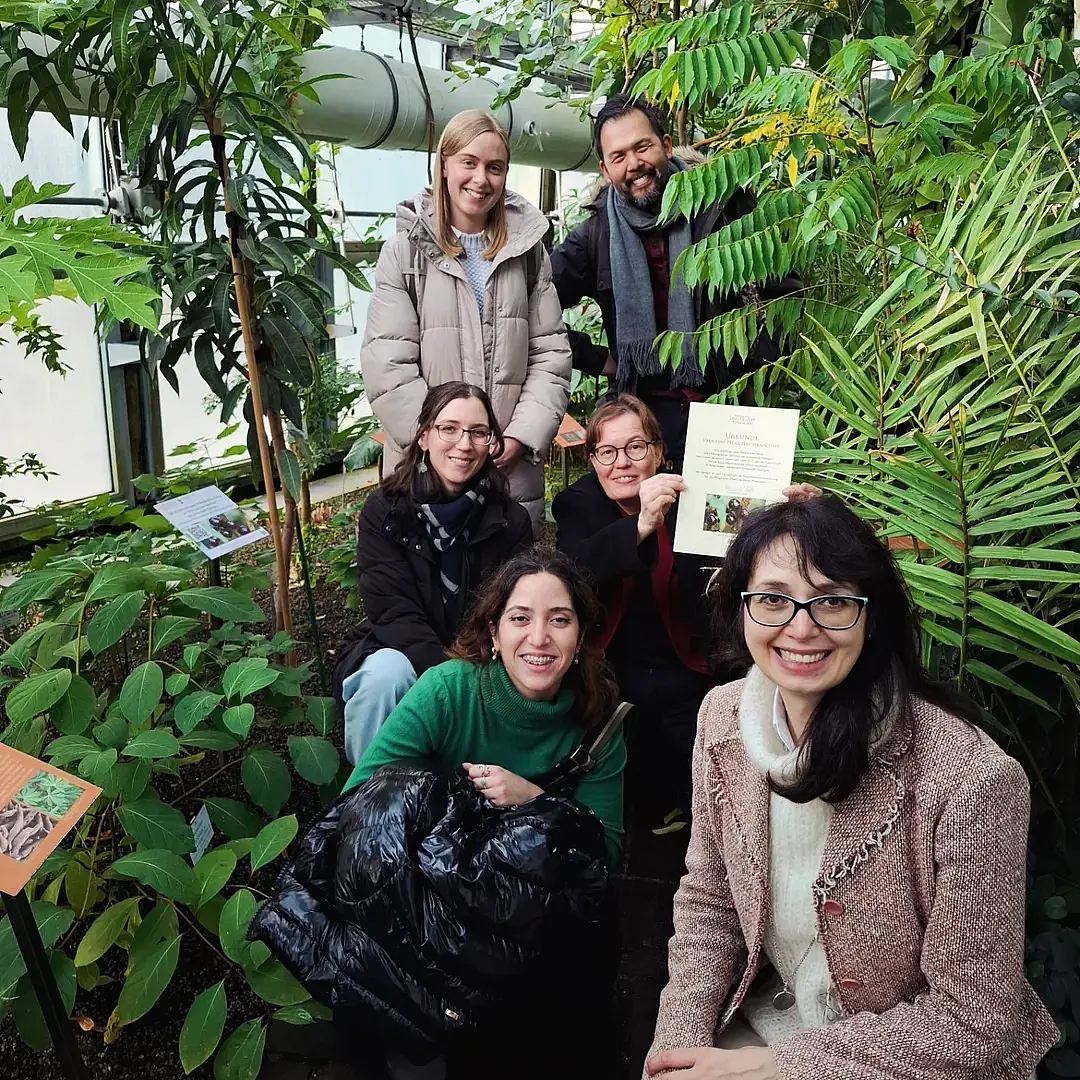
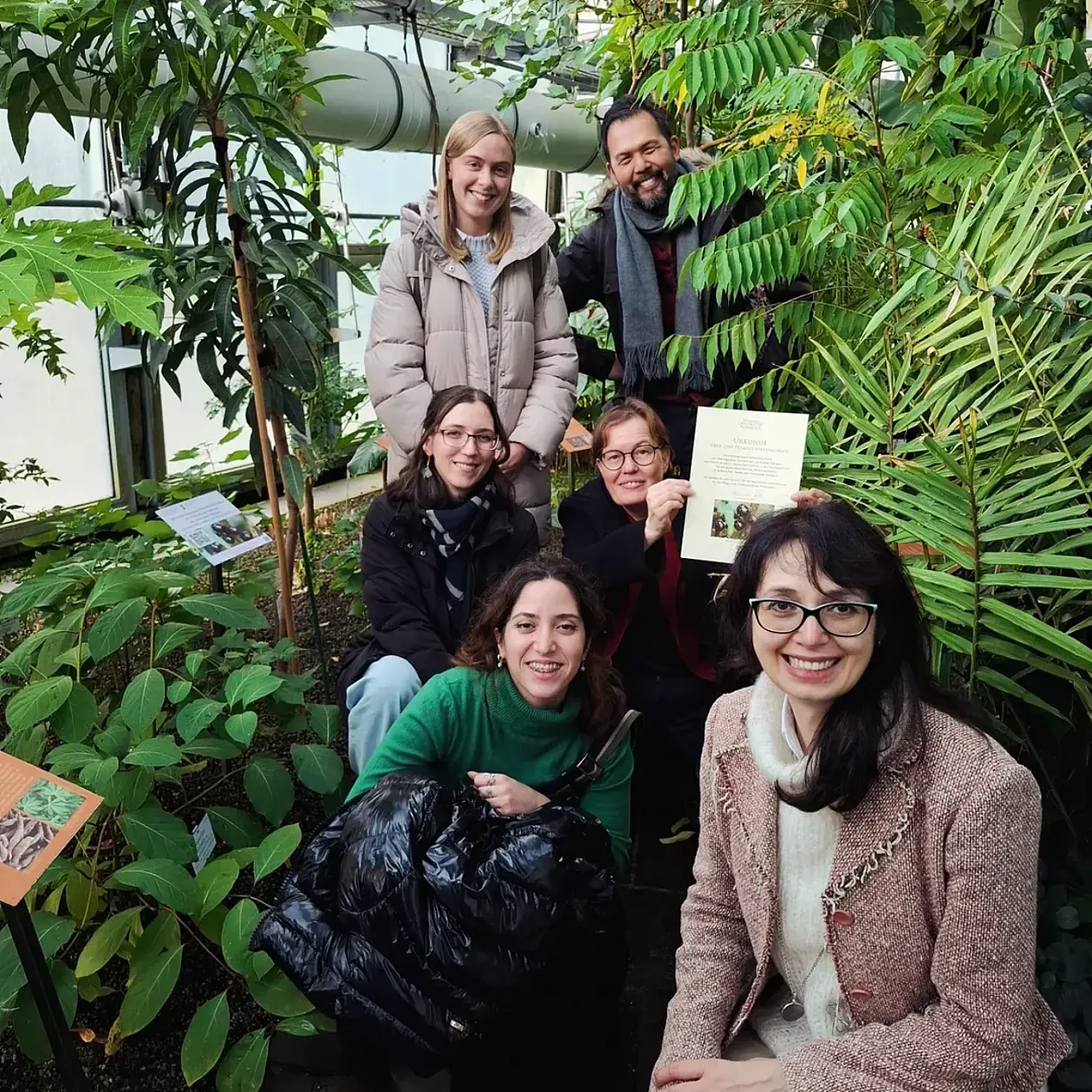
Der Arbeitskreis übernimmt die Patenschaft für die Plinia cauliflora 

Im Rahmen des zweiten gemeinsamen Studientages übernahm der Arbeitskreis PAN eine Patenschaft für die Plinia cauliflora im Botanischen Garten, Tübingen. Mehr zur Übernahme, der Übergabe der Patenschaftsurkunde durch Dr. Alexandra Kehl und die Verbindung der Plinia cauliflora zu Plinius und dem Arbeitskreis finden sich in Kürze hier.

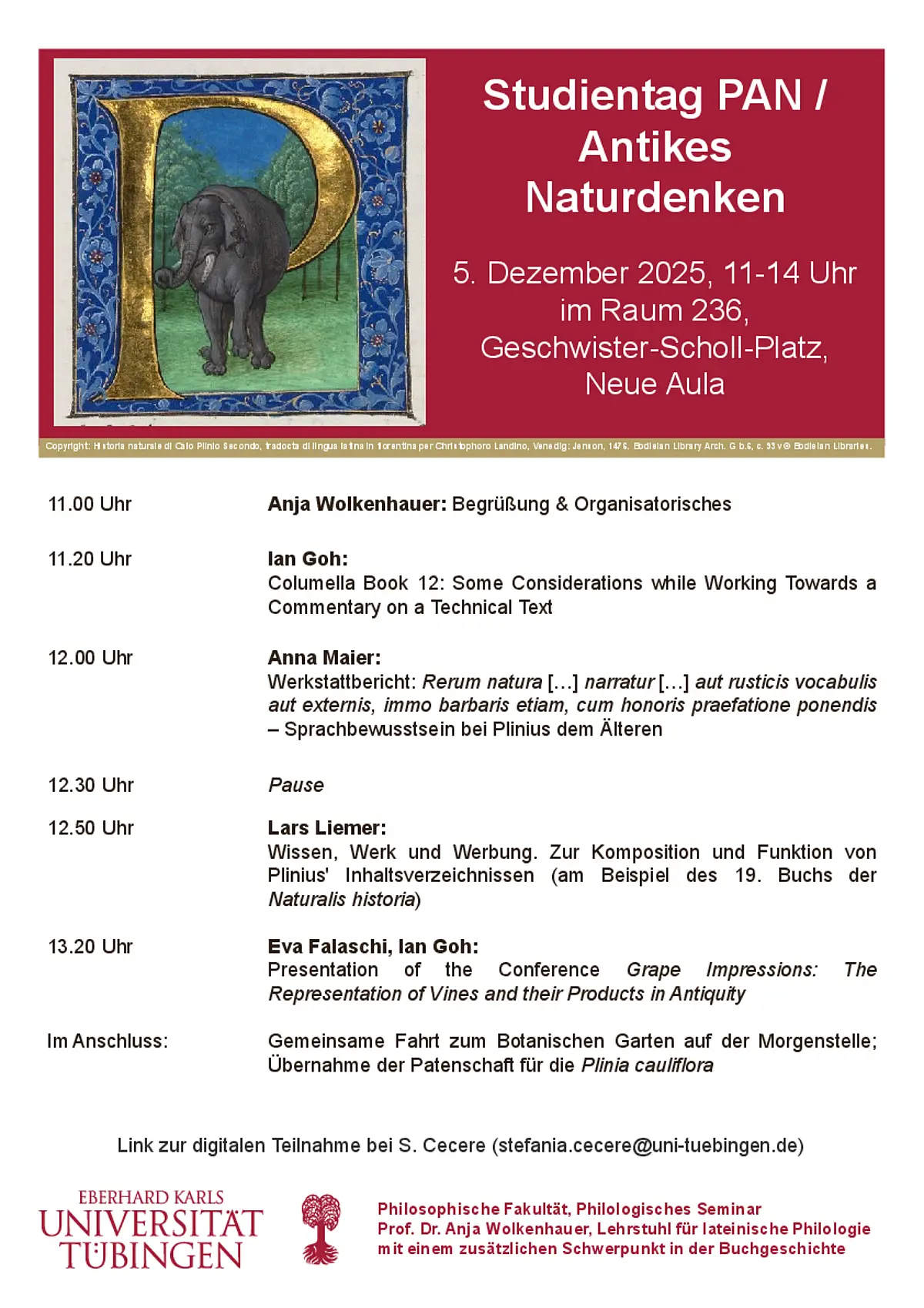
2. Studientag am 5. Dezember 2025

am 5.12. ab 11 Uhr findet der zweite gemeinsame Studientag des Arbeitskreises statt, mit Beiträgen von Ian Goh, Eva Falaschi, Lars Liemer, Anna Maier und Anja Wolkenhauer. Das Vortragsprogramm findet sich auf dem zugehörigen Plakat.

Um 15 Uhr ist zudem ein Besuch im neuen Botanischen Garten geplant. Dort werden wir die Patenschaft für die zu den Myrtengewächsen gehörende Plinia cauliflora übernehmen.

Bei Teilnahme wird um Voranmeldung per E-mail bis zum 3.12.25 gebeten: mailto: stefania.cecere(at)uni-tuebingen.de

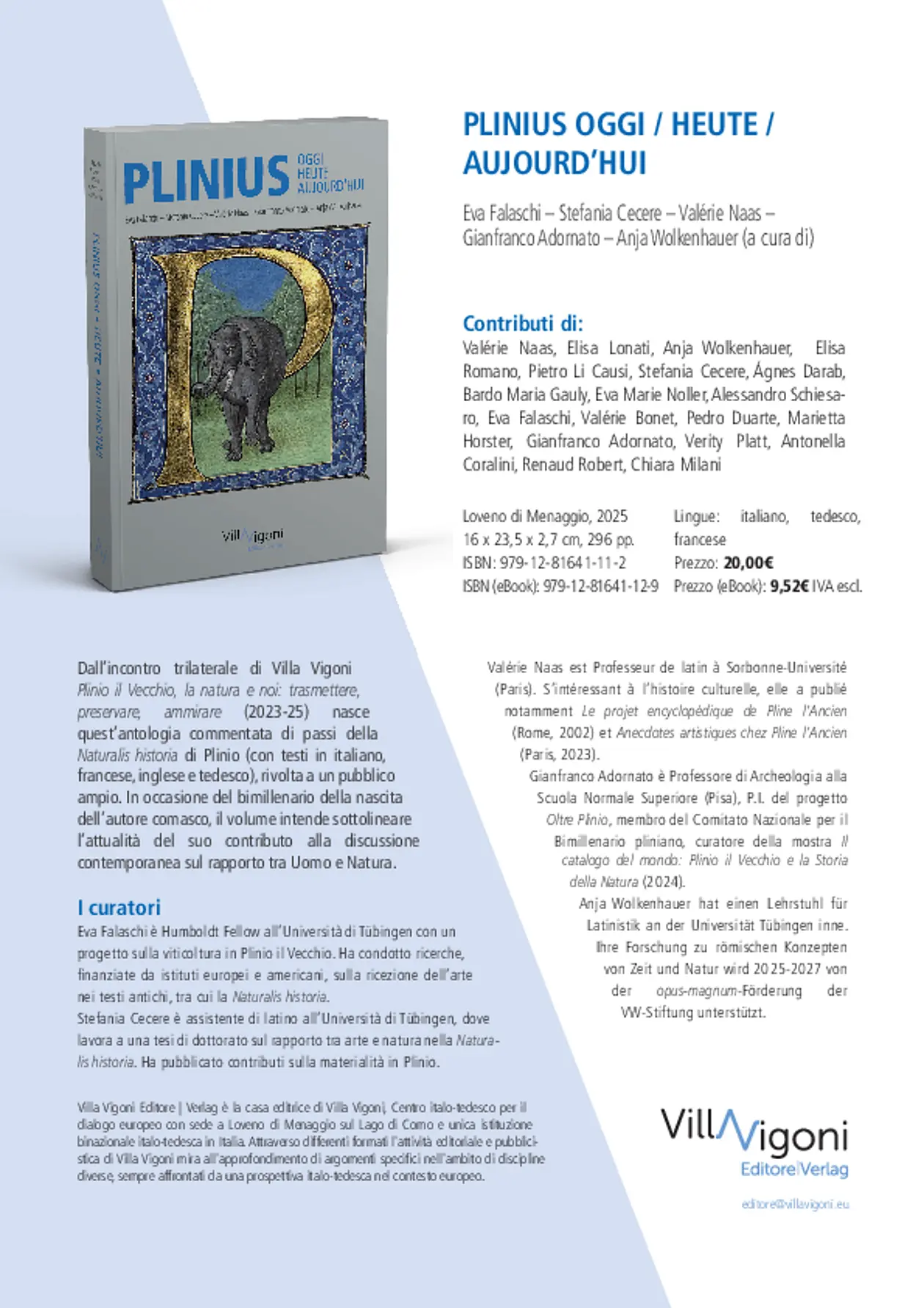
Neuerscheinung

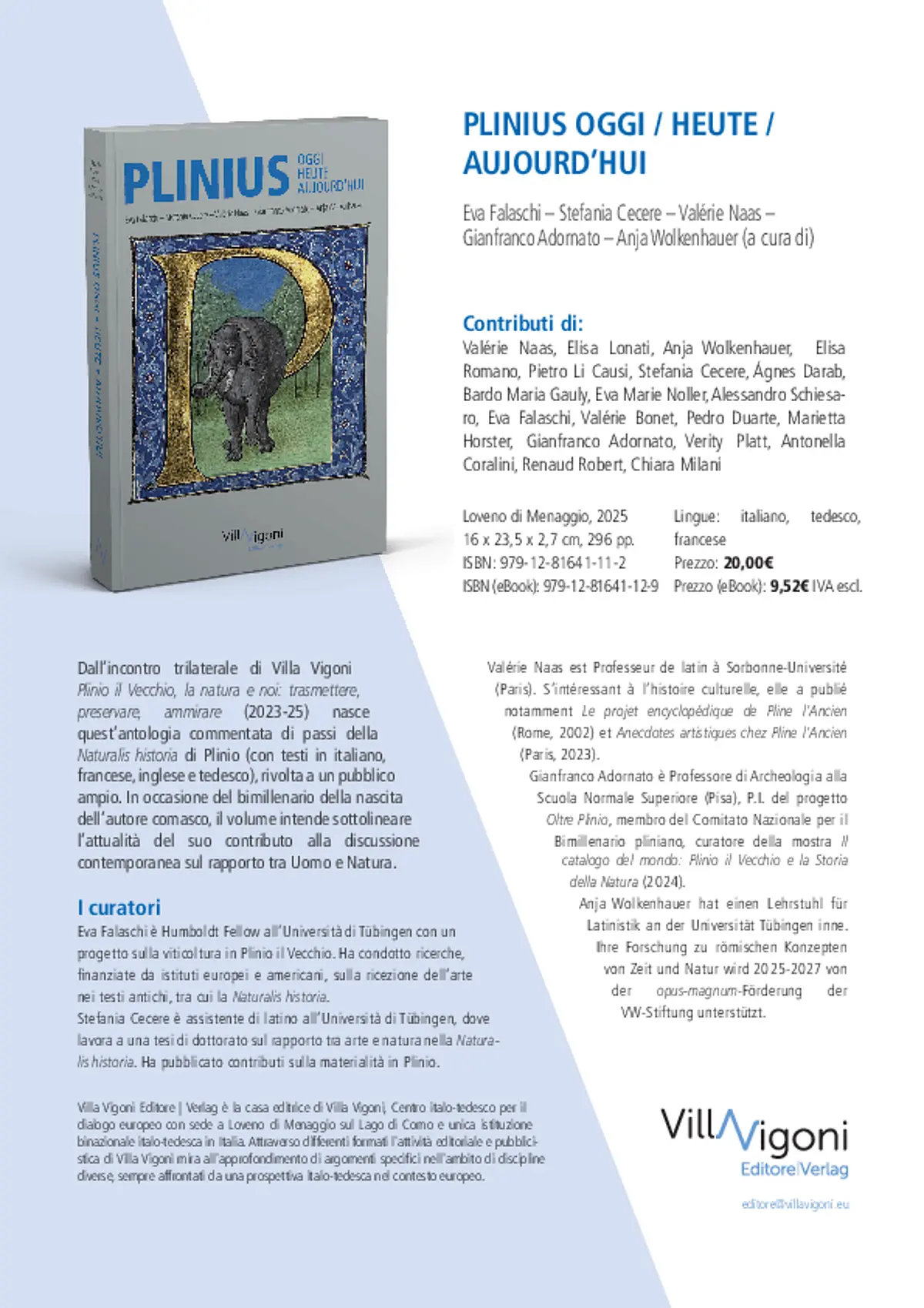
Falaschi, Eva, Stefania Cecere, in Zusammenarbeit mit V. Naas, G. Adornato und A. Wolkenhauer (Hrsg.). 2025. Plinius oggi | heute | aujourd’hui. Un’antologia commentata della Naturalis Historia di Plinio il Vecchio, Loveno. (Flyer)

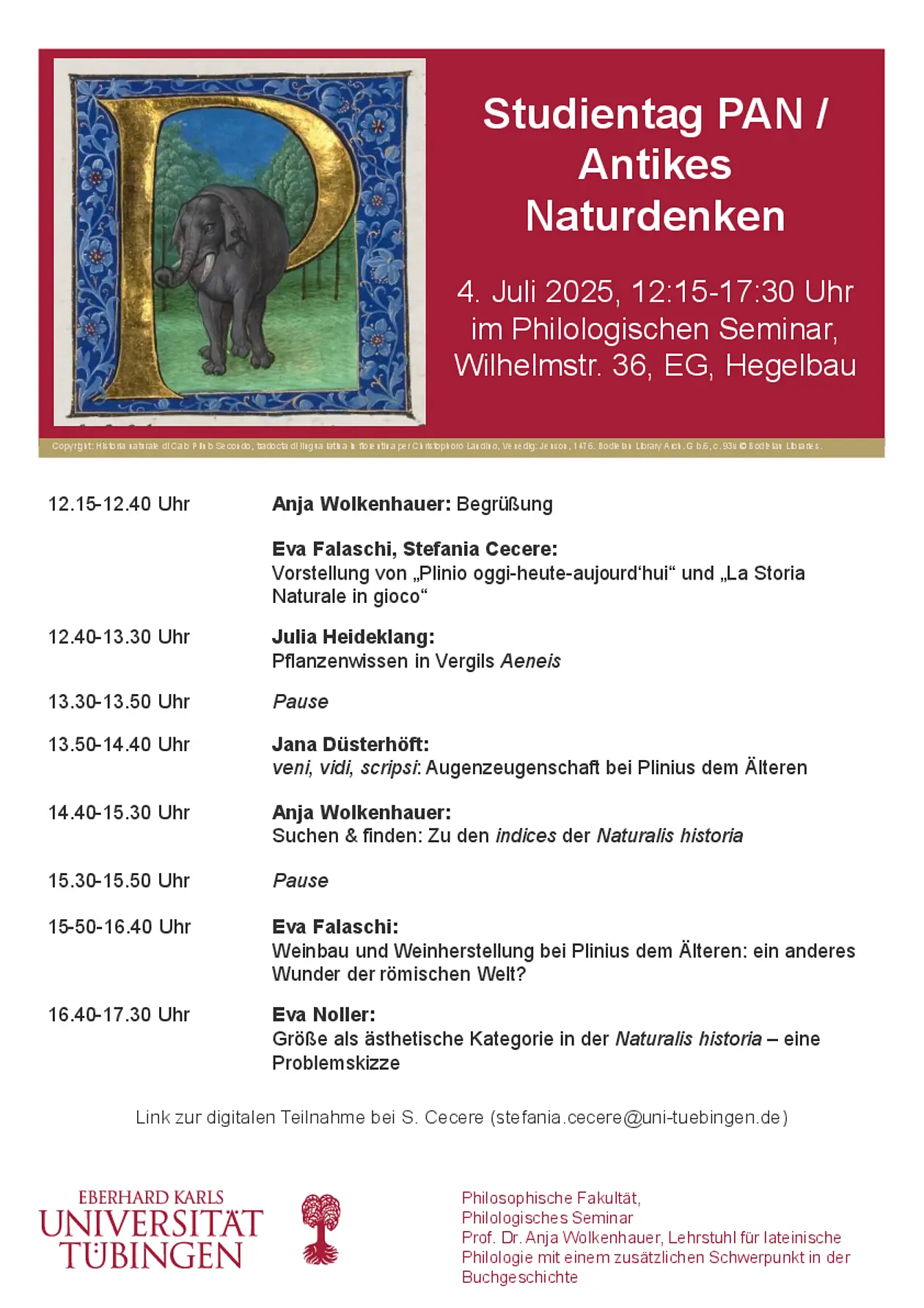
04. Juli 2025

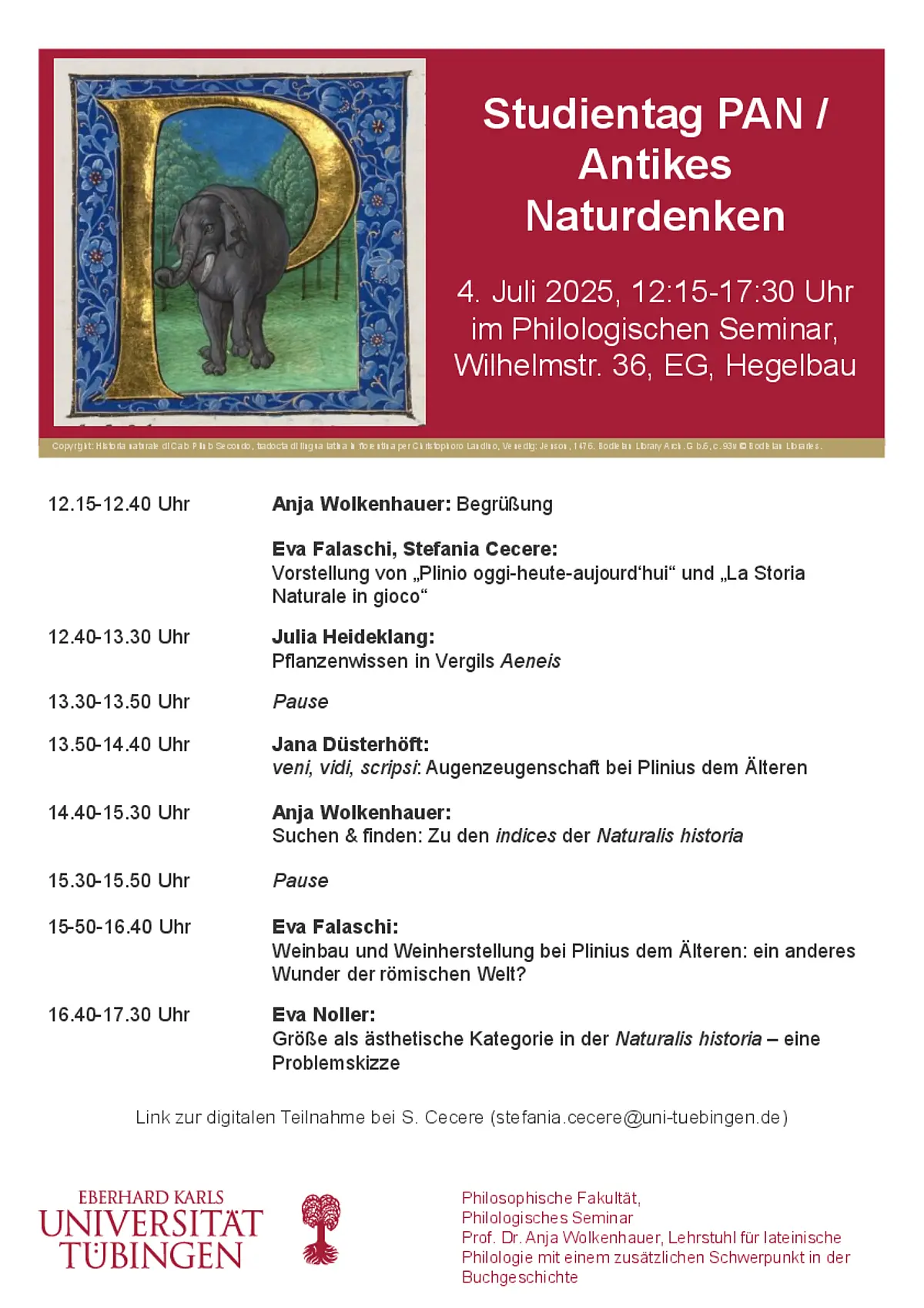
Erster Studientag des Arbeitskreises

Am 04.07.2025 fand ein erster Studientag im Rahmen des Arbeitskreises statt, der sich aus mehreren Vorträgen, insbesondere zu Plinius Naturalis historia, und ersten gemeinsamen Diskussionen zusammensetzte. 

Mit Beiträgen von: Stefania Cecere, Jana Düsterhöft, Eva Falaschi, Julia Heideklang, Eva Noller, Anja Wolkenhauer

Vorgestellt wurde zudem die Neuerscheinung

Eva Falaschi, Stefania Cecere in Zusammenarbeit mit Valérie Naas, G. Adornato und Anja Wolkenhauer (Hrsg.). Plinius oggi | heute | aujourd’hui. Un’antologia commentata della Naturalis Historia di Plinio il Vecchio. Loveno 2025.