Hector Research Institute of Education Sciences and Psychology

PINGUIN

Potenzialidentifikation IN der GrUndschule

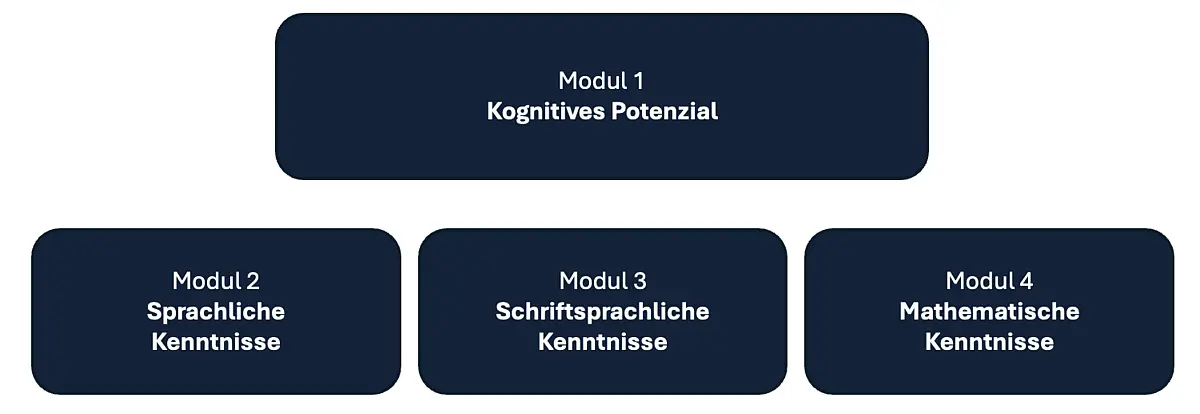
PINGUIN is a modular, tablet-based assessment tool for measuring learning prerequisites and cognitive potential in primary school children, starting from grade 1. Individual feedback reports for students, provided at the beginning and end of the first school year, inform teachers about the initial learning level at school entry as well as the learning progress made during the first year. The assessment tool consists of four modules, can be administered in small groups of up to 15 students within 45–60 minutes, and is currently being further developed as part of the project of the same name.


Interested in learning more?

Would you like your school to participate in the PINGUIN study?
Sign up for our list of interested schools.


The study

As part of the accompanying study, the prerequisites for a successful implementation of PINGUIN in everyday school life at schools in Baden-Württemberg and Hesse will be examined, among other aspects. The aim is to make the assessment tool as easy to access and as straightforward to administer as possible.

Following a successful start of the study in the 2024/2025 school year with 12 schools and over 500 children, we are now looking for additional schools to participate in the PINGUIN study in the coming school year. The procedure and the effort involved in the study for the upcoming 2025/2026 school year are as follows:

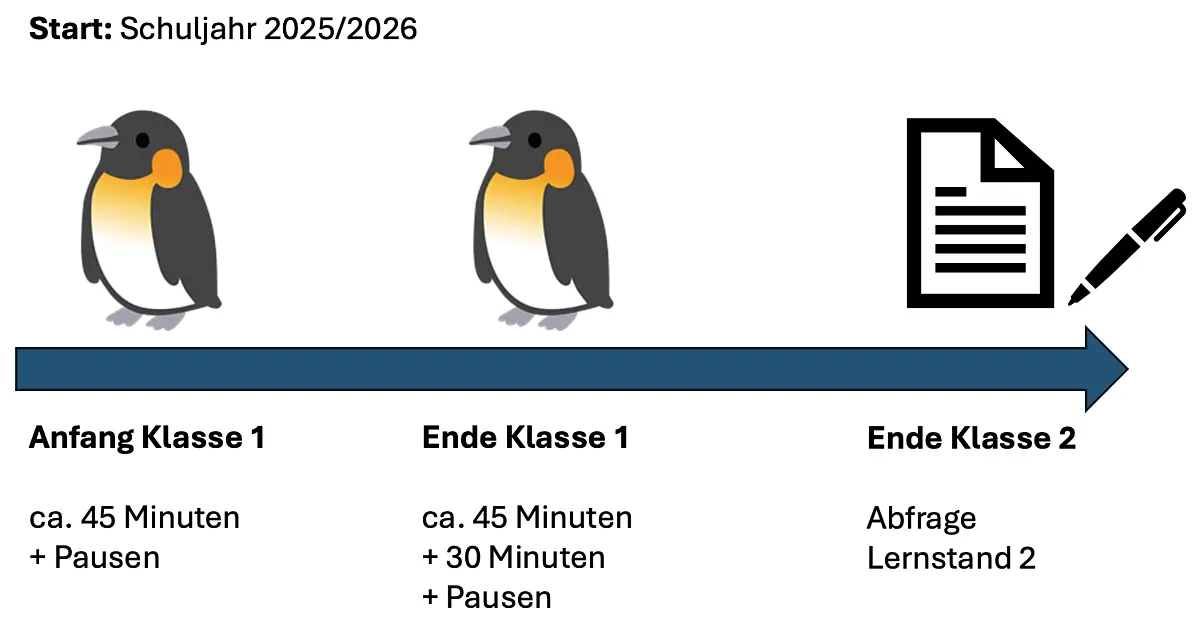
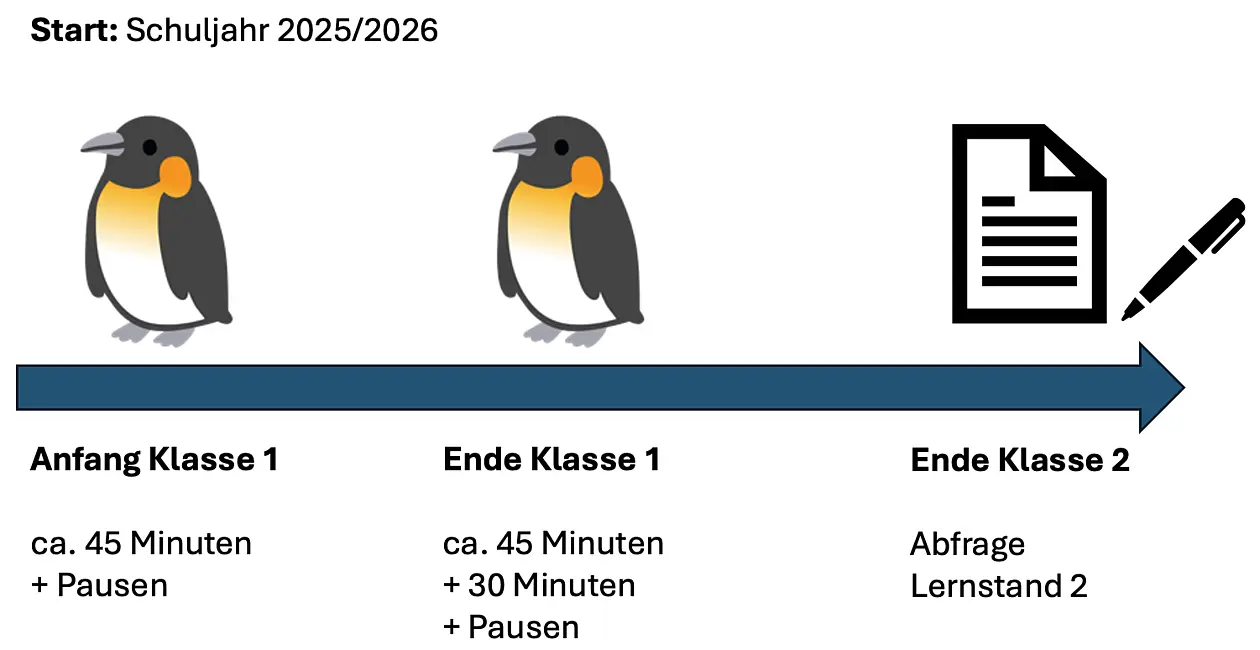
1. Study Schedule

Measurement Point 1 (Autumn 2025)
  • Students take the PINGUIN assessment with their teacher (about 45 minutes).
  • Questionnaires for teachers, parents, and school administrators.
Measurement Point 2 (Summer 2026)
  • Students take the PINGUIN assessment along with validation instruments with their teacher (about 90 minutes).
  • Questionnaires for teachers, parents, and school administrators.
Measurement Point 3 (Summer 2027)
  • Teachers share the results of Learning Assessment 2 with the researchers at the Hector Institute.
  • Questionnaires for teachers, parents, and school administrators.

2. Study Conditions

  • Longitudinal study through the end of Grade 2

  • Testing and surveys of children, parents, teachers, and school administrators

  • Teachers conduct the assessments independently

  • Tablets and headphones required (a limited number can be provided by the Hector Institute)

  • Participation in PINGUIN is completely free of charge.

3. Information for Teachers, Parents, and Children

In summary, participation in the study means for…

… Teachers:
By participating in PINGUIN, you will gain valuable insights into the conduct of a scientific study. At the beginning and end of the first grade, you will receive individual feedback on your students’ learning levels as well as an overview of performance distribution within your class. The feedback illustrates each student’s performance as well as the distribution of abilities across the specified task areas. From the results, teachers can see whether a child is at the same learning level as most other first graders, or whether they perform below or above average.

Additionally, we provide a brief compendium of evidence-based support measures for lower- and higher-performing students across the different areas.

… School Administrators:
Your teachers will not only gain valuable information about their students’ learning levels but also acquire important skills in administering and interpreting diagnostic assessments. This enables your school to contribute to the implementation of evidence-based teaching practices, which primarily benefits your students.

… Parents and Children:
Our experience so far shows that children participate in the assessments with great enthusiasm. The tasks are administered via tablets and are designed to be age-appropriate. By participating, you can help contribute to improving learning opportunities for all children.


4. Background of the Project

Due to the large individual differences in learning prerequisites among school beginners, early and reliable assessment is essential for targeted interventions, both for children at the lower and higher ends of the performance spectrum. Teachers can better provide appropriate learning opportunities and support learning processes when they are well-informed about their students’ existing potential and school-relevant prior knowledge. Science and policy agree that high-performing and particularly gifted children should be identified early to create suitable support conditions. However, there is currently no standardized assessment of individual learning levels or cognitive potential in primary schools. While tests to determine developmental status are available before school entry, Germany lacks a comprehensive, reliable, and meaningful assessment of school-relevant skills at the start of formal schooling (Grade 1).

Experiences from other countries show that standardized procedures in this area can have positive effects. Initial results from similar studies in Germany (FIPS+) indicate that standardized tests for assessing learning prerequisites are associated with more accurate teacher assessments, positive student performance development, and a more performance-based selection for extracurricular enrichment programs, such as those offered by the Hector Children’s Academies. Overall, standardized assessment of learning prerequisites and early potential diagnostics provide an opportunity to identify students’ individual strengths and weaknesses early and to recognize particularly gifted children regardless of their family background—especially those students whose talents might otherwise go unnoticed or be identified too late. The use of such procedures in everyday school life is therefore highly beneficial, particularly when they can be implemented efficiently—for example, through group testing—to reduce the workload for teachers. PINGUIN represents such a standardized early assessment of learning prerequisites and potential.

5. Aim of the Project

The collaborative project “PINGUIN: Potenzialidentifikation IN der GrUndschule” aims to further develop a modular assessment tool for evaluating cognitive potential and basic competencies in language, literacy, and mathematics at school entry. The assessment tool is designed to be administered via tablet in small groups under teacher supervision, enabling an efficient and fair testing process. At the same time, the tool is intended to objectify—and, if possible, further improve—the selection process for particularly gifted students for the Hector Children’s Academies program. In addition to assessing language and numerical basic competencies, the tool also evaluates general cognitive potential.

6. The Project Work Program

The project’s work program foresees that over the course of three years (2024–2027), multiple data collections will be conducted in primary schools in Baden-Württemberg and Hesse using the (further) developed tasks of the PINGUIN test battery. Within a longitudinal multi-cohort design, the research program primarily addresses aspects of convergent and discriminant validation, standardization, optimal design of performance feedback, and pragmatic aspects of test administration. From a test-pragmatic perspective, it is important that efficient testing (group assessments) can be conducted in a computerized and child-friendly manner.

As part of the PINGUIN study, first graders will be followed up until the third grade. This is the only way to examine the potential long-term positive effects of PINGUIN. The children will be assessed twice in the first grade (beginning and end of the school year) and once at the end of each school year in grades two and three. To obtain a comprehensive picture of the participating children, their parents, teachers, and school administrators will also be surveyed each school year.

7. Data Protection, Approval, and Anonymity

Participation in the PINGUIN study is conducted in accordance with data protection regulations. It is completely voluntary and can be discontinued at any time without any consequences. The study has been approved by the Ministry of Education of Baden-Württemberg.


The PINGUIN Consortium

Research Hubs

  • Talent Development
  • Educational Effectiveness