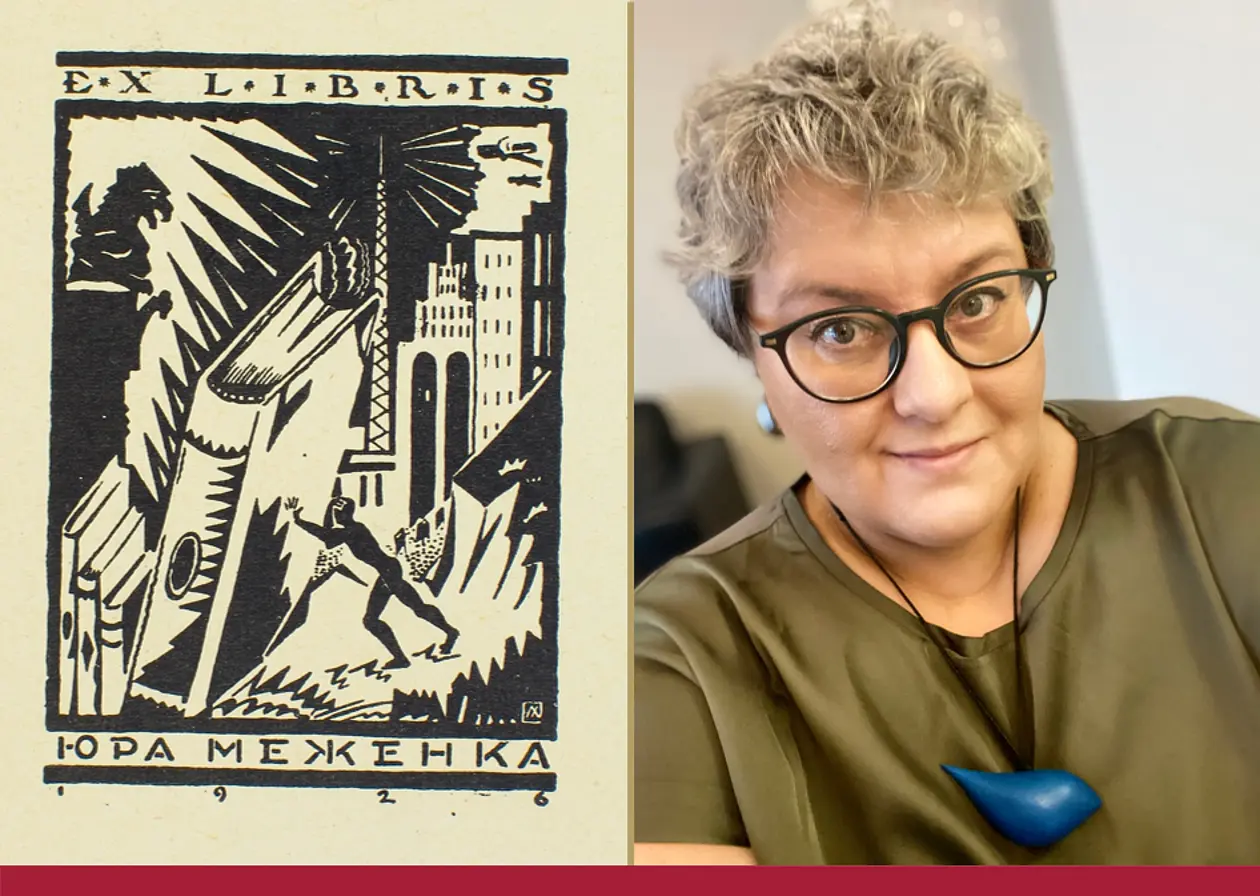
This lecture is devoted to the analysis of the work of memory in the cultural heritage of Yur Mezhenko, who was one of the leading Ukrainian literary critics and theorists of the ‘revolutionary’ 1920s, and the founder and head of the National Library of Ukraine.
His unpublished diary entries for 1919-1926, then for the 1940s and 1950s, are analyzed in terms of how specific textual strategies of constructing and overcoming the self/other opposition are developed, as well as strategies of recalling the traumatic past and imagining the future, which root identity in time, and strategies of choosing 'one's own place' in a geographical and symbolic sense. Yur Mezhenko's Shevchenkiana collection is also considered as a performative space and a kind of metonymy of culture, which refers both to the community and to the figure of the collector himself, tells a story about them, and maintains cultural identity in often contradictory or adverse conditions.