Faculty of Humanities
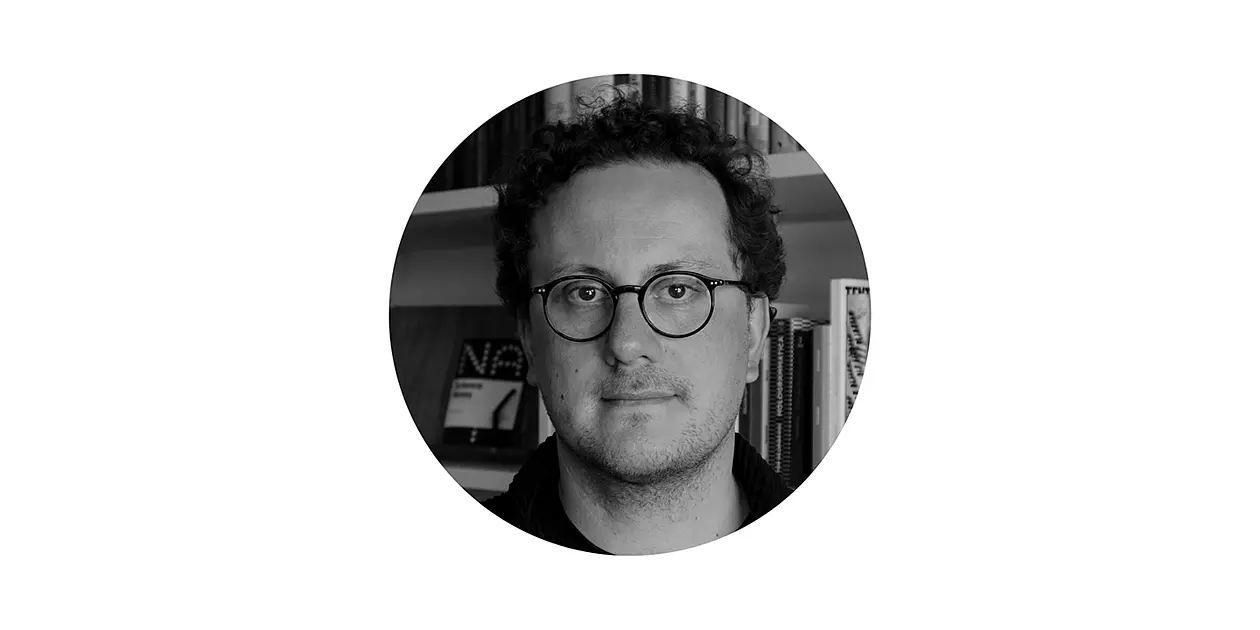
Dr. Markus Gottschling

Seminar for General Rhetoric | RHET AI Center

Bio

Markus Gottschling brings together literature, rhetoric, and science communication in his research and teaching.

He is a research associate at the Department of General Rhetoric, where he also teaches, and coordinates scientific activities at the RHET AI Center. There, he leads the working group Communicative Competence, which focuses on how communication skills shape the relationship between science, society, and technology. Since 2025, he has been co-director of the RHET AI Coalition, an international research network at the interface of rhetoric and artificial intelligence.

He develops and teaches training programs in science communication, both for the RHET AI Center and as part of the certificate program Science Communication and Media Competence, which he oversees.

His current research explores how rhetoric and generative AI interact – particularly in co-creative writing processes and the development of what he calls Rhetorical AI Literacy. He is also interested in the role of fictionalization in science communication and how narrative techniques can reshape public engagement with scientific knowledge.

Markus Gottschling has published on a range of topics at the intersection of rhetoric and science communication. These include methods of recontextualizing scientific knowledge (Recontextualized Knowledge. Rhetoric – Situation – Science Communication, co-edited with Olaf Kramer), the specific challenges of communicating the humanities, and, in literary studies, the relationship between space theory and narration. His dissertation focused on the theme of getting lost in the polar regions of literature.

In addition to academic publications, his journalistic work has appeared in Akzente, DUZ-Magazin, Science Notes Magazin, and on wissenschaftskommunikation.de.

Current Activities
“Künstliche Stimmen, neues Sprechen? Die Rhetorik generativer KI”. Talk, Jahrestagung Berufsverband Sprechen, Heidelberg (30.11.2025)
“Öffentliche Reden im Zeitalter generativer KI”. Talk, Württembergische Landesbibliothek Stuttgart (26.11.2025)
“Die Rhetorik der generativen KI: Persuasive Oberfläche und doppelte Artikulation”. Talk, DAAD Lektorentreffen, University of Danzig (23.10.2025)
“Generative AI in Research and Communication – Advanced”. Workshop with Salina Weber, Graduate Academy Uni Tübingen (8.-9.10.2025)
“Science Communication on Different Career Level”. Panel discussion, 7th Cluster Conference
"Machine Learning in Science" 2025, Universität Tübingen (30.09.2025)
Contact

Eberhard Karls Universität Tübingen
Research Center for Science Communication

RHET AI Center
Doblerstr. 21/1 | 72074 Tübingen
+49 7071/ 29 73321

markus.gottschlingspam prevention@uni-tuebingen.de


Experience and Functions

Current memberships and functions
Co-Director RHET AI Coalition (sice 2025)
Program Lead Certificate Program Science Communication and Media Competence (since 2022)
Principal Investigator RHET AI Center / Unit Head Communicative Competence (since 2021)
Member Rhetoric Society of Europe 
Member PCST Network
Academic Experience
Since October 2021:
Scientific Coordination & Research Program, RHET AI Center
2020 – 2021:
Project management and development of the Certificate Program Science Communication and Media Competence as part of the university’s communication initiative Sharing Knowledge

2018

Doctorate in Literary Studies with a dissertation on getting lost in the polar regions of literature (transcript Verlag)

2011 – 2021:
Research Unit for Presentation Competence at the Seminar for General Rhetoric, University of Tübingen.

  • From 2011: Research and training as part of the Jugend präsentiert project

  • From 2014: Additionally, project management for the science communication series Rhetoric and Knowledge

  • From 2018: Member of the editorial team of Science Notes Magazin

2004 – 2011:
Studied Modern German and Modern English Literature as well as General Rhetoric at the Universities of Tübingen and Nottingham

Publications

Books

Recontextualized Knowledge. Rhetoric – Situation – Science Communication. ed., together with Olaf Kramer. Berlin: De Gruyter 2021.
Verloren Gehen in den Polargebieten der Literatur. Subjekt und Raum bei Christoph Ransmayr und Edgar Allan Poe. Bielefeld: transcript 2018.


Articles

“Towards Rhetorical AI Literacy. Presenting a Conceptual Framework / Vers une littératie rhétorique de l’intelligence artificielle : présentation d’un cadre conceptuel”. In: Argumentation et Analyse du Discours [Online], 35 | 2025, https://doi.org/10.4000/14yaw
“Persuasive Surfaces and Calculating Machines. A Rhetorical Perspective on Artificial Intelligence”. In: Global Philosophy 35, 15 (2025). doi.org/10.1007/s10516-025-09748-3
“Wissenschaftskommunikation als Fiktionalisierung des Faktischen (Hawkesworth, Verne, Schalansky, Herzog)”. In: Literarische Sachbücher Formen – Funktionen – Praktiken. Hrsg. v. Christian Meierhofer, Michael Schikorwski. Non-Fiktion 19(1/2), 2024, S. 109-139.
“Im Durchlauferhitzer der Gegenwart. Eine rhetorische Analyse von Geisteswissenschaftskommunikation auf Twitter”. In: Wissenschaftskommunikation in den Geisteswissenschaften – Grundlagen, Konzepte, Anwendung. ed. by Georgia Gödecke, Andreas Grünewald. Bielefeld: wbv 2024, S. 61-78. https://dx.doi.org/10.3278/9783763976003
“Imitationen: Zur Menschlichkeit des Erzählens mit Künstlicher Intelligenz”. In: Artificial turn. ed. by Anne Burkhardt, Olaf Kramer, Susanne Marschall. Darmstadt: wbgAcademic (Preprint). 
“A Rhetorical Approach to Science Communication: Six Building Blocks as Guidelines for Researchers", zs. mit Michael Pelzer. In: Good Practices in Science Communication and Citizen Science, ed. by Javier Baena, Markus Gottschling, Michael Pelzer, Rafaella Lenoir-Improta; Fotini Venetsanou, Giulia Antinucci; Elizabeth Baier, Alice Novello, Isabelle Galvez. CIVIS (2023). civis.eu/storage/files/guidelines-of-best-practices-in-citizen-science-and-science-communication.pdf
“Verlusträume. Von Dichotomien, Ähnlichkeiten und Grenzgängen”. In: Nach dem Postkolonialismus? Ähnlichkeit als kulturtheoretisches Paradigma. ed. by Dorothee Kimmich together with Anil Bhatti, Nicole Colin, Quintus Immisch, Wege der Germanistik in transkultureller Perspektive. Akten des XIV. Kongresses der Internationalen Vereinigung für Germanistik (IVG) (Bd. 4) - Jahrbuch für Internationale Germanistik - Beihefte, Peter Lang 2022, S. 601-612, https://www.peterlang.com/document/1296845
“Räume räumen. Über den Verlust und das Verschwinden in den Leerstellen der Literatur”. Akzente 69/2 (2022), ed by. Dagmar Leupold, S. 4-8.
“Introduction: A Rhetorical View on Science Communication”, together with Olaf Kramer. Recontextualized Knowledge. Rhetoric – Situation – Science Communication. ed. by Markus Gottschling and Olaf Kramer. Berlin: De Gruyter 2021, 1–14.
“Creating a Rhetorical Situation Kevin Esvelt, Gene Drive and the Call for Open and Responsive Science”. Recontextualized Knowledge. Rhetoric – Situation – Science Communication. ed. by Markus Gottschling and Olaf Kramer. Berlin: De Gruyter 2021, 45–68.
“Wissenschaftskommunikation auf Twitter? Eine Chance für die Geisteswissenschaften!”, together with Andrea Geier. Mitteilungen des Deutschen Germanistenverbandes 66/3 (2019), 282–291. Open Access
“Lend me your eyes”. Rhetoric, Knowledge and the Public Sphere. Ed by. Agnieszka Kampka, Katarzyna Molek-Kozakowska Frankfurt a.M.: Peter Lang 2016, 57–72.
“Serialität”. Medienrhetorik des Fernsehens. Anne Ulrich, Joachim Knape. Bielefeld: transcript 2014, 76–84.
Jugend präsentiert kompakt, together with Carmen Lipphardt et al. Ed. by Olaf Kramer. Heidelberg 2014.


Research Projects and Conference Organization

“From Idea to Impact.” Project Development Workshop and Competition (2025)
“transformativ. Sharing Perspectives on Artificial Intelligence”. Conference by RHET AI Center and experimenta Heidelberg (04.-06.12.2025)
“AI in Work and Everyday Life. Understanding and Using Generative AI.” Project Lead. Workshop series by the RHET AI Center in collaboration with the Adult Education Association of Baden-Württemberg (March 2025 – February 2026)
“Persuasive Algorithms. The Rhetorics of Generative AI”. Conference by RHET AI Center together with MPI for Intelligent Systems, Tübingen (November 2024)
“AI Rhetoric. Foundations of Science Communication”. Project Lead. Workshop series by the RHET AI Center in collaboration with IMPRS-IS Tübingen/Stuttgart (seit 2023).
“Unit 3: Communicative Competence”. Principal Investigator and Unit Head at RHET AI Center (since 2021)
“Certificate Program Science Communication and Media Competence”. Concept and Project Lead. Certificate program for the Sharing Knowledge initiative at the University of Tübingen (since 2021)
“Visuelles Wissen in Schule und Wissenschaft: Show oder Chance?”. Organization. National Conference “Jugend präsentiert” (2018)
“Recontextualizing Knowledge”. Conference at University of Tübingen (2017)
“Rhetorik und Wissen”. Project Organization. Lecture series by the Seminar for General Rhetoric, Tübingen (2015–2019)
“Räume räumen. Vom Aneignen, Verändern und Verlassen des literarischen Raums”. Workshop funded by the Excellence Strategy of the University of Tübingen (2013)

Talks and Workshops (recent and selected)

“The Rhetoric of Generative AI in Research and Science Communication”. Alumni Impact Talk, Uni Tübingen (September 2025)
“Metacognitive Illusions – Rhetoric between AI Strategies and AI Literacies”. Talk with Fabian Erhardt, DGPuK & ICA conference “Digitale Kommunikation” & “Human-Machine Communication” (September 2025)
“Poster Flash & Science Hub Showcase”. Workshop and Moderation, 12th Heidelberg Lauerate Forum (September 2025)
“Storytelling & Audience Design". Workshop at ScienceUs Upscale Academy (July 2025)
“Science Communication for AI research”. Workshop at Munich AI Day (July 2025)
“Cutting through the Bullshit. Rhetorical AI Literacy for Communication Practitioners”. Workshop. PCST 2025, Aberdeen (May 2025)
“The RHET AI Coalition”. RSA Webinar and panel discussion, Online (April 2025)
“Generative AI for Research and Science Communication”. Workshop für das Department für Wissenschaftskommunikation am KIT (25.04.2025)
“The Rhetoric of Generative AI.” Workshop with Salina Weber. Forum Wissenschaftskommunikation, Berlin (December 2024)
“Cognitive Narrative Ontology". Workshop, Nato StratCom CoE, Riga (December 2024)
“Persuasive Algorithms. The Rhetorics of Generative AI” Tagung. Tübingen (November 2024)
“Fictionalization as a Jagged Line of the Humanities in Science Communication”. Talk. Conference Making of the Humanities XI. Lund, Sweden (October 2024)
“Towards Rhetorical AI Literacy”. Talk together with Salina Weber. Conference NKRF9: Rhetoric in Digital and Technological Transition. Copenhagen, Denmark (October 2024)
“Poster Flash & Science Hub Showcase”. Workshop und Moderation. 11th Heidelberg Laureate Forum, Heidelberg (September 2024)
“Generative AI in Research and Communication”. Workshop with Salina Weber. Berlin School of Regenerative Therapies, Charité Berlin (June 2024)
“Generative AI as Recontextualized Knowledge: The Case of Imitatio Auctorum”. Talk. Rhetoric Society of America Conference, University of Denver (Mai 2024).
“AI Rhetoric: Project Development”. Workshop, together with Salina Weber. IMPRS-IS Tübingen/Stuttgart (April 2024).
“AI Rhetoric. Foundations of Science Communication”. Workshop series, together with Salina Weber, Michael Pelzer. IMPRS-IS Tübingen/Stuttgart (March 2024).
“Basic Principles of Science Communication”. Workshop. Stem Cells in Neuroscience Conference, Universität Tübingen (March 2024).
“Developing a rhetorical framework for AI”. Pre-summit workshop. AlphaPersuade: A Summit on Ethical AI, Los Angeles (Februar 2024)
“Imitationsmaschinen. Schreiben mit KI”. Talk, Science Notes, Heidelberg (January 2024)
“Algorithms, AI, and the Future of Theater”. Panel discussion, dai Tübingen (Januar 2024)
“Generative AI for Research and Science Communication”. Workshop, RHET AI / Graduate Academy, Universität Tübingen (January 2024)
“The Rhetoric of Science Communication”. Talk, Science for a Change, Molekulare Medizin, Universität Tübingen (January 2024)
“Weiße Stellen. Unsicherheiten und Imaginationen bei Hawkesworth, Verne, Schalansky”. Talk. Workshop “Literarische Sachbücher. Formen – Funktionen – Praktiken”, Uni Bonn (September 2023)
“Between episteme and doxa: Opinion and Deliberation in Science Communication”. Vortrag, Rhetoric in Society 8 Conference, Uni Tübingen (Juni 2023)
“Reflections on a Rhetoric of Prompts”. Vortrag, Rhetoric in Society 8 Conference, Uni Tübingen (Juni 2023)
“Between Fact and Fiction. The Difficult Quest for Common Ground in SciComm on AI”. Panel, PCST-Conference, Rotterdam (April 2023)
“Grounding AI Communication”. Workshop, PCST-Conference, Rotterdam (April 2023)
“RHET AI Science Communication Series”. Workshops, IMPRS-IS, Uni Tübingen/Stutgart (Februar-Mai 2023)

Teaching

Current (summer term 2025)

“Was ist Rhetorik”, Proseminar together with Dr. Fabian Erhardt

"Jenseits des Faktischen: Wissen erzählen, Wirklichkeiten erschaffen, Wahrheiten erfinden”, Hauptseminar together with Dr. Sara Bangert, SoSe 2025

“Positionen der Rhetorikforschung”, Oberseminar, together with Prof. Dr. Olaf Kramer