Geoarchäologie

Burning Bone Experiments

Our group works on a number of projects related to experimental burning of bone. We conduct controlled oven experiments and use the resulting materials to test different methods of burnt bone identification. We also conduct open campfire experiments and observe the conditions of burning, collect the burned residues, and analyze the burnt bone using archaeological methods.

FTIR Spectra

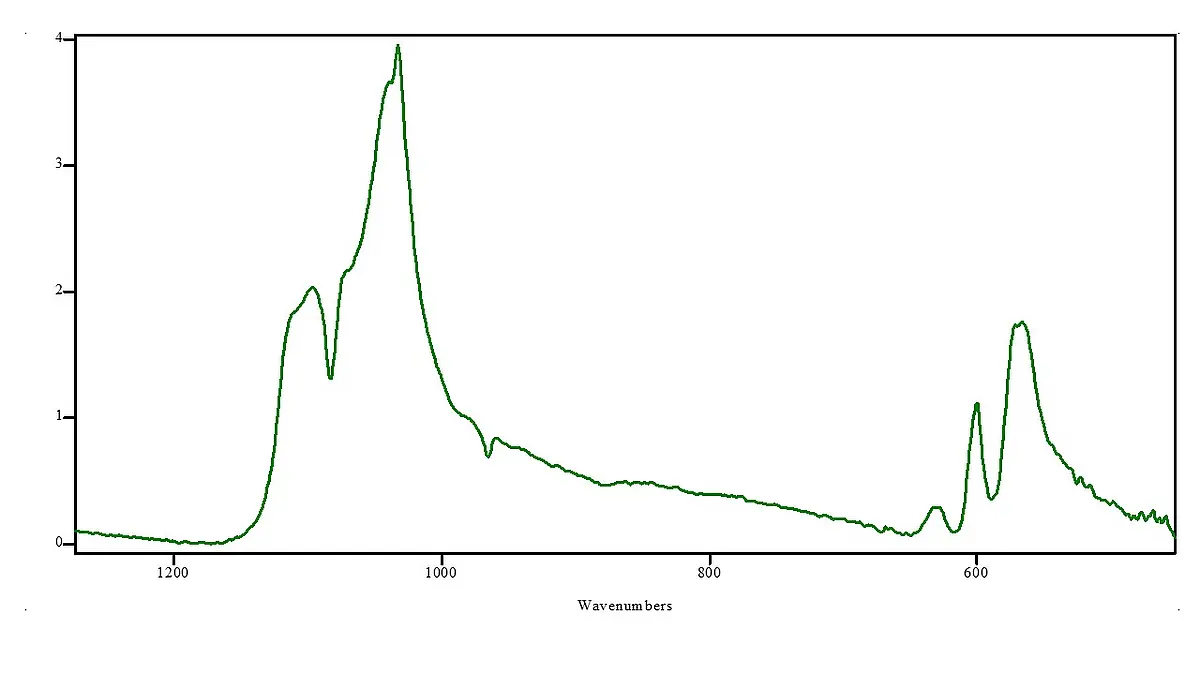
At present, we maintain a database of FTIR spectra of bones. Some bones are unheated and exposed to a variety of taphonomic processes. Others, from a range of animal species, were heated in a muffle oven to temperatures between 100 and 1000⁰C. We use these spectra for teaching purposes and comparison to bones collected from open campfire experiments and archaeological sites. Our analyses include visual observation of spectra, measurement of peak heights and ratios, calculation of spectral indices, and development of statistical classification models. We occasionally teach a course in Advanced FTIR Analysis that utilizes this database and covers many of these approaches. In February 2023, the database of experimental materials contained around 550 entries.

The burned bone database was recently utilized in a study of tortoises that perished in a recent brushfire in South Africa. The work, led by Mareike Stahlschmidt, included a comparison of experimentally heated tortoise bones to bones from other animals in our database.

Download the spectra associated with this study here
Thin Sections

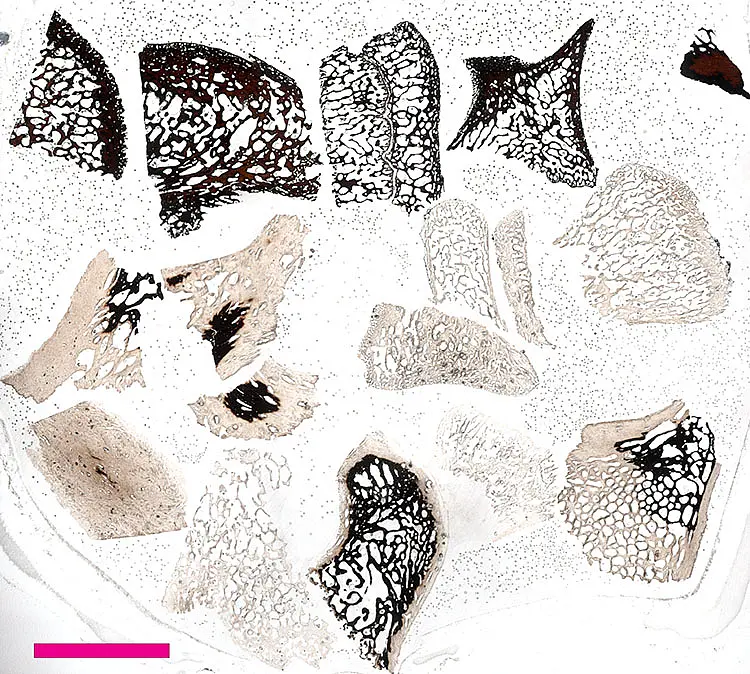
We have also prepared petrographic thin sections and polished mounts from bones burned in the muffle oven. These are analyzed using transmitted light and reflectance microscopy, as well as micro-FTIR. We maintain reference spectral libraries of micro-FTIR spectra collected from these materials using reflectance as well as a Ge ATR objective.

Publication list:

• Bouchard, G.P., Mentzer, S.M., Riel-Salvatore, J., Hodgkins, J., Miller, C.E., Negrino, F., Wogelius, R. and Buckley, M., 2019. Portable FTIR for on-site screening of archaeological bone intended for ZooMS collagen fingerprint analysis. Journal of Archaeological Science: Reports, 26, p.101862.

• Mentzer, S.M., 2009. Bone as a fuel source: the effects of initial fragment size distribution. In Fuel managment during the Palaeolithic and Mesolithic period. New tools, new interpretations. Proceedings of the XVth World congress (Lisbon, 4-9 september 2006), Oxford, Archaeopress («BAR International Series» 1914) (pp. 49-60).

• Stahlschmidt, M.C., Mentzer, S.M., Heinrich, S., Cooper, A., Grote, M.N., McNeill, P.J., Wilder, J.B. and Steele, T.E., 2023. Impact of a recent wildfire on tortoises at Cape Point, South Africa, and implications for the interpretation of heated bones in the archaeological record. Archaeological and Anthropological Sciences, 15(B), p.126.

• Villagran, X.S., Huisman, D.J., Mentzer, S.M., Miller, C.E. and Jans, M.M., 2017. Bone and other skeletal tissues. In Nicosia and Stoops (eds.) Archaeological Soil and Sediment Micromorphology, Wiley, pp.9-38.