Hector Research Institute of Education Sciences and Psychology

Traveling exhibition “Connecting Generations”

Starting a conversation about mutual and shared history through everyday stories

On this page, you will find the following:

  • General information about the traveling exhibition
  • Locations, dates and contacts
  • The four key topics
  • How can you bring the traveling exhibition to your location?
  • Goals of the traveling exhibition
  • Educational materials
  • Related Projects
  • Further information

About the traveling exhibition

Thirty-five years after the GDR came under the jurisdiction of the Basic Law and more than 75 years after the founding of the two German states, it is important to reflect on the upheavals and intertwined threads of German-German history by taking a respectful look at the life stories of people in East and West Germany.

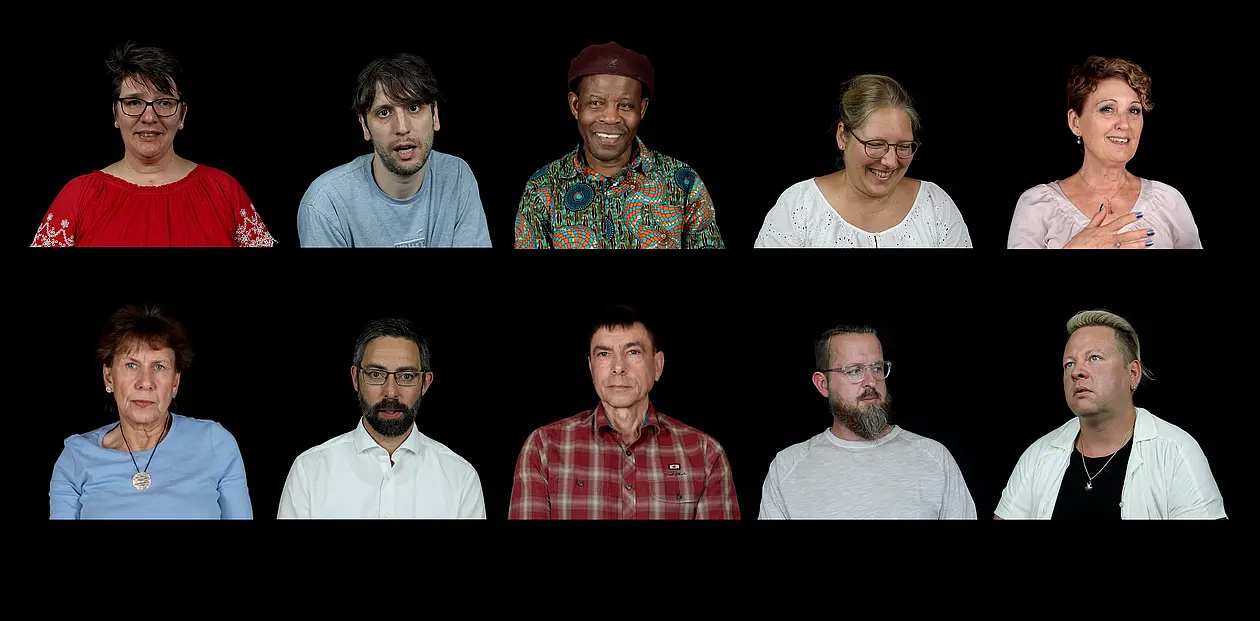
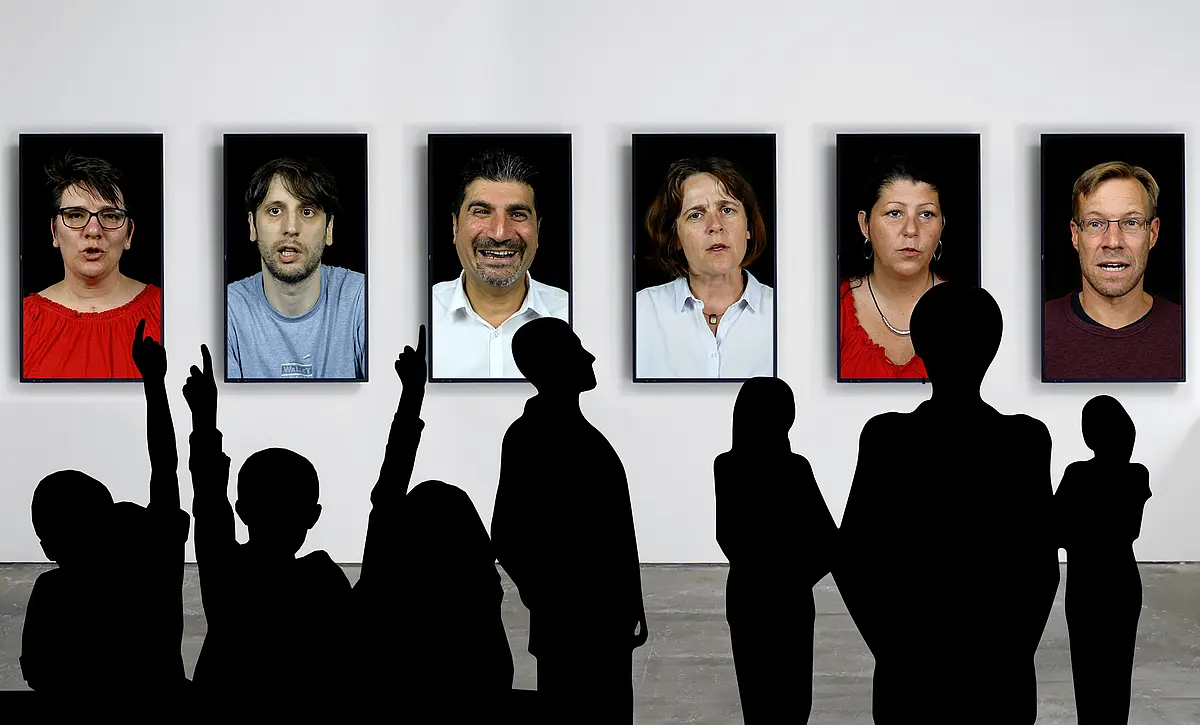
In the traveling exhibition “Connecting Generations,” witnesses from East and West Germany recount their everyday lives in a divided and reunified state through four thematically distinct video installations. In addition to a thematic film, six additional monitors feature in-depth individual videos, allowing viewers to immerse themselves in personal stories. Information stations and handouts complement the video installation.

You can also view the handouts online on this page:  Handouts

Locations, dates and contacts

The traveling exhibition will be shown not only in major cities but also in small towns in rural areas. In 2025 and 2026, the traveling exhibition will often be shown simultaneously for four to eight weeks. Additional locations may be added in 2026 and 2027.


LocationTopicDatesOpeningContact person
Universitätsbibliothek, Universität Hamburg„Generation 1975“21st May 2026 – 21st June 202621st May 2026Konstantin Ulmer
Mail
Schwäbisch Gmünd“Youth life” 26 June 2026 - 31st July 202623rd June 2026, 6pm, location: VHS 
Bautzen Gedenkstätte Sachsen „Generation Wall Construction“ 24th June 2026 until beginning of SeptemberInformation following 
Kulturhistorisches Museum Görlitz“Migration”: movie & deepenings14th August 2026Information following

Kai Wenzel

Mail 

Gedenkstätte Stiftung Berliner Mauer "Generation 1975"1st September 2026 - 13th December 2026Information following 
Marchivum Mannheim Ba-Wü“Krisen”: movie & deepeningsInformation following2nd October 2026 
Stadtbücherei Hagen “Generation 1975”: movie & deepenings3rd November 2026 - February 20273rd November 2026, 5 pm 

Almut Leh

Mail

FernUni Hagen “Lüdenscheider Gespräche” “Lüdenscheider conversations” 4th November 2026, 6:30 pm 

Almut Leh

Mail

The four key topics

Venues can choose from four themed films. With the additional handouts, teachers can familiarize themselves with the content they will see before visiting the traveling exhibition and identify key topics for their own lessons.

Video installation 1: “Generation 1975 - entering the new Germany at age 14”

In Video installation 1, “Generation 1975 – Entering the new Germany at 14,” people from Baden-Württemberg, Brandenburg, East and West Berlin, recount their lives before, during, and after the pivotal year of 1989/1990 from the perspective of teenagers at the time—who watched in amazement and witnessed firsthand how life in the East was turned upside down, while virtually nothing changed in the daily lives of young people in the old FRG (outside of West Berlin). 

Trailer                                                    Handout

Video installation 2 "Generation Wall Construction"

The video installation 2, “Generation Mauerbau,” offers the perspective of young adults at the time—those born in 1961 in Saxony, Baden-Württemberg, East or West Berlin—who were 28 years old during the period of upheaval, having just entered the workforce and often started families. Here, too, nearly every aspect of life changed for people in the GDR; in the old FRG, however, the social system—and thus everyday life—remained virtually the same, even though new job and travel opportunities had emerged in the East. 

Trailer                                                    Handout

Video installation 3 “Never experienced a crisis?“

The video installation 3, “Never experienced a crisis?”, combines material from the two generational projects. While the interviews with “Generation 1975” were conducted before the COVID-19 pandemic, at a time when the feeling of never having experienced a crisis was still widespread in the West, this was no longer the case two years later, when the interviews with “Generation Wall Construction” were conducted. In the video installation, they recount their experiences of personal, professional, and political crises. 

Trailer                                                    Handout

Video installation 4 “A history of the Germans?”

The video installation 4, “A history of the Germans?”, also draws on material from both intergenerational projects. Here, the focus is on the stories of people with immigrant backgrounds—who came to the GDR or the FRG as “contract workers” or as children of “guest workers”—which have received little attention to date, as well as on the stories of West and East Germans who, over time, adapted more or less successfully to their fellow citizens from abroad.

Trailer following…                                           Handout


Past exhibition locations

LocationTopicDuration of the exhibitionOpeningClosingContact person
Universität zu Köln"Generation 1975“

1st October 2025 – 

End of November

1st October 2025, 

10 am

Further information

Elisabeth Hoffmann

Mail

Brandenburg-Museum"Generation 1975“: movie & deepenings4th October 2025 – 22nd March 20262nd October 2025, 
6:30 pm

Katalin Krasznahorkai

Mail

Brandenburg-Museum
Landtag Brandenburg"Never experienced a crisis?“12th November 2025 - 21st December 2025

11th November 2025, 

6 pm


Further information

Silvana Hilliger

Mail

Villa Rot, Burgrieden"Generation Wall Construction“2nd November 2025 – 8th February 2026

2nd November 2025, 

11 am

Further information

Sabine Heilig

Mail

Kulturzentrum KuBa, Saarbrücken"A thing of the Germans“1st October 2025 –
4th October 2025

Annika Busch

Mail


How can you bring the traveling exhibition to your location?

Please contact:
Christiane Bertram
Christiane.bertramspam prevention@uni-tuebingen.de 


Goals of the traveling exhibition

A reminder of the “divided” history of East and West Germany

Promote and facilitate a multi-perspective view

Using oral history in historical and political education

The traveling exhibition “Connecting Generations” facilitates dialogue and interaction in public spaces for both adult visitors and young people. Through the everyday stories of people from East and West, the exhibition offers insights into Germany’s “divided” past. The recorded stories of various individuals foster empathy for their diverse experiences and memories.  The stories told in the interviews are presented without interpretation or judgment and offer a starting point for engaging visitors in accessible conversations about topics related to German-German history.

A reminder of the “divided” history of East and West Germany

Liberal democracies are finding it increasingly difficult to offer convincing solutions to the multiple crises facing the world. Extremist and populist slogans and narratives (e.g., regarding “remigration” or the denial of climate change) resonate with many (Richter & Ulrich, 2024, p. 166) and lead to electoral successes for far-right parties in Germany, Europe, and worldwide. The global shift to the right is exacerbated in Germany by highly divergent memories of the period of German division and transformation, which are also the subject of controversial debate in academic circles—e.g.,  „Ungleich vereint“ (Mau, 2024), „Diesseits der Mauer“ (Hoyer, 2023), or “Tausend Aufbrüche” (Morina, 2024). Academic books on the subject are becoming bestsellers and are receiving extensive coverage in arts sections and cultural programs. It is therefore equally important to remember the experiences of repression in the GDR and to come to terms with the experiences of the transition period. The focus should not be limited to the GDR, but should instead examine the German-German past as a “shared” history. For this reason, the traveling exhibition “Conecting Generations” gives a voice to people through their everyday experiences in a divided and reunified country and their memories, with the aim of conveying knowledge about these diverse experiences and memories and fostering mutual understanding. This is equally important for people in both East and West Germany. In particular, people who grew up in West Germany often know very little about the GDR and the period of transformation, so their understanding of the situation in East Germany is often limited (Ahbe, 2023; Großbölting, 2020). 


A multi-perspective view in the intergenerational interview projects

To provide a multi-perspective view, the two intergenerational interview projects (featuring people born in 1975 and 1961, respectively) each surveyed 26 eyewitnesses who lived in Brandenburg, Saxony, Baden-Württemberg, East or West Berlin until the fall of the Wall, were interviewed about the issues and challenges of the division of Germany and reunification. The videos offer an accessible window into the everyday lives that the (older) viewers themselves led on their respective sides of the Wall, reminding them of how they themselves perceived and judged the “others” on the other side of the Wall before and after the period of upheaval. 
For the first interview project, “Generation 1975,” people from Baden-Württemberg, West and East Berlin, and Brandenburg were interviewed who had experienced the fall of the Berlin Wall and the reunification as teenagers—meaning they were old enough to have consciously witnessed some of these events, but not yet old enough to be held accountable for their actions. In the second interview project, “Generation Wall Construction” the range of topics was expanded to include experiences of crisis in the interviewees’ own life stories. In 1961, the interviewees were in their late twenties and already had professional and family responsibilities, including toward their own parents. Thus, the “Generation Wall Construction”—who were young adults at the time of the fall of the Berlin Wall—experienced the period of transformation and its social implications differently than the teenagers of the “Generation 1975.” The two source corpora also differ in that the interviews with “Generation 1975” were conducted in 2019 with people who were in their mid-forties at the time, before the outbreak of the COVID-19 pandemic, when the multiple crises of the present were not (yet) so visible. The interviews with the “Generation Wall Construction,” on the other hand, were conducted in 2021/2022 with people who were in their early sixties at the time. For many, the restrictions during the pandemic and the war of aggression against Ukraine had led to feelings of uncertainty and also to reminiscences of the Cold War era. The life history interviews from both source corpora are available to researchers in the “Archiv Deutsches Gedächtnis.”

Oral history in historical and political education

Video installations were created from the life story interviews and have already been shown on several occasions (see the trailers for the Generation 1975 and the Generation Wall Construction). In addition, approximately 20-minute individual videos have been (or are being) produced for use in the classroom. The individual videos and lesson plans are available to anyone interested on the  Generationenportal of the Baden-Württemberg State Education Server. In the context of the traveling exhibition “Conecting Generations,” we are currently developing further workshops and lesson plans in collaboration with the Berlin Wall Foundation and the Center for School Quality and Teacher Education in Baden-Württemberg, which will also be made available on the “Generationenportal” in the medium term. Our experience to date working with the video material demonstrates how helpful the everyday history approach is for approaching the topic of German-German history without preconceptions and for broadening one’s own perspective (Bertram, 2023). In light of the deepening of internal societal divides caused by “filter bubbles” on social media channels, it is important to us to engage in dialogue with people across the country and in person through the traveling exhibition “Connecting Generations.” In doing so, we focus on a mutual exchange on equal terms and on integrating historical and political education both within and outside of schools.


Related projects

at Hector Research Institute of Education Sciences and Psychology

Eyewitness interviews

Effectiveness in history classes


Further information

Further literature on the subject

Ahbe, T. (2023). Ostdeutschland und die Ostdeutschen als Erzählung. Identitätsstiftende Narrative im Widerstreit. Erfurt: Landeszentrale für politische Bildung Thüringen.


Bertram, C. (2023). Transformationen in einer diversen Gesellschaft am Beispiel der „Generation 1975“. In M. Oberle & M.-M. Stamer, Politische Bildung in der superdiversen Gesellschaft. Ta-gungsband der Jahrestagung der Gesellschaft für Politikdidaktik und politische Jugend- und Er-wachsenenbildung (GPJE) 2021. (S. 170-178). Frankfurt a.M.: Wochenschau-Verlag.

Großbölting, T. (2020). Wiedervereinigungsgesellschaft. Aufbruch und Entgrenzung in Deutschland seit 1989/90. Bonn: Bundeszentrale für politische Bildung. 

Hoyer, K. (2023). Eine neue Geschichte der DDR 1949-1990.

Mau, Steffen (2024). Ungleich vereint. Warum der Osten anders bleibt. Berlin: Suhrkamp.

Morina, C. (2023). Tausend Aufbrüche. Die Deutschen und ihre Demokratie seit den 1980er-Jahren. Siedler. 

Richter, H. & Ulrich, B. (2024). Demokratie und Revolution. Wege aus der selbstverschuldeten ökologi-schen Unmündigkeit. Kiepenheuer & Witsch.

"Generationenportal"

The videos from the oral history projects “Generation 1975: Entering the new Germany at Age 14” and “Generation Wall Construction” are available for free use by everyone on the “Generationenportal,” along with lesson plans. The "Generationenportal" is a resource hosted on the state education server of the Center for School Quality and Teacher Education (ZSL) in Baden-Württemberg. 
To the “Generationenportal”

"Archiv Deutsches Gedächtnis"

The life history interviews are available to researchers on the “Archiv Deutsches Gedächtnis” website. 
Archiv Deutsches Gedächtnis

Press clippings

  • Tagesspiegel Berlin (3rd October 2025)
  • Museumsfernsehn (October 2025)
  • Saarländischer Rundfunk (MP3) Courtesy of Saarländischer Rundfunk.
    • (Notes on the report: TdE25: What’s already happening at the festival? MuPro live link with TdE reporter Alice Kremer. Author: Alice Kremer. Broadcast: SR kultur – Der Vormittag, October 2, 2025, 11:20 a.m.).

Project partners

In some cases, the venues help fund the exhibition on site.