Excellence Strategy

Funded projects 2024

Ambivalent educational advancement

Cultural and social science approaches in dialogue. Social advancement through education not only commands respect for individual effort, it is also considered a hallmark of a fair education system. However, research shows that educational advancement is often experienced as highly ambivalent. In order to explore educational advancement in all its contradictions, the project takes a new approach: it focuses on auto-sociobiographies and related types of texts as its research subject and organizes cooperation between education, literature, history, and sociology. In the form of an interdisciplinary graduate college, an innovative research network is to be established that would be unique beyond the German-speaking world.


Project Coordination

Principal Investigator:
Prof. Dr. Markus Rieger-Ladich  
Institut für Erziehungswissenschaft  
Universität Tübingen  
Münzgasse 26
72070 Tübingen  
E-Mail:  markus.rieger-ladichspam prevention@uni-tuebingen.de


Publications

  1. Brahm, T., & Haag, L. (2025). The gender gap in economic and financial literacy: A review and research agenda. International Journal of Consumer Studies, 49, e70031. doi.org/10.1111/ijcs.70031
  2. Mengilli, Y. (2025). Making a home, aber wie und mit wem? In C. Reutlinger, A. Pohl & A. Krass (Eds.), Making a home in der Stadt. Sozialraumforschung und Sozialraumarbeit (Vol. 28). Springer VS. doi.org/10.1007/978-3-658-48329-6_12
  3. Mengilli, Y., & Reutlinger, C. (2025). "Social butterfly" und "voll der Stein": Sozialräumliche Positionierungen von Mädchen*. Zeitschrift für Soziologie der Erziehung und Sozialisation, 2, 123–140.
  4. Petrik, F. (2025). Practices of becoming: What and how do first-generation students learn when transitioning to university? Studies in Adult Education and Learning / Andragoska spoznanja, 32(2), 135–153.
  5. Petrik, F. (2025). Student*in werden als soziale Praxis: Bildungsaufsteiger*innen an österreichischen Universitäten. Österreichische Zeitschrift für Soziologie, 50, 1–19. (Open Access)
  6. Petrik, F. (2025). The role of work: Understanding learning experiences in higher education beyond the institution. In M. Bernhard, S. Billett, C. Hof, K. Kraus, V. Marsick & P. Sawchuk (Eds.), Seeing learning differently: Societal challenges, conceptual approaches, and empirical insights (in press).
  7. Petrik, F., Preite, L., Zhou, L., & Jurt, J. (2025). Mit Édouard Louis die Widersprüche des Aufstiegs erkunden: Autosoziobiografische Perspektiven. Zeitschrift für Soziologie der Erziehung und Sozialisation, 45(4), 341–356.
  8. Petrik, F., & Samaluk, B. (2025). Life course transitions, learning and social change (Special Issue). Studies in Adult Education and Learning / Andragoska spoznanja, 31(2). (Open Access9
  9. Rieger-Ladich, M. (2025). Privilegien: An Ongoing Scandal. Paragrana, 34(1), 43–54.
    (Revised and updated version.) 
  10. Petrik, F. (2025): Bildungsaufstieg als epistemologische Herausforderung. Paragrana, 34(3), i.E.

  11. Petrik, F.,& Rieger-Ladich, M. (2025): Vollmundige Versprechungen. Über Risiken und Nebenwirkungen der Rede vom Bildungsaufstieg. In: Weiß, G., Brinkmann, M., Jergus, K. (Hrsg.): Zukunft – zwischen Öffnungen und Schließungen. Zur gegenwärtigen Problematik pädagogischer Zukunftsentwürfe. Weinheim: Beltz Juventa.

  12. Diederichs, Miriam, Grabau, Christian, Rieger-Ladich, Markus (2024): Gesteigerte Reflexivität: Wie die Erforschung von Bildungsaufstiegen die Hochschullehre verändern kann. In: Möller, C., Blome, F., Reuter, J. (Hrsg.): Sozialer Aufstieg durch Bildung? Theoretische Zugänge, empirische Einsichten. Weinheim: Beltz Juventa, S. 101–120.

  13. Rieger-Ladich, M., & Petrik, F. (2024): Wider die Rhetorik der Authentizität: Wie sich die Erzählung vom Bildungsaufstieg (nicht) analysieren lässt. In: Kratz, M., Dlugosch, A., Heß, M. (Hrsg.): Biographisches Erzählen als professioneller Bildungsraum. Gießen: Psychosozialverlag, S. 177–207.

  14. Rieger-Ladich, M. (2024): Abschied von den einsamen Helden. Wie sich die Rede von Bildungsaufstieg verkomplizieren lässt. In: Ammann, K., Emmenegger, F., Gerstgrasser, R., Ibrahim, O., Rucker, T.,  Welti, G. (Hrsg.): Bildsamkeit – Komplexität – Werteorientierung. Beiträge zur erziehungswissenschaftlichen Grundlagenforschung. Bad Heilbrunn: Verlag Julius Klinkhardt, S. 205–221.

Outreach - a selection


GENONESIA

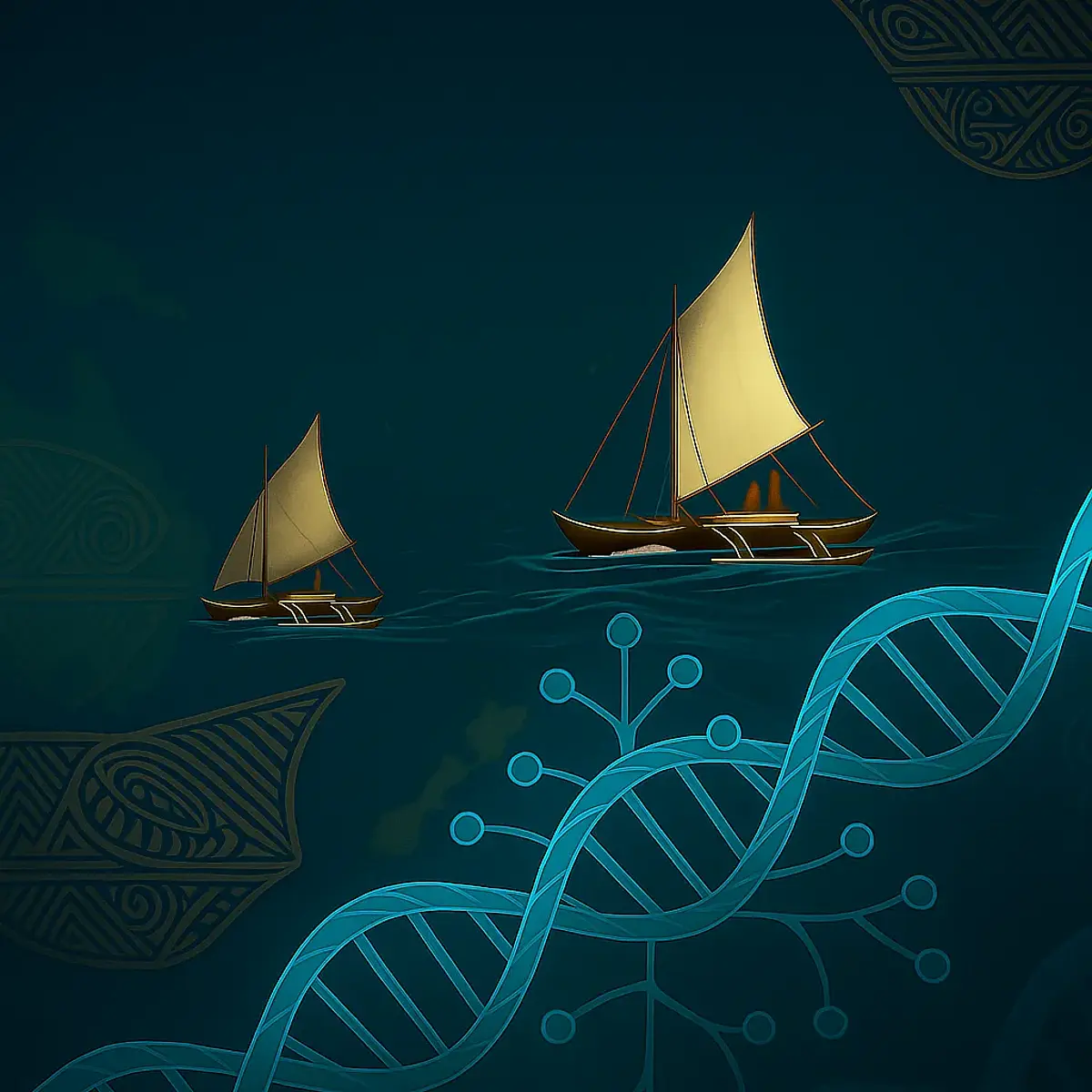
The study of East Polynesian history through an archaeogenomic time transect. The Polynesian triangle, a group of more than one thousand islands spread over two million km2 in the Pacific Ocean was the easternmost frontier for one of the greatest human expansions into the open ocean. This expansion along with later human movements and interactions have shaped the present-day cultural, linguistic, and genetic diversity of Polynesian communities. We study the genomes of ancient East Polynesians to gain insights on settlement history, health, and diversification of social practices through time. A fundamental objective is establishing a strong network of East Polynesian communities along with local archaeologists and linguists that will serve as a foundation for ongoing engagement and bidirectional exchange throughout the research process.

Project Coordination

Principal Investigator: 
Dr. Michal Feldman 
Institute for Archaeological Sciences 
University of Tübingen 
Hölderlin Straße 12 · 72074 Tübingen 
+49 7071 29-76533 
E-Mail: m.feldmanspam prevention@ifu.uni-tuebingen.de 


ICAWaR - Improving climate adaptation policies for water resilience in Germany

An interdisciplinary perspective based on governance networks and future climate scenarios. Many regions in Germany will be affected by the increasing effects of climate change if effective climate protection measures are not taken immediately. Water scarcity and drought threaten the livelihoods of humans and nature. With an interdisciplinary research project that brings together findings from political and environmental sciences, we are contributing to research on the governance of water resources. Using cross-impact balance (CIB) analysis, governance networks and complex political decision-making processes are analyzed in conjunction with scenarios for future climate conditions in order to find efficient strategies for water resource resilience, building adaptation capacities, and reducing carbon emissions, and to support informed decision-making. The aim is to further deepen this research through a DFG research group application.

Project Coordination

Principal Investigators: 
PD Dr. Melanie Nagel and Prof. Dr. Kira Rehfeld  
Geo- and Umweltforschungszentrum (GUZ), 
University of Tübingen 
Schnarrenbergstr. 94/96 
72076 Tübingen 
E-Mail: melanie.nagelspam prevention@uni-tuebingen.de

E-Mail: kira.rehfeldspam prevention@uni-tuebingen.de 


Right-Wing Immersion and Engaged Publics

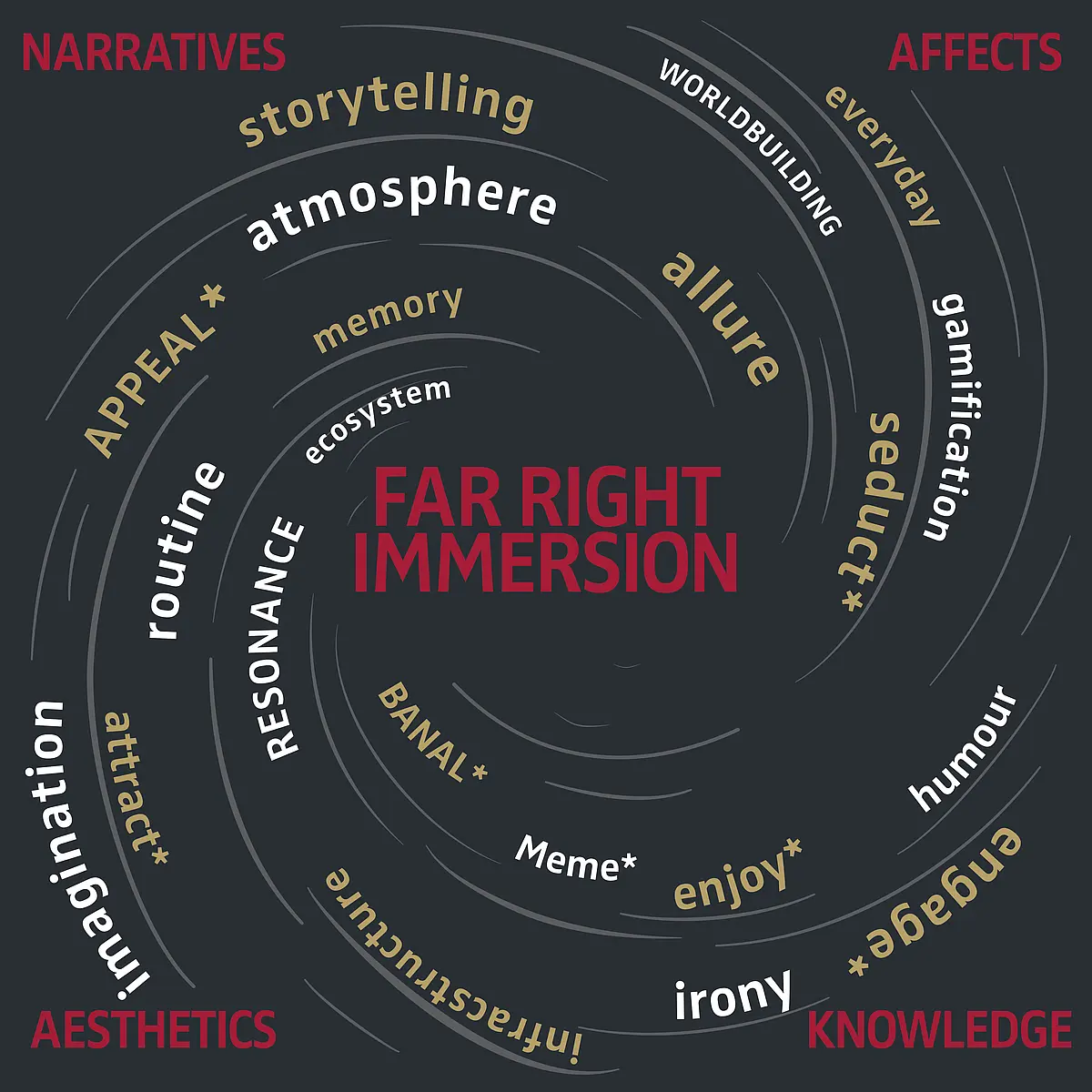
The research project aims to conceptualize and systematically break down right-wing immersion. By this, we mean the process in which subjects encounter right-wing worldviews or lifestyles and consciously or unconsciously become involved (or allow themselves to become involved). We investigate how right-wing immersion works in various (media) infrastructures and what resources and strategies are used in the process. Specifically, we ask how right-wing patterns of knowledge are taken up in everyday and scientific interpretations, politically reshape them, and thereby generate resonance in different social milieus.

Following the conceptualization of ‘right-wing immersion,’ best practice projects in which ‘right-wing immersion’ is successfully counteracted will be examined. The aim here is to systematize the experiences from the projects and develop a ‘response framework’ for promoting democratic resilience.

In addition, the project is an interdisciplinary working context that will culminate in an application to establish a DFG research group on “Right-wing Immersion and Democratic Resilience.” Participants include the Institute for Research on Far Right Extremism (IRex), the application group for the establishment of IRex, and experts from other universities. 

Project Coordination

Principal Investigator: 
Prof. Dr. Tanja Thomas  
Institute for Media Studies
Universität Tübingen 
Wilhelmstr. 50, 72074 Tübingen 
+49 7071 29-76 816 
E-Mail: tanja.thomasspam prevention@uni-tuebingen.de

Outreach - a selection