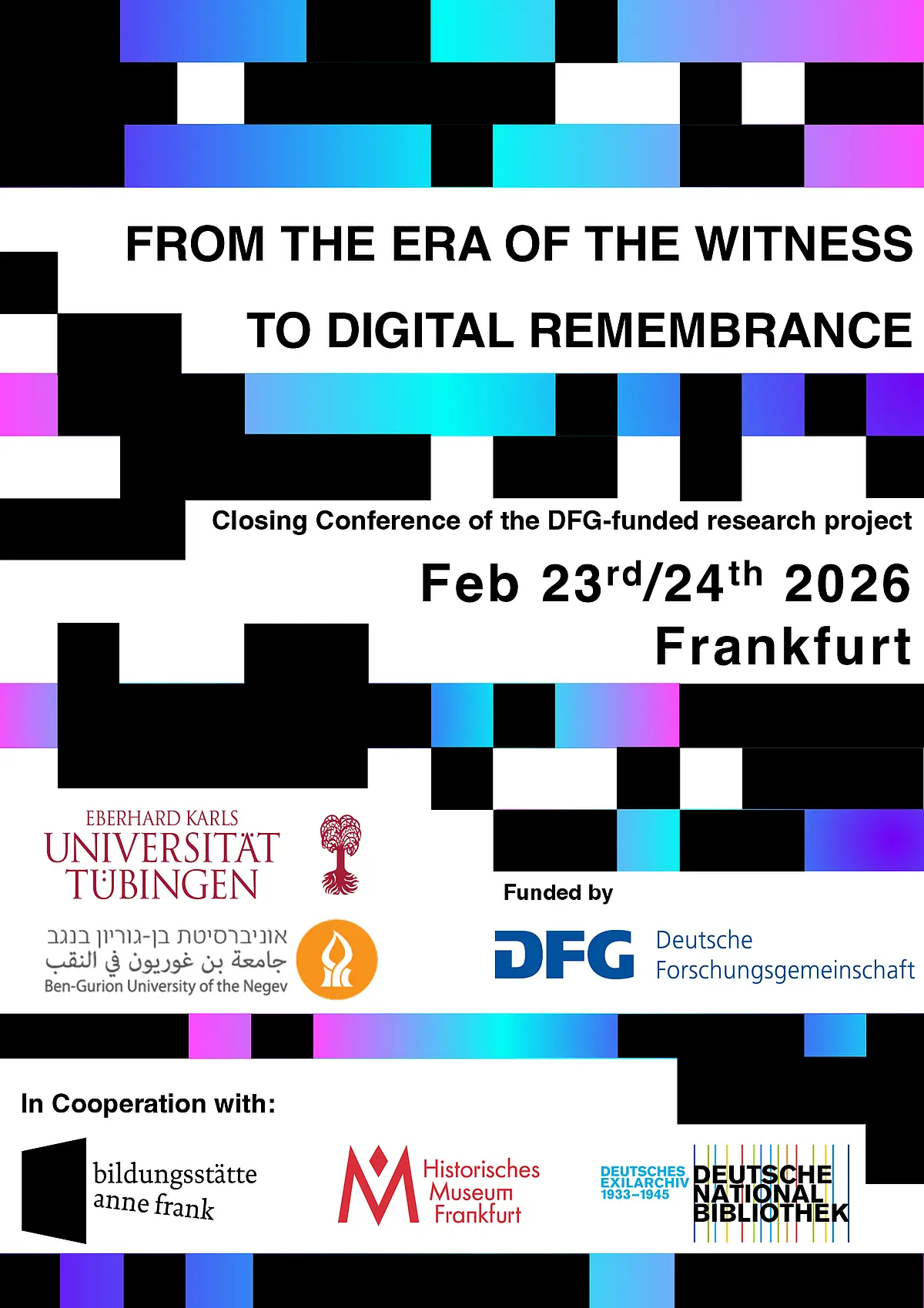
Digital technologies and innovations in everyday life are changing the ways in which history is presented, made accessible, processed, and worked with. Digital tools are also increasingly being used in the field of teaching and learning about antisemitism, racism, and the atrocities of the Nazi Past. Holocaust remembrance has gone digital: pupils today talk to AI-based survivor testimonies in museums, virtually explore former concentration camps right from their classrooms or play video games at home that evolve around historic events and themes such as the Shoah.
The conference “From the Era of the Witness to Digital Remembrance.” brings together personalities from research and memory institutions: Ben- Gurion-University of the Negev, University of Tübingen, Bildungsstätte Anne Frank, German Exile Archive 1933–1945 of the German National Library (Deutsches Exilarchiv 1933-1945 der Deutschen Nationalbibliothek), Historical Museum Frankfurt (Historisches Museum Frankfurt), and others. The two-day conference aims to foster an interdisciplinary exchange of ongoing research projects, educational initiatives, and exhibitions that promote critical reflection and practical discussion of digital transformations of Holocaust remembrance.
The participants will discuss how current developments, technical possibilities and limitations, as well as generational aspects, transform the future of teaching about historic and current forms of discrimination and remembrance work. The talks will look especially at the work of museums, memorial sites, and other agents of memory, and spotlight the field of commemoration of the Holocaust and its victims.
Questions that will be explored in presentations and other formats are: How does knowledge (about historic events) reach users in the form of digital formats and how is it processed individually and/or collectively? How do the digital tools process content and how do the processes of using the tools change the narratives and practices of teaching and learning? What role do emotions, feeling rules and ethical reflections of technology play in these practices and processes? How are such formats produced? How does the interaction of technology, knowledge, emotions, and users take place and with what results? What ethical or pedagogical principles may limit the implementation of digital tools for education or commemoration? How can these questions be answered from different disciplinary perspectives, also regarding specific methods or theoretical frameworks?