Hector-Institut für Empirische Bildungsforschung

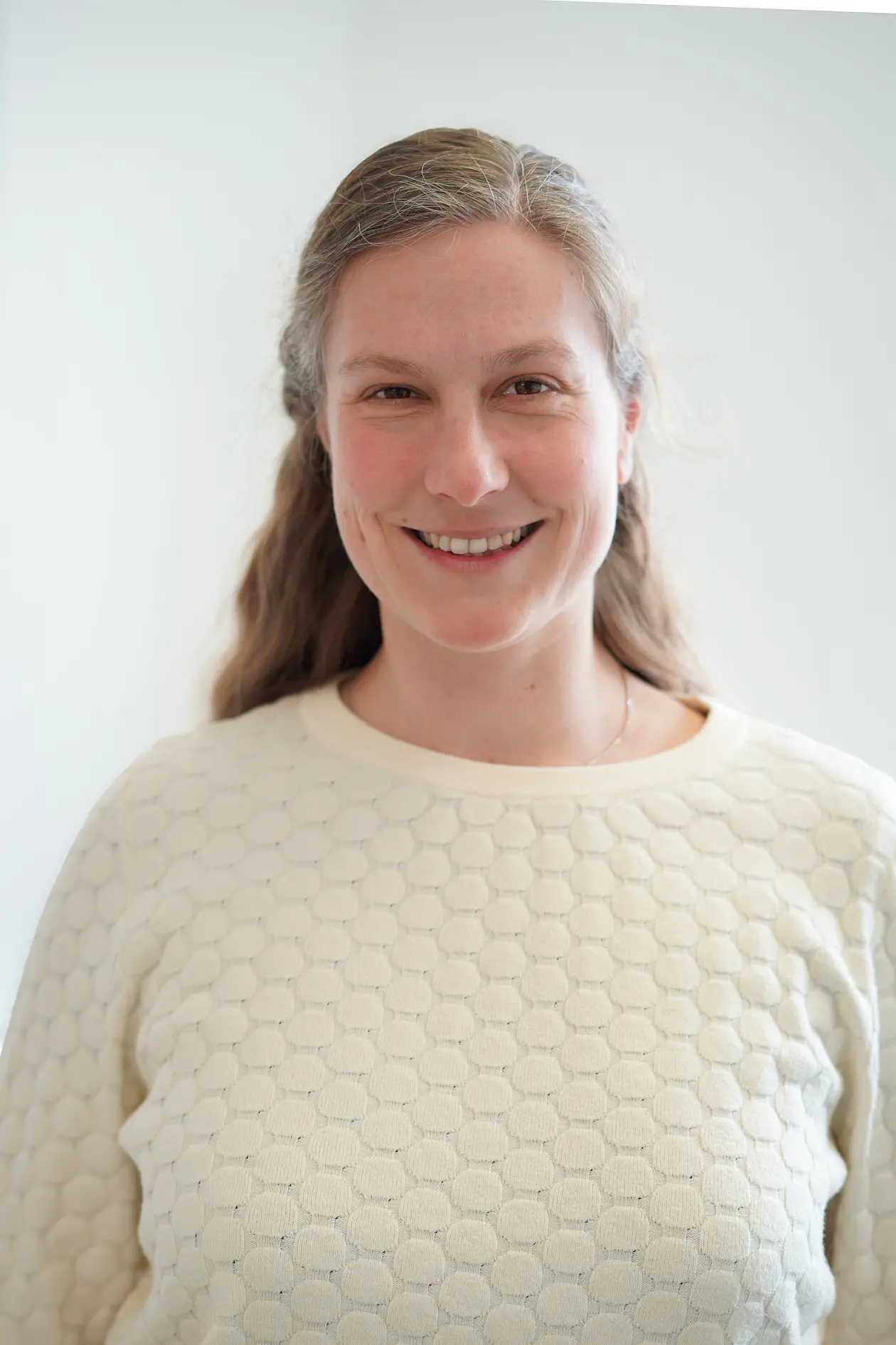
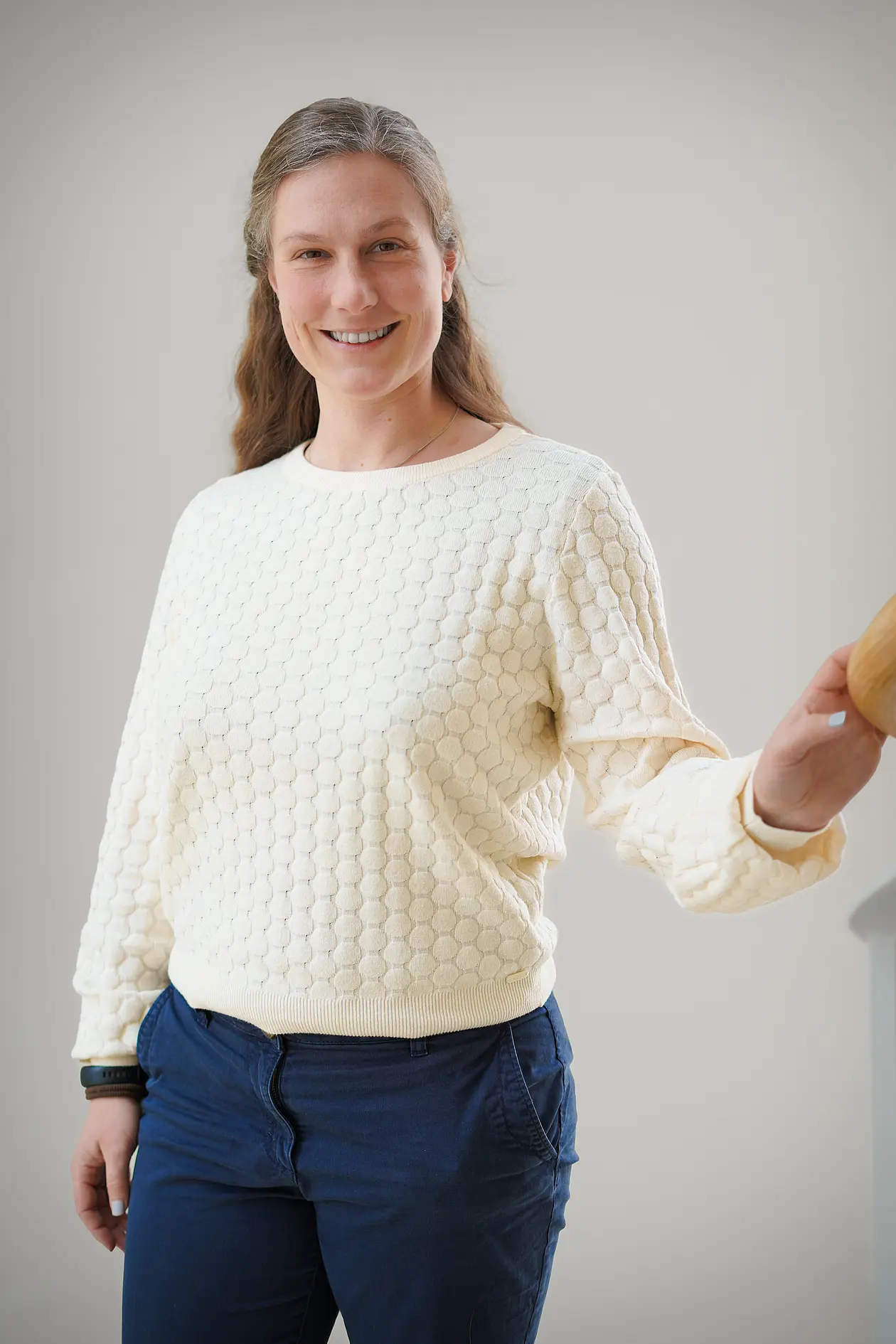
Prof. Dr. Elisabeth Kraus

Elisabeth Kraus ist Juniorprofessorin für Methoden der Empirischen Bildungsforschung. Ihre Interessen sind vielfältig und umfassen (fast) alle Arten der Modellierung von Daten. Ihre Forschungsschwerpunkte liegen im Bereich der Psychometrie, der Nutzung maschinellen Lernens in der Bildungsforschung und der Nutzung von Evaluationsstudiendaten zur individuellen Trainingsempfehlung. In ihrer Forschung möchte sie nicht nur neue Methoden und Ansätze entwickeln, sondern diese auch in die Anwendung bringen.

Adresse

Universität Tübingen
Hector-Institut für Empirische Bildungsforschung, 
Europastraße 6
72072 Tübingen
Raum 404

Follow me:

Publikationen

Publikationen

  • Rank, A., & Kraus, E. B. (2026). Investigating the predictors of academic language competences in primary school children: A machine learning approach. Preschool and Primary Education, 14(1), 144-162. https://doi.org/10.12681/ppej.40307
  • Kraus, E. B., Wild, J., Schilcher, A., & Hilbert, S. (2025). Exploring the short-term and long-term effects of the COVID-19 school closures on reading fluency in southern germany: A longitudinal causal effects analysis. Learning and Instruction, 101, 102227. https://doi.org/10.1016/j.learninstruc.2025.102227  
  • Kraus, E. B., Pargent, F., Hilbert, S., & Augustin, T. (2025). Introducing the treatment decision framework (treadef)–a decision theoretic approach to using evaluation study data to inform individual treatment decisions. Collabra: Psychology, 11(1), 145043. https://doi.org/10.1525/collabra.145043
  • Hilbert, S., Kraus, E. B., & Lindl, A. (2025). Machine Learning: Eine Einführung für Psychologie, Geistes-und Sozialwissenschaften. Springer-Verlag.
  • Bayer, L., Cigelski, M., Eilfgang, J., Kraus, E. B., Mensing, F., & Pülschen, S. (2025). German version of the child sexual abuse myth scale (CSAMS-G): Translation, expansion, and construct validation. Behavioral Sciences, 15(2). https://doi.org/10.3390/bs15020143
  • Giglberger, M., Peter, H. L., Henze, G.-I., Kraus, E. B., Bärtl, C., Konzok, J., Zänkert, S., Kreuzpointner, L., Kirsch, P., Kudielka, B. M., et al. (2024). Brain activation changes as predictors for perceived stress and cortisol awakening responses over a 13-months stress period. Psychoneuroendocrinology, 160, 106798. https://doi.org/10.1016/j.psyneuen.2023.106798
  • Hrabetz, B., Kraus, E. B., & Gruber, H. (2024). Social identity in environmental protection engagement: How are different kinds of identity related to different types of engagement? Journal of Applied Social Psychology, 54, 776–786. https://doi.org/https://doi.org/10.1111/jasp.13072786
  • Kraus, E. B., & Kern, C. (2024). Measurement modeling of predictors and outcomes in algorithmic fairness. European Workshop on Algorithmic Fairness. 3(23), 1-18
  • Kraus, E. B., Wild, J., Bühner, M., Schilcher, A., & Hilbert, S. (2024). Applying cross-validated psychometric models to the bavarian reading test (BYLET). European Journal of Psychological Assessment. https://doi.org/https://doi.org/10.1027/1015-5759/a000848
  • Kraus, E. B., Wild, J., & Hilbert, S. (2024b). Using interpretable machine learning for differential item functioning detection in psychometric tests. Applied Psychological Measurement, 48(4-5), 167–186. https://doi.org/10.1177/01466216241238744
  • Sterner, P., Friemelt, B., Goretzko, D., Kraus, E. B., Bühner, M., & Pargent, F. (2024). The confidence/significance level implies a certain cost ratio between type I error and type II error: For a stronger focus on decision theory in psychological assessment-Das Konfidenz-/Signifikanzniveau impliziert ein bestimmtes Kostenverhältnis zwischen Fehler 1. Art und Fehler 2. Art: Für ein stärkeres
    Einbeziehen der Entscheidungstheorie in die psychologische Einzelfalldiagnostik. Diagnostica, 70(3), 126–138. https://doi.org/10.1026/0012-1924/a000329
  • Giglberger, M., Peter, H. L., Henze, G.-I., Kraus, E. B., Bärtl, C., Konzok, J., Kreuzpointner, L., Kirsch, P., Kudielka, B. M., & Wüst, S. (2023). Neural responses to acute stress predict chronic stress perception in daily life over 13 months. Scientific Reports, 13(1), 19990. https://doi.org/https://doi.org/10.1016/j.psyneuen.2022.105771
  • Kraus, E. B. (2022). Diagnostische Entscheidungen mit dem Treatment Decision Model – ein entscheidungstheoretischer Ansatz auf Basis von Evaluationsstudiendaten. LMU Munich, Germany
  • Giglberger, M., Peter, H. L., Kraus, E. B., Kreuzpointner, L., Zänkert, S., Henze, G.-I., Bärtl, C., Konzok, J., Kirsch, P., Rietschel, M., et al. (2022). Daily life stress and the cortisol awakening response over a 13-months stress period–findings from the lawstress project. Psychoneuroendocrinology, 141, 105771. https://doi.org/10.1016/j.psyneuen.2022.105771
  • Hilbert, S., Pargent, F., Kraus, E. B., Naumann, F., Eichhorn, K., Ungar, P., & Bühner, M. (2022). What’s the measure? An empirical investigation of self-ratings on response scales. International Journal of Social Research Methodology, 25(1), 59–78. https://doi.org/10.1080/13645579.2020.1839163
  • Schilcher, A., Wild, J., Kraus, E. B., & Hilbert, S. (2022). FiLBY-2–ein Leseflüssigkeitstraining für alle Schülerinnen und Schüler? Differenzielle Effekte. Zeitschrift für Sprachlich-Literarisches Lernen und Deutschdidaktik, 2. https://doi.org/10.46586/SLLD.Z.2022.9606
  • Hilbert, S., Coors, S., Kraus, E. B., Bischl, B., Lindl, A., Frei, M., Wild, J., Krauss, S., Goretzko, D., & Stachl, C. (2021). Machine Learning for the educational sciences. Review of Education, 9(3), e3310. https://doi.org/10.1002/rev3.3310 

Curriculum Vitae

Seit 03/2025
Juniorprofessorin Methoden der empirischen Bildungsforschung

Hector-Institut für Empirische Bildungsforschung, Universität Tübingen

04/2023 - 02/2025
Postdoc

Computational Modelling in Psychology, Ludwig-Maximilians-Universität München

10/2020 - 03/2023
Master of Science in Statistik

Ludwig-Maximilians-Universität München

03/2018 - 03/2023
Wissenschaftliche Mitarbeiterin

Educational Data Science, Universität Regensburg

03/2018 - 11/2022
Promotionsstudium: Psychologie

Ludwig-Maximilians-Universität München

10/2015 - 08/2017
Master of Science in Psychology: Learning Sciences

Ludwig-Maximilians-Universität München

10/2011 - 08/2015
Bachelor of Science in Psychologie

Universität Freiburg