Uni Tübingen

T-IES June 2027

Academic Program

The Summer School comprises subject courses, a German language course (A1-A2) and intercultural workshop. Students can choose in the application form between subject courses of Track (A) and Track (B). The courses and excursions are compulsory for all participants within the Summer School.

The schedule will be soon available here. 

Subject courses

Choose between Track (A) and Track (B):

Track (A) "Europe and the Question of Identity"

Instructors: Germana Favognano, Lucas Ogden
Language of instruction: English
Contact hours: 40 (plus field trips)

Course Description 

The past years have seen the EU facing a lot of criticism from various sides and a plethora of challenges threaten the community - internally and externally - and what held its societies together for a long time. In this program, students examine the fundamental notions at the heart of what Europe stands for: pluralism, democracy, subsidiarity, and the rule of law. Furthermore, courses cover the current challenges Europe and the EU face today: the rise of nationalism; political fragmentation and radicalization; migration, religion and questions of identity and war.

Course 1: “Human Rights in Europe: Common Goals and Current Challenges” (Germana Favognano)
Course 2: “Religion and the Challenge of Identity in Europe” (Lucas Ogden)

Track (B) "Society and Artificial Intelligence in Europe Today"

Instructors: Jaqueline Bellon, Jan Battke
Language of instruction: English
Contact hours: 40 (plus field trips)

Course Description

This study track deals with two main questions: what constitutes good societies in Europe (and elsewhere) in the 21st century and how can we protect our very diverse (transnational) societies from breaking apart due to increasing technological pressure? Classes introduce concepts and ideas that enable participants to analyse possible AI-induced mis- and disinformation campaigns which threaten solidarity among the various groups of modern societies in Europe today. Furthermore, a focus will be on recent European attempts to regulate the use of AI-technologies on the Old Continent.

Course 1: “The EU and the Polycrisis. A Story of Sovereignty and Democracy” (Jan Battke)
Course 2: “AI and the EU – Artificial Intelligence in Europe Today” (Jacqueline Bellon)
 

German Language Courses

German Language Courses

Language of instruction: German
Contact hours: 18

Course description

The Summer School includes German language courses on the proficiency levels A1-A2. Participation in the German language course is compulsory. The level of the language courses will depend on students' needs. Through an intercultural and communicative approach students will be actively involved in class to encourage language learning. The focus will be on speaking and listening to improve students' language competence in everyday situations.

Students with a level higher than A2 are also welcome to apply. Please contact the T-IES team after your application to discuss possible participation in the German course or alternatives.

Self-assessment

Within the application form you will be asked to evaluate your German language proficiency according to the Common European Framework of Reference for Languages (CEFR).

The European framework of reference distinguishes between six different reference levels of knowledge from the elementary use of language (A1) to the autonomous language ability (C2). On all reference levels “can-do” descriptors indicate what a learner is supposed to be able to do in reading, listening, speaking and writing at each level. For further details on the six levels see the following document: CEFR.

Intercultural Workshop

Intercultural Workshop & Getting to Know Each Other

Language of instruction: English
Contact hours: 2.5

Course Description

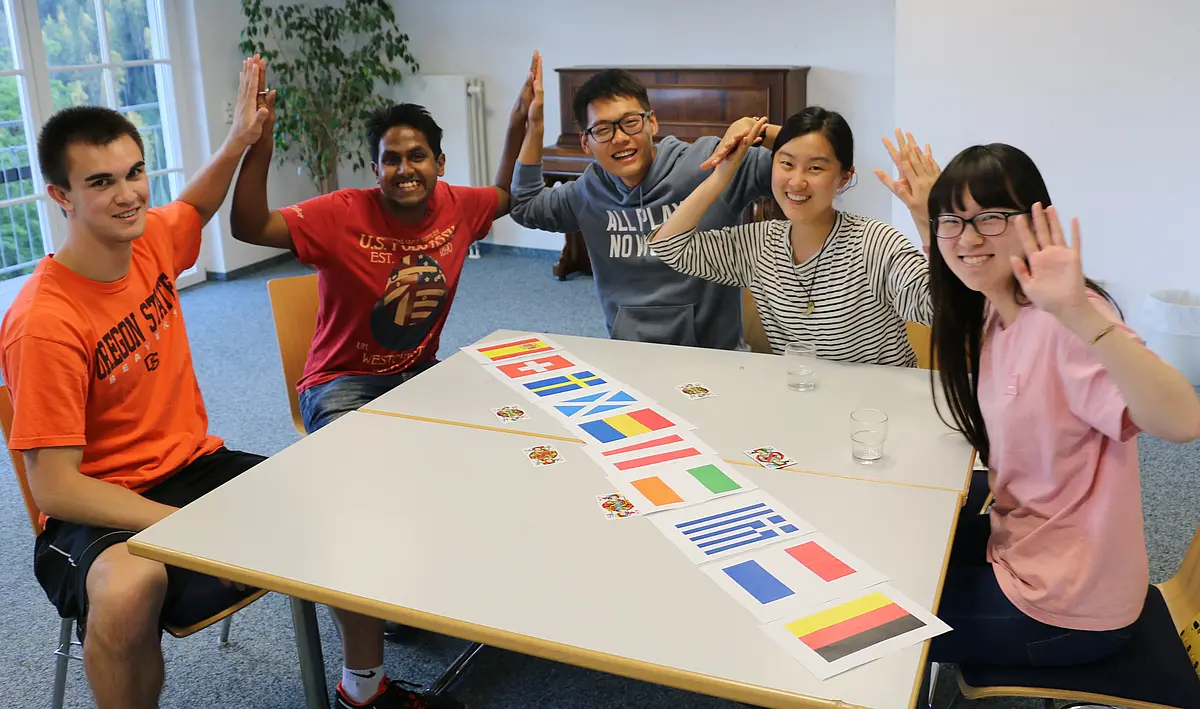
This interactive workshop provides participants with an introduction to intercultural learning and communication in an international environment. Together, we will explore the concept of culture and examine how cultural backgrounds can influence perceptions, values, communication styles, and everyday interactions.

Through group activities and discussions, participants will have the opportunity to get to know each other, share experiences, and build connections within the group. The workshop encourages participants to reflect on cultural similarities and differences in a constructive and open-minded way.

In addition, participants will learn practical methods and reflection tools to help them better understand and process their intercultural experiences in Germany. The workshop aims to foster self-awareness, empathy, and intercultural competence, supporting participants in navigating life and study in an international context.