Uni-Tübingen

Aktuelle Informationen

05.11.2020

"My main interests are the late 19th century and specifically the time around 1900 both from a literary and a historical point of view, the First World War, theories of body, and gender."

In Conversation with Research Alumna Ann-Katrin Fett, author and historian.

Ann-Kathrin Fett

What is your connection with Tübingen and the University?
I obtained both my Bachelor’s degree in Scandinavian Studies and History as well as my Master’s degree in Literature and Culture at the University of Tübingen. After my studies, I spent one year working at the Department for Scandinavian Studies and did research on the theory of privacy, heterotopias, and the body in German and Swedish literature around 1900.

Where are you based?
I currently live and work close to Stuttgart.

What is your main area of research?
My main interests are the late 19th century and specifically the time around 1900 both from a literary and a historical point of view, the First World War, theories of body, and gender.

What is your latest publication about?
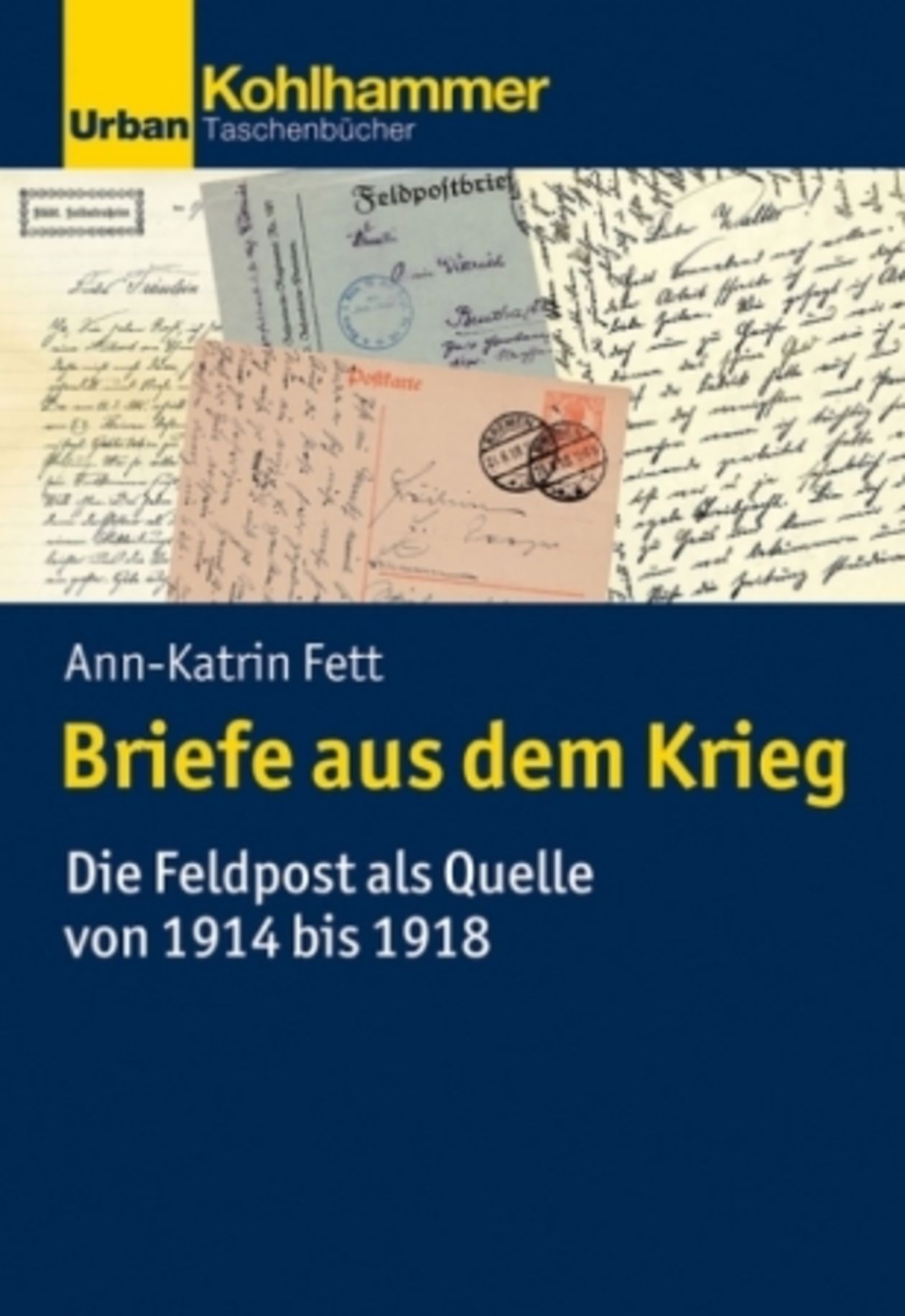
My book Briefe aus dem Krieg – Die Feldpost als Quelle von 1914 bis 1918 is about letters written during the First World War by soldiers and civilians alike. My aim is to identify verbal tropes and discourses within the letters and to find out how the overall language changed in the course of the war. Private letters are ideal for that endeavour because they allow us direct insights into people’s thoughts and mentalities like no other medium. My central questions are: How did the people try to put their sometimes very troubling experiences into words? What was left unspoken? How did people’s relationships change during the war and which role did the letters play in maintaining them? Which figures of speech and discourses did the writers use and how does this correlate to their sociocultural background? For me it was important to take into account theories of milieu and gender and to also specifically focus on women’s experiences, which are otherwise often overlooked within this field of research.

What fueled your interest in this topic?
In my very first semester at the University of Tübingen I attended a seminar in the history department about the First World War and wrote a term paper about war letters which sparked off my fascination for the topic. Later my best friend showed me letters that her great-great-uncle had written in 1915. I deciphered them and started to collect many more letters in the following years until I had the idea to write a book about them.


Fun fact about this topic
I once came across an envelope with a New Year’s greeting from 1915 that was still sealed. So I was the first person to open it after 103 years.

A substitute for direct human interaction
I based my research on over 1000 private letters and postcards from the First World War that I collected and transcribed in the course of several years. Sometimes the letters bring to light many interesting objects, such as pressed flowers, little fir branches, photographs and even strands of hair that people sent each other as mementos or talismans. This shows how essential the letters were to the people who were separated by the war: The letters were a substitute for direct human interaction.

Product details
Fett, Ann-Katrin: Briefe aus dem Krieg – Die Feldpost als Quelle von 1914 bis 1918. Stuttgart: Kohlhammer, 2021.
https://www.kohlhammer.de/wms/instances/KOB/appDE/Geschichte/Neuere-Geschichte/Briefe-aus-dem-Krieg

Contact details
fett.annkatrin@gmail.com

Zurück