

Uni-Tübingen

31.08.2020

"I am excavating several cave sites on the beautiful island of Ilin, where we have found evidence of early modern humans dating back more than 35,000 years ago."

In Conversation with Research Alumnus Professor Alfred Pawlik, Professor in the Department of Sociology and Anthropology at Ateneo de Manila University, Philippines
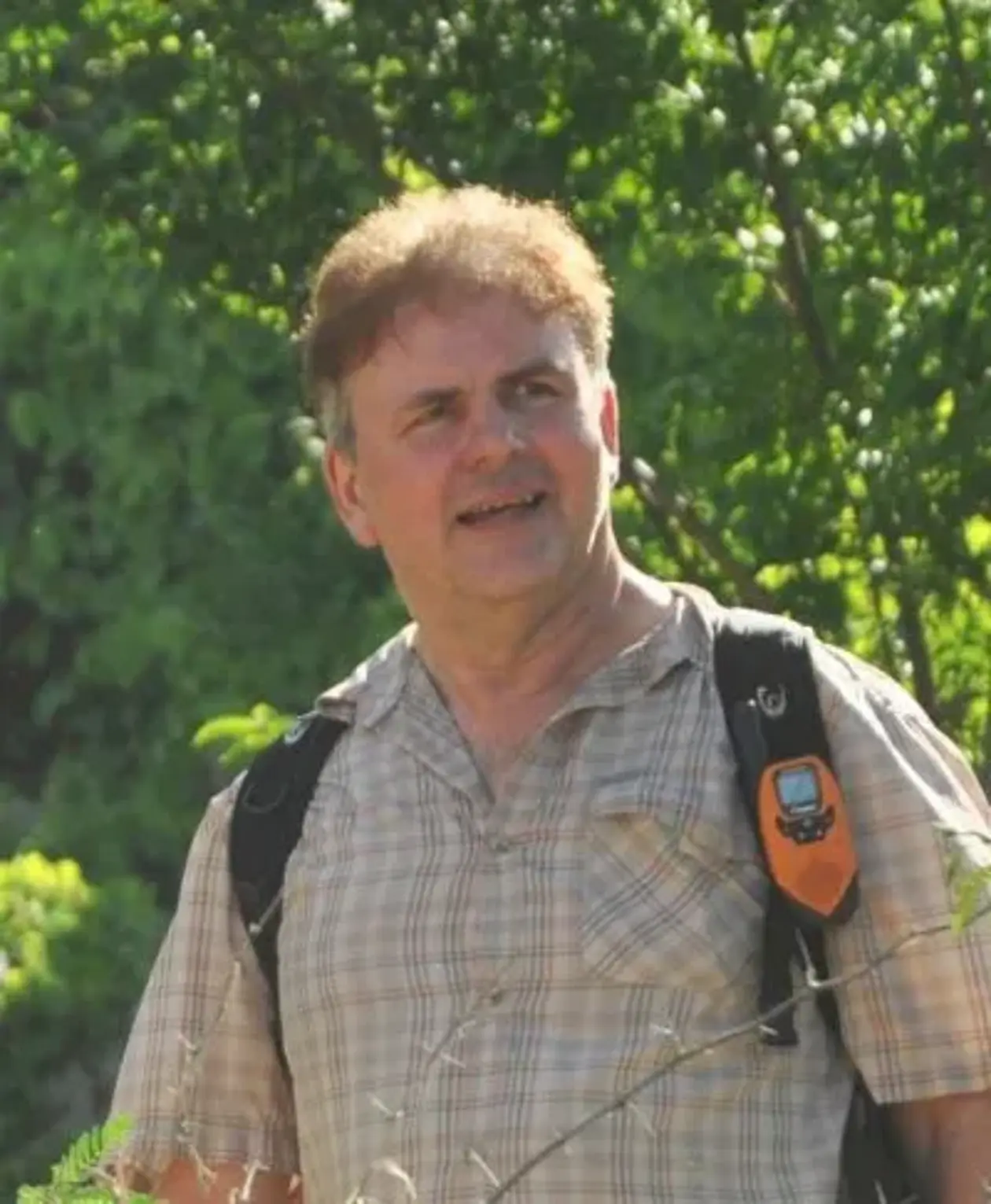
Prof. Dr. Alfred Pawlik

I am a graduate of the University of Tübingen, where I studied Urgeschichte, Geologie and Vor- und Frühgeschichte from 1985-91 and finished with a Magister Artium degree. I continued my studies at the Institut für Urgeschichte (now Abt. Ältere Urgeschichte und Quartärökologie) and received my doctorate (Dr. rer. nat.) with a thesis on the microscopic analysis of prehistoric stone tools in 1995, supported by the Landesgraduiertenförderung Baden-Württemberg. I was then awarded with a DFG-postdoctoral fellowship to do research on the functional organization of settlements in the Neolithic and the associated technological and socio-cultural changes before I successfully applied for a ‘DAAD Langzeitdozentur’ in the Philippines. With short interruptions I have lived and worked in the Philippines for 20 years, first at the University of the Philippines in Quezon City, where I helped to establish the Archaeological Study Program with several grants from the German Academic Exchange Service DAAD and other supporting institutions. Now I am working in the Department of Sociology and Anthropology at the University of Ateneo de Manila, where I am tasked with expanding the subject of archaeology in teaching and research.

My interests are the archaeology of Europe and Southeast Asia and the anthropology of hunter-gatherers, especially past human behaviour, prehistoric technologies and the cognitive and behavioural aspects of human adaptation and interaction with changing environments and ecosystems. My own research focuses on the early prehistory of the Philippines and Island Southeast Asia, as well as on prehistoric technologies, early migration and maritime interaction between remote islands. I am excavating several cave sites on the beautiful island of Ilin, where we have found evidence of early modern humans dating back more than 35,000 years ago. Ilin Island belongs to the Wallacean part of the Philippine archipelago, which has never been connected to the mainland by land bridges, and a sea crossing has always been necessary to reach these islands (Figures 1,2). What I find fascinating about our research and its results, is to learn about the impressive technological and social skills these early seafarers had. Their nautical knowledge enabled them to navigate to and successfully colonize small, distant islands. For example, the people who lived on Ilin Island more than 30,000 years ago were not only successful in hunting wild pigs and deer among a variety of terrestrial animals and foraging the mangrove forests and coral reefs along the shores of the island for shellfish and crustaceans, but they were also skillful open sea fishers who even went after large carnivorous fishes, including sharks.

As far as the Philippines
I am not sure if this counts as a fun fact, but it is perhaps a bit odd that someone who was born and raised in the Swabian Alb and near prehistoric cave sites such as Vogelherd, Geißenklösterle and Hohlefels, and was a student of the Tübingen Institut für Urgeschichte, travelled as far as the Philippines to excavate caves on a distant island in the Western Pacific. But then again, where can you find caves next to tropical beaches in the Swabian Alb?

Recent publications
Together with colleagues from Asia, Australia, and Europe I have published several results from my ongoing excavations on Mindoro and Ilin Island, Philippines. The latest papers report on burial practices among hunter-gatherer societies in the Philippines and Southeast Asia [https://doi.org/10.15184/aqy.2018.190], on coastal subsistence strategies and the exploitation of marine resources by those early islanders [https://doi.org/10.1080/15564894.2018.1531957], and provide a synthesis of the Philippine prehistory from the Terminal Pleistocene to the mid-Holocene [https://doi.org/10.1017/S0959774318000306].

I continue to work in the field of “traceology”, the microscopic analysis of wear traces on prehistoric tools made of stone, bone and shell to reconstruct their former function. The most recent publications deal with traceological studies of stone and bone tools from Sulawesi [https://doi.org/10.1016/j.jas.2019.105031; https://doi.org/10.1016/j.jasrep.2020.102207] and Palawan Island [https://doi.org/10.1016/j.jasrep.2020.102334]. They are part of a special issue of the Journal of Archaeological Science: Reports, titled ‘Functional Studies of Prehistoric Artefacts and their Socio-economic Meaning’, which I have edited together with my colleagues from Italy, Spain and Russia [https://doi.org/10.1016/j.jasrep.2020.102467]. This special issue is dedicated to the complex and manifold role artefacts played in human paleoecology and the reconstruction of the production and use of artefacts in the past and features 23 articles from 92 authors representing 45 universities and research institutions from 17 countries (Figure 3) [https://www.sciencedirect.com/journal/journal-of-archaeological-science-reports/special-issue/10KWGF8N2RR]. The papers were presented at the 18th World Congress of the International Union for Prehistoric and Protohistoric Sciences (UISPP) on June 4–9, 2018 in Paris within two panel sessions that were organized and convened by the UISPP Commission A17 – Functional studies of prehistoric artefacts and their socio-economical inferences on past societies (Figure 4). The aims of the Commission A17 is to study the diverse roles and functions of artefacts in human palaeoecology and to reconstruct prehistoric economic systems and understand the evolution and adaptation of tool technologies and applications within the socio-economic contexts of their prehistoric manufacturers and users [https://uispp.org/functional-studies-prehistoric-artefacts-and-their-socio-economic-meaning].


Contact
Prof. Dr. Alfred Pawlik
Department of Sociology and Anthropology
Ateneo de Manila University
Ricardo & Dr. Rosita Leong Hall
Loyola Heights
Quezon City 1108, Philippines
apawlikspam prevention@ateneo.edu
http://www.ateneo.edu/ls/soss/socio-anthro

Teilen
Zurück