Uni-Tübingen

Living in Tübingen

Settling into life in a new place comes with a fair share of questions. From sorting your trash to finding the best place to shop, this sections help you manage your household and settle in smoothly in Tübingen.

Shopping At home Costs & Services Garbage & Recycling   


Shopping

Whether you’ve just arrived in Tübingen or have been here for a while, you’ll likely need to pick up some essentials. This section covers store hours, where to buy everyday items, and how to navigate local markets and find out about seasonal events. With a bit of exploring, you’ll quickly find the places that suit your needs and budget – making shopping not just practical, but a good way to get to know your new surroundings.

If you’ve just arrived and need essential household items like bed linens or kitchenware, there are affordable options nearby: a discount store on Wilhelmstraße and large supermarkets in the southern city, one at the E-Center and another on Reutlinger Straße. The nearest branch of the popular Swedish furniture retailer, known for its low prices, is in Sindelfingen, about an hour away by public transport.

Opening hours

Supermarkets:

  • During the week, including Saturdays: open by 8:00 a.m. and closed between 8:00 and 10:00 p.m.
  • In Tübingen there is one large supermarket (at Schleifmühleweg 36) that is open until midnight.
  • Look up "Supermarkt Tübingen" online for opening hours of your local supermarket.

Large shops such as clothing chains and department stores:

  • generally open between 9:00- 10:00 a.m. and often remain open until 8:00 p.m in bigger cities. Several shops close already at 7:00 p.m. in Tübingen.

Small shops:

  • Hours vary greatly.
  • Food suppliers such as bakeries and butchers often open before 8:00 a.m.
  • Other small shops typically open later, usually around 10:00 a.m. and may close over lunchtime, usually 12:30 - 2:00 p.m. and typically close for the day between 6:00 and 7:30 p.m. 

Please note: some shops shut at midday on Saturdays, and it's not unusual for family-run shops to shut for a full or half-day during Monday-Friday. Check before you make a special journey.

Gas stations:

  • Often have a  small convenience store and tend to be open late as well as on Sundays.
  • In Tübingen, there are 24-hour gas stations at Bebenhäuser Str. 8 and at Reutlinger Str. 72.

Shops in Germany are generally closed on Sundays and public holidays, even supermarkets, so do shop ahead! 

  • Exceptions regarding Sunday opening are bakers and florists, which often open on Sunday mornings, and souvenir shops.
  • Three to four times a year, Tübingen offers special Sunday shopping days (Verkaufsoffene Sonntage), when local shops can open on Sunday between 1:00 and 6:00 p.m. For dates visit Einkaufstipps from the town council (German).

Finding the right shop

An online search, for example at tuemarkt.de, the Yellow Pages (both in German) or simply via your search engine should help you locate a given type of shop. Some useful shopping-related terms:

  • Apotheke: pharmacist, specializing in over the counter and prescribed medicines; see also the medication section
  • Asialaden: specialist for Asian food supplies
  • Babyladen: sells clothing and equipment for babies and small children
  • Baumarkt: hardware and home improvement/DIY store with household items like light fittings and picture frames as well as tools, nuts and bolts, etc.
  • Bettwäsche: bedding, bedclothes
  • Bio: label on food produced organically
  • Drogerie: drugstore, selling cosmetics and toiletries; see also the medication section
  • Elektrogeräte: electrical/electronic items and parts
  • Feinkostladen: specialist delicatessen
  • Getränkemarkt: store selling bottled drinks, often found within a supermarket; return empty, recyclable bottles here
  • Mode: fashion/clothing
  • Möbel: furniture
  • Naturkostladen: organic food store
  • Reformhaus: health food store
  • Sanitätshaus: medical supply store (e.g. for orthopedic products, mobility aids and maternity supplies)
  • Umstandsmode: maternity wear

Second-hand: furniture and more

Buying second-hand is not just cost-efficient but also sustainable! In Tübingen and online, you have several options:

  1. The largest place in Tübingen for second-hand items is Retour (German). It includes a shop for smaller household items (Haushaltsladen) and a larger one for furniture (Möbelbörse). Furniture can be delivered for a small fee.
    The Retour initiative, part of the non-profit BruderhausDiakonie, offers jobs for socially disadvantaged people and the non-profit is supported by the Protestant Church and the Tübingen district.
     
  2. Various smaller second-hand stores are scattered across the city, mostly focusing on clothes rather than household items. Just search online for "Tübingen Second hand" to discover local options.
     
  3. You can also find used items on several online platforms: Popular options are kleinanzeigen.de, Gebrauchtwarenbörse Landkreis Tübingen (both in German) and nebenan.de  (a neighborhood platform in German, also useful for local tips and borrowing tools).
     
  4. A couple of Facebook groups are active for giving away or selling second-hand goods. Try searching for “Free Your Stuff Tübingen”, Flohmarkt, or Gebrauchtmöbel along with Tübingen as the location.

See also our bike section for additional options on how and where to buy a used bike.

Farmers' market

Every Monday, Wednesday and Friday morning (7:00 a.m. - 1:00 p.m.), the market square (Marktplatz) in front of the town hall becomes a bustling market offering fresh regional produce. You can find many of the same stalls clustered around the Jakobus Church (Jakobuskirche) on Saturdays, 8:00 a.m. - 1:00 p.m,.

Find here an overview of the traders (German) selling their local and regional products on a regular basis at the Wochenmarkt in Tübingen.

Special events


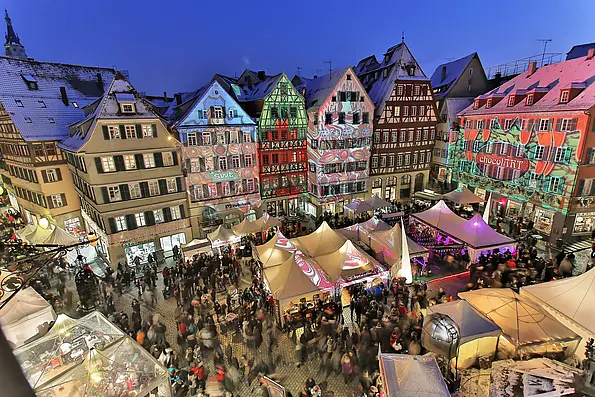
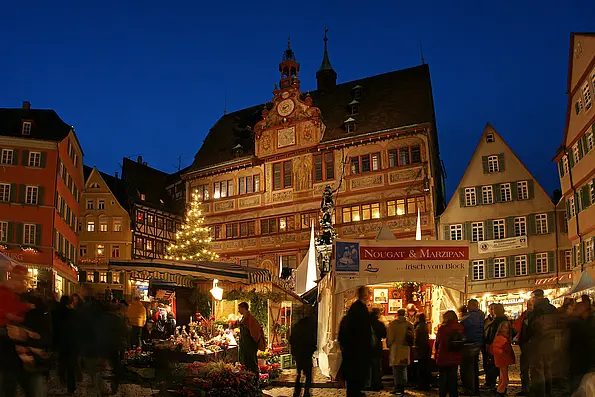
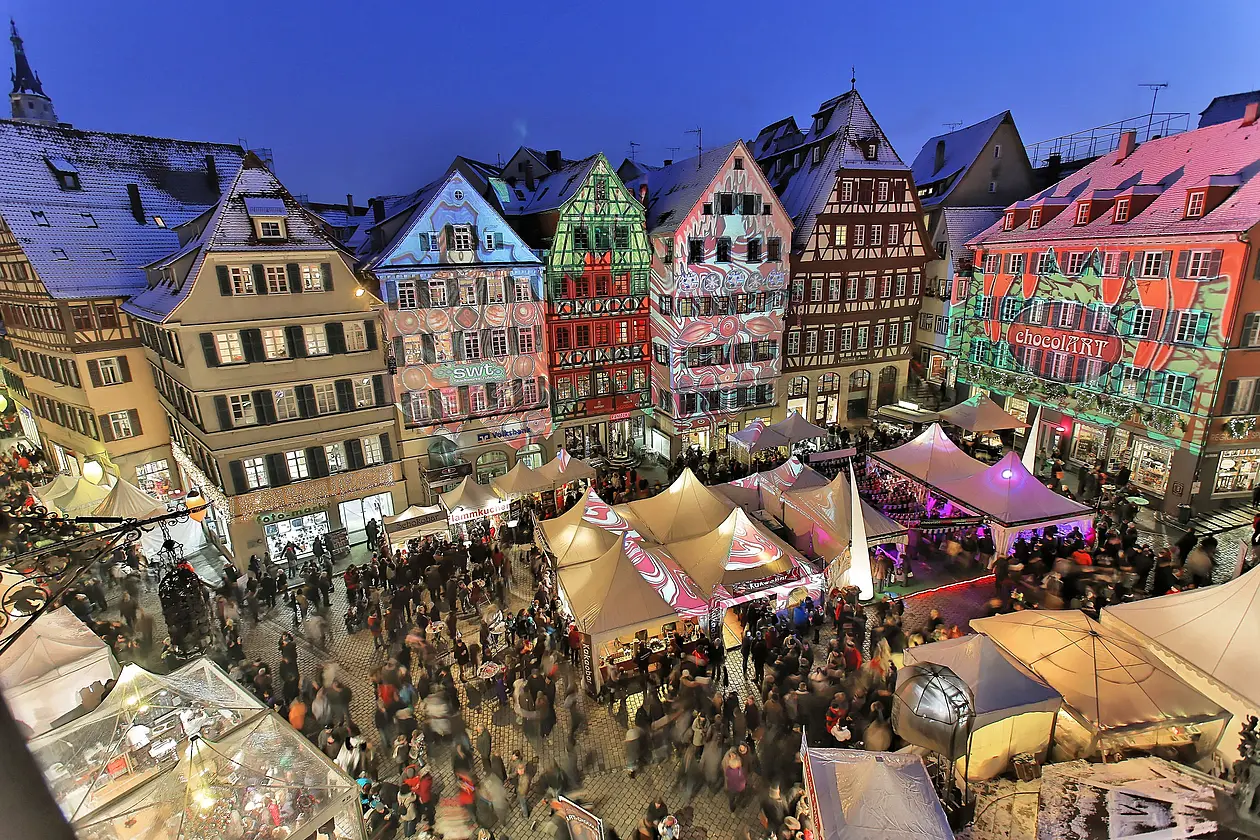
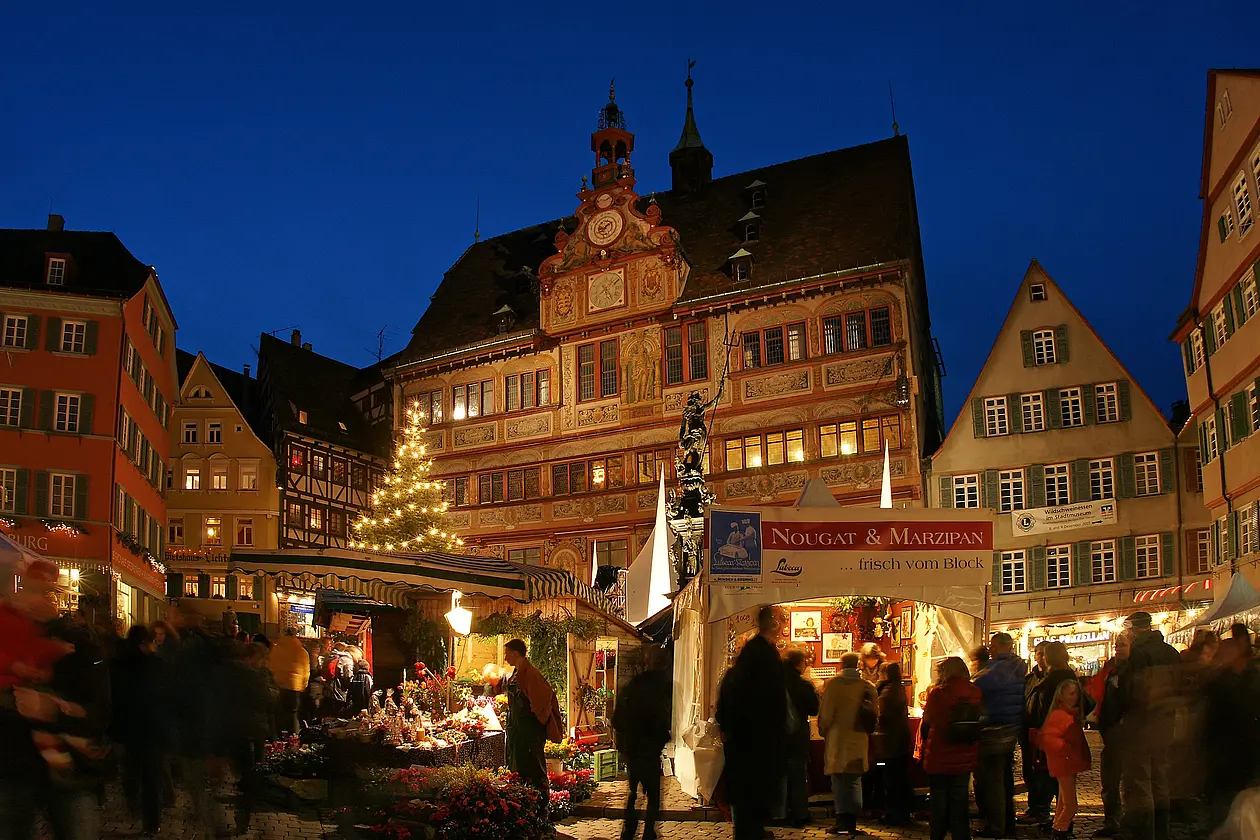
The Tübingen year is punctuated by special events like the 

For dates and more events – everything from food, movies, and books to sport, races, and music – visit the event list of the city or this overview by the tourist information of Tübingen (both in German).


At Home

Moving into your new home in Germany means getting used to a few local customs. It's less about strict rules and more about shared rhythms: being mindful of your neighbours, keeping things and common spaces tidy, and understanding how to keep your place warm in winter and airy in summer. You’ll find practical advice on house rules, learn what the Schwäbische Kehrwoche is, and discover how Germans make a habit of airing out their rooms just right.

House rules (Hausordnung)

The house rules are usually covered in the tenancy contract and help make sure that everyone gets along. Also the dormitories have a Hausordnung. House rules generally cover topics such as:

1. Noise pollution and quiet times: Because multi-unit buildings are the norm in Germany, many things are regulated by law to make living together easier, including certain general quiet hours: from 10 p.m. to 6 a.m., and 1 p.m. to 3 p.m. every day. After 10 p.m. you should turn down any music to a low volume (Zimmerlautstärke) and generally keep things quiet out of consideration for your neighbors

Quiet times in the dormitories are from 10 p.m. to 7 a.m., and 1 p.m. to 3 p.m. every day.

On Sundays and public holidays, you should be especially considerate of your neighbors. This could apply to loud appliances and noisy repairs. If you have guests, it is a good idea to close windows during quiet hours, and speak quietly when you are showing them out the door.

As with most things, common sense and common courtesy are your best guides here. It's always a good idea to talk with your neighbors ahead of time if you are planning a party. Your rent contract or house rules may specify additional quiet hours.

2. Security: The house rules may define times when main entrance should be locked. The use of BBQs and open fires in the garden or on balconies is often limited.

3. Cleanliness: This might concern where to place your flower boxes on balconies and terraces, as well as the placement of garbage cans and dumpsters.

4. Usage of laundry rooms and drying areas: Indicates the times when you are allowed to wash laundry and where you are allowed to hang up clothes to dry. Your house rules may also specify that you are not allowed to hang up laundry on your balcony or in your apartment.

5. Pets: Are pets allowed in your apartment and if so, which ones?

6. Parking rules: Where are cars and bicycles allowed to be parked?.

The Swabian Kehrwoche - a clean sweep

The term Schwäbische Kehrwoche is used in the region to describe an assigned cleaning schedule for shared areas like stairwells, basements and sidewalks. Although the term is regional, similar cleaning duties exist throughout Germany in buildings without paid cleaning staff.
What is typically Swabian is the high importance placed on everyone doing their part to keep things neat and clean. If your building has a Kehrwoche that residents must carry out themselves, please take it seriously to avoid problems with your neighbors, flatmates or landlords. 

This also applies to dormitories in Tübingen – if you live there, check whether your janitor or cleaning service handles the cleaning, or if it’s the residents’ responsibility.

Keeping your home cool and warm

Houses in Germany are normally well-insulated and have reliable heating, usually central heating. Nevertheless, to keep warm in winter and to save on energy costs, the following is helpful: 

  • Turning up the radiator to somewhere between 2 and 3 (20–24°C) is usually sufficient to get your apartment to a pleasant temperature
  • Contrary to what even some Germans believe, your apartment will not get warm any faster if you turn up the heating to 5 – this just means the radiator will keep on heating until a higher end temperature is reached, resulting in unnecessarily hot rooms and high energy costs if you forget to turn it down.
  • When airing out, turn down the heating, and only turn it back on after closing your windows again
  • Keep the temperature at around 16-18°C at minimum even when you’re not home for a few hours or during night time; this will avoid the walls cooling down too much, resulting in more heating needed to get your home back to a comfortable temperature once you are back

The downside of having well-insulated houses is that, once they heat up in summer, the houses will stay rather warm as well. Most German homes don’t have air conditioning, so to keep them cool even when it’s hot outside, try the following: 

  • Keep your windows closed during the hot day time
  • Close the shutters and/or curtains in the morning after airing out and when you leave for uni – this blocks the heat from entering through the windows during the day
  • Open your windows in the cooler evening, night and morning hours so your apartment can cool down

Houses need a good airing out...

Modern homes in Germany – especially newly built ones (Neubauten) – are designed to be energy-efficient and airtight. While this helps reduce heat loss in the cold months, it also limits natural air circulation. Regular ventilation is therefore essential to prevent moisture buildup and, ultimately, mold growth.

How to air out properly: You can fully open some windows for 5 to 10 minutes daily, especially in autumn and winter. If you have windows opposite each other, opening them creates an airflow that quickly replaces stale indoor air. Both methods help bring in fresh air without cooling your apartment too much.

Another tip is to avoid drying clothes inside your flat, as this adds moisture to the air. If you need to dry laundry in your flat, just remember to air out regularly.  Mold may also develop if furniture is placed too close to (cold) exterior walls, where trapped moisture can affect both the walls and the furniture.

Why it matters: In cooler weather, or even during very humid longer periods in summer, moisture can build up. This may be unfamiliar if you're used to warmer dry climates or have lived in e.g. wooden or old houses that allow for more airflow. Mold may form in general from poor airing out. Regular and sufficient ventilation helps therefore to protect your health, home, and wallet.

Can I drink the tap water?

Yes, you can! In Germany, the quality and purity of tap water is very good, and it's the cheapest source for a healthy drink!


Costs & Services

When living on your own, everyday life brings along a handful of regular costs and practical matters that you’ll gradually grow familiar with. Here you will find an overview of common expenses and basic services that you’re likely to encounter – from monthly bills to mail services and understanding your lease. Whether it’s your first time living on your own or you’re adjusting to life here, this section helps you handle home tasks and costs with confidence.

Public TV and radio fees (Rundfunkbeitrag/GEZ)

Just like in other European countries, the state charges a fee for using radios, television and computers in order to finance the public broadcasting institutions. Everyone registered as a resident in Germany is in principle obligated to pay this fee - this applies also to you as an international (exchange) student. The contribution is charged once per household, not per person, and regardless of how many broadcasting devices they own/use. The fee of currently 18.36 EUR per month covers all public radio, television, and online services for your home. After you have registered with the city, you will be contacted by the contribution service regarding setting up an account and payment plan. 

As the GEZ fee is paid per household: If you live in a shared flat, ask your roomates/flatmates if someone is already paying and ask them for their account number to share the costs. Dorm janitors can't assist with this particular matter. 

Setting Up a Payment

Even though the website of the contribution service contains some general information in English, the main contents are in German. You must register online via the information site (see our guide below) or via a form which can be obtained at the Citizen's Office (Bürgeramt).

Here are the most important steps in the GEZ registration process:

  • Register with the GEZ (clicking on 'mich erstmalig für den Rundfunkbeitrag anmelden')
  • Make registration changes
  • Notify the GEZ that you are living in a shared flat and that a flatmate is already paying the GEZ fees for the household: Open this page, choose 'ich zu einem anderen Beitragszahler ziehe'. Enter the data of the person paying already.
  • Cancel your registration (choosing 'ich dauerhaft ins Ausland ziehe' if you leave Germany).

Please note that registration for the broadcasting fee is obligatory. The Citizens Office (Bürgeramt) forward your data to the GEZ. If you do not register, you must retroactively pay the fees from the date of your address registration with the City of Tübingen.

When moving away, please don't forget to deregister. See above for instructions about how to cancel your GEZ registration. If you leave Germany without cancelling your registration with the GEZ and cancelling your address registration at the Citizens' Office, your GEZ fees will continue to accrue, and if you ever come back to Germany you may find yourself faced with back fees which an be tricky to sort out.

Utilities and auxiliary costs

If you live in a dormitory, utility and auxiliary costs are “all inclusive”. For private housing, you may be charged for diverse additional costs besides your monthly rent. So if you have specifically opted for private housing or if you did not receive a room in the dormitories, the following information can be useful for you. 

In Germany, you differentiate between utilities costs and auxiliary costs. Even if you sign a rental contract with a rent including heating (Warmmiete) this does not necessarily mean that you will not have any other costs. Please have a close look at your rent contract and ask your landlord if you are in doubt. Please also check the useful information on   lease agreements on the website of the research campus..

Utilities costs usually include:

  • warm water (Warmwasser)
  • heating (Heizung)
  • fresh water, tap water (Frischwasser)
  • electricity (Strom)

The easiest way to bill these costs is by use, so there should be meters in your apartment or building. If utilities do not provide meters there are rules for how to legally calculate the use according to use and living space.

Other auxiliary costs can be:

  • house insurance(Versicherung)
  • land tax (Grundsteuer)
  • garbage (Müllgebühren)
  • rain water (Niederschlagswasser)
  • chimney sweep (Schornsteinfeger)
  • gardener (Gartenarbeiten)
  • cleaning of hall/staircase (Reinigungsdienst)
  • winter service (Winterdienst)
  • electricity for common areas such as lights in the hall/staircase (Allgemeinstrom)
  • etc.

They are usually calculated by the number of people living in a household and/or by living area.

If your landlord charges you for these, an utilities and auxiliary cost statement (Nebenkostenabrechnung) must be provided one year after any accounting period the latest. Then you can take twelve more months to lodge objections. The limitation period is three years.

Mail and post

To receive mail, you need to put your (family) name on your mailbox. If you are unable to do this yourself, ask your landlord for help. Your mail will not be delivered if your name is not posted on the mailbox and on the letters you're receiving. 

In Germany, you can use a number of different mail delivery companies. The most common company in German is Deutsche Post for letters and DHL for parcels. There are a number of branch offices of the Deutsche Post in Tübingen. Please use search engines to find other postal delivery companies, for packages e.g.  Hermes (German), DPD , GLS, and UPS.

In case your parcel could not be delivered to you, the delivery companies will leave a receipt in your mailbox with info on where to pick it up. Depending on the company, you might also receive an e-mail with further information.

In case of moving to a new place, you should have your mail forwarded to your new address and update your address to the new one in accounts and for orders. Forwarding mail, which has been delivered to your former address and which you cannot pick up anymore, can be done via a so-called forwarding service, Nachsendeantrag: If you book the forwarding service from Deutsche Post (German) you will cover approx. 80 % of your mail that needs to be sent to the new address. You can ask neighbors to inform you about mail which has still been delivered to the old address and not been forwarded.

Repairs and maintenance

If you stay in a dormitory, please first contact your janitor in case of necessary repairs and/or inform the dormitory administration.

If something in your private accommodation needs fixing, the responsibility depends on the nature of the problem: 

  • If the issue involves part of the basic setup of the flat – for example, a broken heater or lack of hot water – the landlord is usually responsible for covering the repair costs. In any case, always inform your landlord before contacting a professional yourself. They may either send someone directly or give you permission to schedule an appointment maybe having already someone in mind. The bill is normally sent directly to them or you can forward it to them.
  • If the issue concerns your own belongings or you have damaged something that belongs to the landlord – such as accidentally breaking a sink or flooding the floor with water – you are generally responsible for the repair costs. In this case as well, make sure to inform your landlord before arranging any repairs.

Personal liability insurance (Haftpflichtversicherung) is highly recommended, as it covers a wide range of accidental damages. This includes damage to personal belongings of others – for example, if you break a laptop, scratch a car, or lose a borrowed phone. It also covers damage in a rented apartment to both immovable property (such as walls or flooring) and movable items (like furniture or kitchen appliances). 

If you already set up personal liability insurance in your home country, check if it also covers your exchange stay in Germany.

Depending on the availability of repair services, it may take up to several days or weeks before an appointment can be arranged. Most service providers have set working hours, starting early in the morning until mid-afternoon. And normally they do not work on Saturdays.


Garbage & Recycling

In Germany, waste separation is taken rather seriously  – and Tübingen is no exception. Sorting your garbage is a normal part of daily life and keeps your surroundings clean. This section walks you through how waste and recycling work, what goes where, and when pick-up happens. With practical tips and reminders, it’s easy to stay organized. A small effort that contributes to a more sustainable environment and quickly becomes a habit.

How to seperate your waste

Gelber Sack (yellow bag): for recyclable packaging materials ( plastic bags, plastic containers, tin cans etc.) – everything with the Grüner Punkt mark on it. If you're living in a dormitory, housing management typically supplies yellow bags to residents. The bags are otherwise obtained at various places in person and free of charge: In the city center, the Gelber Sack is available in the Scriptum shop on the ground floor of the small shopping center ‘Am Nonnenhaus’ ( Beim Nonnenhaus 12); in other neighborhoods located within Tübingen municipal the yellow bags are obtainable at administrative offices. 

Papiermüll (waste paper): Here goes anything made of paper or cardboard, e.g. paper packaging, newspapers, paper bags from the bakery, cpizza boxes etc., as long as it's clean (= no used paper dishes etc.). No tissue paper.

Biomüll (organic waste): For food leftovers, vegetable and fruit leftovers, plants, tea/coffee bags, egg shells, meat, spoiled food etc.

Restmüll (residual waste): all remaining/unrecyclable waste

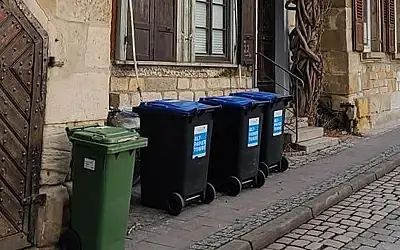
Common bin colors are blue for waste paper, green for organic waste, and gray/black for residual waste.

On the day of collection, your bin needs to be next to the street so the trash collectors can empty it. You can put it out on the night before collection if your house does not have a janitor or service company which takes care of this. If you are living in the dormitories, housing management usually takes care of putting the bins out.

Overview of collection days

If you live in a dormitory the janitor will make sure that the bins are put out at the right dates. If you're responsible for putting out the trash bin yourself or if you're simply interested, you can get a personalized overview of the collection days in your street online from the pages of Tübingen's waste department (German). 

  • In the box saying "Bitte wählen", please select where you are living. If you live in one of the villages belonging to Tübingen, please select "Tübinger Teilorte".
  • From the drop down menu next to it, simply choose the area or street you are living and if not automaticlly done, choose the year.
  • After that, you can display the dates using different options and e.g. import the dates as digital calendar (ical.data).

"Garbage alarm" - reminder to take out the trash

Want to make sure that you don't miss any garbage collection days? You can set up a "garbage alarm" (Müllwecker) email alert on the homepage of Tübingen's waste department, or you can check out the Tübingen waste app (German).

How to dispose plastic and glass bottles

For many plastic and glass bottles and cans, there is a separate collection system called Pfandsystem. This means if you buy something in a bottle or can, you pay a small deposit (Pfand) which you will get back when you return the item. Recyclable bottles and cans have a specific symbol printed on their packaging. When empty, put them into special deposit machines (Pfandautomat) at the supermarket. The machine will print a receipt for you, and you will get the deposit back at the register.

All other glass (not plastic!) without this symbol - e.g. jam jars, wine bottles, vinegar/oil bottles etc. - has to be disposed of in a public glass container. There are separate containers for white, brown and green glass. Red and blue glass also go into the green glass containers. 

You can find glass containers near your home at this container location overview (German) by the city. Find the container nearest to you by choosing the area you live:

  • "Stadt Tübingen" if you live in Tübingen including Südstadt, Derendingen and Lustnau.
  • "Tübingen Teilorte" if you live in one of the villages belonging to the city of Tübingen.
  • "Landkreis Tübingen" if you live in one of the towns/villages belonging to the Tübingen county (Landkreis), but not to the city of Tübingen.

To limit noise for the neighbors, throwing glass into the containers is only allowed Monday to Saturday between 7 a.m. and 8 p.m..