Personal und Innere Dienste

Guidelines for Good Teamwork and Toolbox

Excellent results are also the outcome of good leadership and cooperation.

The university-wide guidelines for good teamwork were developed through an extensive participatory process. They provide guidance and a common basic understanding of leadership and collaboration. 

However, the guidelines for good teamwork are not an end in themselves. Rather, the university encourages initiatives that foster regular reflection on these topics. To this end, we the Personnel Development have developed a toolbox featuring various formats and methods for reflecting on and examining one’s own collaboration within a team.

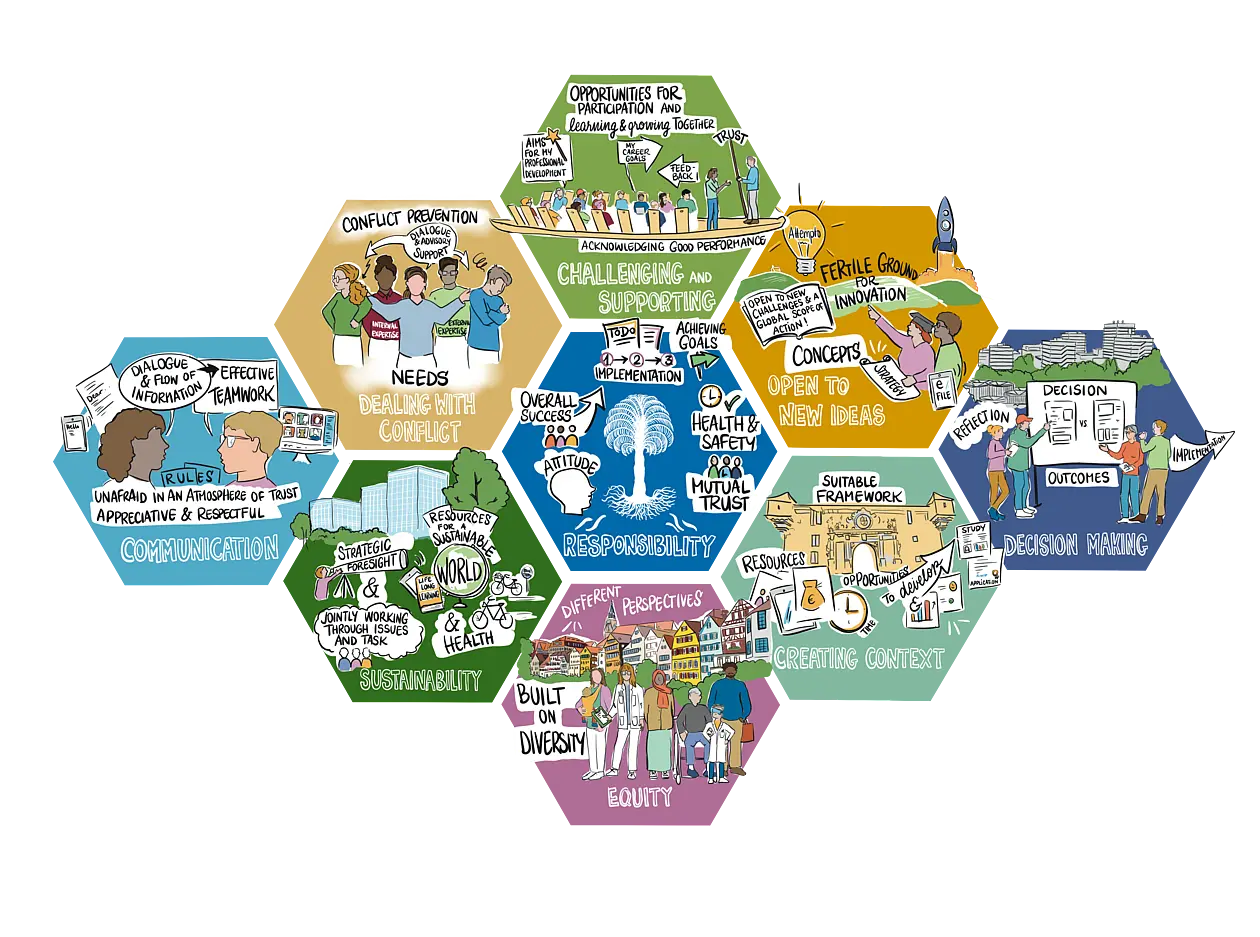
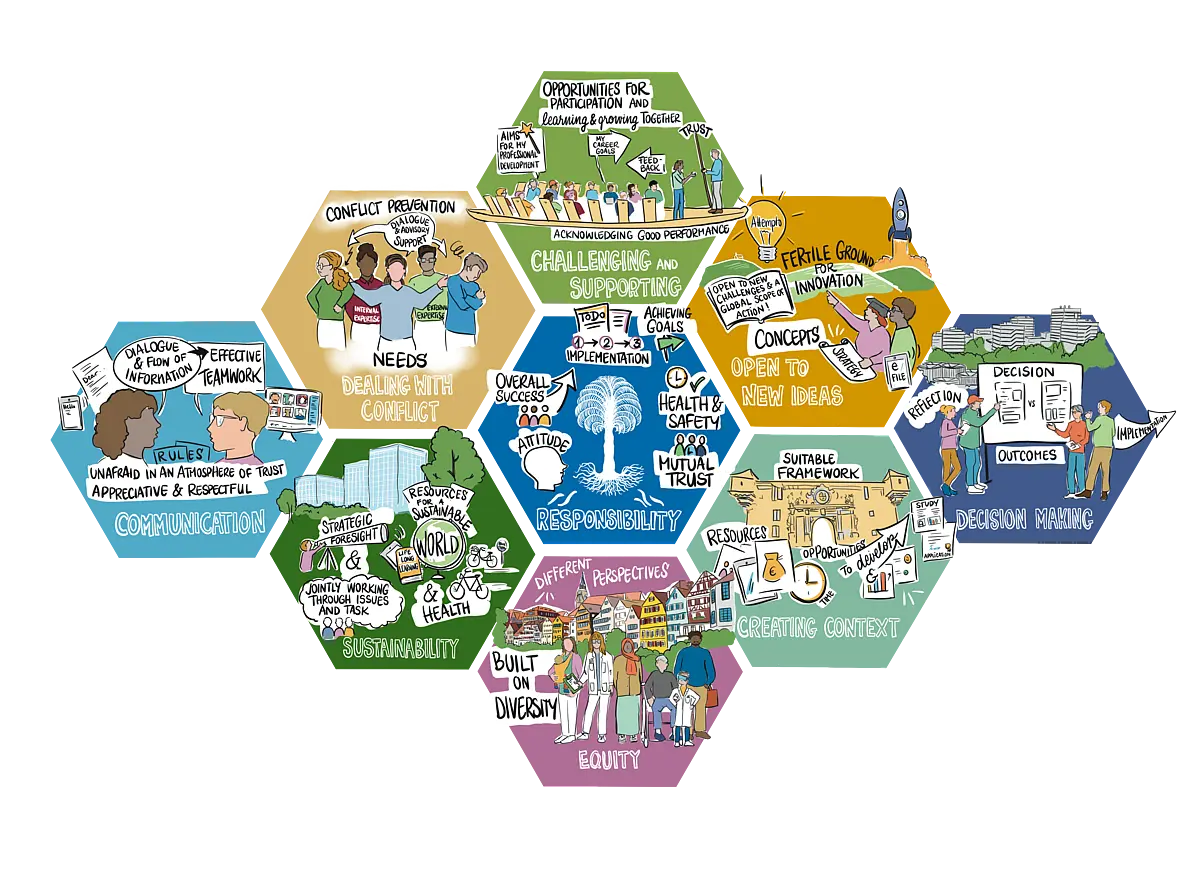
Overview of the Guidelines of Good Teamwork

For further information on the guidelines, please see the accordion below.

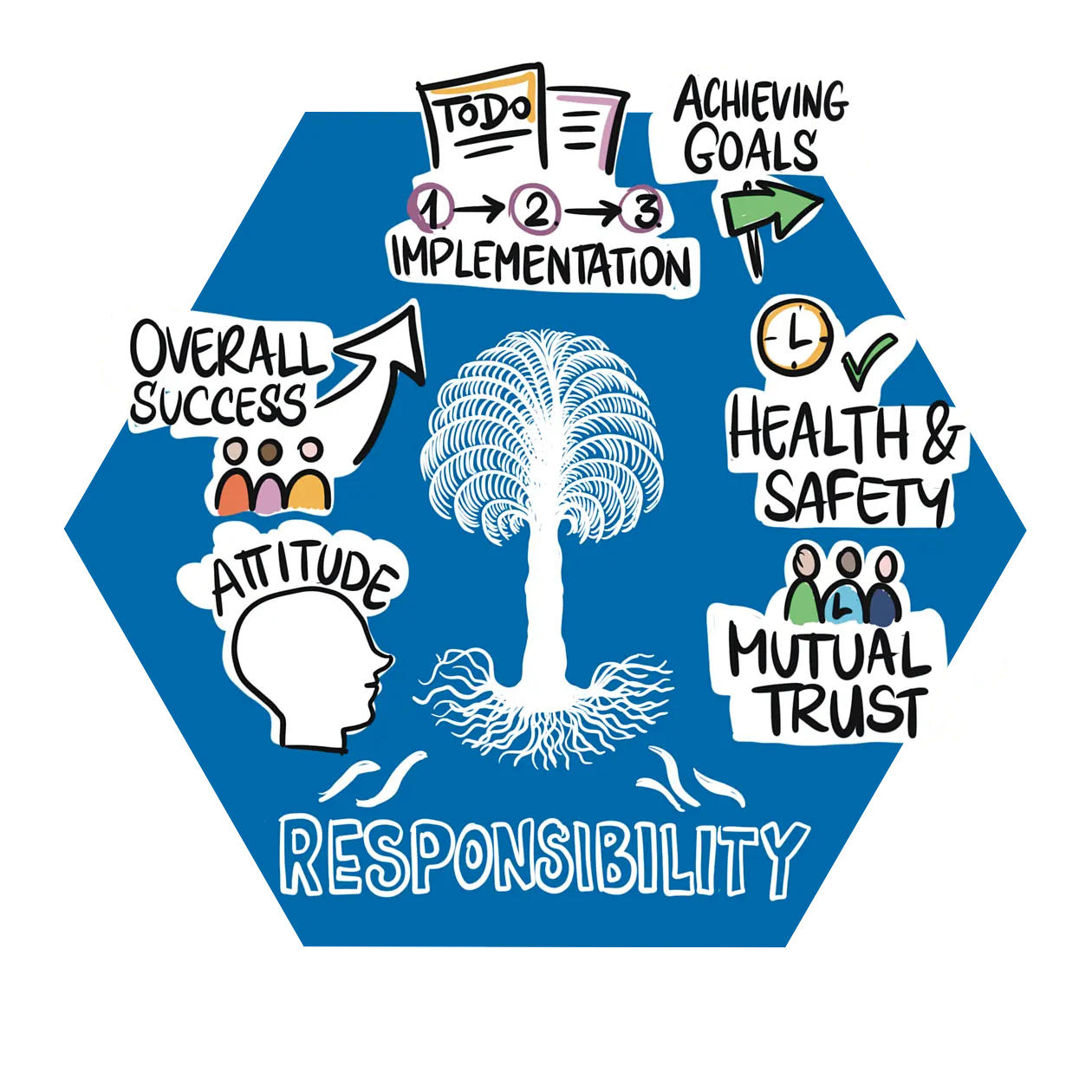
Responsibility

What does this mean?

Working together at the University of Tübingen is directly linked with responsibility. Managers must take responsibility both for others and for themselves. They need to make strategic and operational decisions and vouch for the consequences. Employees at the University of Tübingen should take responsibility for themselves and be aware of their shared responsibility for building good teamwork.

What attitude is needed here?

Managers have to be mindful of their function as role models among their peers, to their employees, and to the outside world. In their work, they must pursue the goal of advancing the University's outstanding achievements in research and teaching - and expect the same motivation from their team.

Managers should cultivate awareness that all employee groups contribute to the overall success of the University by acting responsibly together.

Employees need to be conscious of their duties and carry them out responsibly within the specified time frame. In doing so, they make a significant contribution to the overall success of the University of Tübingen. They must know how important their work is for the University and that their contribution is recognized.

How does this show in our actions?

Managers must fulfill their duty of care towards their employees and ensure that occupational health and safety requirements are implemented.

They need to ensure that measures decided upon are carried out - even if they are labor-intensive or unpleasant or involve changes. Managers should delegate in such a way that all employees know their own area of responsibility and are neither overworked nor are working below capacity.

At the University, it may happen that employment relationships (postdocs, research assistants and student assistants) and academic relationships (degree studies, doctorate, habilitation) overlap. In such cases, managers need to be aware of their different responsibilities as personnel managers and as academic supervisors and act accordingly, e.g. in grading, evaluation and review procedures, as well as in potential bias situations.

Employees should act independently in accordance with their position and area of responsibility and use all the agreed options available to them to carry out their tasks successfully. In doing so, they should take responsibility and actively communicate their needs to their manager. 

They must accept agreed measures and inform their manager of what they need to implement those measures.

By proactively taking responsibility, employees contribute to the joint achievement of overarching goals.

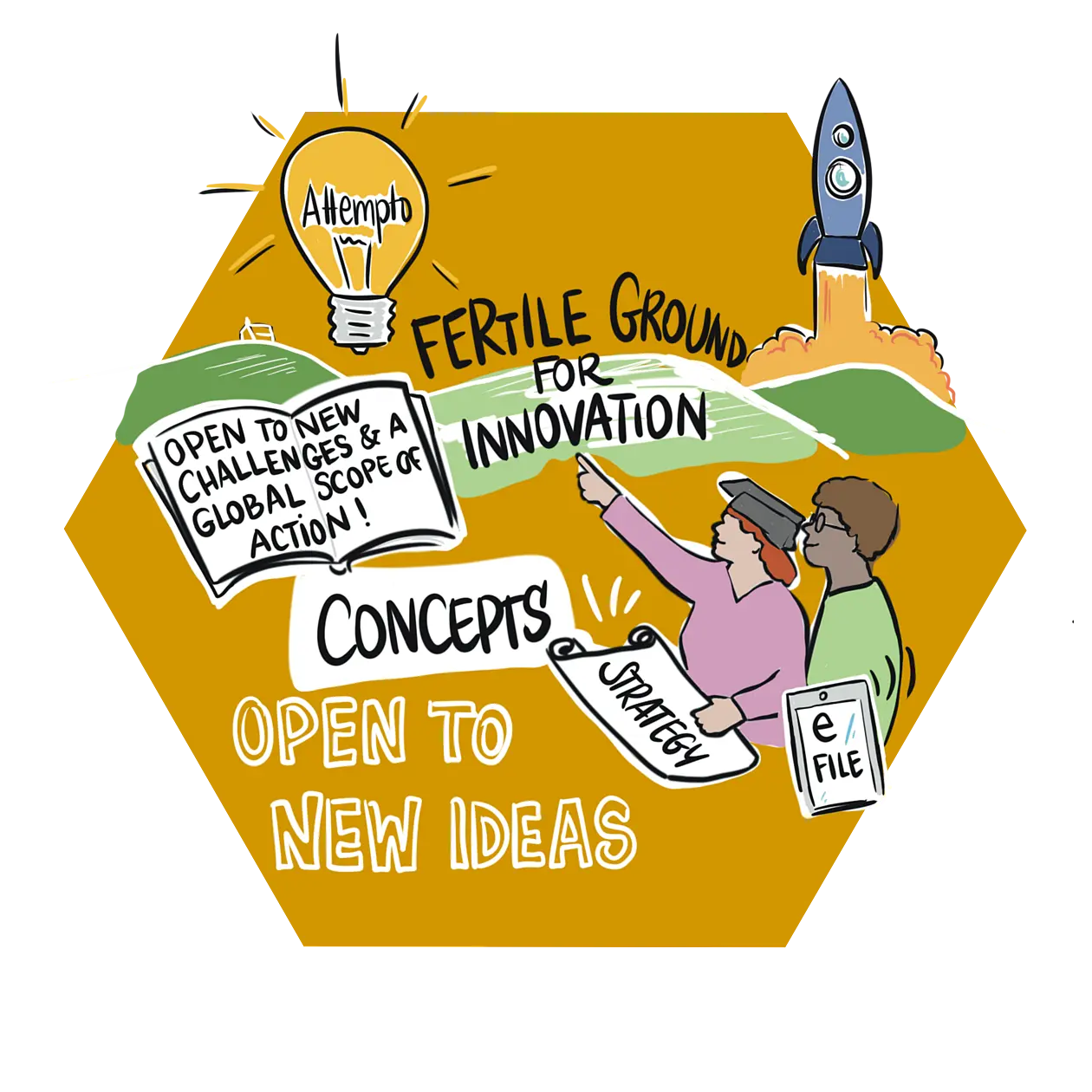
Open to the new

What does this mean?

The University of Tübingen’s chief purpose is the search for new academic knowledge, for innovations to solve challenges in society, for improvements in administration, and the modernization of teaching. For this, cooperation is required across all areas of the University. 

What attitude is needed here?

Managers need to think of the future, have the courage to make changes, and they must see the managing of such changes as their responsibility. They should also have a positive attitude toward increased digitization. Managers should be open to suggestions and criticism from their employees.

Employees need to see change as an opportunity to continuously remold the University and their own professional activities to remain workable in the future. They need to embrace innovation and change in order to experience and reflect on advantages and disadvantages. 

How does this show in our actions?

In line with the Tübingen institutional strategy, Open to New Challenges and a Global Scope of Action, managers need to promote new topics and the optimization of processes in research, teaching, administration and technology, as well as innovative forms of internal and external collaboration.

Managers must create structures enabling them to take ideas from coworkers on board, test them, and implement them if they are successful. In doing so, management always has to weigh the continuation of the tried and tested against the sensible implementation of the new.

For their part, employees need to be on the lookout for opportunities to improve in their work processes and respective areas of responsibility, to develop suggestions, and to contribute constructive solutions. They should be open to suggestions for change, and ought to try out new work methods before giving their managers constructive feedback.

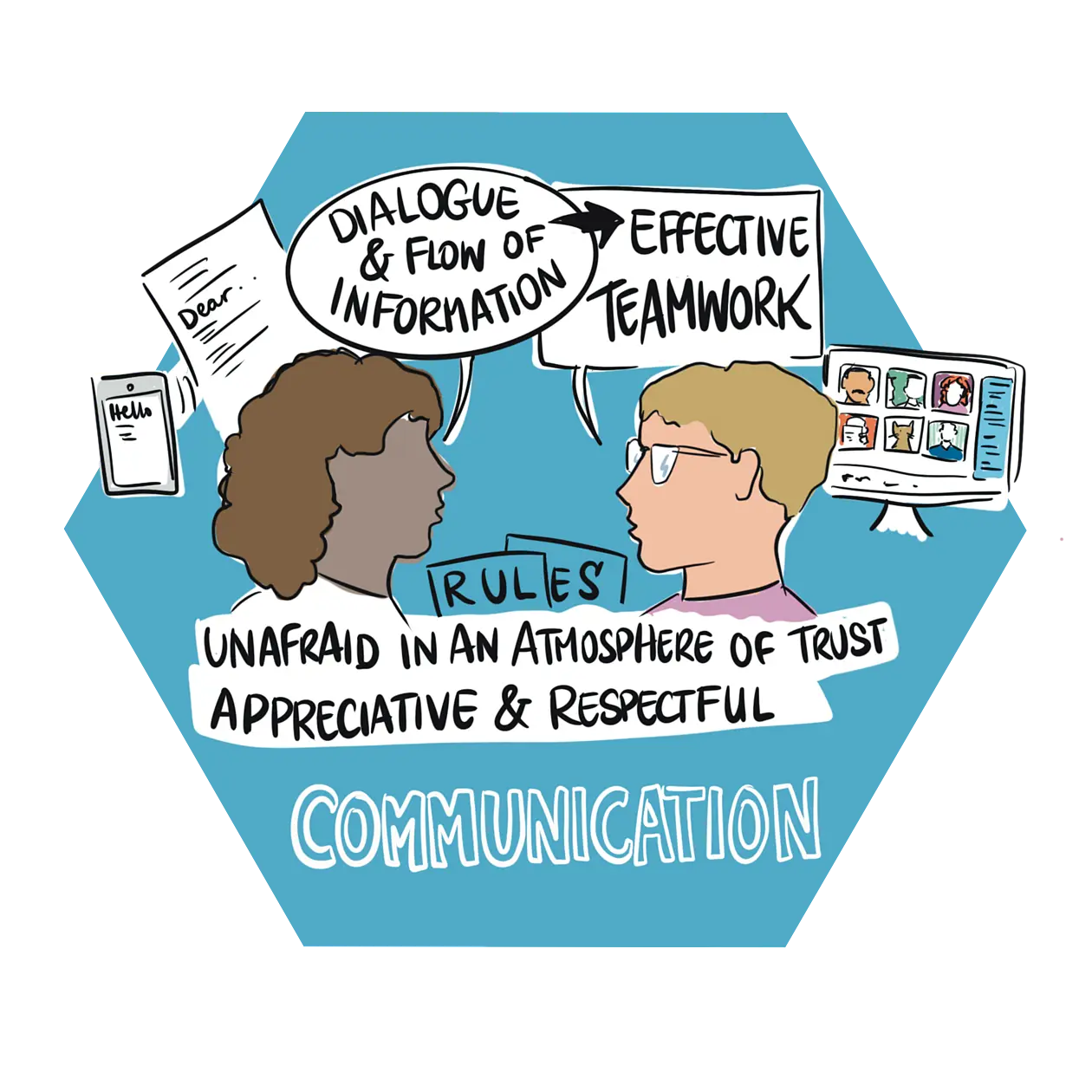
Communication

What does this mean?

Only regular dialogue - both within the team and one-to-one - can ensure the flow of information that forms the basis for sustainable working relationships and outcomes in line with the team goals. Good communication should motivate both coworkers and managers. Communication can take place in a variety of ways, e.g., by direct contact, in writing, by telephone or by video conference. The rules for good communication apply to all such channels and to all members of the University.   

What attitude is needed here?

Communication must take place in an appreciative manner and with respect for the persons involved - even when an unwelcome message needs to be conveyed. In communication processes, both managers and coworkers should seek approaches which will work best with the person they are speaking to.         

Employees need to be aware of how important appreciative and respectful communication is for working together - regardless of the matter under discussion, the format for communication, or the person with whom the discussion takes place. 

How does this show in our actions?

Managers need to create space for communication to take place without fear in an atmosphere of trust - and take the necessary time for it. They should explain tasks, responsibilities, assessments and change projects as clearly as possible. They should review their communication strategy regularly and strive to pass on information promptly.

Managers need to promote structures for exchanging information, for feedback and for networking both within their teams and with other parts of the University. It is they who set the tone for good communication by applying active listening techniques. They must record the content of important discussions, along with the next steps to be taken, in writing, with those involved.          

Employees need to consider the context of their communication, such as the situation and the person they are talking to. They should communicate their concerns constructively and openly. If necessary, they should make use of offers of support. If anything is unclear, they should ask further questions and, if necessary, speak with their manager for clarification.

They should use the existing communication structures to share ideas and information with their coworkers and their manager. They need to be open to feedback and willing to adapt their communication to avoid misunderstandings. 

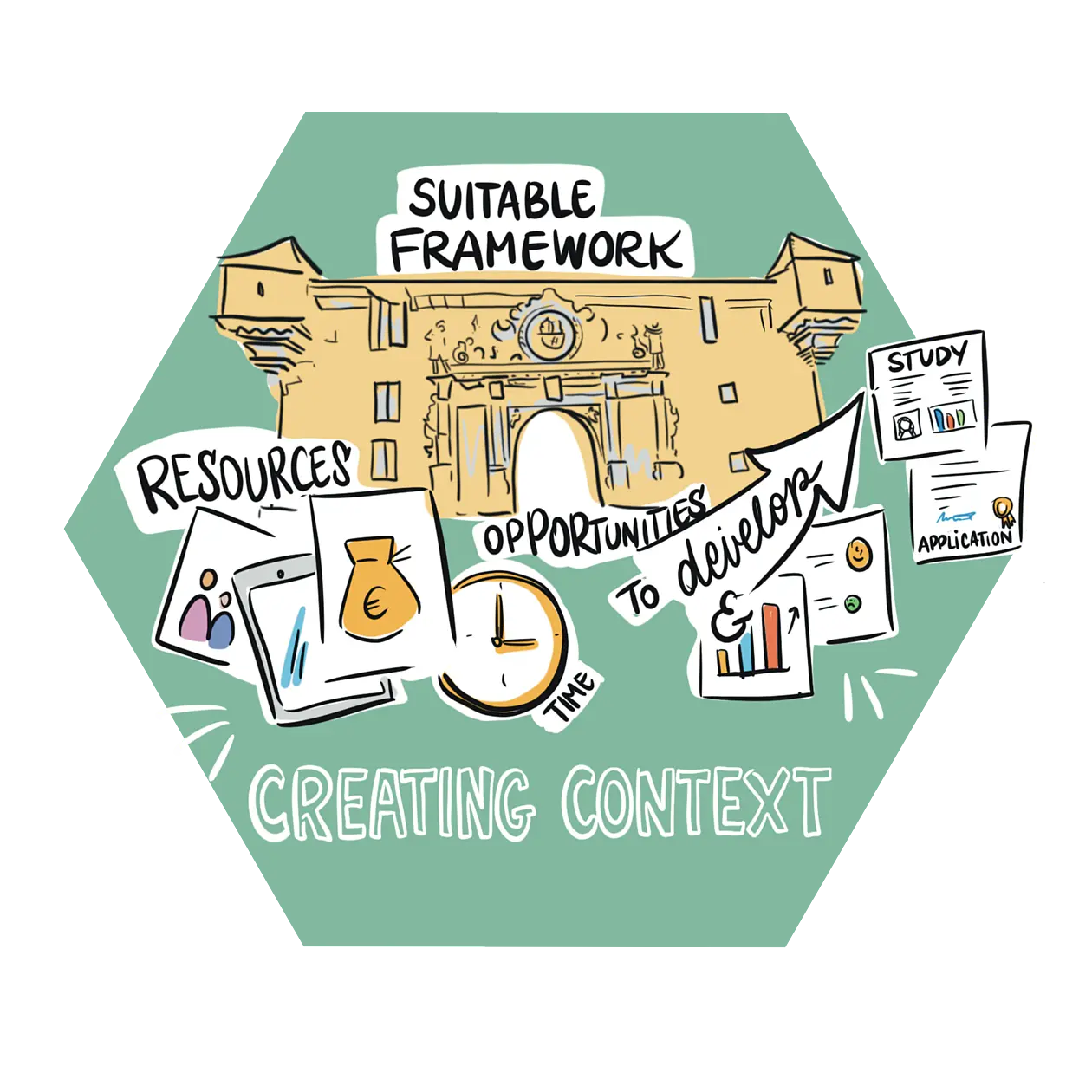
Creating context

What does this mean?

A suitable framework is extremely important for teamwork. This includes suitable working conditions, personnel and material resources matching the tasks to be carried out, sufficient information, and the proper delegation of responsibilities and decision-making authority. Good managers organize this framework - where appropriate, in cooperation with their employees.

What attitude is needed here?

Managers should be aware that they set the tone for the workplace environment and must do so in such a way that good outcomes can be reached and employees can find opportunities to develop.

The working relationships between managers and employees, coworkers and superiors need to be built on an underlying trust. Managers need to be prepared to work in dynamic teams and in project situations and also to take on organizational tasks beyond their own team. 

Employees have to be willing to use their resources within the existing framework to achieve the best possible results. They should be aware that some circumstances cannot be changed easily and that a willingness to compromise is required.

How does this show in our actions?

Managers must take time for personnel management tasks and integrate them into their daily work. In doing so, they need to always ensure a balance between supervision and trust, as well as between standard and individual solutions.

Managers have to ensure that the significance and objectives of the work are clear to employees at all times and that the team does not lose sight of its higher goals.

Employees have to communicate what conditions they need and to actively participate in organizing them. They should make constructive suggestions for improvement if a change would enable tasks to be performed more efficiently. They need to act responsibly with the trust placed in them and the resources available to them.   

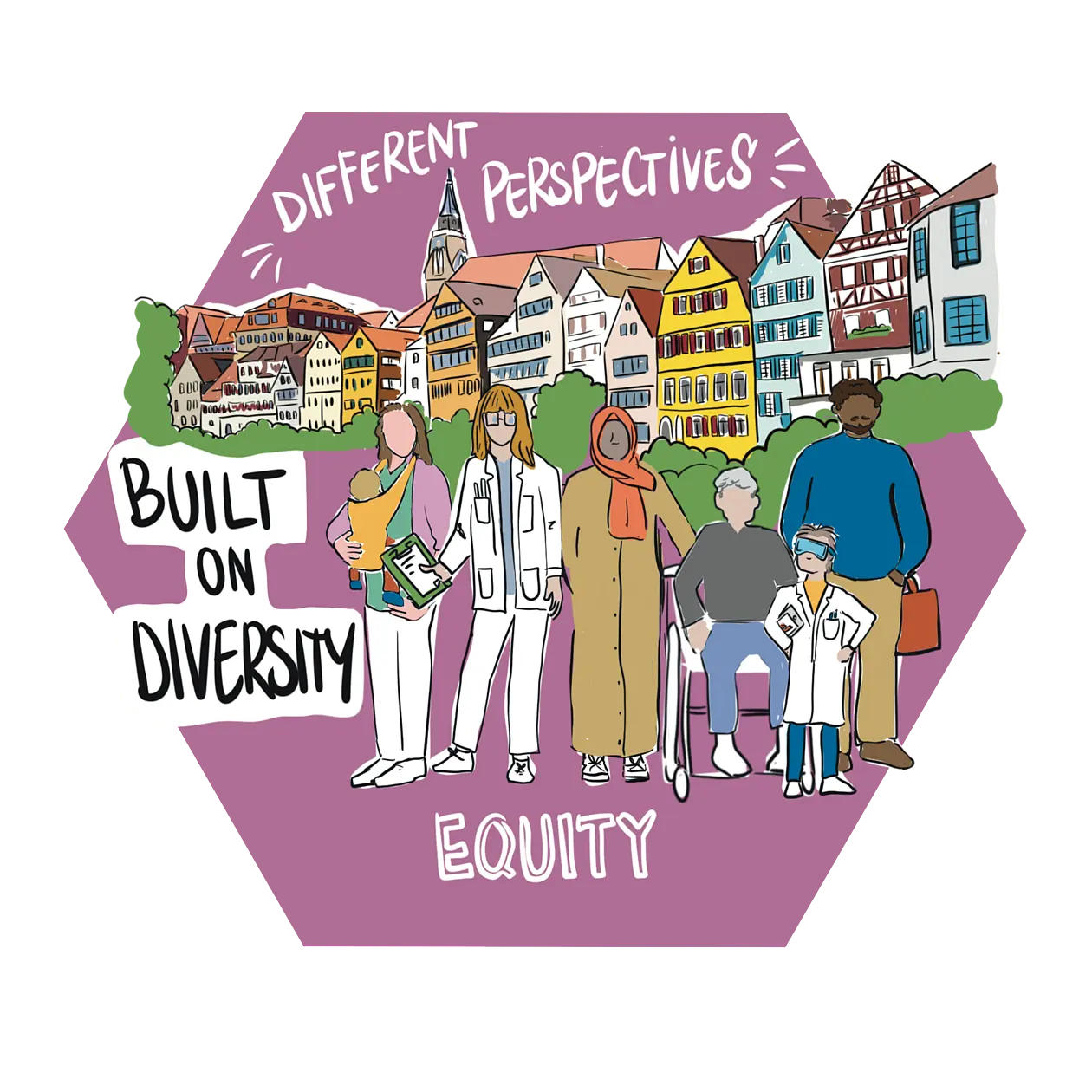
Equity

What does this mean?

The relationships between managers and their employees are manifold. Responsible management should value diversity and actively create equitable conditions and opportunities for all employees. 

What attitude is needed here?

Managers should find it natural to recognize the diversity and variety of the people they work with. They need to see this diversity as an opportunity to make use of different perspectives in day-to-day professional life, and to accept the challenges that arise from it. Managers should not be discouraged if the implementation of equity measures leads to changes in processes and habits and therefore meets with resistance. 

They should understand that there are structural and unconscious biases that can hinder various groups from fully participating in University life. They need to bear in mind their employees’ various personal situations and to be familiar with the available options for compensating for any disadvantage.           

Employees should see diversity and difference as an opportunity and be willing to reflect on their perspectives and what has influenced them. They need to be sensitive to individual circumstances that can lead to different opportunities. They should recognize the importance of equality measures and be willing to implement them and, in order to do so, to alter their habits and processes. 

How does this show in our actions?

Managers must be familiar with the policies in place at the University and should work to identify the conscious and unconscious bias within themselves which may lead to discrimination or exclusion. They should create a climate in which team members can address negative experiences and deal with them jointly. Managers need to work to counter any form of discrimination in their teams; and to see any opportunity to train their employees with regard to equity as a chance for team development. They must take advantage of the information and advice offered by the equal opportunity, diversity and family offices as well as the equal opportunities representative and the disabilities representative, and involve their employees in them. Managers need to promote and respect the diversity in their teams and take care to create equity in hiring processes by maintaining transparency and observing uniform standards. 

Employees must help create equity at the University of Tübingen and promote a working atmosphere in which everyone feels safe. They have to implement equality measures and report any form of discrimination to their managers. Employees ought to know that there are contact points and support services available and should not hesitate to contact them when necessary.

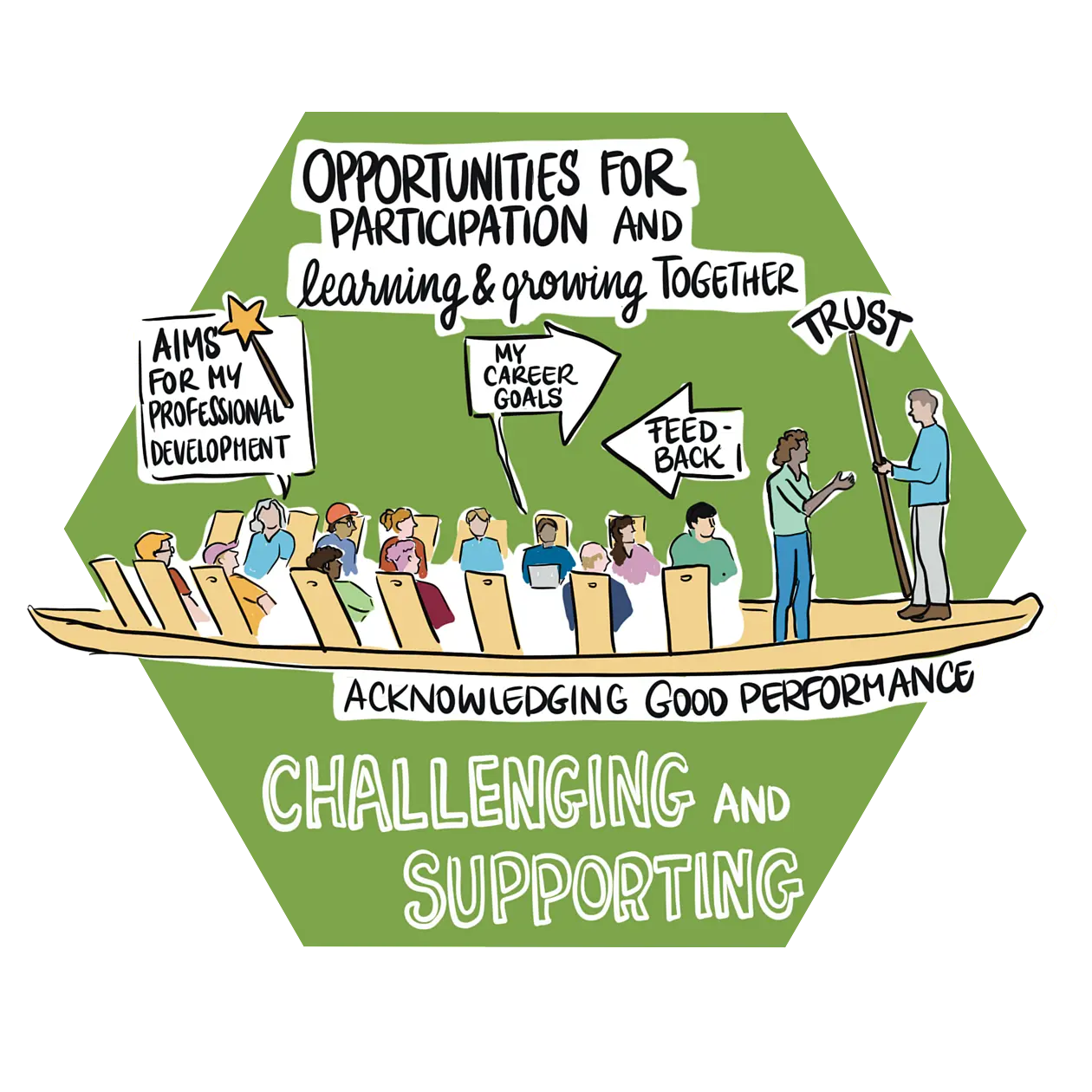
Challenging and supporting

What does this mean?

By successfully fulfilling their duties, all employees contribute to both the achievement of the goals set and the overall success of the University of Tübingen. Through qualification, opportunities for participation, and professional development, we strive to create a culture of challenge and support.

What attitude is needed here?

Managers require employees to fulfill their tasks; in return, they should support employees in their participation opportunities, qualification, and professional development.

Managers should understand the value of committed, reliable and consistent working relationships. 

They need to take an interest in their employees’ views as well as their personal situations and take these into account wherever possible. Good managers view mistakes as opportunities for learning and development.

It should be important to employees to perform their duties reliably and conscientiously. We want them to view opportunities for further development as a chance to grow and be motivated to get involved and acquire new skills. They should approach (new) challenges with confidence that they will learn from them.

How does this show in our actions?

When assigning new tasks, managers must take into account the strengths, weaknesses and potential of their employees and deploy them accordingly. They should build a framework for cooperation by formulating clear expectations and offering appropriate support.

Managers should acknowledge good performance. And if performance is not good, they need to provide constructive criticism and point out opportunities for improvement.

 Managers must encourage their employees by showing them opportunities for further training and development; if need be, they can seek advice and support from Personnel Development.

We want employees to perform their tasks thoroughly and reliably. If they need support, resources, or new skills to do so, they should communicate this to management.

Employees are welcome to actively share their wishes and goals for professional development and to take every opportunity for participation to help ensure that the workplace is productive both for themselves and others. At the same time, they must be able to receive feedback and look for ways to improve.

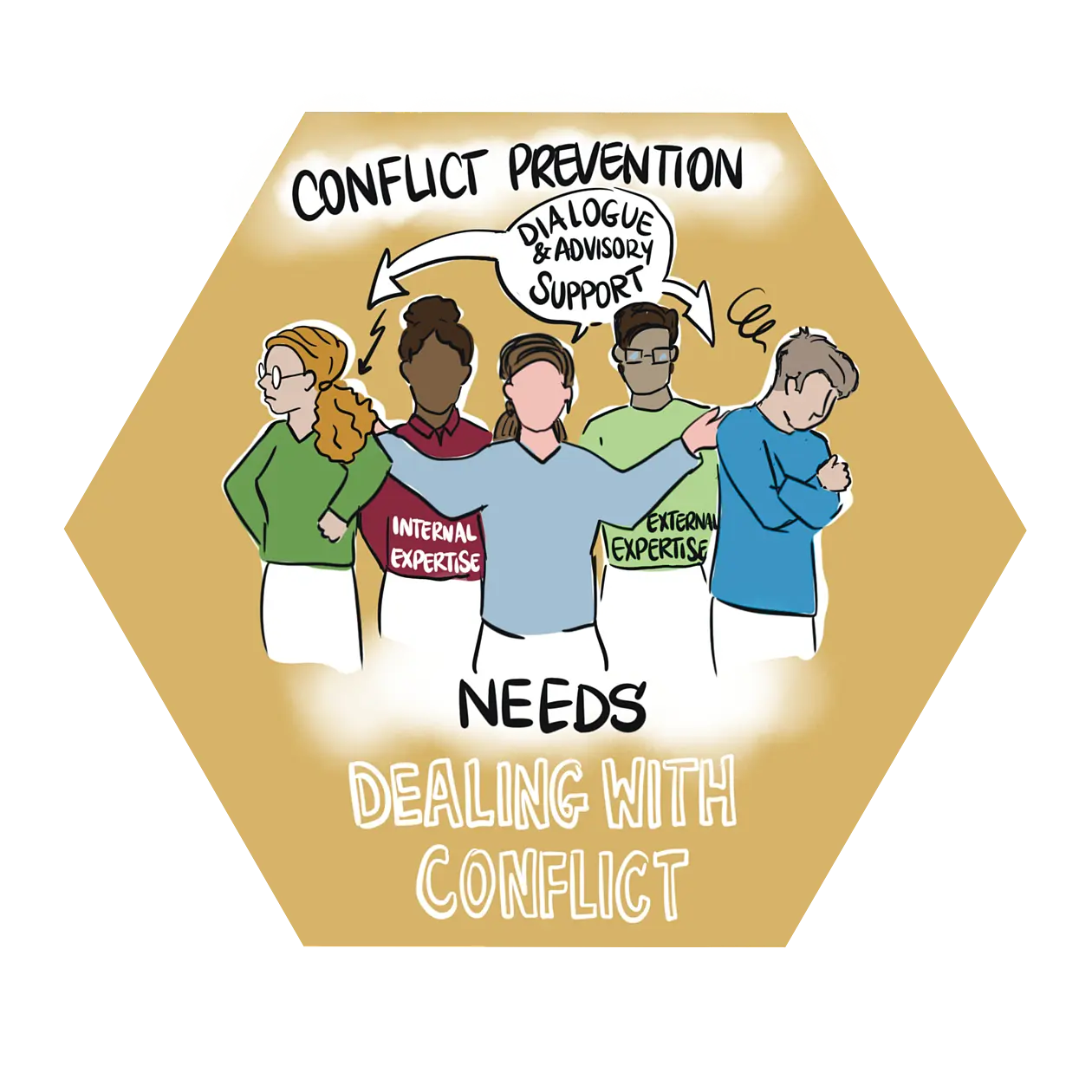
Dealing with conflict

What does this mean?

Dissent and conflict may arise even when the workplace culture is founded on cooperation. In these cases, mutually respectful, constructive interaction is required.

What attitude is needed here?

Managers have to regard conflicts as an integral part of working life and take action to deal with them. In doing so, they perceive differences - in thought and actions, for instance - as an opportunity for adjustment and learning.

Employees, too, need to be aware that differences of opinion and conflicts arise in every workplace. They should try to view conflicts objectively and see them as a source of potential new solutions.

How does this show in our actions?

Managers need to recognize conflicts in their various forms and address them at the earliest suitable moment.

They should encourage their employees to resolve conflicts themselves. If this is not possible, managers need to create options for suitable negotiation processes, especially there is a risk of the work being disrupted.

In the case of conflicts that are difficult to resolve - or if managers are biased or are themselves involved - the manager responsible must call on internal or external expertise. The University offers internal support in an advisory or mediatory capacity, for example, via Personnel Development, the Psychosocial Counselling Service, or the staff council.

Employees should address disagreements at an early stage and seek dialogue. In doing so, they should try to understand the other person's perspective and help to seek a reasonable solution.

If a conflict cannot be resolved independently, the parties must seek help from their manager or the responsible University services.

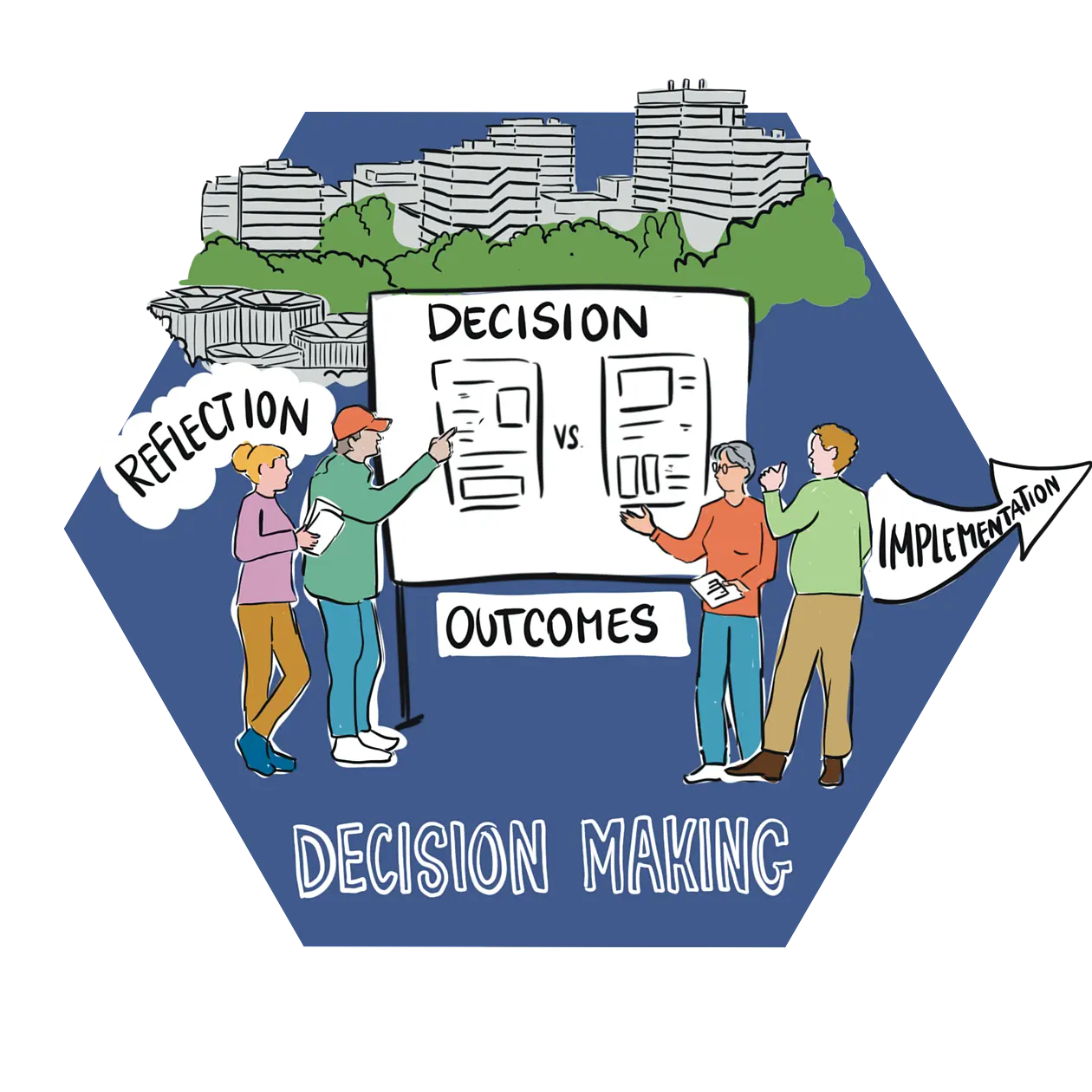
Decision-making

What does this mean?

In everyday work situations, decisions - sometimes difficult decisions - must be made, consciously and unconsciously. Most decisions are based on previous interactions and are thus the result of social processes. 


What attitude is needed here?

Decisions cannot be made with complete certainty, but they can be made to the best of our knowledge and in good faith. Managers should be aware that the basis for decisions may change over time, and respond accordingly.

Sometimes dilemmas or other complex issues arise for which there can be no final decision. These situations require continuous reflection and regular decision-making.

Managers should be aware that decisions made jointly are more likely to be accepted by those involved - which in turn helps to get them implemented.

Employees should cultivate the awareness that their daily decisions influence cooperation and success in the workplace. Therefore, they should be willing to make decisions within their area of responsibility. 

They should be mindful that managers have to make decisions. They also need to be aware that changes to decision-making criteria can lead to adjustments in decisions.


How does this show in our actions?

Decision-making processes must be made transparent to all those involved. Where possible, employees should be involved as participants in the decision-making process.

Managers need to communicate decisions clearly and comprehensibly, and then either implement the decisions themselves or ensure that they are implemented by others. Wherever possible, they should involve employees and consider their ideas.

If it becomes clear that a current procedure or a previous decision does not help achieve the goal, a new decision must be initiated.

 Employees need to make decisions independently within the scope of their authority and participate actively in decision-making processes. 

They should implement decisions made by managers or within the team and contribute their ideas to ensure successful implementation. 

If employees find that a decision is not leading to the desired goal, they should report this to their manager or adjust the decision accordingly.

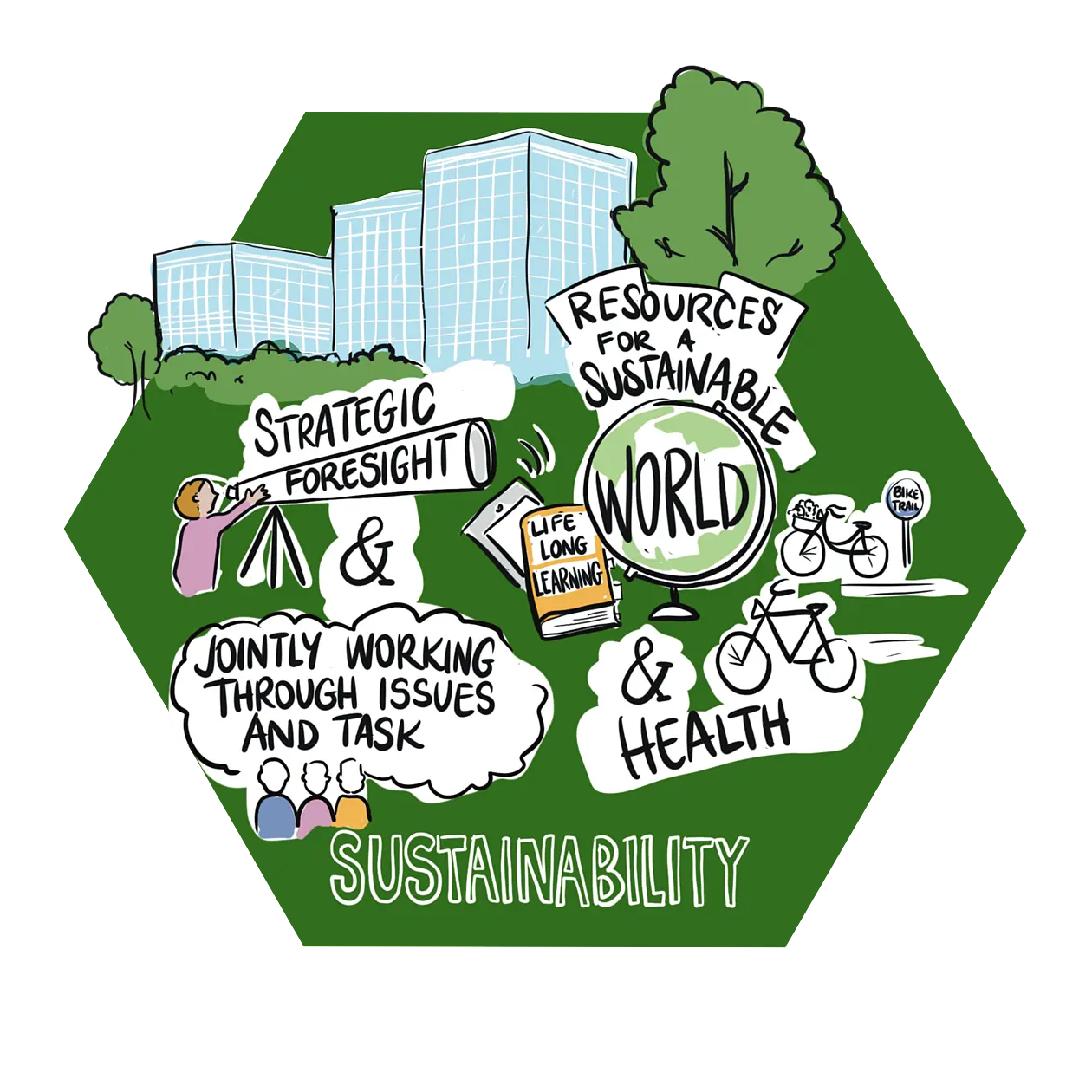
Sustainability

What does this mean?

 All those who work at the University must, in their actions, contribute to the University's social mission of sustainable development. We must all commit to the careful use of ecological, economic, and social resources. 

What attitude is needed here?

Managers need to develop strategic foresight for relevant issues and to regard themselves as role models for sustainable action.

They ought to show an understanding of sustainability and a willingness to learn about how its interrelated aspects may change in the University context and beyond.

Employees should seek to act in accordance with the social mandate of sustainable development and to engage with sustainability issues and relevant topics with implications for the future. They should be aware of the importance of lifelong learning; they want what they do to contribute to the common good.

How does this show in our actions?

Managers should regularly take time to reflect on their work, both individually and with their coworkers, supervisors and teams. This gives them ideas for process-oriented learning and change.

They need to support the long-term maintenance of their employees’ health and manage their own responsibly.

Managers should respond to current developments in terms of content and structure, e.g. by restructuring, shifting topics, changing priorities or taking appropriate steps with the team.

Managers must use the University's resources responsibly, economically and sparingly and encourage their employees to do so too. Their thinking and actions should be geared to long-term solutions for the common good. 

Employees should actively participate in formats aimed at reflection on work processes and the workplace itself, and take advantage of the resulting opportunities for further development while also helping to give them form.

Employees need to treat themselves and their colleagues with respect. They ought to be familiar with University health promotion programs organized for all employees.

Employees must use University resources responsibly, economically, and sparingly, and raise awareness among others about sustainability and environmental protection.


Video statement by the President

After logging in to the intranet, you can watch the video statement by the President, Prof. Dr. Karla Pollmann, on the Guidelines for Good Teamwork and the university’s support services.

Note

To view this page, you need to log in to the University of Tübingen intranet.


Contact person in the President`s Office

Prof. Dr. Monique Scheer

Vice-President for International Affairs and Diversity

Monique.Scheerspam prevention@uni-tuebingen.de

Contact Personnel Development

Dr. Daniela Bister

Division VI Section 3 - Head of Personnel Development

+49 7071 29-76428

daniela.bisterspam prevention@uni-tuebingen.de

Antonia Jeismann

Division VI Section 3 - Personnel Development

+49 7071 29-76918

antonia.jeismannspam prevention@uni-tuebingen.de