Uni Tübingen

University of Tübingen’s 550th anniversary

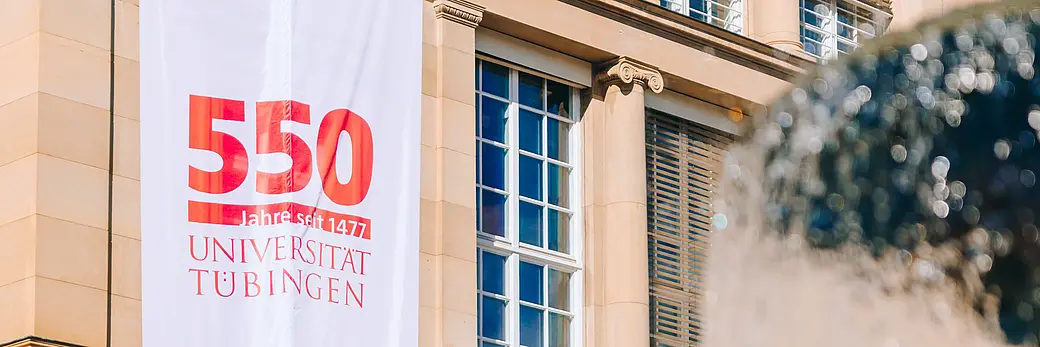
Flags with the anniversary logo in front of the Neue Aula

The 2026-27 winter semester marks the start of a special year for the University of Tübingen: we are celebrating our 550th anniversary. Under the motto ‘the Value of Knowledge,’ we are  not only looking back on an impressive history; we are also looking ahead to a bright future. 

Faculties, institutes, hospitals, and museums will open their doors. There are guided tours, lab visits, and hands-on activities designed for people of all ages and all knowledge levels. Visitors can watch live experiments, gain insights into robotics and virtual avatars, and explore digital reconstructions of historical sites.

University of Tübingen scholarship has been providing guidance to society, thereby helping to shape the future, since its founding in 1477. 

The anniversary year begins with the official start to the semester at the Dies Universitatis.


Looking Ahead

What's next? Discover the upcoming event highlights of our anniversary year.

Wertvolles Wissen?! Zur Vielfalt des Wissens für Nachhaltige Entwicklung

Lecture in German as part of the Studium Generale program 
Tuesdays from 6:00 to 8:00 p.m. in Lecture Hall 21 of the Kupferbau
The Competence Center for Sustainable Development (KNE) and the International Center for Ethics in the Sciences and Humanities (IZEW)

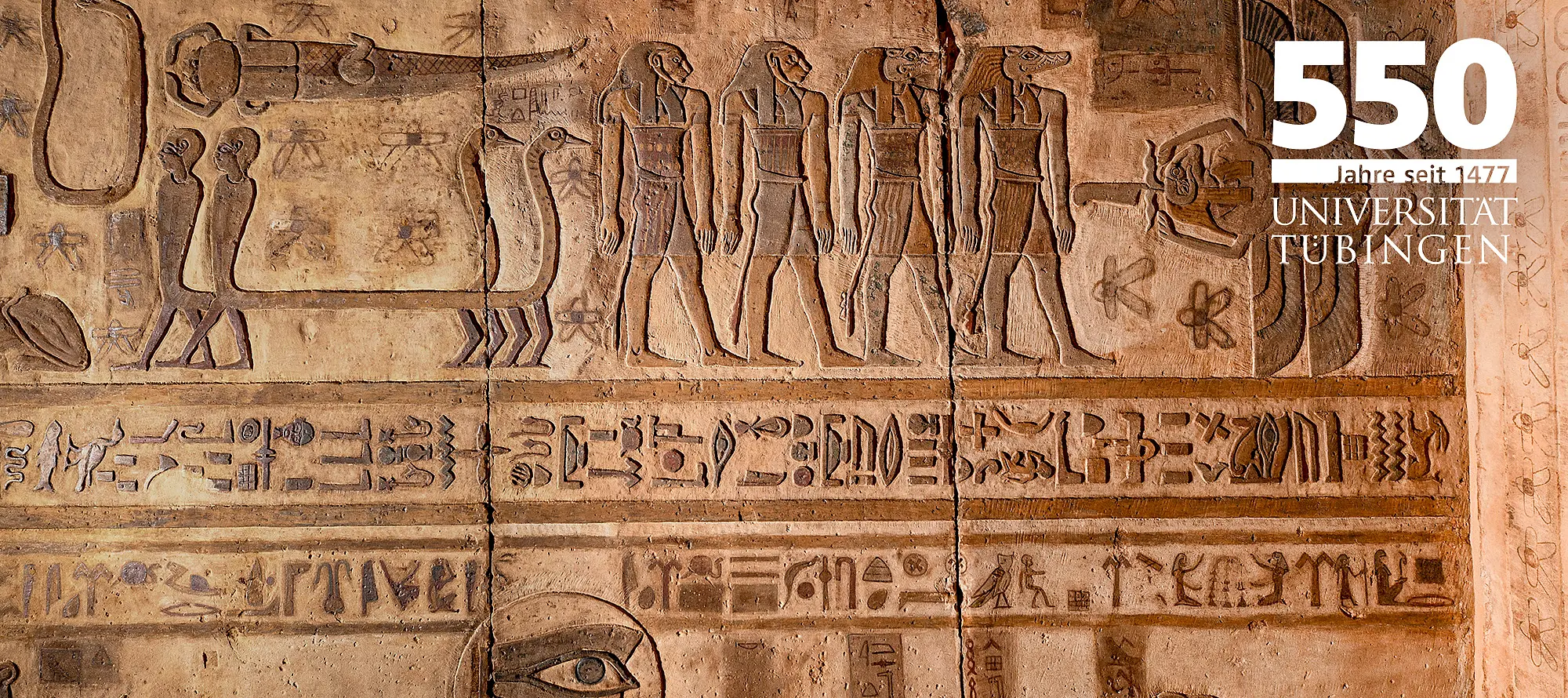
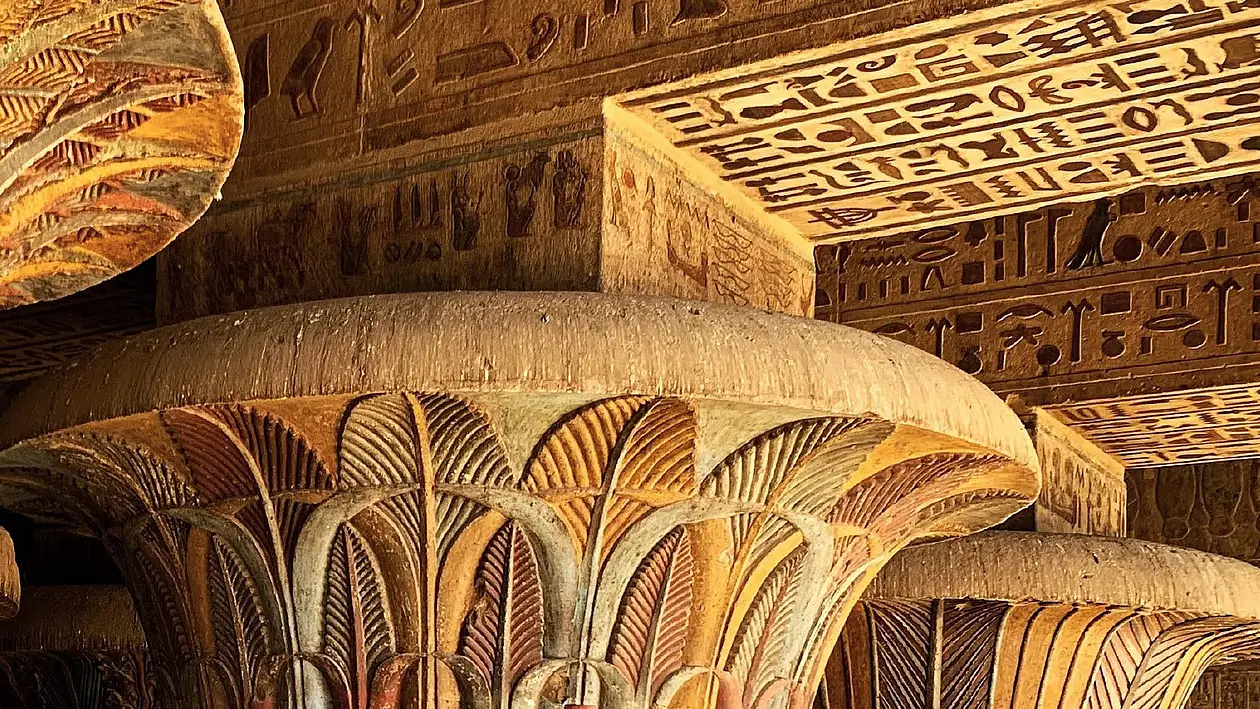
„The Colours of the Cosmos”

The Restored Splendour of the Temple at Esna
SPECIAL EXHIBITION
October 30th, 2026, to January 31st, 2027
Opening: 29.10.2026 | 7pm
Museum Ancient Cultures| Hohentübingen Castle


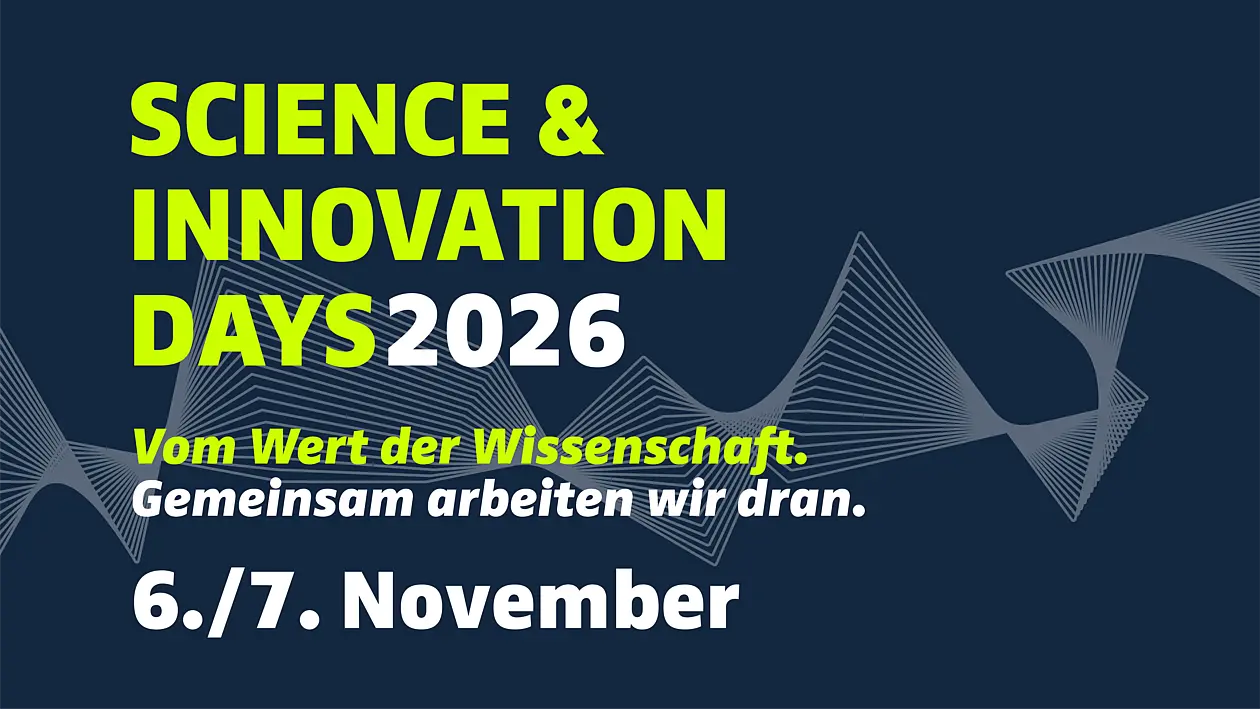
Science & Innovation Days 2026

“The Value of Knowledge”
06.-07.11.2026
30 events, 12 locations, Followed by the “Tour durch das Ländle” in 2027
Media partnership with SWR


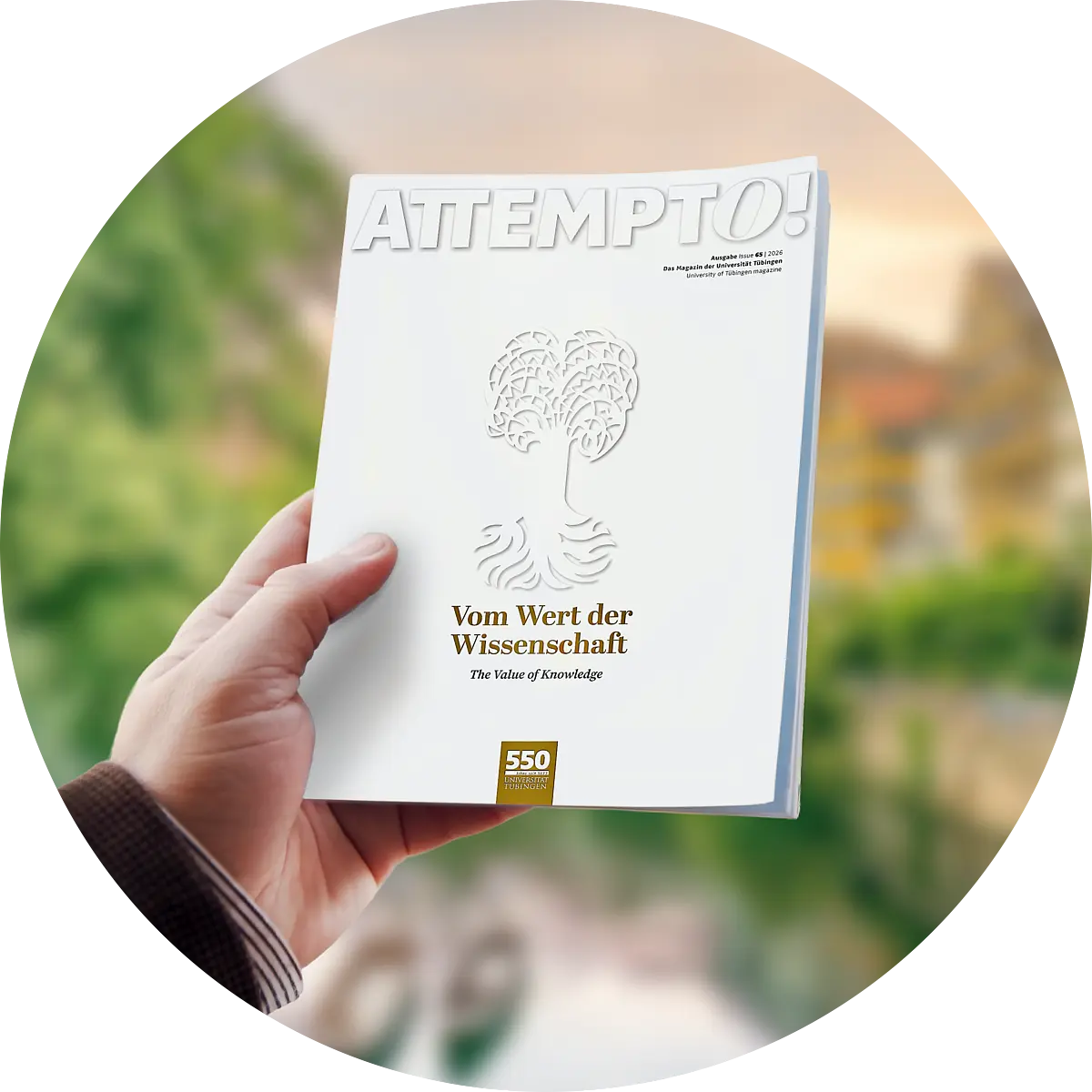
Anniversary edition of ATTEMPTO

People have been carrying out research and teaching at the University of Tübingen for 550 years. Why have they been doing this? The anniversary edition of ATTEMPTO offers some fascinating answers, with a look at milestones in the University’s history and articles on research into climate change, global food security, and the origins of humanity; an interview on the rise of China and the new world order; and a report on studying in the age of AI.

Anniversary edition of ATTEMPTO


The Value of Knowledge – since 1477 and on into the future

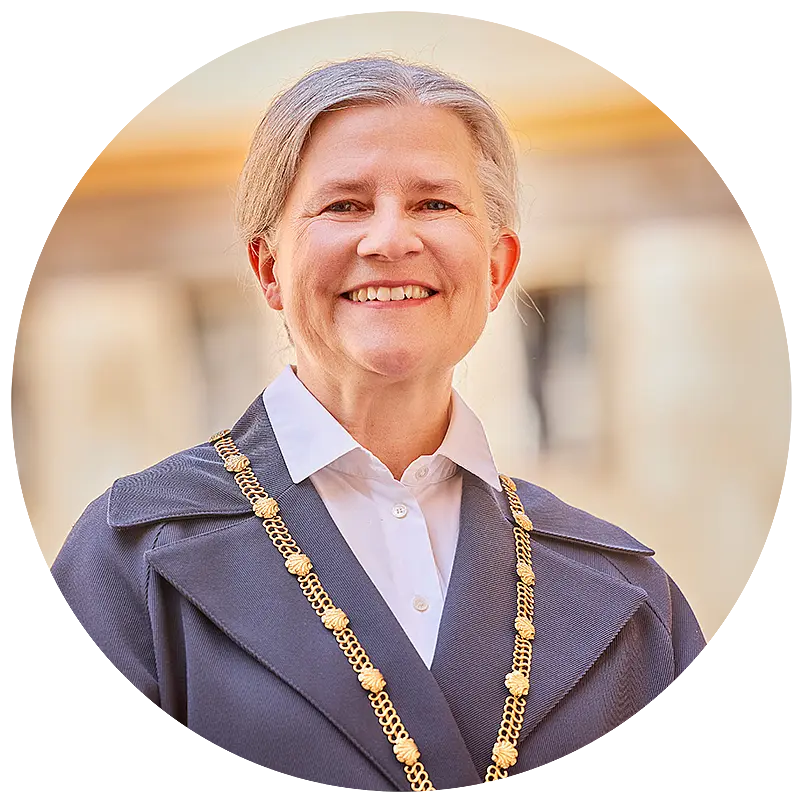
An anniversary like this is an opportunity to reflect on where we have come from and how we got here, and to reflect on the directions we wish to go in the future. Academic knowledge demonstrates its value most clearly when it brings people together, broadens horizons, and contributes to the common good. This shared sense of purpose has guided the University of Tübingen for centuries and will continue to guide us in the future.

Professor Karla Pollmann, President

Events for the anniversary year begin in October 2026 with the opening ceremony, the Dies Universitatis, marking the start of the semester and welcoming the new students. This will be followed in November by a public celebration of academic knowledge, the Science & Innovation Days. The festivities will reach their high point on July 3, 2027, with a ceremony at Tübingen’s Collegiate Church (Stiftskirche) – the site of the University’s founding in 1477. Various other events celebrating the University’s 550th anniversary will take place throughout the year.

14 October 2026
The anniversary year begins

with the official start to the semester at the Dies Universitatis

6 – 7 November 2026
Science & Innovation Days 2026 - “The Value of Knowledge”

Tübingen’s annual celebration of the achievements of research: www.sidays.com

3 July 2027
Anniversary Ceremony

The highlight of the anniversary year at the grand ceremony in Tübingen’s Collegiate Church

February 2028
950 years in Tübingen

The schedule of events will conclude in February 2028 with a handover to the city of Tübingen, which will then celebrate its 950th jubilee.
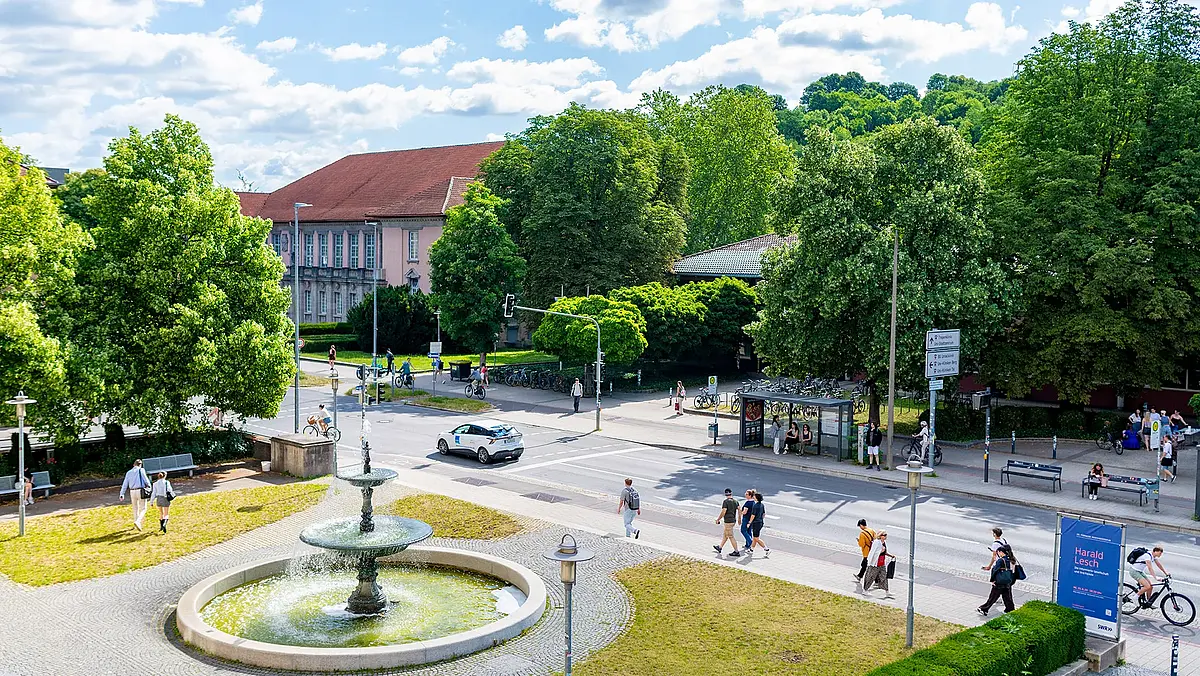
The University of Tübingen was founded in 1477 following papal approval in 1476. In line with this, celebrations marking the University’s 550th anniversary began in October 2026. This also fits with the academic year, which begins in October with the winter semester. The anniversary celebrations will continue through to the end of 2027.


Experiencing the value of knowledge

People will be able to experience the results of research at many locations in Tübingen this anniversary year. Faculties, institutes, hospitals, and museums will open their doors. There are guided tours, lab visits, and hands-on activities designed for people of all ages and all knowledge levels. Visitors can watch live experiments, gain insights into robotics and virtual avatars, and explore digital reconstructions of historical sites.

Exhibitions in museums, galleries, and the botanical garden will offer insights into research and the University’s history. Online services, including app-guided tours of rarely accessible locations, open up new perspectives. The year’s events will include specialist lecture series and conferences, including a conference on the histories of Tübingen, Mainz, and Uppsala Universities, all of which were founded in 1477. In addition, there will be the annual Global Ethics Lecture and Media Lecture series, as well as projects addressing academic topics in social media and film.


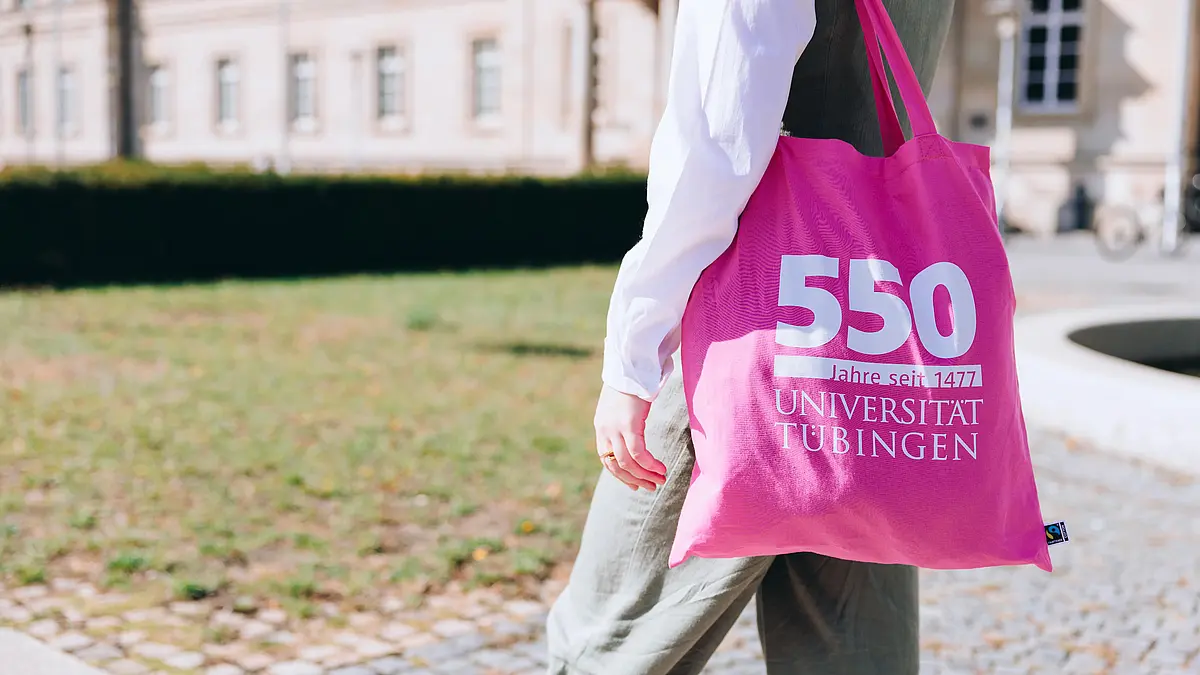
For the University’s 550th anniversary, we have special items celebrating more than five centuries of University history so you can bring home that jubilee spirit. From stylish bags and T-shirts to designer mugs – in our anniversary collection you will find the ideal piece of Tübingen University to keep or share with others.

Opening hours of the Uni shop in Wilhelmstrasse: Tues., Thurs., Fri., 12 noon to 2pm

                                                                                      Shop the 550th anniversary collection


Special projects for the anniversary year
Some projects will continue beyond the anniversary year. They include the restoration and new presentation of the Gallery of Professors: Approximately 40 portraits from the gallery’s collection of more than 300 works will be restored and presented in a new installation, supplemented by recent photographs. 

Further anniversary projects:

  • Popular science book project: A brief history of the University
  • Anniversary edition of the research magazine ATTEMPTO!
  • Anniversary app
  • Special anniversary collections
  • Film projects

A look back at 550 years of the University of Tübingen
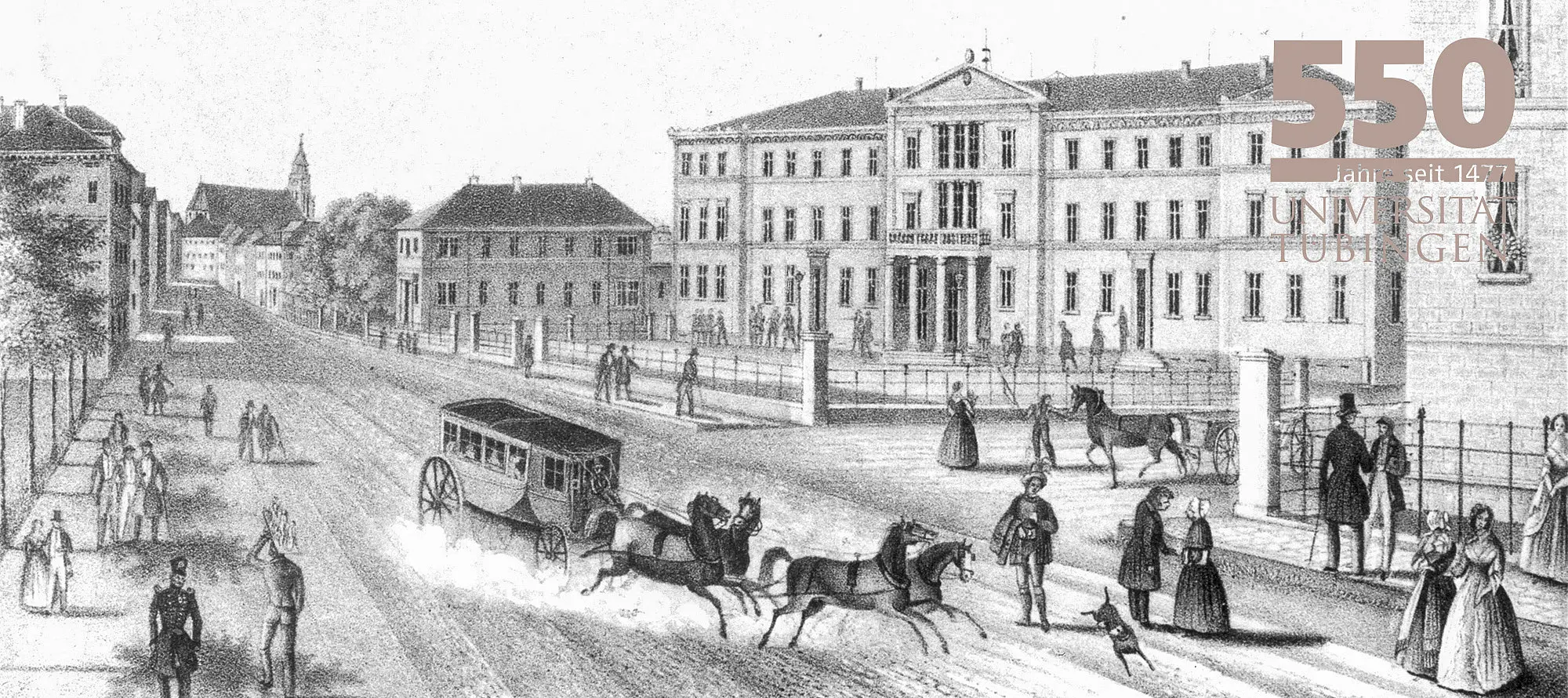
The anniversary provides an opportunity to take a fresh look at the University’s history and key figures in it, especially those that have been largely overlooked. These include Countess Mechthild von der Pfalz, an important patron and driving force behind the University’s founding. The University is also turning its attention to critical chapters in its history – periods of political influence, exclusion, and inequality, and integrating these reflections into the role of academia today in an open and democratic society. 

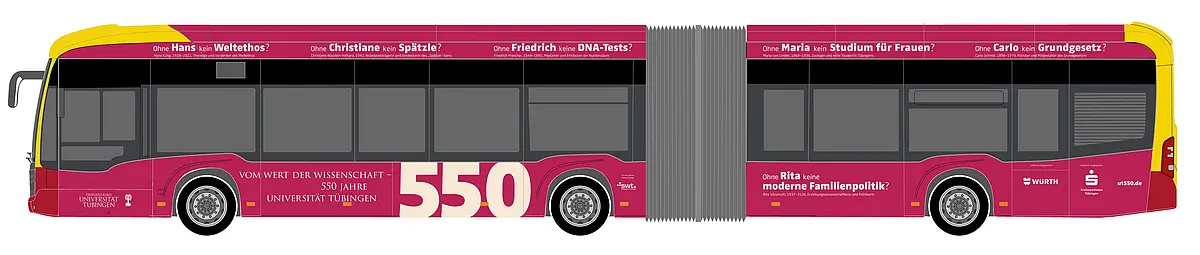
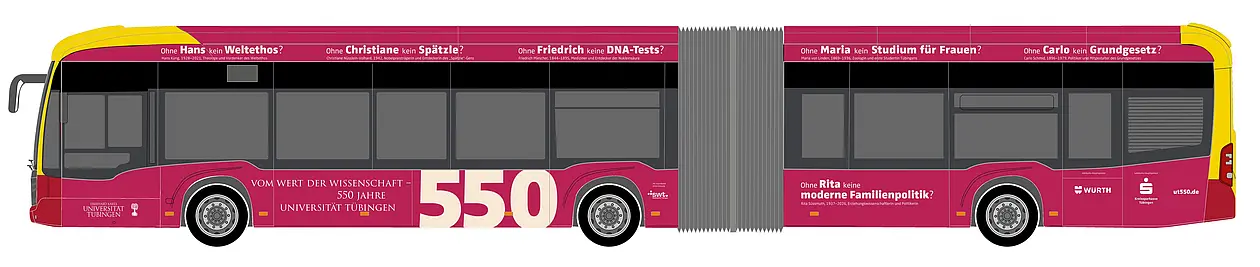
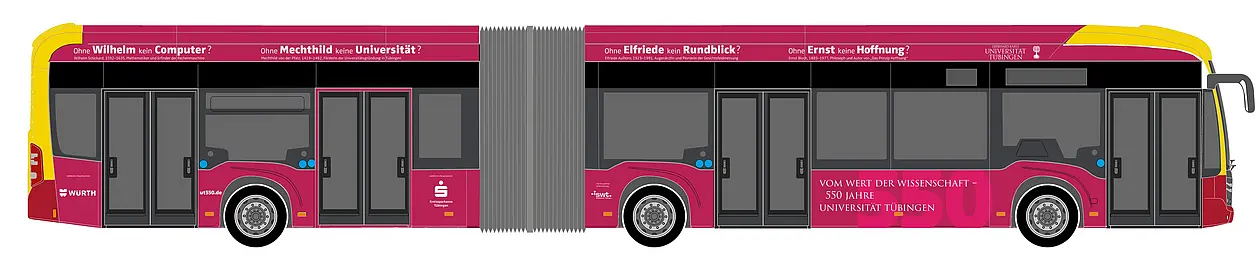
Our anniversary bus highlights individuals whose work has helped shape the University of Tübingen.

No University without Mechthild?

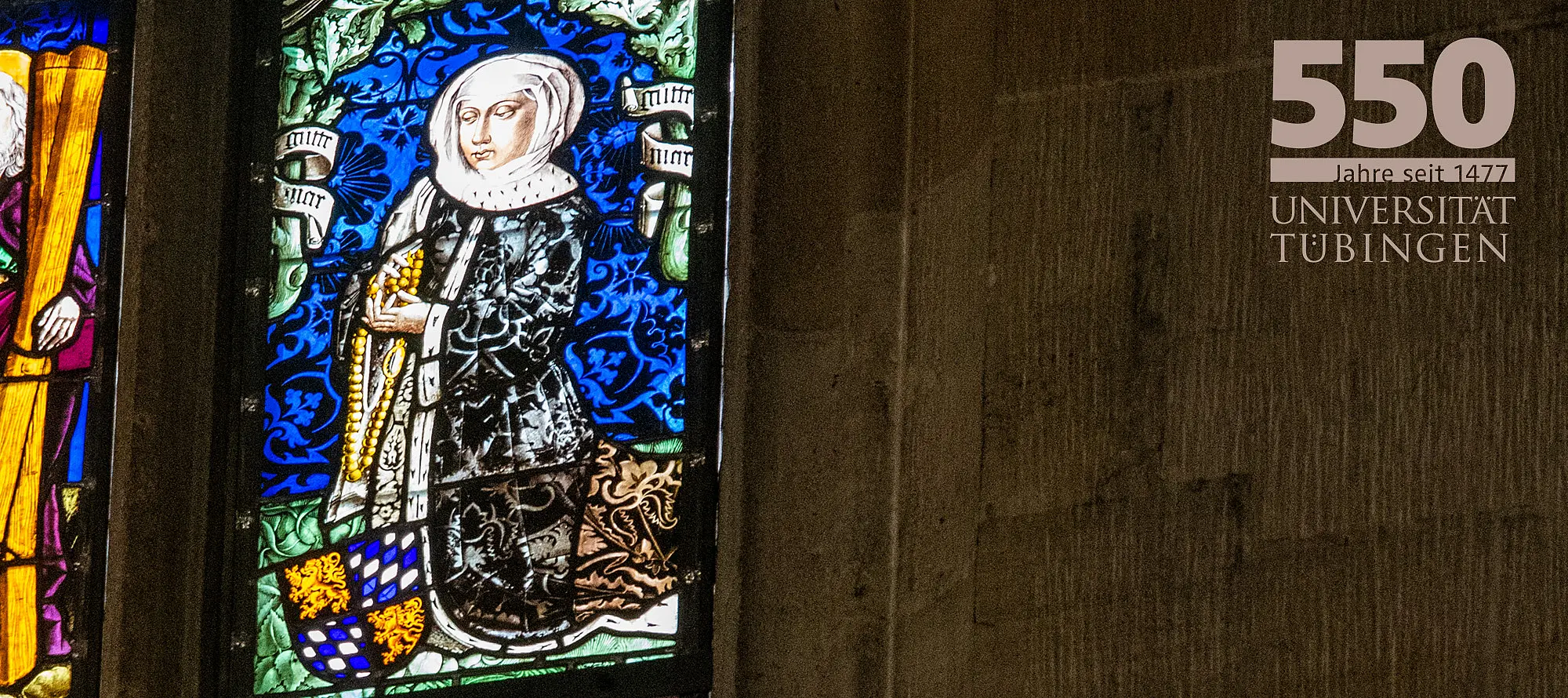
Countess Mechthild von der Pfalz (1419-1482), patron of the arts and education, played a key role in the founding of the University of Tübingen.

Mechthild von der Pfalz used her influence to promote knowledge and the arts. She supported the founding of Freiburg University by her husband, Archduke Albrecht VI of Austria. A few years later, she encouraged her son, Count Eberhard I, to establish a University in Tübingen. She also provided financial support for the project over several years, leading to the founding of the University in 1477.

No GPS without Johannes?

Johannes Kepler (1571-1630), astronomer and mathematician, was the first to formulate three laws to describe the motion of the planets around the sun.

During Kepler’s studies in Tübingen, his teacher Michael Mästlin introduced him to the then-controversial heliocentric model of the universe, by which the Earth and the other planets orbit the Sun. A few years later, Kepler formulated three laws that made it possible to mathematically describe and calculate the movements of the planets. He realized they do not move in circular orbits but in ellipses, and described how their velocity changes during their orbit and how orbital period is related to the size of the orbit.

Kepler’s laws do not apply just to planets. Today, they help calculate the orbits of satellites. And those satellites run navigation systems such as GPS so we can determine precise locations on Earth.

No computers without Wilhelm?

Wilhelm Schickard (1592-1635), theologian, mathematician and astronomer, taught at the University of Tübingen. 

Wilhelm Schickard was in contact with the astronomer Johannes Kepler. Kepler’s calculations for determining planetary orbits were so complex that Schickard sought a technical solution to assist him. In 1623, Schickard built the first mechanical calculating machine capable of adding, subtracting, multiplying, and dividing six-digit numbers, to relieve Kepler of some of his tedious computations.

Although this calculating machine was not yet a computer, Schickard’s machine demonstrated for the first time that arithmetic operations could be transferred to a machine which could carry them out. Over the centuries, this idea led to the development of increasingly powerful calculating machines and, ultimately, the first computers.

No DNA testing without Friedrich?

Friedrich Miescher (1844-1895), researcher in medicine and biochemistry, discovered the substance known today as DNA.

Friedrich Miescher studied the chemistry of simple cells. He obtained them from used wound dressings from the Tübingen hospital. He washed white blood cells out of the pus and analyzed their chemical components. In 1869, he discovered a previously unknown substance in the cell nuclei. Miescher called it “nuclein,” from the Latin word nucleus.

Miescher had isolated the substance we know today as DNA. Its function as the carrier of genetic information was not recognized and deciphered until later. However, the first step toward that discovery was taken in the kitchens of Hohentübingen Castle where Miescher had his lab. Today, DNA testing is indispensable in modern medicine, forensic science, and biological research.

No women students without Maria?

Maria Gräfin von Linden (1869-1936), the first woman admitted to study at the University of Tübingen.

Even before she began her studies, Maria von Linden had taken an unusual path. In 1891, she became the first young woman in Württemberg to earn her high school diploma at a boys’ grammar school in Stuttgart. A year later, she was admitted to the University of Tübingen, though only with special permission from the King of Württemberg. Even then her place at the University was by no means guaranteed, as each professor decided whether to admit her to his courses. Yet von Linden studied Science and earned her doctorate in Zoology in 1895.

This makes Maria von Linden one of the pioneers of higher education for women. But it was not until 1904 that female students were allowed to enroll normally at the University of Tübingen.

No hope without Ernst?

Ernst Bloch (1885-1977), philosopher and author of The Principle of Hope, taught at the University of Tübingen from 1961.

Ernst Bloch asked how people can believe in a better future and hold on to that confidence despite crises, wars, and setbacks. In his magnum opus, “The Principle of Hope” (1954), Bloch described hope as the driving force that motivates people to pursue a better life. Bloch became one of the most influential philosophers of the 20th century.

Bloch moved from East Germany to Tübingen in 1961, and the University became his final academic home. Bloch’s work is still discussed here today. The questions that preoccupied Bloch have lost none of their relevance in these times of crisis.

No Basic Law without Carlo?

Carlo Schmid (1896-1979) lawyer, politician and University of Tübingen professor, helped draft Germany’s Basic Law.

Carlo Schmid began studying law and political science at the University of Tübingen in 1919. He went on to complete his doctorate and habilitation there and, beginning in 1930, worked as a lecturer. After 1945, he played a central role in the reopening of the University, where he was a professor of public law from 1946 to 1953. Carlo Schmid was instrumental in drafting the Basic Law as part of the constitutional convention (1948). He was a member of the Parliamentary Council and, as chairman of its main committee, a co-creator of the Basic Law. He championed important ideas, such as the constructive vote of no confidence, and strongly advocated for the right to asylum, the right to conscientious objection, and the abolition of the death penalty.

Carlo Schmid was among the most influential architects of the Basic Law. He was particularly committed to ensuring the project did not fail and that it should be based on a broad consensus.

No clear view without Elfriede?

Elfriede Aulhorn (1923-1997), ophthalmologist and professor at the University of Tübingen, made major contributions to the study of the human field of vision.

When Elfriede Aulhorn joined the Tübingen Eye Clinic in 1954, researchers there were seeking a way to reliably measure the visual field. Aulhorn and her colleagues developed the Tübingen Perimeter, which became the standard tool for visual field measurement for decades. The device made it possible to detect visual field defects more accurately and to gain new insights into the visual process.

Many modern methods of visual field testing trace their origins to developments initiated by Elfriede Aulhorn and her team in Tübingen.

No Global Ethic without Hans?

Hans Küng (1928-2021), Catholic theologian and University of Tübingen professor, championed interfaith dialogue worldwide through his idea of a global ethic.

Hans Küng was deeply concerned with the question of how people can live together peacefully in a globalized world despite their differing beliefs. He was convinced that all major religions share common ethical principles despite their differences - and that world peace is impossible without peace among religions. Based on this conviction, he developed the concept of the Global Ethic, a basic ethical consensus that attracted worldwide attention and shaped discussions on interfaith understanding.

The concept remains linked to Tübingen. It was here that Küng founded the Global Ethic Foundation in 1995 to establish the idea of the Global Ethic. In 2012, the Global Ethic Institute emerged from it as an associated institute at the University of Tübingen.

No modern family policy without Rita?

Rita Süssmuth (1937-2026), was a student at the University of Tübingen, an educationalist, and a politician who helped shape family and women’s policy in Germany.

As Germany’s Minister for Youth, Family, Women and Health (1986–1988), Rita Süssmuth was one of the leading voices in family and women’s policy. She championed gender equality, addressed issues related to reconciling family and career, and frequently defended her position even in the face of opposition from within her own ranks. In the fight against AIDS, she chose an approach based on solidarity and education rather than marginalizing those affected.

As a reformer of family and women’s policy, Rita Süssmuth recognized new social developments early on and helped bring them to the forefront of political discourse. Many of the issues that were important to her remain the subject of political and social debate to this day.


No noodles without Christiane?

Christiane Nüsslein-Volhard (born 1942), biochemist and Nobel laureate, identified genes that control embryonic development. She and her team named one newly discovered gene Spätzle, after the noodles typical of southwest Germany.

Christiane Nüsslein-Volhard wanted to understand how a single fertilized egg develops into a complete organism. Together with her colleagues, she identified genes that control embryo development. One of them they called Spätzle because fruit fly larvae with a mutation in this gene reminded the researchers of the Swabian noodles. For her discoveries regarding the genetic control of early embryonic development, Nüsslein-Volhard received the Nobel Prize in Physiology or Medicine in 1995.

Christiane Nüsslein-Volhard’s work helped shape a key field of research in biology. The path to these discoveries in embryonic development began with her undergraduate studies and doctoral research in Tübingen.


Your contacts for anniversary matters

Faculties, institutes, hospitals, administrative offices, and student organizations are cordially invited to develop their own contributions to the anniversary program. We also warmly welcome requests for collaboration and ideas from non-university institutions and the broader community. The anniversary coordination team will take these ideas on board and provide support with planning.

Sara Hillemann

Project coordination, decentral events, and publications
+49 7071 29-76789
sara.hillemannspam prevention@uni-tuebingen.de 

Lennart Schmid

Project coordination, central events
+49 7071 29-77825
lennart.schmid@uni-tuebingen.de

Dr. Luisa Scherzinger

Sponsoring and fundraising

+49 7071 29-77846
luisa.scherzinger@uni-tuebingen.de


Thank you for supporting our anniversary celebrations

We would like to thank all those who have helped sponsor the University of Tübingen's 550th anniversary. Your support allows us to realize many events and projects and is a valuable contribution to the overall success of the jubilee.

Hans Lamparter, CEO of Tübingen’s Kreissparkasse savings bank, congratulates the university on its anniversary.
Maria Würth, Art and Culture Division Manager at Adolf Würth GmbH & Co. KG, also sent her congratulations to the University.

Main sponsors

Sponsors