News and publications
Press release
28.04.2022
Forest plants now flower a week earlier than a century ago
University of Tübingen research team investigates shifts in seasonal development of early-blooming forest plants – herbarium records show climate warming
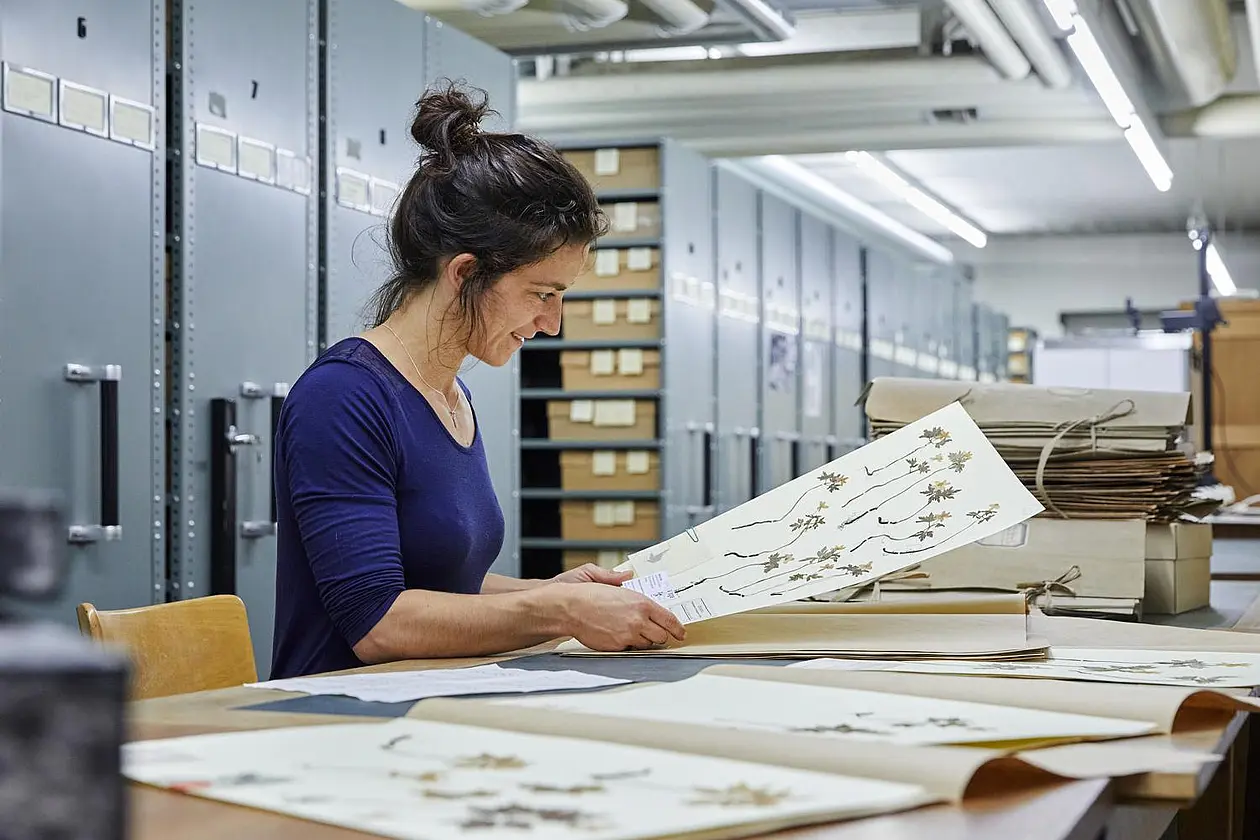
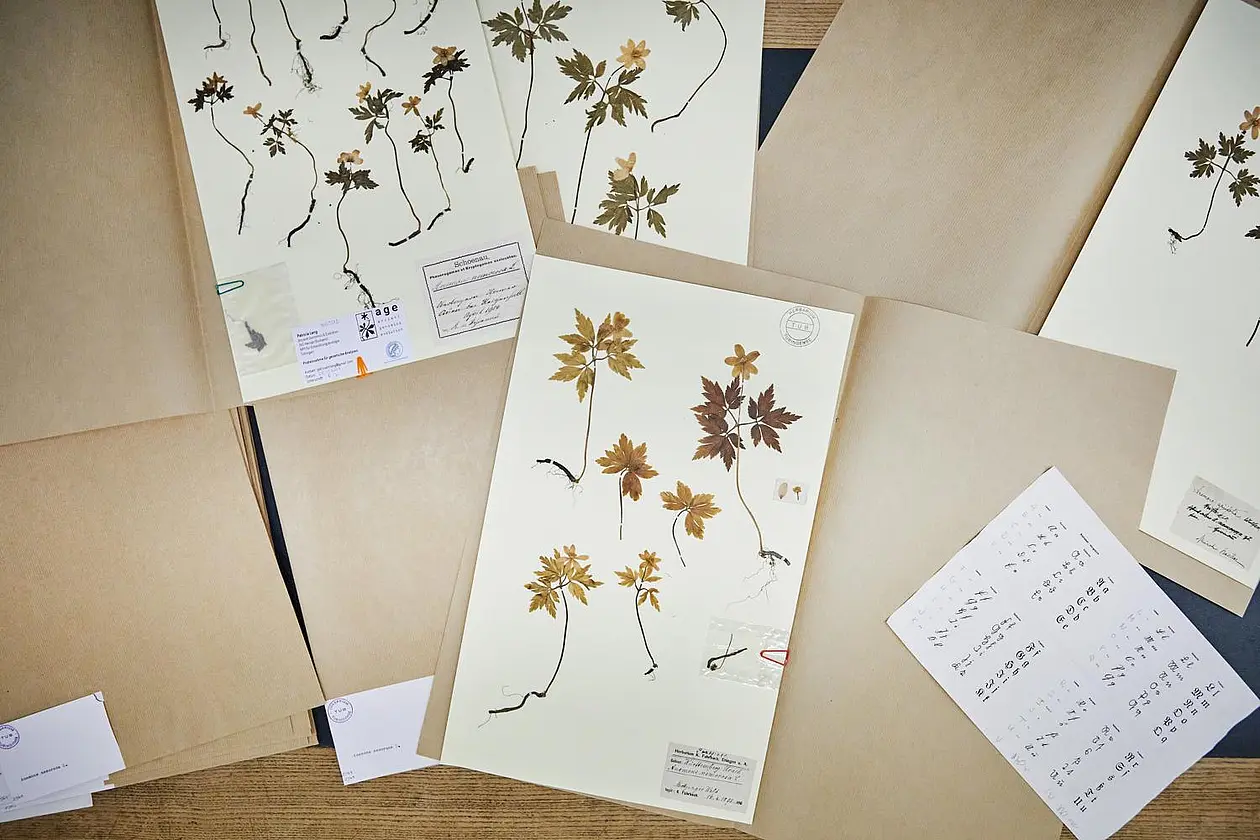
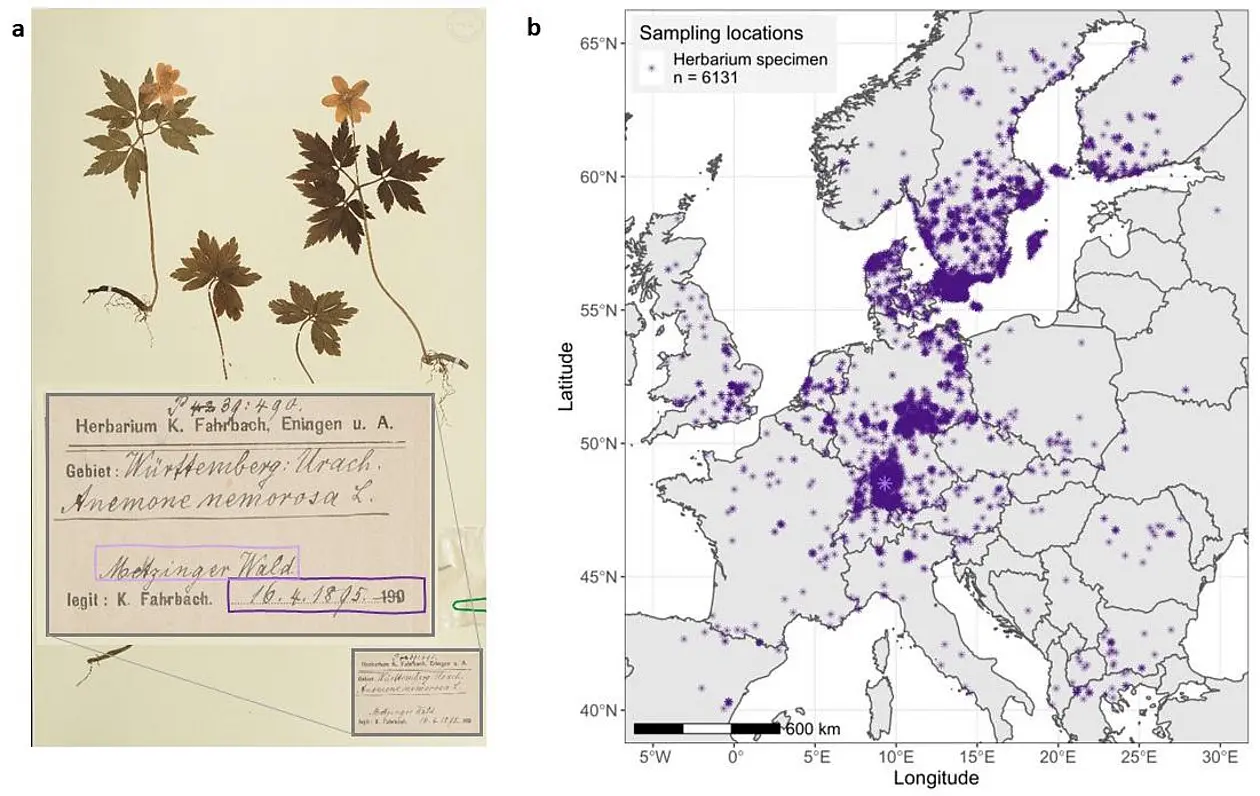
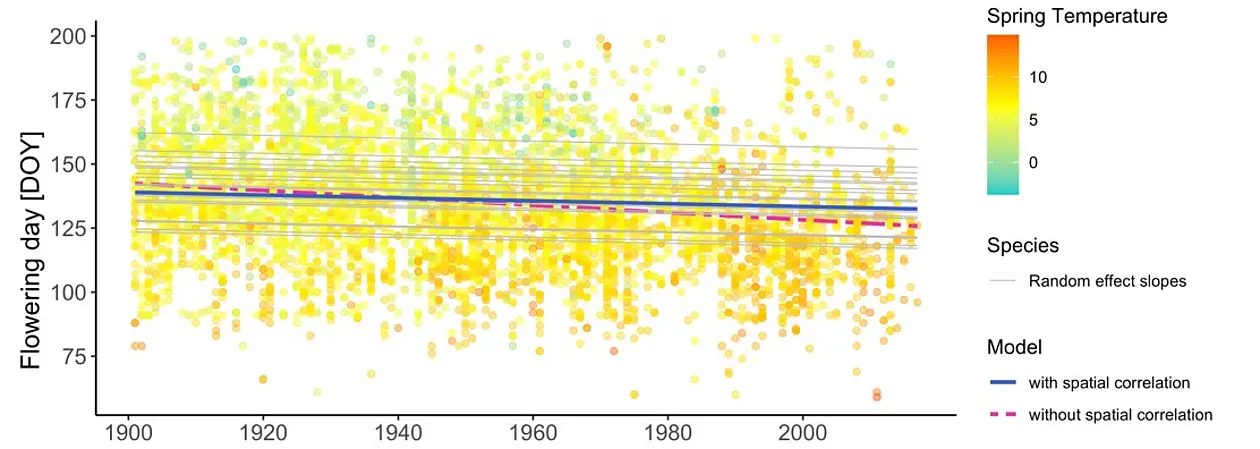
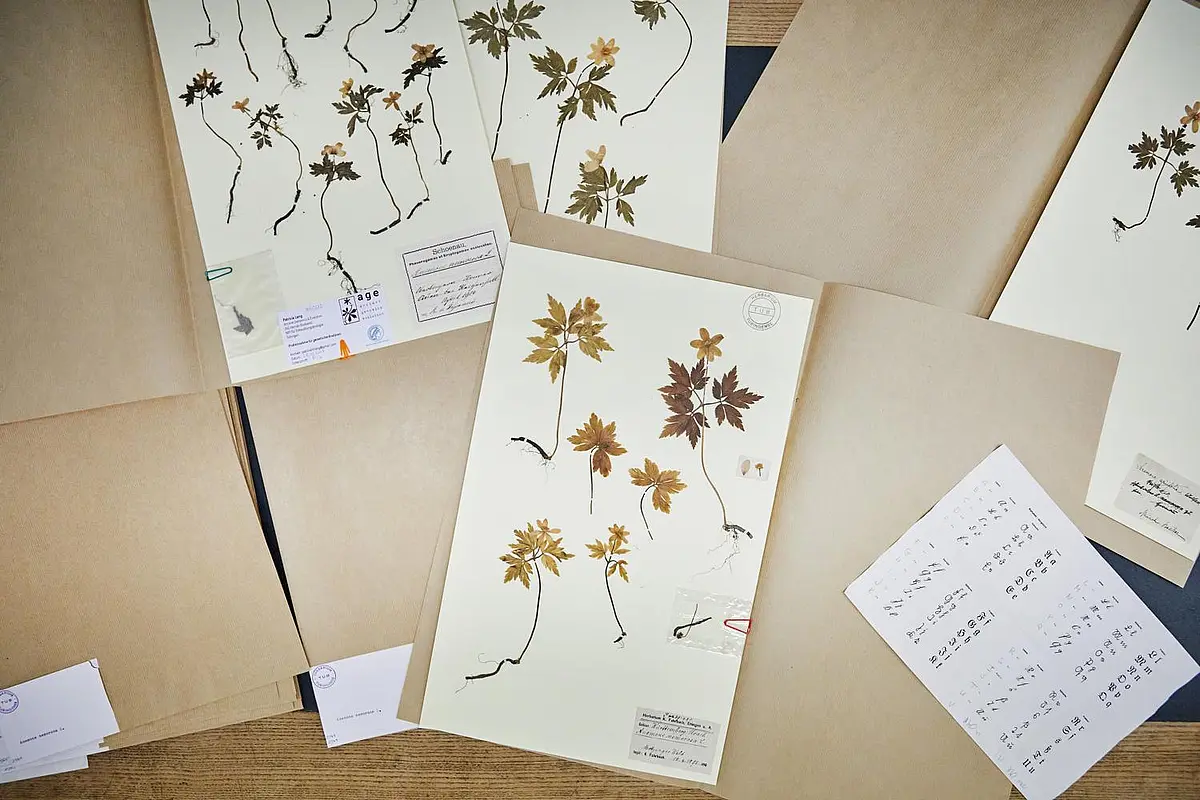
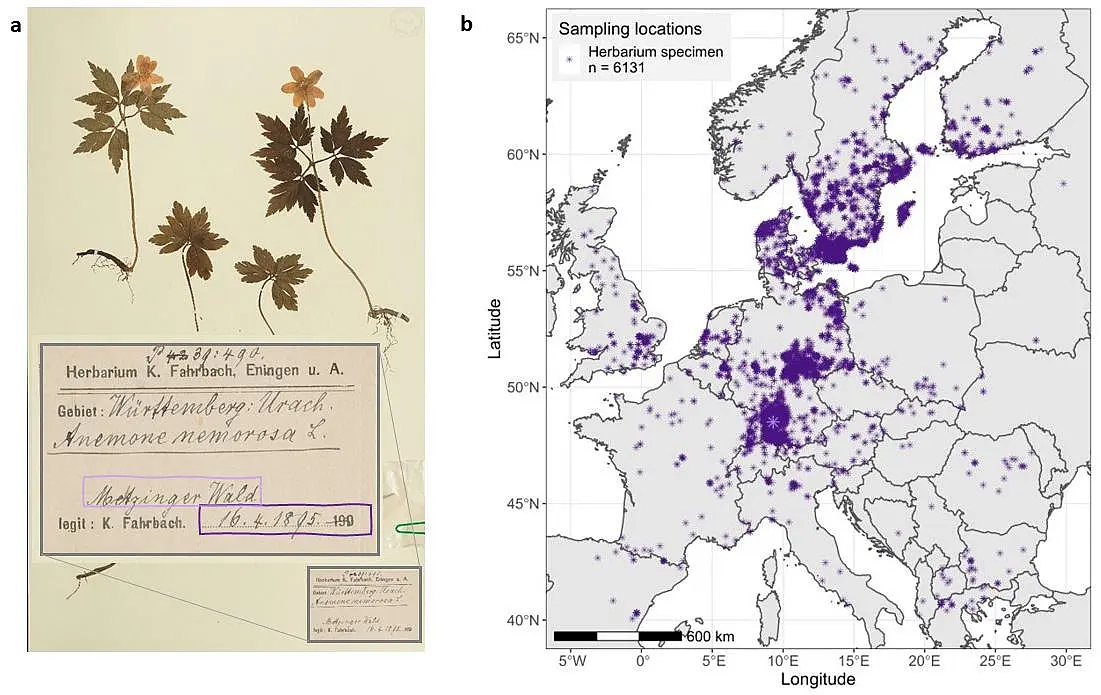
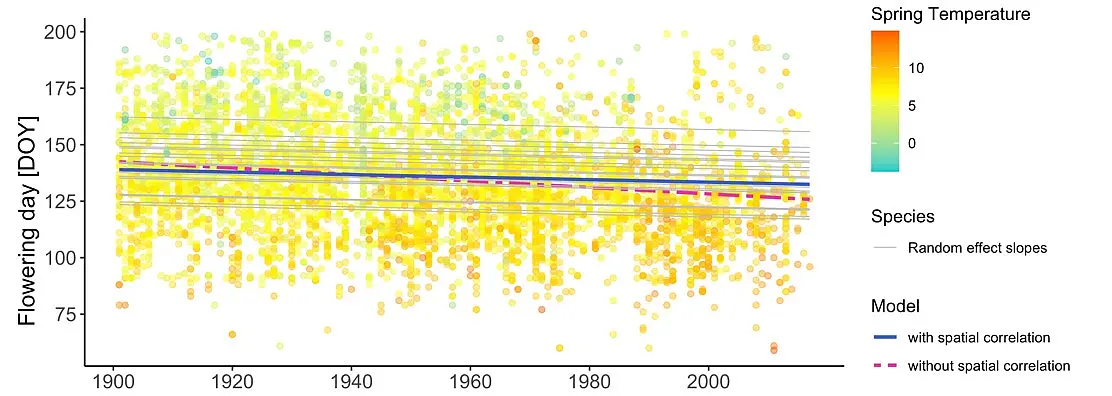
Early-flowering plants in European forests today start their flowering season on average a week earlier than they did a hundred years ago. This is reflected by herbarium specimens, as Dr. Franziska Willems and Professor Oliver Bossdorf from the Institute of Evolution and Ecology at the University of Tübingen, together with Professor J. F. Scheepens from Goethe University Frankfurt, have discovered. The research team used the collection dates from herbarium specimens from more than a century for a novel method of geospatial modeling. This also allowed the team to prove that the earlier flowering of wild plants is linked to climate warming. The study has now been published in the journal New Phytologist.
Wood anemones, woodruff, lungwort and spring wood pea bloom early in the year in the forest understory. "They use a critical window of opportunity to flower before the leaves of deciduous trees are sprouting and shading the understory," explains Franziska Willems. With rising temperatures, leaf buds tend to open earlier, and early bloomers have had to adapt to that as well, she says. "However, they run the risk that their flowers will be damaged by late frost. They also can't do without pollinating insects, which must be active at flowering time."
Witnesses from previous centuries
Publication:
Contact:
Professor Dr. Oliver Bossdorf
University of Tübingen
Institute of Evolution and Ecology
Plant Evolutionary Ecology
Phone +49 7071 29-78809
oliver.bossdorf@uni-tuebingen.de
Contact for press:
Eberhard Karls Universität Tübingen
Public Relations Department
Dr. Karl Guido Rijkhoek
Director
Janna Eberhardt
Research Reporter
Telefon +49 7071 29-77853
Fax +49 7071 29-5566
janna.eberhardt@uni-tuebingen.de