Uni Tübingen

Magazine

29.09.2026

„In order to grow old, a university has to stay young.“

The University of Tübingen looks back on 550 years of history while getting ready for the age of AI. On a walk through the own, the President talks about how the university is embracing the future.
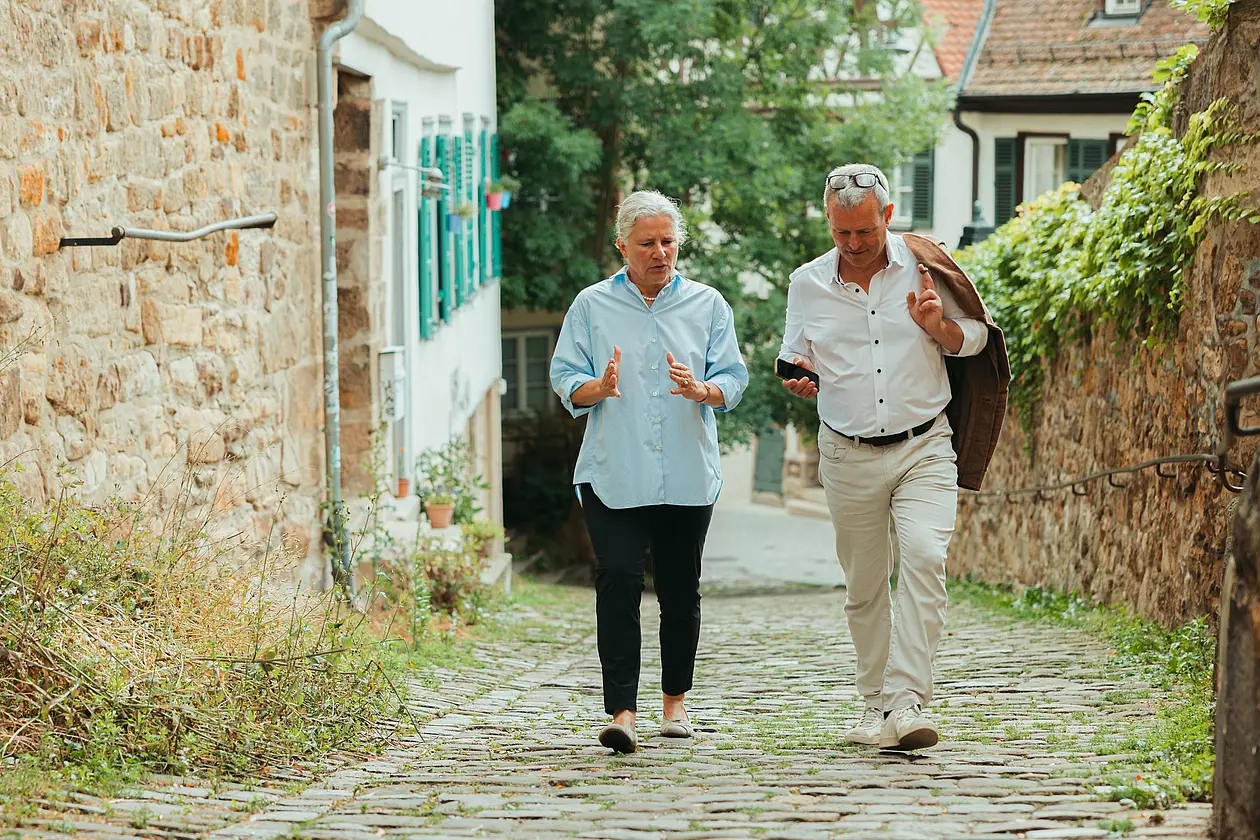
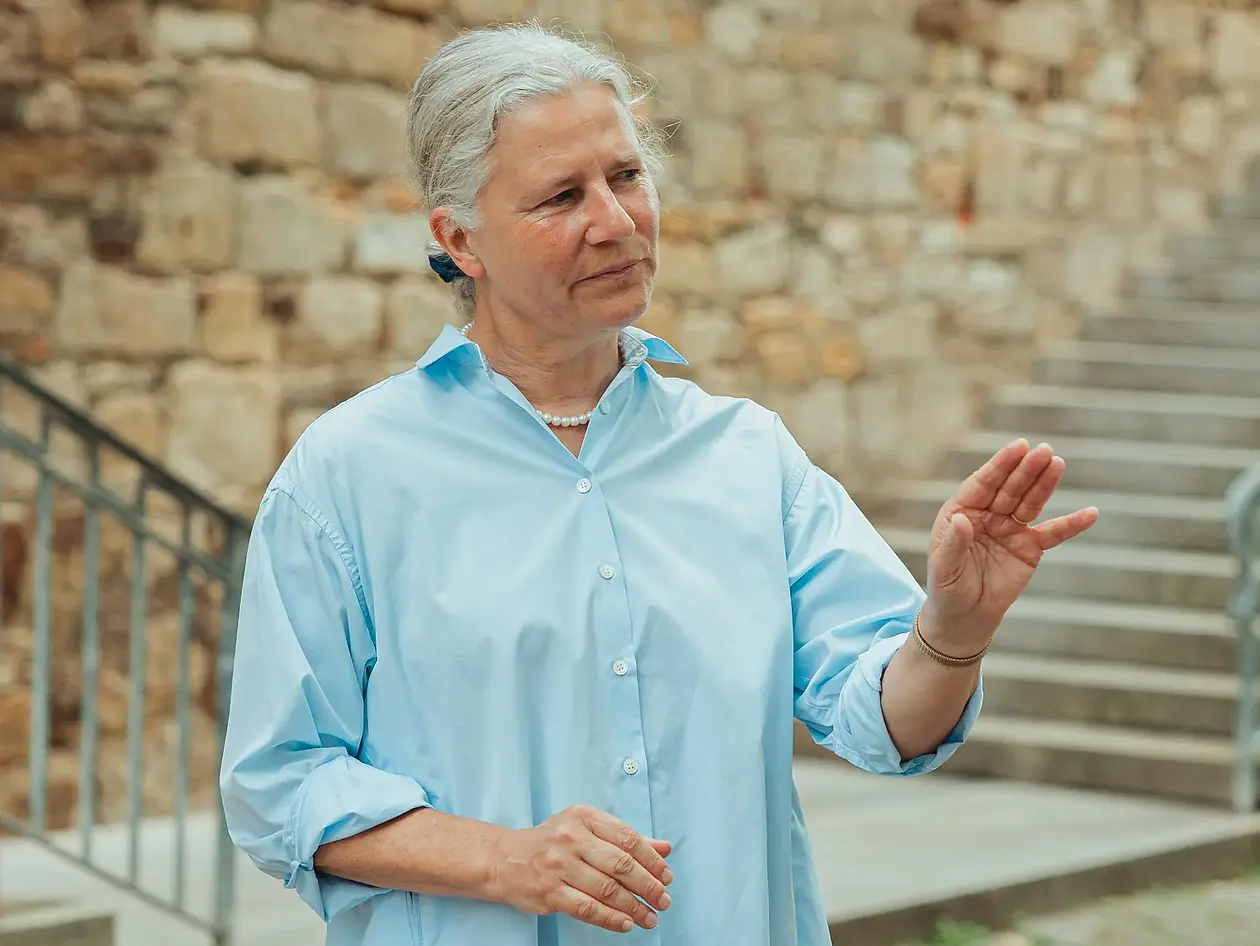
Already as a theology student, President Karla Pollmann used to stroll through the same streets that Hegel, Hölderlin, and Schelling once walked.

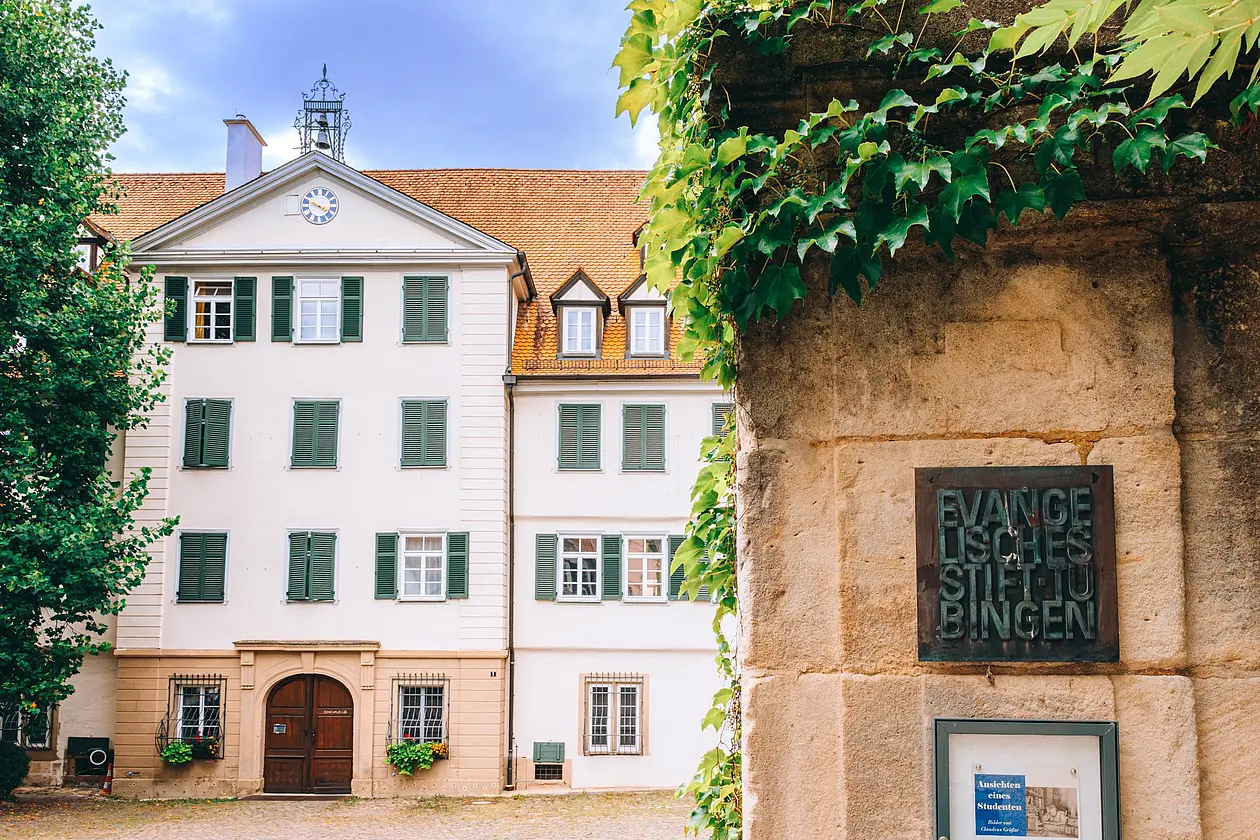
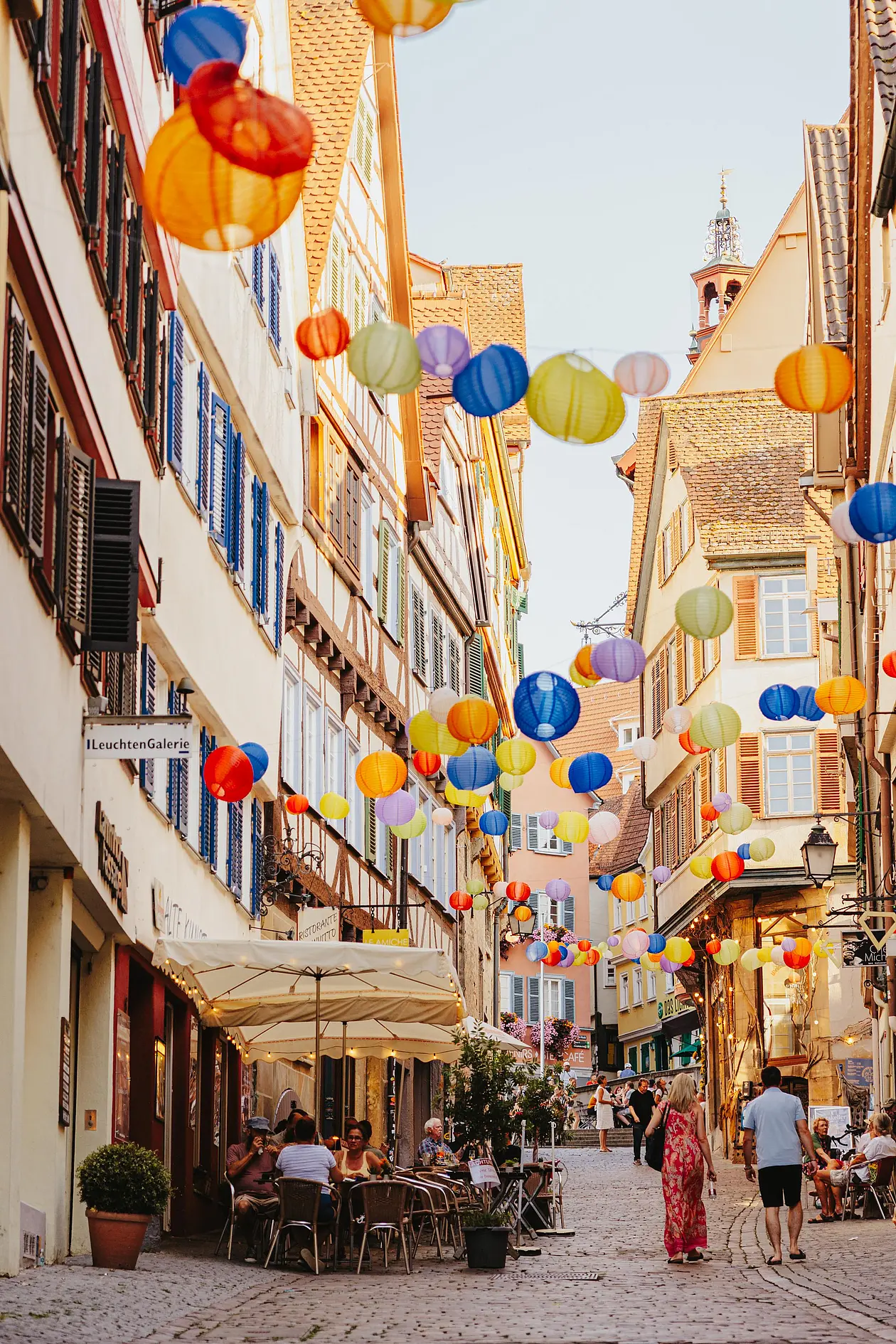
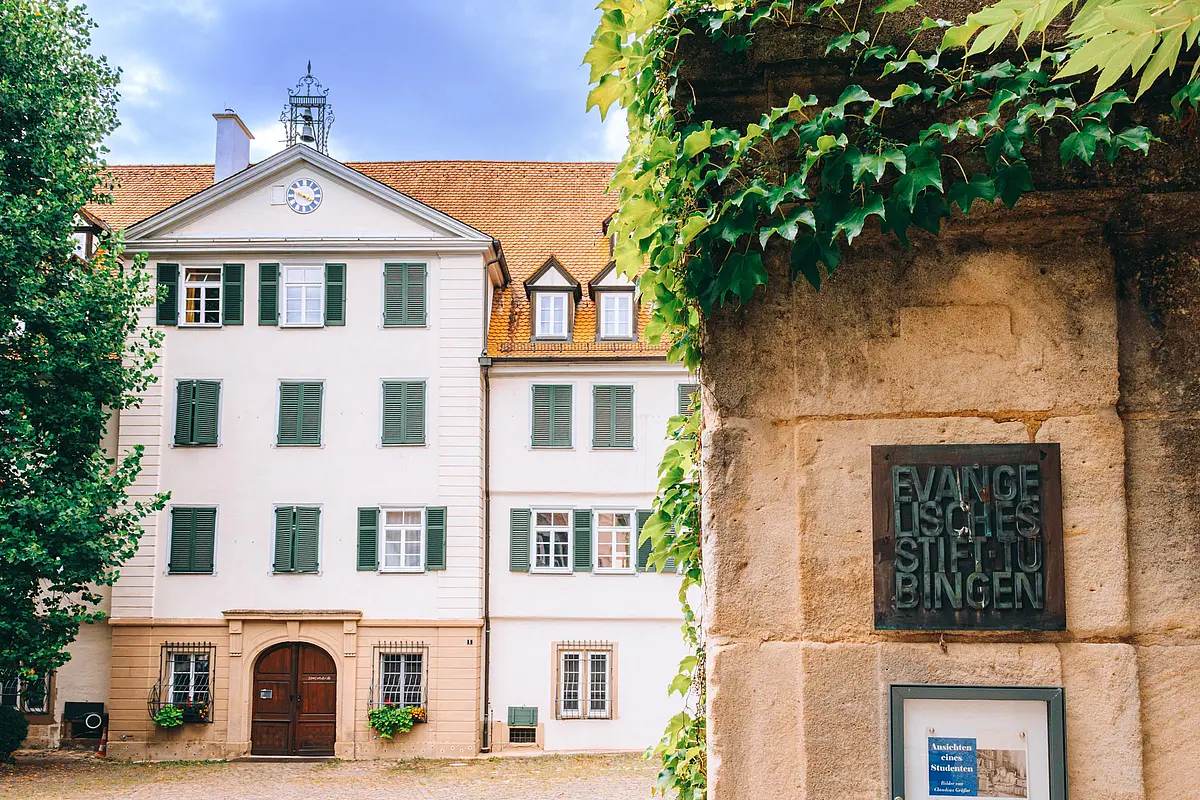
Crooked with age, the colorful houses along the Neckar river have charmed visitors and tourists for centuries. One building stands out: The five-storey Burse, the original home of the university, built just after its foundation in 1477. For years, students enlivened its tiny rooms, today philosophers and teachers work there. President Karla Pollmann descends the stairs to the alley. And here our walk begins. The alleyway wends gently up towards the historic center, past the Tübinger Stift, the seminary where over the centuries theologians – including great names such as Johannes Kepler and Georg Wilhelm Friedrich Hegel – have been taught. Karla Pollmann studied Catholic Theology in Tübingen, along with Latin and Greek.

What did the young Karla Pollmann hope to gain from the university on her first day of studies?

I wanted to learn from times long past and yet still connected with ours – and I often found them to be astonishingly up-to-date. By studying ancient texts, I was able to understand the thoughts of past intellectual giants such as Cicero and Augustine.
Why did you choose to come to Tübingen?

Experts in theology and the humanities in general looked to Tübingen in the 1980s, as they still do today.

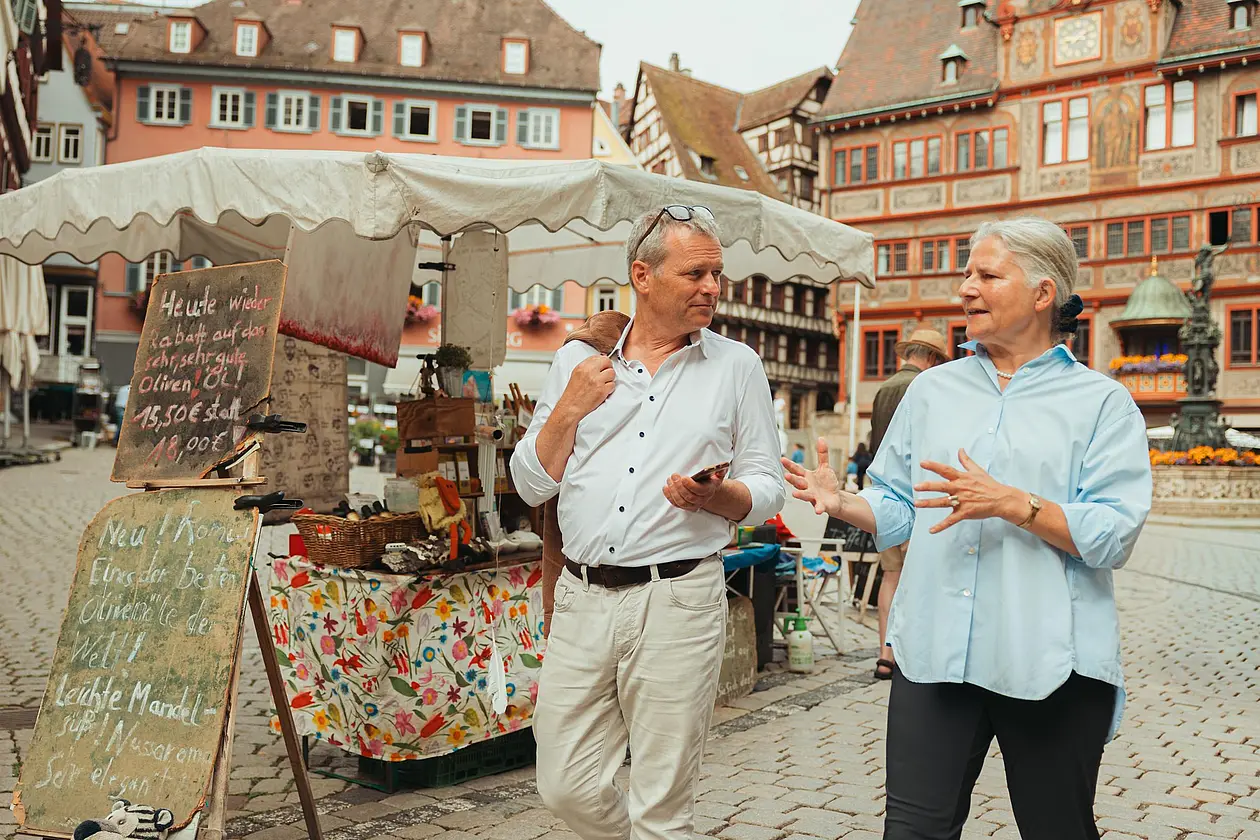
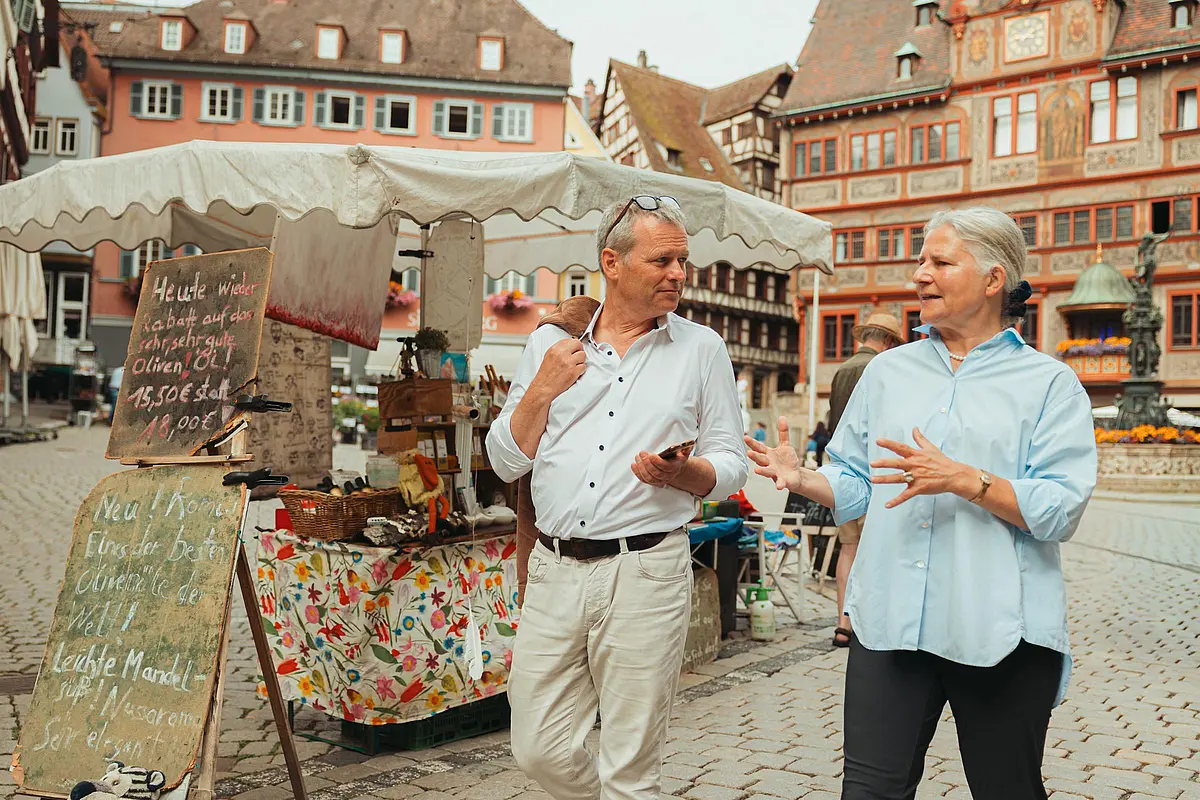
The alleyway rises sharply, past pots of geraniums by low doors, then opens onto the marketplace and the brightly-painted town hall.

Would a female president of the University have been conceivable back in your student days?

It wasn’t taboo, at least. For instance, Heidelberg had already had a female president back in the 1960s. But it was rare, and there were very few female professors too. I’d never have dreamed back then that I would one day be president of this distinguished University.


Today around 40 percent of university presidents in Germany are women.

You’re not the only one today.

My generation the latest has realized that supporting a wider group created a broader spectrum of talents. That benefited everyone, men and women. Today around 40 percent of university presidents in Germany are women.
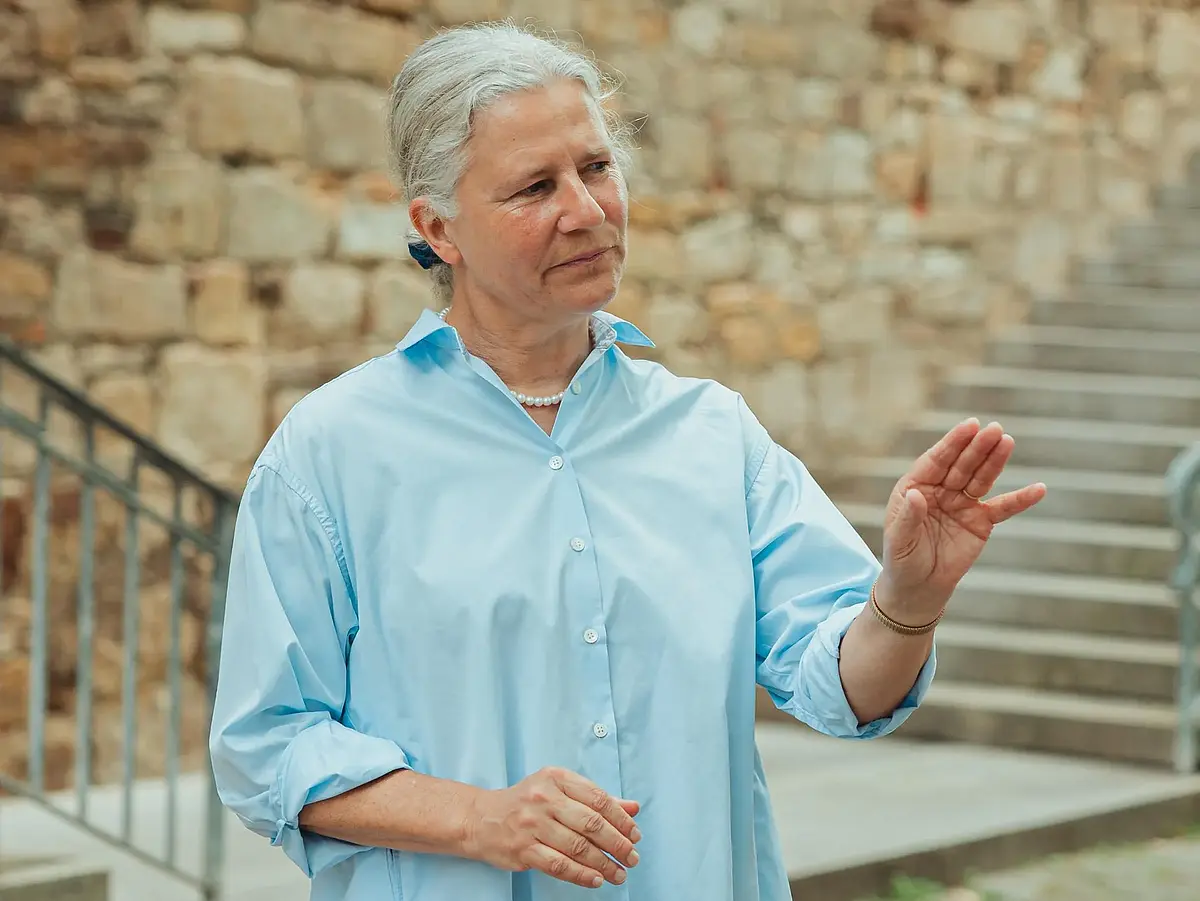
The excellence strategy promotes international cutting-edge research in Germany. But it also demands change of the university itself. What form does this take?

We have three focus areas as a University of Excellence: research, teaching and knowledge transfer. Without excellent teaching, excellent research ceases to be
effective, because knowledge is no longer passed on. Knowledge transfer conveys ideas, information and creativity to society. For example, we have a start-up center that helps graduates and researchers to develop business concepts and establish companies. And we have to open up to society as well – knowledge is also transferred from local residents to the uni!

Karla Pollmann points down past the Collegiate Church to the corner of Lange Gasse and Nonnengasse. In summer 2025, the ‘Café Eckstein’ moved into an empty shop to offer a place where researchers and locals could meet.

The Eckstein also attracted people who would normally avoid visiting university buildings. Talking with local people, researchers developed an understanding of the issues that are important to them. This introduced a new kind of knowledge to the university. We also initiated a citizens’ council on AI and freedom, which developed proposals on how to use AI and presented them to the Baden-Württemberg Minister of Science, Research and the Arts, Petra Olschowski.

What was the result?

There’s been intensive discussion about the safe provision of data for medical research and on providing a forum for suggestions about AI research, for example.
Dialogues like this take time. For our jubilee year, we are taking our Science & Innovation Days festival on tour throughout Baden-Württemberg, including rural
areas where people get less chance to come in contact with the academic world. Part of the festival involves co-creation teams which bring local people together with researchers to investigate subjects like: how can we reduce the burden on family carers? How can we avoid antibiotic resistance? Questions like these can’t be answered without drawing on the knowledge of the wider population. We’ll present our initial results during our big celebration of the 550th anniversary in July next year.


Questions like these can’t be answered without drawing on the knowledge of the wider population.
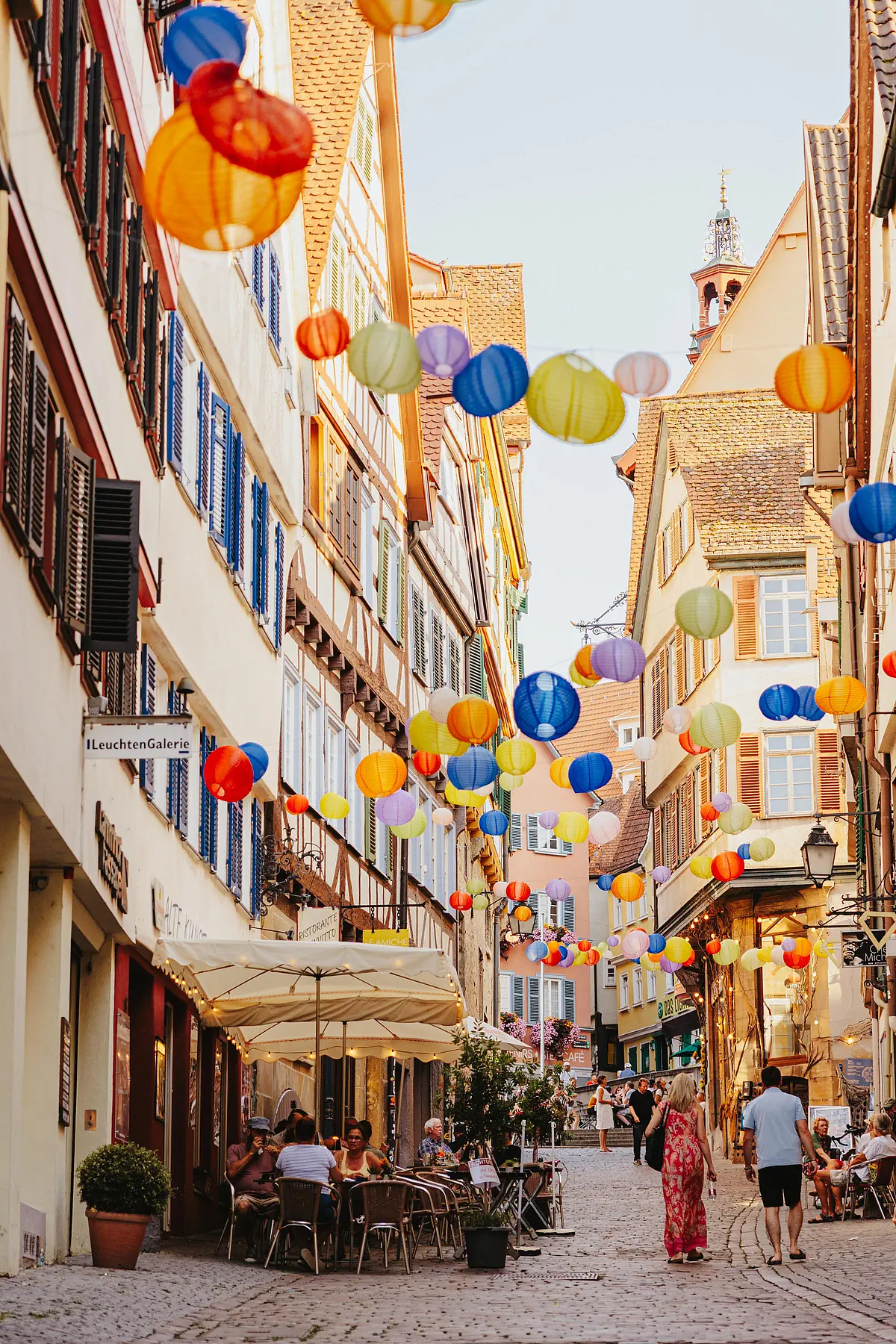
Tables and chairs stand on the street in front of the cafes; the average age is midrange for students. English and Spanish can be heard as often as Swabian. The
university is everywhere in the town, and signs for uni institutes can be seen on many buildings.

Tübingen has fewer than 100,000 residents, and around 36,000 belong to the university. This isn’t large by international standards. Yet the university has managed to gain six Clusters of Excellence. How come the University of Tübingen punches above its weight?

It has strong local roots and a cosmopolitan attitude. In the late Middle Ages, the lingua franca was Latin – a global product. Professors and students came from across Europe. Even today, Tübingen plays an important part for the town and the region, and internationally stands for cutting-edge research. Our student numbers are not likely to rise – but the ratio of international students will. Currently it’s 16 percent, I think more is possible.

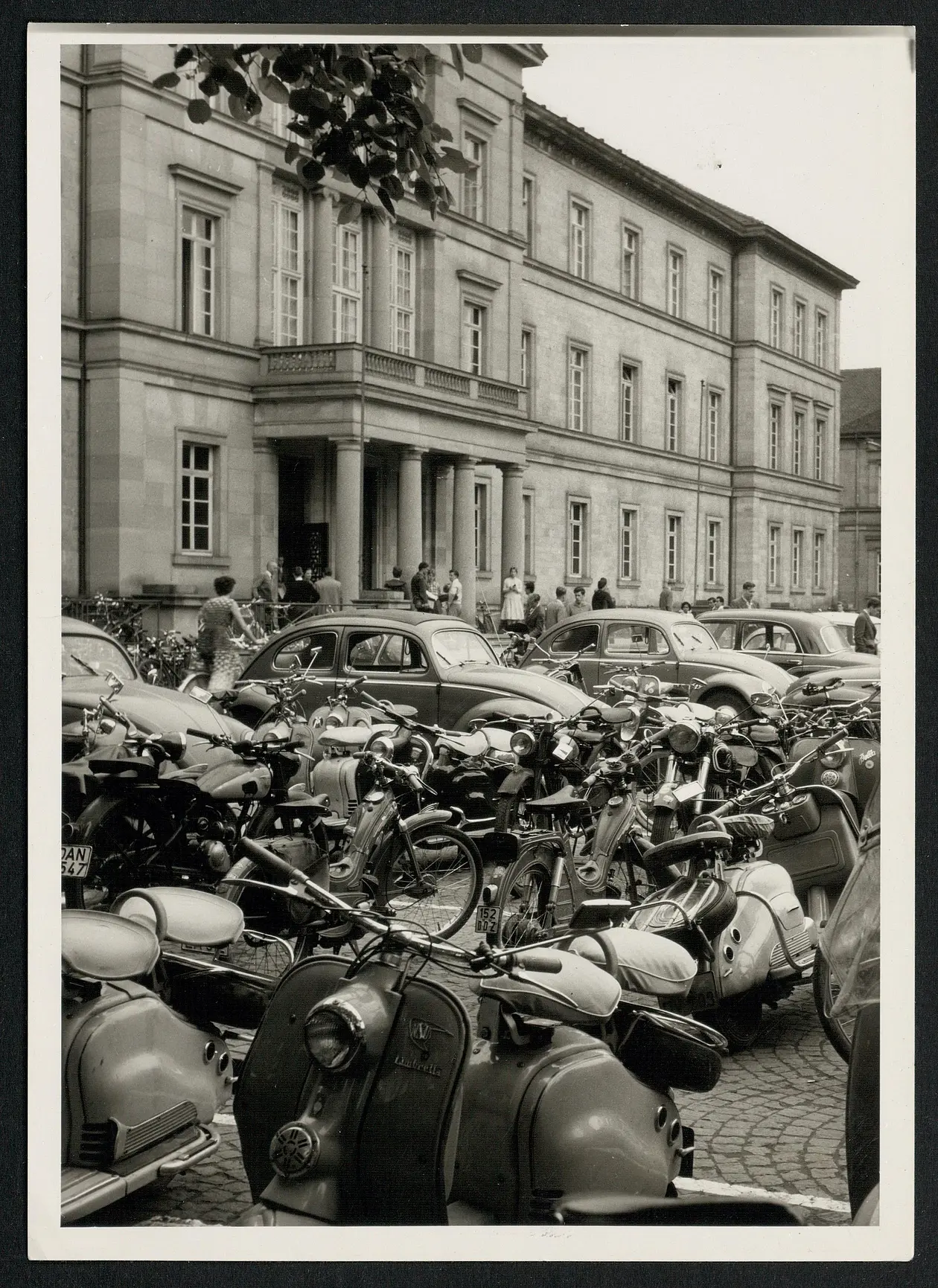
We quickly pass through the Old Botanical Gardens, and arrive at the Neue Aula, built in the 19th century when the university moved into the modern era with two new faculties, of the Natural Sciences and of Political Science, as well as new teaching methods such as seminars and tutorials. The classicistic sandstone building forms the center of the university; it contains the audimax, the festival hall and the Faculty of Law.

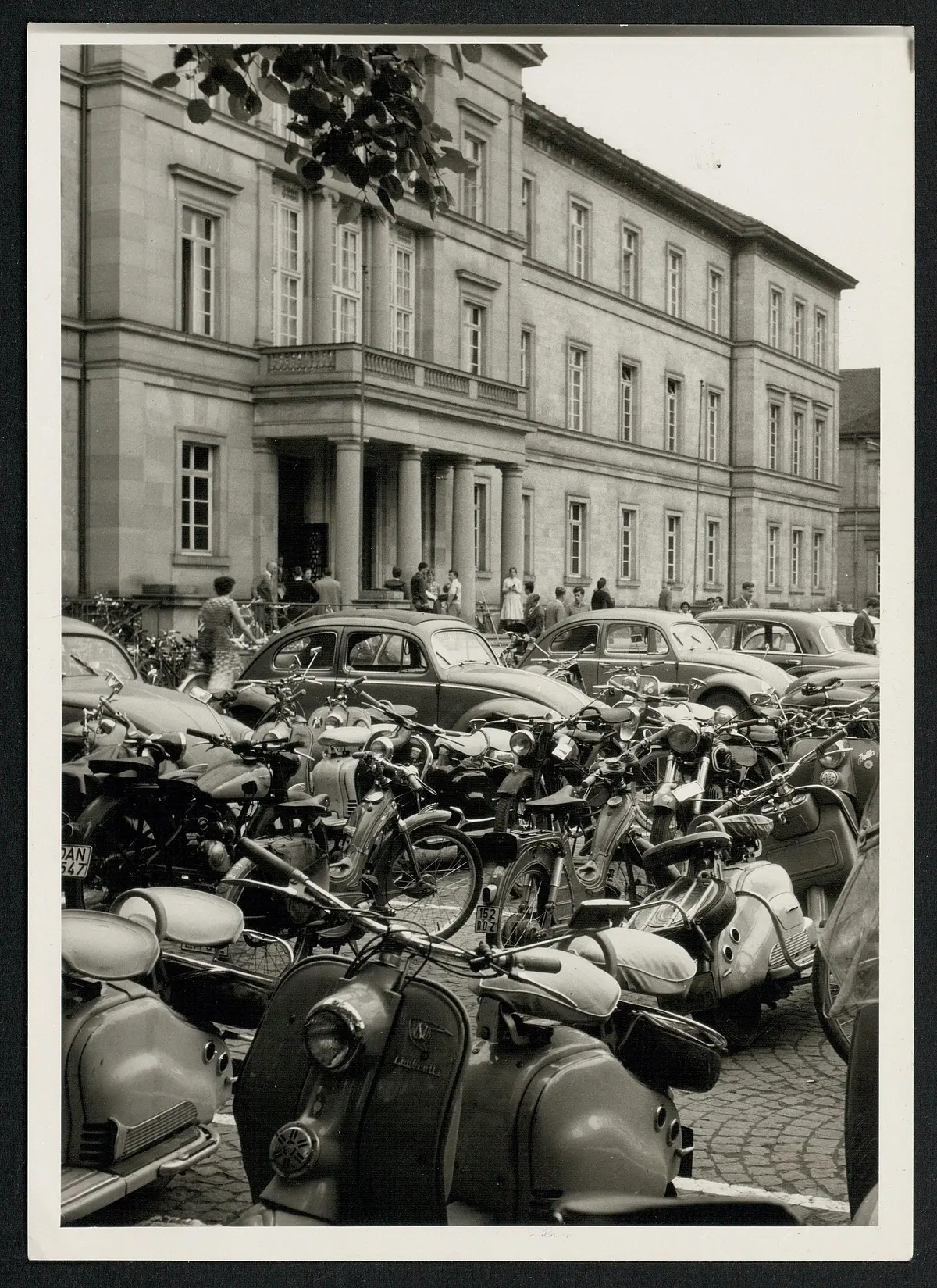
When I was a student, cars still parked on the square. I thought that was the way things were, it’s progress and will never change. Now parking is banned there and we have these beautiful cast-iron fountains, replicas of the originals, which were donated by the Friends of the University for the millennium. Originally the town gave the university the fountains for its 400th jubilee in 1877. But then they were removed in 1931.

Are tradition and a long history an advantage or more of a burden when you have to guide a university towards the future?

I’ve been at several universities, including in Great Britain and Canada. I noticed that people everywhere view change with suspicion to begin with. But if we can point to tradition, we all find it easy to understand that a university has always changed. After all, what tremendous upheavals took place during the Reformation! Or during industrialization! We can draw on our past as a treasure trove and show: in order to grow old, a university has to stay young.

The President’s office is right next to the Neue Aula. We get into a car and drive up the hill past the University Hospitals to the concrete and glass towers of the Morgenstelle, where the science campus is now based.

How should research evolve in Tübingen to remain internationally competitive?

Look at our Environmental and Geoscience Building where they’re investigating how microbes convert carbon dioxide from industrial emissions into methane, a substitute for natural gas. Or how the biosphere and the geosphere influence each other. All questions of relevance in times of climate change – so two Clusters of Excellence are being supported there.

In which areas does AI play a part?

AI is a cross-sectional issue that is changing every academic discipline. For instance, in the Machine Learning in Science Cluster of Excellence, quantum physics experiments are being developed with AI – it’s faster and delivers astonishing results. In addition we are now establishing bridge professorships, specifically between AI research and physics, or philosophy, or economics.


AI is a cross-sectional issue that’s changing every academic discipline.


What role are the humanities playing here?

We cannot shape the age of AI without them. As a comprehensive university, we want to be part of a global network that defines an ethical framework for the development of AI. That’s only possible with philosophy, theology – the humanities.

From the edge of the forest by the New Botanical Garden, we can see across the town and Hohentübingen Castle to the mountain range. Buildings are going up on the nearby hill, on the Obere Viehweide. In the new Tübingen AI Center building, we climb up to the terrace on the sixth floor and look across to the Immatics and CeGaT company buildings, which were once start-ups for the treatment of cancer and rare diseases and have grown into companies with hundreds of employees. The area is part of the research consortium known as ‘Cyber Valley’ – a nod to Silicon Valley in the San Francisco Bay Area. Besides the University of Tübingen, the University of Stuttgart, the Max Planck Institute and companies such as Bosch and Amazon make up Cyber Valley.

Silicon Valley has had a phenomenal number of start-ups from Stanford University. How can knowledge transfer be more effective in AI development?

We’re very well-placed and globally competitive in basic research. Many patents still come from universities. What we are somewhat lacking in Tübingen and in Germany is the necessary venture capital for scalability, taking a start-up to a level at which it can be globally competitive. This isn’t actually the role of a university, but we must strengthen the ties of graduates, PhD students and postdocs with the business community. We are working on changing the mindset; transfer is now part of the curriculum. In our start-up center, ambitious young people with the urge to become entrepreneurs can gain credits in entrepreneurship, for example.


Many patents still come from universities.


Where do you see the University of Tübingen in 20 years time?

As a place with many, also international students and scientists who come for the high quality of research and teaching and feel at home here. A university in close contact with society and business, and as a place offering equal opportunity to anyone – regardless of gender or social background.

Text: Tilman Wörtz