Uni Tübingen

Magazine

29.09.2026

The value of knowledge

The Immaterial, Health-related and Monetary Value of Knowledge.

The Immaterial Value of Knowledge

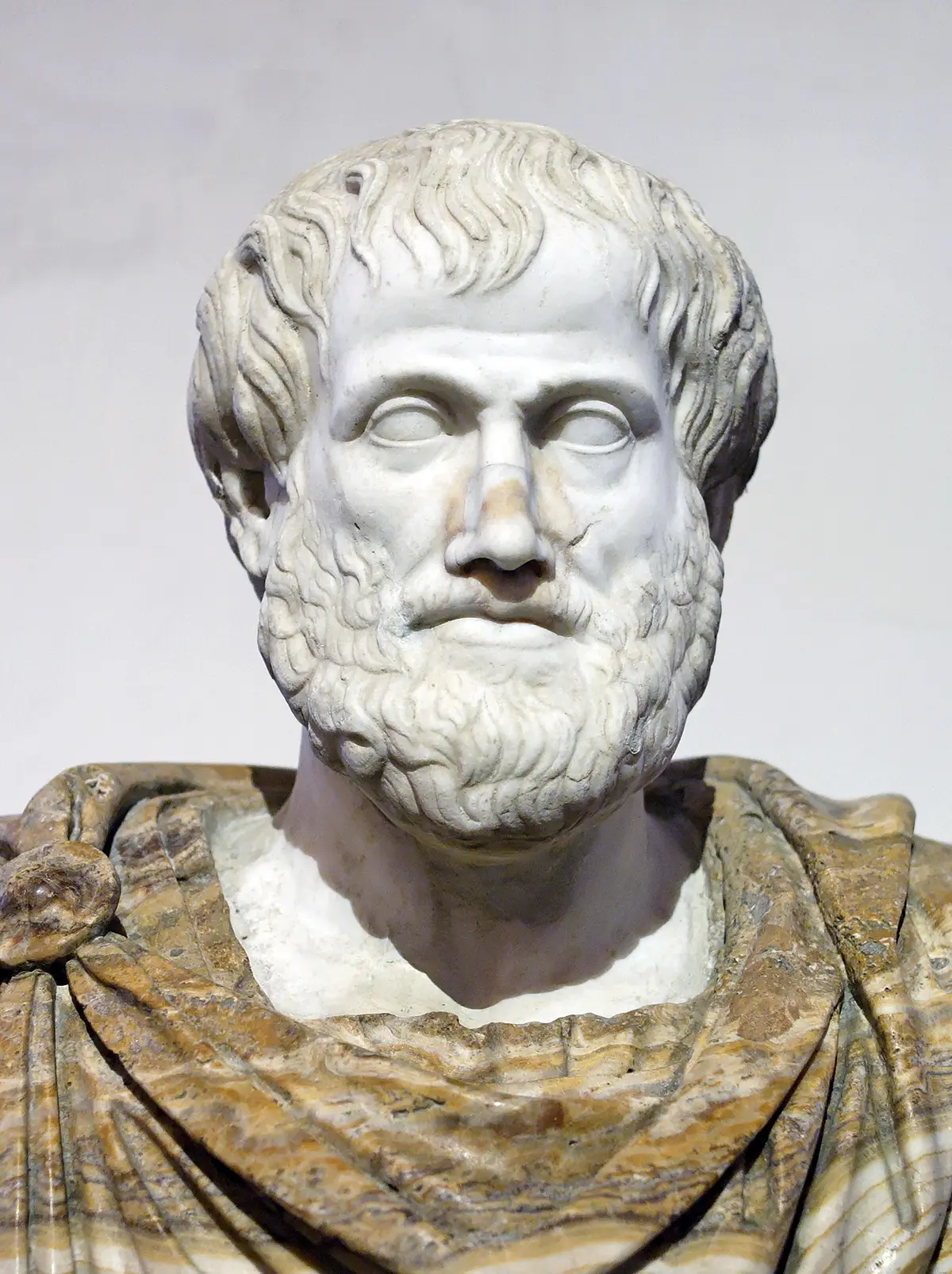
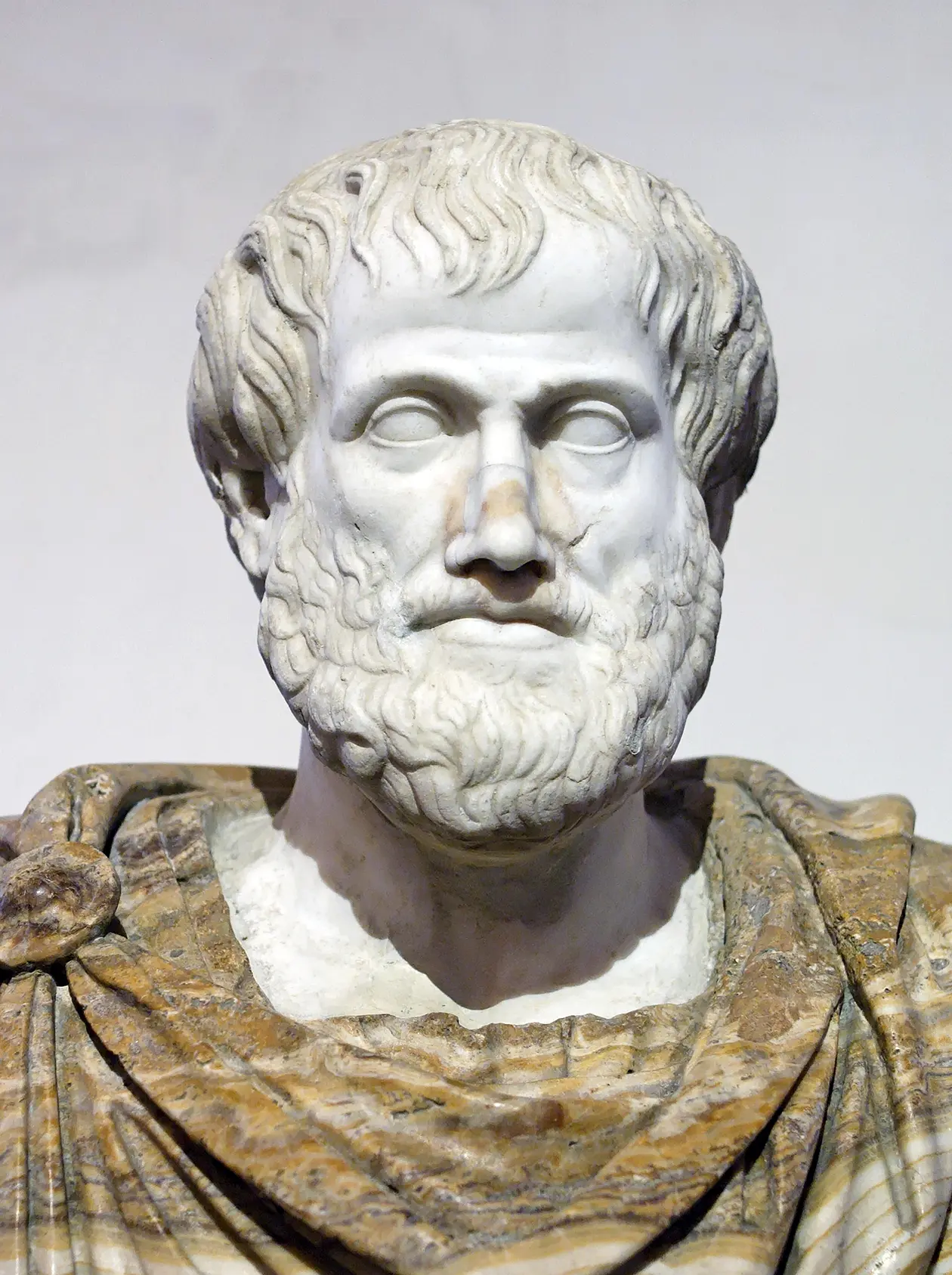
“All people by their nature strive for knowledge.”

- Aristoteles


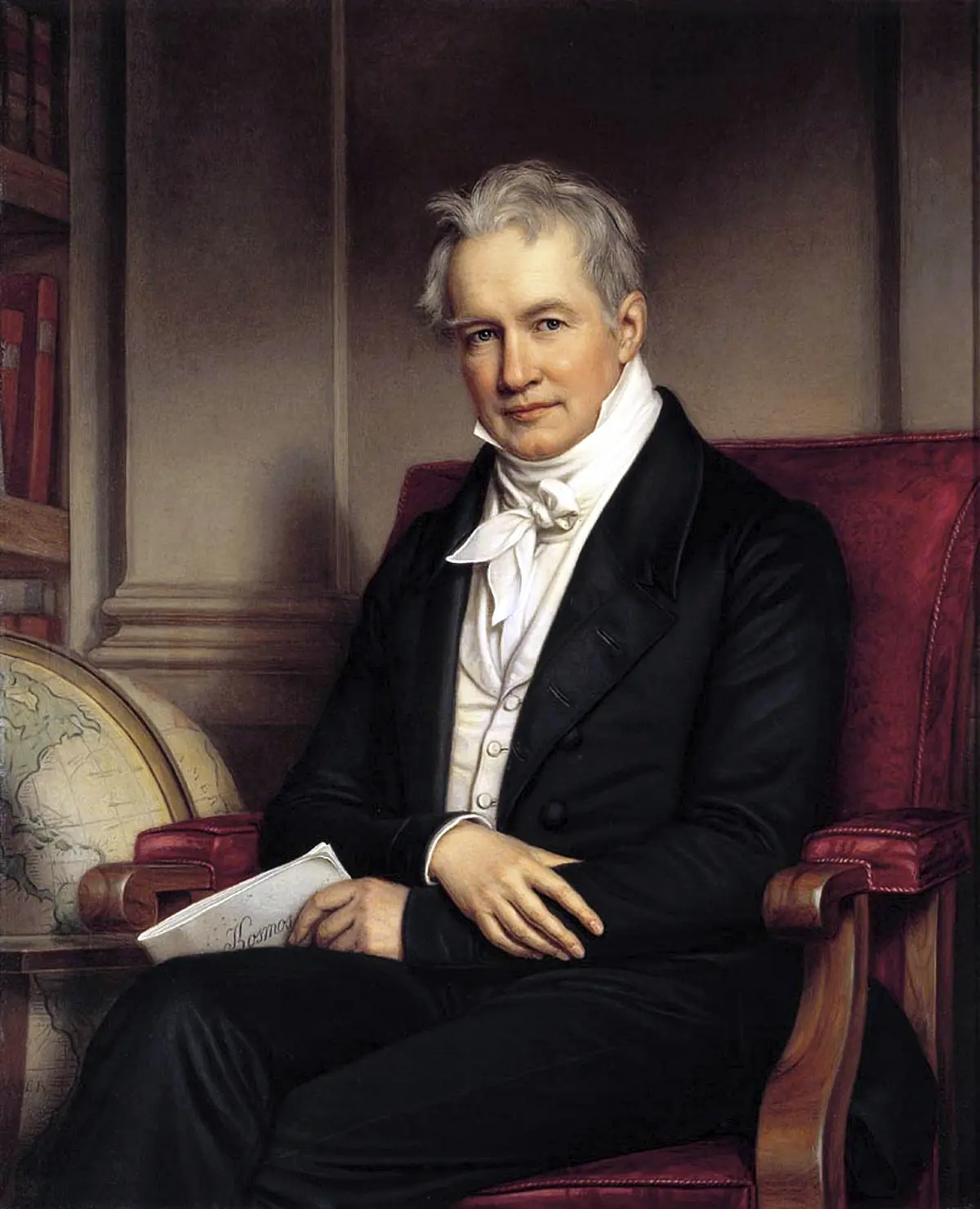
“Knowledge and understanding are humanity's joy and raison d'être.”

- Alexander von Humboldt


“The humanities teach us critical thinking, how to analyze arguments, and how to imagine life from the point of view of someone unlike yourself.”

- Martha Nussbaum


“Knowledge belongs to no one alone – not to any ruler, any empire, or any religion. It is universal. However, knowledge can only truly  flourish if we all recognize its value, share it as a community, and ensure that everyone has free access to it.”

- Harald Lesch


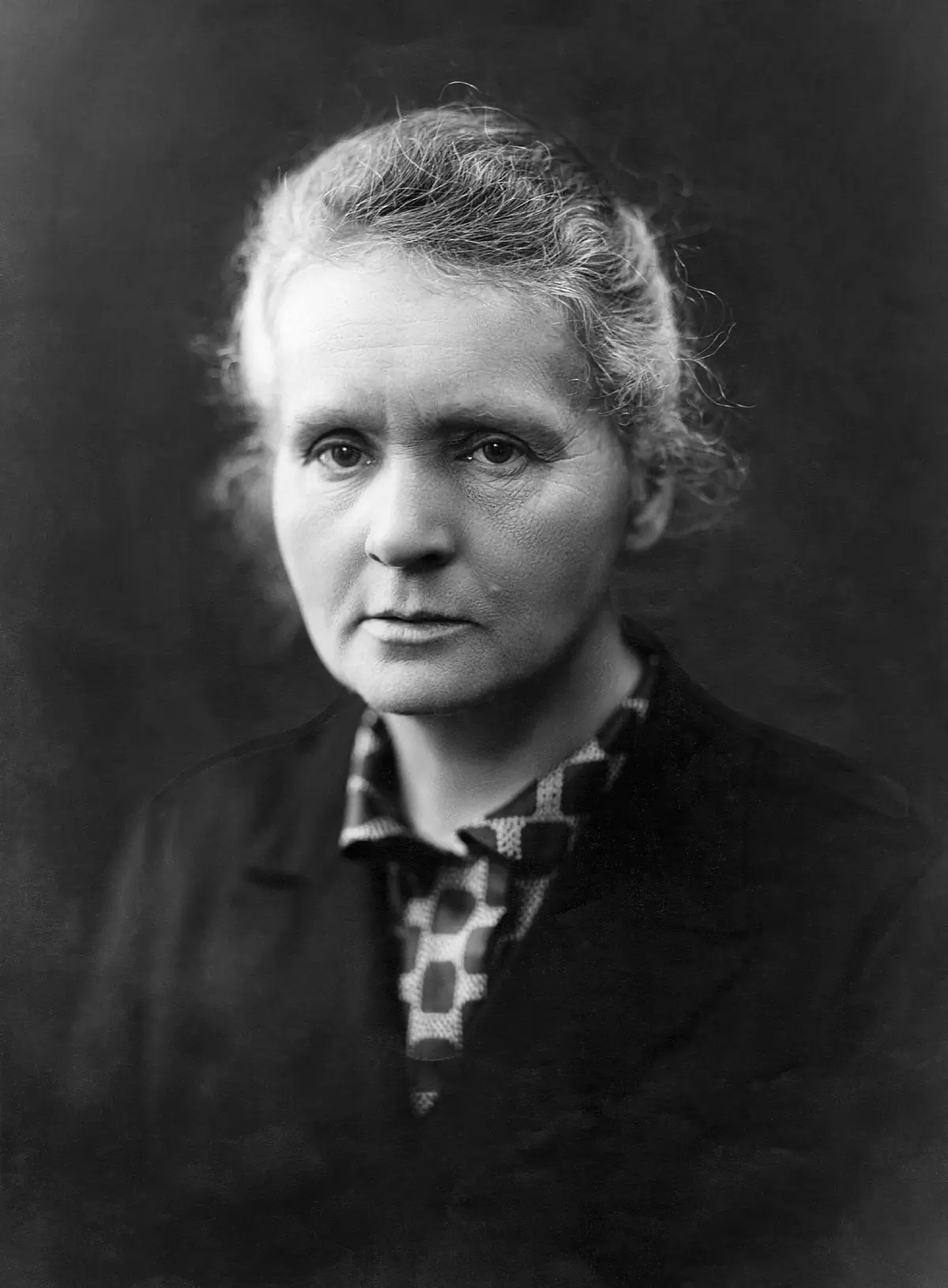
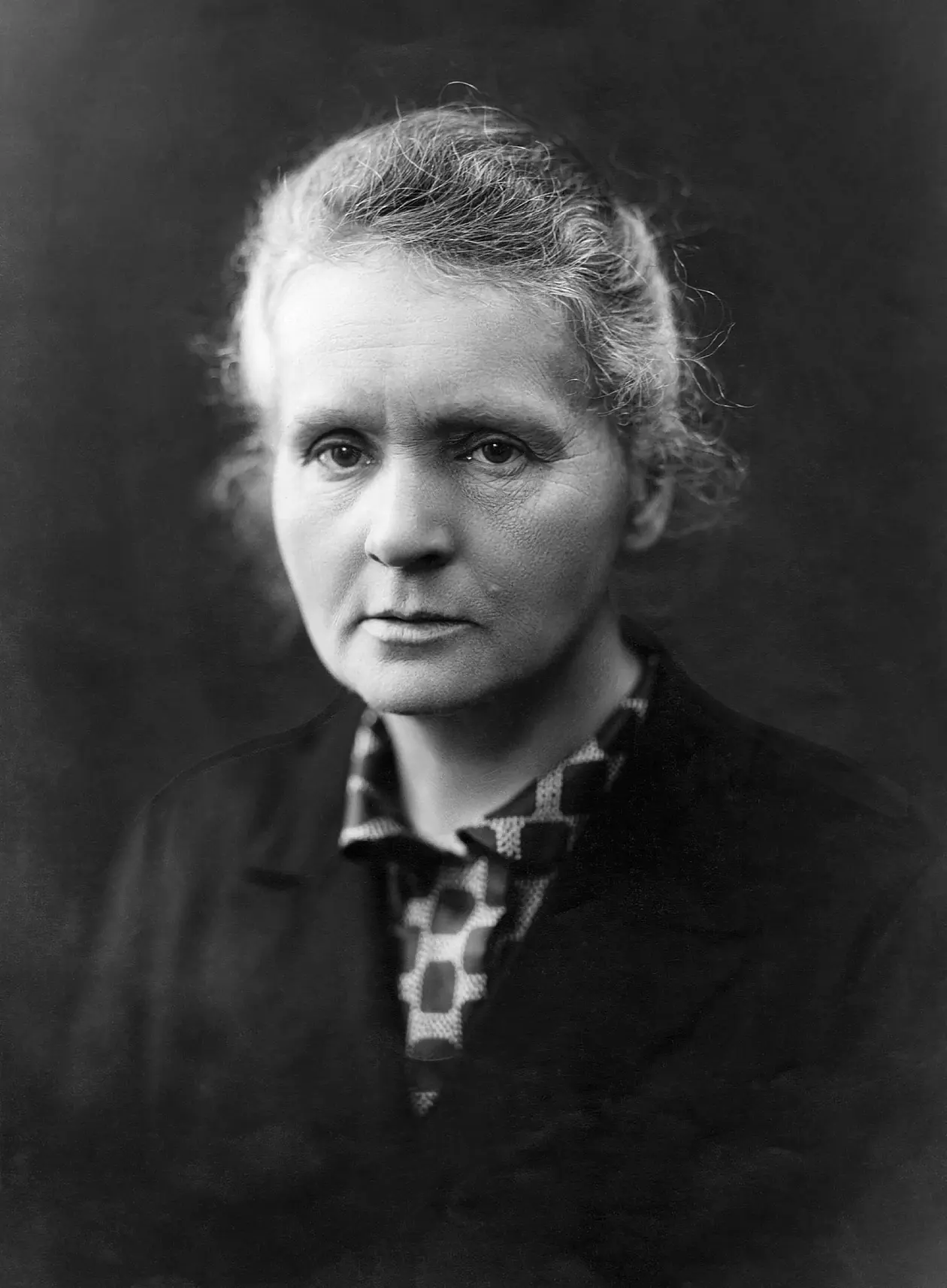
“I am one of those who believe that science is a thing of great beauty.”

- Marie Curie


“Facts – scientifically sound and clearly substantiated – are worth their weight in gold.”

- Mai Thi Nguyen-Kim


“Developing a concept or a theory also means defining the boundaries of thought.”

- Maja Göpel


On the Healthrelated Value of Knowledge

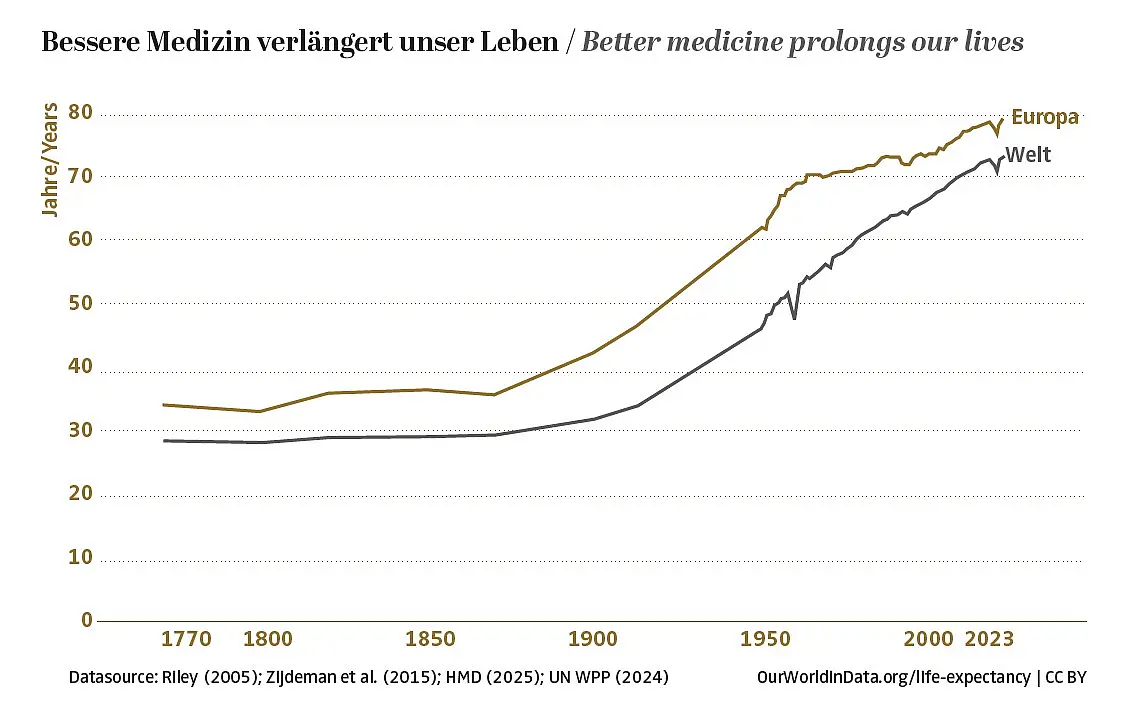
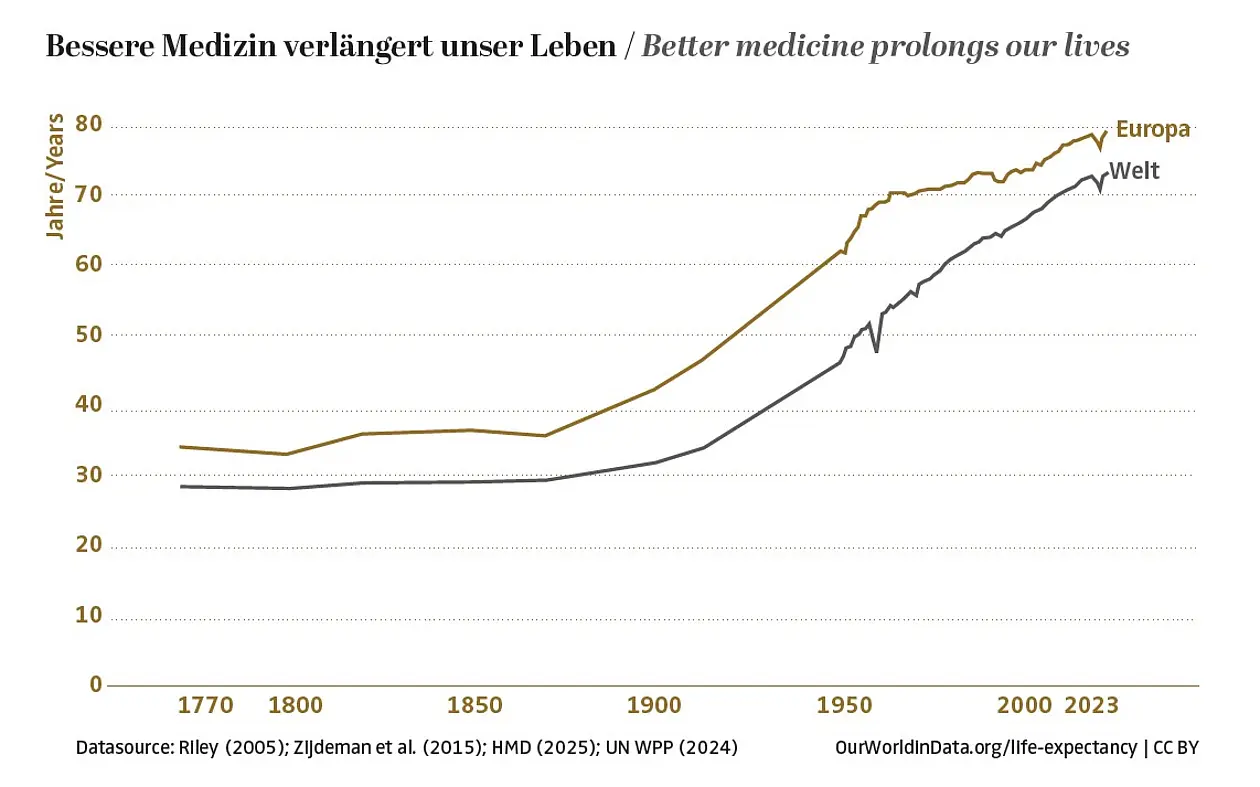
Over the long term, global average life expectancy has risen sharply:  from about 32 years around 1900 to 73 years in 2023. The increase was not steady: the drop around 1960 can be attributed to the great famine in China from 1959 to 1961, while the fall in 2021–2022 is linked to the COVID-19 pandemic and the resulting rise in HIV/AIDS-related deaths worldwide.

People were able to live to old age in earlier centuries as well – but many more children died. Around 1800, an estimated one in two children worldwide died before their fifth birthday.

Today, 96 percent of children survive this vulnerable early stage of life.

From Bloodletting to Evidence-Based Medicine Until around 1850, while doctors were sometimes able to help, many treatments – such as bloodletting, mercury-based remedies, and unsanitary surgical procedures – often did more harm than good. Surgical procedures  were highly risky due to pain and infections. Before the introduction of modern techniques, severe infections led to death in a large proportion of patients who underwent surgery. 

With the introduction of anesthesia in the 1840s, surgeries could be performed with greater precision. The decisive breakthrough, however, came with the  germ theory, antisepsis, and later asepsis.

As a result, surgical mortality and complications dropped dramatically. Medicine as a whole likely crossed its “benefit-over-harm threshold” sometime between 1860 and 1900. For the general population, the benefits became even more evident in the 20th century: vaccinations, medications, safe obstetric care, modern  surgery, preventive measures, and improved hygiene led to enormous declines in mortality.


The Monetary Value of Knowledge