Article
12.11.2026
Double Honor: Albert Einstein World Award for Science and on Honorary Doctorate for Katerina Havati in Argentina
Paleoanthropology Professor from Tübingen received renowned science prize and title Doctor Honoris Causa
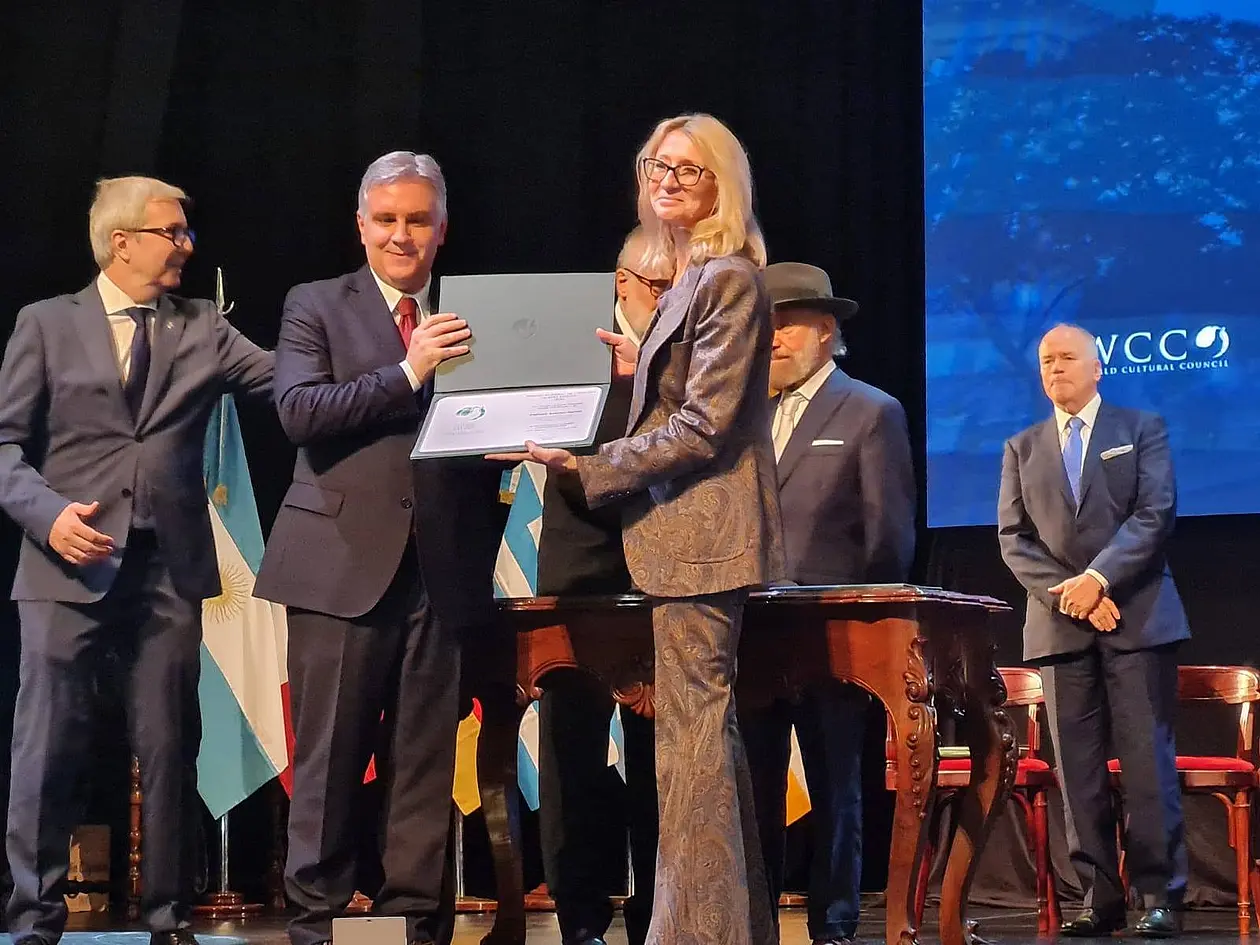
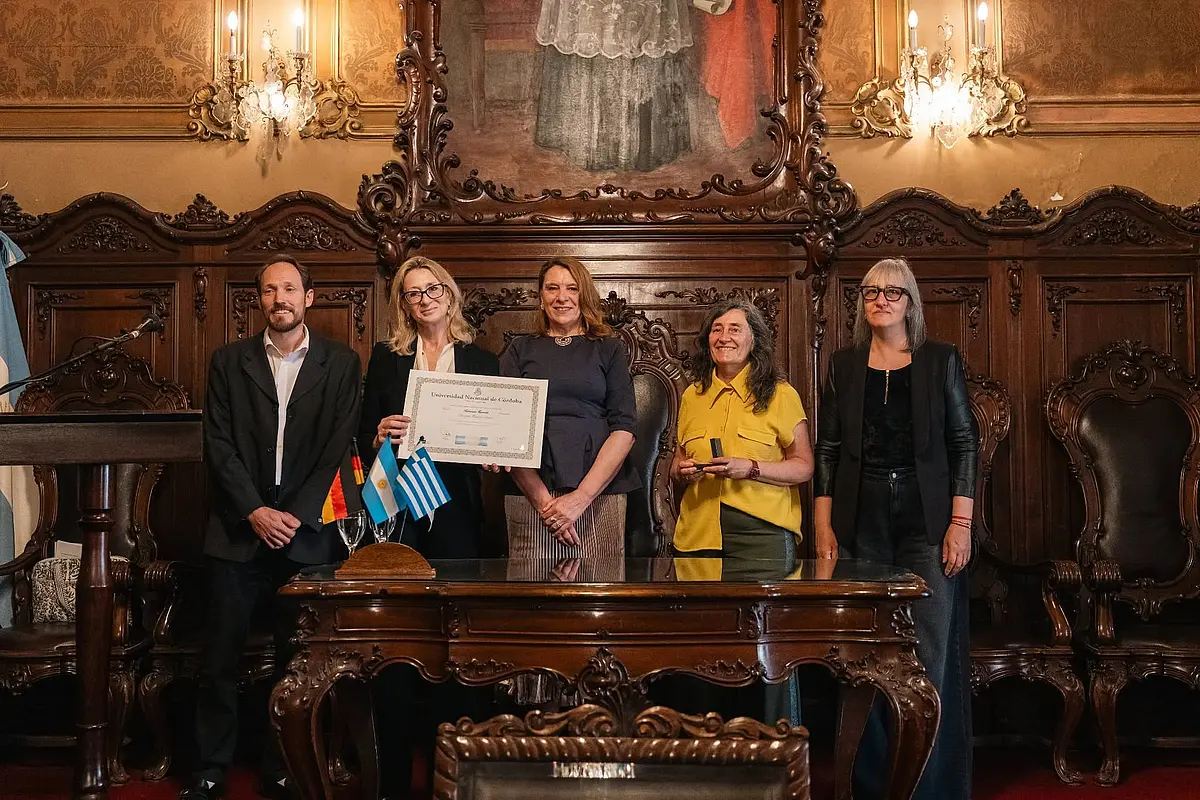
In a festive ceremony in the Teatro del Libertador San Martín in Cordobá, Argentina, Professor Katerina Havati has been awarded with the Albert Einstein World Award for Science on November 2nd, 2026. She is the 41st awardee, and 5th female prize winner, who has been elected by the World Cultural Council. Annually, a jury of renowned scientists, including several awardees of Nobel prizes, elects a prize winner for outstanding research in Life and Nature Sciences, and for their roles as an inspiration of future generations of researcher.
Professor Omar M. Yaghi, president of the World Cultural Council, pointed out the challenges science currently faces in his opening speech, namely climate change, the fast development of artificial intelligence that threatens to evolve faster than our understanding of its abilities, and the fight against disinformation. He highlighted Professor Harvati as outstanding example for scientific practice, essential to counter these developments.
Yaghi pointed out that Katerina Harvati challenged the assumptions about the human past through her studies on evolution and migration, in which she combined meticulous analysis of human remains with innovative scientific methods. She helped uncover an early history of humanity that is far more complex and fascinating than previously thought. Her work serves as a reminder that scientific evidence can reshape our own history, and that some of the greatest discoveries have been made when what was considered certain and true was questioned.
“Katerina Harvati has helped us understand where we come from. Let us now allow science to help determine where we go from here,” concluded the Nobel Laureate in Chemistry, who joined the event virtually from Beijing.
In her acceptance speech, Professor Harvati emphasized that the recognition was not only for her hard work and unwavering dedication over three decades, but also for that of her mentors and team members, who have contributed significantly to her research. She added that the prize also serves as a recognition of the entire field of palaeoanthropology. „At a time when the relevance of basic curiosity-driven research is questioned all over the world, this award highlights the importance of our work for society. Human evolutionary studies provide answers to fundamental questions about ourselves and about the shared journey of humanity.” said Katerina Harvati. Looking back at our past, Harvati continued, offers a much-needed perspective on human existence today and provides irreplaceable insights into the challenges our ancestors faced and the resulting lessons for the future.
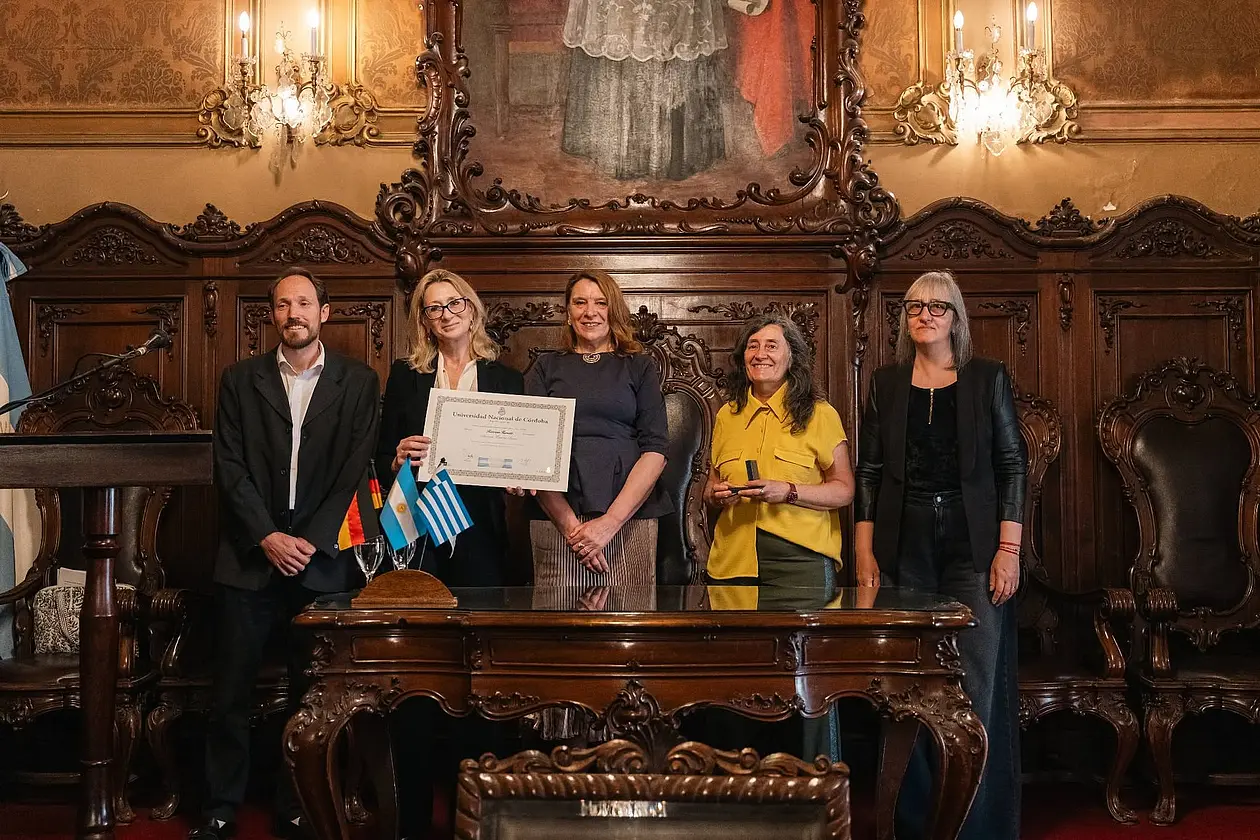
The Albert Einstein World Award for Science consists of a certificate, a medal of honour, and an award cheque, which Professor Harvati accepted. In addition to various ministers and Martín Llaryora, the governor of the province of Córdoba, the ceremony was attended by the university’s rector, Jhon Boretto, Vice Rector Mariela Marchisio, as well as the German honorary consul, Walter Fransisco Oechsle, and the Greek ambassador to Argentina, Efstathios Paizis. Katerina Harvati holds both Greek and German citizenship.
Among the innovative research for which Katerina Harvati was honoured are the developments of computer-based virtual anthropological methods, which have contributed significantly to the reassessment of established assumptions about human evolution. This includes the finding that our species, Homo sapiens, originated in Africa – a fact that, at 300,000 years ago, is much older than originally assumed – as well as the discovery of the oldest known migration out of Africa, which dates back more than 200,000 years. Through systematic and interdisciplinary field research, Professor Harvati and her team were able to demonstrate how, during the ice ages, certain areas served as refuges for entire ecosystems, as well as for the early humans who depended on them. The recent discovery in Central Greece of the oldest preserved wooden tools in human history – dating back 430,000 years – is also attributable to her research.