Magazine
29.09.2026
Return to Yerevan
In Armenia, researchers are studying an old Neanderthal find site using new methods – almost six decades after it was last excavated. The cave promises new discoveries about the history of humanity.
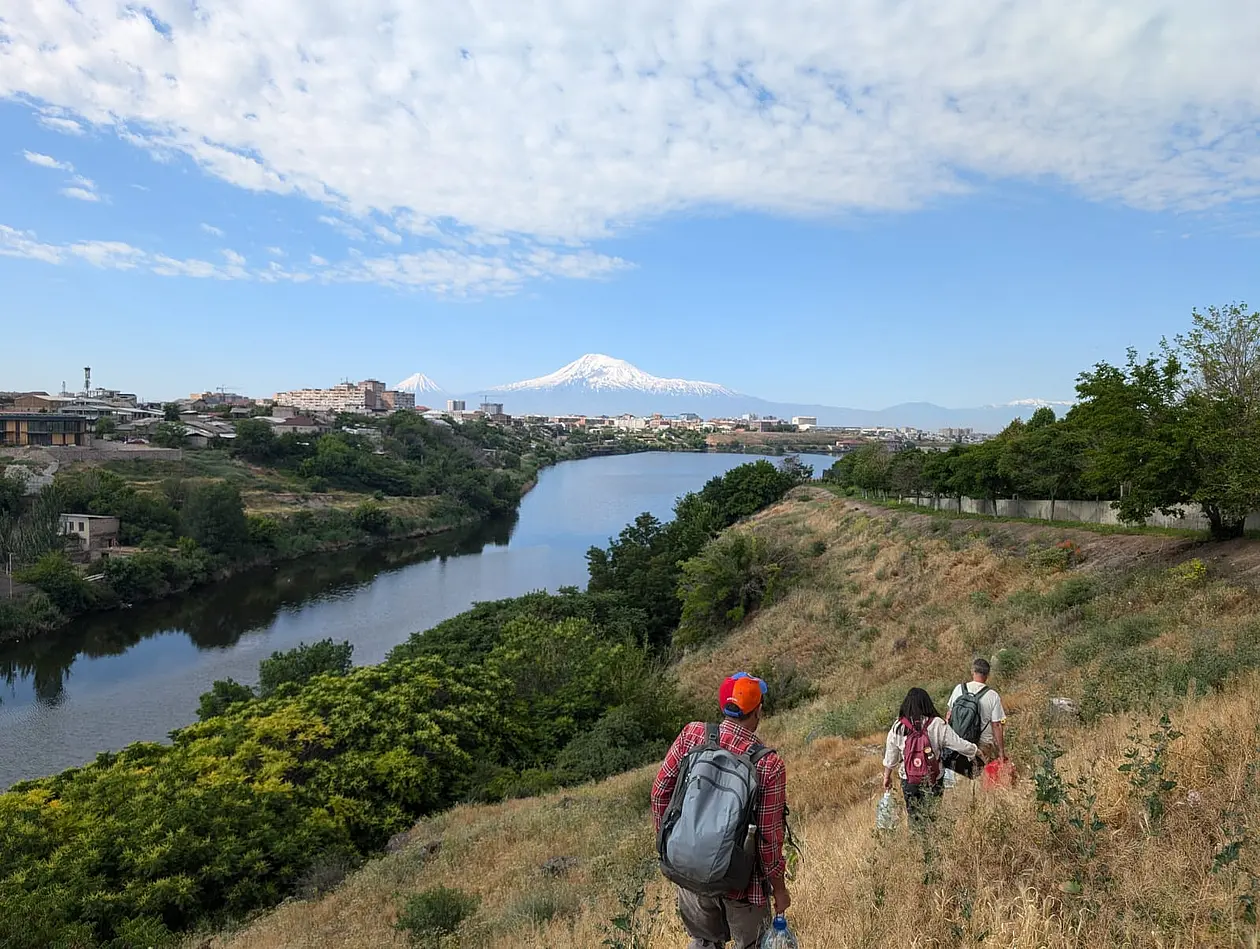
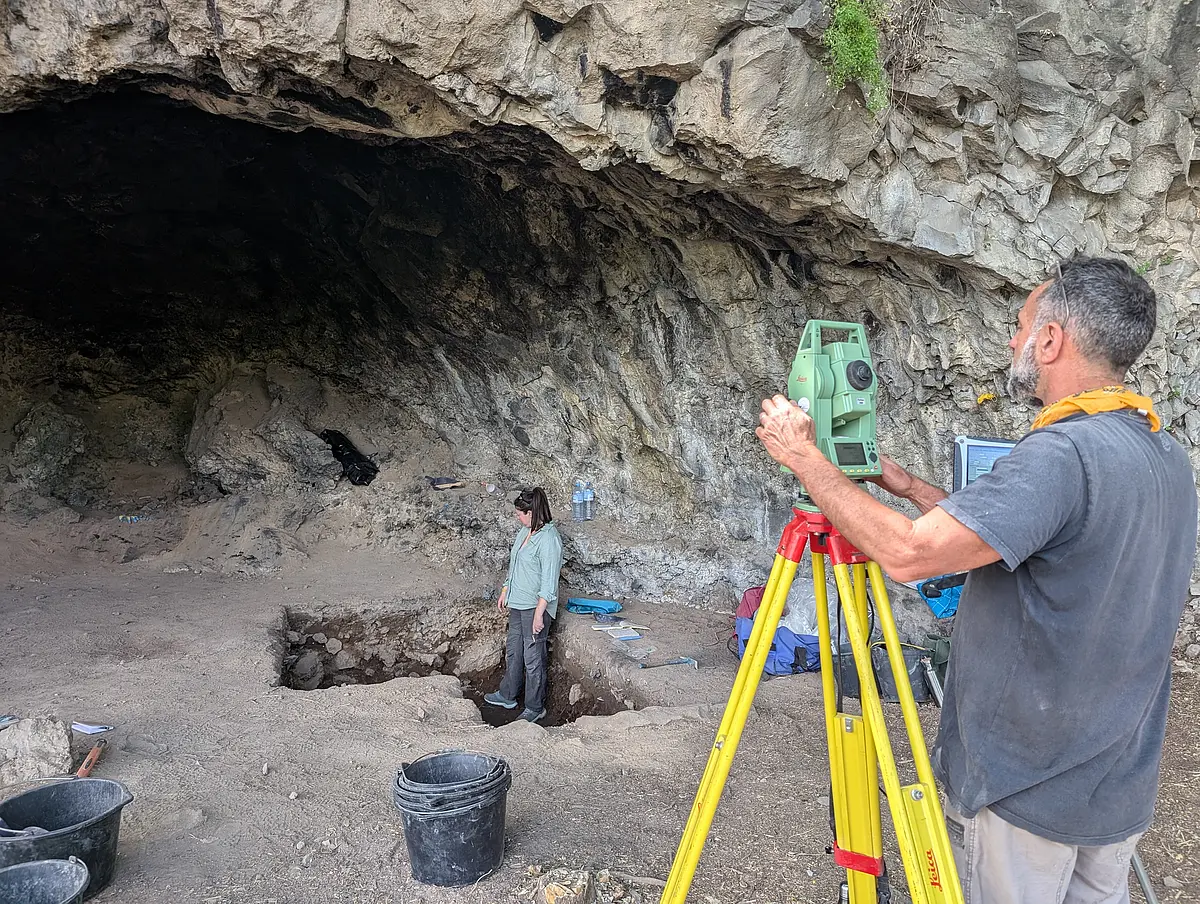
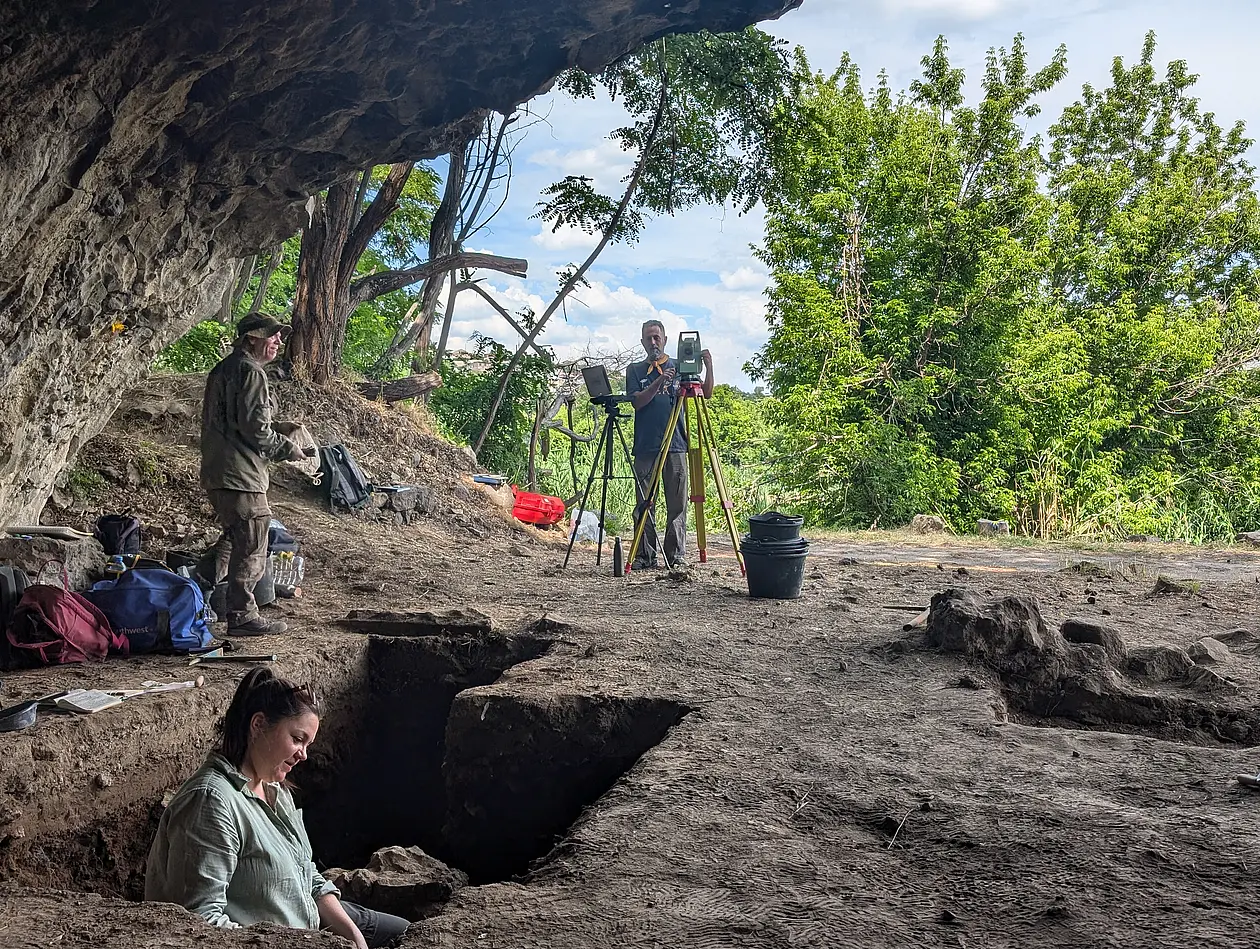
The cave opening is like an archway in the basalt wall. Andrew Kandel pans the landscape with his smartphone. On the screen, the broad river valley of Hrazdan can be seen. In the far distance is the snow-covered Mount Ararat. Below the plateau where the archaeologist stands, the river flows through the green landscape. The place seems remote, but is in fact inside the city limits of the Armenian capital of Yerevan, just a few hundred meters from the American embassy, and a few minutes drive from the excavation team’s accommodation – Kandel appears in the window of the videochat, with a bandana around his neck. “The Neanderthals kept returning here over tens of thousands of years. With the river on one side and the cave on the other, it was a perfect place for them.”
For many years, the archaeologist has been studying traces of Neanderthals and early modern humans in the Caucasus, the mountainous region between the Black Sea and the Caspian Sea. This time he is here for the new Cluster of Excellence Human Origins at the University of Tübingen, to undertake excavations at the Yerevan-1 cave. In the ’60s and ’70s, Armenian archaeologist Benik Yeritsyan uncovered thousands of stone tools, animal bones and possibly even remains of Neanderthals.
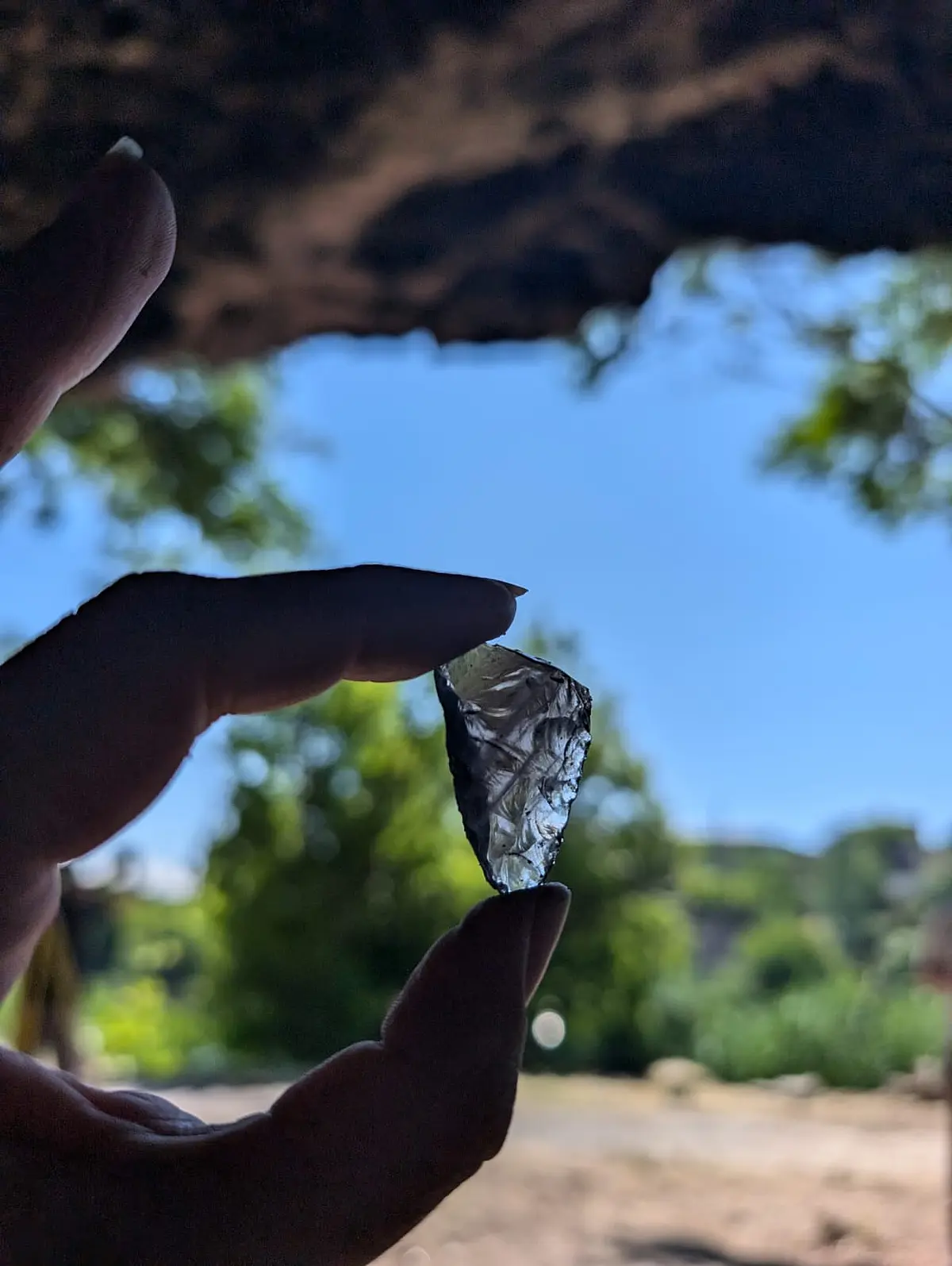
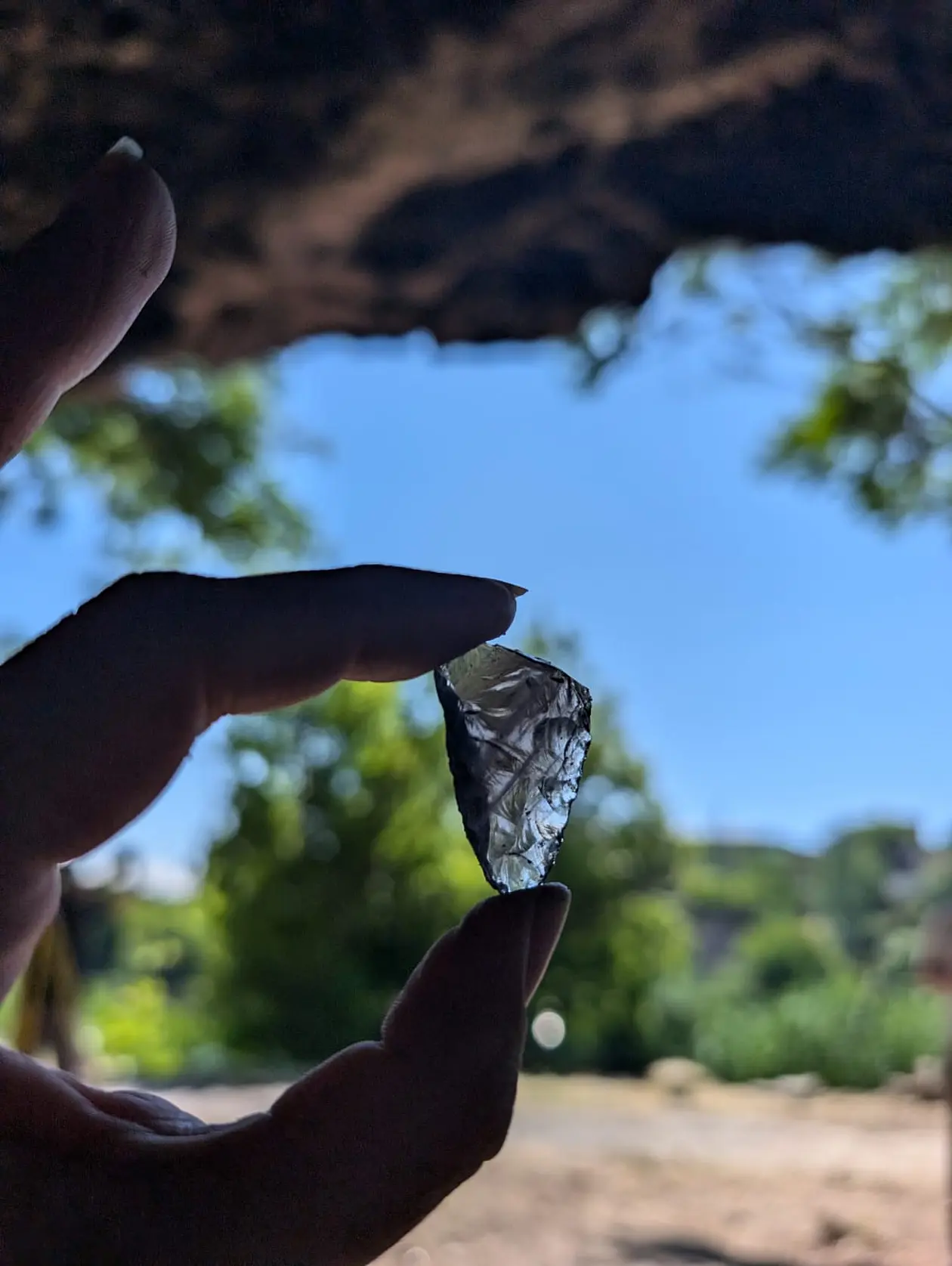
Finds from those times date back to a period roughly 49,000 to 32,000 years ago, that is, the late Middle Paleolithic. “That’s the era in which Neanderthals still populated the Caucasus, but modern humans were already appearing,” explains Kandel. Among experts, the site is known for what became known as Yerevan points - sharp projectile tips of obsidian, skillfully worked by the Neanderthals.
The animal and human bone finds disappeared into the Russian archives in the period of the Soviet Union, which Armenia then belonged to. “Our Armenian colleagues tried to track down the originals. But sadly without success,” reports Kandel. All that remains are descriptions and documentation and the stone tools in a museum in Yerevan. After the last excavations in the 1970s, little happened at Yerevan-1. New expeditions were prevented by a lack of funding and the conflicts in the region after the end of the Soviet Union.
Now, almost 60 years after the last excavations, the old dig site has once again attracted the attention of scientists. “A place like Yerevan-1 is still extremely interesting,” says Kandel. “The Caucasus is a key region in the history of humanity. As a bridge between Africa, the Middle East and Europe, it played an important part in the spread of early humans.” In Georgia, around 1.8 million year old fossils have been discovered, the oldest known human remains in Europe. All the same, until now less archaeological research has been carried out in the Caucasus than in regions in South Africa or the Swabian Jura.
Kandel believes the cave could help us understand a decisive phase in the history of humanity: The disappearance of the Neanderthals and the rise of modern humans. Soil layers may reveal who used the cave at different times and what the living conditions were like then.
A renewed study of the site is mainly promising because archaeological techniques have developed significantly since the 1970s. Modern dating techniques, isotope analyses and also research using ancient DNA enable far more precise evaluation of the layers of Yerevan-1 than back then. “We can read the archaeological site anew scientifically,” says Kandel, who, along with Boris Gasparyan from the National Academy of Sciences of the Republic of Armenia, has formed an international research team of archaeologists, geologists and dating specialists.
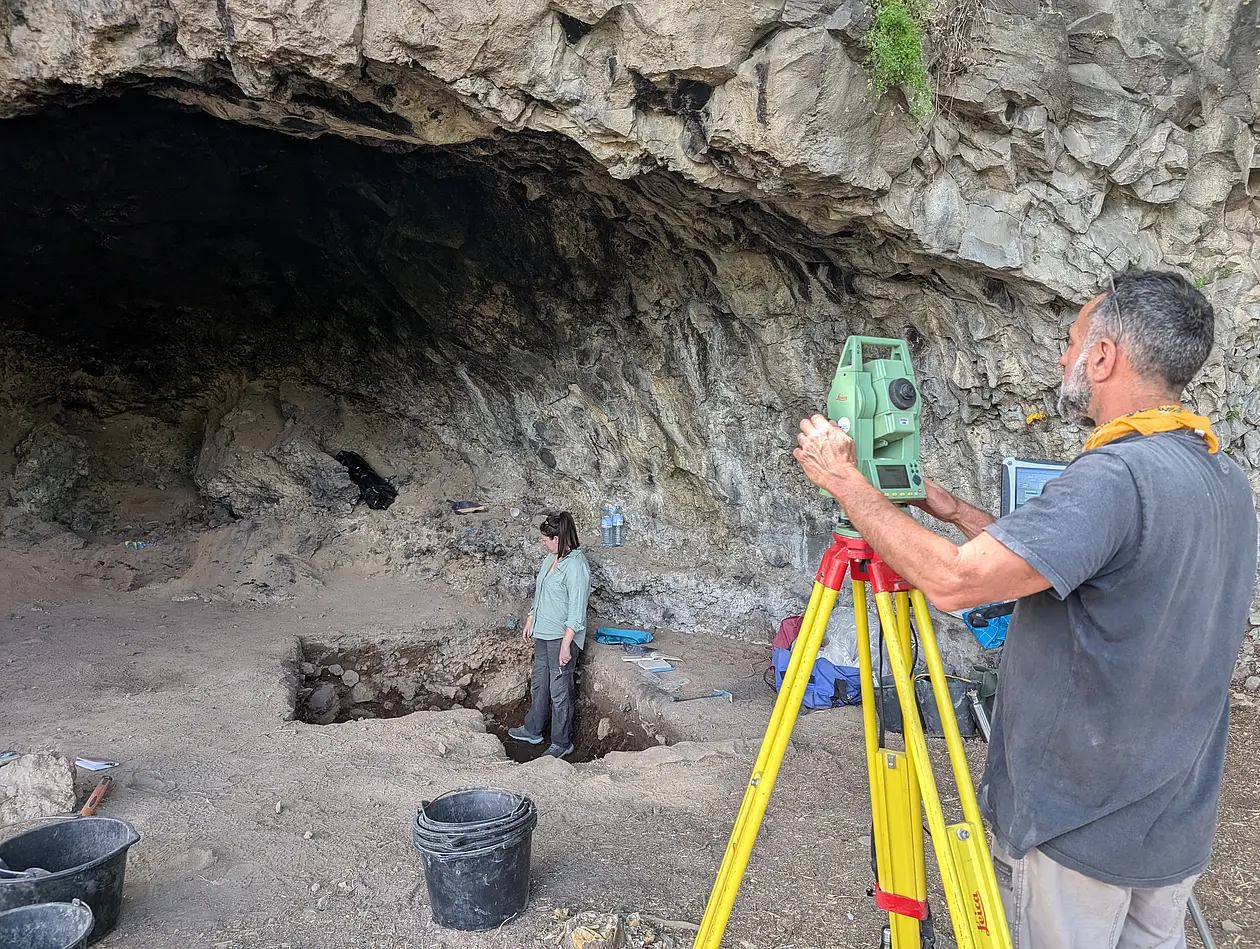
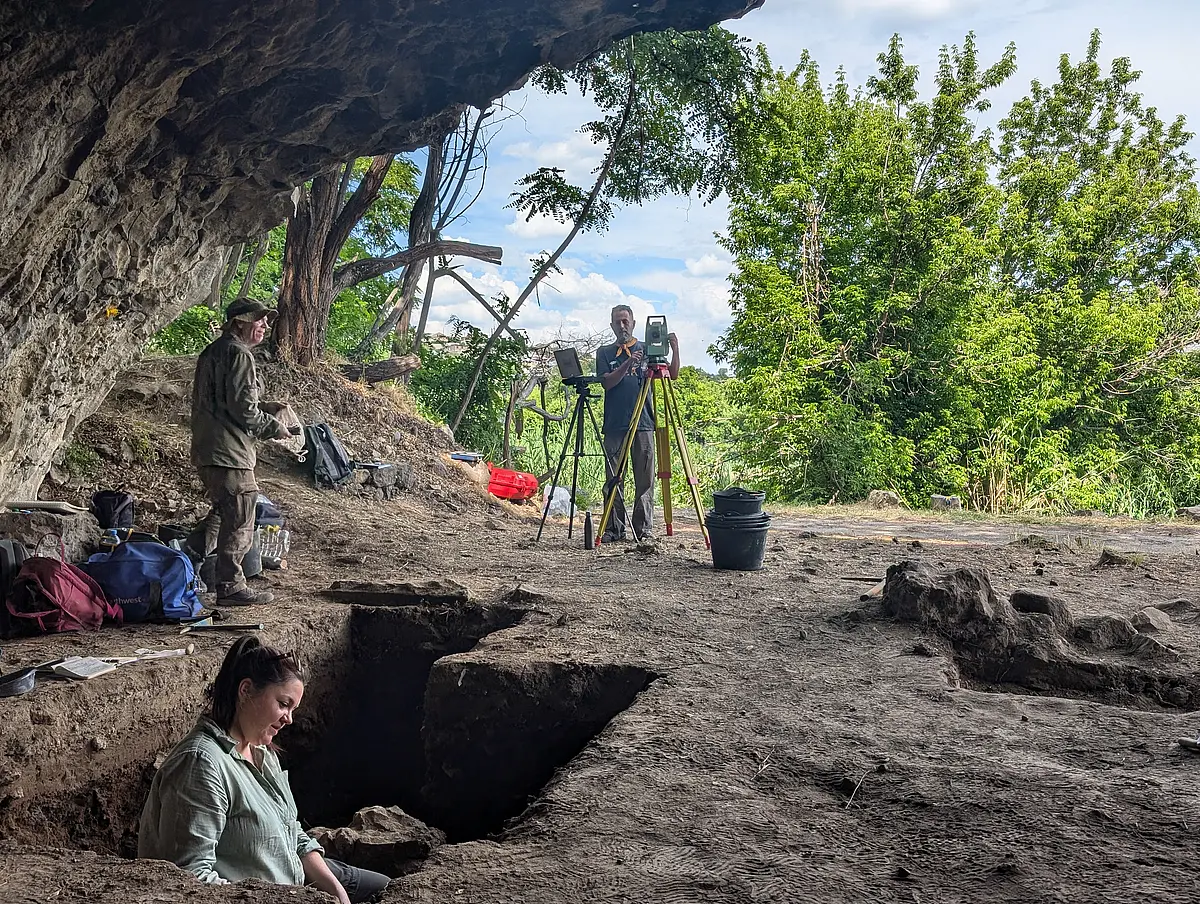
“The Neanderthals probably spent most of their time just in front of the entrance to the cave, here, where I’m standing now,” says Kandel continuing his video tour. Next to a surveying tripod there is a laptop. It shows a reconstruction of the measurement points from the ’60s, transformed into a modern digital 3D model of the cave. “We pick up from the old surveying system, but now we can measure each sample and each layer precisely,” he says.
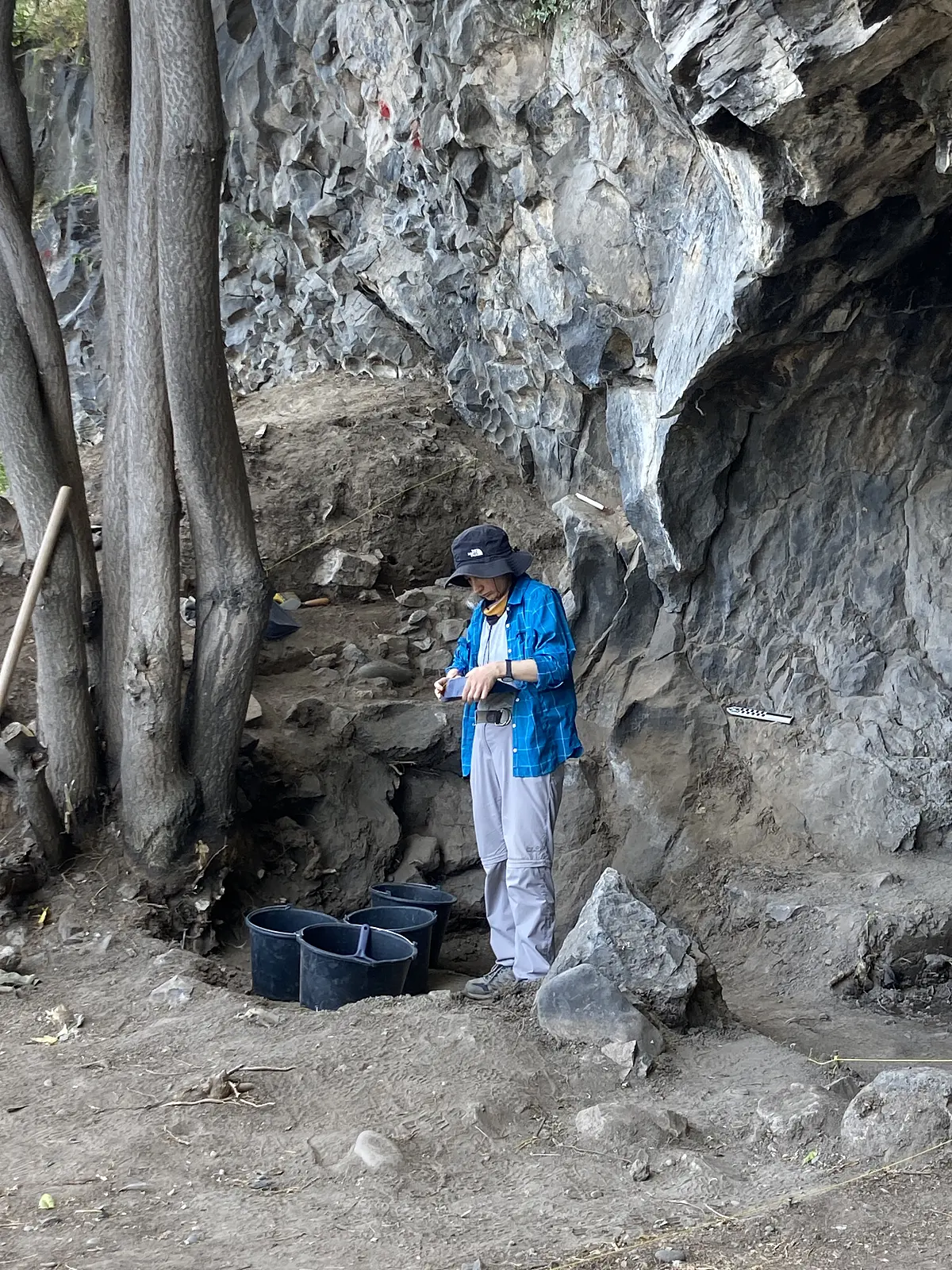
Working away at the earth with a shovel on the slope next to the cave is archaeologist Philip Glauberman. “Phil, do you have a couple of artifacts from today?” Kandel calls to his colleague. Glauberman shows a piece of brilliant obsidian with soil still attached – one of the famous Yerevan points. “From the faceting we can see that this was shaped by humans into a tool,” explains Kandel. Characteristic fractures with a regular form show that the obsidian was not broken randomly but deliberately worked. Using modern analysis, the origin of the obsidian can be identified – sometimes more than 250 kilometers away. “That indicates that the Neanderthals were mobile, or that raw materials were exchanged between groups.”
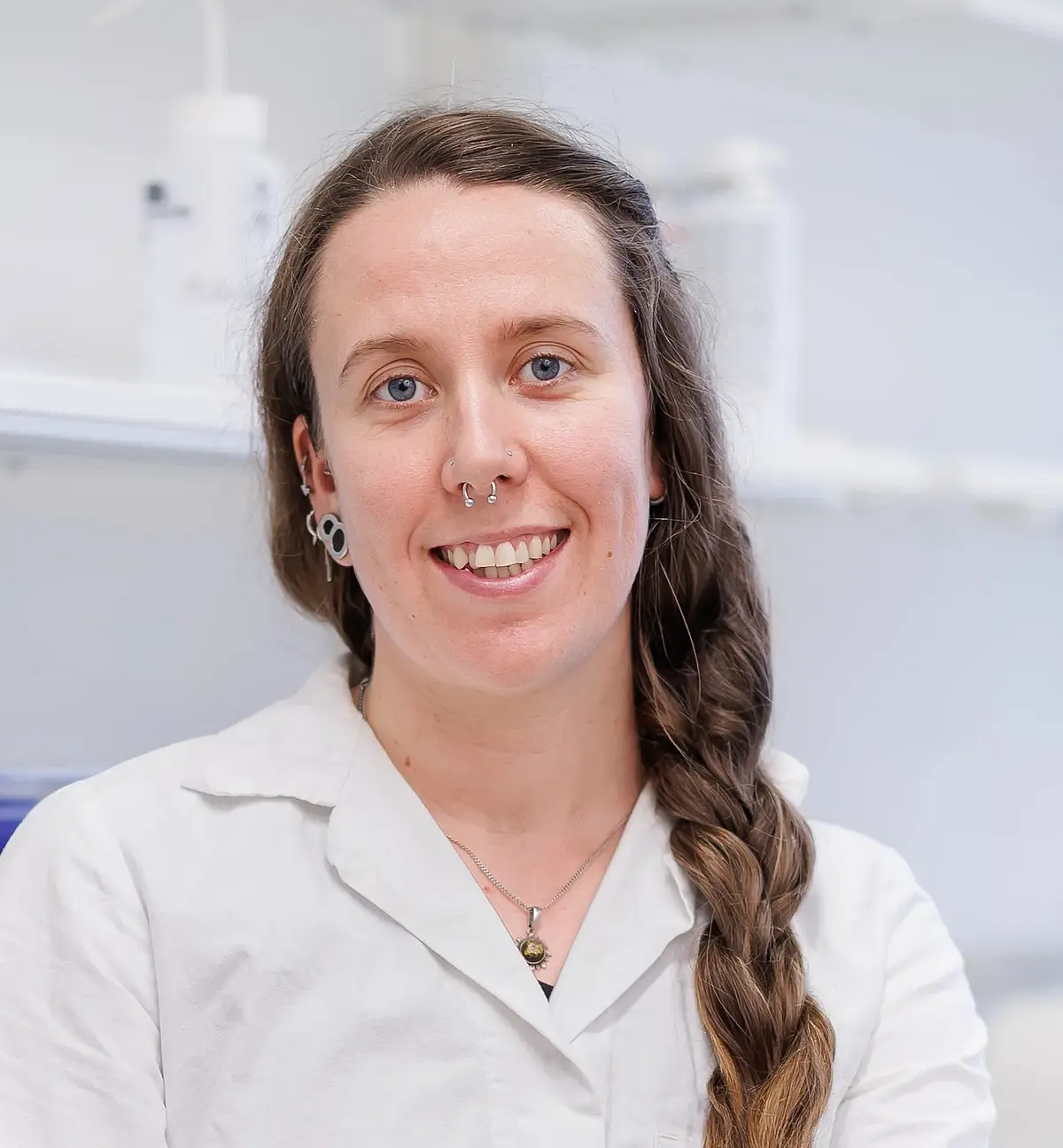
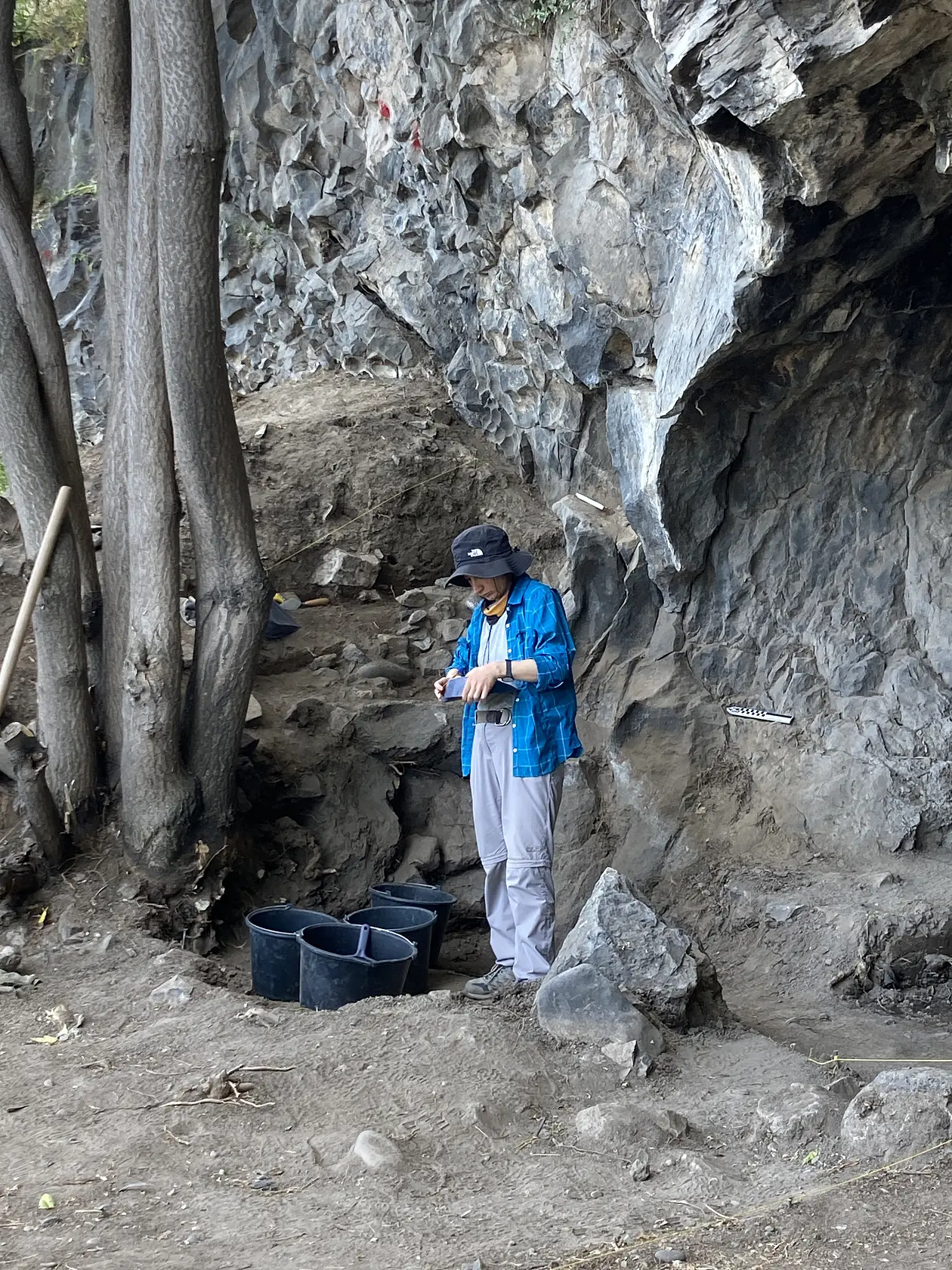
Alongside such highlights, it is above all the sediment that the researchers remove layer by layer in the half-light of the cave that provides valuable information on the climate, fauna and humans who lived here. Emily Pigott, Tübingen postdoc with Human Origins, specializes in the dating and analysis of bone fragments. “Often we only find tiny splinters,” she explains after excavations are over. Using mass spectrometry, she identifies the smallest remains of protein and so can determine which animals they came from, even using highly fragmented bones – such as from wild goats, deer, horses, bison, turtles, hares or mice.
Pollen, charcoal, plant remains and DNA components all go to make up further parts of the puzzle, which gradually build into a picture of the environmental conditions back then, and provide information on when and how Neanderthals used the cave.
The current project is above all to take stock of whether a more ambitious archaeological return to the old dig site would be worthwhile. “We’ve found new artifacts and reached sediments that are still untouched. So we do see considerable potential here,” says Kandel. The history of Yerevan-1 obviously continues.
Text: Christoph Karcher
The HUMAN ORIGINS Cluster of Excellence at the University of Tübingen
Where do we come from? How did Homo sapiens become the only surviving species of human? HUMAN ORIGINS combines biological, cultural and ecological perspectives on evolution and uses modern methods such as precise dating techniques or DNA and isotope analysis. This opens up new means of understanding five million years of the history of humanity. One goal is to fill gaps in our knowledge and alongside established find regions also look at little-researched areas. The spokespersons for the cluster, which is funded from 2026 to 2032, are Professor Katerina Harvati Papatheodorou, head of Paleoanthropology at the Senckenberg Centre for Human Evolution and Palaeoenvironment, Professor Nicholas Conard, head of Early Prehistory and Quaternary Ecology, and Professor Christopher Miller, head of Geoarcheology.