Uni-Tübingen

P11: The influence of cGMP signaling in Alzheimer’s disease (from 01.01.2025)

Aims

This project builds on emerging evidence of the interplay between the actomyosin network and microtubules in neurons, a largely unexplored area. Previous studies have shown that tau protein aggregation, a hallmark of Alzheimer’s disease, results from its dissociation from microtubules. Additionally, destabilization of actin-spectrin rings is known to affect microtubule stability and vice versa. In this study, we will investigate the role of cGMP in regulating actomyosin contractility and its impact on microtubule dynamics and tau aggregation, with the goal of uncovering potential therapeutic targets.

Questions and Methods

cGMP and cytoskeleton mechanics in neurodegenerative disease

> What are the functional effects of cGMP in AD-associated axonal swellings of cortical neurons?
> Does cGMP modulate the microtubule network in these neurons?
> Can clinically used cGMP-elevating drugs (e.g., NO-GC stimulators, PDE inhibitors) reverse axonal swellings?
> Is there a direct connection between cGMP-related pathways and tau phosphorylation?
 

Philadelphia Internship

Lakadamyali Lab

In the Lakadamyali Lab at the University of Pennsylvania in Philadelphia, the doctoral researcher will be trained in biophysical approaches and advanced fluorescence super-resolution microscopy applied to neurons and brain tissue. The researcher will study the organization and dynamics of cytoskeletal proteins and their interactions with microtubules and actin to uncover mechanisms underlying neurodegenerative diseases.

Philadelphia Co-mentor

Prof. Melike Lakadamyali, PhD

link to Philadelphia researcher lab

Doctoral Students

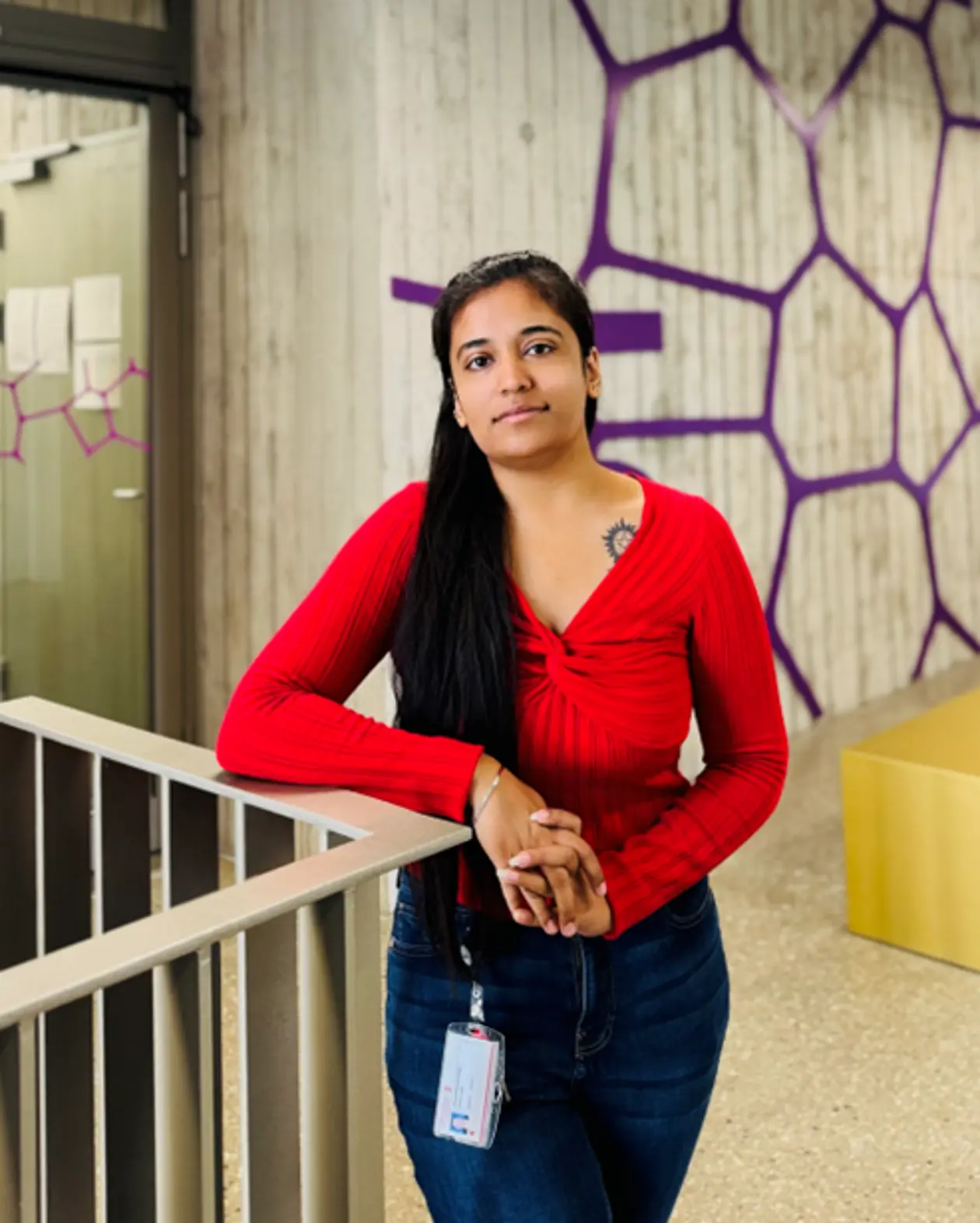
Jaya Mishra

Jaya completed her Bachelor's degree in Biotechnology Engineering from SRM Institute of Science and Technology, India, in 2021. During her undergraduate thesis, she developed a keen interest in neuroscience particularly neurodegeneration while working with Drosophila melanogaster as a model organism. To further build on this interest, she pursued an MSc in Neuroscience at King’s College London, where she specialized in neurodegenerative diseases. Her Master’s research focused on primary neuronal cultures derived from mice, aiming to understand the role of MMP9 and Wnt signaling pathways in multisynaptic dysfunction associated with Alzheimer’s disease.

In 2023, Jaya joined the Hertie Institute for Brain Research in Tübingen to gain clinical research experience. Her growing interest in the molecular mechanisms of neurodegeneration led her to continue her academic journey in Tübingen, where she joined Dr. Rafiq’s research group as a doctoral candidate in August 2024. Her current research focuses on dissecting both genetic and non-genetic contributors to late-onset neurodegenerative diseases, with a particular emphasis on Alzheimer’s and Parkinson’s disease. A central aspect of her work involves investigating how physical forces influence the dissociation of tau protein from microtubules and exploring novel mechanisms underlying tau seeding. Additionally, she is studying non-classical synapses in Parkinson’s disease models, especially in the context of LRRK2 mutations, using neural stem cell systems. To complement this work, she is also developing a non-neuronal model to investigate synaptic mechanisms from an alternative perspective, with the aim of identifying proteins associated with synaptic assemblies.

Through her research, Jaya aims to advance our understanding of the molecular and cellular underpinnings of neurodegenerative diseases, ultimately contributing to the development of targeted therapeutic strategies.


5 Key Publications

Fujise K, Mishra J, Rosenfeld M, Rafiq NM. Synaptic vesicle characterization of iPSC-derived dopaminergic neurons provides insight into distinct secretory vesicle pools. NPJ Parkinsons Dis. (2025).

Rafiq NM*, Fujise K, Rosenfeld M, Xu Peng, De Camilli P*. Parkinsonism mutation in Synaptojanin 1 affects primary cilia in iPSC-derived dopaminergic neurons. PNAS. (2024)
*co-corresponding author

Rafiq NM, Lyons L, Gowrishankar S, De Camilli P, Ferguson S. JIP3 links lysosome transport to regulation of multiple components of the axonal cytoskeleton. Communications Biology. (2022).

Rafiq NBM, Nishimura Y, Plotnikov SV, Thiagarajan V, Zhang Z, Natarajan M, Shi S, Viasnoff V, Jones GE, Kanchanawong P, Jones GE, Bershadsky AD. A mechano-signaling network linking microtubules, myosin-IIA filaments and integrin-based adhesions. Nature Materials. (2019).

Rafiq NBM, Grenci G, Lim CK, Kozlov ME, Jones GE, Viasnoff V, Bershadsky AD. Forces and constraints controlling podosome assembly and disassembly. Philos Trans R Soc Lond B Biol Sci. (2019).