
24.09.2026
Sex, Gender and Culture: Students Develop Methods for Educational Work
In the service-learning seminar “Sex, Gender and Culture,” students developed their own educational and workshop methods that make global and intersectional perspectives on gender equality tangible and applicable in practice.
How do gender inequalities arise? What role do culture, power and social structures play in this? And how can these topics be presented in a way that encourages reflection and discussion?
Students explored these questions in the service-learning seminar “Sex, Gender and Culture – Global and Intersectional Perspectives on Gender Equality,” which was offered as part of the Transdisciplinary Course Program (TCP) in the field of Civic Engagement. Drawing on concepts from Global Learning as well as social and cultural anthropology, they analysed gender relations, power structures, privileges and inequalities in different global contexts.
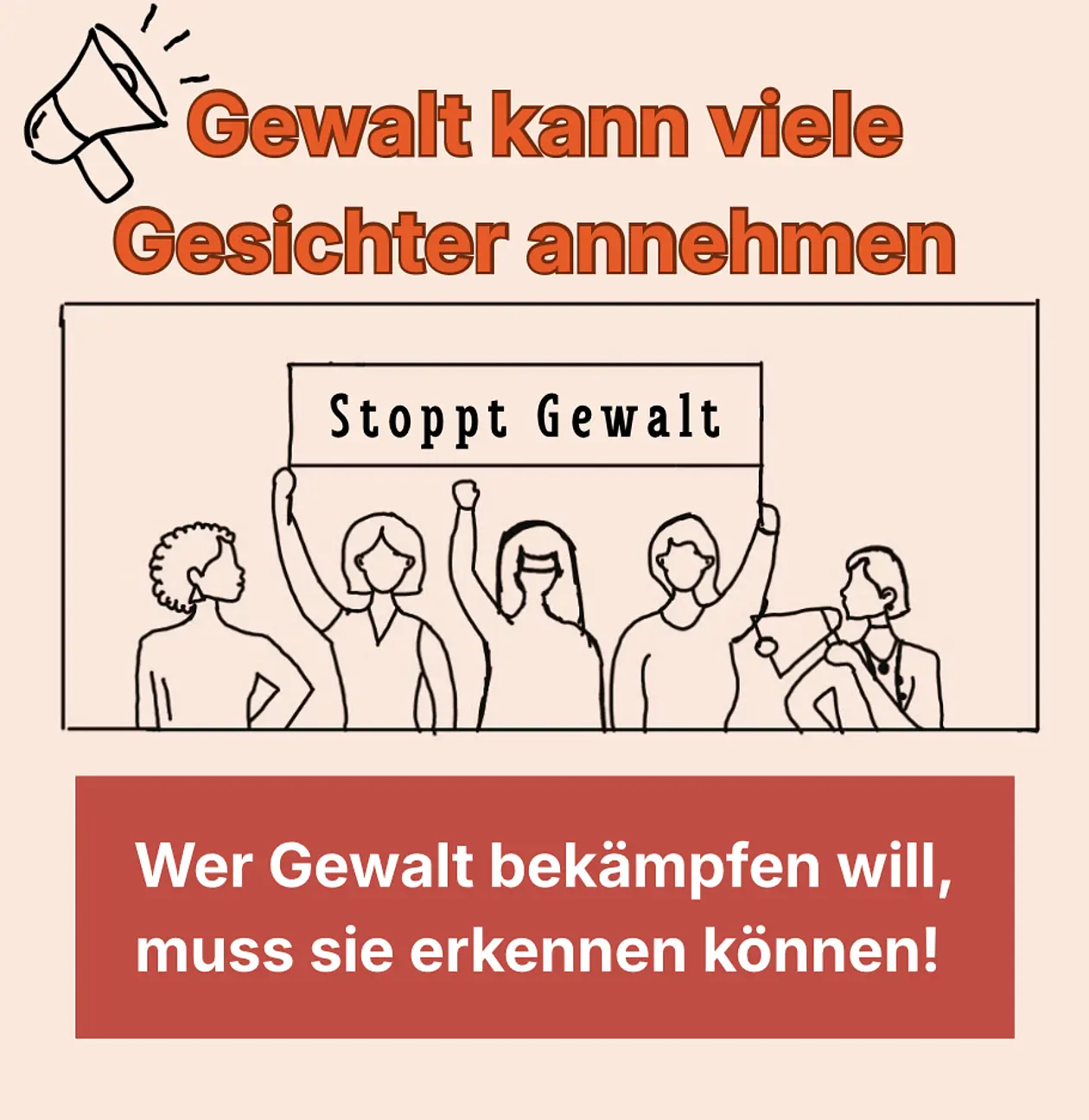
The seminar went beyond theory: as part of the course, students developed their own educational and workshop methods for practical use. One outcome of their work is the series “Is This Violence?”, which uses concrete everyday situations to encourage participants to question different forms of sexualized, emotional, physical and culturalized violence and to engage in discussion. The materials developed by the students highlight that violence can take many forms and often begins where autonomy, personal boundaries and dignity are disregarded.
For example, the students developed scenarios that encourage discussion about personal boundaries, communication and respect, as well as materials addressing less easily recognizable forms of emotional or culturalized violence.
In this way, the seminar conducted as part of the TCP combines learning, research and knowledge transfer: students acquire interdisciplinary knowledge, work academically on their own questions, and translate their findings into materials for educational practice. The resulting methods are made available to the practice partner finep and can subsequently be used in educational events.
An example of how students within the TCP not only analyse academic and social issues, but also translate their findings into concrete offerings for practical use.