Uni-Tübingen

A house for any situation

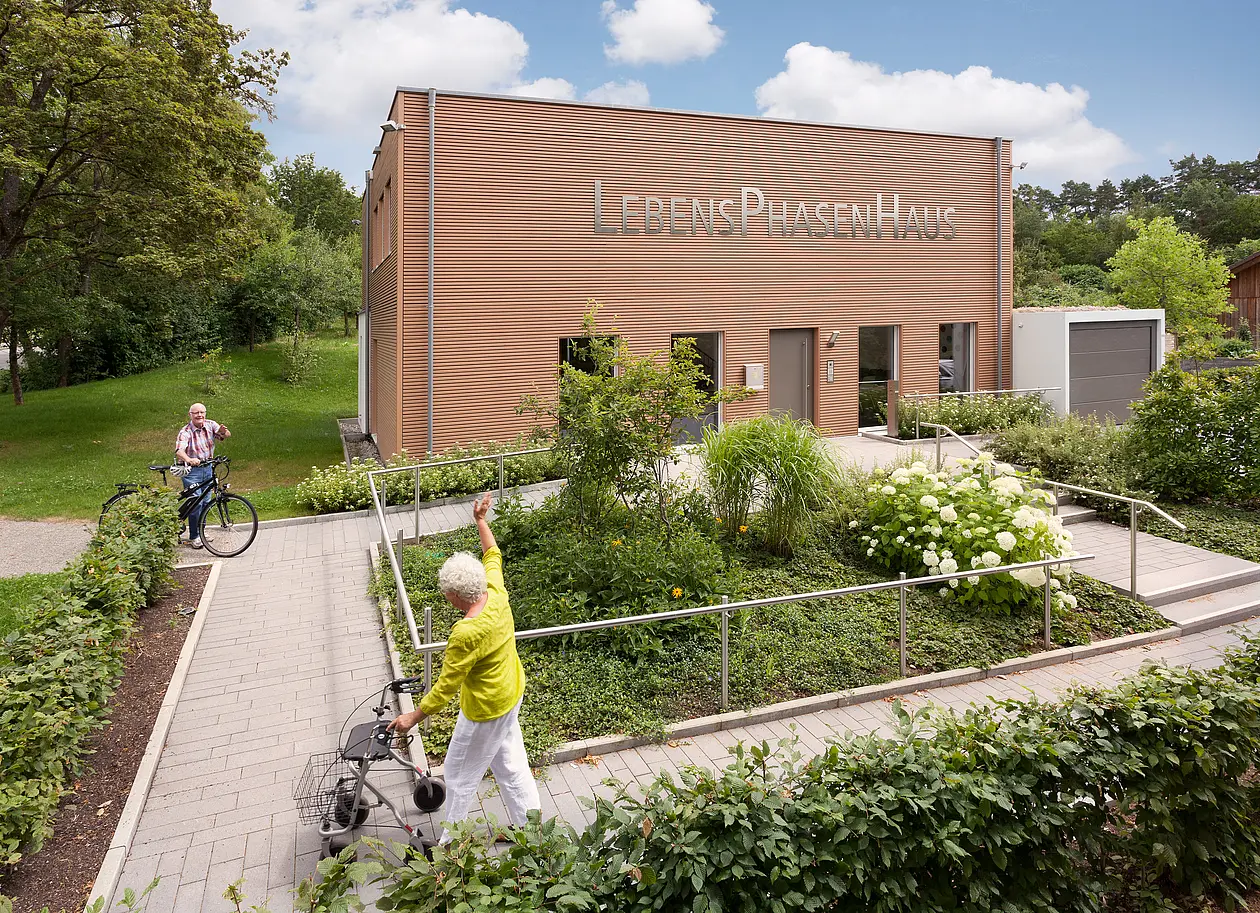
For ten years, the LebensPhasenHaus in Tübingen has inspired people to live independently for longer in their own homes.

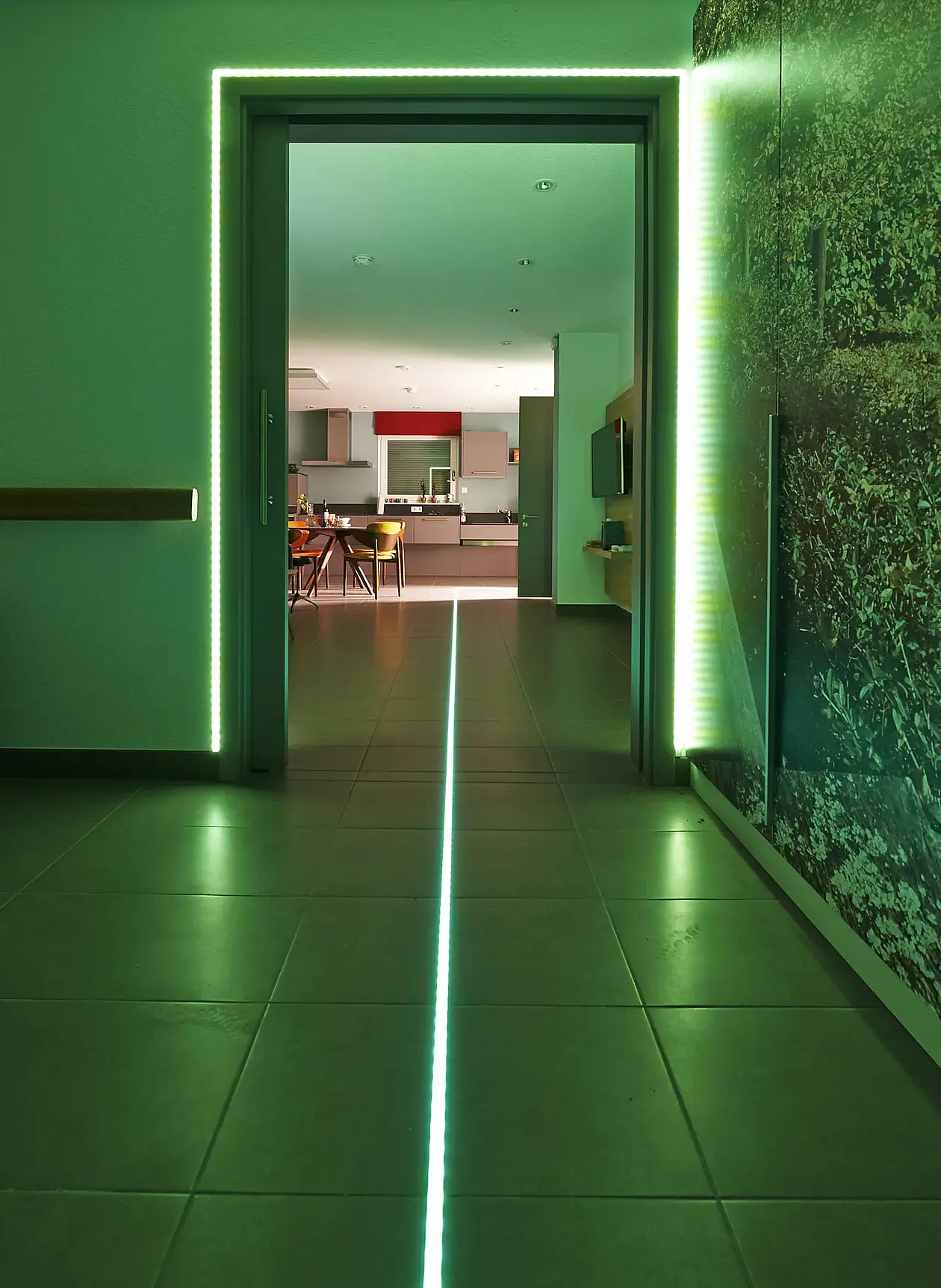
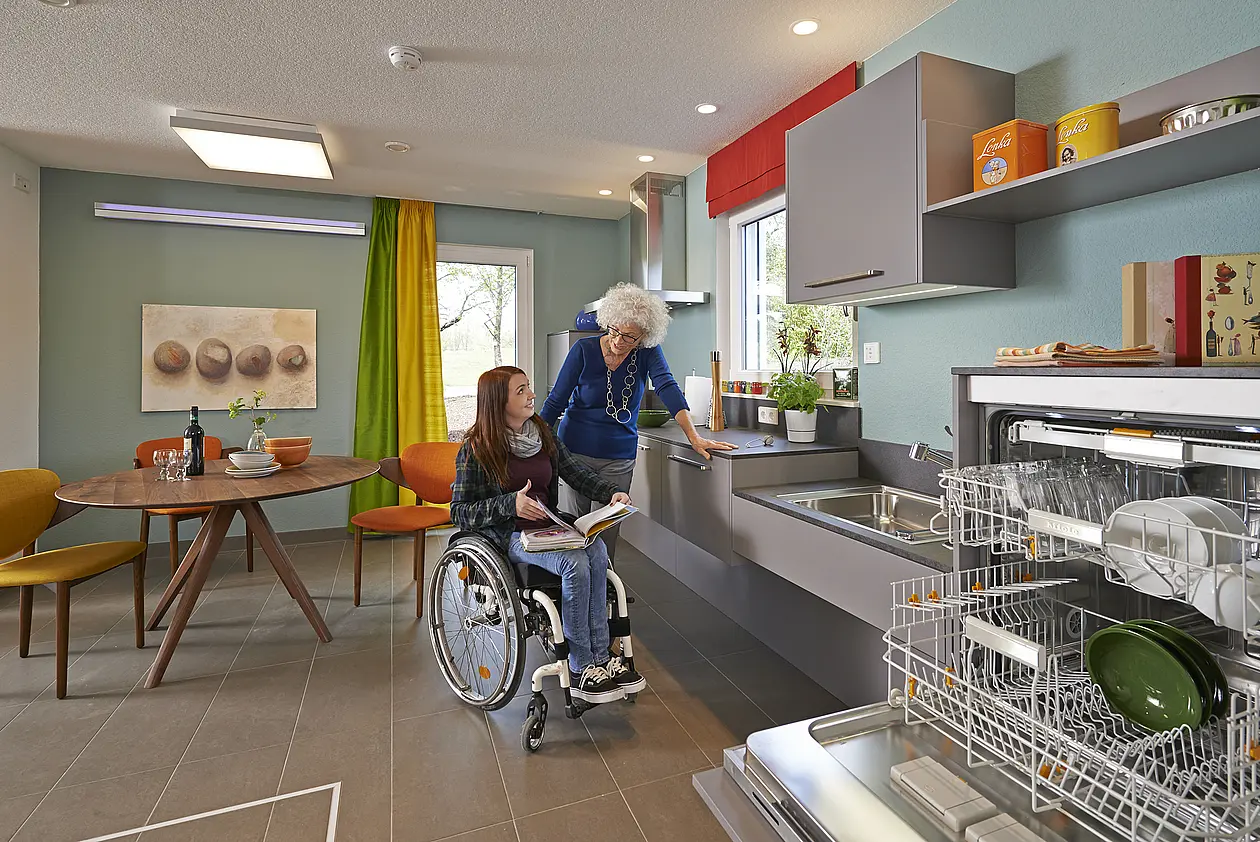
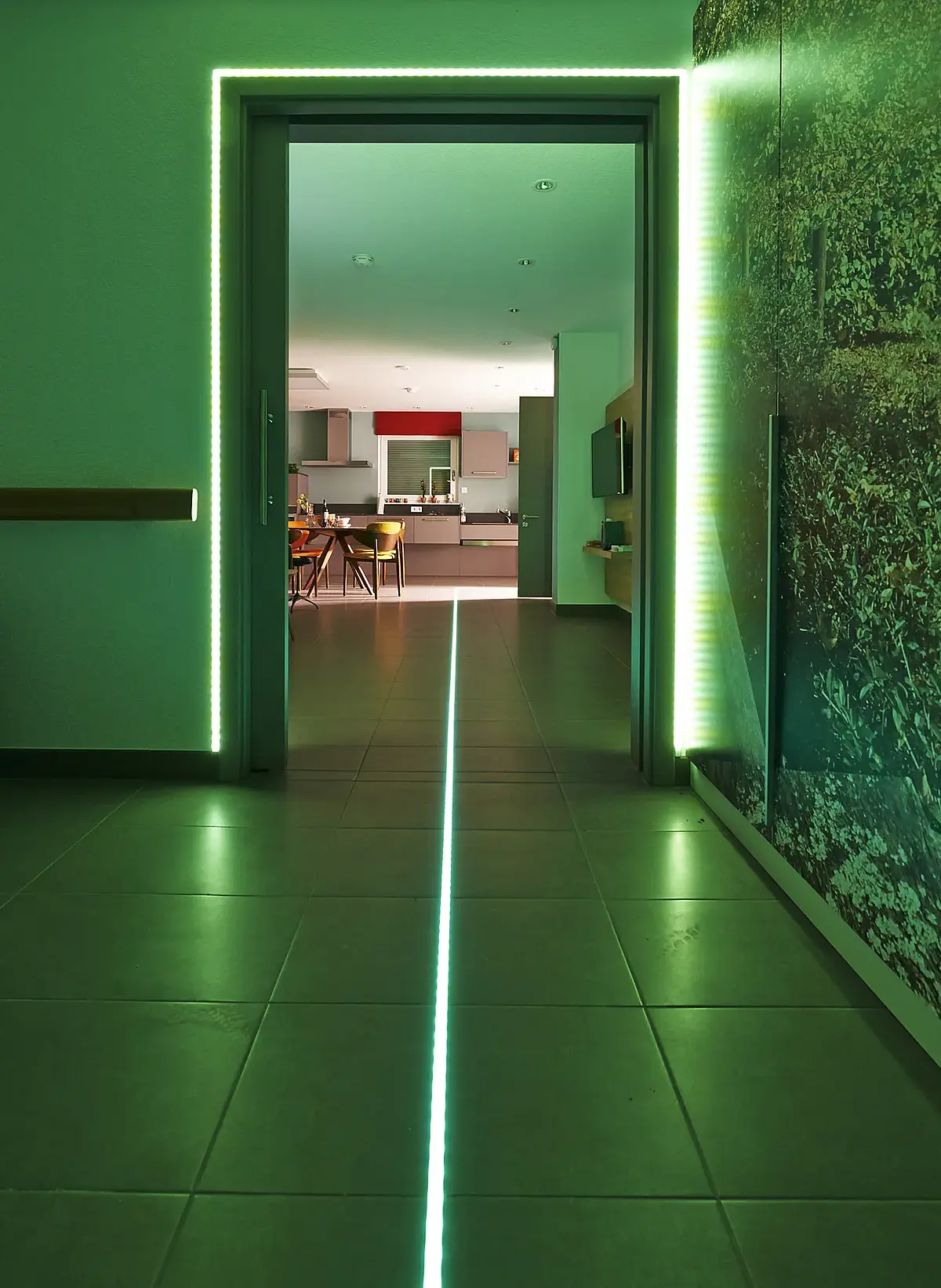
Hilde Ehrle presses a light switch. A green LED strip lights the floor, running across the apartment: From the bedroom with the nursing bed, through the living room, past the kitchen with height-adjustable countertops, and into the accessible bathroom. “Green light is especially good for orientation at night, as the brain doesn’t react as sensitively to this frequency,” Hilde explains to an elderly couple listening closely. She then walks in her bright sneakers along the green line from room to room, the couple following behind.

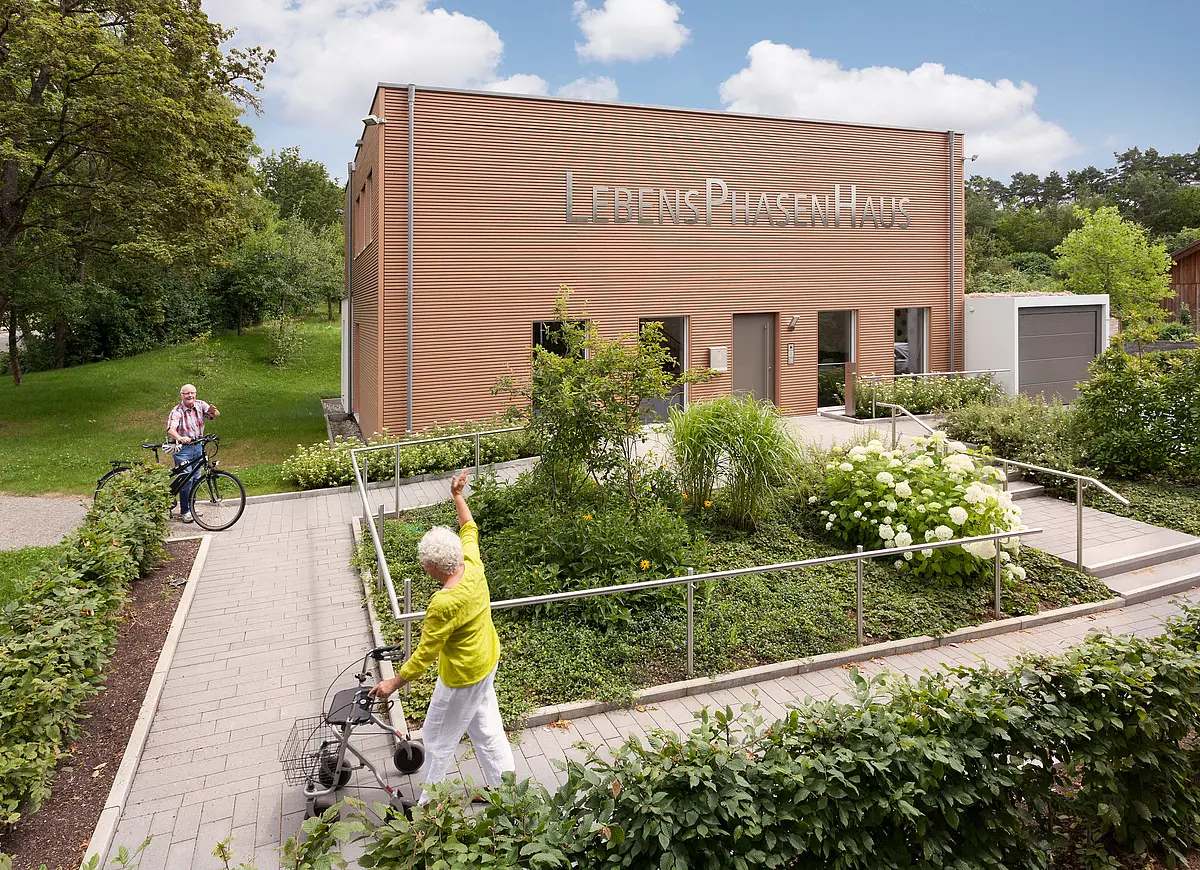
For over ten years, Hilde Ehrle has been volunteering to advise visitors at the LebensPhasenHaus, a two-story building on the outskirts of Tübingen. Researchers from the university work here together with guests, the district seniors’ council, local trade businesses, and enterprises from the medical engineering, pharmaceutical, and electrical industries to test ideas for independent living for seniors or people with physical or cognitive disabilities.

Since 2015, the LebensPhasenHaus has opened its doors every Friday. In the last five years alone, about 3,000 interested people and caregivers have visited.
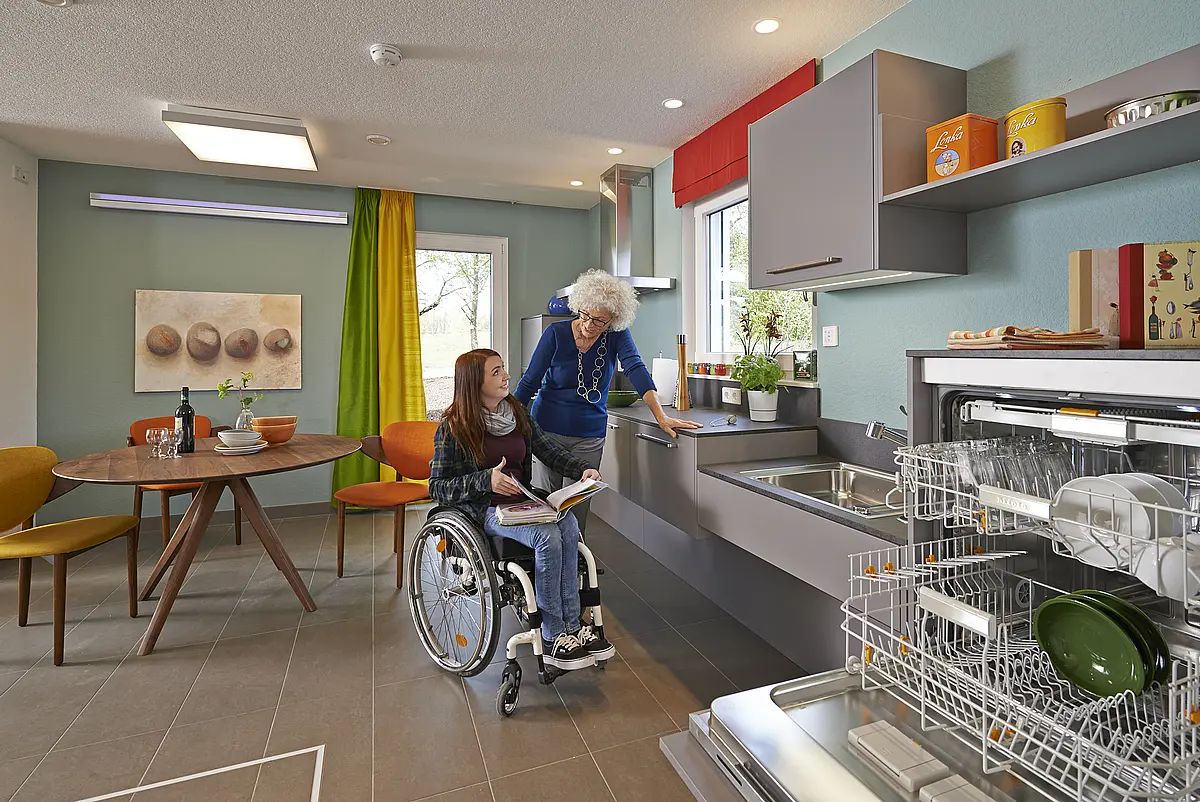
The elderly couple also wants to know what their life could look like when they are no longer as fit. Should they, for example, remodel their apartment if one of them ever needs a wheelchair? In the kitchen, they use a button to raise and lower individual modules and the countertop. People in wheelchairs could cook here, too. In the background, a gurgling sound plays, as if someone were pouring a glass of water: an automatic reminder from hidden speakers for senior residents to drink enough fluids.

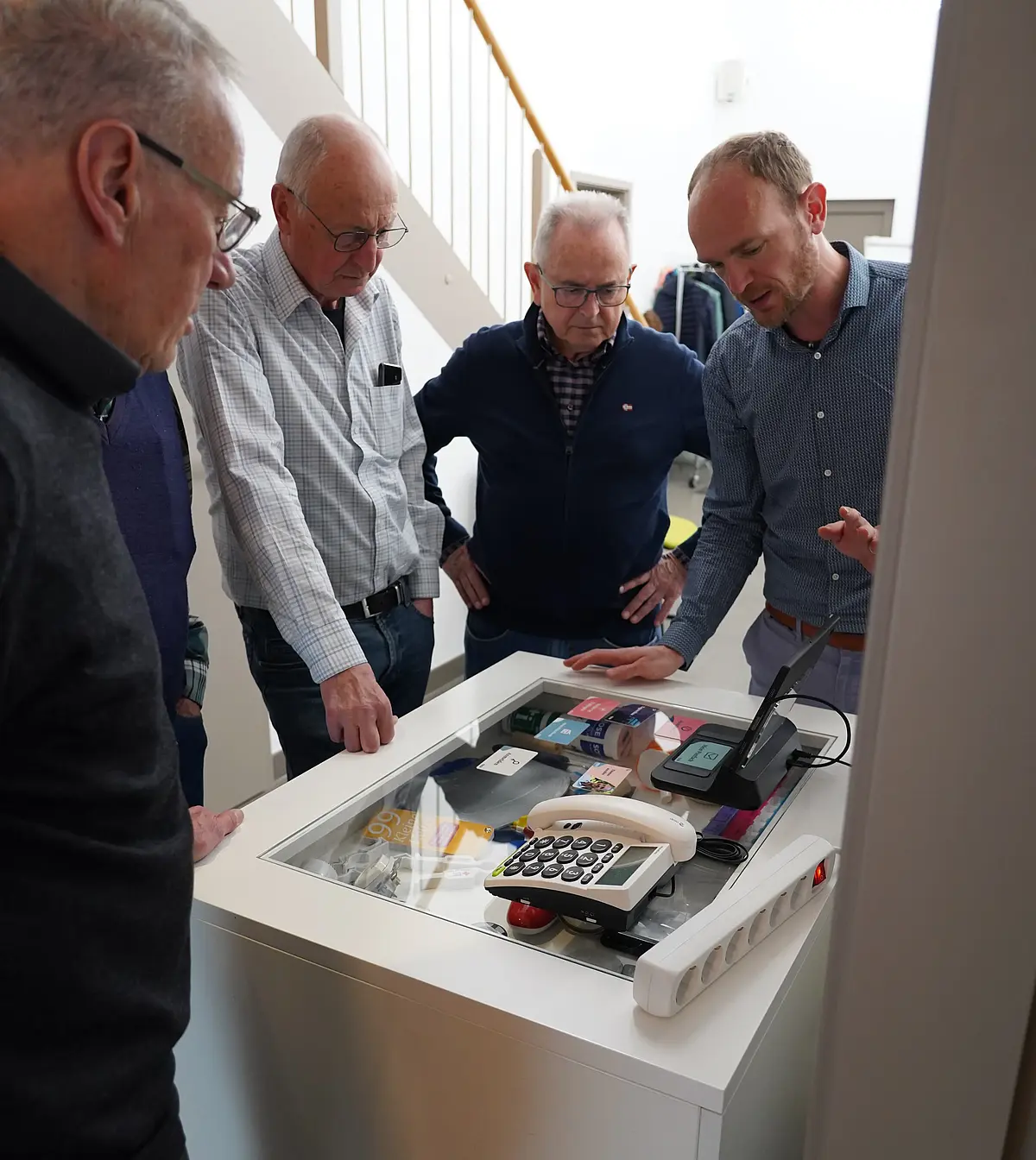
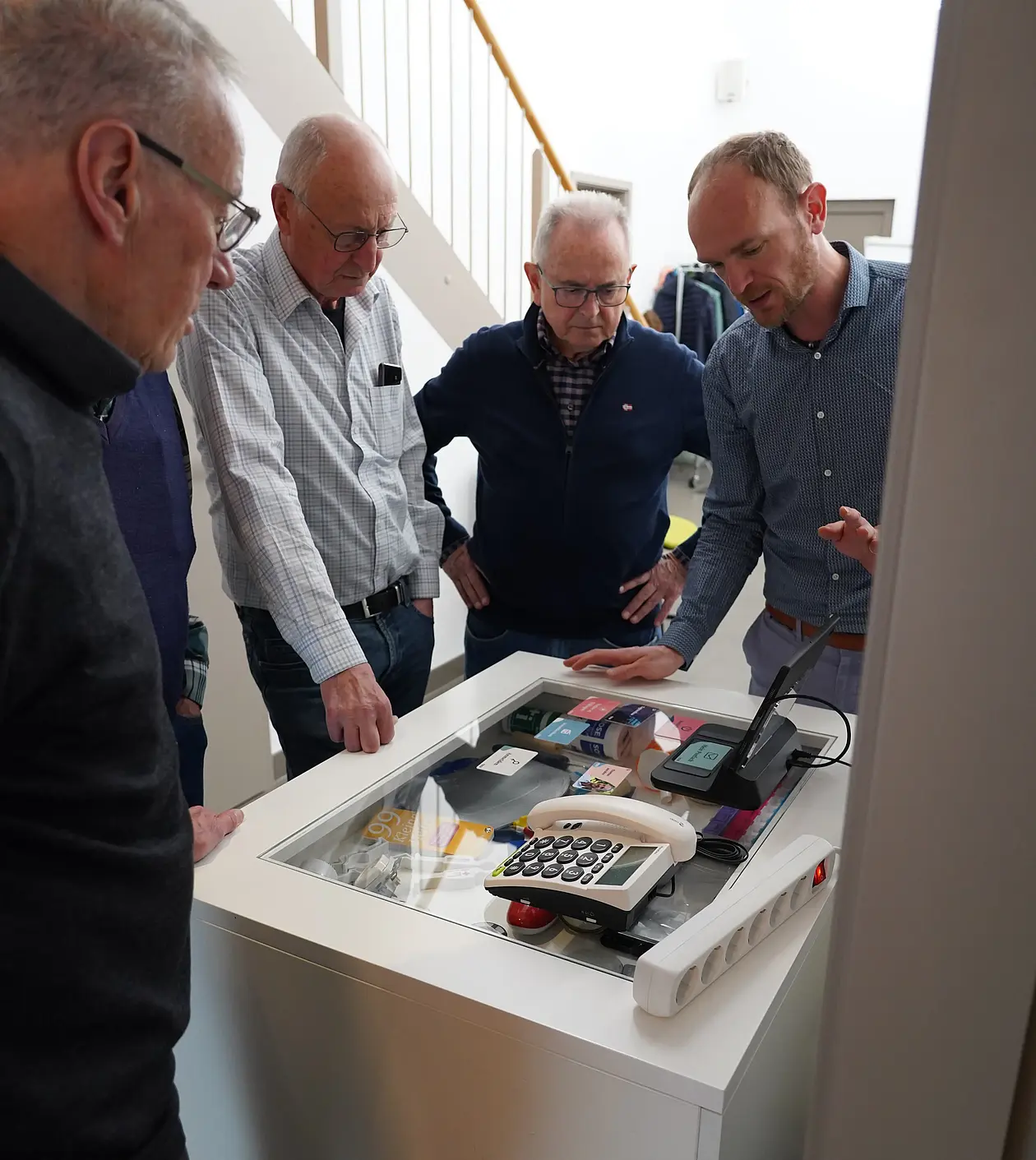
Hilde Ehrle pulls open a drawer filled with various devices she bought at a local store specializing in senior needs for demonstration: an electric can opener, a spill-proof sippy cup, a key finder, a pen grip aid, extended scissors and reinforced cutlery, a pillbox with a reminder function, and a key extender. “It’s hard for healthy people to imagine just how many things can become difficult,” she explains.


It's hard for a healthy person to understand how difficult things can become.


Daily essentials also include age-appropriate lighting in the LebensPhasenHaus, developed in cooperation with the university’s geriatric and ophthalmology centers for use in care facilities. It is designed to solve the problem of day-night reversal in older people: As it never gets truly bright during the darker months, the human brain produces more melatonin, causing residents to doze off during the day and not get tired enough at night for restful sleep. This night-time activity not only reduces quality of life for those affected, but also creates problems for care staff, as night shifts are staffed with fewer people. Circadian lighting, which changes color temperature throughout the day to mimic natural daylight solves this problem The day starts with blue light, which automatically shifts to warm white in the afternoon and dims to a reddish hue in the evening. Anyone can use these research findings and copy the lighting concept from the LebensPhasenHaus by changing the color temperature of their home lighting throughout the day. Suitable daylight lamps are now available at any hardware store.

A somewhat more advanced device can be found on the second floor, in the LebensPhasenHaus lab: Exoskeletons – frames that people strap on to literally give them a helping hand when lifting heavy loads. In logistics companies, exoskeletons already make it easier for warehouse workers to carry heavy items, and they are also used in operating rooms. Researchers are now adapting various models for professional caregiving, for example by adding support straps that patients can hold onto. 

While the husband of the elderly couple takes a virtual bike ride on a stationary trainer in the living room, his wife is drawn to the activity table. The table-top is a touch sensitive screen. The woman chooses a reaction game: Whoever touches he lit-up spots first wins – speed is key.


The first person to touch the flashing dots wins!


“The LebensPhasenHaus is all about networking in the best sense of the word,” says Udo Weimar, one of the three University of Tübingen professors who initiated the LebensPhasenHaus and continue to support it today. The model house has since inspired other facilities: The Evangelische Heimstiftung in Stuttgart and BruderhausDiakonie in Reutlingen have also set up spaces to test age-appropriate living.

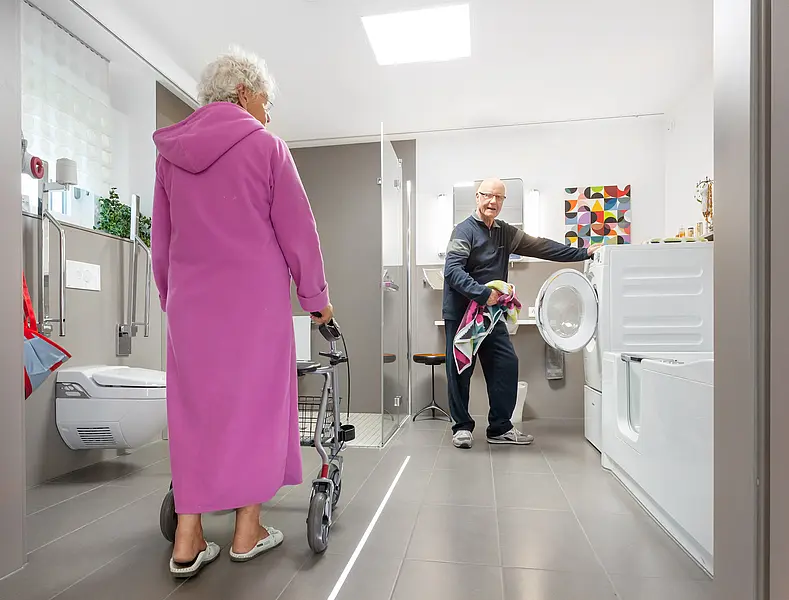
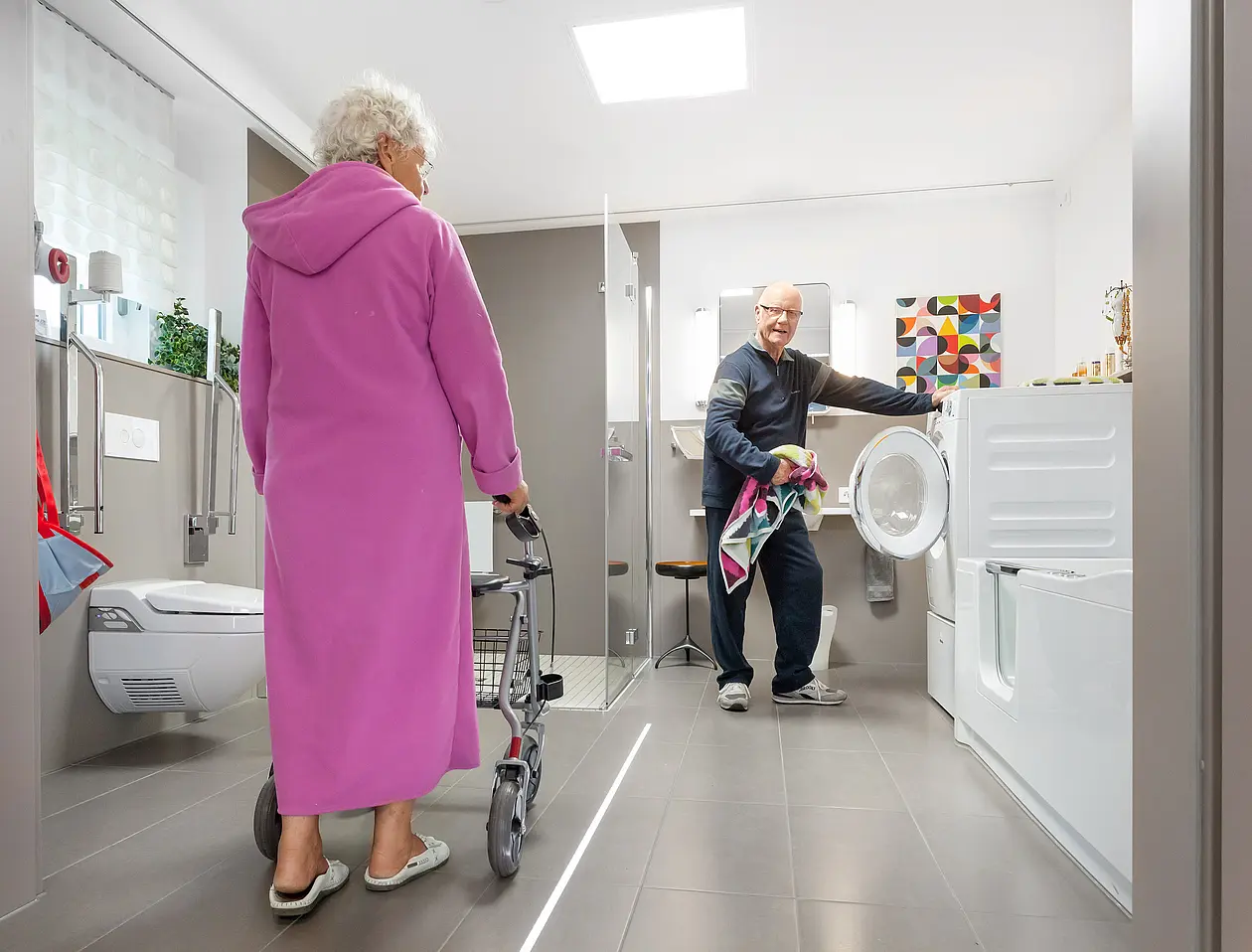
By now, Hilde Ehrle and the elderly couple have reached the bathroom, following the green light strip. “The first and most important renovation: Remove the tub, install a walk-in shower,” Hilde Ehrle explains. The elderly couple is concerned about the cost. Hilde Ehrle has another helpful suggestion that will hardly cost anything at all: “You could raise the washing machine on a platform.” Now the couple has heard, seen, and tested a few ideas. They can now decide which ones to implement when the time comes.


The LebensPhasenHaus is all about networking in the best sense of the word.

Prof. Udo Weimar


Text: Franziska Hammer


More articles

Letter or email: What causes more CO2?

A letter produces about two to three times as much carbon dioxide as an email. 

Not everything withers with age

Layer number four of our neocortex keeps growing and growing –with astonishing consequences