Uni-Tübingen

attempto online

09.07.2026

New evidence challenges big-game hunting and fire-use by Homo floresiensis

A new innovative study in Experimental Archaeology by an international team of researchers, including from the University of Tübingen, challenges claims on hunting and fire-making by the hominins of Flores, Indonesia – nicknamed the ‘hobbit’.
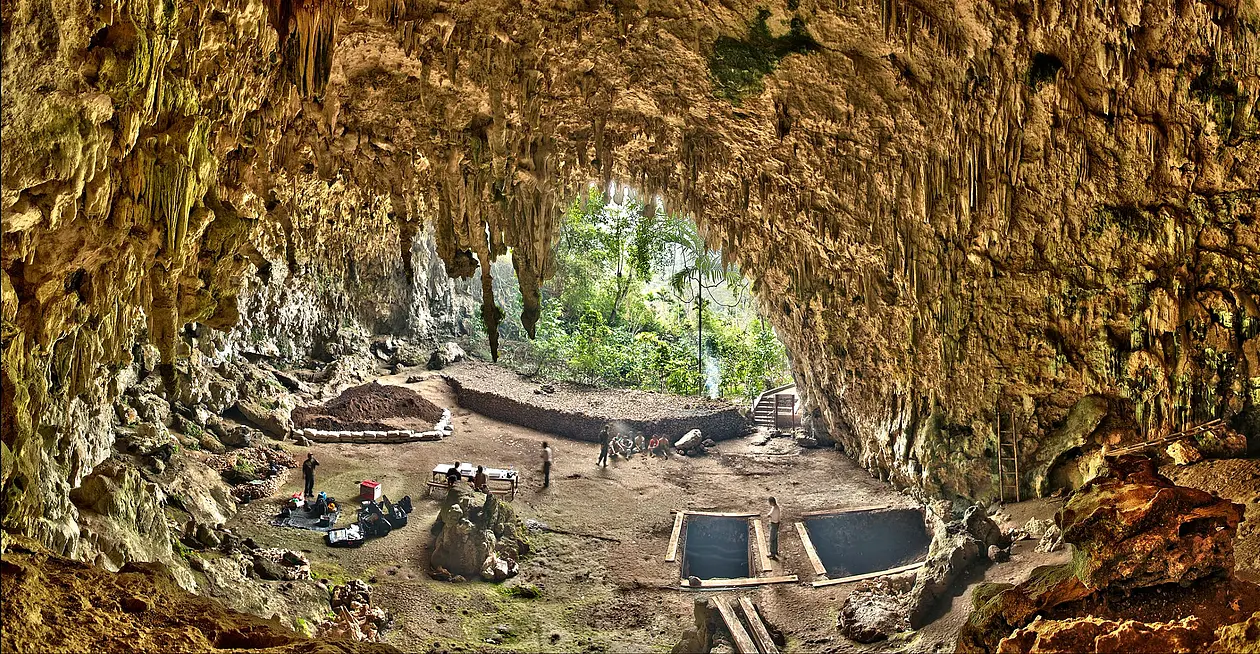
Liang Bua, a limestone cave on the Indonesian island of Flores. The Liang Bua Team prepares for new archaeological excavations.

Dr. E. Grace Veatch, the newly appointed Independent Junior Group Lead for Experimental Archaeology at the Cluster of Excellence HUMAN ORIGINS at University of Tübingen, and colleagues present new evidence that challenges the original claim that Homo floresiensis hunted a type of ancient elephant called Stegodon and used fire at Liang Bua (Flores, Indonesia). Their results show that the only evidence of fire use at Liang Bua occurs after Homo floresiensis was likely extinct and instead was the result of modern human (Homo sapiens) behavior. Furthermore, Komodo dragons, not Homo floresiensis, hunted Stegodon although both utilized these proboscidean carcasses as a dietary source. 

The international team around Dr. Veatch, including researchers from Indonesia, USA, Canada and Australia, applied the study of taphonomy – understanding what happens to an organism after it dies – to investigate whether an ancient human relative, Homo floresiensis – affectionately nicknamed the ‘hobbit’ –, hunted ancient relatives of today´s elefants (Stegodon florensis insularis) and used fire – claims that were made back in 2004 and 2005 when the first studies on H. floresiensis were published in Nature.

Homo floresiensis survived isolated on an island until 50,000 years ago
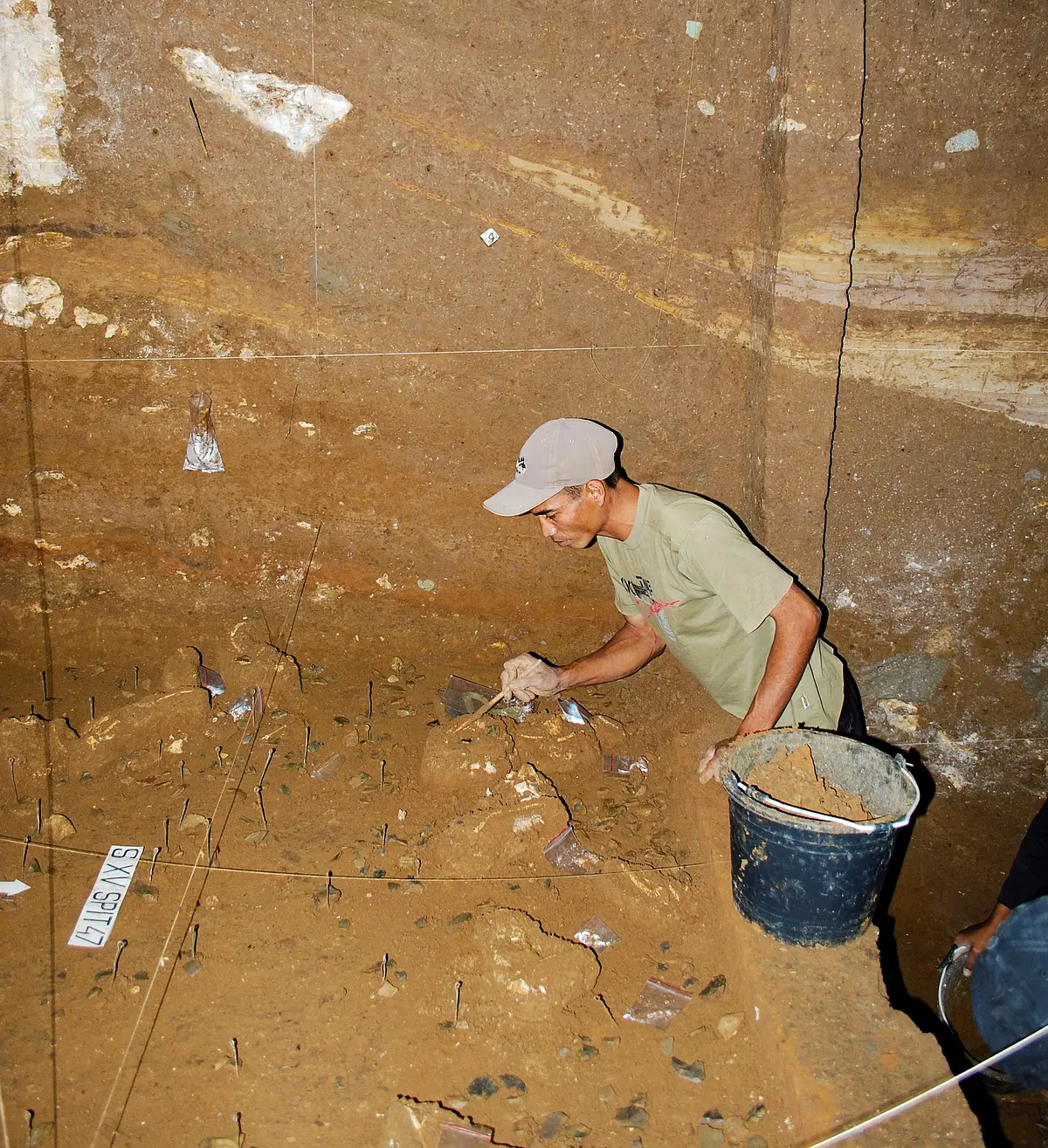
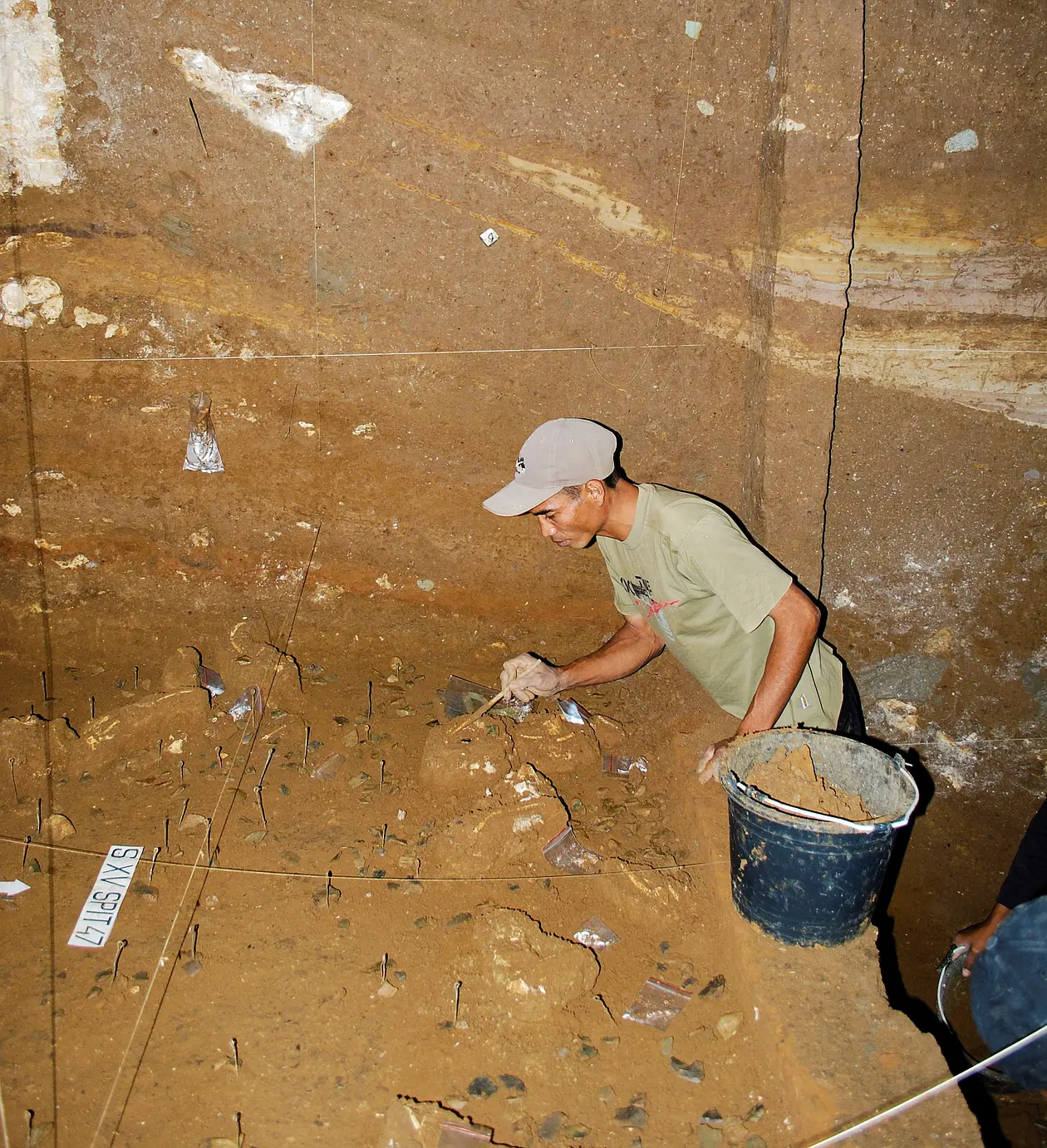
“These behaviors have important evolutionary and ecological implications for the Flores hominins,” says Dr. Veatch. “The fact that they survived isolated on an island until 50,000 years ago without needing to hunt or use fire to survive speaks volumes to the role that these hobbits played within an island or insular ecosystem.” Coauthor Nico Alamsyah agrees: “Homo floresiensis clearly engaged in competition with larger predators like Komodo dragons for food, and this study highlights the importance of understanding the ecological role of hominins surviving within a limited island ecosystem.”

“We have learned so much more about Homo floresiensis and its various contexts since we first discovered it,” said Dr. Thomas Sutikna, who has led research at Liang Bua since 2001. “As our excavations have continued and expanded, we have learned that many of our initial interpretations about Homo floresiensis, for example, its geological age, its stratigraphic context, and now its behavior were incorrect. This study helps clarify key aspects about Homo floresiensis behavior that are important for understanding how this species lived on Flores for countless generations.”

Taphonomy is being used to understand prehistory

Taphonomy is not just an important approach for forensics, but it’s long been used to understand prehistory, and this study used taphonomy to try to figure out if hobbits really used fire and hunted these ancient elephants or whether they just scavenged them from kills made by komodo dragons. 

Using fire and hunting animals larger than ourselves are considered key human traits that evolved at some point during our evolutionary past. While the exact origins of these behaviors are contested, the timing and extent of which hominins began to rely on these behaviors is strongly associated with larger brained hominins, such as modern humans (Homo sapiens), Neandertals, and possibly Homo erectus

It has been argued that evidence of hunting and fire-use in Homo floresiensis supports the idea that they are closely related to Homo erectus, which may have dispersed to Flores from elsewhere in Indonesia. However, the study by Dr. Veatch and colleagues show that Homo floresiensis did not hunt or use fire, possibly signaling a far deeper ancestry within the genus Homo

Methodological approach to scan marks on the Stegodon
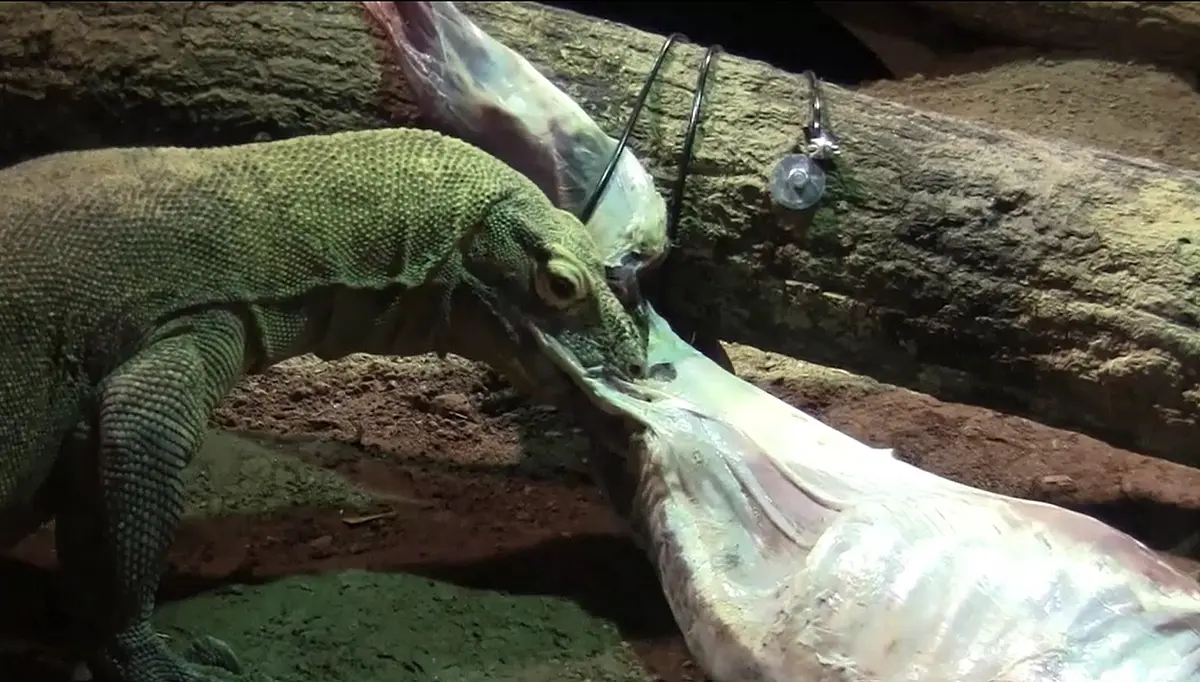
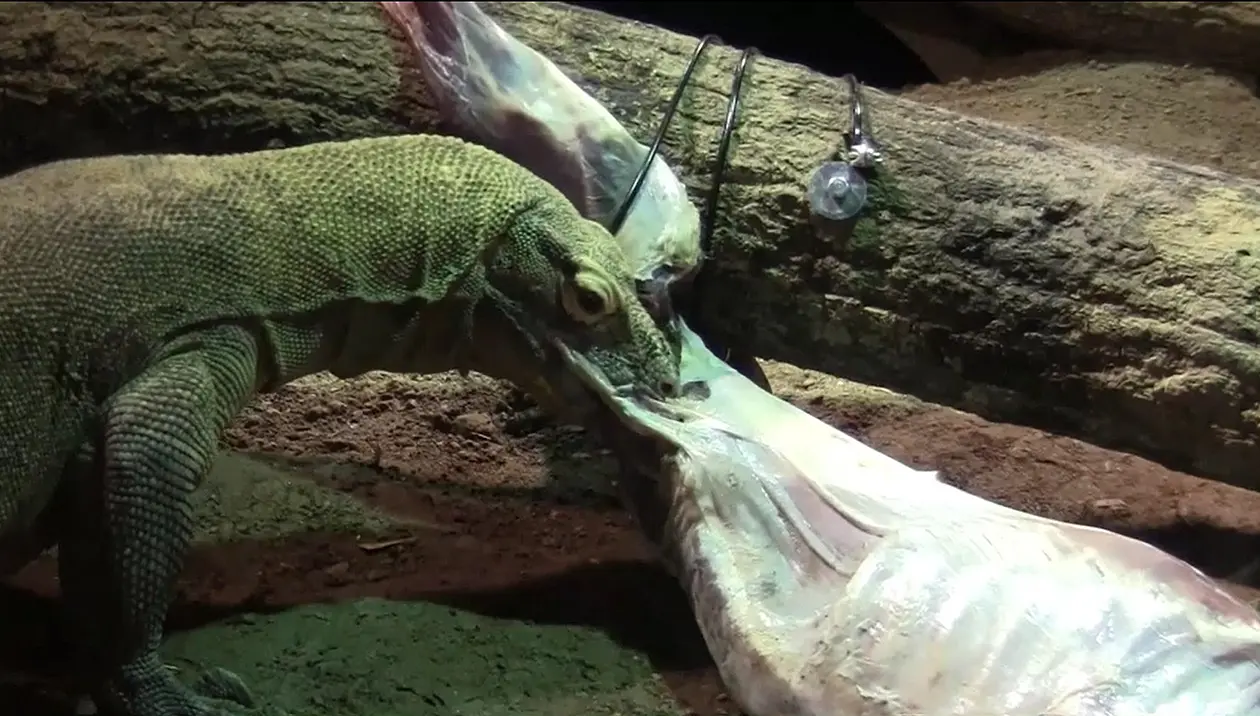
Veatch used a methodological approach developed by coauthor Dr. Michael Pante to scan marks on the Stegodon bones and compare them with marks of known origin. “We first had to acquire a sample of toothmarks on bone made by a Komodo dragon,” says Dr. Pante. To obtain those samples, the team collaborated with the Atlanta Zoo, where bones of animal carcasses fed to a Komodo dragon were collected. “We then scanned the marks using a 3D profilometer and compared them with other known marks, such as cutmarks made by humans using stone tools”. 

The comparison allowed the authors to determine if the marks found on the fossil Stegodon bones were then made by hominins using stone tools or from the teeth of Komodo dragons. Based on this analysis and the skeletal abundance pattern, the authors concluded that Komodo dragons were responsible for killing the Stegodon, not Homo floresiensis. Coauthor Dr. Briana Pobiner further notes: “This was an elegant application of experimental taphonomy models to determine who got to the Stegodon carcasses first and accessed the meatier parts of these prey animals - turns out, it wasn’t Homo floresiensis.

Studying traces of fire usage with unorthodox methods using rat bones

Dr. Veatch used a rather unlikely source to determine if Homo floresiensis used fire: rats. These smaller animals dominate the faunal assemblage at Liang Bua making them an excellent comparative source to see if the presence of fire could be detected in layers associated with Homo floresiensis and Homo sapiens. Much like today, rodent bones litter the cave floor from roosting owl pellets, so when a hearth was built in the cave, the heat from the fire would burn the underlying bones,and some would be incorporated into it. The complete absence of a single burnt rodent bone out of about 4,500 sampled led Dr. Veatch and colleagues to determine that H. floresiensis did not use fire at Liang Bua. 

“This research highlights the importance of collaboration between Indonesian and international scholars, bringing together different approaches and skills for continued archaeological research at Liang Bua” says coauthor Dr. Matt Tocheri. “Slowly but surely, our work is revealing important details about the prehistory of Homo floresiensis and Homo sapiens on this fascinating island.”

Publication: 

E. Grace Veatch, Nico Alamsyah, Michael Pante, Alex Pelissero, Tewabe Negash, Briana Pobiner, Chelsea R. Betts, Jatmiko, Thomas Sutikna, Matthew W. Tocheri: Taphonomic analysis at Liang Bua reveals the behavioral and technological capabilities of Homo florensis. SCIENCE ADVANCES, (DOI: 10.1126/sciadv.aeb7219)

Contact: 

Dr. E. Grace Veatch
University of Tübingen
Human Origins Cluster of Excellence
elizabeth.veatchspam prevention@uni-tuebingen.de 

Contact for the media: 

Nicola Scheyhing
University of Tübingen
Human Origins Cluster of Excellence
nicola.scheyhingspam prevention@uni-tuebingen.de