
Article
21.05.2026
SSRC Graduate Research Fellowship for Wendy He
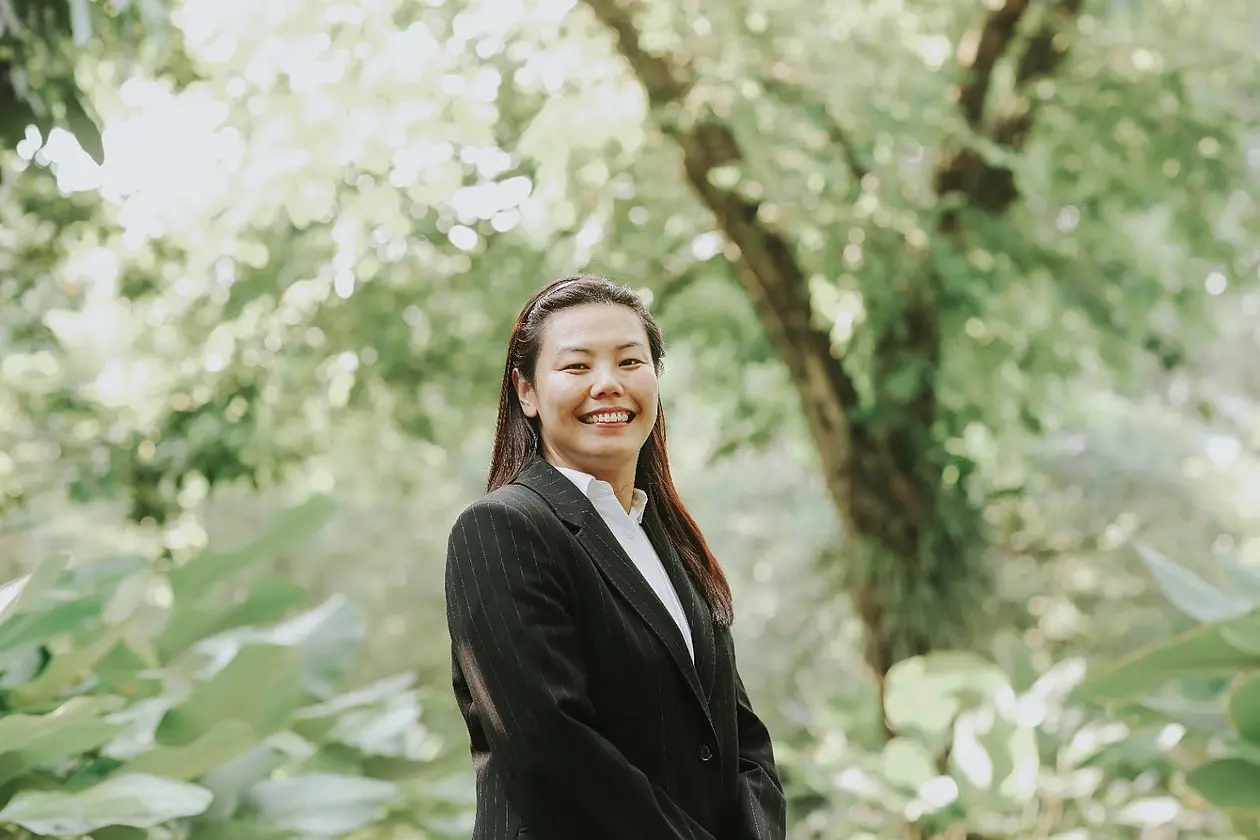
Wendy He has been awarded the Singapore Social Science Research Council Graduate Research Fellowship, a national research grant supporting promising postdoctoral research in the social sciences. This award was made possible through her fellowship at the University of Tübingen’s College of Fellows, where she is currently based as a Global Encounters Fellow from April 2026 to March 2027. Her project on confidence, trust, and the political psychology of climate diplomacy contributes to this year’s Global Encounters theme, “Making Peace with Nature”.
Wendy He is an interdisciplinary scholar of international relations whose research bridges political psychology, international security, and diplomatic history. Her work examines how leaders and advisers assess credibility, escalation risk, and restraint under conditions of uncertainty, developing a psychological framework that explains how confidence calibration and trust dynamics shape foreign policy decision-making. She has a Bachelor of Arts in History from National University of Singapore (2003–2007), and Master of Science and PhD (2018–2025) in International Relations from S. Rajaratnam School of International Studies, Nanyang Technological University, Singapore, with a PhD on "The Confidence Trap: How Leaders and Advisors Assess the Credibility of Military Threats”.
Research project
Climate science has made the stakes unmistakably clear. The remaining challenge is political. How can states build trust and sustain cooperation under deep uncertainty? Why do some climate negotiations collapse while others produce breakthrough agreements?
This project examines how leader confidence and trust dynamics shape cooperation in climate diplomacy. Drawing on political psychology and research on advice utilisation, I argue that miscalibrated confidence, what I call the “Confidence Trap,” distorts how leaders interpret evidence, incorporate expert advice, and signal commitment. Overconfident leaders may dismiss credible counsel and overpromise. Underconfident leaders may hesitate and signal unreliability. Both patterns weaken trust.
Through comparative case studies of major negotiations such as Copenhagen, Paris, and Glasgow, as well as analysis of China’s role in climate diplomacy, the project investigates how calibrated confidence, trusted chairs, and epistemic communities enable durable cooperation and shared norms.
By integrating in-depth case analysis with experimental design, the research offers theoretical and practical insights into how diplomacy can move beyond tactical bargaining toward sustained trust-building. Achieving peace with nature requires scientific knowledge, political will, and carefully calibrated judgment. It requires rethinking the psychological foundations of cooperation itself.
The selection of the University of Tübingen as host institution reflects the university’s strong international standing and highlights the College of Fellows and the Global Encounters platform as important spaces for interdisciplinary and globally engaged research. The University of Tübingen is the first university in Germany to be selected as a host institution for the SSRC Graduate Research Fellowship.
Niels Weidtmann
Link