

10.11.2025
Explaining and drawing in physics class: Study shows benefits for conceptual understanding
Dr. Heike Russ and colleagues show that combining explaining and drawing can promote learning in authentic classroom settings.
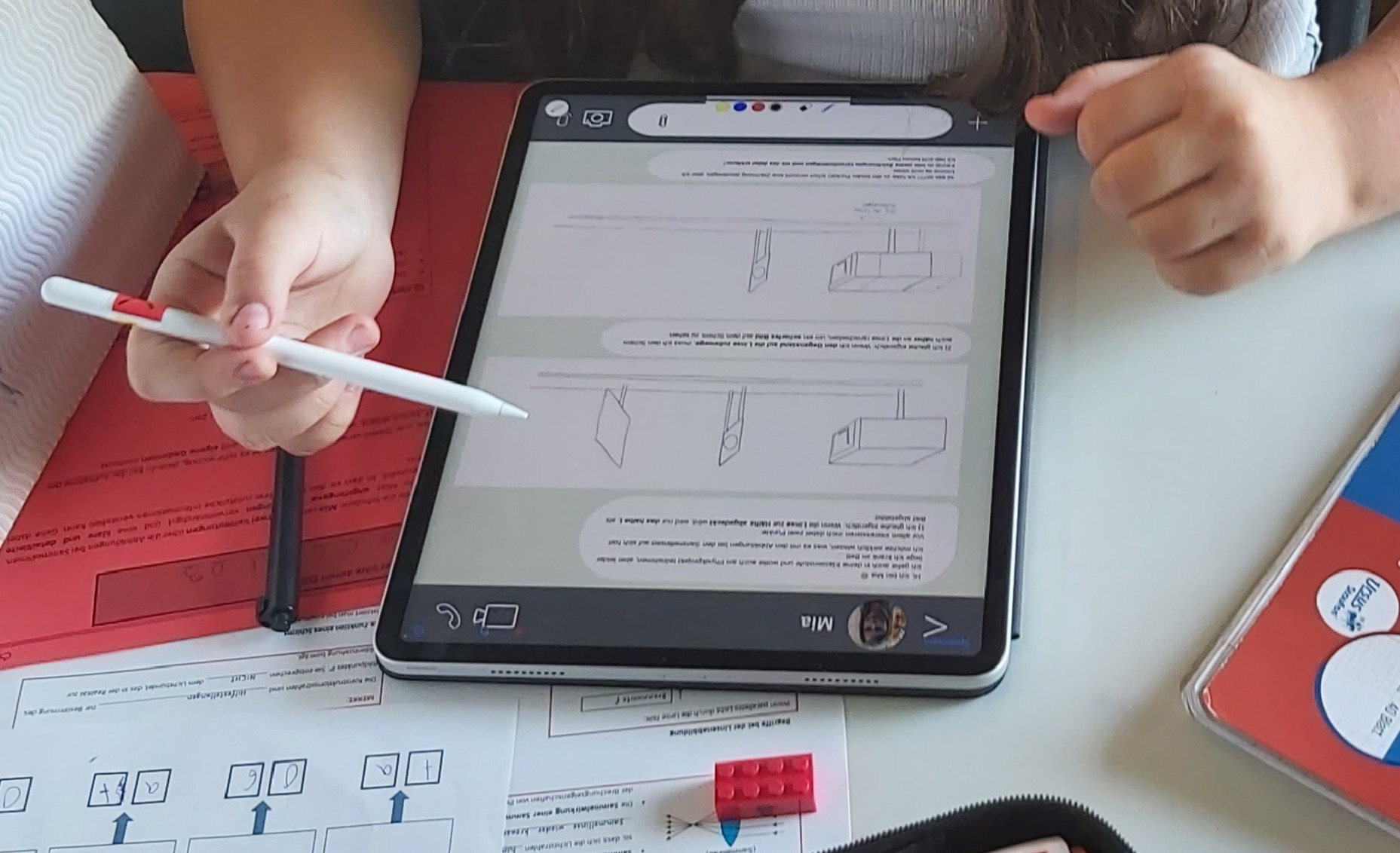
Physics is a fascinating but challenging subject. How can students best develop conceptual understanding in a field like physics? A new publication by LEAD member Dr. Heike Russ and colleagues in the Journal of Educational Psychology investigates how combining explaining and drawing influences the learning of physics concepts.
The large-scale study, conducted in authentic physics lessons, involved 720 students in 30 classes across 11 schools (final N = 590). The results demonstrate that students who explained the learning content orally and through drawing to a fictitious peer developed an immediately deeper conceptual understanding than students who explained with a provided visualization, explained only, or restudied the material. At the same time, the study shows how challenging it is to maintain such effects over time. Overall, the study makes an important contribution to understanding how students can be supported in science education.
Publication
Russ, H., Sibley, L., Flegr, S., Kuhn, J., Hoogerheide, V., Scheiter, K., & Lachner, A. (2025). Combining non-interactive teaching and drawing fosters conceptual knowledge but not monitoring accuracy from guided inquiry in science learning. Journal of Educational Psychology. Advance online publication. https://dx.doi.org/10.1037/edu0000971
Project
Embedding generative and retrieval activities to foster inquiry-based learning in science classrooms (GRAIL)
Research Group
The project is part of the DFG Research Unit "Lasting Learning: Cognitive mechanisms and effective instructional implementation" (FOR 5254).
Media Contact
Rebecca Beiter
rebecca.beiter@uni-tuebingen.de