Uni-Tübingen

Interested in using Graveler for your teaching?

Project Completion and Future Engagements 

The Graveler project has now been successfully completed. We would like to thank everyone who contributed to its development, implementation, and continued use in teaching and learning. Although the project has come to an end, we remain happy to support colleagues interested in using Graveler in their courses or in learning more about game-based learning in higher education. Please feel free to reach out to us at any time with questions, ideas, or collaboration proposals, you can contact us at our email gravelerspam prevention@tracs.uni-tuebingen.de. 

For a closer look at the project's journey, activities, and outcomes, we invite you to read our final project report. Developed at the University of Tübingen as a response to the teaching challenges of the pandemic, Graveler grew from a single serious game into a full co-creative platform that lets educators and students build interactive, globally themed learning worlds together. It is continued to be used in Global Awareness Education seminars, workshops, community events and shares the pedagogical thinking, student feedback, and lessons learned along the way. 

Read our Graveler Report in detail: English version and German version available.


Retrospective: Graveler Game Festival

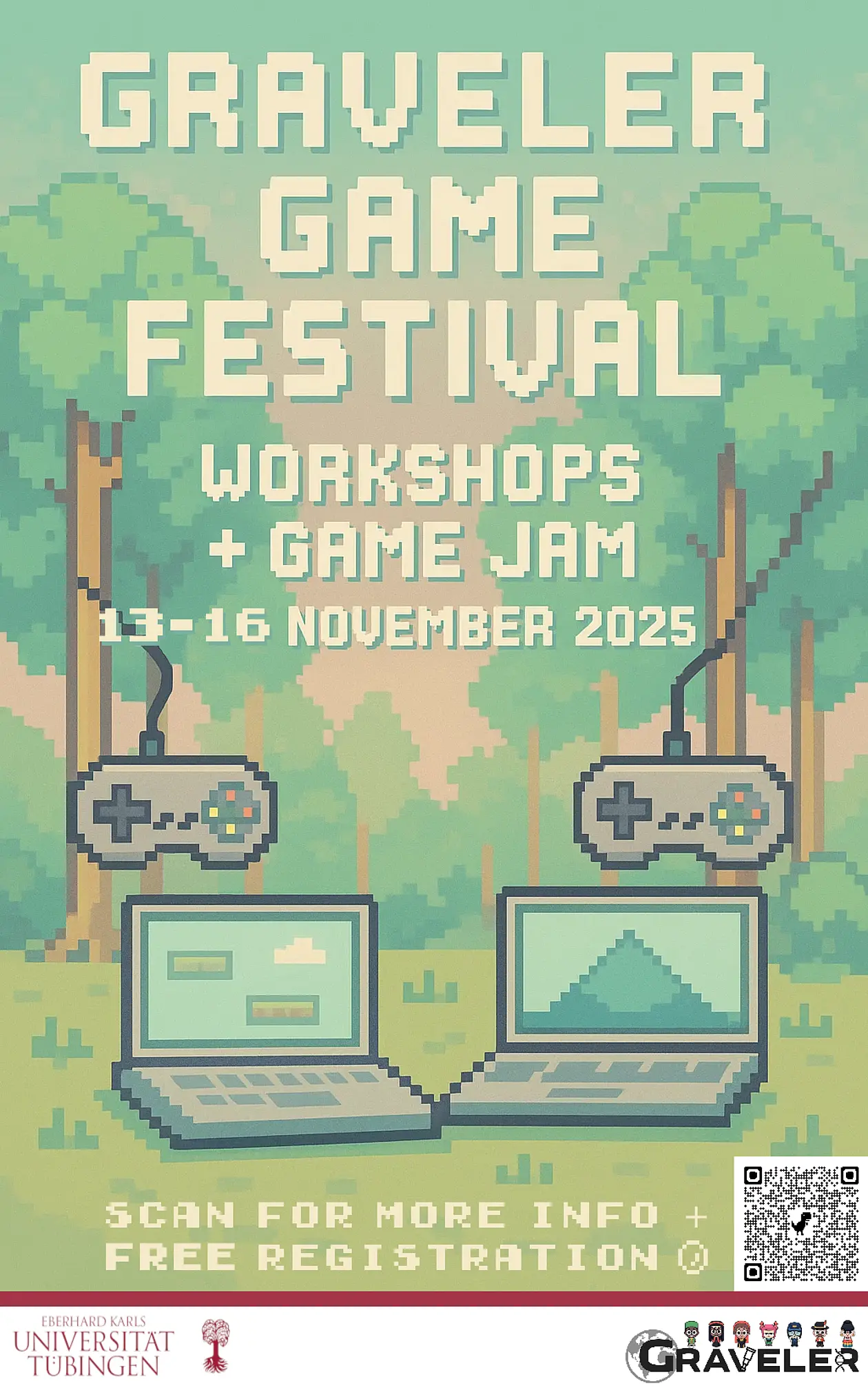
In collaboration with UT Tracs – Global Awareness Education, UT Digital Humanities, and the German-French Cultural Institute (ICFA) in Tübingen, the Graveler Game Festival took place from November 13 to November 16, 2025. The four-day event with 92 participants began with a conference (Conference Program) that brought together experts from higher education, the gaming industry, and politics with students, lecturers, and researchers to discuss the future of game-based learning in higher education in keynote speeches and workshops. Over the following three days, a total of 55 participants with seven mentors (including Mexico, Romania, Italy, and Uganda), mainly students from six universities as well as researchers and freelancers, formed teams to develop serious games within 48 hours as part of the 2025 Graveler Game Jam. Forty-seven participants worked on site in Tübingen, while a team of eight participants worked at Makerere University in Uganda. As part of this “game jam,” participants were given four sponsored challenges, including topics such as digital cultural heritage, political and ethics education, citizen science, and educational games. They were supported on site by experienced mentors in the areas of game narrative, graphics, audio, and software architecture, and ultimately developed a total of 16 serious games (to view the finished games: https://itch.io/jam/graveler-game-jam-2025/entries). An initial evaluation of the participants' feedback showed that they were very interested in the educational and transformative potential of their games, and no team developed games without a conscious learning purpose. In terms of collaboration, 100% of respondents received helpful feedback from team members, 76.7% from non-team members, and 63.3% from experienced mentors. Fifty percent of respondents said they would continue to refine their games and add additional content. The University of Tübingen was strongly represented during the four days with a total of 67 registrations. You can find the SWP's report here: https://www.swp.de/lokales/tuebingen/game-festival-in-tuebingen-in-48-stunden-zum-fertigen-spiel-78448087.html
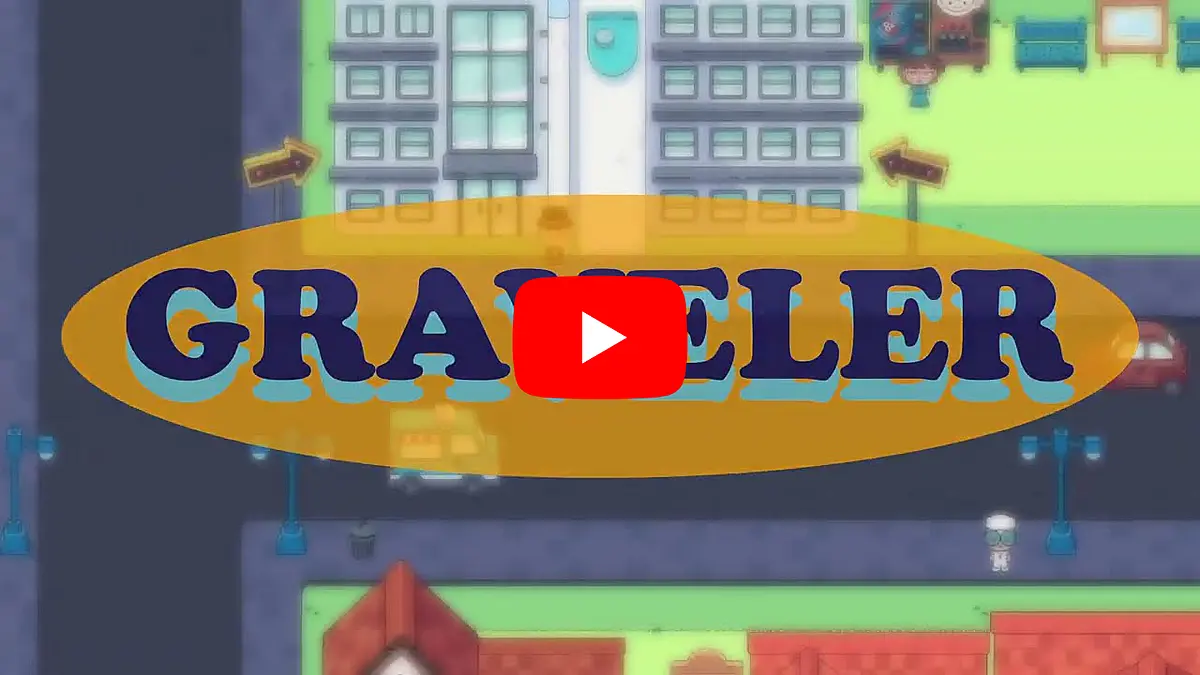
Innovative Teaching with the new Serious Game Graveler

Our Department of Global Awareness Education, together with the Digital Humanities Masters programme, University Didactics, and the company Ncite, has developed a virtual world tour in the form of a serious game to convey and discuss the basics of the globalization debate 


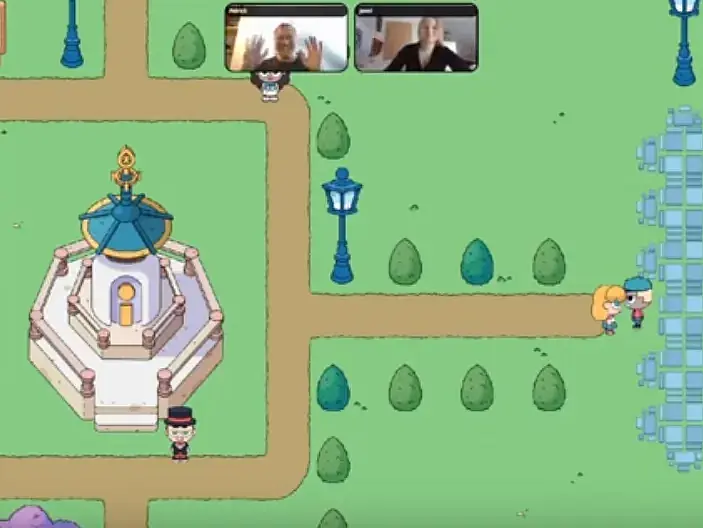
The game has been designed as an engaging two-dimensional online multiplayer role-playing game with both collectible and puzzle components. In the game, a group of students embark on a virtual trip around the world, visiting a number of selected cities. As they travel, they must solve puzzles and meet the people they need to solve them, some of whom are real. These interactions are designed not only to develop students' problem-solving skills, but also to give them the opportunity to explore the content in greater depth.


In order to provide students with a comprehensive knowledge of the regions they have travelled to, the game contains a variety of multimedia content. In addition to videos and graphics, this includes scientific texts that provide in-depth information and background to the topics covered. This combination of different media formats ensures a varied and in-depth learning experience.


The serious game is used in various seminars, including "What is Globalization? No Poverty", "CIVIS BIP Democratic Memories in Global Perspective" and "Global Migration on the Ground". In these courses, the game supports the theoretical content and enables students to explore and understand the complex issues of globalization in an interactive and hands-on way.

To try out Graveler, please use Chrome, Edge or another Chromium Browser, then press the “GO” Button. Please select “without credentials” and then create a unique username (e.g. “bob12345”) and pin (e.g. “1234”). Please don't use your Universität Tübingen credentials to log-in.