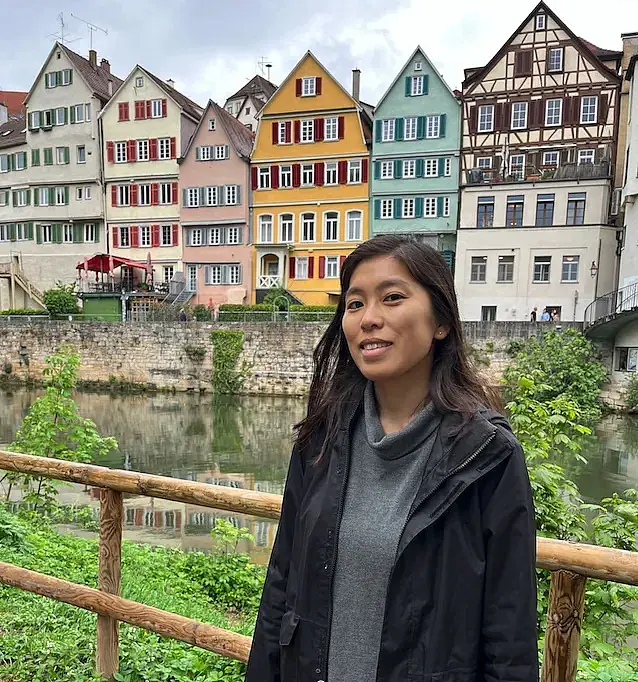
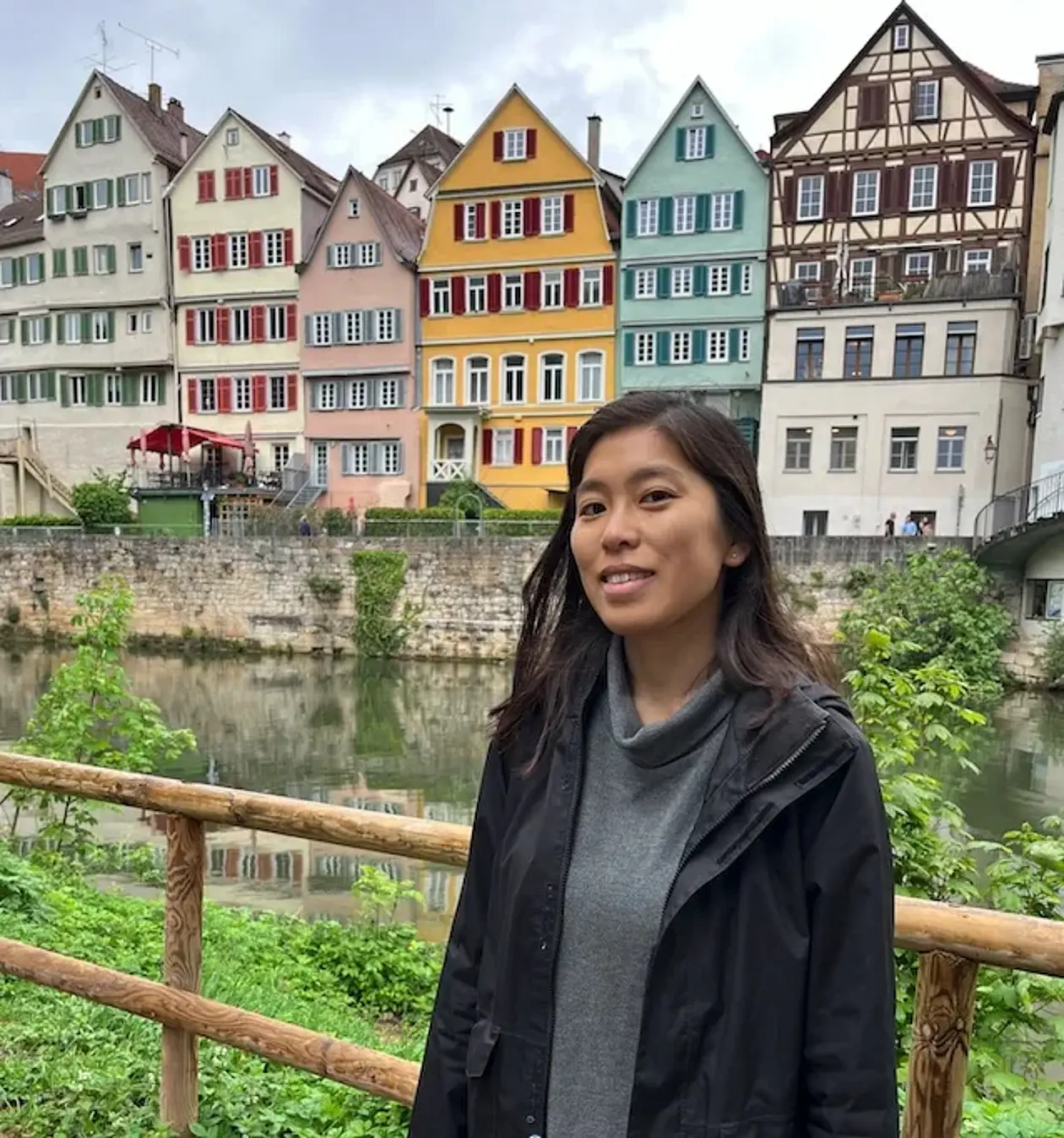
Dr. Angelina Zheng is an Alexander von Humboldt Postdoctoral Fellow from Italy. She specializes in the fields of algebraic and tropical geometry on a topic known as tropical trigonal curves and is currently active in the Combinatorial Algebraic Geometry working group headed by Professor Hannah Markwig at the Department of Mathematics.
Angelina Zheng studied Mathematics in Bologna and completed her doctorate in the subject at the University of Padua with a thesis titled “On the cohomology of moduli spaces of trigonal curves.” She has since been a postdoctoral fellow at two other Italian universities, Roma Tre and Pavia, and visited the University of Stockholm for a semester. Through Professor Margarida Melo of Roma Tre University, Zheng came to the attention of Professor Markwig, a member of the Humboldt Foundation’s Henriette Herz Scouting program, and was invited to apply for the Fellowship to come to Tübingen.
Zheng’s background is in classical algebraic geometry. She has expanded her area of expertise into tropical geometry, the study of polynomials and their geometric properties when usual addition and multiplication are altered. Now, Zheng is working at the cutting edge between these two fields.
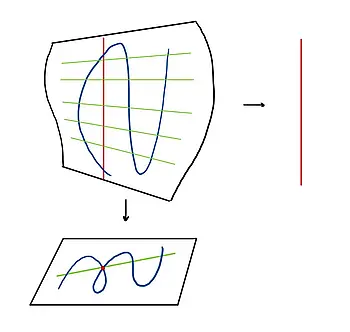
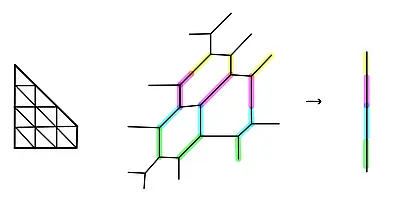
Zheng is studying complex curves through the lens of tropical geometry, which allows you to think of the curves as combinatorial objects such as graphs: “One way to study these geometric objects is to compute invariants of these spaces,” she says, “The goal of my research is to get information on these invariants in the study of these classes of curves from the point of view of tropical geometry, by looking at them as graphs. It’s a very abstract project.”
As yet any practical applications are far in the future. Currently, Zheng is studying spaces of curves by computing topological invariants, called cohomology groups.
“I study the moduli spaces of curves, which are a focus of algebraic geometry and have been studied for the last few decades. These are complex curves but you can think of them as real surfaces. And even though they have been studied for some years now, lots of their geometry is still unknown.”

Dr. Zheng arrived in Tübingen in October and for the two years of her Humboldt Fellowship will be working with Professor Markwig on a project to study embedded trigonal curves. “In particular, I have studied trigonal curves, in which other than the genus you also fix another invariant, which is the gonality of the curve. In Rome, I was working on the tropical analogue of this space, parametrizing tropical trigonal curves. When you look at this interpretation via graphs, you have abstract tropical curves – like graphs – and you also have embedded tropical curves. What I am doing with Hannah Markwig is studying them from the point of view of embedded tropical trigonal curves.”
The working group provides a relaxed and supportive environment and the opportunity to discuss mathematics with people at various qualification levels – doctoral students, postdocs and professors, Zheng says. “We get ideas from each other and help each other.” She finds Tübingen very different from living in Rome, but enjoys living in a smaller city which is not so crowded and noisy, and where green spaces are never far away.
Amanda Crain
The Humboldt Research Fellowship enables a 6–24-month research stay in Germany for researchers from around the world working in any discipline. They must have completed their doctorates within the last four years, with above-average results.