Uni-Tübingen

“Art arises from something sincere”
What does aesthetics mean? Ballet star and tutor Friedemann Vogel literally gets the theoretical debate moving at a workshop.

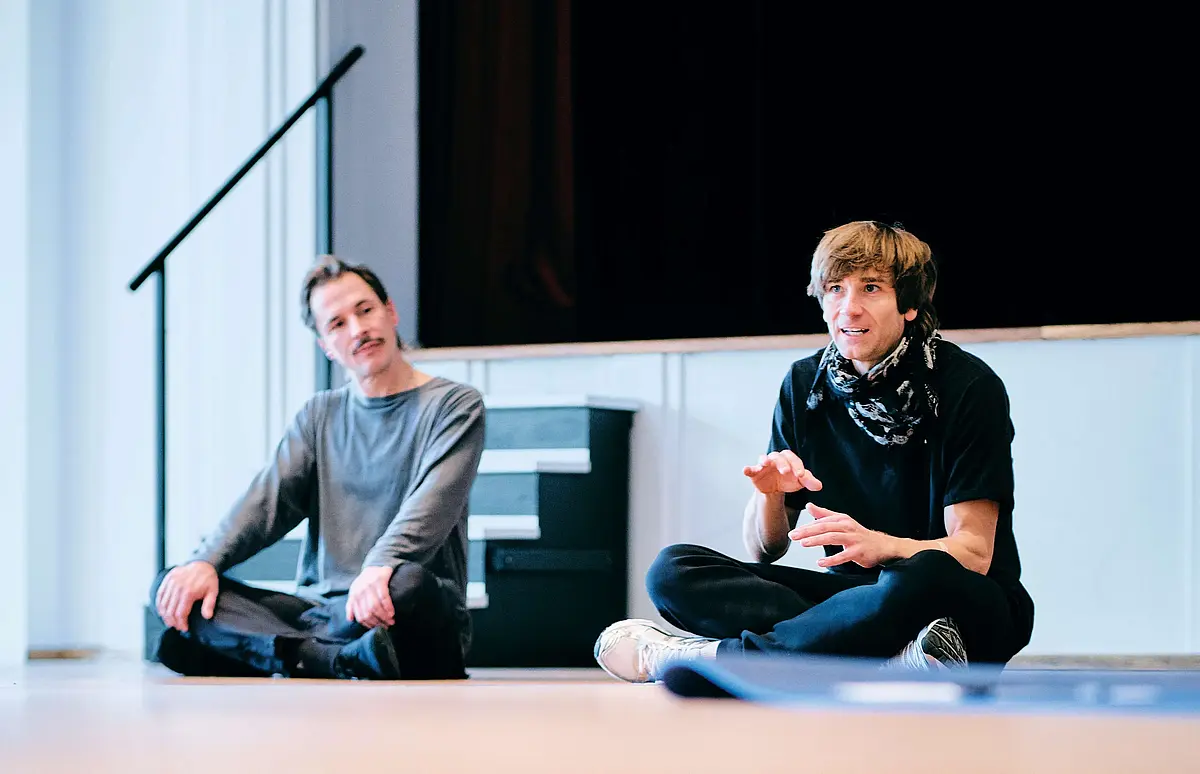
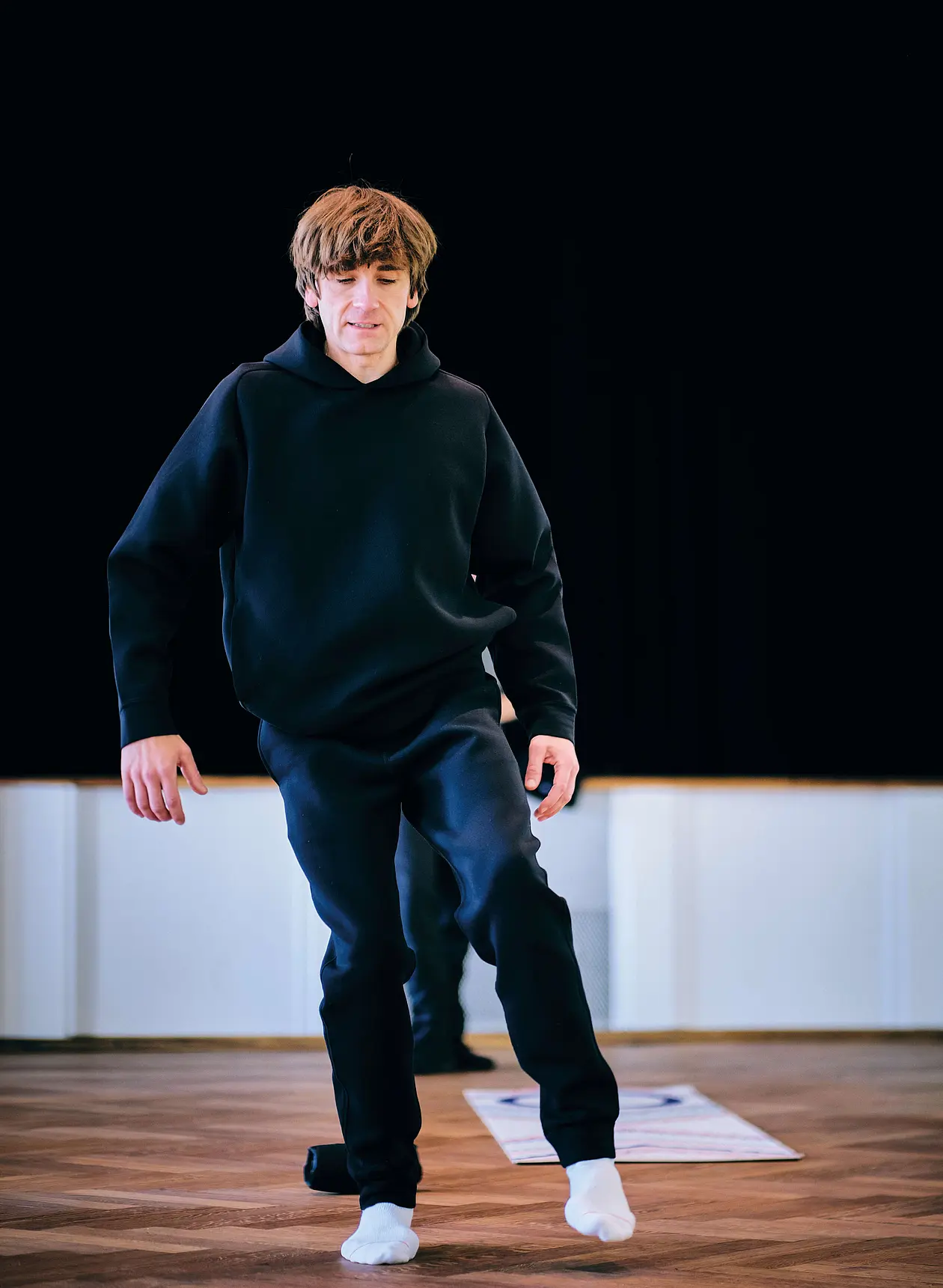
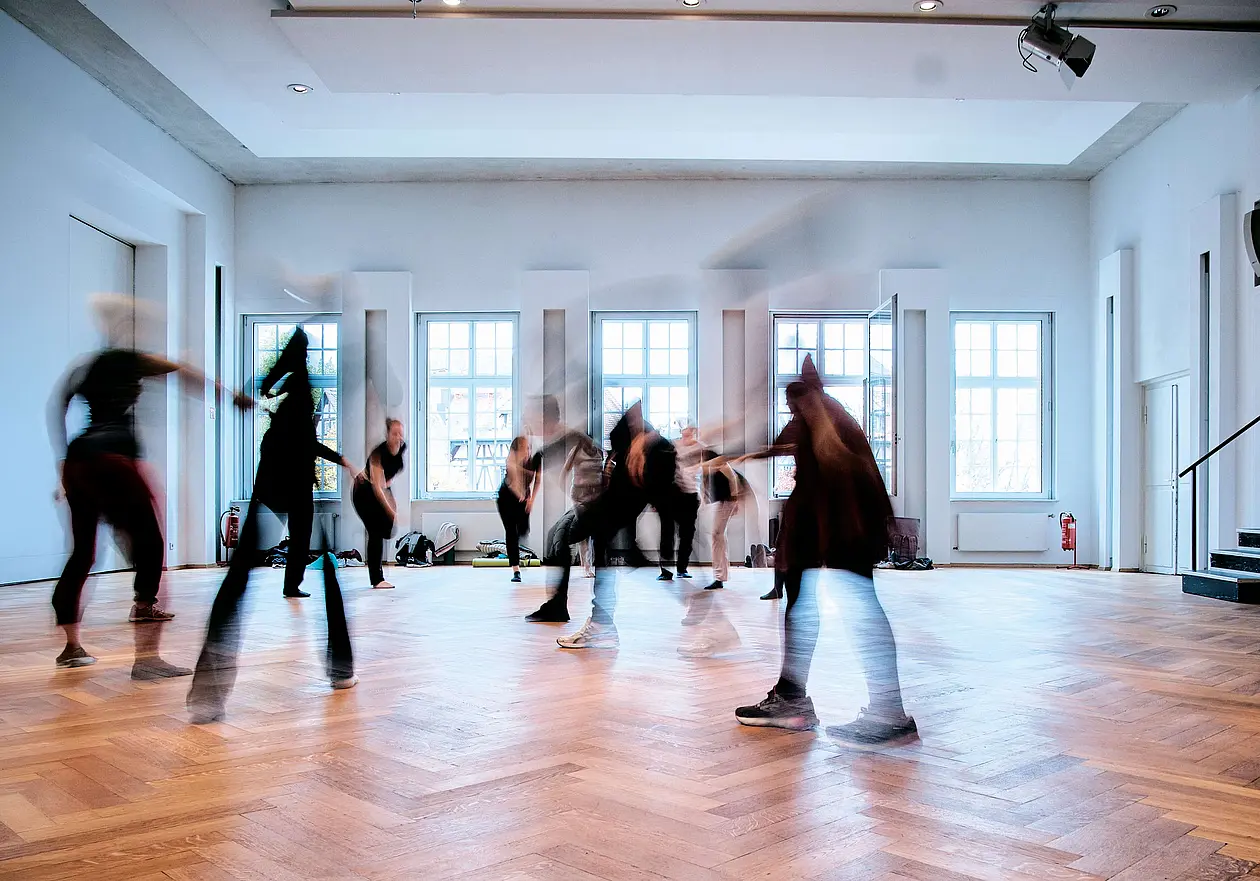
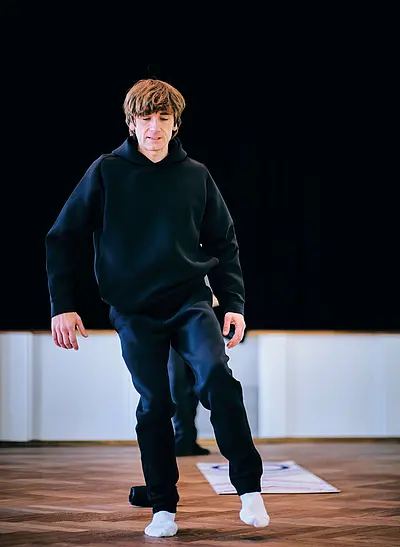
With elastic steps, the dancer treads the parquet floor. He wears sweatpants and a hooded top. The sun suffuses the room. It’s warmer than expected. And here we are, a group of twelve researchers and staff from the University of Tübingen, as recommended in comfortable clothing, in eager anticipation. We form a circle and introduce ourselves. Of course, there’s no need for Friedemann Vogel to introduce himself – he’s the principal dancer at the Stuttgart Ballet, an internationally renowned, multi-award-winning ballet star.

Since 2024, Friedemann Vogel has been working with researchers at the University of Tübingen from sixteen different disciplines, from archeology through art and music studies to history and theology. In the Different Aesthetics collaborative research center they jointly study works of art from ancient history to the early modern period, all of which were naturally integrated in people’s everyday lives: so how can the aesthetics of ancient coins, music in early modern public bathhouses or a medieval homily be described – and why are these also art? In performances, exhibitions and courses, Friedemann Vogel contributes his experiences from artistic practice: what does it mean to create art?

Today, we are venturing onto Friedemann Vogel’s terrain: guided by him, we want to get moving. This isn’t an easy task, because our everyday jobs mainly involve
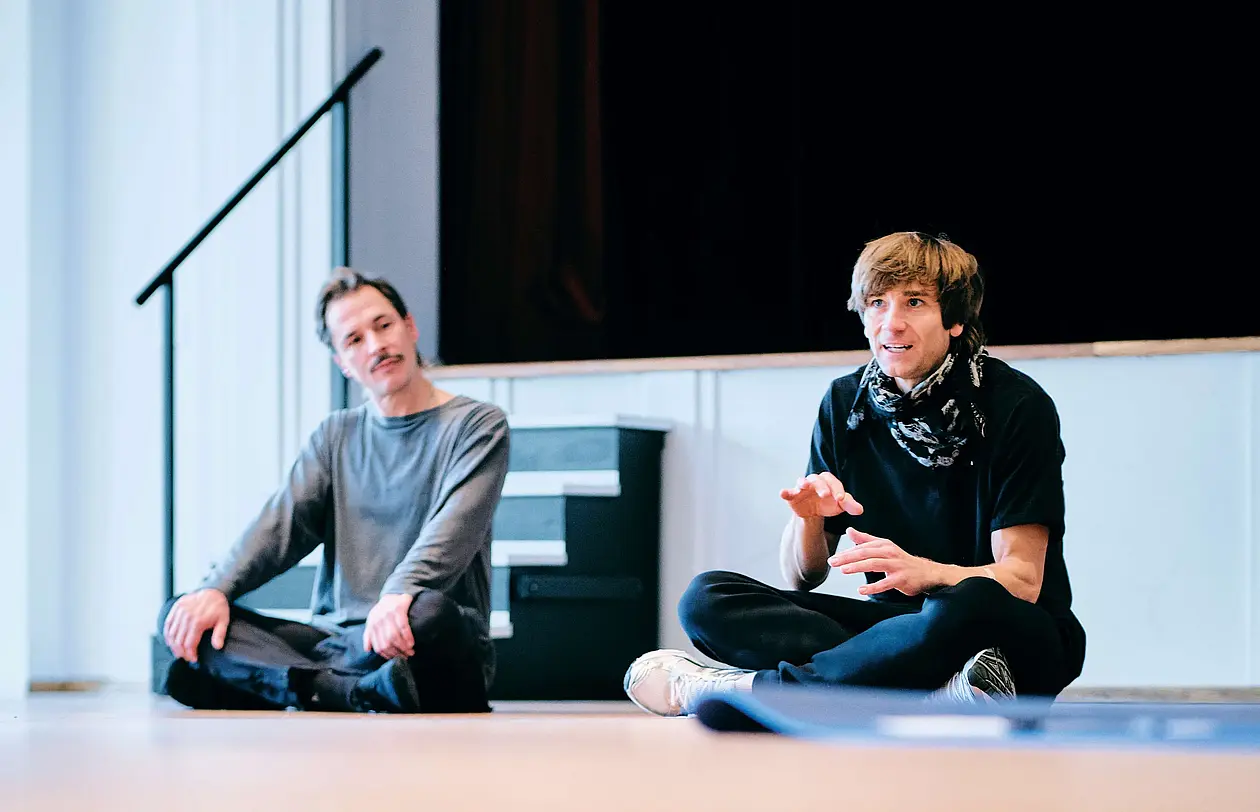
sitting at the desk. Support for Friedemann Vogel comes from the choreographer Thomas Lempertz, with whom he has already developed several projects. In preparing for the workshop, the two felt it was important that everyone contributed something – even without dance training.

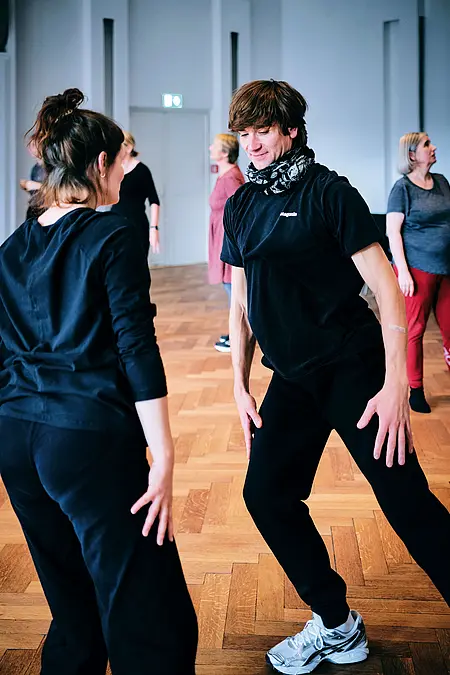
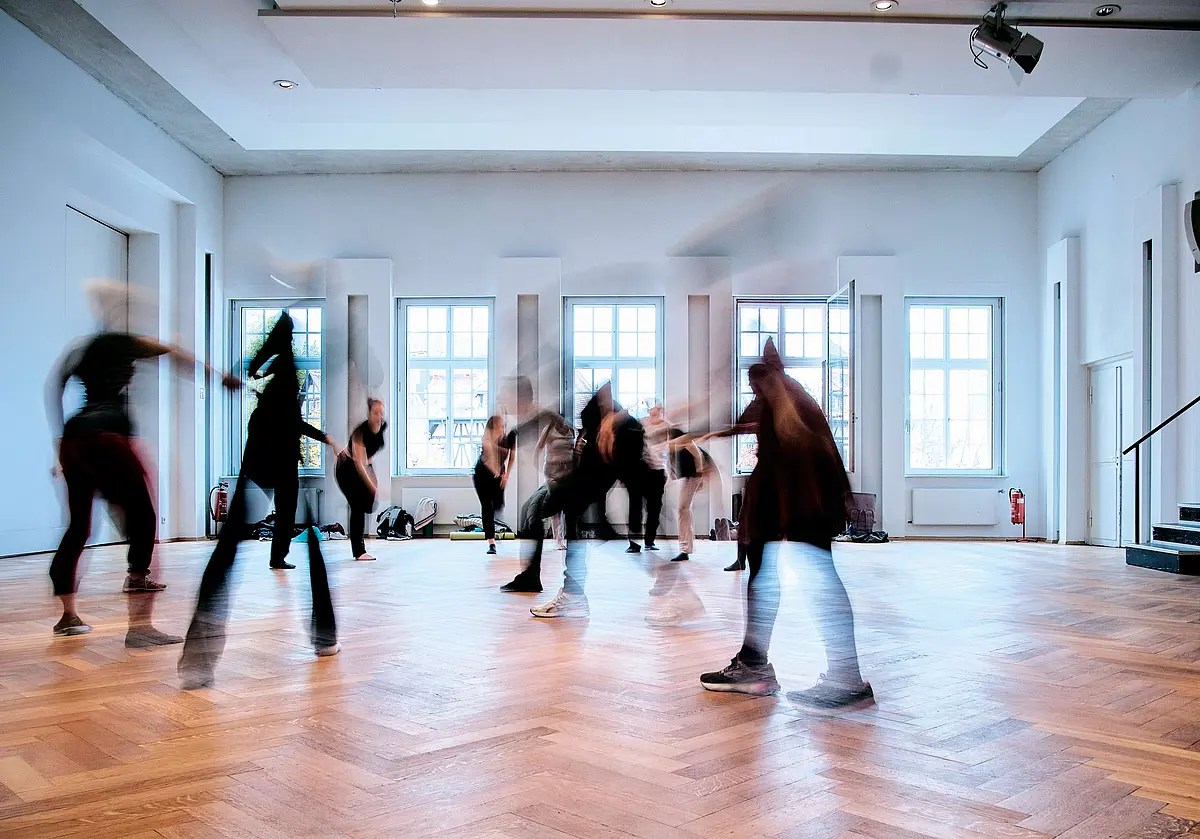
Shoes off, on the mat, warm up. We work through our bodies, direct toes, feet, legs, hands, arms, head. For Friedemann Vogel this is his daily routine. Where a lack of body control causes me to wobble occasionally, his feet flex every fiber. As we skip vigorously around the room, Friedemann encourages us with his gentle voice: ‘You have to get the ticker going properly once a day. Only then is the body ready.’ In fact, exhaustion is an essential element in ballet training, as Thomas Lempertz explains: ‘You have to reach a point where the body is so overworked and drained that you give up any excitement, no longer judge what’s good and what’s bad but simply begin to be real.’ I already feel a bit more real – following the initial tension I now feel myself in my body.


“Aesthetics” in everyday sense: 

the epitome of beauty

“Aesthetics” in academia: 

the theory of the nature and impact of art

“Aesthetics” in the CRC project Different Aesthetics: 

the result of the interplay between form and social function


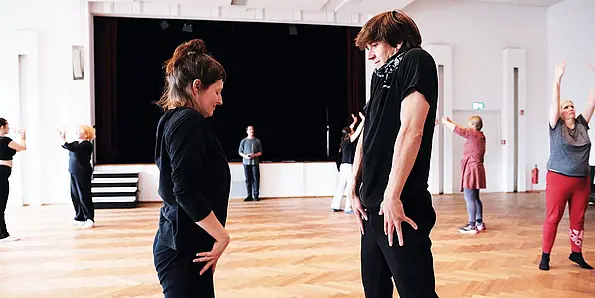
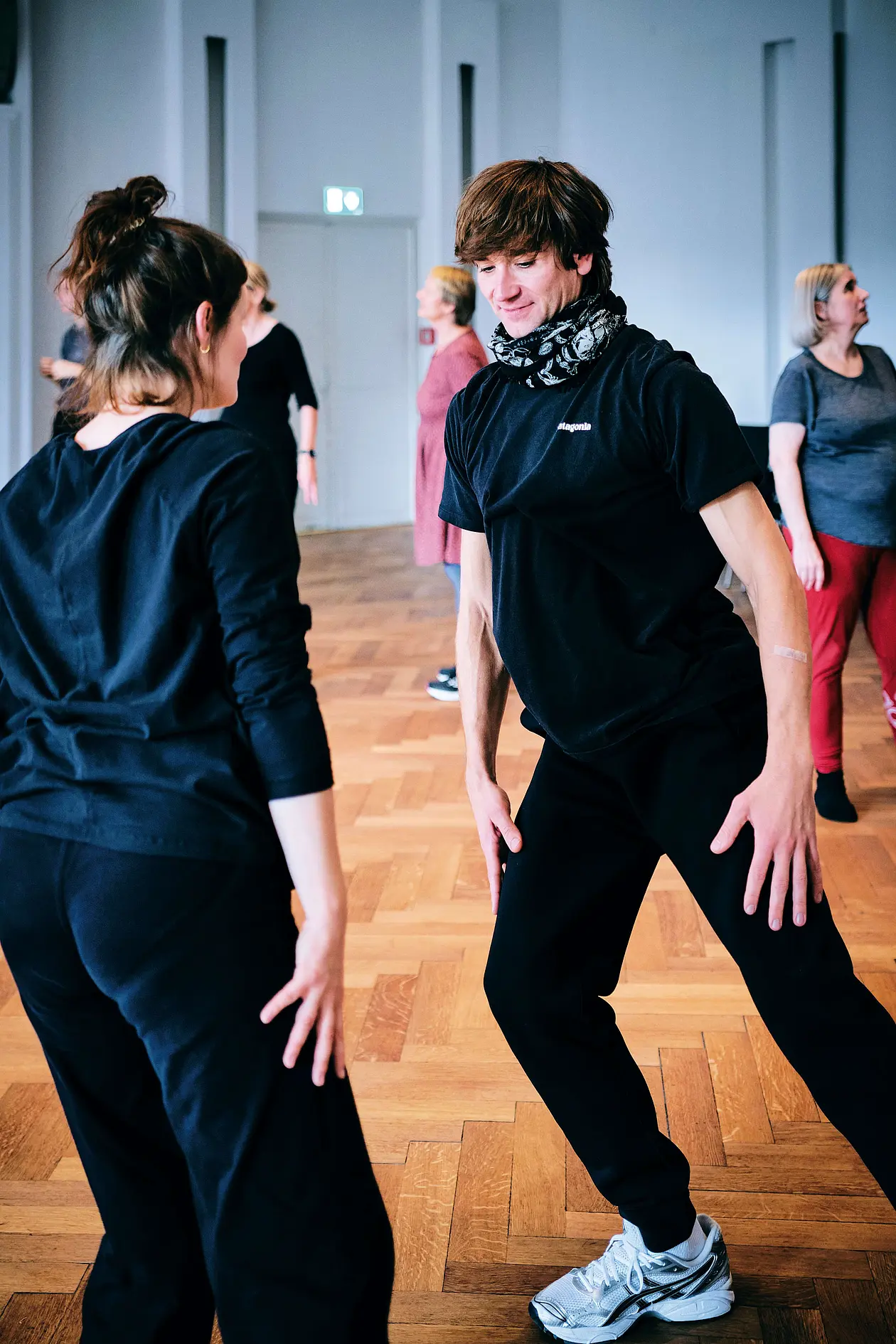
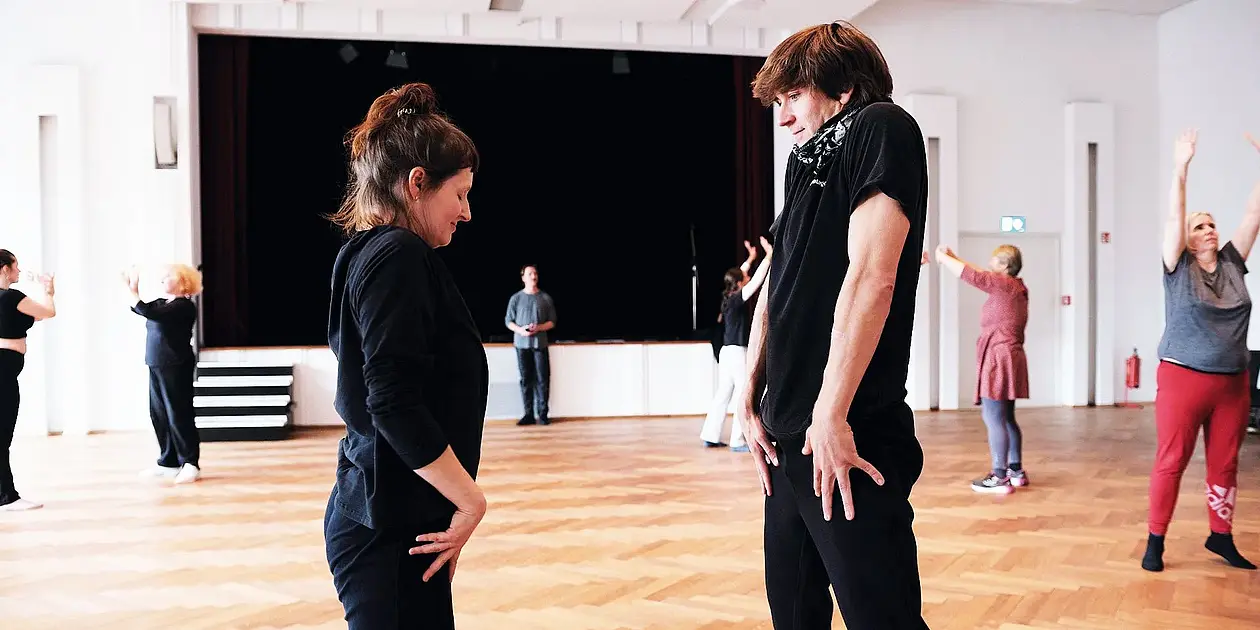
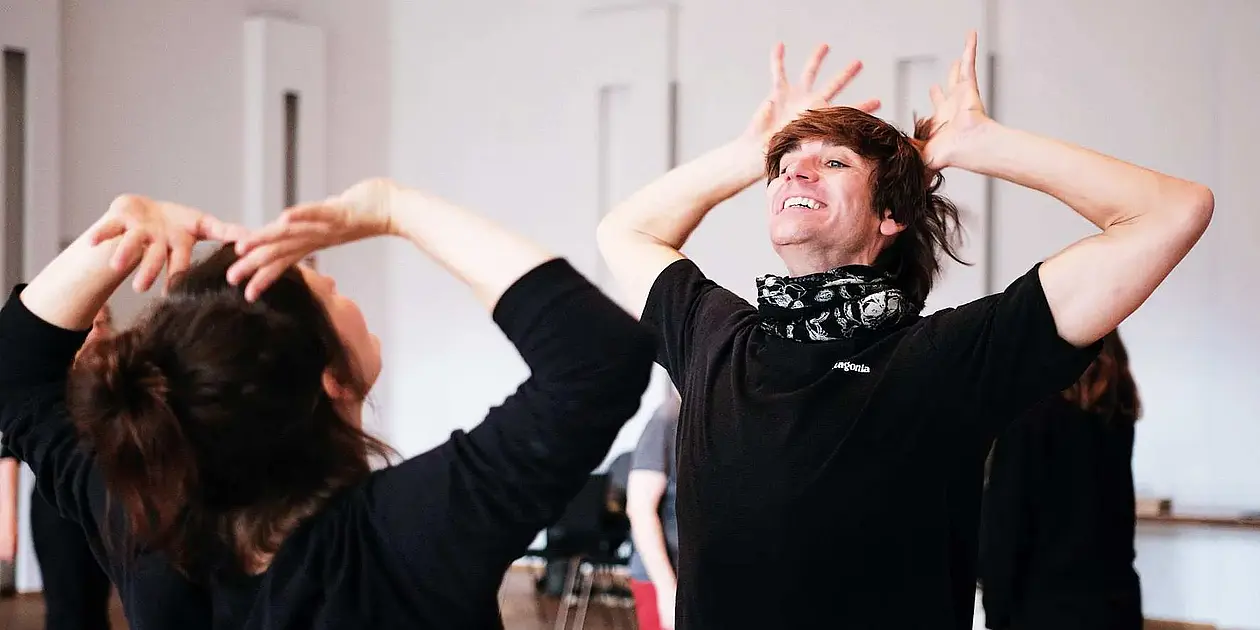
Now it is time for us to show our creativity in an improvisation exercise: in the ‘mirror’, we each face another person. One of us makes a movement, and the other has to reflect it back almost immediately. The groups of two have formed quickly, I’m a bit late and stand there alone. So in the end, my mirror partner is Friedemann Vogel. I have to model a movement, and struggle with embarrassment about making boring moves. Raise both arms, push the hands forward at chest height like a Tai Chi move, and then let my arms drop down again in a wide arc – I can’t help imitating in a small way a movement from a performance that Friedemann Vogel actually developed for our field of research. We have to laugh. I move like Friedemann and Friedemann moves like me. My mind becomes calmer, the movements less thought-out, larger and freer.

So how does a movement become art? This question concerns Friedemann Vogel as much as the collaborative research center Different Aesthetics. ‘Art,’ says Friedemann Vogel in conversation after the workshop, ‘always arises for me from something honest, something sincere’ He recalls a joint workshop on Kleist’s famous text “On the Marionette Theatre”. In this essay, which was published in 1810, Kleist looks at the natural grace that manifests itself in the absence of self-consciousness. Friedemann takes this thought further: ‘Aesthetics arise through authenticity. If you try too hard, it becomes affected, as Kleist puts it. This affectation can only be avoided in ballet by repeating a movement over and over and over. You’ve rehearsed for two months and now it’s time for it to look as if it were the first time, but now you can draw on that.’ For Friedemann Vogel, the authentic, artistic movement comes from life. This intersects with the work of our collaborative research center Different Aesthetics: looking at the anchoring of art in life and the permeability of our everyday life to the aesthetic.


For me, art arises from something honest and sincere.

Friedemann Vogel


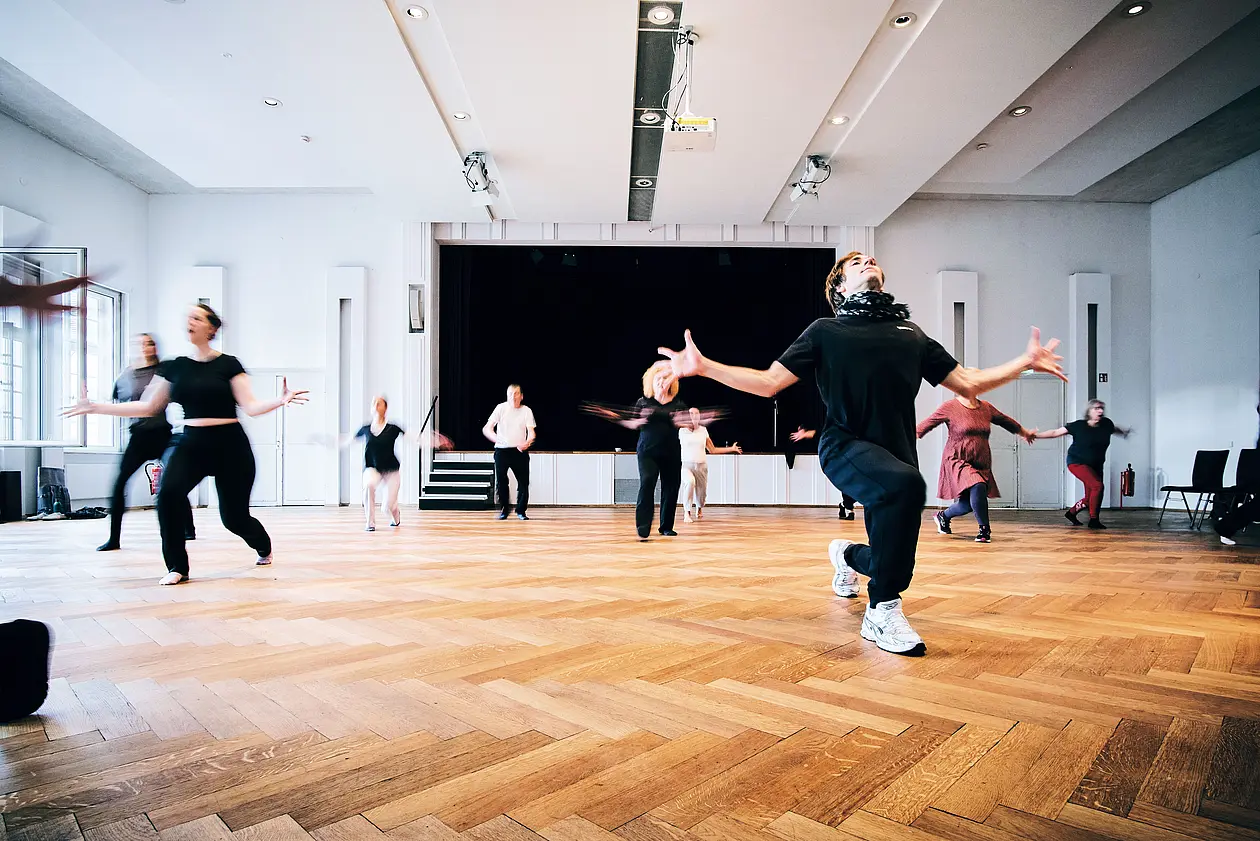
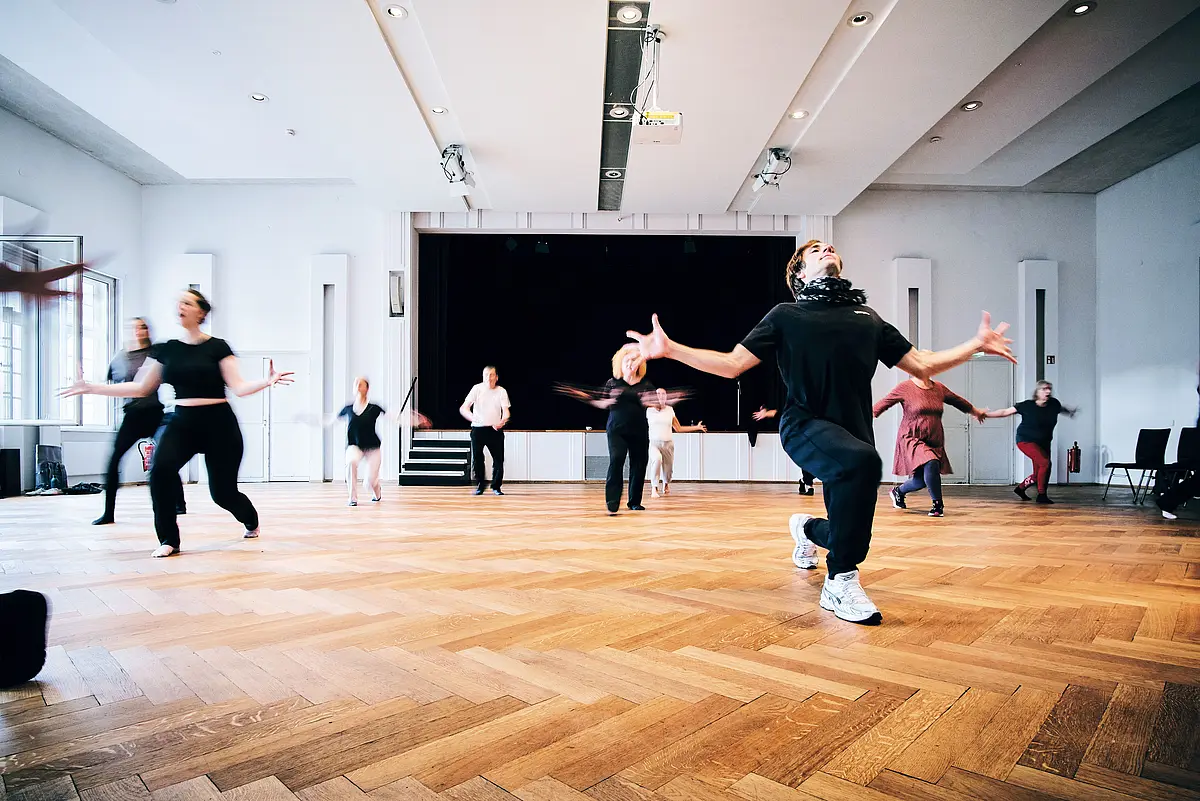
Everyday movements and repetition are the ingredients for the choreography that we now develop together in the workshop. Once again we form a circle. Each of us has to think up a movement – for the count of 4, as it is called in ballet. In other words, each movement is the same length. Thomas Lempertz starts with an expressive gesture: He takes two urgent steps forward, acts startled and then yields two steps back (1 – 2 – 3 – 4). Friedemann Vogel chooses a spirited combination of steps. Then each of us in turn has to replicate the previous movements and add one of our own. The choreography is the total of all the movements. It soon becomes clear that this not only demands creativity, but is also a memory test. Remembering sequences of movements, entire choreographies, is not what our academically-trained brains are used to. Our gestures, which were at first restrained, soon develop into a story that our memories can retain: someone gets dressed, sets off, misses the bus and by chance meets a friend. Yet the strict tempo of the repetition transforms the banal story into a dance performance.


Memorizing choreography –our academically trained brains aren't trained for that.


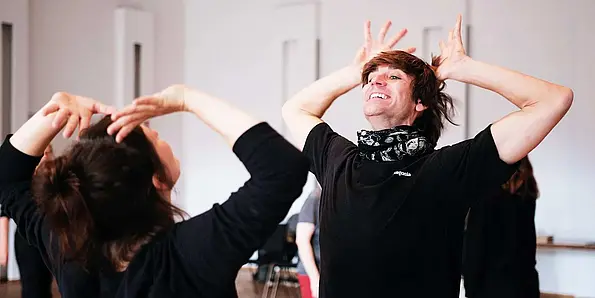
To close, we open up the circle and all turn towards an imaginary mirror: Friedemann Vogel stands in the first row and provides strong support for our memories with his impeccable execution. The music – an electronic bossa nova – drives us. We sense the energy that comes when you make the same movement simultaneously as a group. ‘And now, let the energy flow in your arms!’ calls Thomas Lempertz. We are now – more or less – all in time and dance the choreography so often that we gradually cease to be self conscious. It’s far from being art, but it reveals the intuitive, something that science can find hard to deal with. In conclusion, Friedemann Vogel leaves us with an important thought: ‘The intuitive, instinct, can give birth to something new.’

Franziska Hammer took her doctorate in literary studies at the University of Tübingen and has been a science communicator in the collaborative research center Different Aesthetics since 2019.

Text: Franziska Hammer


More articles

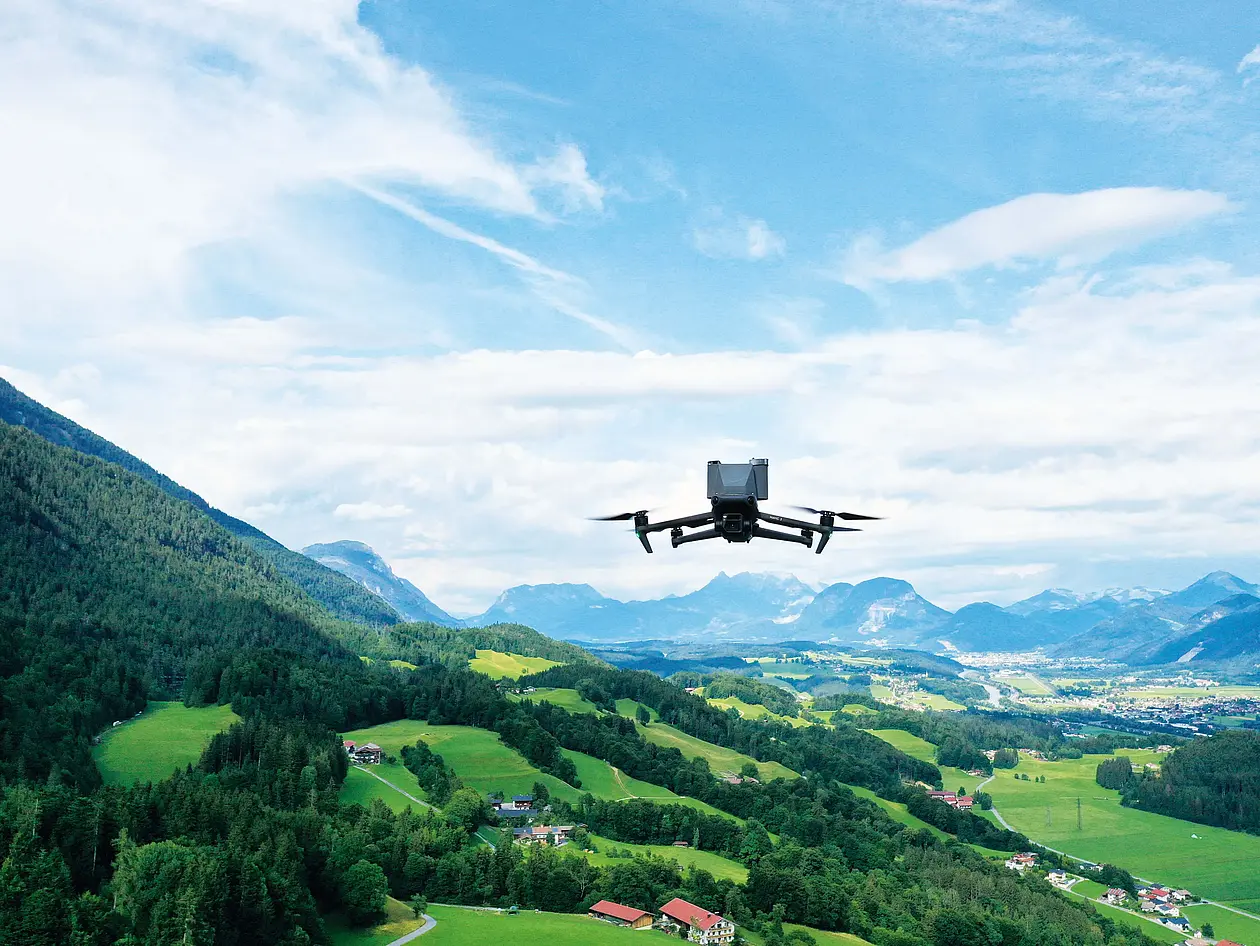
Measuring the Inn Valley

Weather models lack data on the complex wind patterns in the mountains. Measurements taken by drones fill this gap.

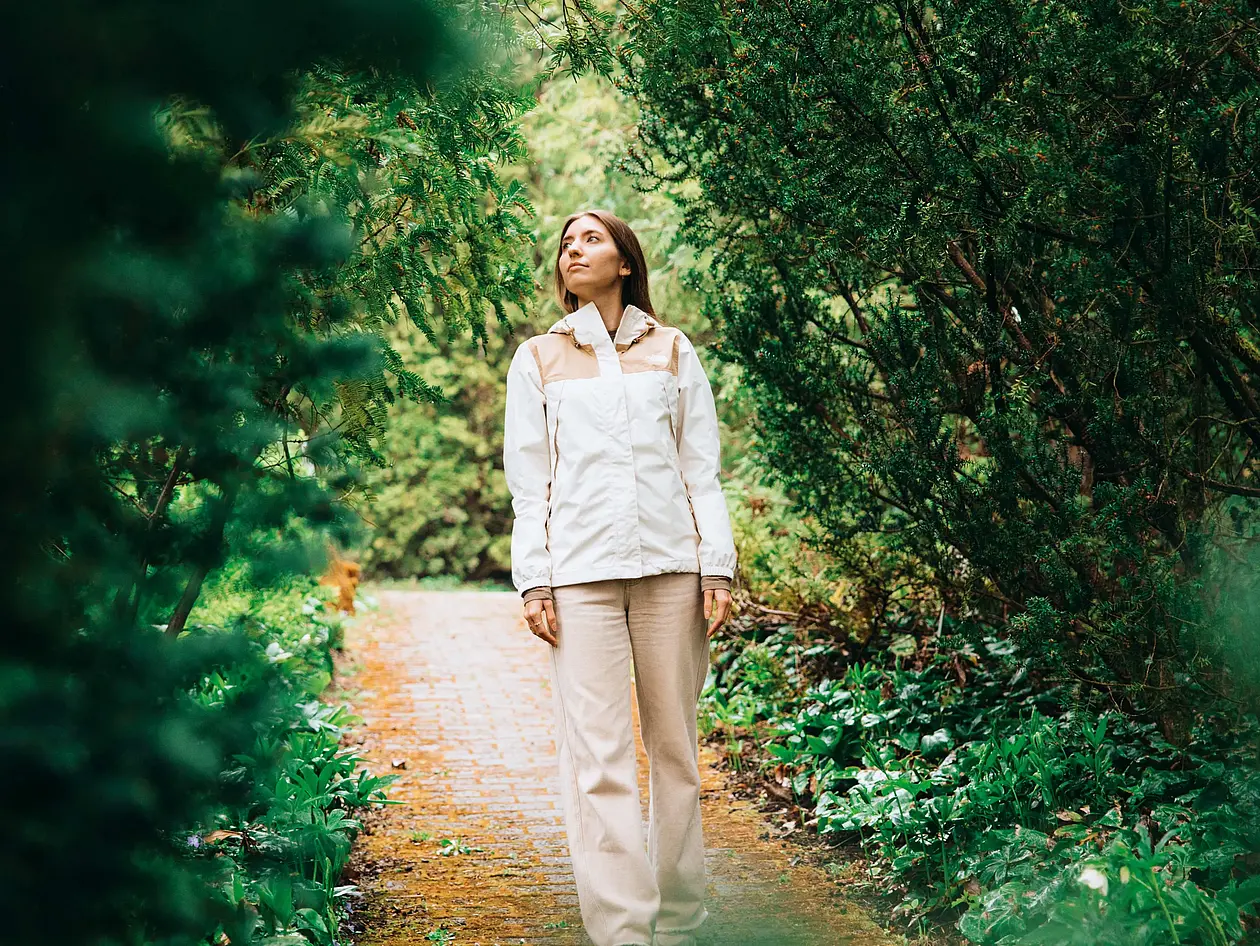
Measurable relaxation

It doesn't take much to make us happy: a walk and birds singing measurably reduce stress and increase our well-being.