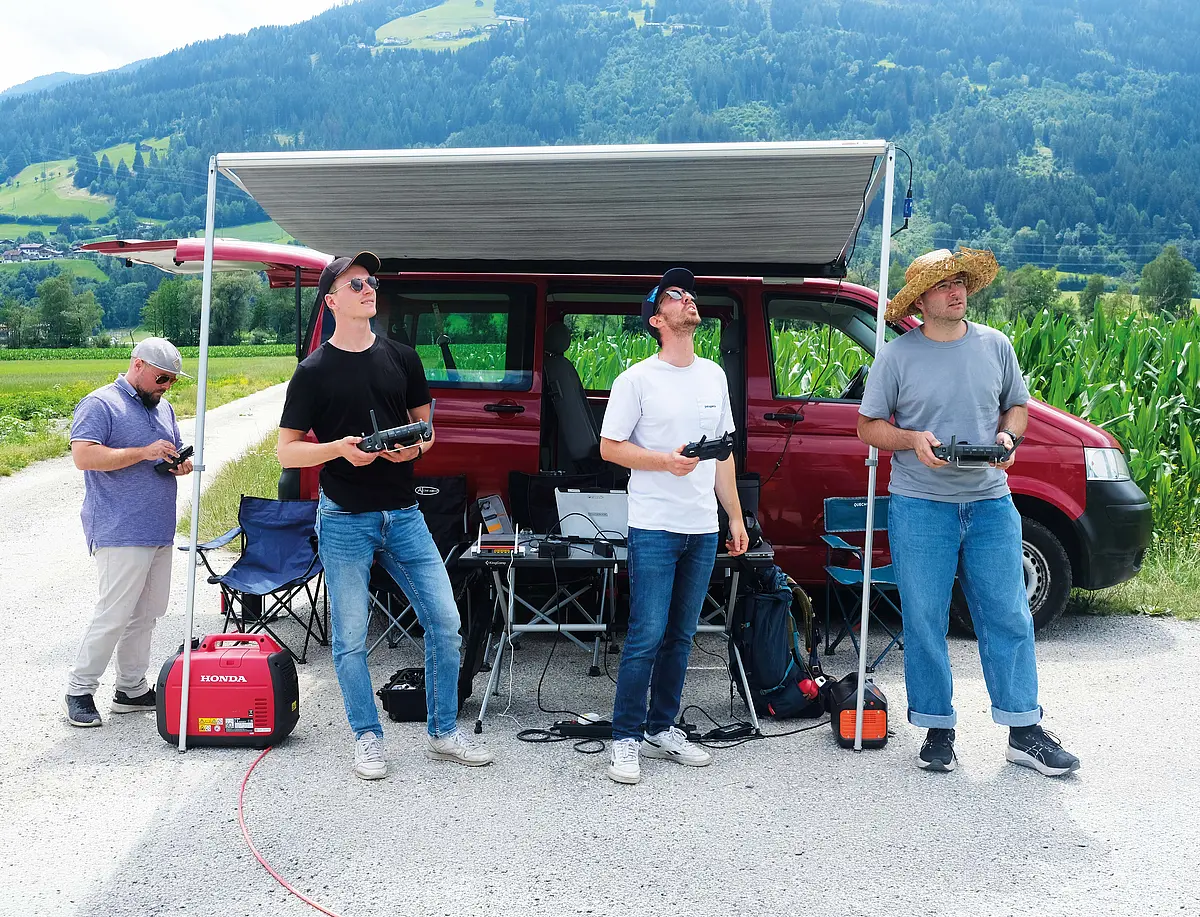
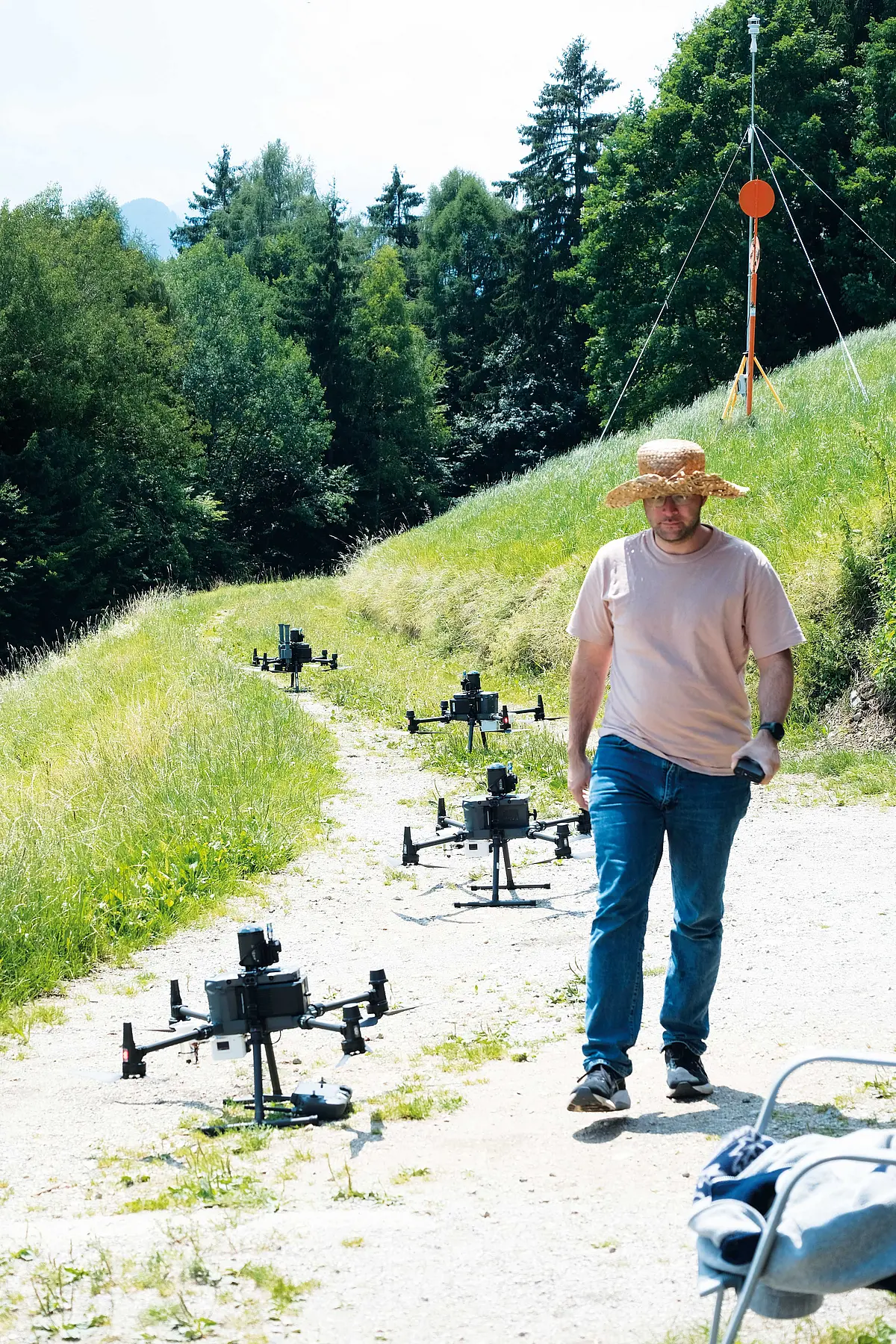
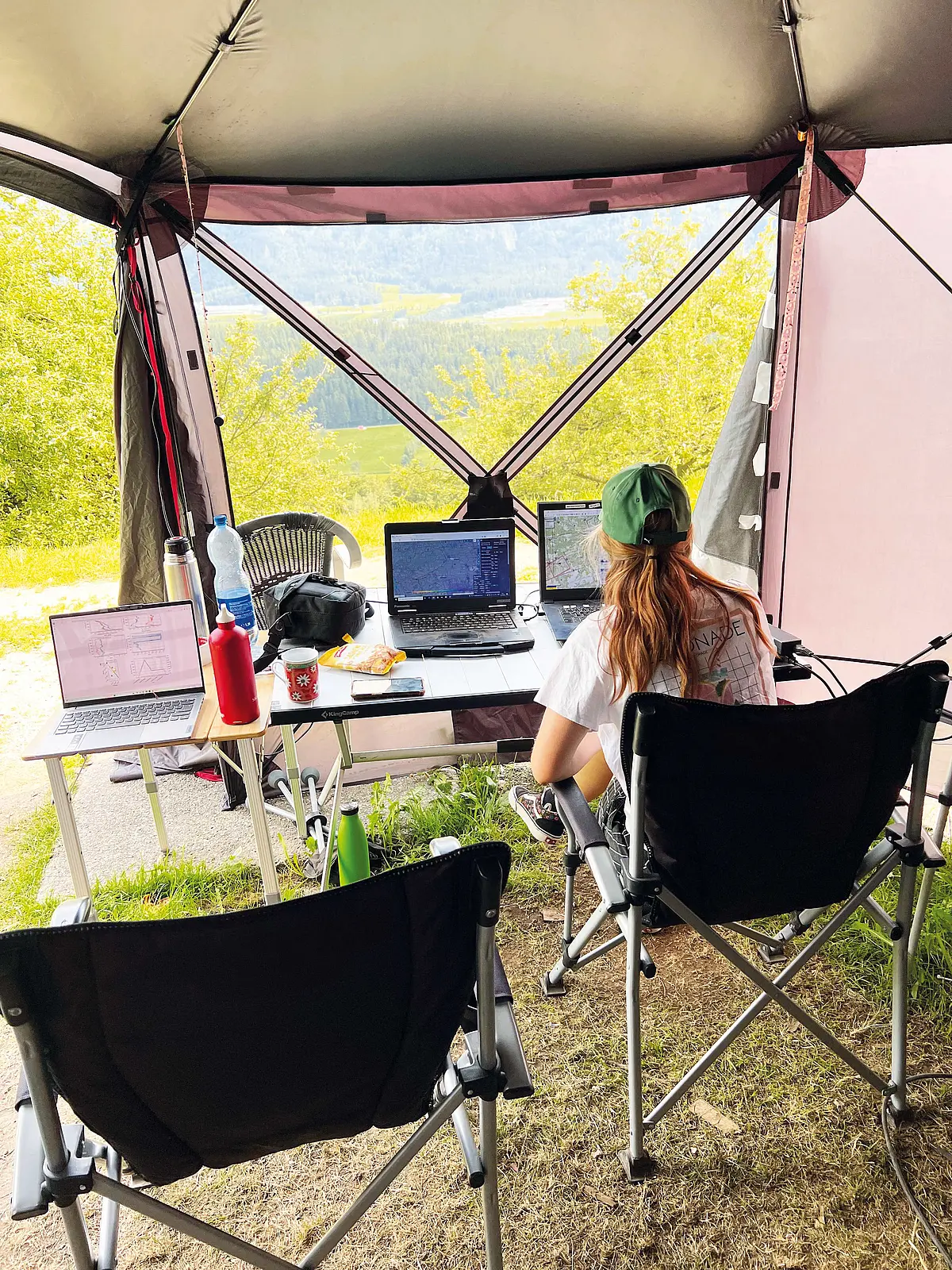
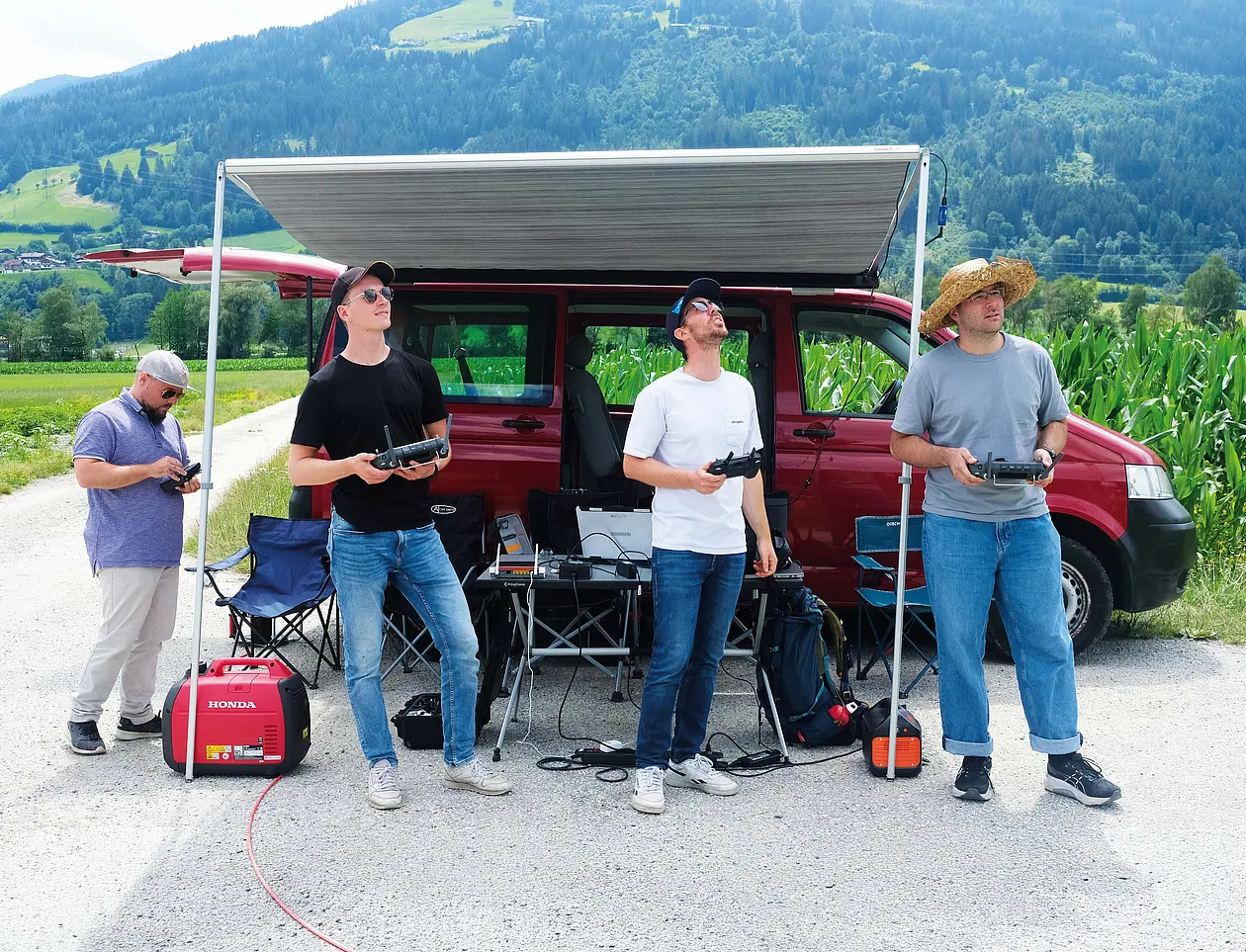
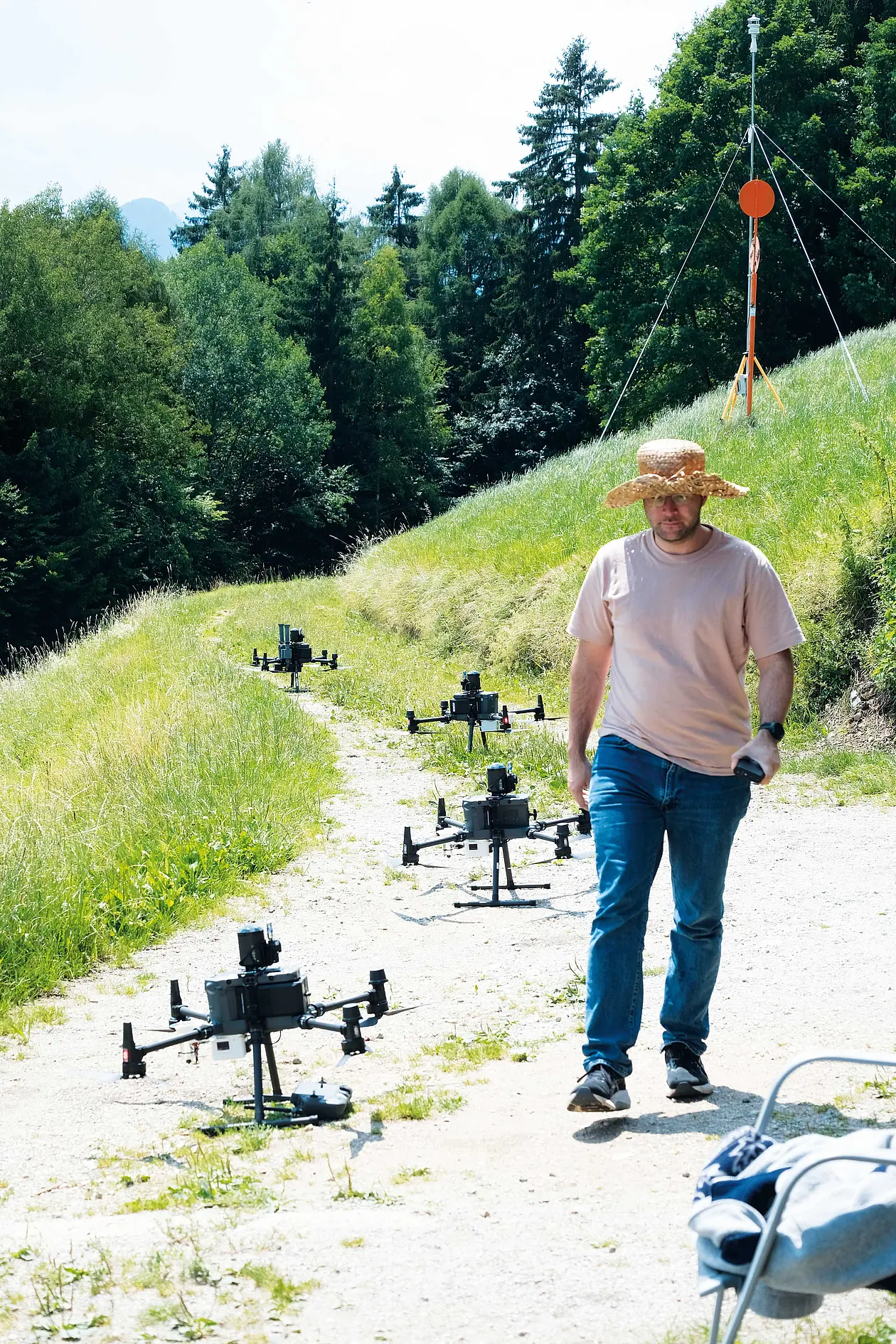
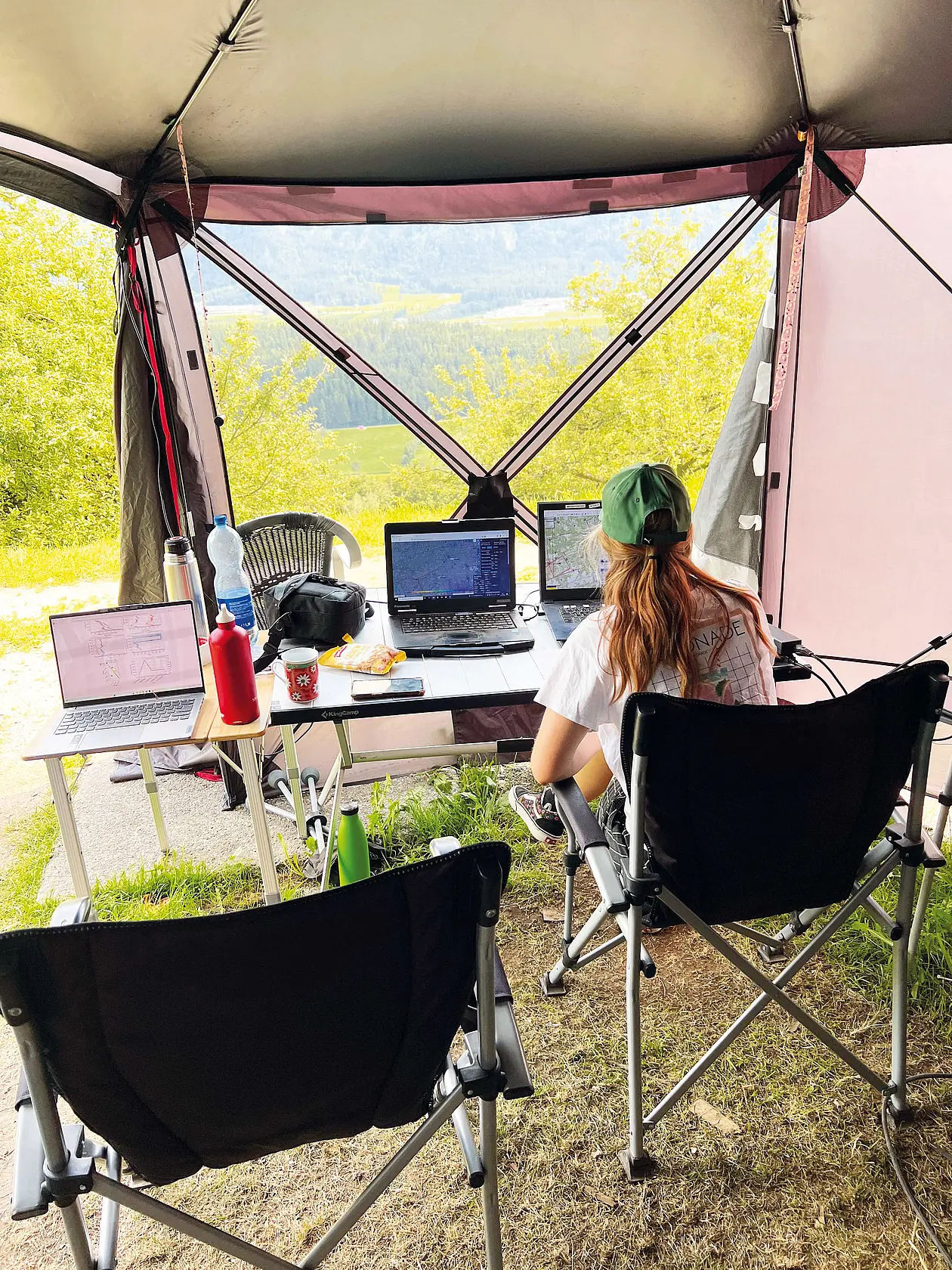
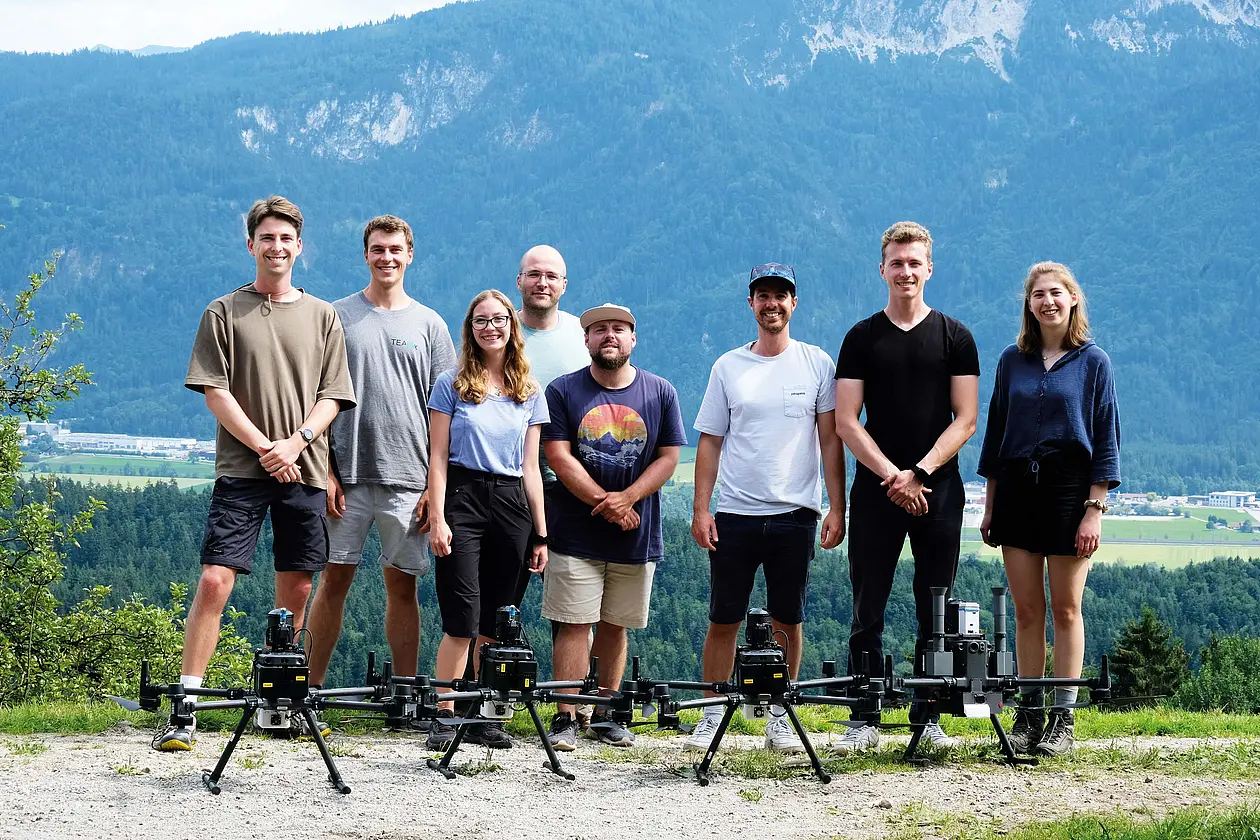
There were plenty of upsets even without erring gliders: storms would move down into the valley and all flights would have to be rescheduled – or alternatively, the daytime weather was so good that even at night interesting airflow conditions could be expected and make flights advisable. Or there was also the time when Martin’s cows escaped while the research group was staying on his farm. Since the drones were already waiting to launch, he asked them for help searching from the air.
‘In the beginning, the farmer and his wife were skeptical about our measurements,’ recalls Moritz Kippenberger, a PhD student on Andreas Platis’ team. ‘They were convinced that they knew the weather best themselves.’ But as the days passed, their curiosity and openness grew. ‘First of all, the children came, and then the 90 year old granny, and looked at what was going on, then farmer Martin and his wife Angelika.’
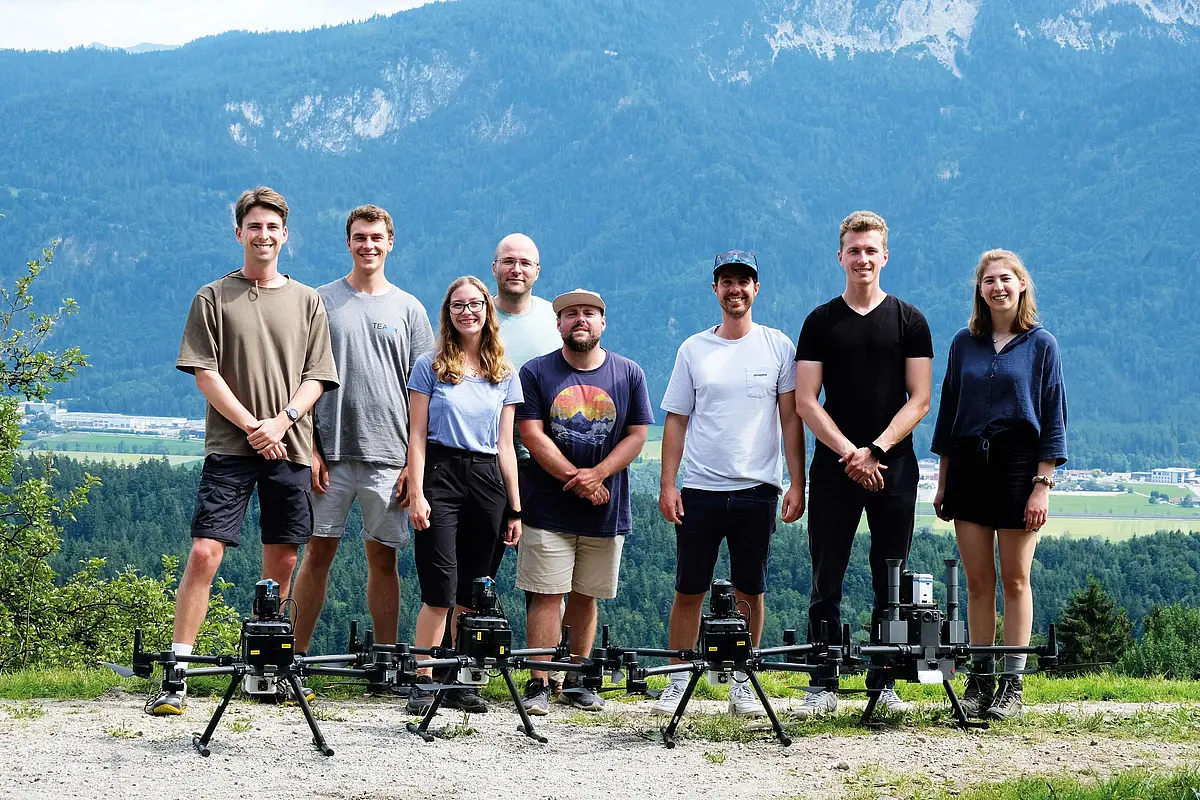
Kippenberger and other PhD students on the team were able within just a few weeks to gather so much data that they will be occupied for years on analysis and their doctoral theses. Weather services in Germany and other countries will be able to draw on the results of their research and train their weather models with them. ‘And, one day, far more precise weather forecasts in the mountains will be possible,’ says Andreas Platis, going on to risk a forecast of his own: ‘Maybe we’ll get there in five years.’