
10.11.2025
From the lecture hall to society – How Service-Learning at the University of Tübingen puts disaster risk reduction into practice
How can teaching about disaster risks be more than just theory? In the service learning course “Breaking the Cycle of Disaster, Response, Recovery and Repeat” offered in the summer semester of 2025, Dr. Solmaz Mohadjer showed how students at the University of Tübingen put their knowledge directly into practice – together with non-profit partners, education and research. The goal: to understand risks, take responsibility, and work together to build more resilient communities.
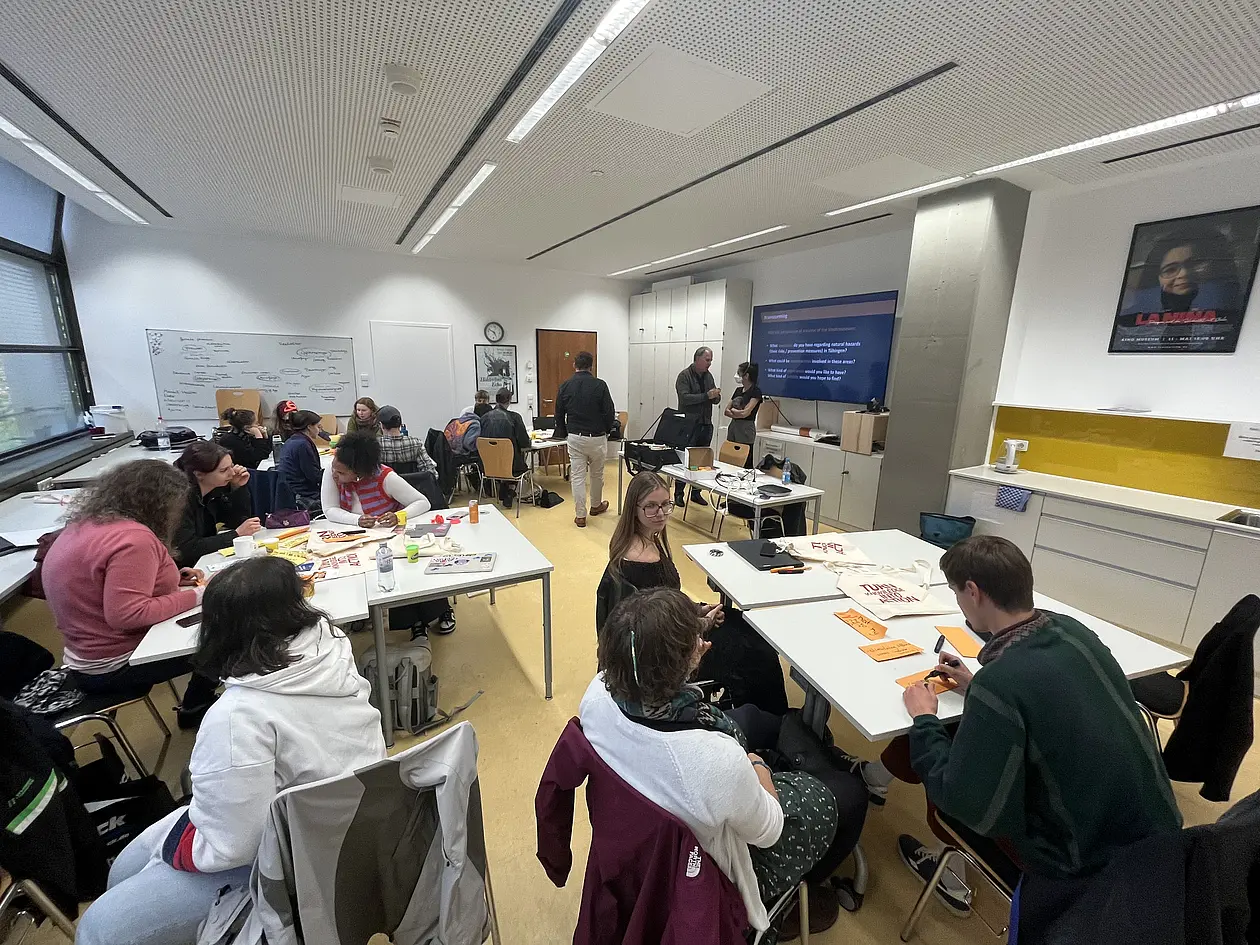
In the summer semester of 2025, our colleague Dr. Solmaz Mohadjer led a Service-Learning course as part of the Transdisciplinary Course Program, in which students worked together with non-profit organisations on real-world issues.
The course, entitled ‘Breaking the Cycle of Disaster, Response, Recovery and Repeat,’ aimed not only to impart knowledge, but also to bring students into active partnerships with practitioners. In the process, students learned about important factors for effective risk reduction – such as the importance of cooperation, cultural sensitivity, inclusive access to information and dialogue with those affected.
The Service-Learning approach specifically combines ‘service’ and ‘learning’: students leave the traditional lecture hall, engage directly with partners in the field and reflect on how theory and implementation interact. Mohadjer emphasises: ‘Inclusive disaster preparedness means creating space for everyone and ensuring that all voices, knowledge, experiences and needs are included.’ She adds: ‘Hazards do not have to become disasters – hazards become disasters when risks are ignored or poorly understood.’
One particularly pleasing result is that many students have published their final thesis as blog posts – a platform that shares their experiences and insights with the professional community. One participant described the course as ‘one of the most influential courses of my undergraduate studies.’ A look ahead reveals the ambition: this approach is to be integrated more strongly into study programmes in all disciplines. As Mohadjer explains, ‘Service learning is ideal for teaching Disaster Risk Reduction topics, for example.’