Uni-Tübingen

Yoga as Medicine

Numerous studies have proven the health benefits of yoga. But is it also the secret to a long life?

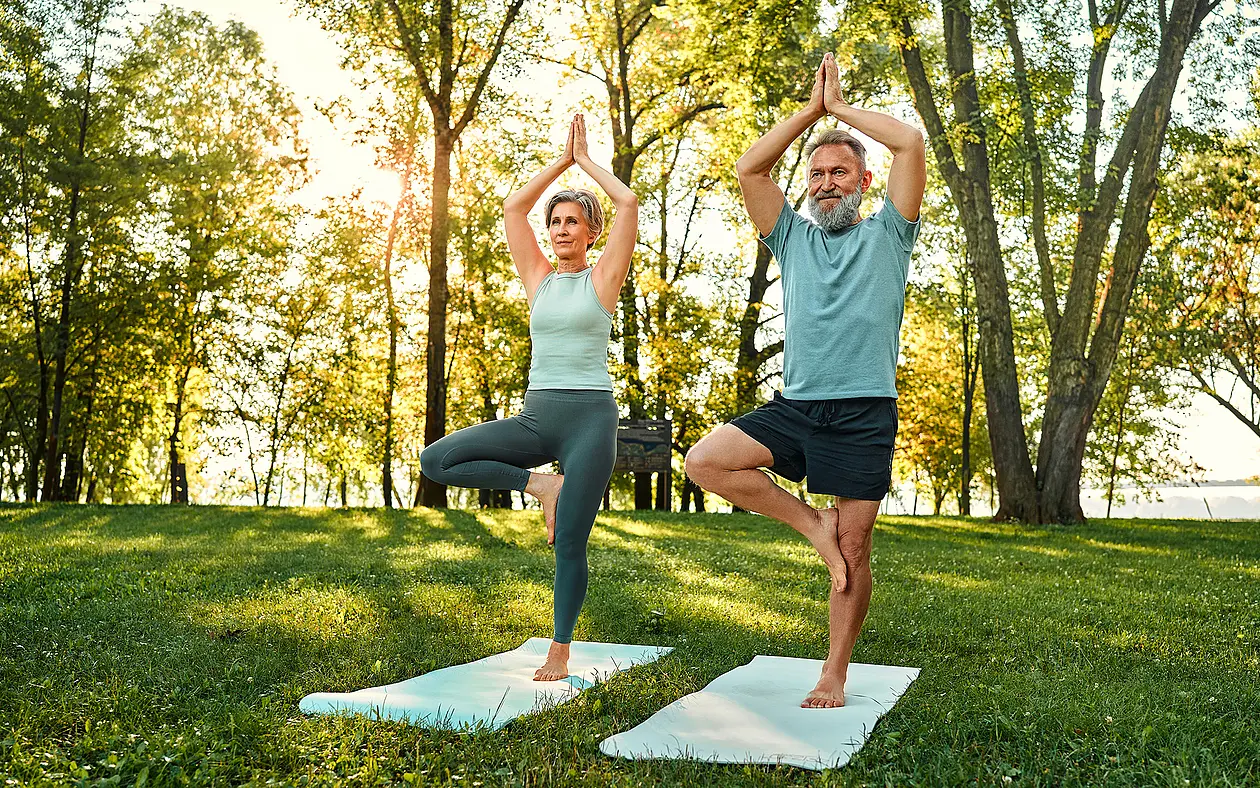
In a recent interview on her 105th birthday, Daisy Taylor from Chelmsford, England, told the BBC she attributes her long and healthy life to yoga – alongside her optimism and appreciation of the little things. She says yoga especially helps her to stay mentally fit. She’s still practising yoga even at her age – although now more often in a chair than on a mat.

As an aged and, above all, mentally fit yogi, Taylor is not alone. Many of the world’s most notable yoga practitioners have lived long, healthy lives. Take B.K.S Iyengar, for example. Probably the most famous yoga teacher of our time, in childhood he was given only a few years to live after simultaneously catching malaria, typhoid and tuberculosis. Then he discovered yoga and started practising for ten hours a day. He not only survived his illness for a few years – he lived to 95. His brother-in-law and teacher Tirumalai Krishnamacharya, founder of Vinyasa yoga, lived to age 100. And Krishnamacharya’s almost equally-famous other master student Krishna Pattabhi Jois, whose Ashtanga yoga laid the foundation for the yoga fitness wave, lived to be 93. There are many reasons why yoga is so beneficial to do even in old age. 

Studies show it can have a positive effect on various age-related diseases by reducing blood pressure, blood fat levels 1 and obesity 2 . Yoga can also alleviate depression 3 , stress and anxiety 4 . Yoga is also associated with a generally healthier lifestyle – such as following a healthier diet. Evidence also shows that yoga may have many benefits when it comes to ageing and staying young. 

Research shows yoga may potentially influence ageing at a cellular level. In one study, participants who practised yoga showed a 43% increase in telomerase activity – while participants who only relaxed showed an increase of just under 4%. The enzyme telomerase is a key factor in ageing, as it slows down cell ageing. Moreover, some very experienced yogis can reduce their metabolism so substantially that their physiological state is similar to that of hibernating animals: their breathing and heart rate drop significantly, as does their body temperature. In animals, this sort of resting phase is shown to increase lifespan. Some argue that same could be true in humans.


Telomerase activity is 43% higher in yoga practitioners compared to the normal value. For participants who only relax, 4 %.


Evidence also indicates yoga helps us keep mentally fit as we age. As we get older, we decline mentally. Learning new things and forming new memories becomes increasingly difficult. This is reflected in the brain: the hippocampus in particular, which is important for the formation of new memories, loses substance with age. But a study which examined the brains of yoga practitioners found they generally had a larger brain mass compared with non-yogis of the same age. This difference was particularly evident in the hippocampus. Not only that, but the longer someone had been practising yoga, the larger their brain mass 5 .

Another study also found the average brain mass in 40-50-year-old meditators corresponded to the average brain mass of 20-30-year-old non-meditators 6 . Meditation is an important part of yoga. While many of these studies take care to adjust for any variables which might influence a person’s risk of cognitive decline (such as their lifestyle habits and genetics), this control is never perfect – so these associations are only correlations. 

But research has actually shown meditation can indeed increase brain mass causally – and rather quickly. In a study with participants who were not experienced in meditation, one group took part in a four month meditation course while the other group did not. After four months, brain mass increased significantly in the meditation group 7 . Once again, this particularly affected the hippocampus. Overall, the data suggests meditation – and yoga – is associated with a younger brain age.

Studies have also looked at so-called “fluid intelligence” – the ability to solve new, unknown problems, learn new things and recognise patterns and connections. This ability tends to decline with old age. But research shows middle-aged people who have done yoga or meditation for many years have better fluid intelligence compared to people of the same age who did not do either activity 8 .


The average brain mass of 40- to 50-year-old meditators corresponds to that of 20- to 30-year-old non-meditators.


Longevity and yoga

But is there any direct evidence showing that yoga prolongs life? One study looked at just that 9 . The researchers used linked data from the National Death Index and the National Health & Nutrition Examination Survey – an ongoing, nationally representative survey of the health and nutritional status of the US population. The 22,598 study participants were asked a range of questions about their lifestyle habits – including whether they did yoga. The results were striking. Within an average of eight-and-a-half years after the survey, the risk of dying was almost two-thirds lower among participants who practised yoga than among those who did not. There was just one catch: yogis were generally much younger than the average participant. When age was accounted for in the analysis, there was no longer any difference between mortality in yogis and non-yogis.

So, yoga does not seem to increase longevity after all.

Daisy Taylor spoke in her interview about her 103-year-old sister and her five other siblings, who have each lived to be over 90. So in Taylor’s case, her longevity appears to be more of a family trait. But yoga seems to keep us healthier and, above all, mentally fitter in old age. And perhaps, as it has for Daisy Taylor, it can take the fear out of old age.

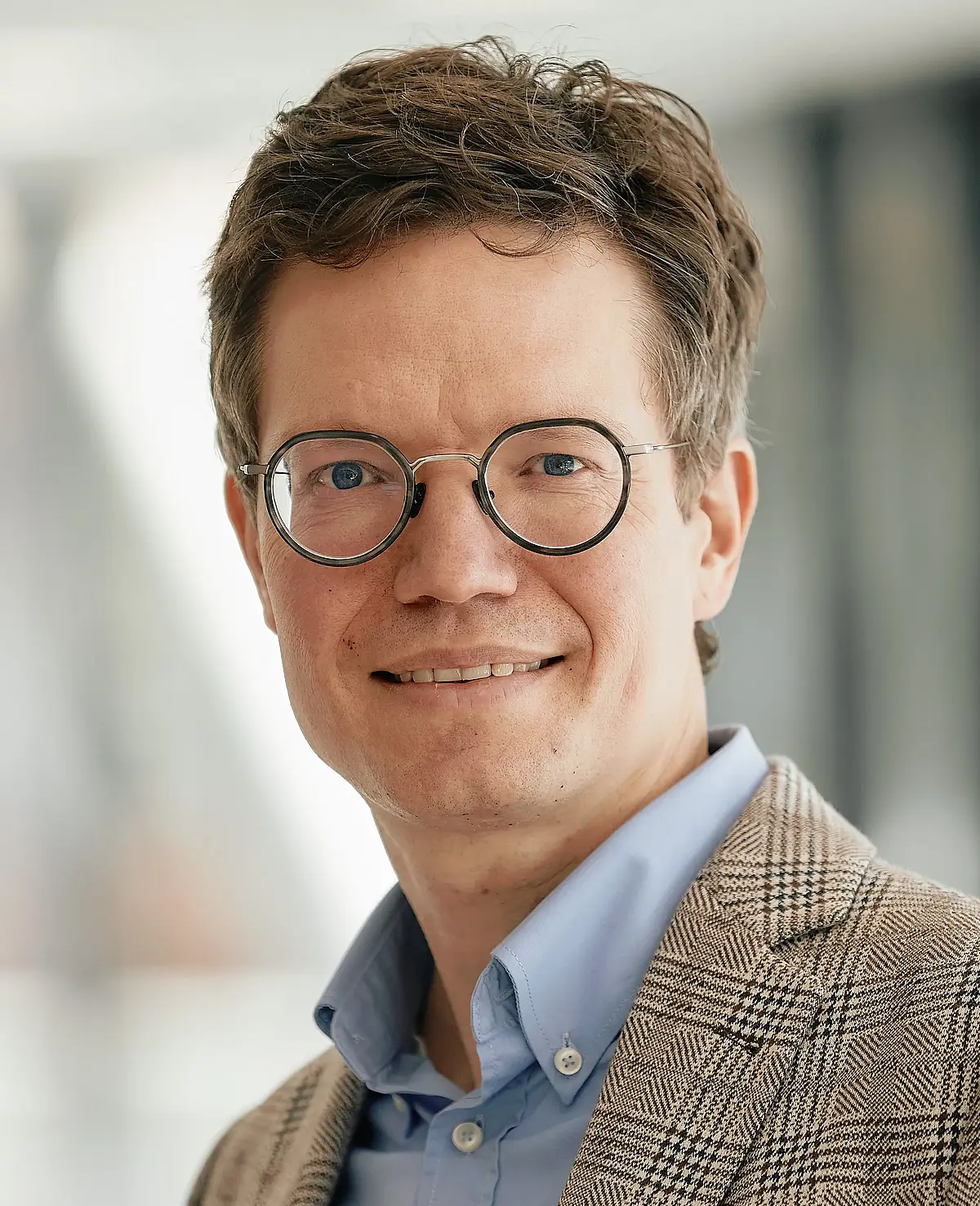
Holger Cramer is Professor of Complementary Medicine Research. He is therefore interested in everything that is not part of conventional medicine, yet still much in demand from the population. 

Since January he has headed the first German center of the international research network Cochrane Complementary Medicine, which was founded in cooperation with the University of Tübingen’s Faculty of Medicine, the University Hospital Tübingen and the Bosch Health Campus in Stuttgart

Cramer and his colleagues investigate the effectiveness, safety and cost effectiveness of complementary procedures such as yoga, acupuncture or diet, and develop and enhance methods of studying them.


By founding Cochrane Complementary Medicine Germany, we are creating a platform to strengthen research in this field and make scientific findings accessible to the general public. - Holger Cramer


1 Holger Cramer et al: “Effects of Yoga on Cardiovascular Disease Risk Factors: A Systematic Review and Meta-Analysis”, International Journal of Cardiology, 2014 May 1

2 Romy Lauche et al: “A systematic review and meta-analysis on the effects of yoga on weight-related outcomes”, Preventive Medicine, 2016 June

3 Holger Cramer et al: “Yoga for Depression Disorder: A Systematic Review and Meta-Analysis”, Depression and Anxiety, 2024 December 19

4 Holger Cramer et al: “Yoga for anxiety: A systematic review and meta-analysis of randomized control trials”, Depression and Anxiety, 2018 April 26

5 Chantal Villemure, “Neuroprotective effects of yoga practice: age-, experience-, and frequency-dependent plasticity”, Frontiers in Human Neuroscience, 2015 May 12

6 Sara W Lazar: “Meditation experience is associated with increased cortical thickness”, NeuroReport, 2005 Nov 28

7 Britta K Hölzel: “Mindfulness practice leads to increases in regional brain gray matter density”, Psychiatry Research: Neuroimiging, 2011 Jan 30

8 Tim Gard et al: “Fluid intelligence and brain functional organization in aging yoga and meditation practitioners”, Frontiers in Aging Neuroscience, 2014 April 22

9 Paul D. Loprinzi: “Yoga participation and all-cause mortality: National prospective cohort study”, Complementary Therapies in Medicine, December 2015


Text: Holger Cramer


More articles

Virtual Lymph Nodes

Florian Wimmers is investigating how AI can improve vaccinations for cancer patients.

Elon Musk and the Narratives of the Far Right

The richest man in the world likes to talk about the decline of culture and a longed-for salvation. Just like all anti-democratic movements.