“Making Soil Healthy Again!” A Sustainability Slam for a Better Climate
Why is the “dirt” beneath our feet so valuable? How do artists engage with soil, climate, and sustainability? Are there commons in the city? And what would a fifth season for our planet look like?
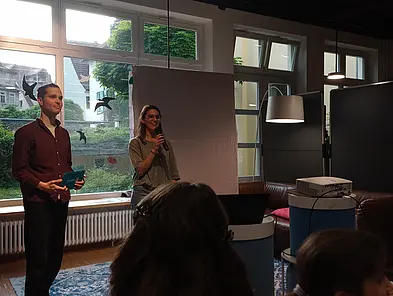
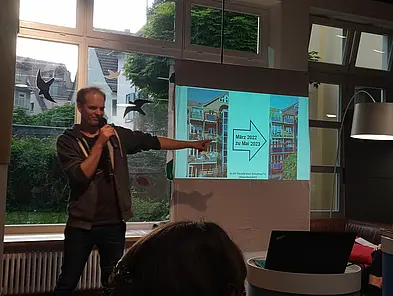
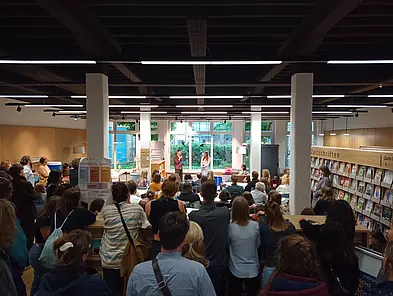
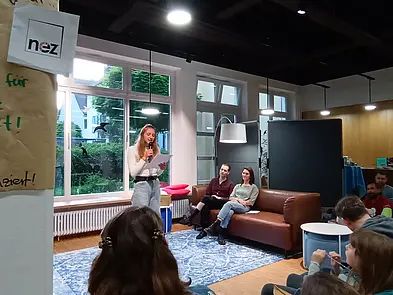
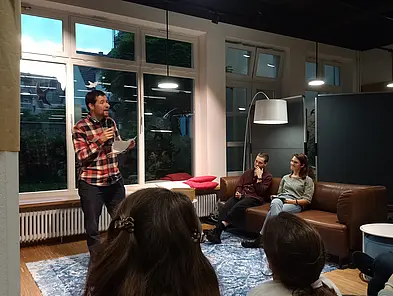
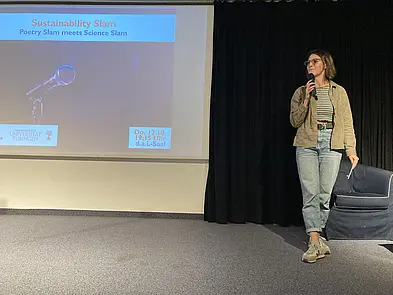
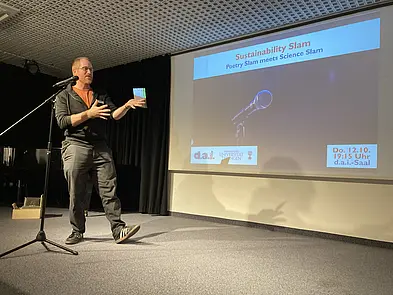
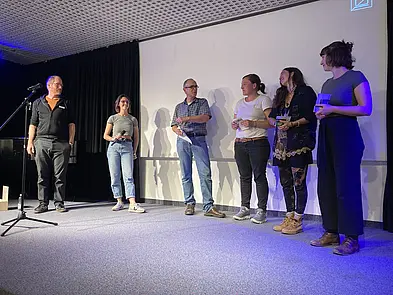
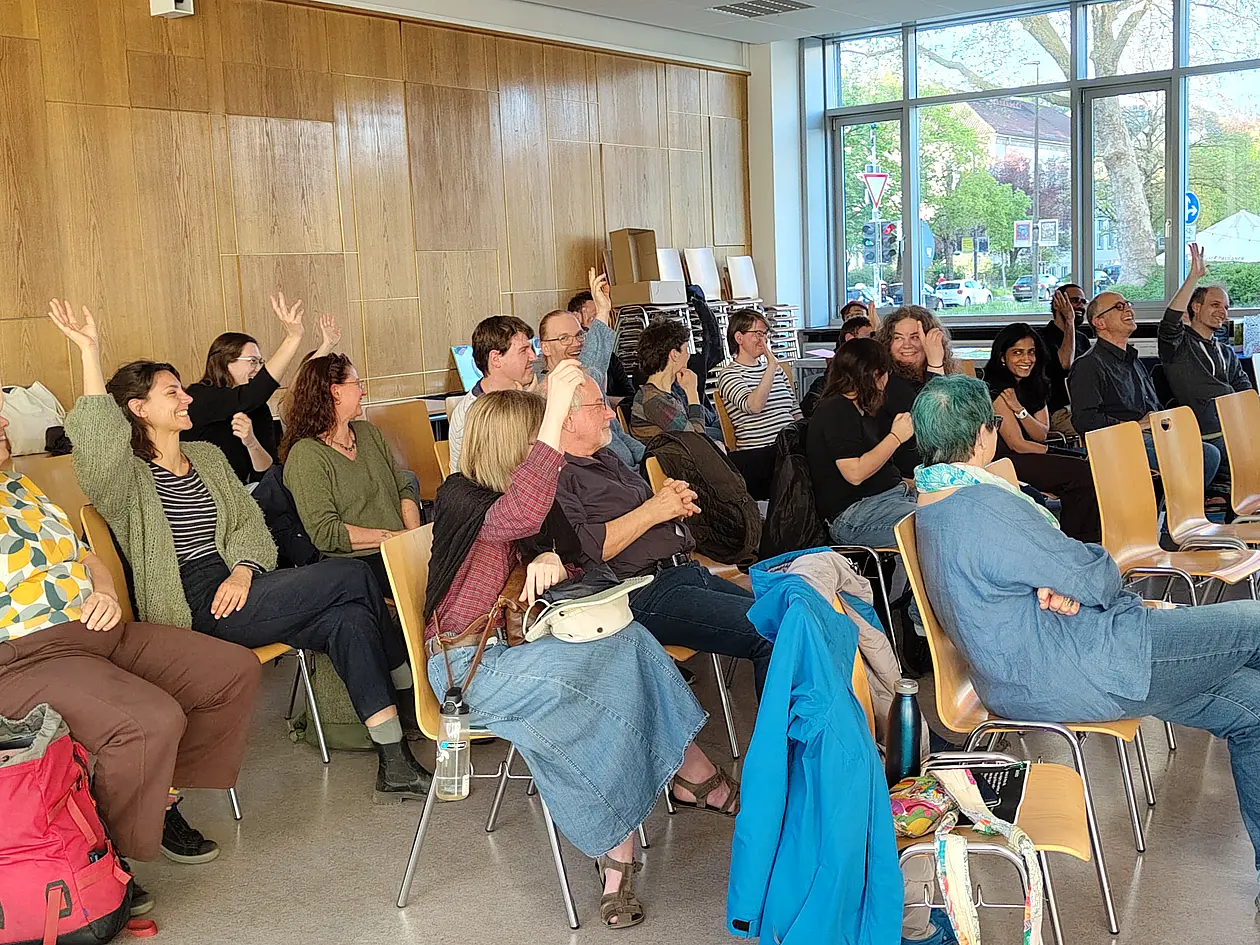
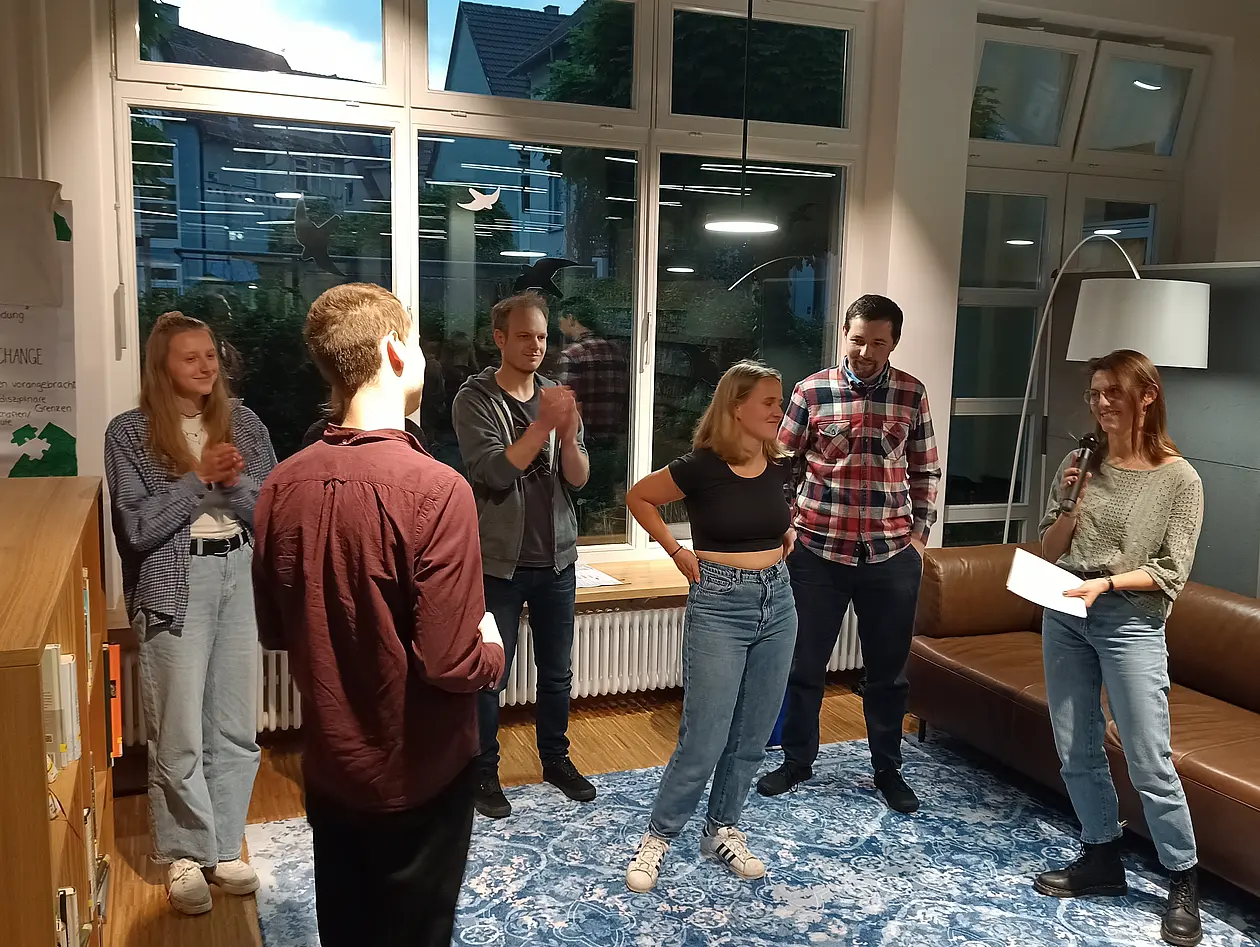
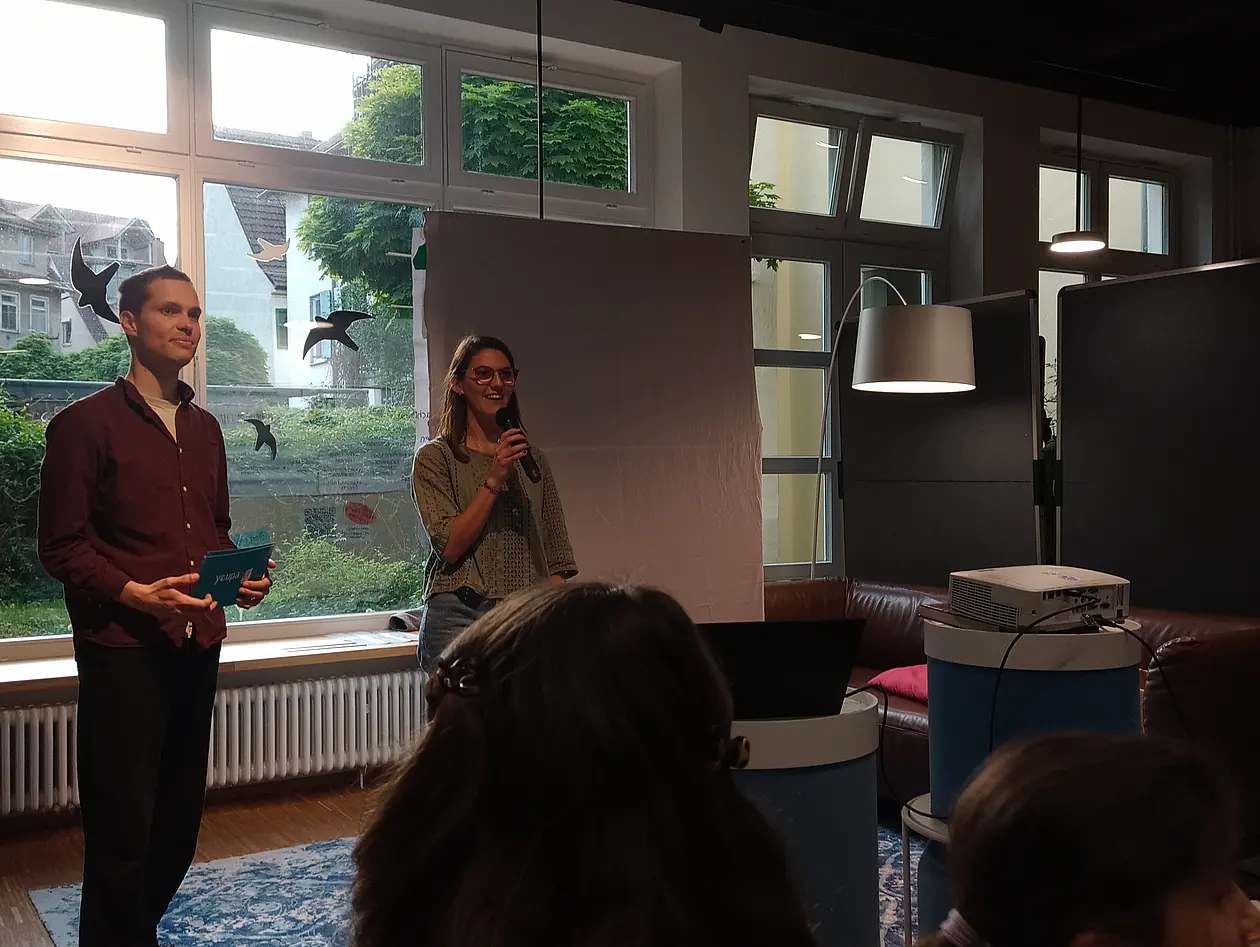
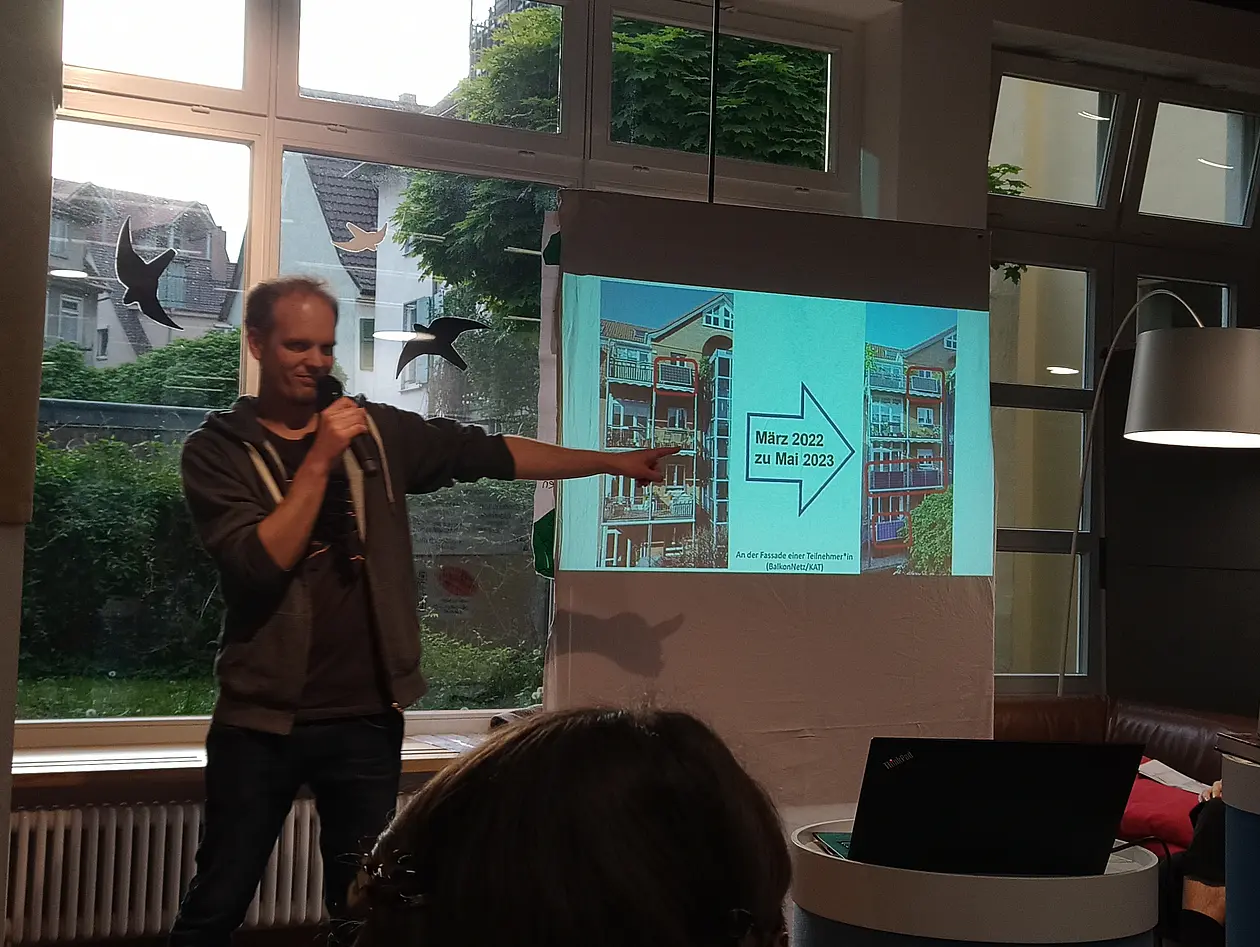
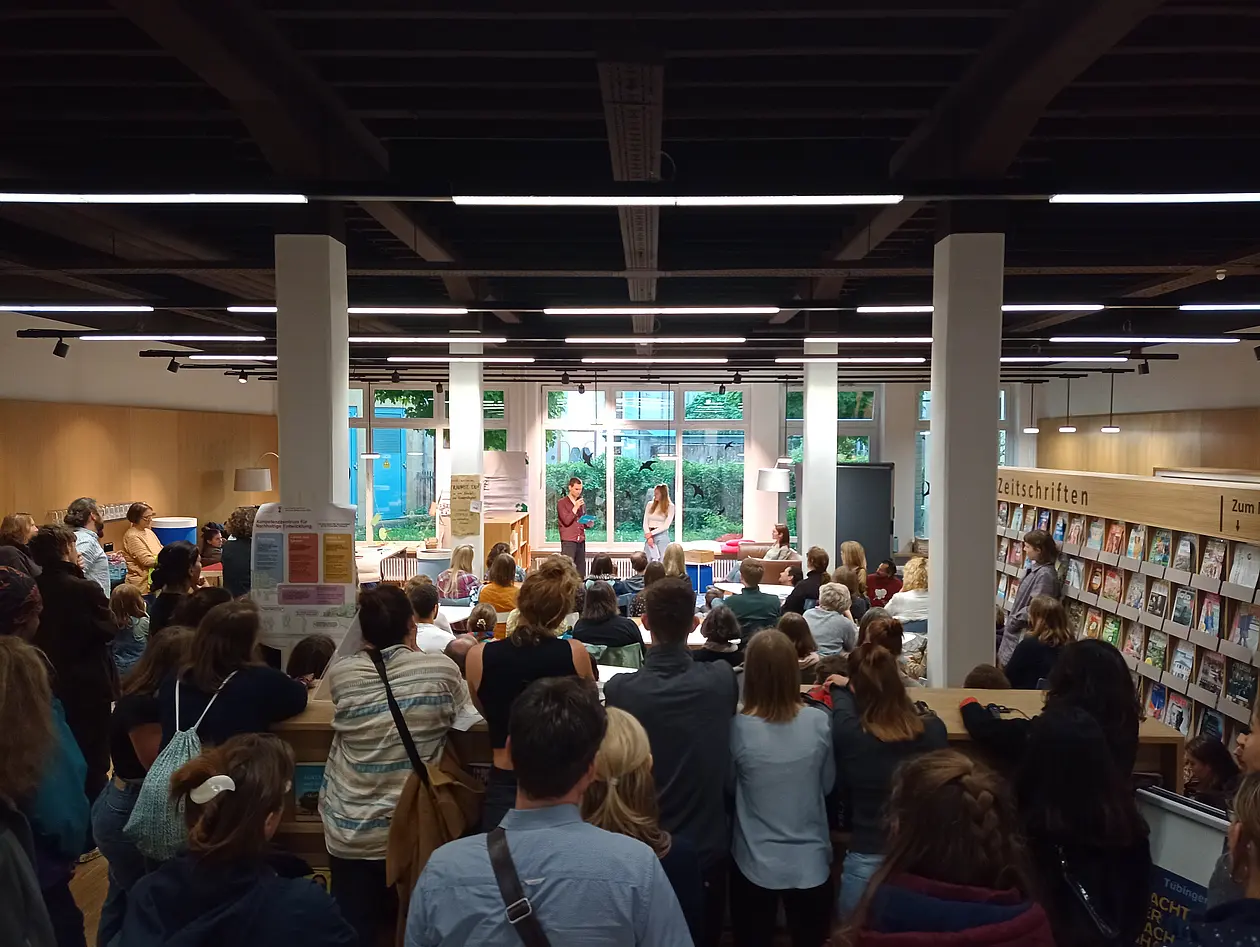
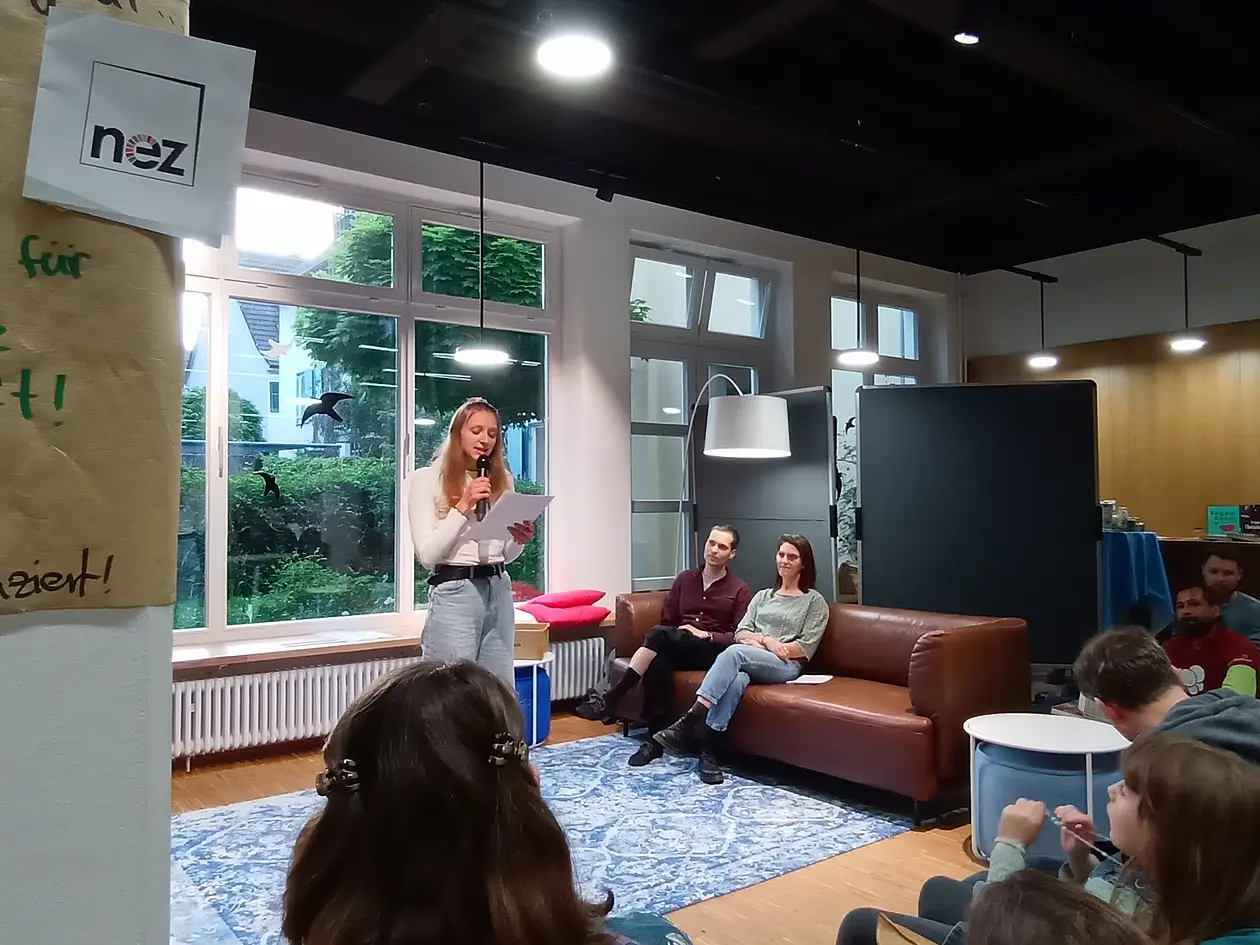
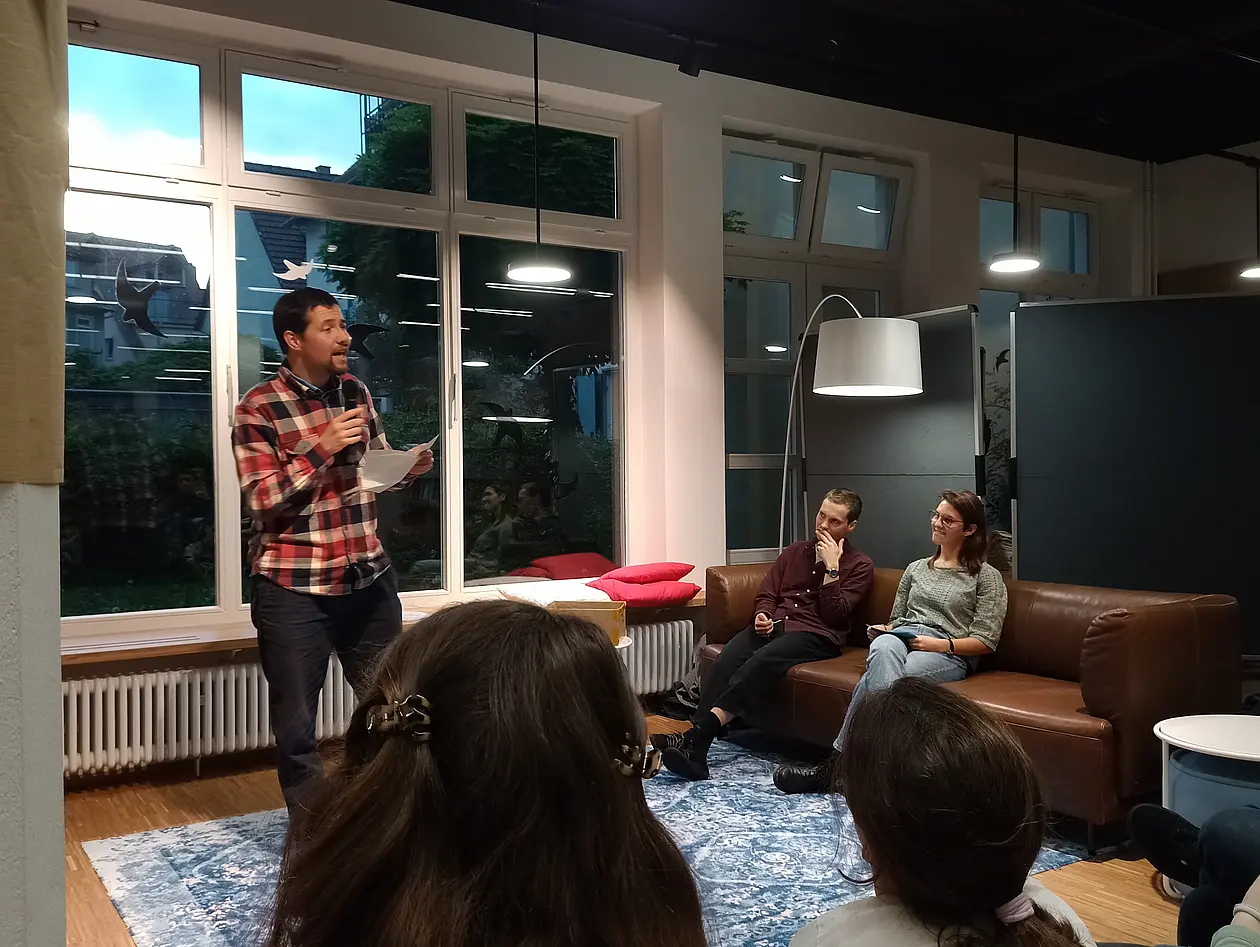
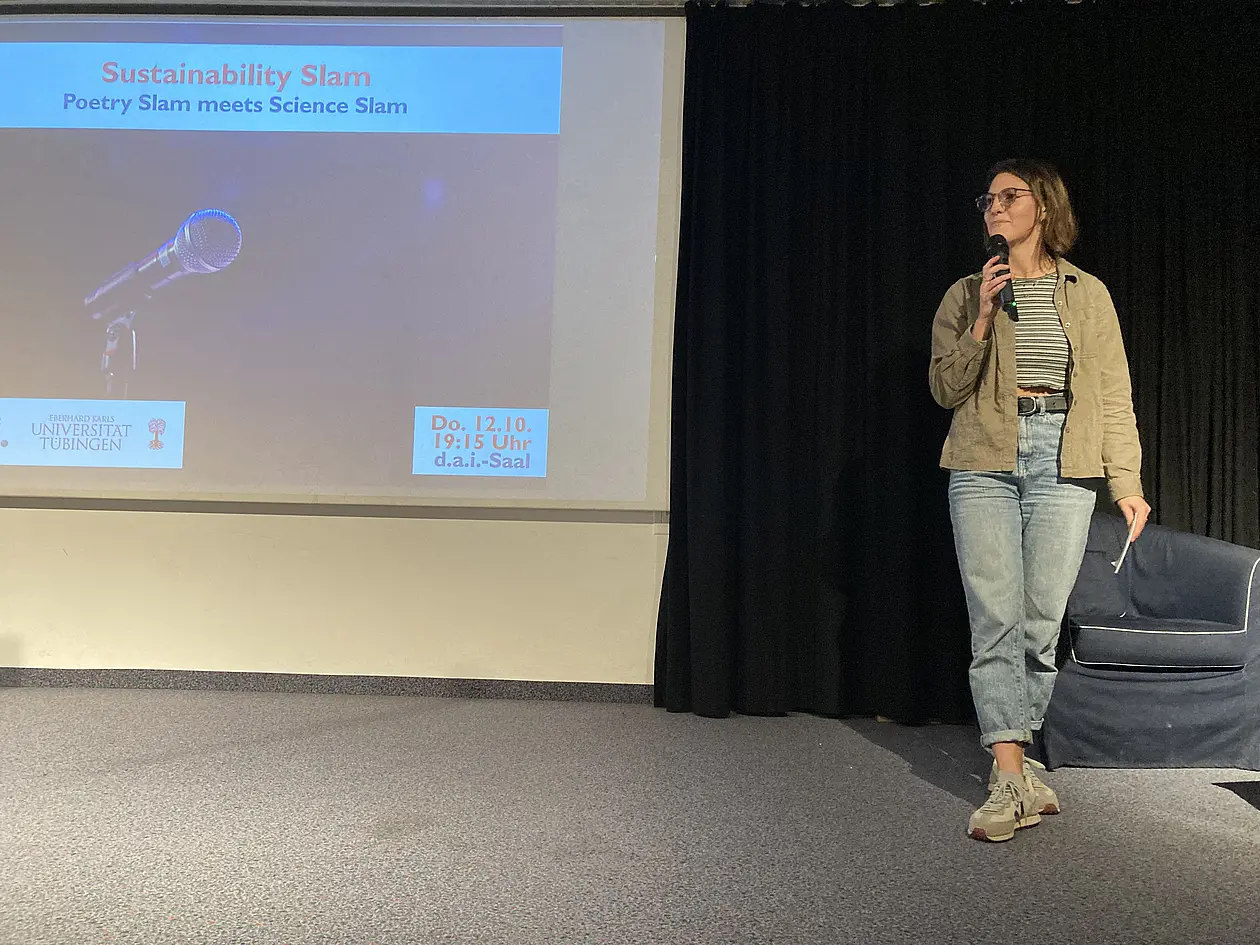
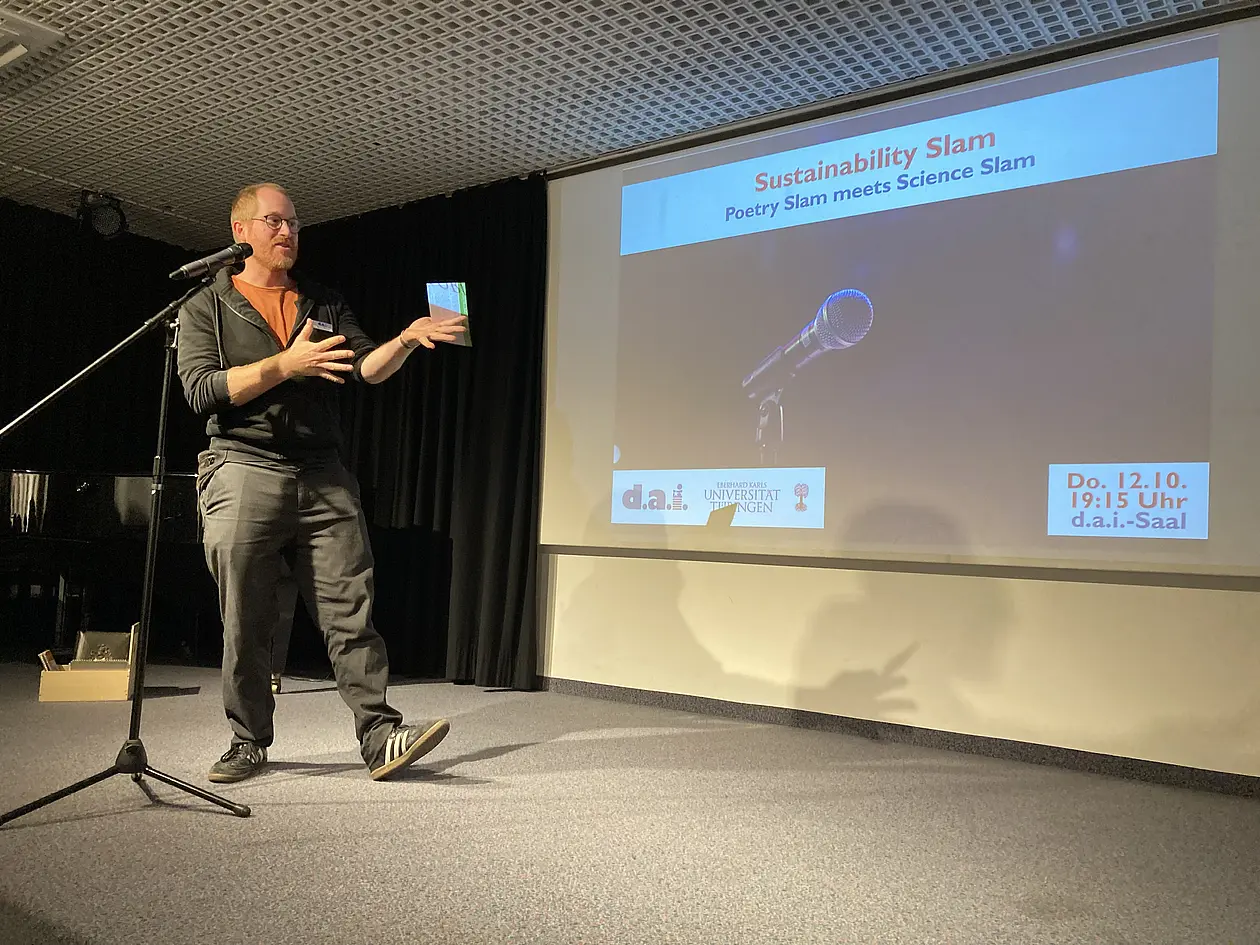
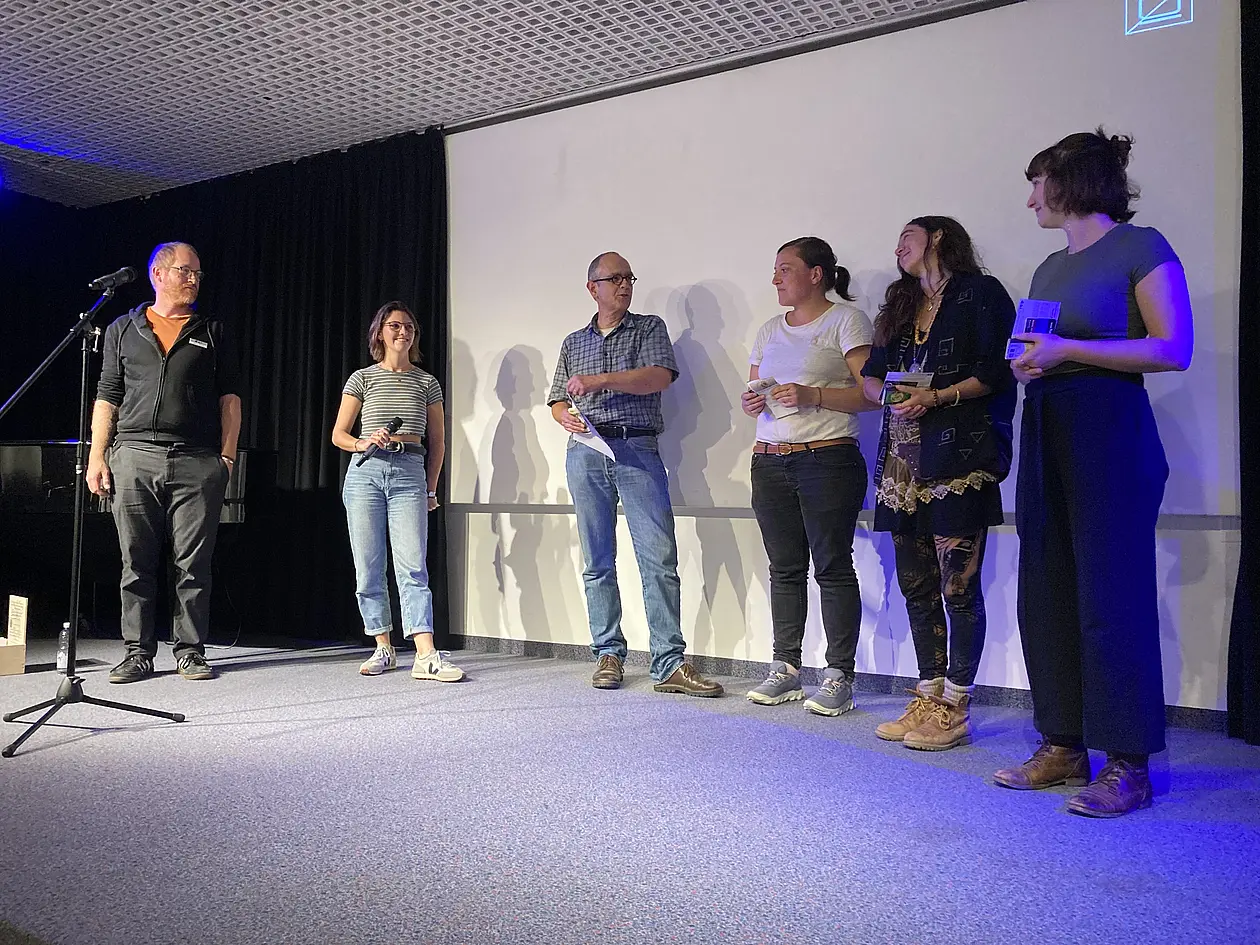
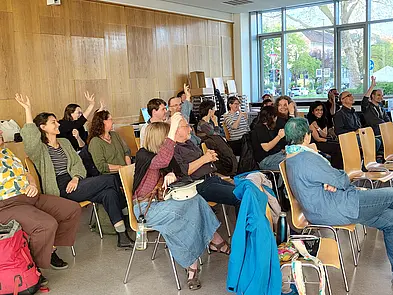
Everyone is talking about the climate crisis… we’re slamming! On Thursday, May 23, 2026, the popular Sustainability Slam returned for another round. This successful format - a mix of science and poetry slam - was organized this time by the Competence Center for Sustainable Development in cooperation with the Food Policy Council of the Tübingen Rottenburg region and delighted around 35 attendees.
Oliver Meckes, from eye of science, used scanning electron microscopy to document life in a handful of soil from the Black Forest National Park. He took us on a short journey through the world of bacteria, single celled organisms, fungi, and tardigrades - revealing a stunning, almost otherworldly aesthetic.
Gaytri Easwaran explained the diverse perspectives on ecological commons using the example of the wetlands at Ennore Creek in Chennai, India. Through the stories of various stakeholders - including city officials, experts, local fishing communities, and nearby residents - these perspectives became vividly tangible.
Levi Lay, an experienced poetry slammer, poetically illustrated how each season has its own time and how the world appears in a different light with each one. Yet the garments worn by nature no longer seem to fit. He posed the question: what if there were a fifth season - one that our planet needs now more than ever?
Angharad Dean, resident artist at the University of Tübingen, drew on the Indigenous Australian concept of “Country” and examples of Indigenous art to explore human connections to the land. She spoke about creating art rooted in place and about finding our own place in the world while remaining deeply connected to nature.
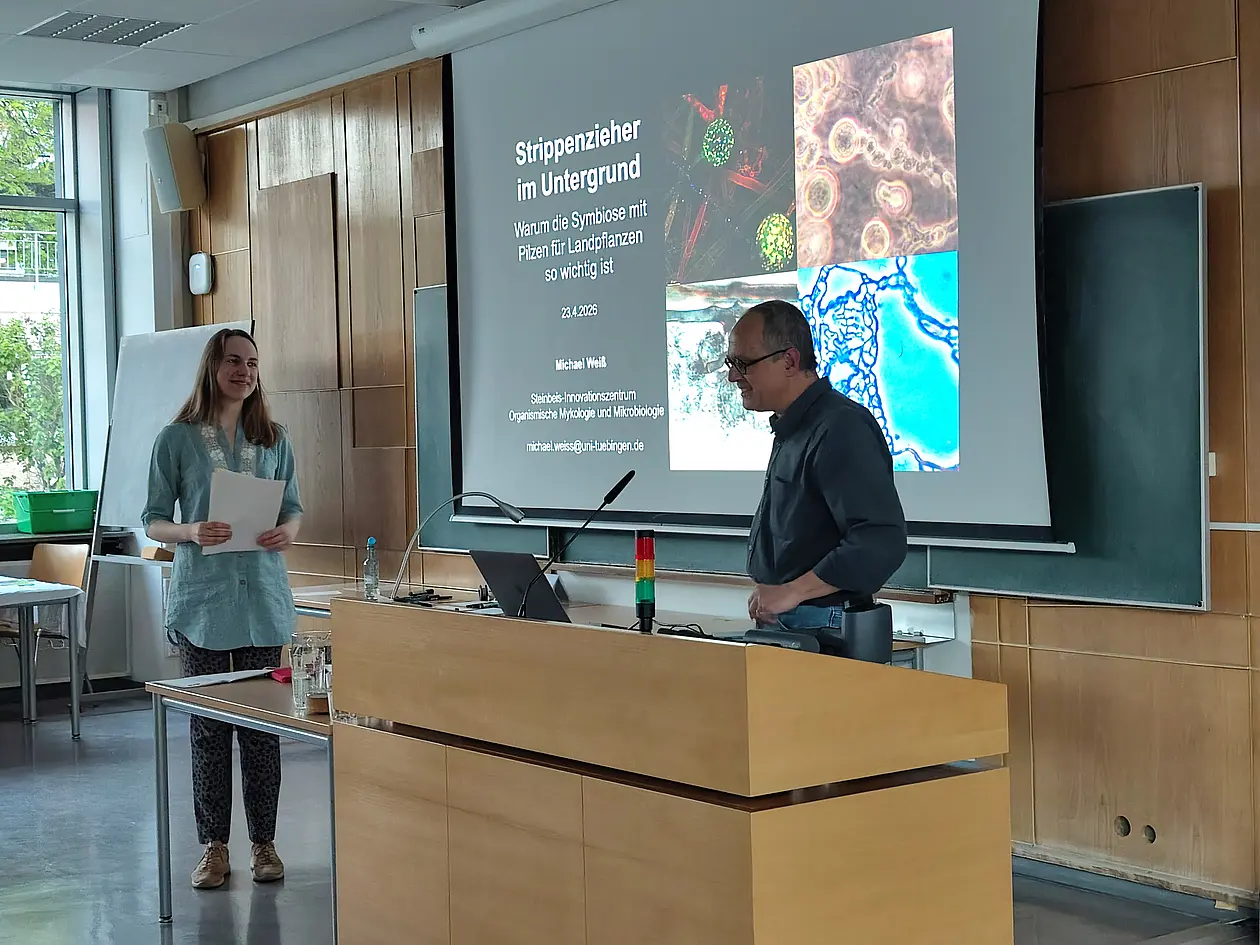
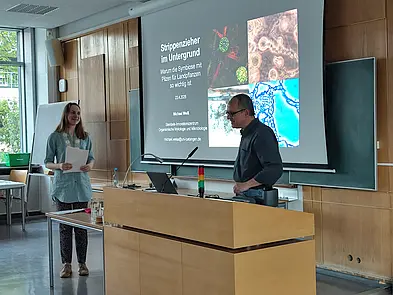
Michael Weiß, professor and head of the Steinbeis Innovation Center for Organismic Mycology and Microbiology, reminded us that the soil beneath our feet is always there, yet rarely noticed. And yet, quite literally, it is the foundation of our existence. Soil ecosystems contain the greatest biodiversity on Earth - an alive, teeming, fascinating, and still largely unknown world. He illustrated this with striking images of fungi that significantly expand the surface area of plant roots.
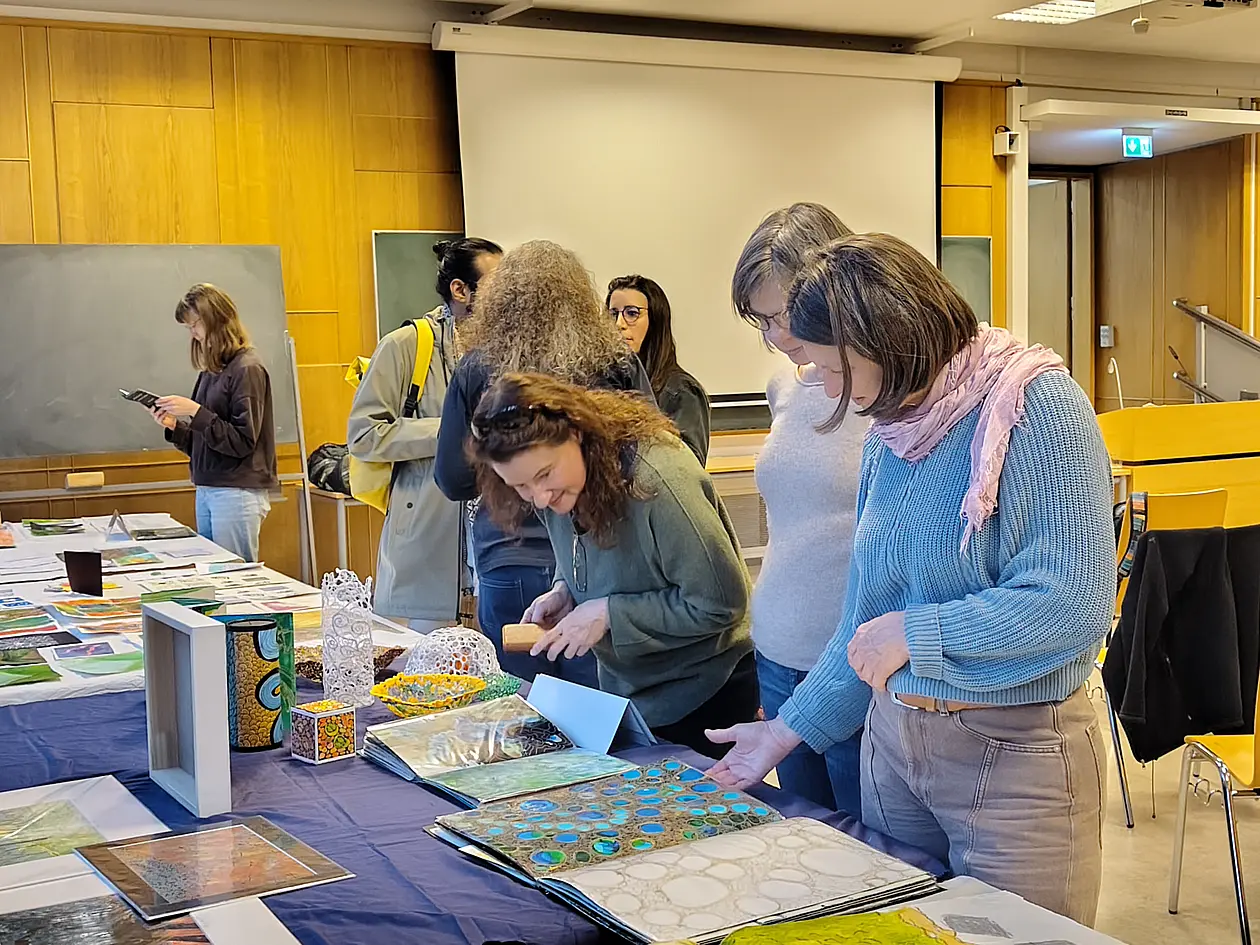
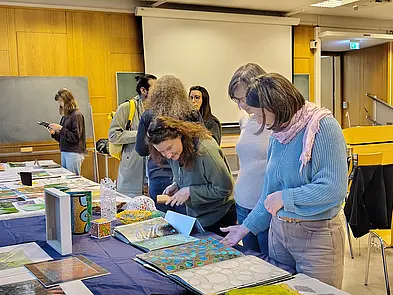
Afterwards, Tübingen based artists and students presented their personal and moving works in a small exhibition, reflecting their relationship with nature and soil.
It was an all around successful evening, and we would like to sincerely thank the slam participants, the organizing team, the artists whose work we had the pleasure to experience, and of course all attendees who made the evening truly special.


![[Translate to Englisch:] Bild der vier Slammerinnen, der Moderatorin und des Gastgebers vom d.a.i.](/fileadmin/_processed_/8/0/csm_231013_Sust.Slam_b67007b94c.webp)
![[Translate to Englisch:] Bild der SlammerInnen bei der Nacht der Nachhaltigkeit in Tübingen 2023](/fileadmin/_processed_/d/9/csm_NdN2023_687e059849.webp)