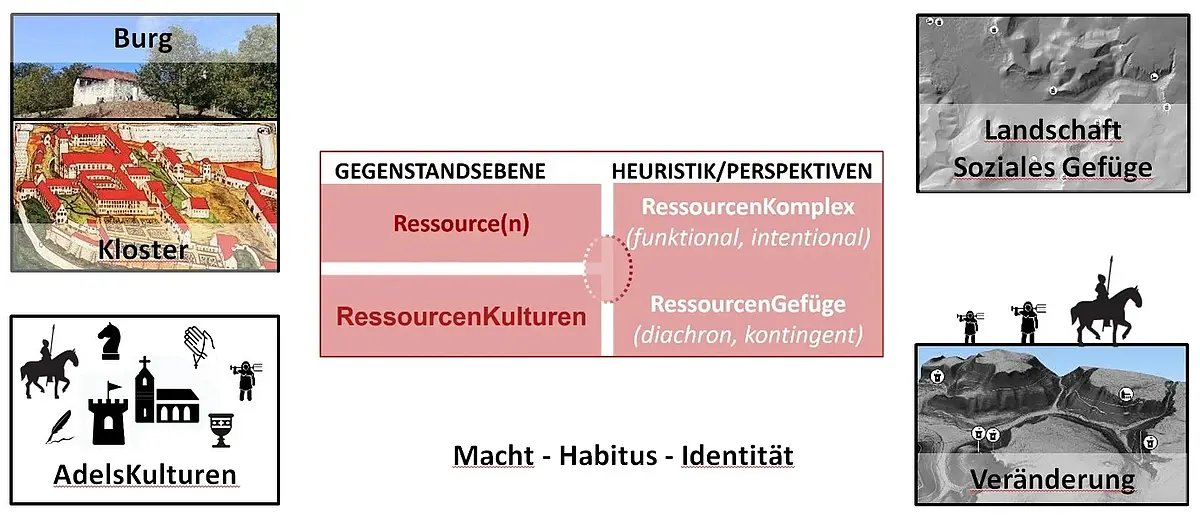
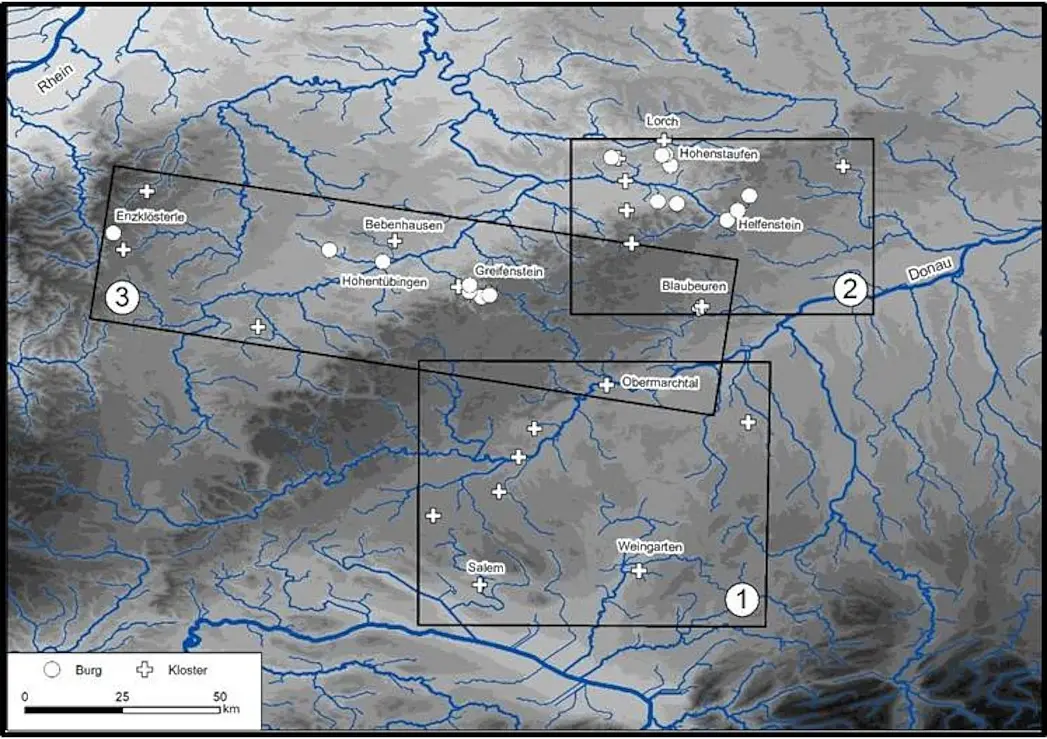
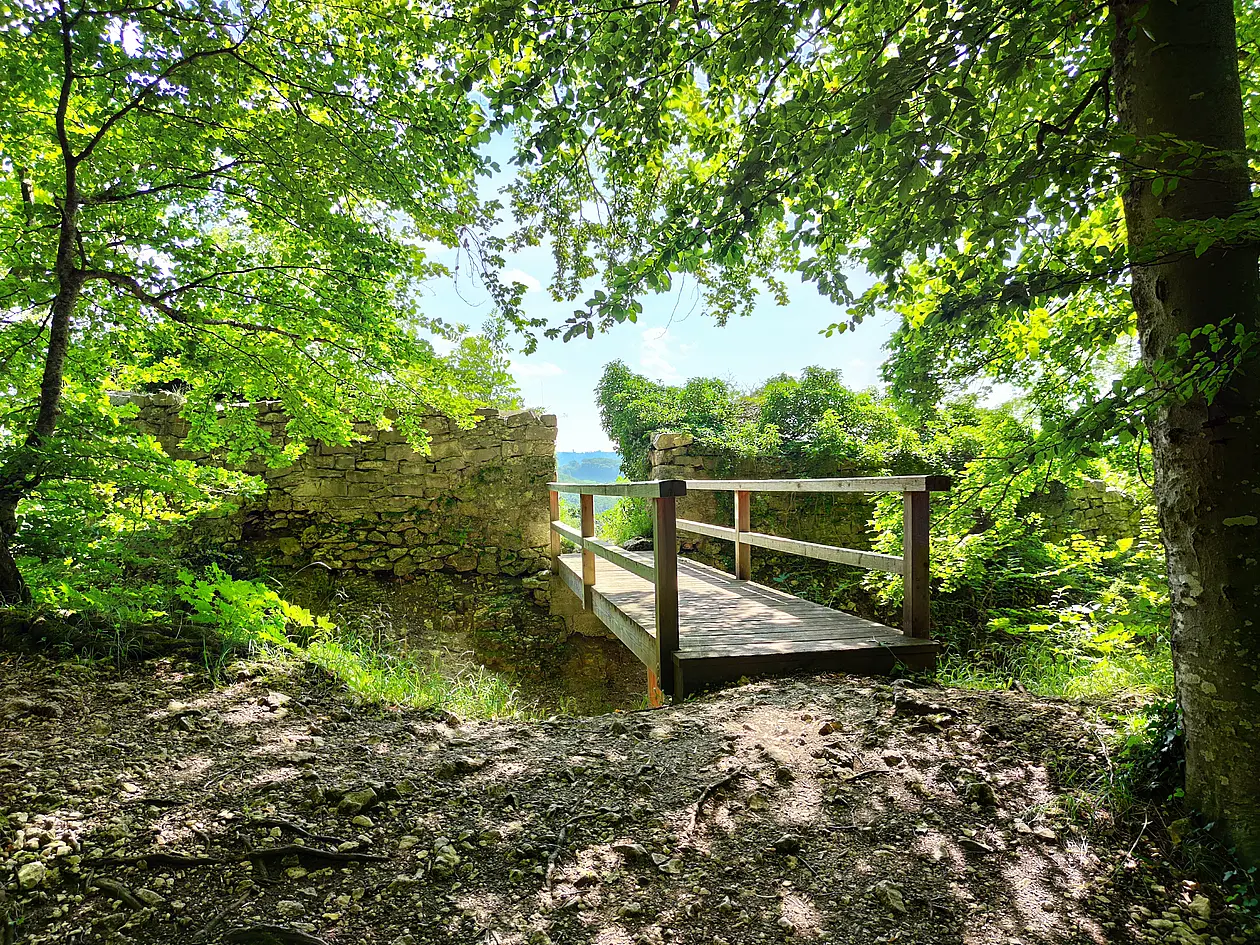
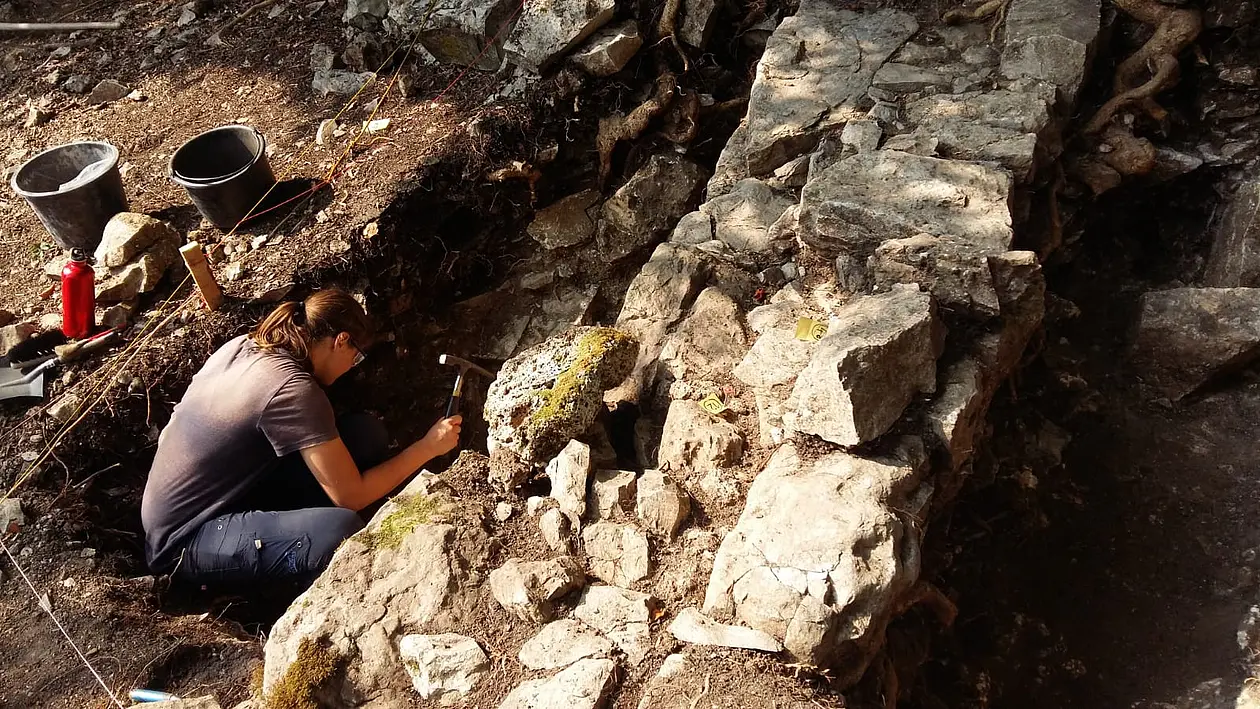
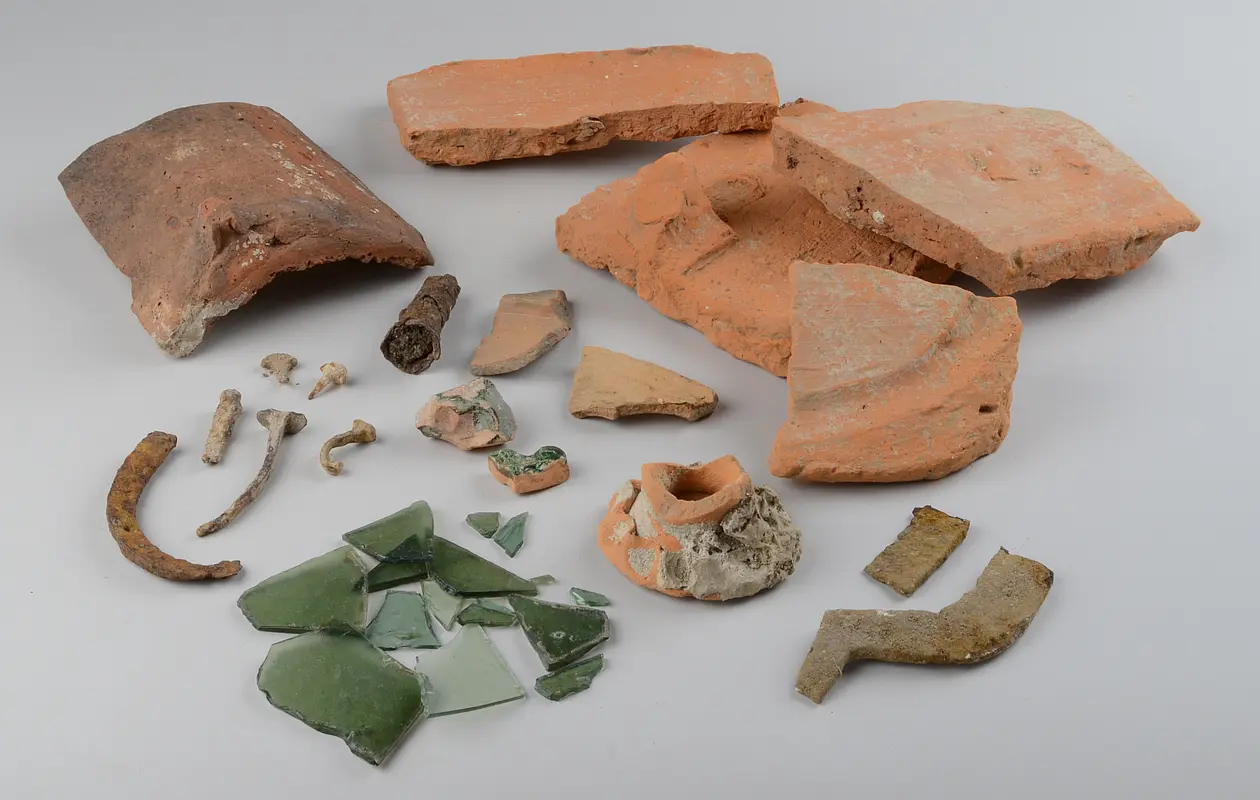
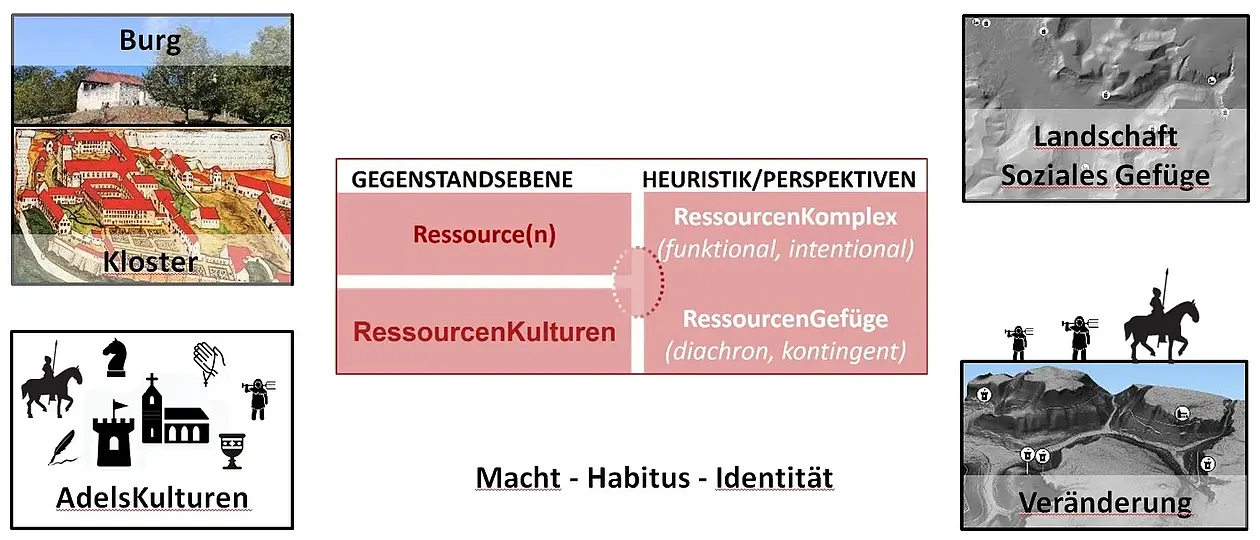
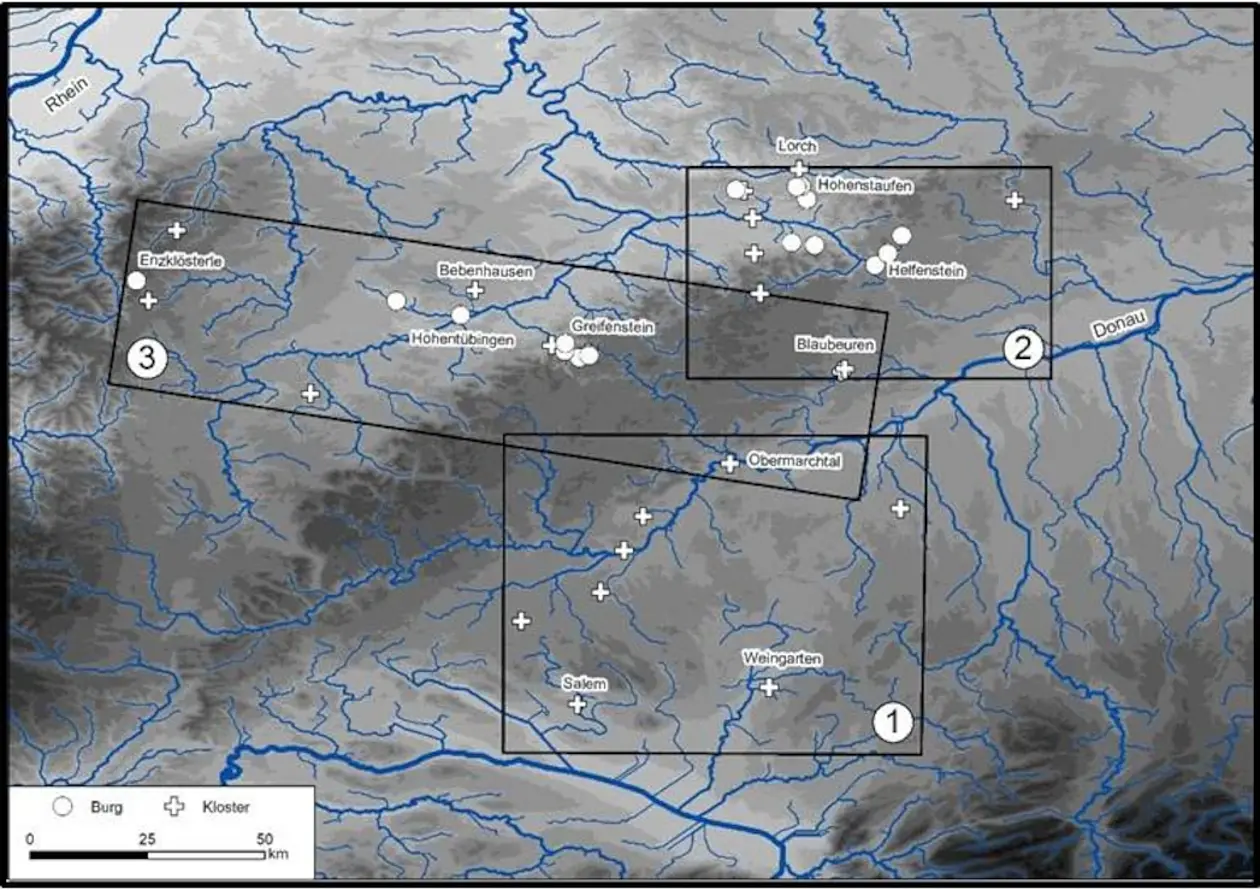
During the first phase of funding (2013–2017), project B 03 focused on the economic and spiritual resources of medieval monasteries and the nobility interacting with them in Upper Swabia. During the second phase (2017–2021), the interest was on castles, the formation of lower nobility and the resources of the cultural landscape between the Rems, Fils and Danube rivers. The aim of the project was to systematically and comparatively examine the interplay of castle and monastery in order to work out socio-cultural, spatial and temporal commonalities, differences and changes in the ResourceAssemblages linked to them. Thereby, the individual characteristics of specific monastery- and castle-related ResourceCultures of different groups of actors such as the high nobility and the lower nobility will be illuminated. In the third phase (2021–2025), the comparative and synthetic-comparative approach will be examined in interdisciplinary detail on the basis of two further local case studies and the change in small-scale ResourceAssemblages will be elaborated. For this purpose, a partial study is planned on the Counts Palatine of Tübingen and on the noble-free Lords of Greifenstein, for which both archaeological and historical approaches are possible.
Building on the results of the two previous phases, in which it became clear how fundamentally important monasteries and castles were as ResourceComplexes for the formation of aristocratic rule, castles and monasteries are now to be examined in their interaction as parts of an aristocratic ResourceCulture for the shaping and development of rule. Previous research saw a clear division of tasks. While from the 11th cent. onwards the nobility began to form a centre of spatially manifesting rule with castles and at the same time to centre their (new) understanding of a dynastically defined ruling family (the eponymous ancestral castle as a 'symbol of the dynasty turned to stone'), the monasteries and foundations founded in the vicinity of the 'ancestral castle' were assigned the task of family burial place and thus as a centre of memoria for the dynasty.
As central resources in the agnatic, patrilineal understanding of dynasty and rule of the nobility since the High Middle Ages, the castle and the monastery had a theoretically precise distribution of tasks. This contrasted with the older clan based, cognatic kinship relations, and the nobility's new understanding of dynasty became manifest in the ancestral castle and house monastery.
More recent research, however, has differentiated and further developed this model in many ways. In the course of this, it has become clear that agnatic thinking did not replace cognatic thinking, but rather was added to it and gradually overlapped it, without the idea of a clan that was also defined by the female lines ever being completely abandoned. On the contrary, in addition to the formation of the dynasty, the deliberate maintenance and shaping of kinship relationships between in-laws is clearly evident, especially in the connubium of the late medieval nobility. Accordingly, the nobility's castle policy was similarly differentiated, which by no means amounted to a simple 'ancestral castle', but rather developed, evolved and occasionally abandoned in a variety of ways with different castles and nuclei of rulership formed by castles. Castles were therefore not only stone built centres of noble rule in the sense of a military fortification for the control of an area, but could also fulfil central local functions in many ways and thus be used to form rule and, if necessary, also be abandoned again: to secure and develop unfavourable locations, as an administrative centre, as a centre for trade and crafts, as a symbol of rule, as a stage for aristocratic everyday life and as a sacral centre. For the high and late medieval nobility, monasteries were not only spiritual centres for the cultivation of memoria. Rather, they were often used to secure land and rulership, because as ecclesiastical institutions they secured land from the seizure of neighbours and at the same time, through the instrument of the bailiwick, enabled the donating noble family a new, more effective control of the area. By appointing their children to the ecclesiastical estate, they were able to provide them with a secure position in line with their status, while at the same time being useful and powerful for the family, and additionally they were able to secure access to ecclesiastical benefices (and thus also economic resources) for their own clientele. Beyond these resources as instruments of power, however, the sacral tasks as an investment in the salvation of the founders should not be neglected. Only this significance as a ResourceComplex allows to understand the myriad of monastery foundations by the nobility and the enormous land masses from which they were prepared to 'part'.