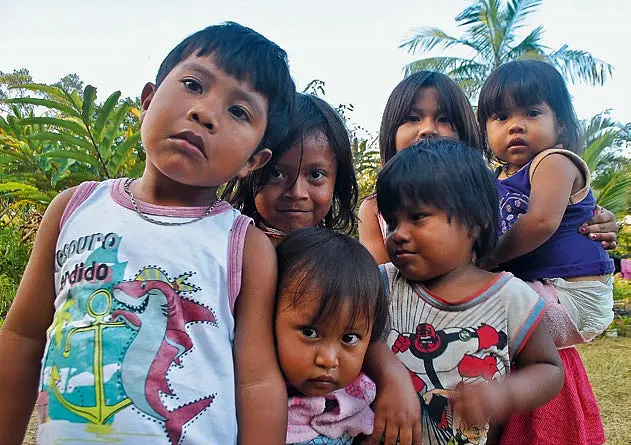
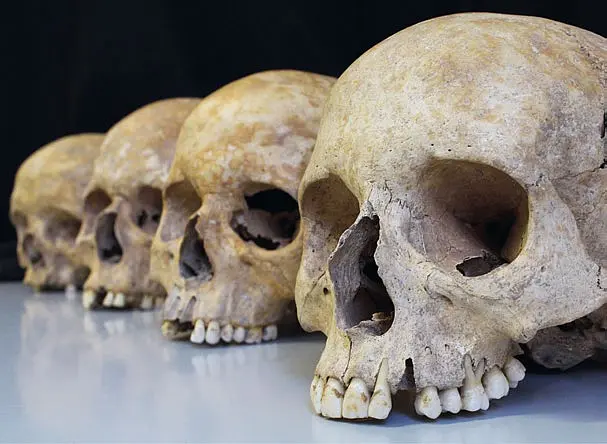
We owe words like “Jaguar” and “Piranha” to the indigenous Tupí-Guaraní language family from South America, of which 40 languages are still spoken today. It originated about 2,550 years ago in the basin of the rivers Tapajós and Xingu, as computational linguist Fabrício Ferraz Gerardi shows for the first time. Together with an international team, he used molecular biological kinship analysis to understand the development geographically and chronologically. The team compared vocabulary for animals and plants. Mutations showed when two related species had split off from a common ancestor – the gene mutations in biological species corresponded to sound shifts or replacements. With the analysis of vocabulary and with algorithms from molecular biology, a family tree could be created. In addition, the team assigned archaeological finds spatially to individual languages, for example the description of ceramics, in order to indirectly draw conclusions about the development of language over time.