Artificial Intelligence and Education: An Interdisciplinary Future Project at the Tübingen Research Context
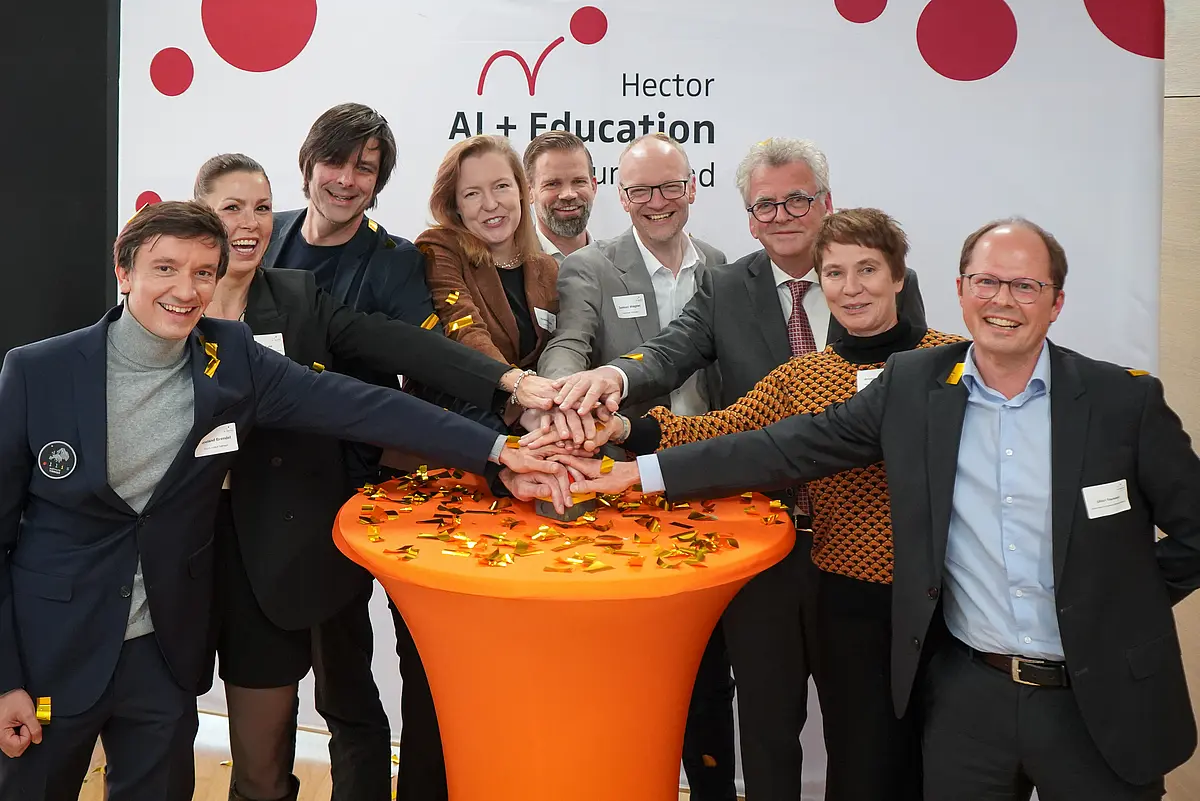
It's an exciting time for AI and education right now, with many innovations on the horizon. To make the best of these developments, both fields, AI and education sciences, must work hand-in-hand. That's where our major initiative, the Hector AI + Education Future Fund, comes in.
The goal
We fund projects that connect AI and education in a meaningful way to create a fast and direct impact for pupils, schools and teachers.
How? Via Co-Design & Agile Transfer in Tübingen
We support interdisciplinary projects that develop AI solutions for key educational challenges, impacting stakeholders’ daily lives.
We promote iterative, practice-oriented development to achieve results within three years through rapid user testing.
We aim for sustainable impacts in the educational landscape.
The Projects
To achieve this, the Hector Foundation provides funding for the following projects over the next three years.
AI@Schools
Empowering informatics teachers in AI through professional development
AI-LIT
AI-supported literacy development in kindergarten
Compass
Comprehensive Open Math Platform with Adaptive Self-Regulation Support
ETQ-AI
Enhancing teaching quality with artificial intelligence
Immersive AI
AI dialogue partner for social- immersive learning
VOILA
Voice-operated intelligent learning assistant for gifted children
Empowering Informatics Teachers in AI through Professional Development and postgraduate Education
The Challenge In Baden-Württemberg, the subject of media education and computer science for grades 5-11 will be successively introduced at all general secondary schools from the 2025/26 school year. Courses in the Upper Secondary School are also planned in the long term and should enable a subject-specific and didactically sound Abitur in computer science. The computer science teachers currently active in BW cover the current demand to some extent, but not the broad scaling to a compulsory subject including Upper Secondary School. BW must therefore quickly and yet thoroughly qualify more computer science teachers and impart the urgently needed subject-specific and didactic competences in AI. Our Solution In cooperation with the Centre for School Quality and Teacher Training (ZSL) and the Ministry of Education, we will develop a modular tthat is conceptually based on the IMP contact study program. Training courses developed by us and certified by the ZSL will be offered quickly after the start of the project to reach as many teachers as possible.We enable computer science teachers in BW in all phases of their training and professional life to offer technically sound and didactically excellent computer science lessons for their students at both lower and upper secondary level.
AI-supported literacy development in kindergarten – A mobile app for authentic language support in early education.
The Challenge Fostering language development is one of the central challenges of early childhood education. First, individual differences in language skills can already be observed at kindergarten age, and these differences are not sufficiently compensated for during primary school (Schneider, 2008). Despite intensive efforts by the federal states, evaluation studies on the effectiveness of less structured and situated support measures in kindergarten hardly yield any discernable effects on vocabulary and language comprehension (Schneider, 2018). Early literacy development is fundamental for the successful acquisition of later reading competencies in primary school.
One empirically supported method for promoting early language skills is dialogic reading (Whitehurst et al., 1988), which is based on language-promoting interactions during shared picture book reading. Although dialogic reading has proven to be a highly promising approach to support language development, its widespread implementation in practice in the traditional format with early childhood educators is failing due to a lack of human resources. Traditional implementation of dialogical reading requires supervision in a small group setting.
Our Solution The AI-LIT project seeks to develop a mobile AI-supported app for the systematic promotion of linguistic interaction among preschool children in the context of picture book reading.
For this purpose, we develop a dialogue system employing current computational linguistic methods, automatic speech recognition, and large language models. Following the principles of dialogic reading (Whitehurst et al., 1988), the system will interact with children using language. Our AI-supported dialogic reading approach starts earlier than digital reading tools typically introduced in primary school by promoting the expansion of receptive and productive vocabulary as well as the development of the language of schooling and narrative skills to foster the necessary competencies of children even before school entry. This project focuses on the question of whether the functionality required for dialogical reading (PEER sequence) can be implemented with AI support in a way that promotes learning.
COMPASS, short for Comprehensive Open Math Platform with Adaptive Self-Regulation Support, aims to leverage AI to foster domain-specific learning while developing self-regulated learning strategies through an adaptive math learning platform supporting tens of thousands of pupils across Germany.
The Challenge Self-regulated learning is crucial for developing lifelong learning skills, critical thinking, and academic resilience. Adaptive digital AI tools present both opportunities and challenges for developing self-regulation skills: they might undermine the students' ability to develop independent self-regulation by encouraging reliance on algorithmic guidance, or they could enhance these skills through personalized support. How much and what kind of adaptive support versus self-regulation do individual students need at different learning stages?
Our Solution An open math platform will systematically assess and optimize various self-regulation strategies, ensuring positive impacts on students' autonomous learning competencies and overall educational outcomes. In detail: We build an adaptive mathematics learning platform starting from MatheBattle (mathebattle.de), an established platform in Baden-Württemberg with >10 million completed tasks yearly and nearly 100,000 active users. We redevelop MatheBattle as a modern, open-source React application based on the Growify Learning platform, migrate existing users, and integrate adaptive tutoring components. We first introduce an AI-based task editor for interactive learning content, and add features prompting learners to engage in self-regulated learning (e.g., goal setting, self-evaluation). We then add an evidence-based tutoring model engaging students in self-regulated learning strategies, and finally implement AI-driven knowledge tracing and adaptive learning paths aligned with US Common Core Standards (mapped to German curriculum).
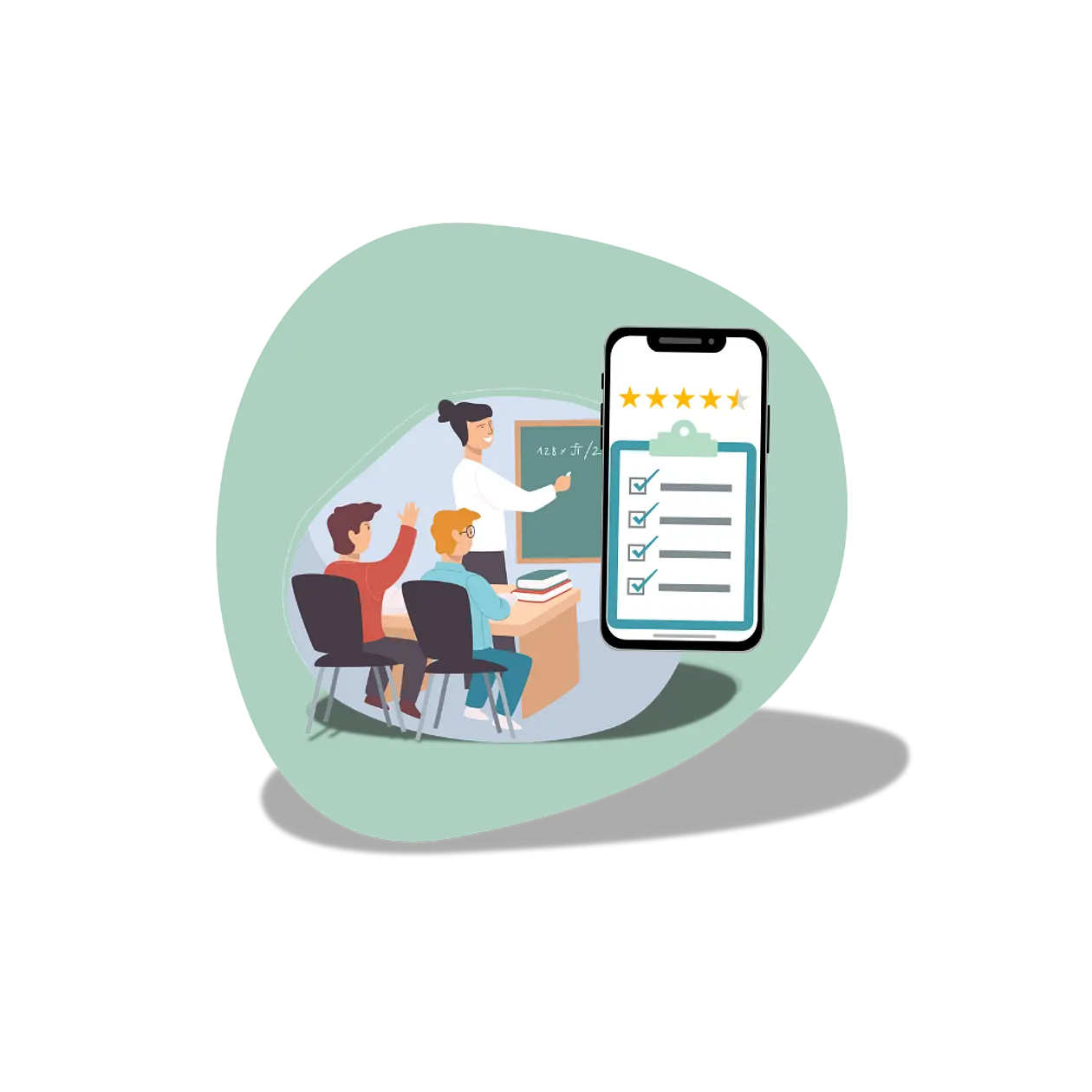
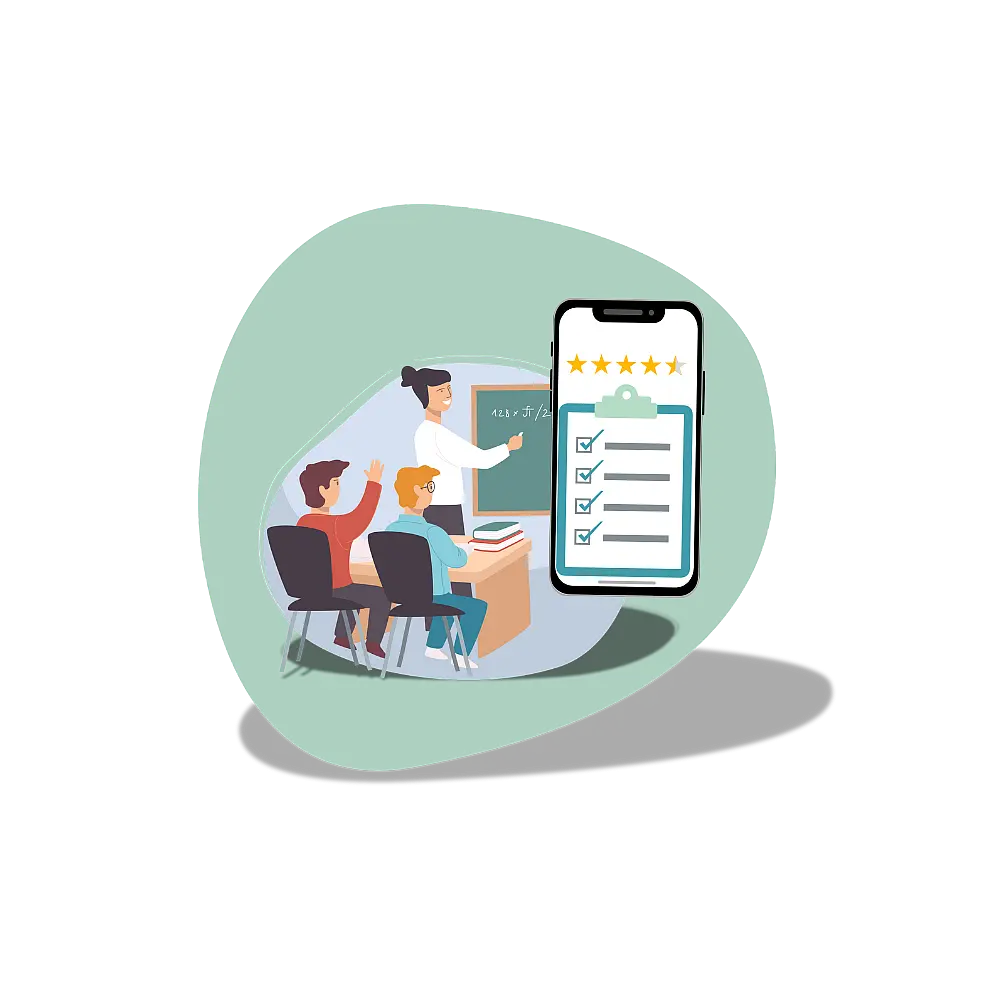
Enhancing teaching quality with artificial intelligence: a feedback system leveraging AI to provide teachers with real-time, formative feedback on their teaching practices.
The Challenge Even though the quality of teaching is a key determinant of effective learning, getting timely, reliable feedback about one's teaching quality remains a significant challenge. Traditional methods (student evaluations, teacher self-assessments, classroom observations etc.) have limitations in predictive validity, are time-intensive and costly and lack the actionable depth needed to foster meaningful, ongoing professional growth. This gap prevents teachers from reflecting on and adapting their daily work practices if they strive for educational excellence. Our Solution Real-time, formative feedback on teaching practices: We aim to develop an AI-based copilot application called Teaching Copilot that teachers can use on their smartphones to self-assess the quality of their teaching. Teachers can record classroom audio using their smartphones, and the system analyzes this data (audio and transcripts) to predict teaching quality aspects such as instructional organization, cognitive stimulation, or encouragement and warmth. Teaching Copilot will be a self-assessment tool empowering teachers to self-reflect. The system adheres to GDPR and EU AI Act regulations and privacy-preserving machine learning (ML) to ensure secure, ethical data handling. This innovation will enhance teaching effectiveness, enrich student learning experiences, and promote a culture of professional growth.
Whom to talk to in the VR-Headset? An AI Dialogue Partner for Social-Immersive Learning
The Challenge Educational technologies (EdTechs) in classrooms are a means to achieve didactic aims such as coping with heterogeneity, supporting self-regulated learning, or providing authentic learning experiences. Integrating two major current EdTech trends in schools, Artificial Intelligence (AI) and Virtual/Augmented Realities (VR/AR), has strong potentials to support these aims: Learners can be provided with more authentic experiences when exploring 3D learning contents together in social-immersive VR/AR-environments, and integrating multimodal Large Language Models (LLMs) into these environments allows learners to engage in self-guided explanatory dialogues about their exploration. Our Solution We will contribute to the solution of this problem by developing and distributing a generic application for VR-headsets focusing on learning by explaining. It allows learner groups to interact with 3D scans /360° scenes in a social VR/AR environment that focuses on learning by explaining and integrates a multimodal AI dialogue partner (seeing what learners see, listening and talking to them). As exemplary use-cases we will develop two full-fledged sets of biology materials serving as a blueprint for other subject matter domains on how to generate immersive learning experience with AI support in a making-education context.
Voice-operated intelligent learning assistant for gifted children
Voice-operated intelligent learning assistant for gifted children: An evidence-based open-source AI tutor for gifted elementary students.
The Challenge Giftedness is regarded as a crucial incubator for driving innovation, productivity, and societal advancement. However, the recent PISA-findings revealed that gifted children are increasingly neglected: the share of adolescents who were able to translate their giftedness into high achievement has nearly halved in 10 years. Support for gifted students should begin early and be sustained continuously to nurture the curiosity and competence of the next generation of talented students. We see distinct potential in the use of AI, as it allows for seamless, adaptive, on-demand tutoring.
Our Solution The goal of this project is to develop an evidence- and voice-based open-source AI tutor for gifted elementary students, starting with a tailor-made Hector Core Course and later extending towards general topic spaces. This AI tutor acts as a personal tutor for scientific questions and is designed to inspire discussions and offer age-appropriate scaffolds (e.g., prompts, hints, explanations) that guide children's curiosity-driven discovery learning, both inside and outside of school. To ensure success, we follow an agile, co-constructive, and practice-oriented development approach with rapid test cycles and direct stakeholder involvement (i.e., students, parents, teachers).
Ethics KI-Chatbots/Conversational Agents in der Bildung: Ethische Reflexion
Examination of the ethical aspects of using conversational AI in education by developing guidelines for transparent AI design, informed consent, and data literacy to support safe, inclusive, and responsible learning environments.
RIghts The Use of AI in Education: A Fundamental Rights Perspective under EU Law
Researching the integration of AI in education through a fundamental rights lens under EU law, analyzing how tools powered by AI can align with principles such as data protection, non-discrimination, human dignity, and the right to education while fostering trustworthy practices as guided by the EU's regulatory frameworks.
Implementing Research-Based AI Innovations in Education
Implementing Research-Based AI Innovations in Education: Challenges and Solutions in the Context of the Hector AI + Education Innovation Fund
Examination of how research-based AI innovations can be effectively implemented in education by analyzing contextual, procedural, and stakeholder-related factors and developing practical solutions to overcome challenges, thereby enhancing the uptake of these innovations through the collaborative framework of the Hector AI + Education Innovation Fund.
Begleitprojekt: Funding from the university, not from Hector Foundation
The Hector AI + Education Future Fund started in July 2025. The projects are funded for three years.
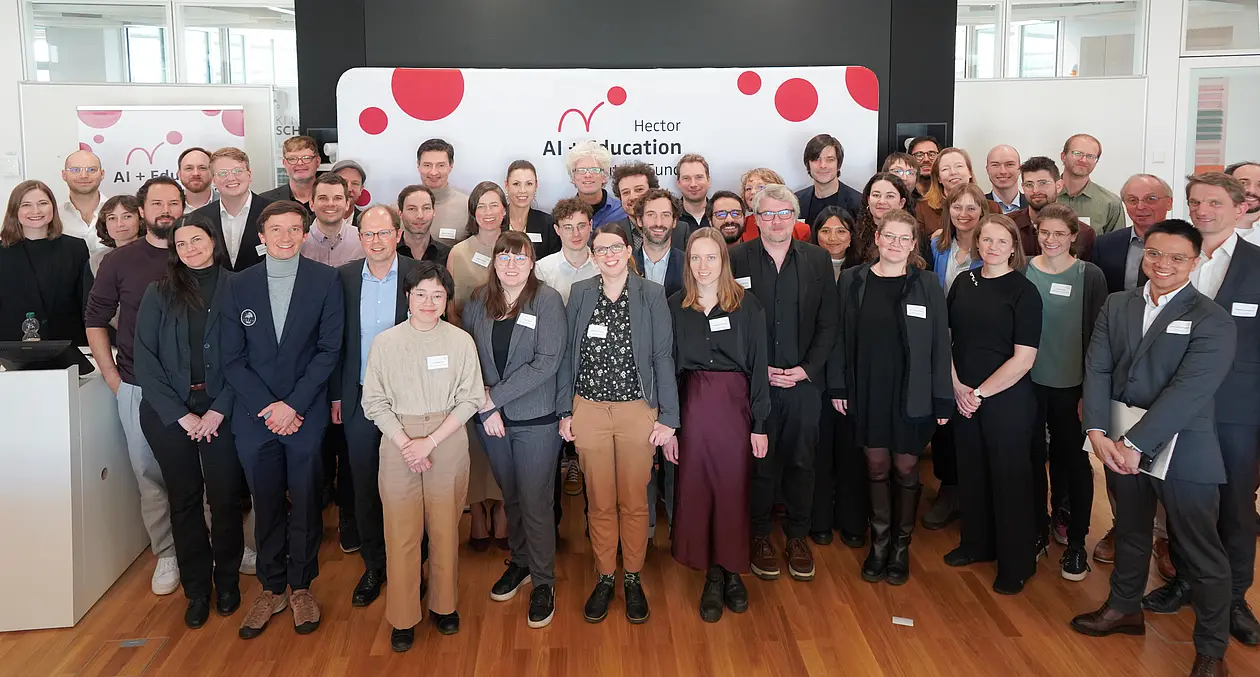
All projects profit from a close integration into the LEAD Graduate School & Research Network. The initiative involves local institutions, such as the University of Tübingen and the Leibniz Institute for Knowledge Media (IWM), as well as national and international participants from interdisciplinary backgrounds in social sciences, computer sciences, and natural sciences.
Director
Samuel Wagner Prorektor University of Tübingen
Initiators
Ulrich Trautwein Hector Research Institute of Education Sciences and Psychology, University of Tübingen
Wieland Brendel ELLIS Institute Tübingen, University of Tübingen
Matthias Bethge Tübingen AI Center, University of Tübingen
Contact
Project Coordination
Luisa Luiz von Witzleben luisa.luizspam prevention@uni-tuebingen.de +49 7071 29 73913 Hector Research Institute of Education Sciences and Psychology University of Tübingen